
Our readers keep the lights on and my morning glass full of iced black tea. As an Amazon Associate, I earn from qualifying purchases.
The gap between a miserable night shivering in a damp bag and a sunrise that makes you forget the climb is often measured in grams and seam taping. Affordable backpacking tents occupy a brutal engineering space: every dollar saved in materials fights against every ounce of weight a hiker’s knees must carry. The wrong choice here means a pack that feels like a cinder block or a shelter that turns a summer shower into a soaking disaster.
I’m Min — the co-founder and writer behind Gadgets Feed. This guide compiles hundreds of hours of spec analysis, real-world buyer reports, and material comparisons across the current market to identify the shelters that truly balance low weight with durable weather protection.
From sub-three-pound trekking-pole designs to freestanding domes that survive alpine gusts, these picks represent the current standard in lightweight, durable, and genuinely affordable backpacking tents.
How To Choose The Best Affordable Backpacking Tents
The line between a great budget backpacking tent and a frustrating one comes down to three variables: trail weight, waterproofing strategy, and livable interior volume. Cheap nylon can shed rain, but if the seams aren’t taped or the floor hydrostatic head is under 3000mm, you are gambling with dry sleep. Lighter fabrics also demand more careful campsite selection — thin 10D or 15D nylon rips on sharp rocks if you skip the footprint.
Trail Weight Versus Packed Weight
Manufacturers often quote a “minimum trail weight” that excludes the footprint, stakes, and stuff sack. For a true comparison, look at the packed weight — that is what your back carries. An affordable shelter around 2.5 to 3.5 pounds for a two-person model hits the sweet spot for multi-day trips. Anything over 5 pounds defeats the purpose of backpacking unless you are sharing the load across a group.
Waterproof Ratings and Seam Construction
Hydrostatic head (HH) ratings tell you how much water pressure the fabric resists before leaking. Look for at least 1500mm on the fly and 3000mm on the floor for reliable three-season use. Seam-taped construction is non-negotiable — unsealed stitches are the most common leak point in budget tents. Several tents in this list require user-applied seam sealant, which adds 30 minutes of labor but saves money upfront.
Freestanding vs. Trekking-Pole Dependent
Freestanding tents pitch anywhere, even on platforms or hard-packed ground, but they carry the weight of pole hubs and extra fabric. Trekking-pole tents shave 1 to 2 pounds by using your hiking poles as the frame. The trade-off is that you must carry poles and need soft soil for staking. If you already hike with trekking poles, the weight savings are substantial; if you don’t, a freestanding dome simplifies campsite selection.
Quick Comparison
On smaller screens, swipe sideways to see the full table.
| Model | Category | Best For | Key Spec | Amazon |
|---|---|---|---|---|
| Naturehike Mongar 2P | Mid-Range | Balanced weight/price duo | 4.7 lbs packed, 7001 aluminum poles | Amazon |
| Naturehike Star Trail 2P | Mid-Range | Ultra-light for the price | 2.76 lbs packed, 10D fly/20D floor | Amazon |
| Featherstone Backbone 1P | Premium | Single-wall ultralight solo | 2 lbs 6 oz trail weight, sil-nylon | Amazon |
| Snugpak Stratosphere 1P | Premium | Bivvi-style extreme weather | 2.5 lbs, 5000mm HH fly/8000mm floor | Amazon |
| OneTigris COSMITTO 2P | Mid-Range | Roomy two-person with dual doors | ~5 lbs packed, 20D ripstop fly | Amazon |
| Kelty Late Start 2P | Premium | Fast setup freestanding | ~4+ lbs, 68D polyester, 1200mm HH | Amazon |
| 3F UL Lanshan 1 15D | Mid-Range | Poleless double-wall solo | 1.9 lbs, 15D silicone fly, trekking pole | Amazon |
| MIER LANSHAN Ultralight | Budget | Entry-level ultralight double-wall | 2.6 lbs 2P, 5000mm HH fly/6000mm floor | Amazon |
| Kelty Discovery Trail 2P | Budget | Beginner-friendly freestanding | 4 lb 5 oz, polyester, Quick Corners | Amazon |
In‑Depth Reviews
1. Naturehike Mongar 2-Person 3-Season Backpacking Tent

The Naturehike Mongar hits the sweet spot where weight (4.7 lbs packed), livable interior volume (30 sq ft, 3.28 ft peak height), and price intersect. Its Y-frame structure with 7001 aluminum poles sets up in under 5 minutes — reviewers consistently report sub-4-minute pitches after one or two tries. The double-wall design uses a full-coverage B3 mesh inner that breathes well enough to eliminate condensation in 40°F conditions, according to field reports.
Weather resistance is surprisingly robust for the price point. One buyer documented survival through a tropical storm with 50–72 mph gusts; the cross-pole collapsed the vestibules outward but the interior remained completely dry. The 20D nylon ripstop fly and 210T polyester floor handle moderate rain without seam tape failures, though pushing it into alpine storms is not advised. The included footprint adds protection against ground moisture and abrasion.
Internal storage includes two vestibules and roof hammocks, making it cavernous for solo use and comfortable for two in mummy bags. Warm-weather sleeping with two wide pads is tight — the 53.1-inch floor width forces close quarters. Take-down requires careful folding to fit the stuff sack, a minor irritation relative to the overall value. For an all-around affordable two-person shelter that does not demand trekking poles or perfect soil, this is the benchmark.
Why it’s great
- Fast, intuitive setup with symmetrical Y-frame and color-coded clips
- Full mesh inner prevents condensation build-up in humid conditions
- Withstood measured 50+ mph gusts without structural failure or interior leaks
Good to know
- Floor width is snug for two adults in summer-weight bags; best for mummy bags
- Packed size requires careful rolling; easy to over-stuff the sack
- Vestibule stakes popped out in extreme wind; upgrade to beefier stakes for storm camps
2. Naturehike Star Trail Ultralight Backpacking Tent (2P)
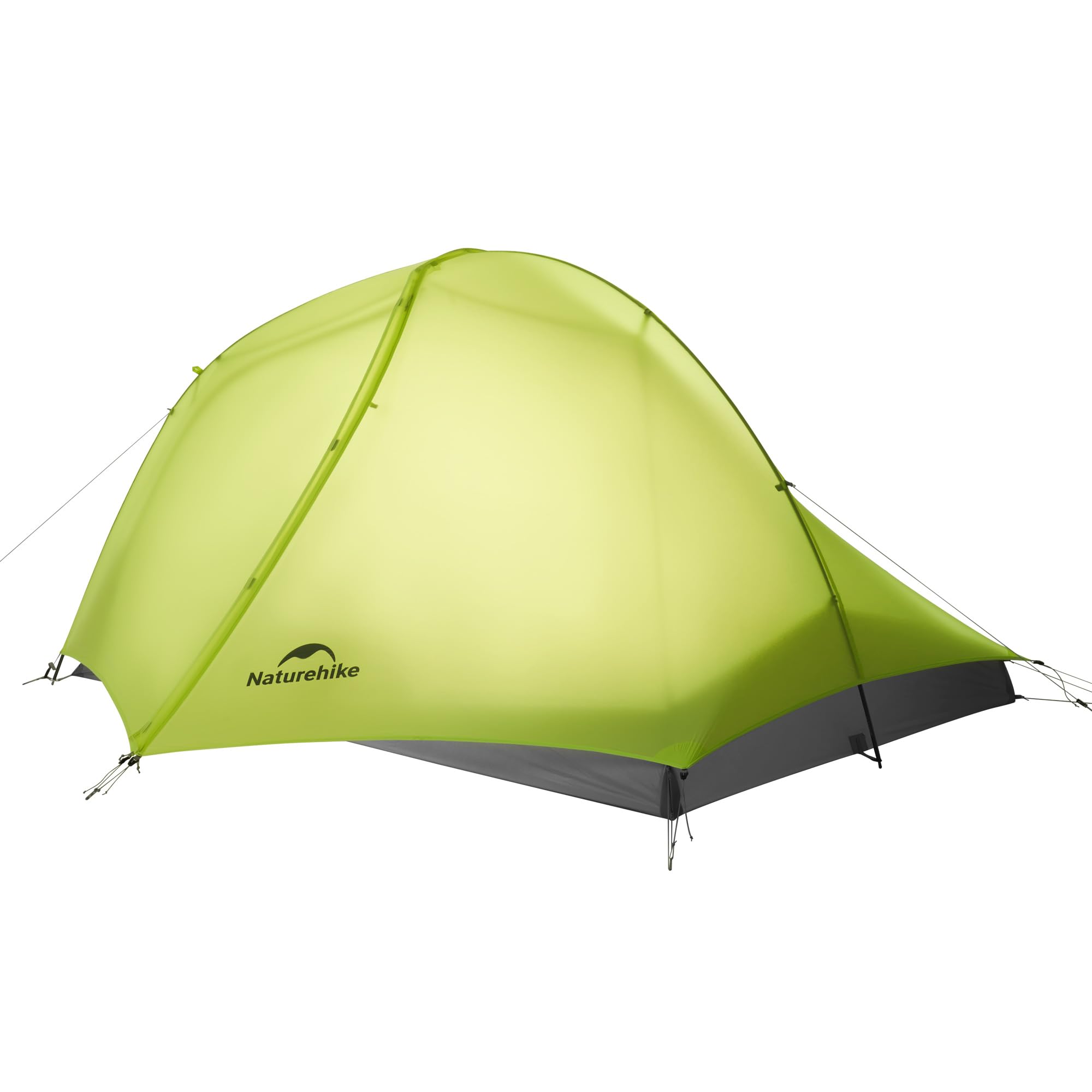
The Star Trail undercuts nearly every sub-three-pound two-person shelter on price while delivering a livable 82.7 x 51.2 x 39.3-inch interior. The 10D nylon fly with 1500mm HH coating and 20D floor with 3000mm HH create a reliable wet-weather envelope for its weight class. Reviewers note it sets up in about three minutes using the included Y-poles, and the full-coverage mesh inner keeps airflow high enough to avoid condensation in moderate humidity.
At 2.76 lbs packed (including footprint, stakes, and guy lines), it competes directly with shelters costing three times as much. Buyers report the floor fits a 25-inch wide sleeping pad with room for gear beside the head. The included groundsheet is a genuine plus — many budget ultralight tents skip this and charge separately. The only durability concern is the 10D fly fabric, which demands care when staking near rocks or roots; one reviewer noted the stuff sack felt thin and likely to wear quickly on long thru-hikes.
The vestibule is compact — about 24 inches deep — which fits a 30–40L pack but not much more. For solo trips with a partner’s gear stored under the fly edge, this is workable; for two full backpacking packs, it will be tight. The bright green color appealed to some but attracted insects in one report. Overall, this tent sets a new weight-to-price baseline for budget-conscious thru-hikers and weekend fast-packers.
Why it’s great
- Remarkable 2.76 lbs packed weight at a mid-range price point
- Includes lightweight footprint, stakes, and guy lines out of the box
- Full mesh inner provides excellent ventilation for summer and shoulder-season use
Good to know
- 10D fly fabric is thin; requires careful site selection to avoid tears
- Small vestibule barely fits one 40L pack; two packs will need floor space
- Stuff sack durability is questionable for multi-year thru-hikes
3. Featherstone Backbone Ultralight Tent (1P)

The Featherstone Backbone is a single-wall trekking-pole shelter that achieves 2 lb 6 oz trail weight with a 40/60 pole placement design that maximizes headroom at the top end. The 85-inch floor length fits a 6’4” user comfortably, and the tapered floor accommodates a full-size 25-inch sleeping pad. Two entrances with dual vestibules allow gear storage on both sides — a rarity in single-wall tents at this price.
Sil-nylon fabric with seam-taped construction creates a waterproof barrier that held up in sustained rain during testing. The TPU waterproof zipper on the main entrance slides smoothly without snagging. Ventilation relies on wide mesh panels and large vents, but condensation is the primary weakness: multiple reviewers reported significant interior moisture in rain or sleet due to the single-wall design. Using it in humid or wet-forest conditions requires careful camp selection to minimize condensation.
Setup is straightforward — stake four corners, insert trekking poles adjusted to full height, and tension the guy-out loops. The included J-stakes and Y-stakes are comparable to MSR Groundhog minis, providing good holding power in loam and soil. A compression stuff sack is included but no groundsheet; a polycro or tyvek sheet is recommended. This is an excellent gateway into ultralight trekking-pole shelters if you already carry poles and accept that single-wall tents require condensation management skills.
Why it’s great
- Under 2.5 lb trail weight with dual vestibules and dual doors
- Fits tall users up to 6’4” with genuine sitting headroom in the peak
- Seam-taped sil-nylon and TPU zipper provide reliable waterproofing
Good to know
- Single-wall design leads to heavy condensation in rain or high humidity
- No groundsheet included; budget for a polycro sheet or tyvek footprint
- Zippers on the mesh inner can be cumbersome to operate in the dark
4. Snugpak Stratosphere Shelter (1P)

The Snugpak Stratosphere is a hybrid bivvi-tent that uses two aluminum screw-lock poles to create a 2-foot head canopy over the occupant, eliminating the claustrophobic coffin feel of traditional bivvy sacks. The 50D nylon ripstop fly carries a 5000mm HH coating, while the 210T nylon floor rates 8000mm HH — numbers that belong in the alpine tent category. Every seam is taped, and the full-length side zip with velcro seal provides easy entry even with a sleeping pad inside.
Weighing 2.5 lbs and packing to 12 x 5 inches, it fits into the corner of a 34L pack without dominating the volume. Ventilation comes from a roll-away no-see-um mesh panel at the head and a rear mesh section that prevents condensation from soaking the bag. Reviewers report it handled light rain and heavy dew without interior moisture, but one user noted water pooled at the foot end in sustained rain, creating ice overnight. The included repair kit — pole sleeve, tensioner, spare cord, elastic loop, and patches — adds genuine value for remote trips.
Interior dimensions (91 x 32 x 20 inches) accommodate a 6’5” user with room for a sleeping pad and a thin layer of gear along the sides. The profile is tight for side sleepers who thrash, but most found enough space. Setup takes roughly one minute: lay flat, insert poles, stake the four corners. For minimalist solo backpackers or winter campers who prioritize weather resistance over elbow room, this is the most bombproof shelter in the affordable range.
Why it’s great
- Exceptional 5000mm/8000mm HH waterproof ratings for serious storm protection
- Packs very small for its protection level; fits in a pack corner or daypack
- Two-pole canopy creates real headroom — avoids classic bivvy claustrophobia
Good to know
- 32-inch width is tight for broad-shouldered users; not designed for two
- Water can pool at the foot end in heavy rain; requires careful site slope
- Zipper under tension can be hard to close from inside; practice before the trip
5. OneTigris COSMITTO 2 Person Backpacking Tent

The COSMITTO is a freestanding dome that prioritizes interior space and build quality over minimum weight. At roughly 5 lbs packed, it is heavier than dedicated ultralight options, but the payout is a 30.96 sq ft floor with 3.6 ft peak height that fits two adults on standard sleeping pads without rubbing elbows. The hexagon-shaped outer tent provides solid wind resistance, and reviewers report stability in high winds with the guy lines deployed.
Waterproofing comes from a 20D plaid ripstop polyester fly with 1500mm HH coating and a 75D nylon floor. Buyers who used it through two weeks of hard rain report zero leaks, crediting the factory seam sealing and Line Loc 3 tensioners that keep the fly drum-tight. The internal vestibules (one per side) store boots and a 40L pack each, keeping the sleeping area clear. Dual zippered entrances mean neither occupant has to crawl over the other for midnight exits.
Setup takes under 5 minutes solo using the three aluminum alloy poles, with color-coded clips that make fly attachment a one-hand job. The only drawback flagged by owners is the packed weight: at 5 lbs, it is better suited to shorter trips or shared load situations than sustained thru-hikes. The zippers on the rainfly can snag if not aligned carefully, and the fly limits airflow when fully deployed, leading to warmth inside during summer nights. For a balance of price, durability, and living space, it rivals tents costing double.
Why it’s great
- Spacious 2-person interior with 360-degree mesh views and dual vestibules
- Excellent factory seam sealing; no leaks reported in extended rain exposure
- Fast 5-minute setup with color-coded clips and pre-attached guy lines
Good to know
- Pack weight around 5 lbs limits use for ultralight or long-distance backpacking
- Rainfly zippers require alignment to avoid snagging on fabric
- Limited airflow with fly fully deployed can get warm in summer conditions
6. Kelty Late Start Backpacking Tent (2P)

The Late Start is Kelty’s answer to the “I want to camp tonight but I’m lazy about setup” crowd, and it works. Two identical 68D polyester poles slide into Quickcorner sleeves, and color-coded buckles snap the fly in place — solo users report under three minutes from bag to taut shelter. The 30.6 sq ft floor with 43-inch peak height provides genuine sitting room for two, though several reviewers note it fits as a roomy 1.5-person rather than a true two-person for side sleepers.
The 68D polyester fly with 1200mm HH coating and C0 DWR (PFC-free) handles moderate rain well, but the HH rating is lower than many competitors in this list. For summer thunderstorms and three-season use, it works; for sustained downpours in exposed ridgelines, the extra guy-out points should be deployed. The bathtub-style floor uses the same 68D fabric, which feels more durable than the thin sil-nylon options — it resists punctures from sharp ground debris better.
Internal storage includes one mesh pocket and a gear loft, adequate for wallets and headlamps but not for a full pack (which belongs in the single vestibule). The shark-mouth stuff sack is genuinely easy to repack, a small detail that matters after a long hike. At around 4+ pounds, it is heavier than dedicated ultralight tents, but the 3-minute setup and freestanding nature make it ideal for campers who value convenience over gram-counting.
Why it’s great
- Lightning-fast 3-minute setup with Quickcorner sleeves and color-coded buckles
- Sturdy 68D polyester floor resists punctures better than ultralight nylon options
- Freestanding design pitches on platforms, sand, or hard-packed ground
Good to know
- 1200mm HH fly rating is lower than many competitors; use extra guy-outs in heavy rain
- Interior feels more like a spacious 1.5-person than a true 2-person shelter
- Heavier than dedicated ultralight options; best for short trips or shared loads
7. 3F UL Gear Lanshan 1 Ultralight Tent (1P, 15D)

The Lanshan 1 is a poleless double-wall tent that sheds weight by relying entirely on a single trekking pole for structure, achieving 1.9 lbs total weight. The 15D silicone-coated nylon fly and 20D floor provide a solid weather barrier — one reviewer reported staying dry through a thunderstorm with 30 mph winds while a companion’s well-known brand tent let water in. The inner mesh stretches taut for headroom, and the 230 cm length accommodates tall sleepers without footbox contact.
The “3-season” version uses 15D nylon mesh inner for breathability; the “4-season” version swaps to a 15D windproof cloth inner for cold-weather use. Setup involves staking the four corners, inserting the trekking pole at the peak, and tensioning the four guy lines. First-time users may struggle for 10 minutes, but after two pitches it becomes a 3-minute process. The included 9 aluminum alloy stakes are functional but light; upgrading to longer stakes for soft ground is recommended.
Condensation is the primary challenge: the double-wall design helps, but at 30°F with high humidity, interior moisture built up significantly in one reviewer’s experience. The lack of a separate bug screen at the entrance means the door mesh acts as the only barrier when the fly is open — visibility is reduced compared to dedicated screen doors. For the weight and price, this is one of the most accessible ultralight shelters for hikers who already own trekking poles and want to test the poleless design philosophy.
Why it’s great
- Sub-2-pound weight at a highly accessible price point for ultralight entry
- Double-wall construction reduces condensation compared to true single-wall designs
- Performed well in thunderstorm and 30 mph wind; better than premium-brand companion tent
Good to know
- Trekking pole not included; requires poles at full height for proper pitch
- Condensation still occurs in cold, humid conditions despite double-wall
- Heavy snow collapses the sides; not suitable for winter camping above treeline
8. MIER LANSHAN Ultralight Tent (2P)
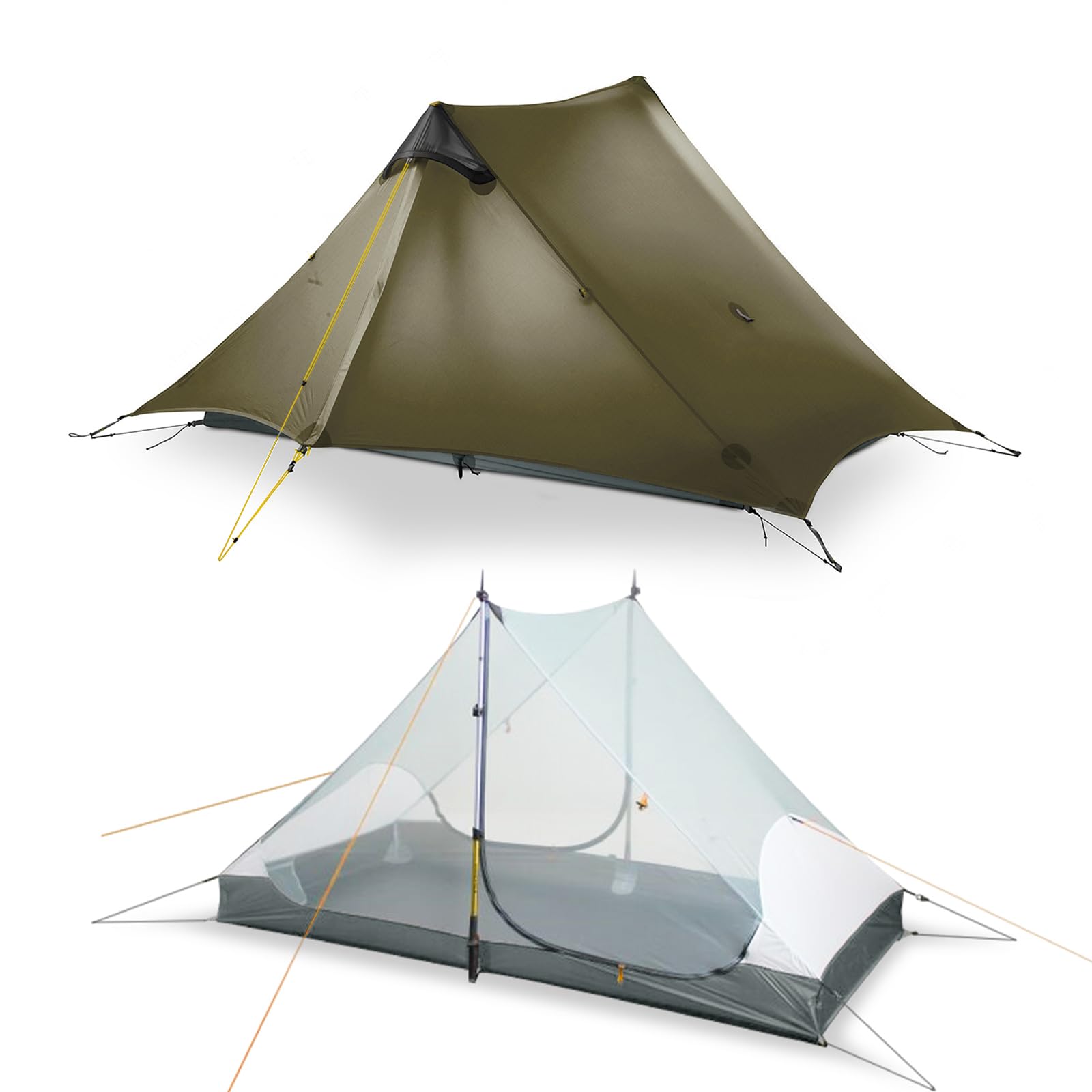
The MIER LANSHAN (commonly called the “3F UL Lanshan Pro” in its first iteration) is a trekking-pole double-wall tent that offers waterproof ratings far above its price tier: 5000mm HH on the 15D nylon fly and 6000mm HH on the bathtub floor. The 2-person version weighs 2.6 lbs and packs to 12.6 x 5.9 inches, making it competitive with shelters costing triple. Headroom (49.2-inch peak) is generous for the class, and the 86.6-inch length fits 6’1” users without touching the ends.
Setup uses hiking poles (1 for the 1P, 2 for the 2P) with hooks that connect the outer and inner tents, reinforced by wind ropes and stakes. Experienced users pitch it in 5–10 minutes, but the learning curve is real — first-timers may need YouTube tutorials to dial in the pole height and guy-line tension. The main durability concern is the factory seam sealing: multiple reviewers reported leaks at tie-out points and the fly edge pooling water that required aftermarket sealant and tarp clamps to resolve. True double-wall design prevents condensation, but the vestibule sits high, risking rain blow-in during sideways weather.
The 2P floor is 43.3 inches wide — comfortable for one person with gear, tight for two unless they are cozy. The included stakes are decent, but the stuff sack is small, requiring careful rolling. For hikers who are comfortable modifying gear (seam sealing, adding guy lines) and want the best waterproofing stats for the money, this tent delivers protection that outperforms many mid-range domes at a fraction of the weight.
Why it’s great
- Exceptional 5000mm/6000mm HH waterproof ratings for reliable storm protection
- Very low pack weight (2.6 lbs for 2P) for the waterproofing level provided
- Generous headroom for a trekking-pole shelter; fits tall sleepers
Good to know
- Factory seam sealing is inconsistent; many units require user-applied sealant
- Trekking poles required — not included; setup has a learning curve
- Narrow floor width makes it a true 1-person shelter with gear, not a comfortable 2P
9. Kelty Discovery Trail Backpacking Tent (2P)

The Discovery Trail is Kelty’s entry-level backpacking tent, designed to make first-time backcountry campers feel like pros. The press-fit aluminum poles and Quick Corners system — where the pole tips slide into pre-formed corner sleeves — let a single person pitch it in under 5 minutes without watching a video. The 33 sq ft floor with 42-inch peak provides comfortable space for one adult plus gear, or two cozy sleepers in mummy bags. Pre-attached guylines and a shark-mouth stuff sack that actually closes easily round out the beginner-friendly package.
Weather protection comes from a taped-seam waterproof fly with PFC-free DWR coatings, though the supplied aluminum stakes are the weak link — several reviewers noted they bent in hard or rocky soil and recommended upgrading to MSR-style stakes before the first trip. One buyer reported the tent survived 50 mph gusts without deformation, though the rainfly guy-line attachment points ripped in sustained 40 mph wind. The mesh inner is the most delicate component; rough handling near campfire sparks could create small holes.
Ventilation is adequate but not stellar: the fly vent sits high and does not create strong crossflow, making the tent warm in direct morning sun. Condensation forms under the fly in cold conditions but did not drip onto occupants in reports. The 2P model weighs 4 lb 5 oz — heavier than the ultralight competition but still reasonable for weekend trips or shared loads. For the new backpacker who wants a frustration-free shelter that works out of the box, this is the most forgiving option in the budget tier.
Why it’s great
- Tool-free setup with Quick Corners; first-timers pitch it in under 5 minutes
- Pre-attached guylines and shark-mouth stuff sack reduce packing frustration
- Survived 50 mph wind gusts; sturdy enough for exposed campsites
Good to know
- Included aluminum stakes are flimsy; budget for aftermarket stakes
- Mesh fabric is the weakest point — handle carefully near sharp objects or sparks
- Limited ventilation; can get hot in direct morning sun
FAQ
What is the difference between a trekking-pole tent and a freestanding tent?
How much should I spend on a first affordable backpacking tent?
Should I seam seal a new budget tent before my first trip?
Final Thoughts: The Verdict
For most backpackers looking for the best balance of weight, weather protection, and ease of use, the winner is the Naturehike Mongar 2P because it combines a 4.7 lb packed weight with a fast-pitching freestanding design and proven storm survival. If you need to cut every gram possible and already carry trekking poles, grab the Naturehike Star Trail 2P — its 2.76 lb packed weight is unmatched in the affordable range. And for extreme weather protection in a compact solo package, nothing beats the Snugpak Stratosphere with its 5000mm HH fly and 90-second setup.
Product prices and availability are accurate as of the date/time indicated and are subject to change. Any price and availability information displayed on Amazon at the time of purchase will apply to the purchase of this product. As an Amazon Associate I earn from qualifying purchases.
CERTAIN CONTENT THAT APPEARS ON THIS SITE COMES FROM AMAZON. THIS CONTENT IS PROVIDED "AS IS" AND IS SUBJECT TO CHANGE OR REMOVAL AT ANY TIME.
Amazon and the Amazon logo are trademarks of Amazon.com, Inc. or its affiliates.