
A battery junction box sits in the most hostile environment of your electrical system — under a truck bed, on a boat deck, or strapped to an RV tongue where water, vibration, and heat conspire to corrode terminals and melt thin plastic. The difference between a box that lasts a decade and one that fails in a season comes down to the specific sealing method, bus bar material, and stud gauge the manufacturer chose.
I’m Min — the co-founder and writer behind Gadgets Feed. I’ve spent hundreds of hours comparing ampacity ratings, ingress protection claims, and real-world build quality across dozens of power distribution enclosures to find the options that actually deliver on their specs.
Whether you need a weatherproof hub for a solar array, a clean terminal block for a marine auxiliary battery, or a rugged enclosure for a high-amperage inverter install, this guide to the best battery junction box options breaks down seven contenders by their real construction and measurable performance.
How To Choose The Best Battery Junction Box
Selecting a battery junction box means balancing current capacity, environmental sealing, and physical wire management. A 300-amp bus bar in a sealed nylon housing serves a solar off-grid setup, while a 500-amp copper plate with dual stud sizes handles the surge demands of an inverter or winch system. You need to match the box to the specific electrical load and exposure conditions of your install location.
Bus Bar Material and Ampacity
The conductor inside the box defines its current-handling ceiling. Nickel-plated brass resists galvanic corrosion better than bare copper in marine environments, but a thick copper plate offers lower resistance at high amperage. Check the continuous current rating — a 150-amp bus bar will heat up dangerously if fed by a 200-amp alternator, while a 500-amp unit provides headroom for future expansion. The number and size of studs (M8 at 5/16-inch versus M10 at 3/8-inch) determines which ring terminals you can physically fit without stacking lugs.
Enclosure Protection and Venting
A sealed box with IP65 gaskets keeps out hose spray and road splash, but a totally watertight design can trap heat inside. Look for enclosures that combine a gasketed lid with rainproof louvers or passive vent holes that allow hot air to escape while deflecting water. ABS plastic is impact-resistant and cost-effective; nylon glass-fiber reinforced housings handle higher temperatures and UV exposure better over time, though they cost more. Hinged covers with metal latches survive frequent opening cycles better than all-plastic snap closures.
Quick Comparison
On smaller screens, swipe sideways to see the full table.
| Model | Category | Best For | Key Spec | Amazon |
|---|---|---|---|---|
| Joinfworld 500A | Premium | High-current inverters & winches | 500A copper plate, M10 + M8 studs | Amazon |
| ALL-TOP Smart Box | Premium | DIY portable power stations | 50A Anderson connectors, voltmeter | Amazon |
| Sidasu 27 Series | Premium | Rugged battery storage on trailers | Stainless steel, fireproof coating | Amazon |
| AMOMD 300A Pair | Mid-Range | Solar battery bank distribution | 300A nickel brass, M8 studs | Amazon |
| True Mods Bus Bar | Mid-Range | Marine accessory distribution | 150A copper bus, IP65 nylon | Amazon |
| Namunanee ABS Box | Budget | Low-power outdoor enclosures | ABS plastic, 1.77-inch vents | Amazon |
| Ericsity Solar Gland | Budget | Solar cable pass-through on roofs | IP68 gland, 10AWG pre-wired | Amazon |
In‑Depth Reviews
1. Joinfworld Heavy Duty 500A Bus Bar
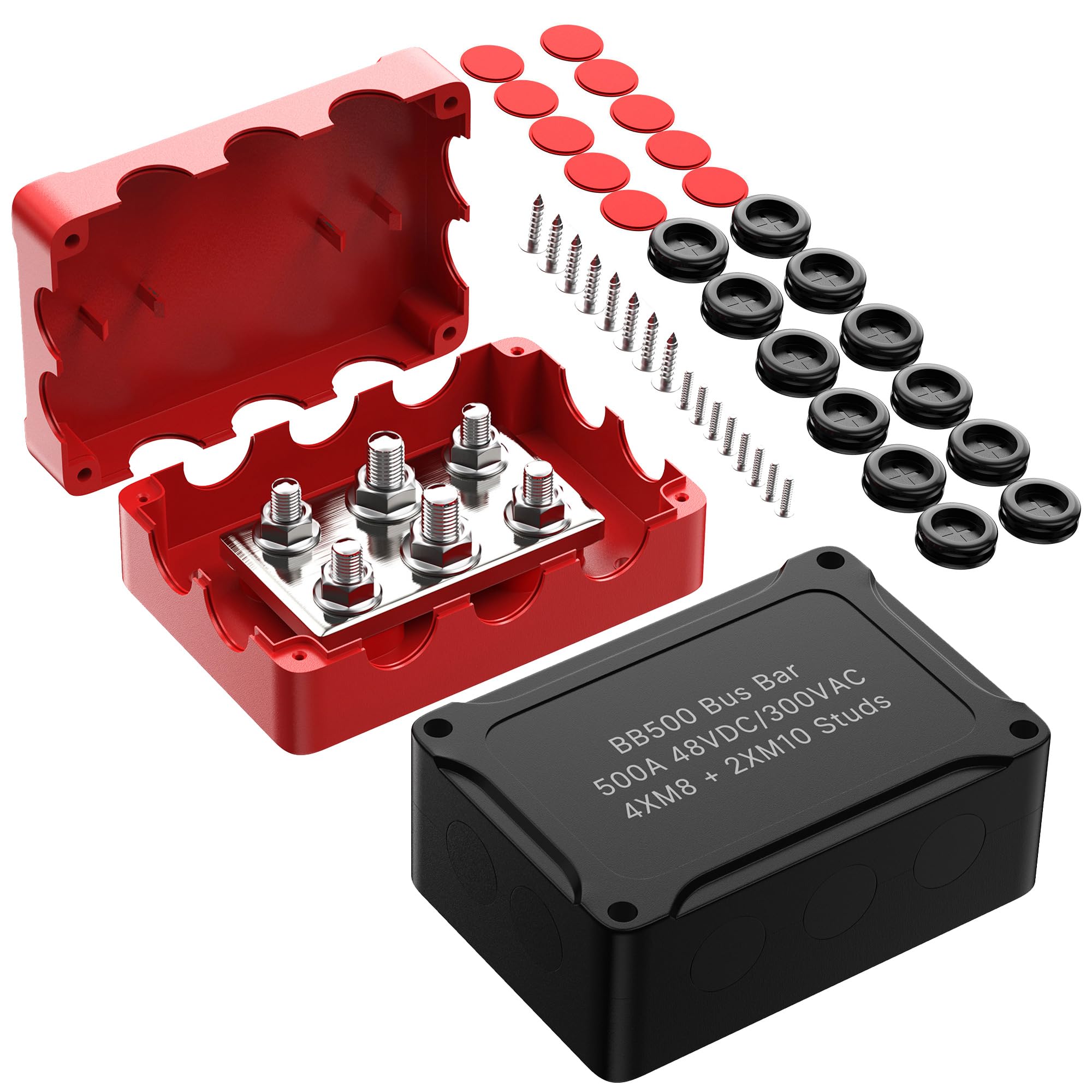
The Joinfworld 500A pair uses a thickened copper plate with six studs — two central M10 posts handle 4/0 AWG lugs for high-current feeds, while four outer M8 studs accept smaller accessory circuits. The housing is glass-fiber reinforced nylon that resists deformation under the heat of sustained 400-amp loads, and the included cuttable rubber grommets seal around entry points to reduce the risk of short circuits against the metal bus bar.
Each unit ships as a red positive and black negative block with a screw-down protective cover that stays in place without fasteners — a design that simplifies inspection and troubleshooting. The removable knock-out plates let you route cables through the sides or bottom, giving flexibility when mounting inside tight equipment bays or battery compartments. Owners report that the thick bus bar accommodates large lugs without bending, though the M8 bolts sit close enough together that stacking two oversized lugs on a single post can be tight.
The unit is rated water-resistant rather than waterproof — there is no full gasket between the base and lid — so it suits dry compartments or under-deck areas but not open exposure to direct hose spray. If your install calls for 250-amp continuous loads on a solar array or inverter system, the Joinfworld delivers headroom without the voltage drop seen in thinner brass bus bars, making it the most capable choice for serious DC power distribution.
Why it’s great
- 500A rating provides ample headroom for high-demand inverters and winches
- Dual stud sizes (M10 and M8) accept both main battery cable and smaller branch wires
- Removable plastic knock-outs allow flexible cable entry from any side
Good to know
- Not fully waterproof — lacks a base gasket for direct rain exposure
- Bolts are closely spaced, which can crowd large terminal lugs on adjacent posts
2. ALL-TOP Smart Battery Box

The ALL-TOP Smart Battery Box transforms a standard Group 24 to 31 battery into a full power distribution hub. It includes dual 50-amp Anderson-style quick connectors, each protected by a 60-amp fuse, making it ready for solar panel input and high-current output to a refrigerator or oven simultaneously. Two USB ports (5V 2.1A and 1A) and a 12V cigarette socket provide low-current device charging, while a 16-amp resettable circuit breaker protects the accessory circuits.
A built-in digital voltmeter displays battery voltage to within 0.1V, so you can monitor discharge levels without an external meter. The external positive and negative terminals are unfused, allowing direct connection to a 300-amp inverter or high-current load. Owners report that 100Ah LiFePO4 batteries fit easily inside, and the unit works as a complete portable power station when paired with a small solar charge controller tucked into the box alongside the battery.
The main drawback is the plastic latch and lighter socket quality — some users report the 12V socket fails after a few insertions, and the lid handle is not designed for one-handed carrying. The absence of an internal battery retention frame means smaller batteries may shift inside the box during travel. For a turnkey solution that consolidates fusing, monitoring, and accessory ports into one enclosure, the ALL-TOP is the most feature-dense option available.
Why it’s great
- Includes dual 50A Anderson connectors for solar input and heavy load output
- Built-in voltmeter and USB ports eliminate need for separate accessories
- Fits Group 24 to 31 batteries including common 100Ah LiFePO4 sizes
Good to know
- No internal battery retention strap — smaller batteries may slide around
- 12V cigarette socket is prone to failure under frequent use
3. Sidasu Stainless Steel 27 Series Battery Box

The Sidasu battery box is fabricated from heavy-gauge stainless steel with a black anti-rust paint coating that resists corrosion on trailers, boat decks, and truck beds. Its waterproof top cover uses a lip-seal design that prevents water ingress even during rain, and the concave bottom keeps the battery elevated off the mounting surface to avoid standing water damage. Rubber grommets in the cable entry points help seal around wires and reduce chafing against the metal edge.
The box accepts Group 24 and Group 27 batteries up to 13 inches long, 7.5 inches wide, and 10 inches tall, which covers the majority of deep-cycle marine and RV batteries. Detachable non-slip feet and adjustable mounting brackets simplify installation on uneven trailer tongues or boat stringers. Owners report the box is strong enough to stand on and provides a significant upgrade over flimsy plastic enclosures, though the metal construction makes it heavier — over 9 pounds empty — and difficult to drill for custom modifications without a step bit.
Some units arrive with loose lid latch rivets that prevent the cover from sealing flush, requiring an adhesive weather-strip add-on to achieve full water resistance. The lift-off lid design means you cannot open the box without unbolting it from the mount if clearance is tight. For permanent installations where physical protection from impact and puncture is the priority, the Sidasu steel box is the most rugged enclosure in this lineup.
Why it’s great
- Stainless steel construction offers unmatched puncture and impact resistance
- Cable entry grommets reduce wire chafing at metal edges
- Adjustable mounting brackets allow flexible placement on uneven surfaces
Good to know
- Heavy empty weight makes it unsuitable for portable applications
- Some units have loose lid latch rivets that compromise the water seal
4. AMOMD 300A Bus Bar Box Pair

The AMOMD set includes two separate bus bar boxes — one red for positive distribution and one black for negative grounding — each rated for 300 amps continuous at 48V DC. The conductor is nickel-plated brass rather than bare copper, which trades a slight increase in resistance for superior corrosion resistance in salt-air marine environments. Four M8 studs per block provide enough terminals for a 2S2P solar battery bank, combining two parallel strings of two series-wired batteries into a single distribution point.
The base is flame-retardant nylon glass-fiber reinforced plastic that withstands the heat generated by high current charging from a 60-amp MPPT controller. Six detachable windows on the cover allow you to remove only the plastic sections needed for your wire routes, keeping the rest of the enclosure sealed against debris. The studs are removable Allen-head bolts, so you can position the lugs in the orientation that best fits your cable bends rather than being locked into a fixed stud pattern.
Owners note that the trapped nuts under the cover screws prevent hardware from falling into the enclosure during assembly — a small but real convenience when working in tight battery compartments. The main limitation is stud height: at approximately 1.75 inches between the base and the top of the M8 stud, stacking two heavy 4/0 gauge lugs on a single post leaves limited thread engagement for the nut. For clean installations with one lug per stud, the AMOMD delivers 300-amp capacity and robust corrosion protection at a price that undercuts most marine-grade bus bars by a significant margin.
Why it’s great
- Nickel-plated brass resists galvanic corrosion better than bare copper
- Removable allen-head studs allow flexible cable lug orientation
- Detachable windows keep enclosure sealed while providing cable access
Good to know
- Stud height limits stacking of multiple large-gauge lugs per post
- M8 thread size may require reducers for smaller ring terminals
5. True Mods Waterproof Bus Bar Box
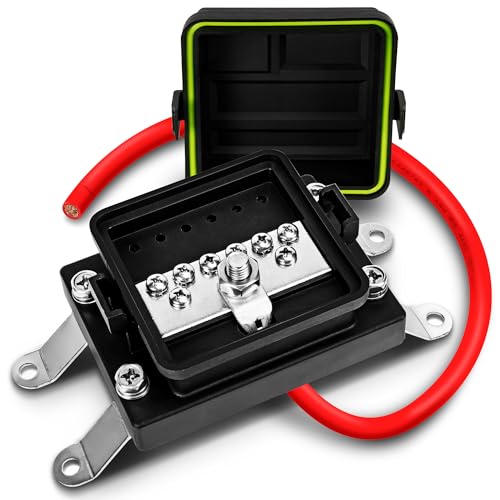
The True Mods distribution block combines a copper bus bar — not the common brass — with a heavy-gauge nylon housing that seals to IP65 standards, meaning it withstands low-pressure water jets from any direction. This makes it a strong candidate for exposed installs like the underside of a truck, on the deck of a boat, or inside an engine bay where splash and steam are constant. The bus bar carries 150 amps continuous at 32V DC and 300V AC, with four positions for feed and branch circuits plus a separate ground stud.
The kit includes a two-foot pre-terminated 4 AWG copper power feed wire (not copper-clad aluminum), plus Z-brackets for mounting on uneven surfaces and a full set of seals for each cable entry. The small footprint — 4.12 inches wide by 3.62 inches tall — fits into spaces where a larger bus bar box cannot go. Owners report the housing feels dense and the seals compress properly without leaking, though the terminal screws are not case-hardened and can strip if over-torqued with a power driver.
The key limitation is that the sealing gasket is calibrated for 4 AWG wire; when routing smaller 8 AWG or 10 AWG cables through the same port, the gasket opening does not compress fully around the thinner wire, requiring a wrap of electrical tape to achieve a watertight fit. For a dedicated high-current accessory circuit — such as a 12V fridge, a lighting panel, or a relay bank — the True Mods box provides genuine IP65 protection and a solid copper current path in a compact, marine-ready package.
Why it’s great
- IP65-rated housing protects against low-pressure water jets and spray
- Copper bus bar offers lower resistance than brass alternatives
- Compact 4×4-inch footprint fits confined engine-bay locations
Good to know
- Seals are calibrated for 4 AWG — smaller wires require tape wrap
- Screws are relatively soft and can strip if over-tightened
6. Namunanee Outdoor ABS Junction Box
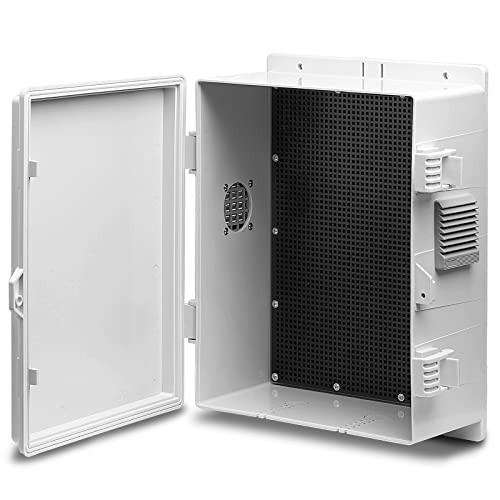
The Namunanee enclosure is a large ABS plastic box with a hinged lid and a removable grill mounting plate for securing equipment such as battery chargers, fence controllers, or small power supplies. The standout feature is the pair of 1.77-inch ventilation holes on each side, paired with rainproof louvers that slant downward at 45 degrees to block water while allowing hot air to escape — a critical design for any junction box housing electronics that generate heat during operation.
The box measures 13 inches tall by 9.2 inches wide, providing interior space for bulky components and excess cable loops that smaller boxes cannot accommodate. Padlock holes on the lid tabs allow security locking, and the included mounting screws let you attach the box to a wall, fence, or structural post. The ABS material provides good electrical insulation and impact resistance for stationary indoor or sheltered outdoor use.
Several owners report that the plastic hinges bind after a few open-close cycles and that one of the two lid latches can break on first use — not a problem if you padlock the box shut and only open it occasionally for maintenance. The mounting plate is thin and flexible, so heavy components may need additional support. For an affordable weather-resistant enclosure that prioritizes ventilation for a small solar controller or a low-power battery tender, the Namunanee offers the most interior volume per dollar spent.
Why it’s great
- 1.77-inch vent holes with rain louvers prevent heat buildup in enclosed electronics
- Large interior accommodates oversized components and cable slack
- Padlock holes provide security against tampering in public locations
Good to know
- Plastic hinges bind and lid latches are prone to breaking
- Mounting plate is thin and may not support heavy transformers or relays
7. Ericsity Solar Cable Gland Entry Housing
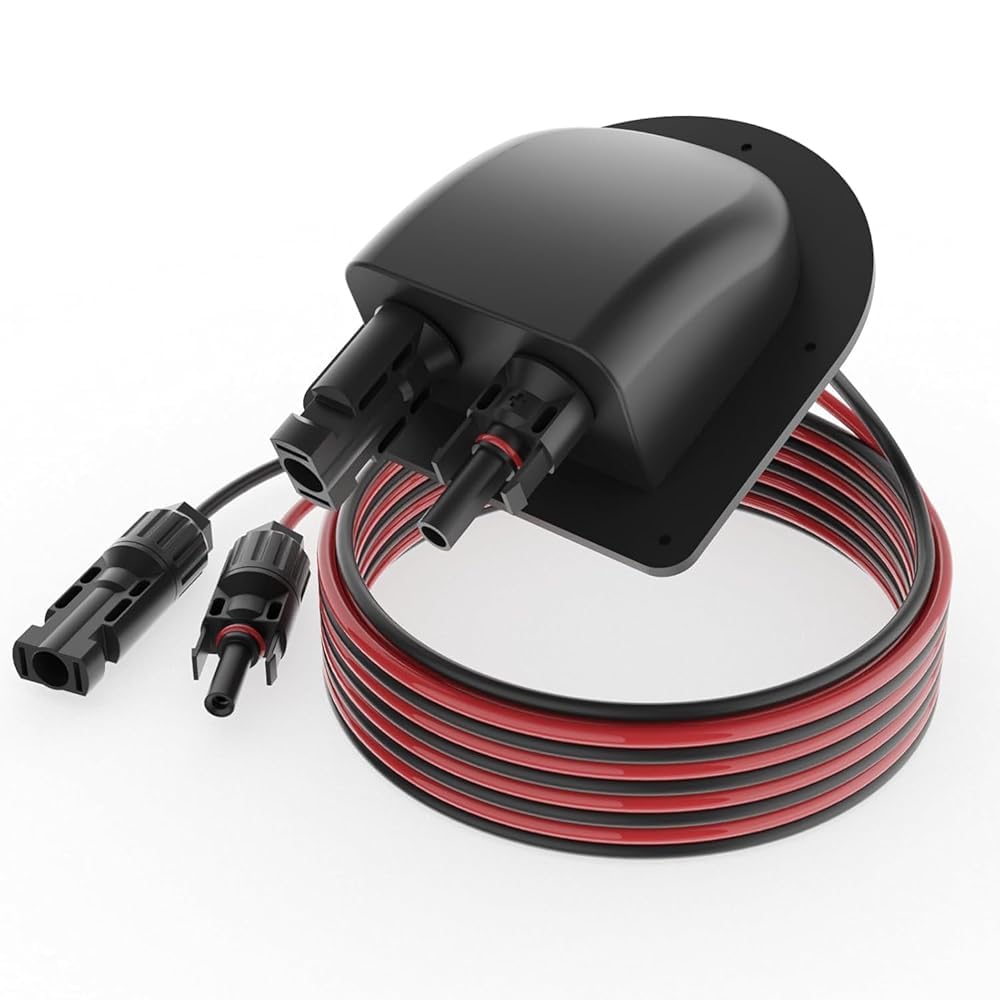
The Ericsity entry housing is purpose-built for routing solar panel cables through a roof, wall, or vehicle skin while maintaining a watertight seal. The ABS enclosure includes two pre-installed IP68-rated cable glands that compress around the wire when you tighten the cap, creating a seal rated for submersion up to 1.5 meters. A ten-foot 10 AWG solar extension cable with MC4-compatible connectors is already attached, eliminating the need to strip, crimp, or seal the wire yourself.
The housing measures 4.7 by 4.3 by 1.9 inches, which keeps the profile low enough to mount flush against a camper van roof or boat deck without creating a wind-catching bulge. A groove on the bottom permits application of sealant or adhesive for a permanent bond to the mounting surface, and four stainless steel self-tapping screws are included. The PA nylon material of the glands resists UV degradation and remains flexible in cold temperatures, reducing the risk of cracking around the cable entry point over years of thermal cycling.
The trade-off is that the housing is a pure pass-through enclosure — there is no internal bus bar, fuse holder, or terminal block, so you need to make your splices or connections elsewhere downstream. The 10 AWG wire is suitable for solar arrays up to roughly 30 amps at 12V (360 watts) before voltage drop becomes a concern over long runs. For a clean, leak-proof cable entry point that eliminates the headache of drilling through a roof and sealing around raw wire, the Ericsity gland box is the most professional-looking solution in this roundup.
Why it’s great
- IP68-rated cable gland prevents water ingress on roof installations
- Pre-attached 10AWG wire with MC4 connector saves crimping labor
- Low-profile ABS housing minimizes wind resistance on vehicle roofs
Good to know
- No internal bus bar or terminal block — pass-through only
- 10 AWG wire limits current handling for larger solar arrays
FAQ
Can I use a battery junction box outdoors in direct rain?
What size wire should I use with a 300-amp bus bar?
Why does my junction box feel hot after running the inverter?
Final Thoughts: The Verdict
For most users, the best battery junction box winner is the Joinfworld 500A Bus Bar because its copper plate, dual stud sizes, and glass-fiber reinforced housing deliver genuine high-amp headroom for both solar and inverter installations. If you want integrated USB charging, Anderson connectors, and a built-in voltmeter in a single portable enclosure, grab the ALL-TOP Smart Battery Box. And for a low-cost pass-through solution that seals solar cables against roof leaks, nothing beats the Ericsity Solar Gland Housing.