
A bug out bag needs to carry the weight of your survival plan—food, water, shelter, and medical gear—without tearing under pressure. The difference between a good day and a bad one often comes down to whether your pack’s zippers hold, its straps distribute load, and its MOLLE system accommodates mission-specific pouches.
I’m Min — the co-founder and writer behind Gadgets Feed. I’ve spent hundreds of hours researching tactical packs, analyzing stitch patterns, frame materials, and real-world stress testing from thousands of user reports to find which bags actually earn a spot in a go-bag rotation.
This guide breaks down the essential specs—from internal frame types to MOLLE density—to help you pick the right bag for bugging out based on real durability metrics and field-tested performance.
How To Choose The Best Bag For Bugging Out
Not every tactical backpack can survive a forced march with 50 pounds of gear. Buyers often chase cheap capacity or military aesthetics without checking the frame, zipper quality, or weight distribution—three factors that make or break a bug out bag when you actually need to move fast.
Volume and Load Capacity
Bug out bags for solo use typically range from 24L to 60L. Smaller packs like 24L force hard trade-offs on food and water, while 50L+ bags can carry full 72-hour kits but risk overloading if the frame isn’t designed for it. Look for an internal frame or aluminum stays if you plan to carry more than 30 pounds—without one, weight transfers directly to your shoulders and causes fatigue within a few miles.
Fabric and Zipper Durability
600D polyester is the entry-level standard for budget packs, but it abrades faster against rough surfaces. 1000D Cordura nylon (found on premium bags) resists tears significantly better. YKK zippers with metal sliders are the gold standard—plastic zippers fail under side stress. Check the zipper pull quality: if it feels thin or bends easily, that’s the first failure point during a real bug out.
MOLLE Compatibility and Organization
Laser-cut MOLLE offers a sleeker profile but less versatility than traditional PALS webbing. For a bug out bag, you want enough webbing rows on the front and sides to attach an IFAK, radio pouch, or water bottle holder without crowding the main compartment. Internal organization with admin panels and fleece-lined pockets helps you access small critical items without dumping everything onto the ground.
Quick Comparison
On smaller screens, swipe sideways to see the full table.
| Model | Category | Best For | Key Spec | Amazon |
|---|---|---|---|---|
| Maxpedition Gyrfalcon | Premium | Heavy loads & long treks | 1000D Ballistic Nylon | Amazon |
| Kelty Redwing Tactical 50L | Mid-Range | Hybrid EDC & bug out | U-Zipper Clamshell | Amazon |
| LA Police Gear Atlas 72Hr | Mid-Range | 72-hour loadout capacity | 900D Polyester | Amazon |
| 5.11 Tactical RUSH 12 2.0 | Premium | EDC & short missions | 1050D Nylon | Amazon |
| HAZARD 4 Plan-B Sling | Premium | Low-profile & rapid access | 11.8L Sling Format | Amazon |
| Mardingtop 60L | Budget | Maximum volume on budget | 600D Polyester | Amazon |
| Emergency Zone 72Hr Kit | Budget | Pre-packed starter solution | All-in-one kit | Amazon |
In‑Depth Reviews
1. Maxpedition Gyrfalcon Backpack

The Maxpedition Gyrfalcon uses 1000D ballistic nylon with a Teflon coating, making it one of the most abrasion-resistant and water-shedding bags you can load into a trunk kit. It’s built around an internal frame that comfortably handles 60 pounds over 5-mile treks—users consistently note the harness distributes weight better than many dedicated hiking packs.
A standout feature is the detachable 6L waist pack that doubles as a fanny pack for short reconnaissance missions or camp perimeter walks. The main compartment swallows a 3L hydration bladder plus a 21-inch laptop sleeve, and the YKK zippers with metal sliders provide the smooth, jam-resistant action you want when seconds count.
Real-world feedback from long-term owners reports zero structural failures after years of use as an INCH bag. The harness lacks adjustability for shorter torsos, so try it before committing if you’re under 5’5”. This pack is built for people who plan to move weight over distance and expect their gear to survive the same scenario.
Why it’s great
- Rugged 1000D Cordura with waterproof zippers and Teflon coating
- Detachable waist pack adds mission flexibility
- Comfortable internal frame carries heavy loads efficiently
Good to know
- Fixed harness may not fit shorter torsos
- Outer bottom pouches are sewn together, limiting separate access
2. Kelty Redwing Tactical Backpack 50L
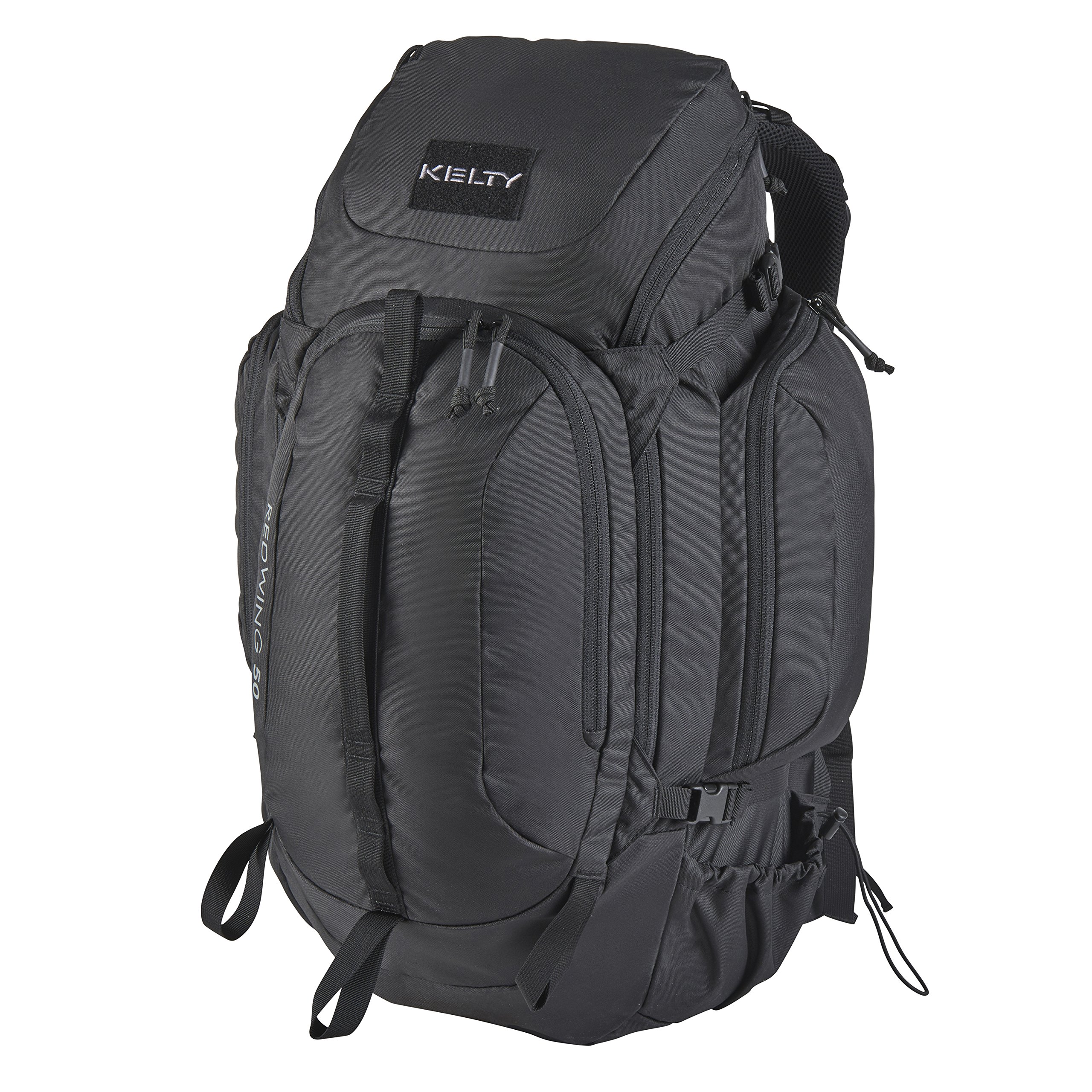
The Kelty Redwing Tactical 50L bridges the gap between a civilian hiking pack and a tactical bug out bag. It uses a U-zipper clamshell opening that lets you see every item at once—critical when you’re digging for a filter or headlamp in the dark. The Dynamic AirFlow back panel keeps your spine ventilated even under heavy loads.
Aluminum stays combined with a frame sheet support up to 50 pounds while maintaining a relatively low profile for a 50L pack. Side pass-through pockets fit trekking poles or a rifle buttstock, and the removable waist belt lets you convert it to an EDC pack when you’re not bugging out. Users report it hauling 30 pounds daily for two miles with no comfort complaints.
Some users note the MOLLE options are limited compared to pure tactical packs—there are PALS rows on the bottom and waist belt but minimal side webbing. The grab handle lacks reinforcement, and the zippers are solid but not YKK #10s. For under , you get a versatile pack that transitions from daily commuting to emergency loadout better than most in its price range.
Why it’s great
- Full clamshell opening for easy gear access and organization
- Aluminum stays and frame sheet for load stability
- Removable waist belt adapts to EDC use
Good to know
- Side pockets fit rifle but not typical water bottles well
- Limited traditional MOLLE real estate for attachments
3. LA Police Gear Atlas 72 Hour Tactical Backpack
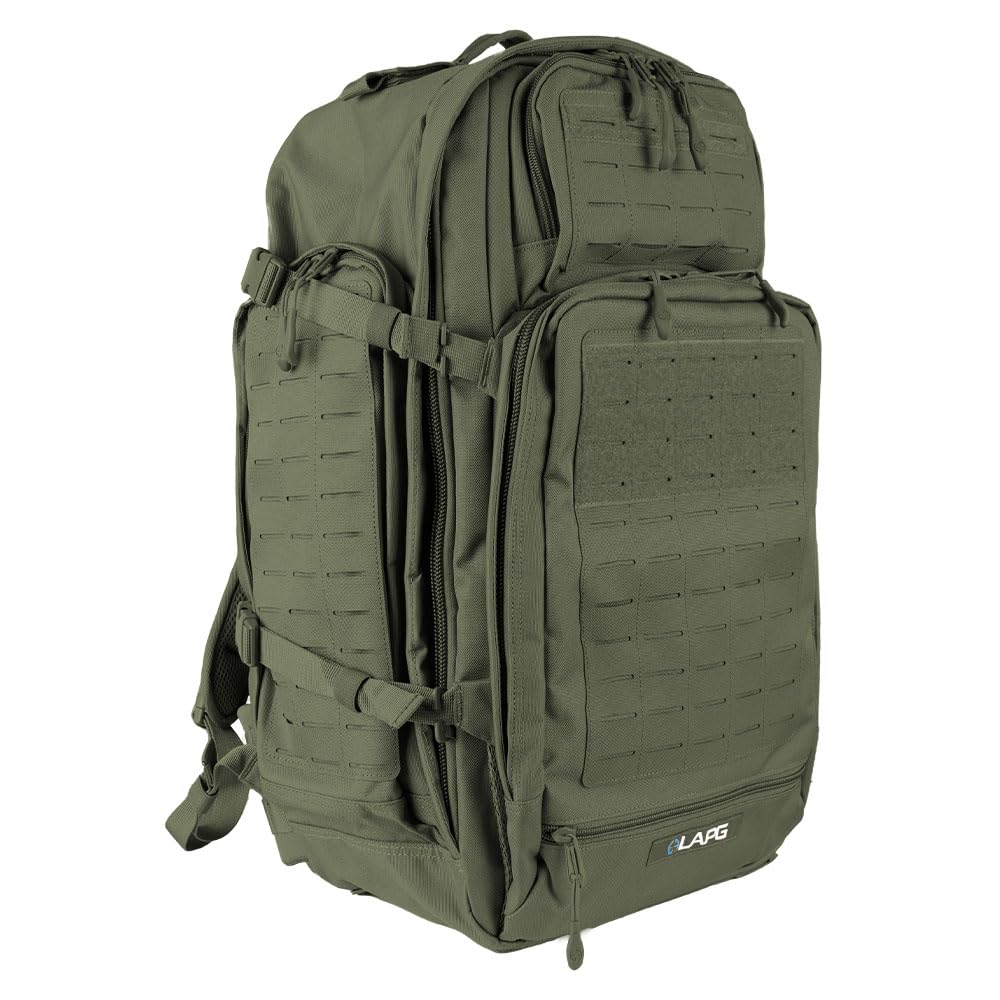
The LA Police Gear Atlas 72 Hour bag punches above its weight class with 900D polyester construction that feels substantially tougher than typical budget packs. The main compartment swallows an entire 72-hour loadout with room to spare, and the interior loop lining lets you attach Vel-backed organizers for a custom layout.
The ergonomic padded back panel includes a removable backplate, and the breathable shoulder straps distribute weight effectively—users report carrying 53 pounds without the frame digging in. Laser-cut MOLLE along the front and sides keeps a sleek profile while still accepting standard pouches. The fleece-lined glasses pocket at the top provides safe storage for fragile optics or comms gear.
Long-term users note that water ingress through the zippers is a concern in heavy rain—the bag lacks waterproof zippers or a built-in rain cover. The admin panel is not detachable, and the PALS lattice is thinner than on 1000D bags. For the price point, it delivers an impressive balance of volume, organization, and load comfort that rivals bags costing nearly double.
Why it’s great
- Spacious 72-hour capacity with internal loop for custom panel setup
- Comfortable shoulder straps and padded back with removable backplate
- Laser-cut MOLLE maintains slim profile
Good to know
- Zippers not waterproof – water can enter during sustained rain
- Internal admin panel is permanently attached
4. 5.11 Tactical RUSH 12 2.0 Backpack

The 5.11 RUSH 12 2.0 is a 24L tactical pack built from 1050D water-repellent nylon that shrugs off abrasion from concrete and brush. The contoured yoke shoulder system with web MOLLE offers excellent adjustability for different torso lengths, and the rear hydration compartment doubles as a concealed carry sleeve with loop panel for holster attachment.
Organization is the star here: a fleece-lined eyewear pocket, multiple internal slip and zippered compartments, and external front and side web MOLLE for expansion. The RUSH 12 is compatible with 5.11’s Tier System, so you can add purpose-built pouches without turning the pack into a bulky mess. At 24L, it forces disciplined packing but rewards you with a low-profile bag that doesn’t scream “tactical” in an urban setting.
Some owners note that the plastic buckles feel less durable than the rest of the build, and the hydration compartment’s bulk can eat into the already tight main cavity when used. The bag works best as an EDC or short-duration bug out bag for climates where you don’t need layers of cold-weather gear.
Why it’s great
- Extremely durable 1050D nylon resists tearing and abrasion
- Excellent internal organization with dedicated compartments
- CCW-compatible hydration sleeve adds security flexibility
Good to know
- 24L is tight for a full 72-hour loadout
- Plastic buckles are a weak point compared to the overall build
5. HAZARD 4 Plan-B ’17 Sling Pack

The HAZARD 4 Plan-B is an 11.8L sling pack designed for rapid access and low-visibility carry. Its single-strap design rotates from back to front in one smooth motion, letting you access your IFAK, radio, or pistol without setting the bag down—a critical feature in active-threat scenarios. The ambidextrous setup works equally well on left or right shoulders.
The main compartment includes a padded center divider, internal MOLLE panel, and a back slot that fits a hydration bladder or concealed carry configuration. External compression straps and MOLLE points let you lash a jacket or small pouch externally. The Cordura nylon construction has held up for users reporting over six years of consistent use with only minor seam fraying.
The Plan-B is inherently limited by its form factor: 11.8L cannot support a full 72-hour loadout. You’ll need to restrict it to medical, comms, and immediate survival essentials (fire, knife, filter). The narrow profile also struggles with laptops or tablets larger than 10 inches. This is a specialist bag for those who want a fast-access option alongside a larger primary pack.
Why it’s great
- One-handed rotation enables rapid gear access without removing the bag
- Ambidextrous design fits both shoulder preferences
- Very durable Cordura construction with proven 6+ year lifespan
Good to know
- 11.8L cannot support a full 72-hour kit
- Exterior side pockets are too small for water bottles when packed
6. Mardingtop 60L Military Internal Frame Backpack
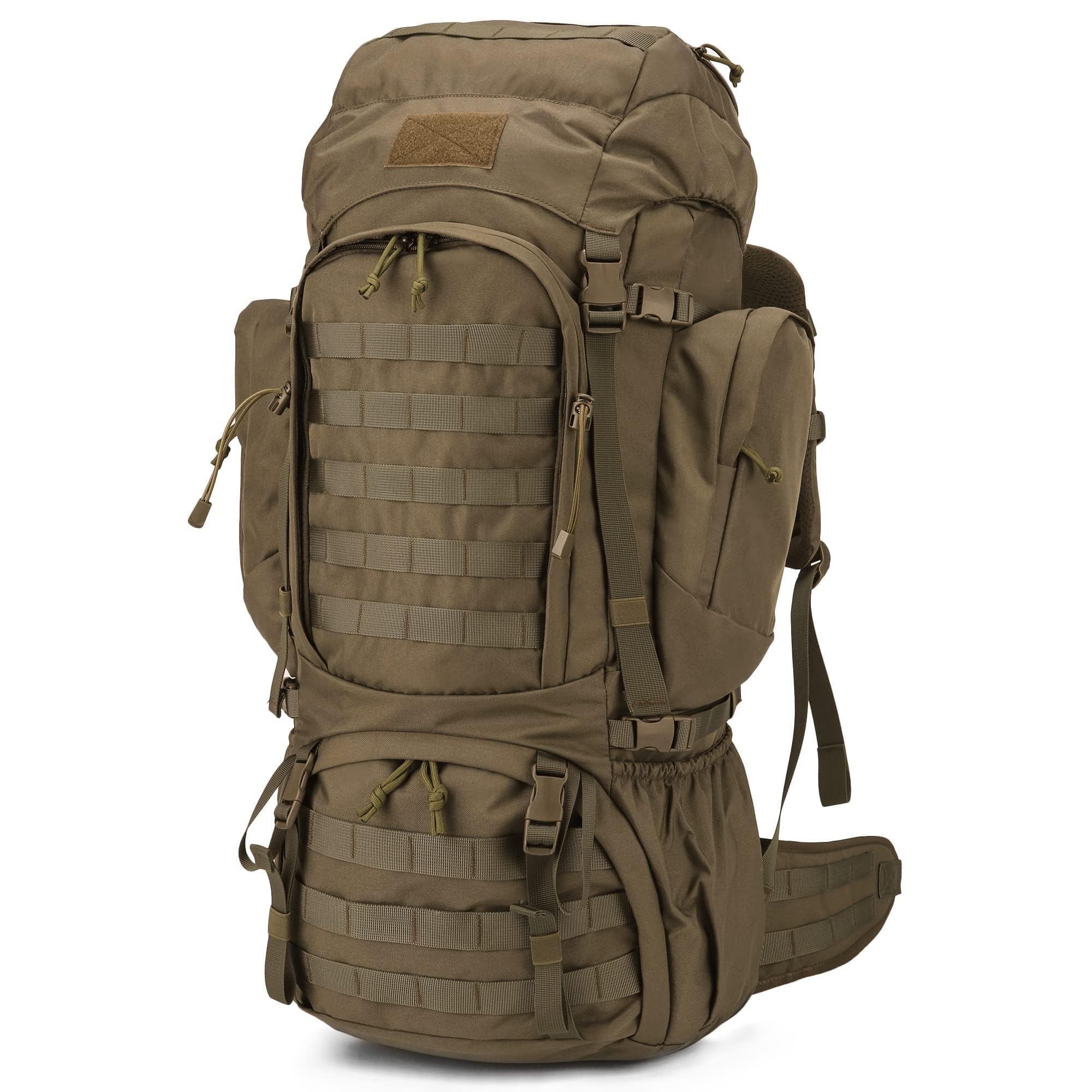
The Mardingtop 60L is the classic budget entry into the bug out bag space, offering massive internal volume at an entry-level price point. It uses an internal frame with a compartment that fits a 2.5L hydration bladder or a 15.6-inch laptop, and the modular MOLLE webbing around the pack lets you attach additional pouches for specialized gear.
Users consistently report that the YKK zippers are durable and the stitching holds up under moderate loads up to 50 pounds. The included rain cover adds a layer of weather protection that many budget packs skip. The pack expands up to an estimated 75L by using the MOLLE system to lash sleeping bags and tents externally, making it a versatile option for car camping and base-camp bug out scenarios.
The weak point is the hip belt padding—multiple sources note it lacks the density needed to transfer load effectively over double-digit mile distances, leading to chafing with heavy loads. The shoulder straps are also on the narrow side. This bag works best for short evacuation treks or staged vehicle kits where you don’t need all-day carry comfort.
Why it’s great
- Massive 60L capacity expandable with MOLLE to ~75L
- Durable YKK zippers and solid stitching for the price tier
- Included rain cover provides weather protection out of the box
Good to know
- Hip belt padding is too thin for heavy loads over long distances
- Shoulder straps are narrow, reducing comfort on multi-mile carries
7. Emergency Zone 2 & 4 Person 72 Hour Survival Kit

The Emergency Zone 72 Hour Kit is a complete pre-packed solution that includes food bars, water pouches, a 121-piece first aid kit, multitool, flashlight, gloves, ponchos, and a tube tent—all organized in ziplock bags inside a low-key black backpack. The food bars provide 3600 calories with a five-year shelf life, and the included water purification tablets and collapsible container extend hydration beyond the initial pouches.
The backpack itself is a generic nylon pack without MOLLE or internal frame, but it’s intentionally inconspicuous—no “EMERGENCY” labels that could draw unwanted attention during a crisis. For a starter bag, the gear selection is practical rather than gimmicky: the hand-crank flashlight/radio works well, the paracord is quality, and the whistle includes a waterproof seal for matches.
The strap quality is the main compromise—users report the shoulder straps feel thin and may fail under regular use. This is an ideal base kit to build upon: replace the bag with a framed pack over time, add a real knife and water bottle, and use the included gear as backups or training items.
Why it’s great
- Complete ready-to-go kit with food, water, shelter, and first aid
- Inconspicuous design avoids drawing attention in a crisis
- Hand-crank radio/flashlight and quality paracord included
Good to know
- Backpack straps are thin and may not hold up to regular use
- No frame or MOLLE system for load support or expansion
FAQ
What is the ideal liter capacity for a bug out bag?
Should I get a bag with MOLLE webbing?
How important is the zipper type for a bug out bag?
Can a budget bug out bag be effective for emergencies?
Final Thoughts: The Verdict
For most users, the bag for bugging out winner is the Maxpedition Gyrfalcon because its 1000D nylon, internal frame, and detachable waist pack deliver combination of ruggedness, load comfort, and versatility that covers both long treks and short missions. If you want a budget-friendly hybrid for EDC and bug out use, grab the Kelty Redwing Tactical 50L. And for a complete pre-packed starter solution, nothing beats the Emergency Zone 72 Hour Kit.