
Your motherboard’s built-in audio chip is a noise factory, flooding your signal with electrical interference that crushes detail and narrows the soundstage. An audiophile audio card strips that contamination away, replacing it with a dedicated DAC, discrete amplification, and a shielded circuit path designed to extract every micro-detail from your digital files.
I’m Min — the co-founder and writer behind Gadgets Feed. I’ve spent countless hours analyzing DAC chipsets, SNR figures, THD measurements, and output stage topologies to identify which cards genuinely deliver measurable performance gains over standard audio hardware.
Whether you are chasing studio-grade monitoring or simply want your music to breathe, finding the best audiophile audio card is the single most impactful upgrade you can make to your listening chain.
How To Choose The Best Audiophile Audio Card
Not every sound card deserves the “audiophile” badge. The real difference lives in three pillars: the DAC chip and its measured linearity, the amplifier stage’s ability to drive your specific headphones without distortion, and the total electrical isolation from the noisy environment inside your PC. Ignore flashy marketing and focus on measurable specs that correlate with audible transparency.
DAC Chip Architecture and Dynamic Range
The digital-to-analog converter is the heart of any audio card. Chips like the ESS Sabre 9018 or the newer ES9039PRO define the noise floor and the maximum dynamic range you can achieve. Look for a dynamic range of at least 120 dB and a THD+N rating below 0.001% for genuinely transparent playback. Dual-chip designs separate left and right channels entirely, eliminating crosstalk and improving spatial imaging.
Headphone Amplifier Output Power and Impedance
A DAC is only as good as the amp that follows it. High-impedance headphones — anything above 250 ohms — require a dedicated amplifier stage capable of delivering clean voltage swing. Check the output power specification in milliwatts at a given impedance, and look for discrete bi-amping or dual-amp topologies that drive each ear cup independently. An underpowered amp will sound thin, lifeless, and dynamically compressed.
Connectivity and Platform Compatibility
Internal PCIe cards offer the lowest possible latency and direct bus power, but they are tethered to desktop PCs. External USB DACs and audio interfaces provide portability and often include balanced XLR outputs, ADAT expansion, or built-in DSP processing. Decide whether your setup demands a fixed workstation or a flexible hub that can travel between a laptop and a desktop.
Quick Comparison
On smaller screens, swipe sideways to see the full table.
| Model | Category | Best For | Key Spec | Amazon |
|---|---|---|---|---|
| Topping D90III Sabre | External DAC | Reference desktop listening | Dual ES9039PRO, 135dB dynamic range | Amazon |
| aune S9c Pro | DAC/Amp Combo | High-power headphone driving | 5W per channel, dual ES9068 DACs | Amazon |
| Creative Sound Blaster AE-7 | Internal PCIe | Gaming and music hybrid use | ESS Sabre 9018 DAC, 127dB DNR | Amazon |
| RME Babyface Pro FS | Audio Interface | Portable pro recording | SteadyClock FS, 12-in/12-out | Amazon |
| Universal Audio Apollo Twin X Duo | Audio Interface | Real-time UAD DSP processing | Unison preamp modeling, 24-bit/192kHz | Amazon |
| Neumann MT 48 | Premium Interface | Ultra-high resolution recording | 136dB ADC dynamic range, AES67 | Amazon |
| Focusrite Clarett 2Pre | Audio Interface | Studio-grade mic preamps | 119dB dynamic range, Air mode | Amazon |
| Focusrite Scarlett 18i20 4th Gen | Audio Interface | Multi-channel multitrack recording | 18-in/20-out, 122dB dynamic range | Amazon |
| Creative Sound Blaster G8 | USB DAC/Amp | Portable entry-level audiophile | 120dB SNR, 384kHz sample rate | Amazon |
In‑Depth Reviews
1. Topping D90III Sabre
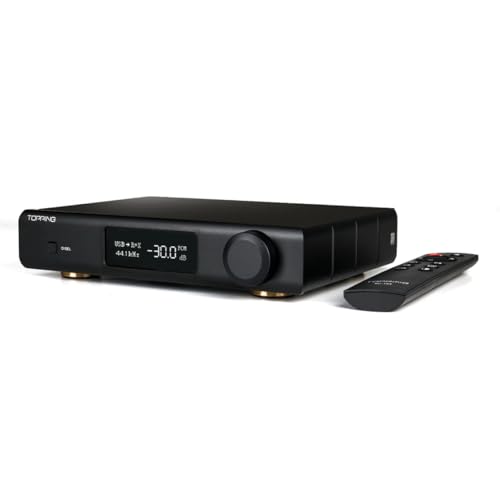
The Topping D90III Sabre anchors this list with dual ES9039PRO chips running in fully balanced mode, delivering a measured 135dB dynamic range and THD+N below 0.000045%. That level of noise floor suppression is genuinely reference-class — you hear the recording space, not the electronics. The CPLD-based jitter suppression circuit drops timing errors to -160dB regardless of the input source, making this one of the most transparent DACs you can pair with a desktop amplifier.
Connectivity is comprehensive: USB, optical, coaxial, AES, and IIS inputs feed into both balanced XLR and single-ended RCA outputs. The QCC5125 Bluetooth module supports LDAC for 24-bit/96kHz wireless streaming from your phone, and the Preamp Mode lets you control volume directly when feeding active monitors or a power amplifier. The aluminum chassis feels dense and inert, shielding the sensitive analog stage from external interference.
Owners upgrading from mid-range DACs consistently describe the D90III as sounding “more like live music” with improved soundstage depth and instrument separation. The only real caveat is the slightly dated on-unit interface — you will likely rely on the remote for most adjustments. For a pure DAC that sits at the center of a high-end system, this is the benchmark.
Why it’s great
- Industry-leading 135dB dynamic range with near-zero distortion
- Fully balanced dual-chip architecture eliminates crosstalk
- Extensive input options including IIS and LDAC Bluetooth
Good to know
- Interface navigation is less intuitive than younger Topping models
- No built-in headphone amplifier — requires external amp
2. aune S9c Pro
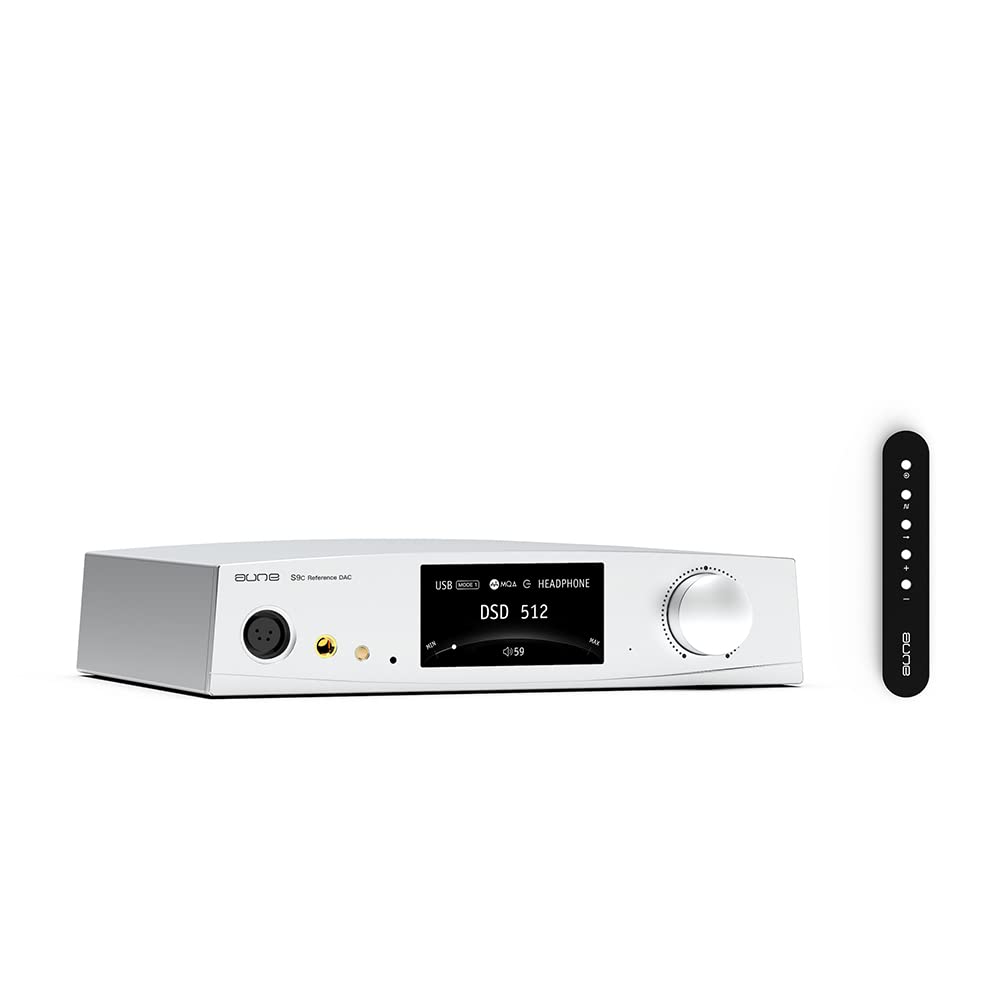
The aune S9c Pro combines dual ES9068 DAC chips with a fully discrete twin-JFET headphone amplifier that outputs 5 watts per channel into 32 ohms. That is enough power to drive even the most demanding planar-magnetic headphones to concert levels with headroom to spare. The proprietary second-generation PLL core synchronizes the USB XMOS controller and the DAC chip to a single ultra-low-jitter clock source, a genuine engineering achievement that eliminates the timing discrepancies common in standard architectures.
The analog power supply is equally serious: a 50-watt toroidal transformer feeds a 23,900µF capacitor array, delivering a clean, stiff voltage rail to the output stage. The line output noise floor sits at an absurdly low 2.04µV, and the headphone output THD+N measures 0.00058% at 1.78Vrms. With 6.35mm, balanced 4.4mm, and XLR outputs, it accommodates virtually any headphone connection standard on the market.
User feedback consistently praises the S9c Pro for its punchy bass, detailed mids, and expansive soundstage that rivals units costing twice as much. The unit is heavy at roughly 10 pounds and runs warm, which is the price of that toroidal linear supply. Some users note the volume knob feels slightly wobbly, but the sound quality more than compensates. It is a genuinely end-game DAC/amp combo for desktop listening.
Why it’s great
- Massive 5W output effortlessly drives any headphone type
- Global clock sync via advanced PLL eliminates jitter
- Balanced 4.4mm, XLR, and 6.35mm output flexibility
Good to know
- Heavy chassis and warm operation from linear power supply
- Requires 110V input — verify your region before purchase
3. Creative Sound Blaster AE-7

The Creative Sound Blaster AE-7 is an internal PCIe sound card built around the ESS Sabre 9018 DAC — the same chip found in many high-end external DACs — paired with a dedicated quad-core audio processor. The 127dB dynamic range and 0.0001% THD at 384kHz put it firmly in audiophile territory, while the hardware-based audio acceleration offloads processing from your CPU entirely. The Xamp discrete bi-amp drives each ear cup independently, with a 1-ohm output impedance that comfortably handles headphones up to 600 ohms.
The included Audio Control Module gives you a physical volume knob and 1/4-inch headphone and microphone jacks on your desktop, which is far more convenient than reaching behind the PC. The card supports discrete 5.1 surround on speakers and virtual 7.1 surround on headphones, making it a compelling choice for anyone who wants both music fidelity and immersive gaming audio from a single internal solution. Dolby Digital Live and DTS Connect encoding are built in.
Reviewers note a clear audible improvement over standard onboard audio, particularly when driving high-impedance headphones like the Audeze LCD-XC or Beyerdynamic DT 990 Pro 250 ohm. The software suite offers gaming-optimized profiles and a 10-band equalizer, though it lacks parametric EQ. The ACM volume knob can exhibit channel imbalance at very low levels, and driver installation requires a download rather than a disc. For a fixed desktop PC, the AE-7 delivers excellent value without taking up desk space.
Why it’s great
- ESS Sabre 9018 DAC with 127dB dynamic range at a reasonable price
- Hardware-accelerated audio frees up system resources
- Drives high-impedance headphones up to 600 ohms
Good to know
- ACM external module may exhibit low-volume channel imbalance
- Limited to internal PCIe — not usable with laptops
4. RME Babyface Pro FS
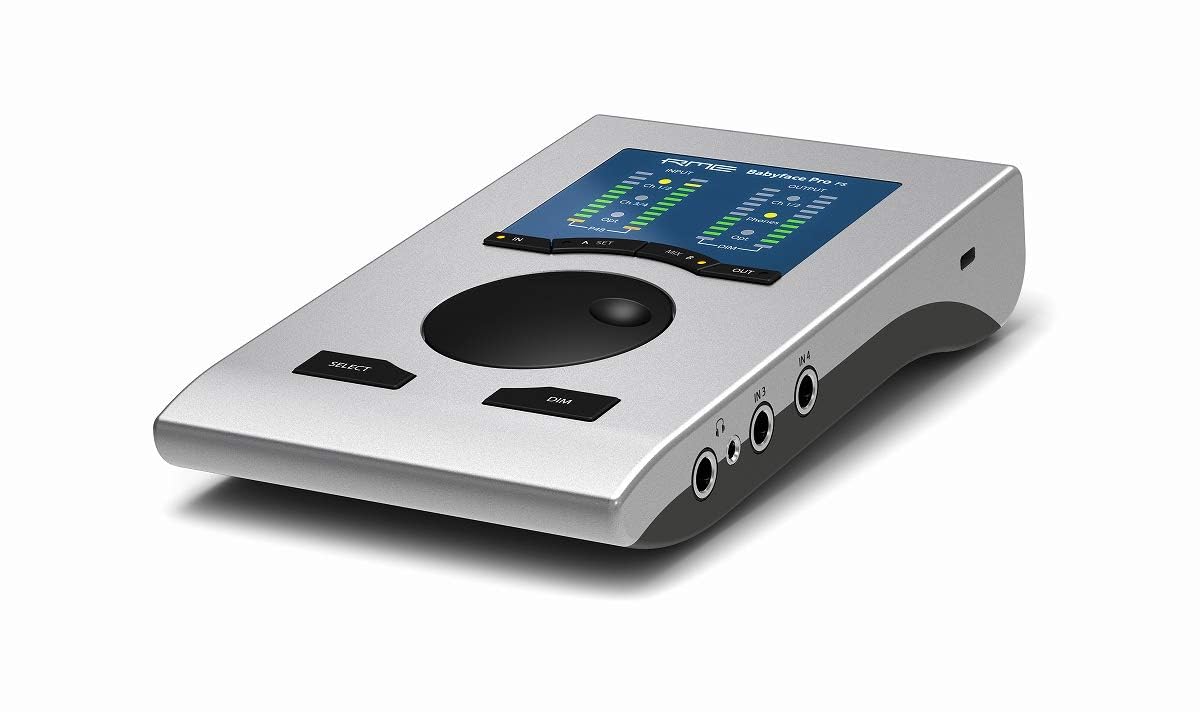
The RME Babyface Pro FS is a professional USB audio interface that doubles as an exceptionally clean playback system. Its SteadyClock FS circuit, derived from the flagship ADI-2 Pro, delivers the lowest jitter and highest jitter immunity of any interface in its class. With 12 inputs and 12 outputs, two microphone preamps, and two instrument inputs, it is built for mobile recording engineers who demand studio-grade conversion in a compact aluminum chassis that weighs less than two pounds.
Latency figures are genuinely best-in-class: 5 samples on the AD side and 7 samples on the DA side, which translates to sub-millisecond round-trip performance. The unit is bus-powered via USB, eliminating the need for an external power supply when used with a laptop. RME’s TotalMix FX software gives you full routing and mixing control, though the learning curve is steeper than simpler interfaces. It works natively with Windows and macOS without additional driver headaches.
Users who switch to the Babyface Pro FS from other interfaces consistently cite its rock-solid driver stability and transparent preamps as the deciding factors. The unit handles everything from Shure SM7B vocal mics to line-level synthesizers with equal fidelity. The only downside is that the headphone output is sufficient for most dynamic headphones but may struggle with very high-impedance planars without a separate amp. For a portable hub that never compromises on clock precision, this is the gold standard.
Why it’s great
- Industry-leading jitter immunity with SteadyClock FS technology
- Ultra-low latency — 5 samples AD, 7 samples DA
- Rock-solid driver stability across Windows and macOS
Good to know
- Headphone output may need external amp for high-impedance planars
- TotalMix software has a steep learning curve
5. Universal Audio Apollo Twin X Duo

The onboard UAD-2 DUO Core chip runs vintage compressor, EQ, tape machine, and mic preamp emulations with near-zero latency, regardless of your audio buffer size. The Unison technology physically reconfigures the preamp’s impedance and gain staging to match the modeled hardware, so plugging into a Neve 1073 emulation genuinely feels different from a API 512c simulation.
The built-in talkback mic is a practical addition for producers communicating with talent in the recording room. Connectivity includes two Unison mic/line preamps, two instrument inputs, and four balanced line outputs.
Windows users should be aware that the Apollo Twin X requires a specific USB-C cable (not always included) and the UAD software installation demands a dedicated learning session. Some users report initial setup hurdles with WDM drivers affecting system audio routing. Once configured, the sound quality surpasses most interfaces in its bracket, and the UAD plugins are genuinely irreplaceable for certain workflows. This is the choice for producers who want their audio card to also be their effects processor.
Why it’s great
- Real-time UAD DSP processing with near-zero latency
- Unison preamp modeling changes hardware behavior authentically
- Includes legendary plugin bundle worth significant value
Good to know
- Software and driver setup can be complex for beginners
- USB-C cable selection matters — verify compatibility before use
6. Neumann MT 48
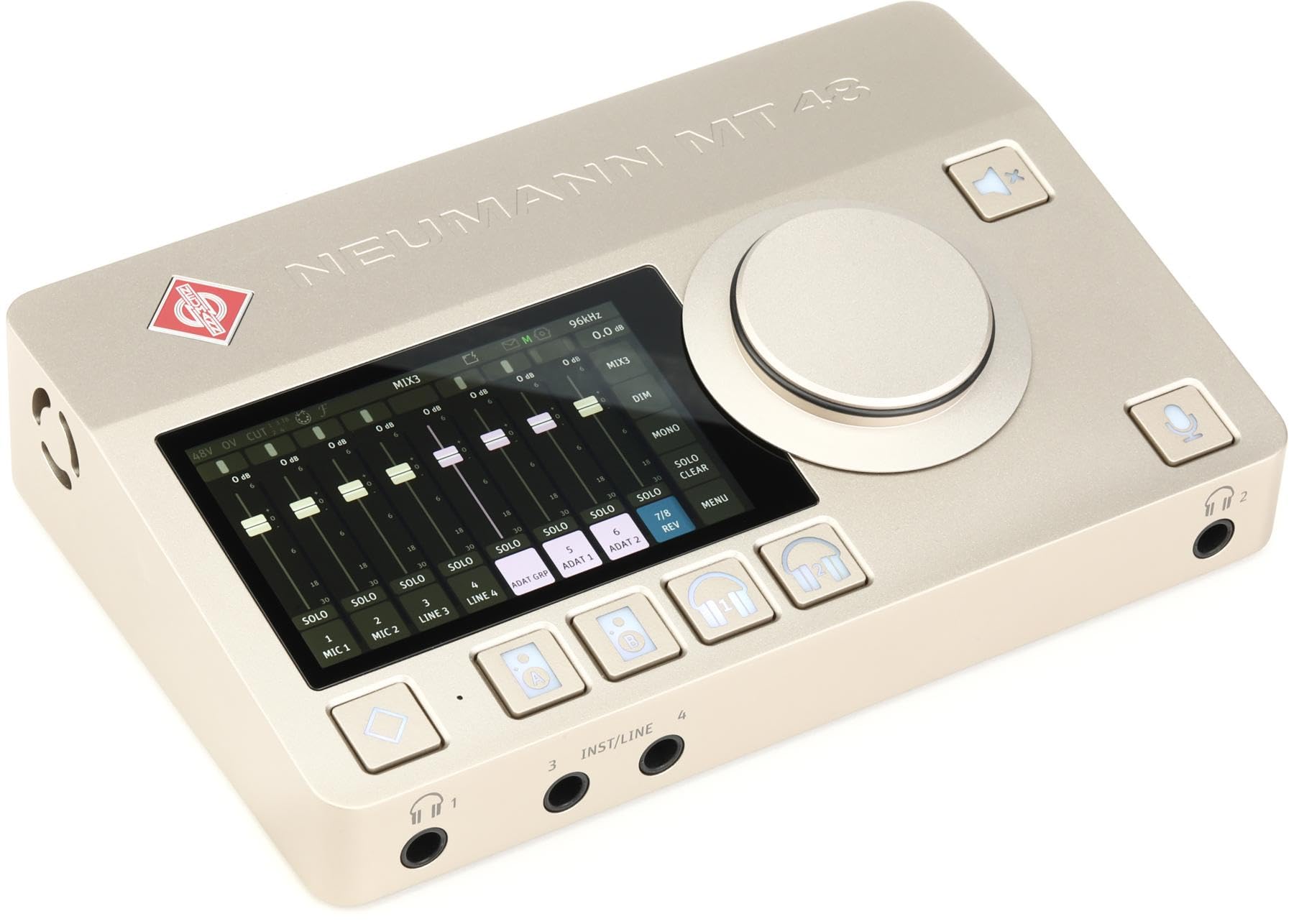
The Neumann MT 48 sets a new benchmark for analog-to-digital conversion with a 136dB dynamic range — surpassing most interfaces on the market by a meaningful margin. That number translates to an extraordinarily low noise floor that captures the full harmonic texture of acoustic instruments and vocals without any electronic coloration. The unit is built around premium mic/line preamps, two pristine line/instrument inputs, and four line/monitor outputs, all controlled through a responsive touchscreen interface that shows real-time metering and DSP settings.
Built-in DSP processing includes EQ, dynamics, and reverb effects with onboard mixing capabilities via four independent mixers with integrated talkback. The ADAT and S/PDIF expansion ports allow you to scale up to 8 additional channels, and AES67 support makes the MT 48 suitable for networked audio installations. The two headphone outputs feature ultra-low impedance and adjustable crossfeed, which helps reduce listening fatigue during long monitoring sessions. USB-C connectivity ensures high-bandwidth data transfer.
Initial impressions from users are overwhelmingly positive regarding sound quality — many describe it as the best interface they have ever used and note that it can replace external outboard gear like dedicated compressors and preamps. However, multiple buyers report receiving units with unsealed boxes or fingerprints on the touchscreen, indicating that the retail packaging process may allow returns to be resold as new. Check the box seal upon delivery. For pure recording fidelity, the Neumann MT 48 is unmatched in this lineup.
Why it’s great
- Class-leading 136dB ADC dynamic range for pristine recording
- Onboard DSP with EQ, compression, and reverb
- ADAT and AES67 expandability for studio growth
Good to know
- Some units arrive without factory seal — inspect packaging carefully
- Setup complexity requires time investment for full routing control
7. Focusrite Clarett 2Pre
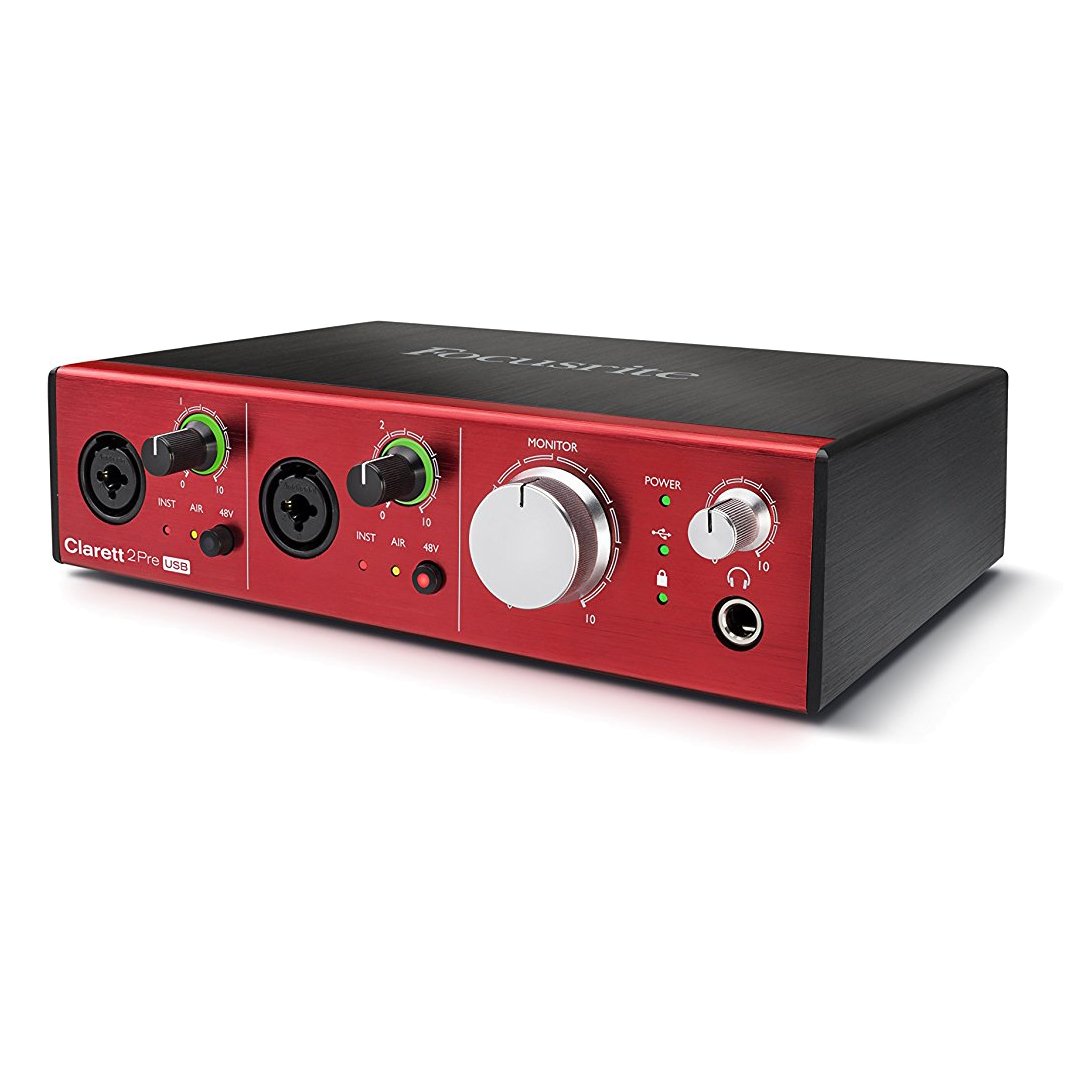
The Focusrite Clarett 2Pre bridges the gap between entry-level audio interfaces and professional-grade converters. Its 119dB dynamic range and precision 24-bit/192kHz conversion are taken from Focusrite’s RedNet range, delivering a noticeably lower noise floor and higher headroom compared to the popular Scarlett series. The two Clarett mic preamps feature Air mode, which engages an analog EQ circuit modeled on the classic Focusrite ISA console, adding presence and harmonic drive to vocals and acoustic instruments.
The 10-in/4-out configuration includes two mic/line/instrument inputs with high-headroom instrument inputs that handle hot pickups without distortion, plus an ADAT input for expanding to 8 additional channels. MIDI I/O is included, and the unit ships with both standard USB and USB-C cables. The bundled software package includes Ableton Live Lite, the Brainworx bx_console Focusrite plugin, and the Softube Time and Tone Bundle — a genuinely useful starter kit for music production.
Users who upgrade from the Scarlett 2i4 consistently report hearing the difference: lower noise, more gain before feedback, and a more three-dimensional soundstage. The Clarett is USB-powered but requires AC power for full functionality, which limits its portability compared to bus-powered rivals. The headphone amp is strong enough for most studio headphones, and the direct monitoring with zero latency makes tracking seamless. For recording-focused setups that prioritize preamp quality, the Clarett 2Pre is a solid mid-range choice.
Why it’s great
- ISA-inspired Air mode adds analog presence and harmonic richness
- Precision 24-bit/192kHz conversion with 119dB dynamic range
- ADAT expandability for up to 8 additional channels
Good to know
- Requires AC power — not fully bus-powered
- All switching between inputs and Air mode requires software
8. Focusrite Scarlett 18i20 4th Gen
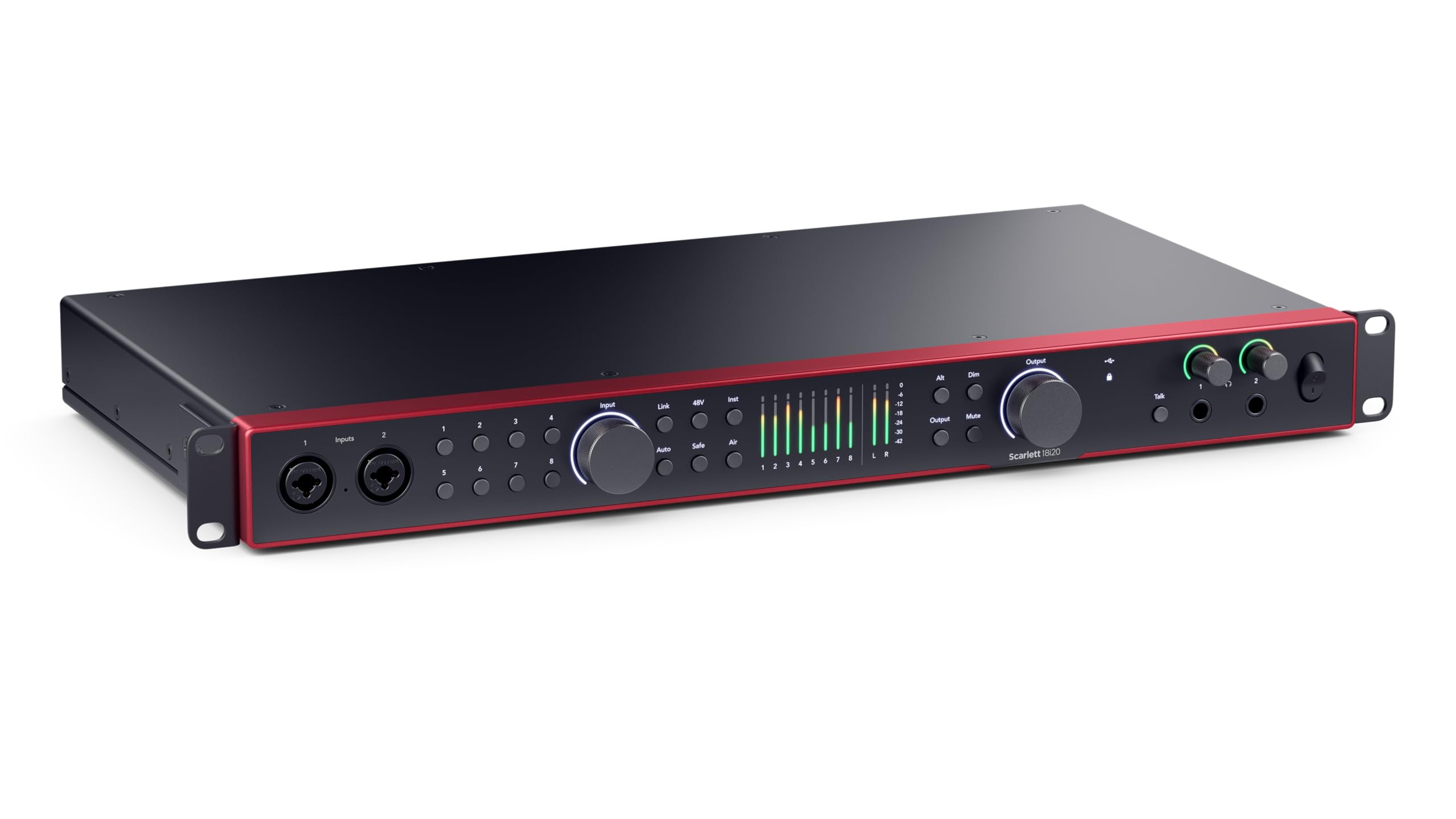
The Focusrite Scarlett 18i20 4th Gen is a full-featured rack-mountable audio interface built for multitrack recording. With 18 inputs and 20 outputs, including eight mic preamps offering 69dB of gain, Hi-Z inputs, line inputs, ADAT, S/PDIF, MIDI I/O, and Word Clock — it handles everything a small studio or podcast setup can throw at it. The 4th-generation preamps use RedNet-derived 24-bit/192kHz converters with a 122dB dynamic range, delivering noticeably cleaner recordings than previous generations.
Two standout workflow tools are Auto Gain, which sets optimal recording levels in one click, and Clip Safe, which monitors the input in real-time and automatically adjusts gain to prevent clipping. The Air modes add presence and harmonic drive to your sound, replicating the character of classic studio consoles. The bundled software includes Pro Tools Intro+, Ableton Live Lite, Cubase LE, and the Hitmaker Expansion suite with essential effects and mastering tools.
Users praise the 18i20 for its quiet preamps, flexible routing, and the fact that the continuous knobs now work without needing the control software for basic functions. The unit integrates seamlessly with Windows and macOS, and the option to route DAW signals to separate headphone jacks makes it ideal for tracking sessions with multiple musicians. The form factor is large — nearly 18 inches deep — so it is built for a permanent studio rack, not a portable desktop. For multi-mic recording without breaking the bank, this is the definitive choice.
Why it’s great
- 18 inputs and 20 outputs for extensive multitrack workflows
- Auto Gain and Clip Safe streamline recording setup
- RedNet-derived converters with 122dB dynamic range
Good to know
- Large rack-mount chassis — not portable for mobile recording
- Some rear input settings require software control for adjustments
9. Creative Sound Blaster G8

The Creative Sound Blaster G8 is an entry-level USB DAC and amplifier that brings 120dB SNR and 384kHz sample rate support to a portable form factor. It is designed for users who want to step beyond motherboard audio without investing in a full desktop setup. The unit connects via USB-C to PC, laptop, smartphone, or tablet, and its compact 540-gram chassis makes it genuinely travel-friendly. The Acoustic Engine software offers surround virtualization and EQ adjustments for both music and gaming.
Reviewers note that the G8 delivers surprisingly clean and powerful audio for its size, easily driving Audeze LCD-2 headphones — a demanding pair of planars — without audible strain. The sound is described as “astonishingly good” for both music snobs and gamers, with clear footstep separation in FPS titles and rich imaging for acoustic tracks. The volume knob provides tactile control, and multiple input/output options add versatility for different setups.
Reliability concerns appear in some user reports. A few units have experienced sound cutouts requiring USB-C re-plugging, and one owner reported the volume knob causing sudden volume jumps in high-gain mode. These issues appear to affect a minority of units, and Creative’s support process has been described as responsive. For a budget-friendly introduction to dedicated audio, the G8 offers an impressive feature set and sound quality that punches well above its price tier.
Why it’s great
- Excellent sound quality for music and gaming at a budget-friendly entry point
- Portable USB-C design works with PCs, phones, and tablets
- Drives demanding headphones like Audeze LCD-2 without issue
Good to know
- Some units may experience intermittent sound cutouts
- Volume knob is digital — not analog — with potential gain jump issues
FAQ
Do I need an internal PCIe card or an external USB DAC for the best sound quality?
What headphone impedance and sensitivity should I match to my audio card?
Does a higher sample rate like 384kHz or DSD512 actually sound better?
Can I use an audio interface as my primary listening DAC?
Final Thoughts: The Verdict
For most users, the best audiophile audio card winner is the Topping D90III Sabre because its dual ES9039PRO DAC chips and 135dB dynamic range deliver reference-grade transparency that reveals the full depth of your music library. If you want a combined DAC and headphone amplifier with enough power to drive any headphone, grab the aune S9c Pro. And for professional recording workflows that demand pristine conversion and real-time DSP, nothing beats the Neumann MT 48.