
Our readers keep the lights on and my morning glass full of iced black tea. As an Amazon Associate, I earn from qualifying purchases.
Cosplay armor demands something most 3D printers simply cannot deliver: the ability to print a full-sized pauldron, chest plate, or helmet in one seamless piece. Splitting models ruins surface finish, adds post-processing time, and introduces structural weak points. The machines that solve this problem share one critical spec — a build volume large enough to swallow armor components whole.
I’m Min — the co-founder and writer behind Gadgets Feed. For this guide, I put in the hours cross-referencing build volumes, material temperature ranges, print speeds, and community reliability data to find the machines that actually work for armor-grade prints.
After analyzing dozens of large-format FDM printers, I’ve narrowed the field to six models that consistently deliver the dimensional accuracy and layer adhesion required for wearable props — making this the definitive resource for anyone searching for the best 3d printer for cosplay armor.
How To Choose The Best 3D Printer For Cosplay Armor
Choosing a printer for armor involves more than just comparing build volumes. You need to consider material capabilities, print reliability during long sessions, and how much post-processing you’re willing to tolerate. These five factors will help you decide.
Minimum Build Volume: 300mm on the Shortest Axis
A helmet typically requires at least 300mm in height. Chest plates need even more width. If your printer’s smallest axis is under 300mm, you will have to cut models into pieces and glue them back together — introducing seams that ruin the illusion. Every printer on this list meets or exceeds a 300x300x300mm working area.
Enclosed or Open Frame
PLA works fine on an open frame, but PLA deforms in heat and cracks under impact — unacceptable for wearable armor that gets stressed during movement. ABS, ASA, and PETG are far better choices. ABS requires a stable ambient temperature above 40°C to prevent warping, which means an enclosure (or at least a heated chamber) is essential. Budget-friendly open-frame printers can print ABS with a makeshift enclosure, but it’s a hassle.
Print Speed vs. Durability
Cosplay armor pieces can take 40 to 80 hours each. Speed matters, but not at the cost of layer adhesion. A printer running at 600mm/s with a CoreXY structure can dramatically reduce print times without sacrificing quality, provided the hotend can maintain consistent extrusion. Look for machines with high-flow hotends and sturdy frames that minimize vibration at high speeds.
Multi-Material and Color Capabilities
Painting armor takes hours. A printer that supports multiple colors or materials in a single print can embed color details directly into the model, eliminating painting entirely. Multi-material systems also allow for soluble supports, which leave zero scarring on visible surfaces — a huge advantage for curved armor panels.
Reliability for Long Runs
A single armor component can require three days of continuous printing. If the printer fails on hour 60, you lose three days of material and time. Filament runout sensors, power-loss recovery, and a robust filament path are non-negotiable for armor printing. Community reputation for reliability should carry as much weight as the spec sheet.
Quick Comparison
On smaller screens, swipe sideways to see the full table.
| Model | Category | Best For | Key Spec | Amazon |
|---|---|---|---|---|
| QIDI Max4 Combo | Premium | Industrial-grade materials, huge prints | 390x390x340mm, 65°C heated chamber | $1,259.00$1,399.00Limited time dealAmazon |
| Creality K2 Plus Combo | Premium | Multi-color armor, ease of use | 350x350x350mm, 16-color CFS system | $1,199.00$1,529.00Amazon |
| Original Prusa XL 5T | Premium | Professional reliability, 5 materials | 360x360x360mm, segmented heated bed | $4,484.44$4,799.00Amazon |
| Creality Ender 5 Max | Mid-Range | Print farm, high-speed production | 400x400x400mm, CoreXY 700mm/s | $699.00Amazon |
| Anycubic Kobra 3 MAX | Mid-Range | One-piece helmets and busts | 420x420x500mm, AI print monitoring | $429.99$479.99Amazon |
| Longer LK5 Pro 3 | Budget | Entry-level, cost-effective large builds | 300x300x400mm, TMC2209 quiet driver | $349.99Amazon |
In‑Depth Reviews
1. QIDI Max4 Combo
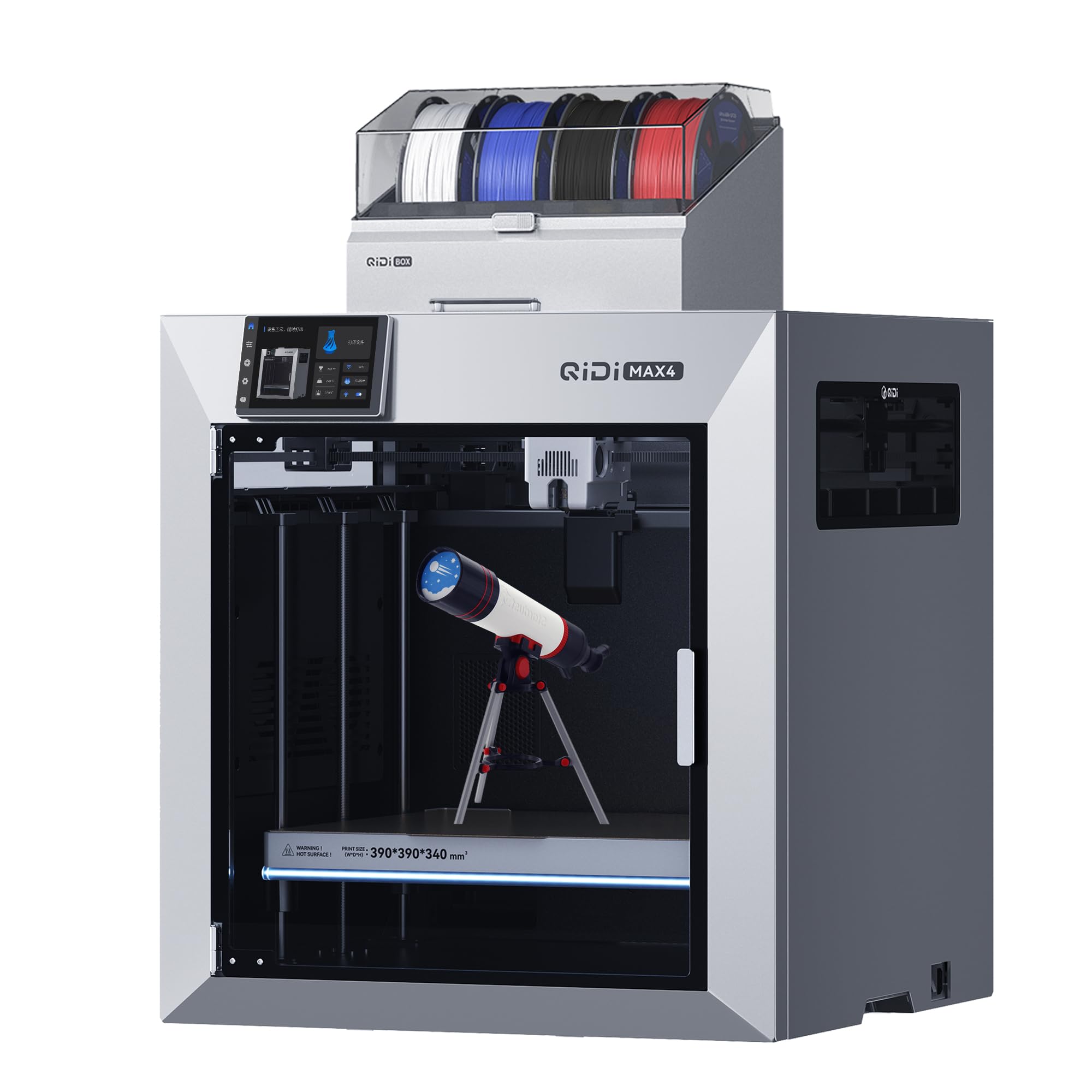
The QIDI Max4 Combo sits at the intersection of massive build volume and engineering-material capability. Its 390x390x340mm work area swallows full chest plates, and the 65°C actively heated chamber makes printing ABS-CF, PC, and PPS-CF straightforward — materials that maintain stiffness and heat resistance for real-world armor wear.
Closed-loop motors on the X and Y axes deliver 800mm/s peak speed with 30,000mm/s² acceleration, and the 40mm³/s high-flow hotend keeps extrusion consistent even at high velocities. The built-in AI camera detects print failures and pauses automatically, which becomes critical during 60-hour armor prints. A single QIDI BOX add-on unlocks 16-color and multi-material printing.
User feedback highlights excellent print quality with PP and carbon-fiber nylon, and Qidi’s support for right-to-repair (providing replacement parts and guidance) stands out in an industry where many brands lock users out. The initial power draw is high due to the chamber heater, and the UI feels a generation behind, but for armor that needs to survive a convention floor, this machine delivers.
Why it’s great
- Actively heated 65°C chamber enables industrial-grade filaments
- Massive build volume fits full chest and back pieces
- Closed-loop motors maintain precision at 800mm/s
Good to know
- Heavy and bulky at 120 pounds
- High power usage during chamber warm-up
- Slicer and UI feel less refined than competitors
2. Creality K2 Plus Combo

The K2 Plus Combo brings Creality’s most ambitious feature set to the armor printing scene. Its 350mm³ build volume is adequate for full helmets and many torso pieces, and the step-servo motor system hitting 30,000mm/s² acceleration means print times shrink dramatically compared to prior generation machines.
The headline feature is the Creality Filament System (CFS), which supports up to four units for a total of 16 colors or materials. For armor printing, this means embedding color details directly — no painting required. The actively heated chamber and hardened steel nozzle unlock ABS, PA-CF, and PPA-CF, delivering the dimensional stability armor demands. Dual AI cameras monitor for spaghetti failures and create time-lapses of the print.
Customer experiences confirm the printer produces excellent quality out of the box, with many users reporting zero failed prints after initial setup. The assembly instructions are sparse and the shipping screws can be difficult to remove, but the community is large enough to fill those gaps. The magnetic build plate makes removing large armor parts simple. Some units ship with minor alignment issues, but Creality support responds promptly.
Why it’s great
- Multi-color CFS eliminates painting for many armor builds
- Heated chamber and high-temp hotend handle engineering materials
- Step-servo system delivers fast prints without sacrificing quality
Good to know
- Assembly instructions are vague and printed poorly
- Some units ship with QC issues requiring minor fixes
- Can be loud during high-speed operation
3. Original Prusa XL 5 Independent Toolhead
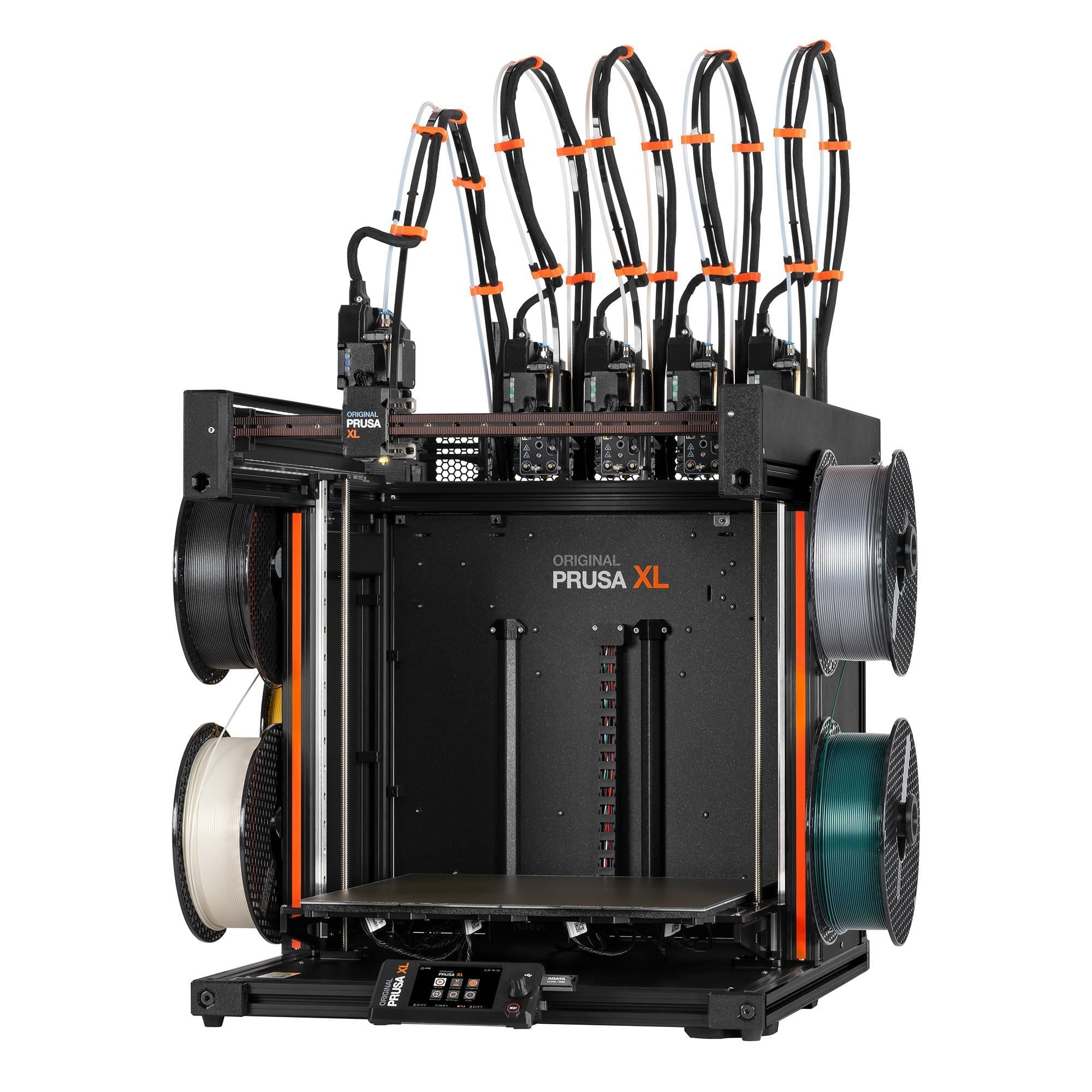
The Prusa XL is the reference standard for reliability in large-format printing. Its 360mm³ build volume supports full armor components, and the five independent toolheads allow multi-material printing with zero cross-contamination — each toolhead has its own hotend, so switching between PETG for structure and TPU for flexible joints is seamless.
The segmented heated bed is a genuine innovation for armor: only the area under the print heats up, reducing power consumption and warping on large parts. The CoreXY structure maintains precision even during complex multi-tool moves. Prusa’s firmware ecosystem is fully open-source, meaning no forced updates or cloud dependencies — a significant advantage for users who need consistent behavior across months of operation.
Reviews from professional users praise the build quality and print consistency. The obvious trade-off is the price — this is the most expensive machine on this list by a wide margin. The printer ships partially disassembled, requiring a half-day of assembly, and some units arrive with minor cosmetic damage from shipping. For teams or individuals who require absolute reliability for commission work, the Prusa XL justifies its cost through uptime alone.
Why it’s great
- Five independent toolheads enable true multi-material printing
- Segmented heated bed reduces warping and energy use
- Fully open-source with no forced updates or cloud logins
Good to know
- Premium price restricts it to serious professionals
- Partial assembly required out of the box
- Shipping can cause damage to packed components
4. Creality Ender 5 Max
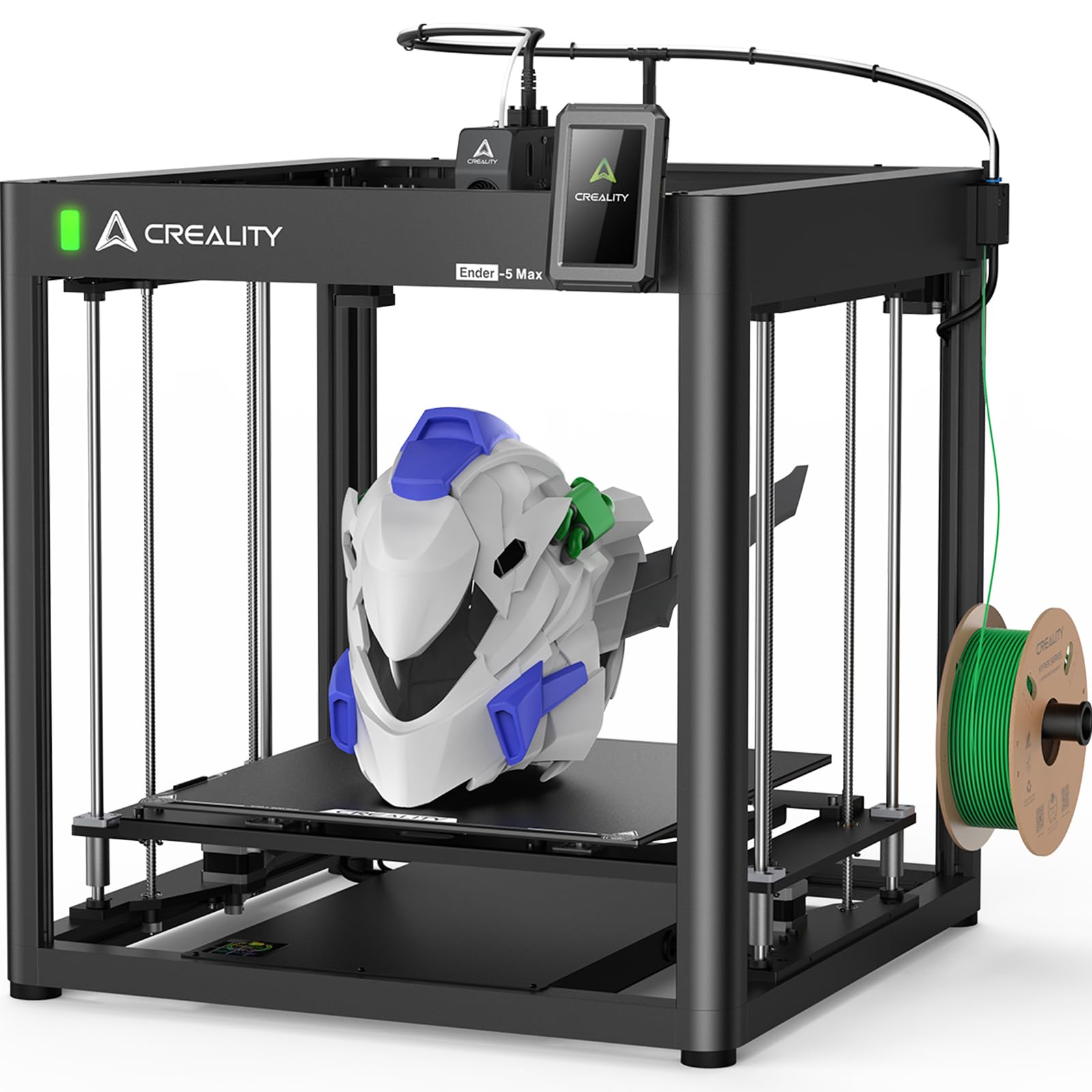
The Ender 5 Max pushes build volume to 400mm³ — a full cube that accommodates even the widest shoulder armor without splitting. The CoreXY structure and high-torque motors achieve 700mm/s print speeds, and the 64-point auto-leveling system combined with automatic Z-offset eliminates first-layer failures, which is the most common cause of failed armor prints.
The reinforced die-cast aluminum frame and X-axis linear rail keep vibrations under control at high speeds. The 1000W rapid-heating bed reaches working temperature in minutes and supports PLA, PETG, ABS, ASA, and PA. The direct-drive dual-gear extruder is designed for 24/7 operation — important for print farms running multiple machines. WLAN multi-printer control allows managing a fleet from a single interface.
Users report excellent results with PLA and PETG out of the box, and the enclosure (sold separately) enables ABS printing. The main complaints center on inconsistent bed adhesion on some units and vibration issues that can loosen parts over time. The machine is heavy at nearly 70 pounds, and the light AI failure detection is unreliable — external camera monitoring is recommended for long prints.
Why it’s great
- 400mm³ build volume fits any armor piece in one print
- 64-point auto-leveling eliminates manual bed calibration
- WLAN multi-printer control for scaling production
Good to know
- Bed adhesion can be inconsistent from unit to unit
- Vibration can loosen components over extended use
- AI failure detection is not reliable enough for unattended prints
5. Anycubic Kobra 3 MAX

Anycubic’s Kobra 3 MAX offers the largest build volume on this list at 420x420x500mm, making it the only printer that can handle a full Spartan helmet plus the top of a chest plate in a single print. The 500mm Z-axis is particularly valuable for tall items like gauntlets with integrated elbow guards or full helmets with crests.
The printer hits 600mm/s speeds using Kobra OS firmware and SG15 bearings on a dual-axis core design. The built-in AI print monitoring detects spaghetti failures and auto-pauses the print to save the model. Pairing with one or two Anycubic ACE Pro units enables 4- or 8-color printing, which reduces painting time on multi-color armor designs.
Initial user feedback is positive for large-format prints, with several users printing RC boats and organizers successfully. The machine does require some tuning — filament changes can be finicky, and one user found a tension adjustment on the print head that even support was unaware of. The PTFE tube in the heat throat can pull loose under high-temperature use, but replacing it with a copper nozzle solves the issue. Despite these quirks, the sheer build volume makes it the go-to for one-piece helmets.
Why it’s great
- Massive 420x420x500mm build volume fits any armor component
- AI monitoring catches print failures during long runs
- ACE Pro units enable 4- to 8-color printing without painting
Good to know
- PTFE tube can pull loose with high-temp materials like PETG and ABS
- Auto-leveling sometimes requires manual recalibration
- Initial filament changes can be finicky
6. Longer LK5 Pro 3

The Longer LK5 Pro 3 proves that entry-level pricing doesn’t have to mean tiny prints. With 300x300x400mm of usable build volume, this machine handles full-sized Iron Man helmets and shoulder armor without splitting models. The reinforced triangular frame with inclined rods reduces resonance errors, keeping layers consistent across tall prints.
Print quality reaches 0.1mm precision at 180mm/s speeds, which is respectable for the price tier. The silicon carbide lattice glass platform provides strong adhesion and uniform heating, reducing warping on large pieces. The TMC2209 driver makes this one of the quietest printers available — important when you’re running 60-hour prints in a shared living space. The open-source firmware allows full customization, and the 90% pre-assembly means you can be printing within 30 minutes.
Community experience confirms the LK5 Pro 3 prints PLA, PETG, ABS, and TPU reliably. The manual bed leveling system is a weak point — it’s finicky and temperature-sensitive, and upgrading to automatic leveling requires significant work. Some units have shipped with warped beds that still produce acceptable prints. For someone on a tight budget who needs large prints, this machine offers the lowest barrier to entry.
Why it’s great
- 300x300x400mm build volume at a budget-friendly price
- TMC2209 driver makes it very quiet for overnight prints
- 90% pre-assembled out of the box
Good to know
- Manual bed leveling is finicky and temperature-dependent
- Auto-leveling upgrade requires advanced modding
- Some units have warped beds that still function but limit precision
FAQ
Can I 3D print cosplay armor without a heated chamber?
Do I need a multi-color printer for cosplay armor?
What layer height works best for armor props?
How long does a full armor set take to print?
Final Thoughts: The Verdict
For most cosplayers, the best 3d printer for cosplay armor winner is the QIDI Max4 Combo because its 390x390x340mm build volume and 65°C actively heated chamber handle full armor pieces in tough materials all without splitting models. If you need multi-color printing to eliminate painting, grab the Creality K2 Plus Combo. And for absolute professional reliability in a production environment, nothing beats the Original Prusa XL.
Product prices and availability are accurate as of the date/time indicated and are subject to change. Any price and availability information displayed on Amazon at the time of purchase will apply to the purchase of this product. As an Amazon Associate I earn from qualifying purchases.
CERTAIN CONTENT THAT APPEARS ON THIS SITE COMES FROM AMAZON. THIS CONTENT IS PROVIDED "AS IS" AND IS SUBJECT TO CHANGE OR REMOVAL AT ANY TIME.
Amazon and the Amazon logo are trademarks of Amazon.com, Inc. or its affiliates.