
Marine vinyl faces a relentless assault from UV rays, salt spray, body oils, and heat, turning supple upholstery into brittle, cracked surfaces within a single season if left unprotected. The right protectant doesn’t just add shine—it forms a sacrificial barrier that absorbs UV radiation, conditions the PVC polymers to prevent drying and splitting, and repels the grime that accelerates wear.
I’m Min — the co-founder and writer behind Gadgets Feed. I’ve spent hundreds of hours researching marine-grade vinyl care, analyzing UV inhibitor formulations, silicone content trade-offs, and real-world durability data to separate temporary gloss from genuine long-term protection.
This guide cuts through the marketing to compare six of the top contenders, evaluating each on UV protection depth, ease of application, surface feel, and durability. Finding the best boat vinyl protectant means matching the right formula to your specific conditions—saltwater versus freshwater, daily exposure versus seasonal storage, and your tolerance for reapplication frequency.
How To Choose The Best Boat Vinyl Protectant
Not all protectants deliver the same result. Some prioritize a wet, high-gloss showroom shine, while others focus on maximum UV absorption with a matte, factory-original finish. The wrong choice leaves your vinyl either sticky and dirt-attracting or under-protected and vulnerable to sun rot.
Silicone vs. Silicone-Free Chemistry
Silicone-based formulas create a deep, slippery gloss that buyers often mistake for “conditioning.” They fill micro-cracks visually and repel water effectively, but they can cause issues if you ever need to re-coat with a different product later—silicone layers resist adhesion. Silicone-free protectants use polymer emulsions or ceramic-based barriers that bond differently, leaving a dry-to-the-touch finish that doesn’t attract dust. If you sit on your seats immediately after application, a silicone-free formula is far more comfortable.
UV Inhibitor Quality and Concentration
The key spec here isn’t “UV protection”—every product claims that. Look for specific inhibitor names like Ciba Tinuvin (used in premium marine-grade products) rather than vague “UV blockers.” The concentration directly dictates longevity: a product with high-load UV inhibitors can last 4 to 6 weeks between reapplication in direct Florida sun, while a lightly dosed product may fade in 1 to 2 weeks.
Application Method and Dwell Time
Spray-and-wipe formulas offer convenience but often sacrifice durability because the active layer remains thin. Products requiring a 5- to 10-minute dwell time before buffing allow the chemistry to absorb into the vinyl pores, creating a deeper bond that lasts longer. If you have heavily oxidized or faded vinyl, a product with a longer recommended dwell time will produce more dramatic restoration results.
Quick Comparison
On smaller screens, swipe sideways to see the full table.
| Model | Category | Best For | Key Spec | Amazon |
|---|---|---|---|---|
| Marine 31 Vinyl Cleaner & Conditioner | Premium | Deep conditioning + UV protection | Ciba Tinuvin UV inhibitors, 32 oz | Amazon |
| STAR BRITE Vinyl Brite | Premium | Non-greasy high-shine finish | Marine-grade, 16 oz spray | Amazon |
| Marine 31 Vinyl Protectant Sunblock | Premium | Silicone-free UV barrier | Silicone-free, 20 oz spray | Amazon |
| WAVESRX EpicRestore | Premium | Restoring oxidized faded vinyl | Ceramic coating, 6-month shield | Amazon |
| Hula 3-in-1 | Mid-Range | All-in-one quick maintenance | Biodegradable, 32 oz | Amazon |
| Babe’s Seat Saver | Budget/Eco | Daily gentle conditioning | Silicone-free, 16 oz spray | Amazon |
In‑Depth Reviews
1. Marine 31 Vinyl Cleaner & Conditioner

Marine 31’s dual-action formula uses Ciba Tinuvin UV inhibitors—the same class of stabilizers used in industrial marine fabrics—to block photo-degradation at the polymer level. The 32 oz bottle delivers enough product for multiple full-boat applications, and the water-based chemistry leaves zero sticky residue, making it safe for vinyl, plastic, and even canvas Bimini tops.
The required 5- to 10-minute dwell time before buffing allows the conditioning agents to penetrate the vinyl’s surface pores, softening stiff upholstery and restoring flexibility that prevents cracking. Real-world reviews on 2007-era Sting Rays and pop-up camper canvas confirm it restores elasticity even on severely dried-out material.
Heavier mildew stains may require a separate dedicated mildew cleaner first, but for everyday ground-in dirt, body oils, and UV damage, this is the most effective all-in-one solution on the market. The finish is a natural satin, not a wet gloss.
Why it’s great
- Industrial-grade UV inhibitors for deep protection
- Cleans and conditions simultaneously
- No sticky or greasy residue after buffing
Good to know
- Requires 5-10 min dwell time for best results
- Not a heavy-duty mildew stain remover
2. STAR BRITE Vinyl Brite Marine Grade Protectant Spray
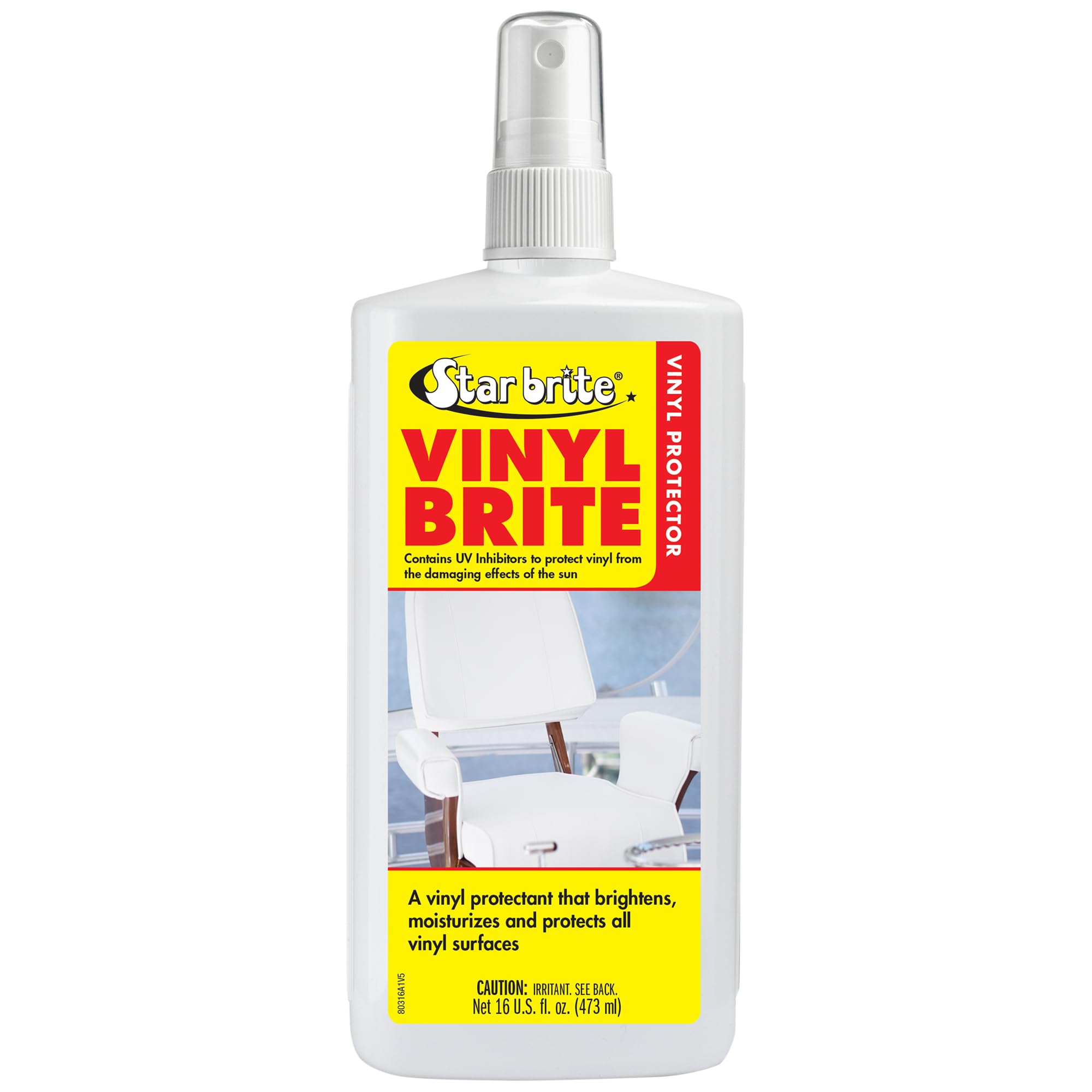
STAR BRITE’s Vinyl Brite has been a mainstay in marine detailing for decades, and its formula is optimized for one specific priority: a brilliant, wet-looking shine without the slippery feel. The 16 oz spray delivers a dry-to-the-touch finish that resists dust attraction, making it a favorite for show boats and owners who want that “waxed” visual effect on seats and trim.
The UV protection layer is durable enough that reviewers report using it on boats purchased as far back as 1992 with original upholstery still soft and uncracked. The formula works on fiberglass and plastic in addition to vinyl, so you can treat the entire cockpit with one can.
The spray nozzle design has been noted as a weak point—some units arrive with a missing cap or a faulty sprayer, so check the packaging on delivery. The product itself performs consistently well across marine, automotive, and outdoor furniture applications.
Why it’s great
- Deep, wet-look shine without greasy residue
- Proven track record over decades of marine use
- Versatile on vinyl, rubber, plastic, fiberglass
Good to know
- Spray nozzle quality control can be inconsistent
- Smaller 16 oz bottle requires more frequent repurchase for large boats
3. Marine 31 Vinyl Protectant with Sunblock

This silicone-free formula from Marine 31 is engineered specifically for boaters who want UV protection without a slick, slippery feel that makes getting in and out of seats treacherous. The 20 oz spray delivers a smooth, even coating that dries down to a non-sticky, non-greasy finish—ideal for Bimini tops, helm seats, and any surface where you need secure footing.
The Sunblock branding refers to a proprietary blend of UV absorbers that the brand claims penetrates vinyl rather than just sitting on the surface. Reviewers consistently report that it keeps seats shiny without feeling oily, and the absence of silicones avoids cross-contamination issues if you later switch to a different protectant family.
Application is straightforward: spray, wipe, and go—no extended dwell time required. The longevity is solid but not industrial-strength; expect reapplication every 3 to 4 weeks under heavy sun exposure.
Why it’s great
- Zero silicone means no slipperiness or dust attraction
- Works on interior and exterior marine vinyl
- Quick spray-and-wipe application
Good to know
- Reapplication needed more frequently than ceramic-based options
- Not designed for deep restoration of oxidized vinyl
4. WAVESRX EpicRestore Marine Trim Restorer & Vinyl Protectant
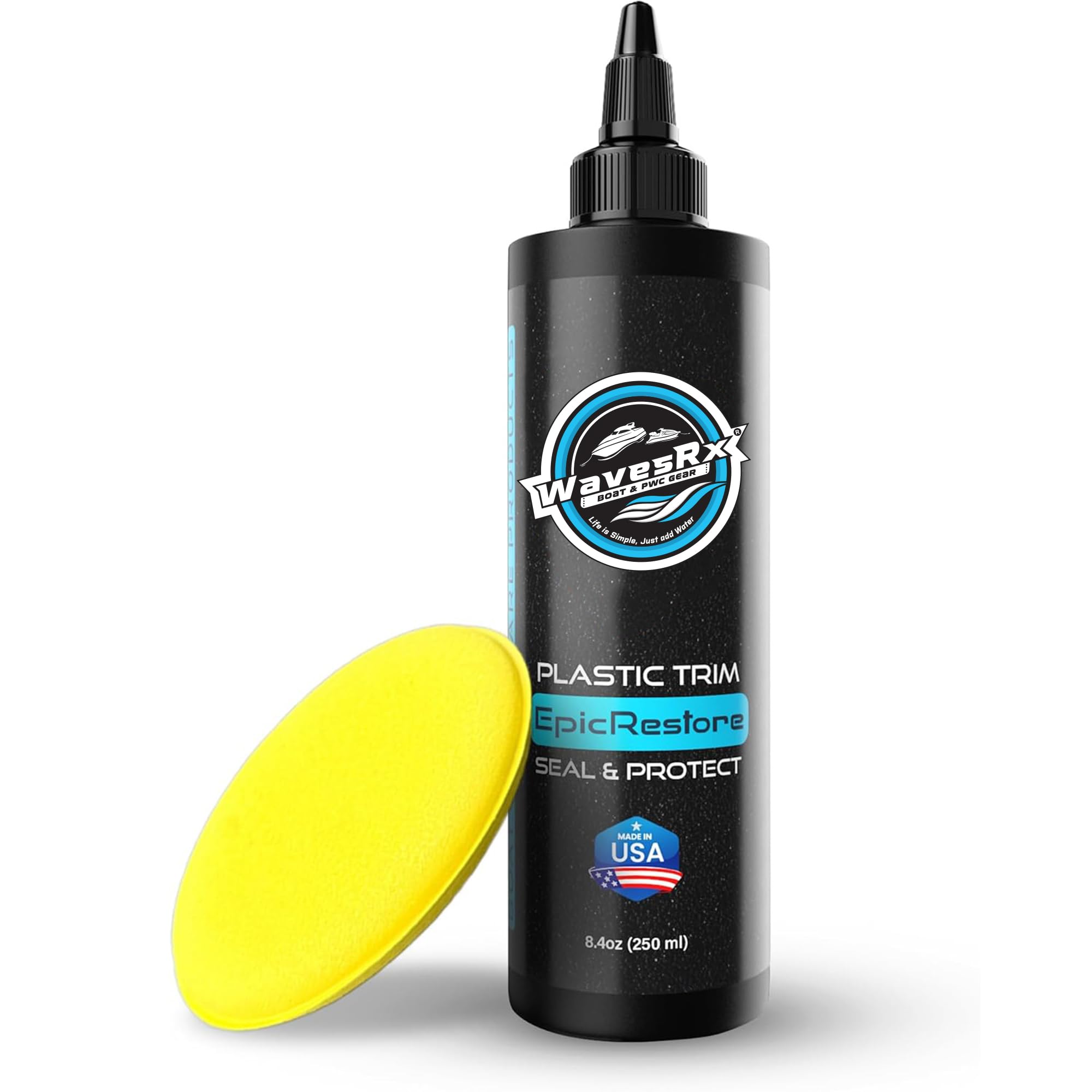
EpicRestore is the only product in this roundup that incorporates true ceramic coating technology into its marine vinyl protectant formula. The 8.4 oz bottle is small compared to other options, but it compensates with density—the ceramic layer creates a hydrophobic barrier that repels saltwater and grime for up to 6 months, drastically reducing reapplication frequency.
Where it truly shines is restoring heavily oxidized, ashy black plastic and gray vinyl surfaces. The formula contains color-reviving pigments that brought one reviewer’s gray jet ski panels back to deep black, and the coating held up through multiple water rides without the black streaks common with cheaper “back to black” products.
Application requires a cool surface and a 5-minute dwell time before buffing with the included applicator sponge. It works best on plastic and vinyl but is less effective on rubber rub rails, which absorb the product quickly with minimal visual improvement.
Why it’s great
- Ceramic barrier lasts up to 6 months
- Revives heavily oxidized gray/black vinyl
- Excellent saltwater and grime repellency
Good to know
- Small bottle size limits coverage per application
- Not effective on rubber rub rails
5. Hula 3-in-1 Boat Vinyl Cleaner, Conditioner and UV Protectant

Hula takes a distinct approach by using plant-derived surfactants in a water-based, biodegradable formula confirmed not harmful to aquatic organisms—a meaningful consideration for boaters who clean directly over the water. The 32 oz bottle is the largest in the mid-range tier, and the 3-in-1 promise of clean, condition, and protect in a single spray-and-wipe pass is genuinely convenient for regular maintenance.
The silicone polymer UV barrier requires reapplication every 3 to 5 weeks, which aligns with most weekend boating schedules. The mild suede scent is a welcome change from harsh chemical odors often associated with marine vinyl products. Reviewers report that it cleans pollen stains, suntan lotion residue, and light grime effectively, making it a strong maintenance product.
Heavier mildew stains are only lightened, not fully removed, so a dedicated mildew treatment is recommended for severe cases. It works well on golf cart upholstery and car leather seats, adding versatility.
Why it’s great
- Biodegradable and aquatic-safe formula
- Large 32 oz bottle at a strong value
- Pleasant mild suede scent, no harsh fumes
Good to know
- Struggles with heavy mildew stains
- 3- to 5-week reapplication window is average
6. Babe’s Seat Saver – Marine Vinyl Protectant & Conditioner

Babe’s Seat Saver is the most accessible entry point in this guide, offering a pure silicone-free conditioning formula that prioritizes a soft, supple, non-greasy finish above all else. The 16 oz spray bottle uses a simple spray-and-wipe system that takes seconds per seat, and the immediate result is butter-smooth vinyl that feels comfortable to sit on without any slippery transfer to clothing or skin.
The UV inhibitors are effective for daily or weekly use, but reviewers note that the protective layer is less durable than thicker silicone-based competitors. Some buyers report needing to reapply after every outing to maintain the same level of UV defense, which makes this a high-frequency maintenance product rather than a set-and-forget option.
The fragrance is a standout positive—a clean, pleasant scent that lingers without being overpowering. For boat owners who prefer to condition after every use as part of a quick-detail routine, this delivers immediate visual satisfaction with minimal effort.
Why it’s great
- Silicone-free formula leaves no slick residue
- Softens vinyl to a buttery smooth feel
- Pleasant scent that boaters consistently praise
Good to know
- Protective layer requires frequent reapplication
- Less durable than silicone-based or ceramic alternatives
FAQ
Can I use automotive vinyl protectant on my boat seats?
How often should I reapply boat vinyl protectant in direct sun?
Will a vinyl protectant restore faded or oxidized boat seats?
Final Thoughts: The Verdict
For most users, the best boat vinyl protectant winner is the Marine 31 Vinyl Cleaner & Conditioner because it combines industrial-grade Ciba Tinuvin UV inhibitors with a genuine cleaning capability, delivering the deepest protection and longest-lasting suppleness. If you want a brilliant wet-gloss showroom shine, grab the STAR BRITE Vinyl Brite. And for restoring oxidized faded surfaces with a ceramic coating that lasts all season, nothing beats the WAVESRX EpicRestore.