
Our readers keep the lights on and my morning glass full of iced black tea. As an Amazon Associate, I earn from qualifying purchases.
A failing continuous duty solenoid doesn’t announce itself with a bang — it starts as a slow crank, a clicking relay, or an intermittent electrical gremlin that leaves a winch dead or a golf cart stranded mid-round. The difference between a 150-amp rated coil and a 300-amp transient-capable unit often determines whether a plow drops when the snow hits or a trailer winch stalls under tension. Getting this wrong means melted wiring, stuck contacts, or a fire hazard in the equipment bay.
I’m Min — the co-founder and writer behind Gadgets Feed. After analyzing hundreds of hours of buyer feedback, technical datasheets, and real-world failure reports across the top continuous duty solenoids on the market, I’ve narrowed down which models reliably survive the sustained loads of marine, RV, winch, and golf cart applications and which ones leave owners chasing intermittent failures.
This guide breaks down the critical specs — copper gauge, coil resistance, terminal count, and continuous amperage — to help you find the right 12 volt continuous duty solenoid for your specific application without wasting time on parts that overheat or fail prematurely.
How To Choose The Best 12 Volt Continuous Duty Solenoid
A continuous duty solenoid is built to remain energized for extended periods — unlike a starter solenoid that clicks on briefly and then rests. Choosing the wrong one means risking a welded relay or a smoldering coil. Pay attention to these four factors before clicking buy.
Continuous Amperage Rating vs. Transient Peak
Most solenoids advertise a “300A” or “250A” rating, but that figure is almost always the maximum transient inrush current — a spike that lasts milliseconds. The real number you need is the continuous working current, which buyers often find buried in the description. Many 300A-rated units recommend no more than 125A to 150A continuous. Exceed that for more than a few seconds and the internal coil temperature climbs rapidly.
Contact Material and Plating
Copper contacts deliver lower electrical resistance than brass or steel, which means less heat buildup at the junction point. Nickel-plating on the outer casing prevents the corrosion that often kills solenoids in marine or snowplow environments. A solenoid that arrives with loose terminal nuts or a thin zinc coating is a reliability risk before the first load is applied.
Terminal Configuration and Bracket Pattern
Three-terminal solenoids (two large battery posts plus one small coil trigger) are the standard for SPST normally-open switching. Six-terminal units add extra switching capability for winch reversing applications. The mounting bracket hole spacing — typically 5/16 x 19/32 on 2-13/64 inch centers — is the most common fitment mismatch. Measure your existing bracket before ordering.
Quick Comparison
On smaller screens, swipe sideways to see the full table.
| Model | Category | Best For | Key Spec | Amazon |
|---|---|---|---|---|
| Cole Hersee 24059-08-BP | Premium | Heavy-duty fleet & industrial use | Insulated SPST, Made in USA | Amazon |
| Rareelectrical 812-1211-211 | Premium | ATV, UTV, snowmobile replacements | 3-terminal, Trombetta cross | $31.59Amazon |
| MaySpare 6 Terminal | Mid-Range | Winch reversing applications | 6-terminal SPDT, chrome finish | $18.50Amazon |
| 10L0L 250A 4-Terminal | Mid-Range | EZGO Marathon golf cart (1979-1994) | 4-terminal, isolated ground | Amazon |
| APIELE 125A Continuous | Budget-Friendly | RV, mowers, light marine | 125A continuous, zinc plating | $16.99Amazon |
| Lucky Seven 300A | Budget-Friendly | General 12V relay replacement | 14Ω coil resistance, 10.2W | $16.79Amazon |
| Newdeli Max 300A | Budget-Friendly | Entry-level winch & marine use | 300A peak, 180°C copper wire | $15.88Amazon |
In‑Depth Reviews
1. Cole Hersee – 24059-08-BP 12V Insulated SPST Continuous Duty Solenoid
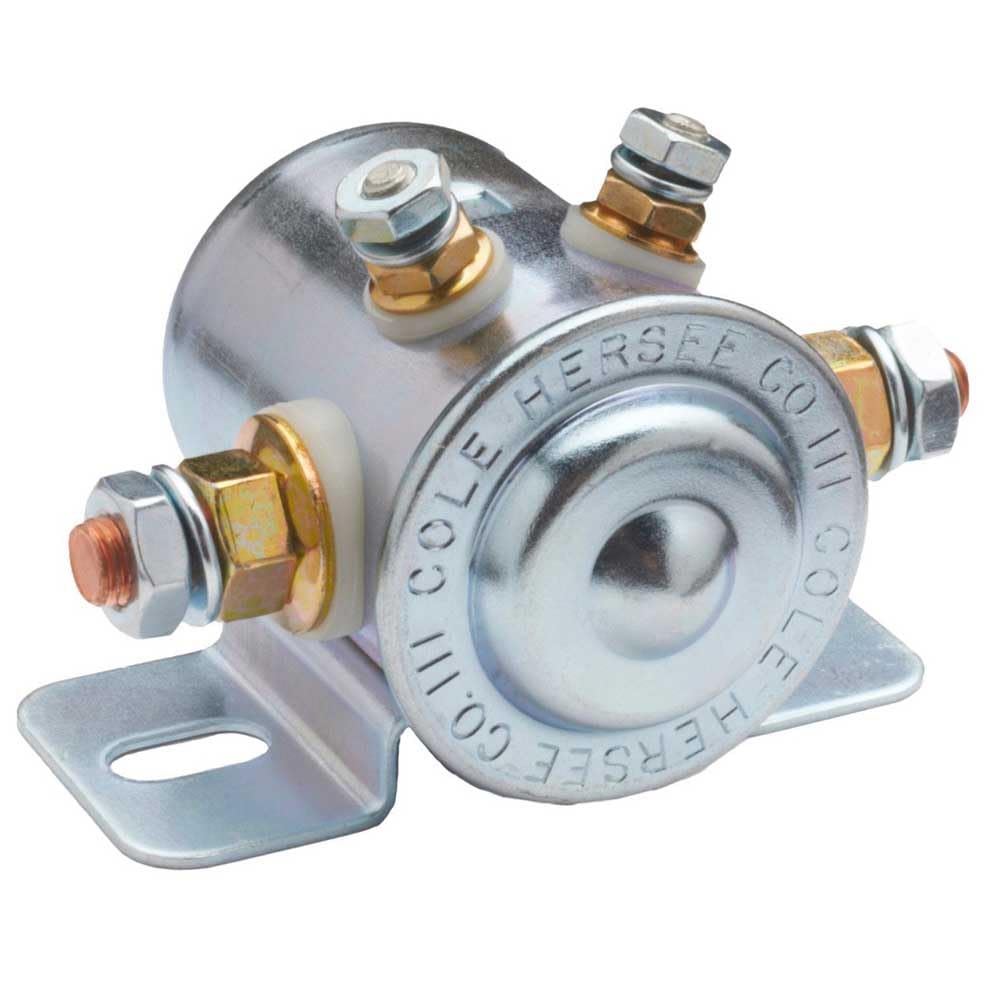
The Cole Hersee 24059-08-BP sits in a class above the rest because it delivers a genuine continuous duty rating without inflated transient numbers masking the real spec. The SPST insulated base prevents accidental grounding against the chassis — a critical detail when mounting to painted or powder-coated frames where bare-metal contact isn’t guaranteed. The machined exterior and tight terminal construction reflect industrial-grade tolerancing that aftermarket parts rarely match.
Owners using this solenoid for battery isolation on Nifty Lift boom lifts and trailer charging systems report consistent engagement with that authoritative ker-chunk sound that signals solid internal contact. The unit handles sustained loads like keeping six 6V golf cart batteries topped off via an alternator feed without the coil overheating or drawing excessive hold current. The lightweight 9.6-ounce construction uses engineering-grade materials rather than thin metal stampings.
The one recurring complaint is that Cole Hersee ships this solenoid without mounting nuts and washers — the product images show them, but the box contains only the solenoid itself. Buyers need to supply 5/16 fine-thread nuts for the large terminals and #10 fine-thread nuts for the coil terminals. It’s a minor inconvenience given the build quality, and seasoned mechanics usually have those in their fastener bin anyway.
Why it’s great
- Insulated base prevents accidental chassis shorts
- Built with industrial-grade machining tolerances
- Reliable for continuous loads in battery isolation and boost applications
Good to know
- Does not include mounting hardware or terminal nuts
- Premium price relative to generic alternatives
2. Rareelectrical 12V Continuous Duty Solenoid (Trombetta 812-1201-211)

The Rareelectrical 812-1211-211 is the direct replacement for Trombetta 812-1201-211 solenoids at roughly half the OEM price, making it a strong choice for owners of Yamaha Bruin ATVs, Cub Cadet riding mowers, and Polaris side-by-sides who want factory-level fit without the dealer markup. The three-terminal layout with 1/4-20 studs matches the exact footprint of Trombetta units, and the dust-resistant plastic housing provides adequate protection for under-hood and chassis-mount environments.
Buyers consistently report that this solenoid starts smoother and faster than the original factory part, likely because the copper contacts provide lower internal resistance than older solenoids with worn or oxidized surfaces. The F180 flat mount bracket aligns perfectly with OEM hole patterns, eliminating the drilling or adapter plate fabrication that generic solenoids often require. The 5.6-ounce weight is notably lighter than the Cole Hersee unit, reflecting the different plastic-housing design philosophy.
While the housing is described as liquid-resistant, it is not fully sealed, so mounting it in a location exposed to direct pressure washing or submersion could shorten its lifespan. Some users note that for heavy snowplow or marine applications where moisture ingress is a constant threat, a full nickel-plated or sealed solenoid would offer better long-term corrosion protection.
Why it’s great
- Exact Trombetta cross at a much lower price
- Copper contacts provide reliable engagement
- Lightweight and easy to install in tight compartments
Good to know
- Housing is not fully sealed for wet environments
- Not designed for extreme continuous loads above 100A
3. MaySpare 6 Terminal 12V Solenoid 100 Amp Rated
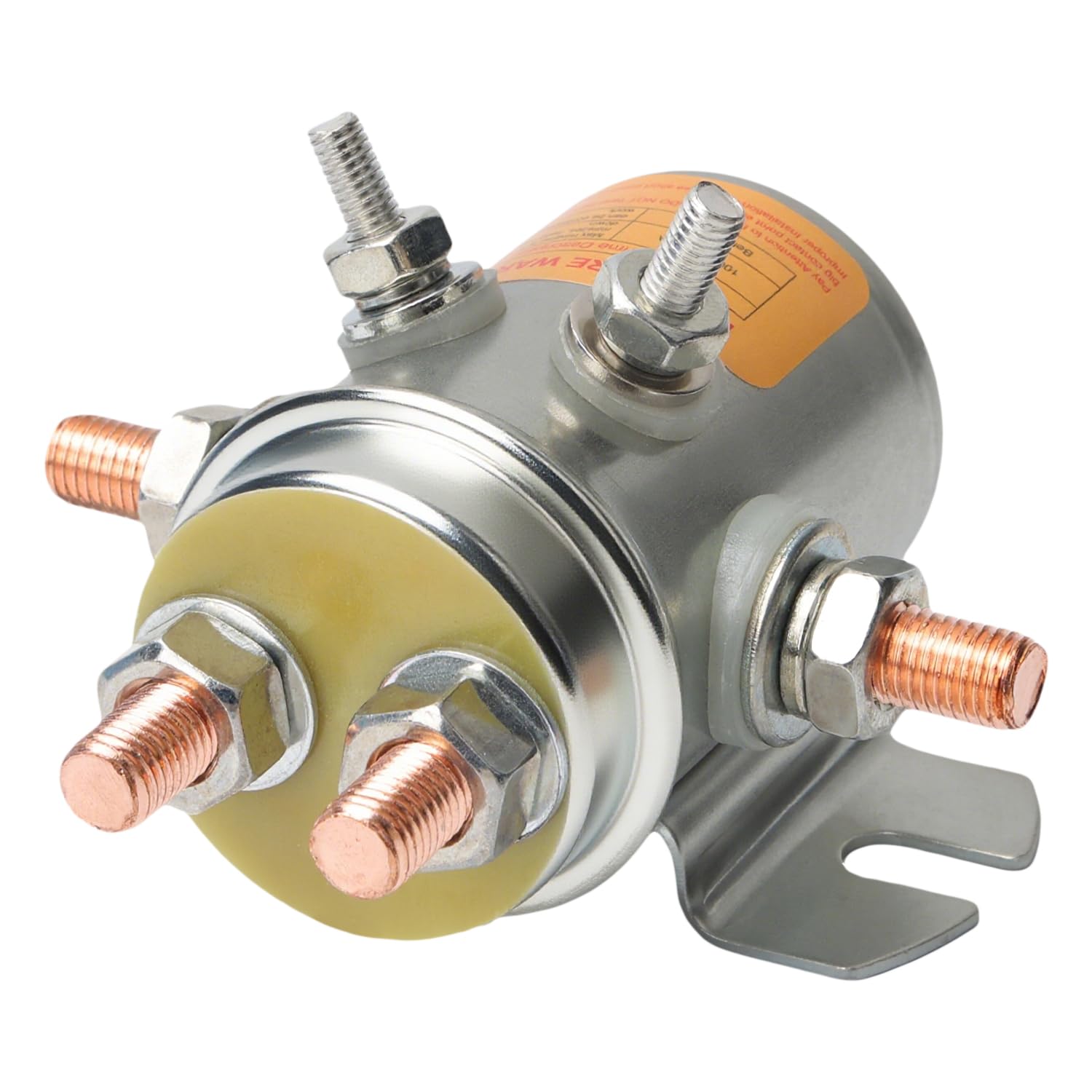
The MaySpare 6-terminal solenoid stands apart because it uses an SPDT configuration — single pole double throw — instead of the standard SPST normally-open design. This matters for winch applications where you need to reverse motor direction by switching power between forward and reverse terminals. The 100-amp continuous rating is honest and directly stated, not buried as a footnote under a 300A peak claim. The chrome exterior adds corrosion resistance compared to standard zinc finishes.
One experienced buyer used this solenoid to switch 140 amps at 24V DC for a TIG torch welding setup, reporting that the 100% duty cycle kept the coil cool during extended operation. The 10Ω coil resistance and 400mA activation current make it compatible with low-amp foot switches and small control relays without requiring a separate 12V supply for the coil circuit. The 14.9-ounce weight comes from the robust metal housing and multiple terminal posts.
The primary failure mode reported is rapid on-off cycling causing the internal contacts to stick in the closed position. If a pedal spring is weak or the control signal fluctuates, the solenoid may weld shut and keep the load energized even when the switch releases. Owners should pair this unit with a properly adjusted control linkage or a timing circuit to prevent short-cycling.
Why it’s great
- SPDT switching enables winch reversing without external relays
- Honest 100-amp continuous duty rating
- Chrome housing resists corrosion better than bare metal
Good to know
- Rapid on-off cycling can cause contact welding
- Requires careful wiring to avoid unintended engagement
4. 10L0L 12V 250A Solenoid Relay for EZGO Marathon
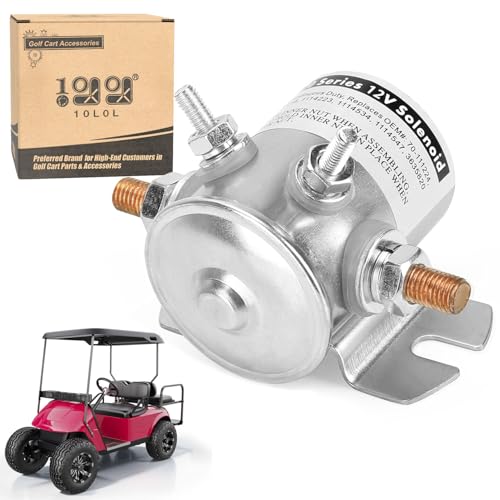
The 10L0L solenoid targets a specific niche — EZGO Marathon gas golf carts from 1979 to 1994 — and nails the fitment precisely. The 4-terminal SPNO configuration includes an isolated ground design that prevents the solenoid from shorting against the frame, a common issue when replacing non-isolated units on older carts. The 250A peak rating with a 150A continuous recommendation aligns well with starter motor draw on the 2-cycle and 4-cycle Robin engines found in those carts.
Buyers with non-starting EZGO carts report that swapping in this solenoid immediately resolves the classic clicking-no-start symptom without requiring bracket modification or wire rerouting. The nickel-plating and copper contacts handle the repeated start cycles of a golf season without developing the internal resistance that causes slow cranking. The standard flat mount bracket with 5/16 x 19/32 holes on 2-13/64 inch centers matches the OEM bolt pattern exactly.
A small but concerning number of users report that this solenoid has caused controller damage when installed in series with aftermarket speed controllers. The isolated ground design may interact differently with certain controller grounding schemes, so owners with modified carts should verify compatibility before installation. For stock EZGO Marathon carts, the fit and function are identical to the original part.
Why it’s great
- Direct bolt-in for EZGO Marathon 1979-1994 gas carts
- Isolated ground prevents chassis short circuits
- Copper contacts maintain reliable starter engagement
Good to know
- May cause issues with aftermarket speed controllers
- Limited to 150A continuous draw
5. APIELE Continuous Solenoid Relay 12V DC 125A
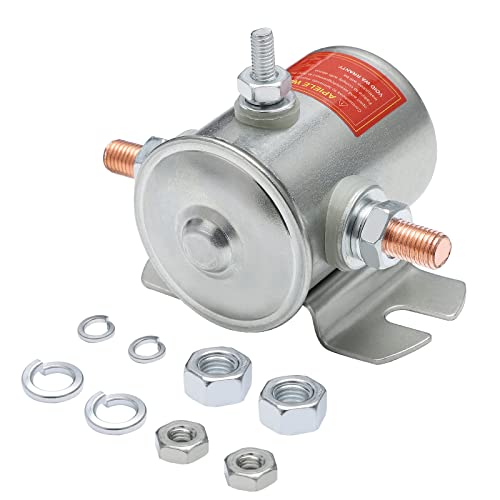
The APIELE solenoid takes a more conservative approach by rating its continuous current at 125A rather than inflating the number. This honesty makes it a predictable choice for RV slide-out motors, small hydraulic pumps, and mower starter circuits where the actual draw sits well under 100A. The zinc-plated outer shell offers basic corrosion resistance, and the 180°C copper wire insulation ensures the coil doesn’t break down under sustained heat.
Owners using this solenoid on riding mowers and camper applications consistently report it works without issues, with one buyer noting it outperformed the box store replacement it replaced. The three-terminal design keeps wiring simple — two large posts for power in/out and one small post for the coil trigger. The manufacturer explicitly warns against sustained high-load operation, specifying a 60-second maximum at the 300A transient peak before risk of fire increases.
The zinc plating is noticeably thinner than the nickel-plating found on mid-range units, making this solenoid a poor choice for saltwater marine use or locations with road salt exposure. The terminal studs also lack the heavy-duty feel of the Cole Hersee or Rareelectrical units, and the bracket steel feels slightly thinner. For light-duty intermittent applications, the value is strong, but it won’t survive repeated high-cycle operation.
Why it’s great
- Transparent 125A continuous rating with no exaggeration
- Affordable price for light-duty replacements
- 180°C copper wire handles moderate heat buildup
Good to know
- Zinc plating is not suitable for marine or salt environments
- Bracket and terminal studs feel less robust than premium options
6. Lucky Seven Max 300A Continuous Duty Solenoid Relay

The Lucky Seven solenoid occupies the same specification territory as the Newdeli unit — 300A transient peak, 14Ω coil resistance, 10.2W power draw — but with a nickel-plated exterior that provides better corrosion resistance than bare zinc. The 180°C copper wire coil and copper contact points are identical in specification to several other budget solenoids, suggesting a shared manufacturing base with different branding. The bracket uses the standard 5/16 x 19/32 hole pattern.
One buyer successfully installed this solenoid on a high-current Humvee setup, reporting it engaged cleanly every time and handled the continuous loads without overheating. The nickel-plated terminals resisted the corrosion that typically forms around battery-terminal connections in vehicles that sit through wet seasons. For general-purpose replacements where the manufacturer part number cross-reference includes DELCO 1114208, Motorcraft SWX88, and Trombetta 974-1215-011, the compatibility is broad.
Quality control is the biggest variable here. Multiple buyers report loose back jam nuts that allow the main terminal studs to spin when tightening external nuts, making installation frustrating and potentially damaging the internal connections. If you get a unit with properly staked nuts, it works fine. If not, returning and reordering is the only fix. A small number of buyers also report needing an external flyback diode between the switch poles to prevent parasitic power feed when the solenoid is off.
Why it’s great
- Nickel-plating improves corrosion resistance
- Broad cross-reference compatibility with many OEM numbers
- Copper contacts maintain low resistance
Good to know
- Loose terminal nuts are a common quality control issue
- May require external diode to prevent parasitic current
7. Newdeli Max 300A Continuous Duty Solenoid Relay
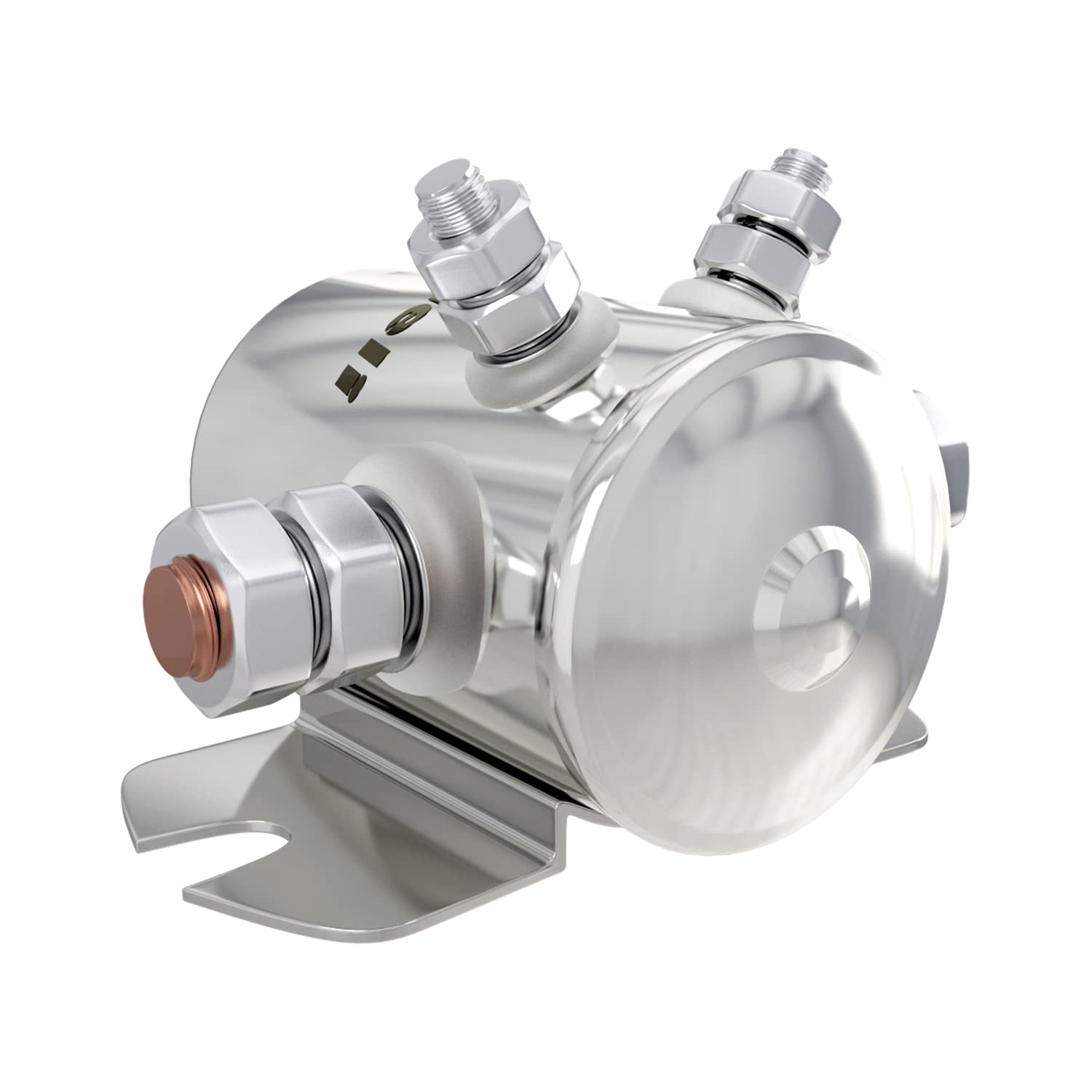
The Newdeli 300A solenoid is the entry-level workhorse for buyers who need a functional continuous duty relay without a premium budget. The nickel-plating on the outer layer and canned coil interior provides meaningful environmental protection, and the 180°C copper wire matches the specification of many more expensive units. At this price point, the 150A continuous recommendation and 300A transient peak reflect realistic expectations for light winch operation, marine bilge pumps, and RV slide mechanisms.
Real-world users have installed this solenoid on motor home slide-out systems and snowplow applications with positive results — the solenoid engages reliably, the nickel-plating resists the corrosion that forms under the hood during winter salt exposure, and the bracket mounts without drilling new holes. The cross-reference list covers DELCO 1114208, Prestolite 15-88, and Trombetta 974-1215-011 patterns, making it a candidate for old-equipment repairs where OEM parts are discontinued.
The QC lottery is even more pronounced here than with the Lucky Seven unit. One buyer received a solenoid with loose main terminals that showed no electrical continuity straight out of the box — a dead-on-arrival scenario that requires immediate return. The build quality is visibly lighter than mid-range units, and the internal components lack the robust potting found on industrial-grade solenoids. For critical applications where a failure could leave equipment stranded, spending more on the Cole Hersee or Rareelectrical is the safer bet.
Why it’s great
- Budget-friendly price for basic continuous duty switching
- Nickel-plating provides better corrosion resistance than zinc
- Broad OEM cross-reference compatibility
Good to know
- Higher failure rate out of the box compared to premium options
- Lightweight build quality with less internal potting
FAQ
Can I use a continuous duty solenoid in place of a starter solenoid?
Why does my solenoid get hot when left energized?
What does isolated ground mean on a solenoid?
How do I wire a 3-terminal continuous duty solenoid?
Final Thoughts: The Verdict
For most users, the 12 volt continuous duty solenoid winner is the Cole Hersee 24059-08-BP because it delivers industrial-grade construction, an insulated base for safe chassis mounting, and proven reliability under sustained loads in fleet and industrial environments. If you need a direct replacement for an ATV, UTV, or lawn tractor with Trombetta-style fitment, grab the Rareelectrical 812-1211-211. And for winch reversing circuits that require SPDT switching, nothing beats the MaySpare 6 Terminal for its honest 100-amp continuous rating and chrome corrosion resistance.
Product prices and availability are accurate as of the date/time indicated and are subject to change. Any price and availability information displayed on Amazon at the time of purchase will apply to the purchase of this product. As an Amazon Associate I earn from qualifying purchases.
CERTAIN CONTENT THAT APPEARS ON THIS SITE COMES FROM AMAZON. THIS CONTENT IS PROVIDED "AS IS" AND IS SUBJECT TO CHANGE OR REMOVAL AT ANY TIME.
Amazon and the Amazon logo are trademarks of Amazon.com, Inc. or its affiliates.