
Our readers keep the lights on and my morning glass full of iced black tea. As an Amazon Associate, I earn from qualifying purchases.
Compressing foam running shoes under a heavy barbell robs you of force transfer and introduces dangerous instability. The right affordable squat shoes replace that squishy midsole with a solid, elevated heel that locks your feet to the floor, enabling deeper squats and better quad activation without the premium price tag.
I’m Min — the co-founder and writer behind Gadgets Feed. I’ve spent countless hours analyzing the technical specifications, customer feedback, and long-term durability reports across dozens of models in the weightlifting shoe category to identify the best value for serious lifters on a budget.
Whether you’re chasing a new one-rep max or just trying to hit depth consistently, this guide cuts through the noise to present the best affordable squat shoes that deliver professional-grade stability without emptying your wallet.
How To Choose The Best Affordable Squat Shoes
Buying your first pair of weightlifting shoes is different from buying a regular gym sneaker. The wrong choice — like a shoe with a compressible foam heel — can actually make your squat less stable than going barefoot. Focus on these three factors instead.
Heel Height and Material
The defining feature of a squat shoe is its raised, rigid heel, typically made of wood, plastic, or solid rubber. A heel height between 0.6 and 0.75 inches works for most lifters with average ankle mobility, offering a good compromise between quad recruitment and balance. Higher heels (around 1.0 to 1.4 inches) are better for lifters with poor dorsiflexion or those performing Olympic lifts, but they can feel tippy for beginners. The material must be non-compressible — if you can push a thumbnail into the heel, it will waste your power under load.
Upper Construction and Closure
A squat shoe must hold your foot firmly to the sole without allowing forward slide. Look for a combination of laces and at least one wide Velcro strap. The strap cinches across the midfoot, locking the heel down and preventing your foot from shifting inside the shoe during heavy eccentric phases. The upper material — leather, synthetic leather, or heavy-duty mesh — should be stiff enough to resist stretch but breathable enough to manage sweat during long sessions.
Outsole Grip and Width
The outsole pattern is less about traction for running and more about preventing micro-slippage on a platform or wooden gym floor. A flat, full-contact rubber outsole with a slight tread pattern is ideal. The width of the shoe at the forefoot determines how stable your base of support feels. Wider toe boxes (like those from Nordic Lifting or Osterland) suit lifters who push their knees out during squats, while a narrow toe (common on older Adidas models) may feel restrictive for wide-stance squatters.
Quick Comparison
On smaller screens, swipe sideways to see the full table.
| Model | Category | Best For | Key Spec | Amazon |
|---|---|---|---|---|
| VELAASA Strake | Premium | Deep squats with narrow stance | Raised heel optimizes squat technique | $199.00Amazon |
| adidas Adipower III | Premium | Professional-grade stability | Non-compressible rubber sole | from $104.76Amazon |
| Nordic Lifting VENJA | Mid-Range | Balanced lifting and walking comfort | 1.06-inch raised heel | $47.49$94.99Limited time dealAmazon |
| Adidas Powerlift 5 | Mid-Range | Beginner entry to heeled squat shoes | Low heel rise for easy transition | $130.00Amazon |
| CORE Bodybuilding | Mid-Range | Ankle support and stability | 0.67-inch raised heel | $89.90Amazon |
| Osterland Weightlifting | Mid-Range | Budget-friendly beginner to intermediate | Solid hard rubber outsole | $79.98Amazon |
| Castikon Lift Weightlifting | Mid-Range | Affordable powerlifting with wide fit | Elevated heel for deep squats | $79.99Amazon |
In‑Depth Reviews
1. VELAASA Strake

The VELAASA Strake is a purpose-built Olympic weightlifting shoe designed for serious lifters who demand maximum stability and a precise fit. Its raised heel allows for deep, upright squats with a narrow stance, which is critical for lifters with limited ankle mobility who want to hit parallel without placing plates under their heels. The stiff, durable upper and secure closure system lock the foot in place, eliminating wasteful energy leak during the drive phase.
Customers consistently praise the exceptional stability and support, noting a substantial improvement over cross trainers or barefoot lifting. The shoe’s build quality is high, with a well-made construction that feels dense and protective. However, the Strake runs small, and multiple reviews advise ordering at least half a size up to avoid a cramped toe box. The leather upper also requires a break-in period and is prone to scuffing, though this does not affect performance.
For the lifter who values technique refinement and has a narrow-to-neutral foot width, the Strake delivers professional-grade performance. It is an investment in your squat mechanics that pays off every rep.
Why it’s great
- Exceptional stability for heavy loads and deep squats
- Durable, high-quality build that feels dense
- Secure fit eliminates heel slip during the squat
Good to know
- Runs small; order at least half a size up
- Requires break-in period for comfort
- Not suitable for wide feet without sizing up
2. adidas Men’s Adipower Weightlifting III
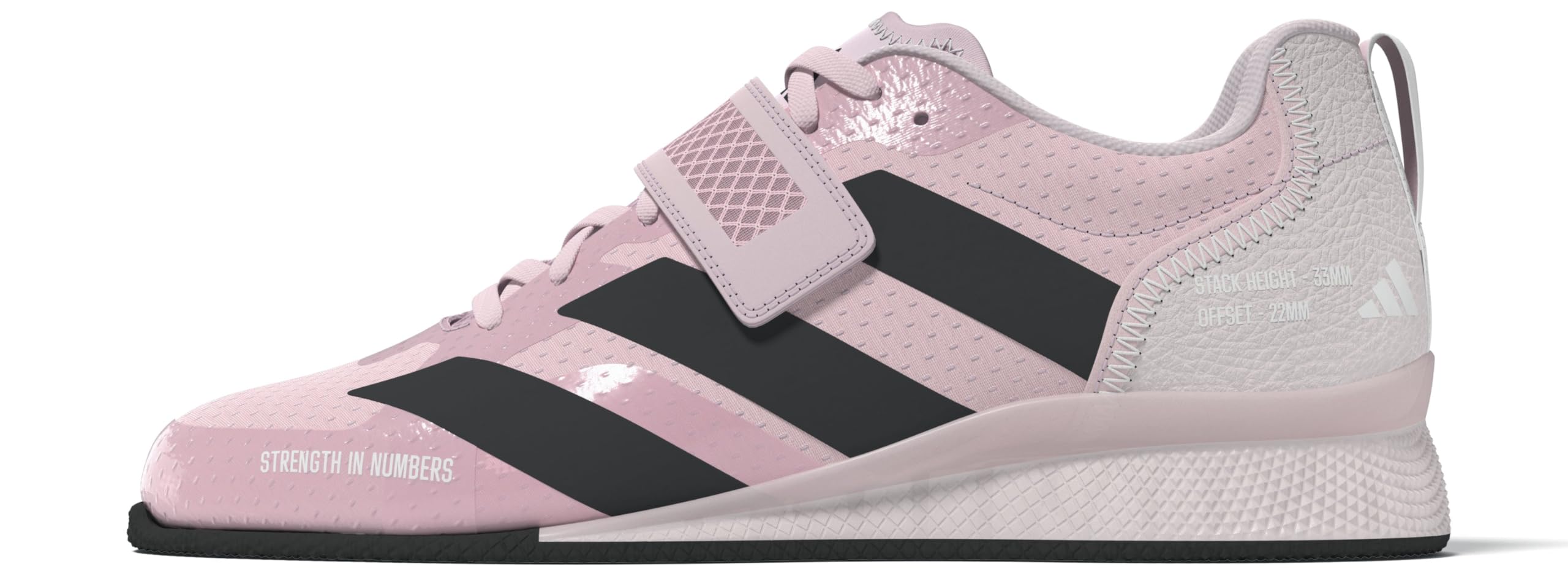
The Adipower III represents adidas’s top-tier offering for weightlifting, and it shows in every detail. The shoe features a solid, non-compressible rubber sole that provides an immovable platform for heavy squats. The laces are complemented by a wide Velcro strap that locks the midfoot, and the heel elevation is perfectly calibrated to help lifters with poor ankle dorsiflexion achieve depth without rounding their lower back.
Reviews highlight the shoe’s excellent build quality and aesthetics, with many users noting a significant improvement in squat form and stability compared to running shoes or flat trainers. The fit is snug around the toes for normal-width feet, but multiple owners explicitly warn that it is too narrow for wide-footed lifters. The Adipower III is stiff and not intended for walking or cardio — it is a purpose-built tool for the squat rack and deadlift platform.
This is the gold standard for lifters who want a proven, brand-name platform that will last through years of heavy training. The investment buys confidence under the bar.
Why it’s great
- Non-compressible sole provides a rock-solid base
- Velcro strap and laces lock the foot securely
- Excellent build quality that resists wear
Good to know
- Narrow toe box; not suitable for wide feet
- Uncomfortable for walking or cardio use
- Premium price point reflects professional-grade build
3. Nordic Lifting VENJA Weightlifting Shoes

The Nordic Lifting VENJA hits a sweet spot between price and performance that few competitors can match. Its 1.06-inch raised heel offers enough elevation to fix ankle mobility issues for most lifters, and the forefoot is noticeably more flexible than pure competition shoes, making it comfortable to walk in between sets. The outsole provides reliable grip on both platform and rubber gym flooring without the rock-hard feel of pricier models.
Customer feedback consistently praises the shoe as a stable upgrade over standard sneakers while remaining versatile enough for accessory work. It fits true to size for most foot shapes, though users with wide feet are advised to go half a size up for comfort. The upper is breathable, reducing sweat buildup during longer training sessions. Some reviewers note that the forefoot flexibility, while comfortable for walking, reduces the direct force transmission of a fully rigid competition shoe.
If you want one shoe that handles heavy squats and doesn’t feel like a brick on your feet during warm-ups, the VENJA is the smartest choice in this bracket.
Why it’s great
- Balanced heel height suits most ankle mobility levels
- More flexible forefoot for comfortable walking
- Breathable upper reduces foot sweat
Good to know
- Forefoot flexibility reduces direct power transfer slightly
- Wide feet should size up for a comfortable fit
- Not as rigid as elite competition shoes
4. adidas Powerlift 5
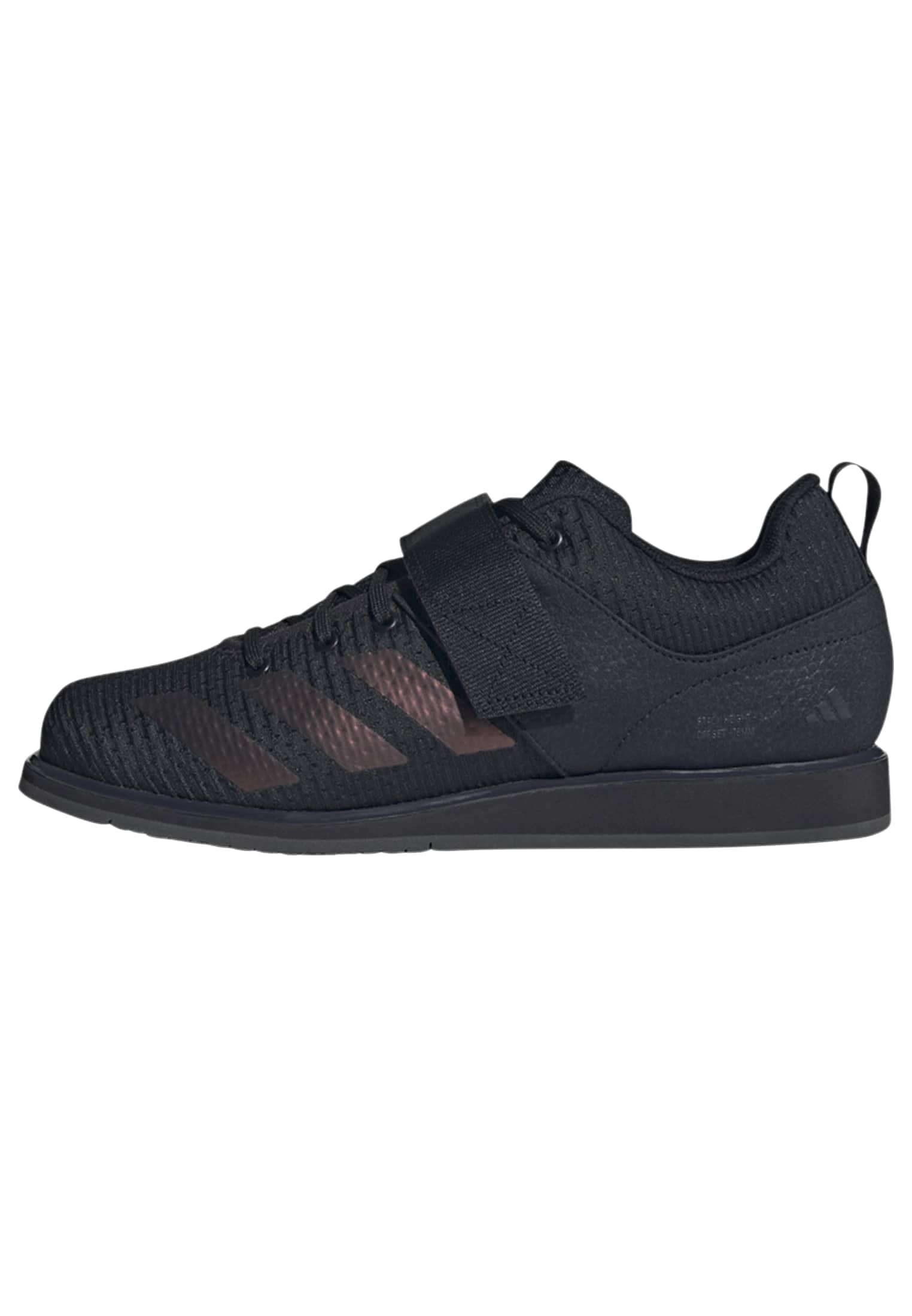
The Powerlift 5 is adidas’s entry-level weightlifting shoe, designed to introduce lifters to the benefits of an elevated heel without the aggressive angle of the Adipower line. The heel is lower than competition shoes, which makes the transition from flat trainers feel natural while still providing a measurable improvement in squat depth and quad engagement. The upper is less rigid than premium models, offering more comfort for general gym use.
Reviewers consistently call this a “game changer” for squat form, with many reporting elimination of knee pain and easier depth. However, the toe box is notably narrow — multiple reviews advise ordering half a size up, and lifters with wide feet should look elsewhere. The build quality is good for the mid-range, and the shoe provides enough stability for intermediate lifters working toward a 1.5x bodyweight squat.
For the lifter who isn’t sure if they want a dedicated squat shoe, the Powerlift 5 is a low-risk, high-reward entry point.
Why it’s great
- Low heel rise eases transition from flat shoes
- Improves squat stability and reduces knee pain
- Good build quality for the mid-range
Good to know
- Toe box is narrow; size up if you have average width feet
- Not suitable for lifters with wide feet
- Less rigid than higher-end weightlifting shoes
5. CORE Bodybuilding Squat Shoes
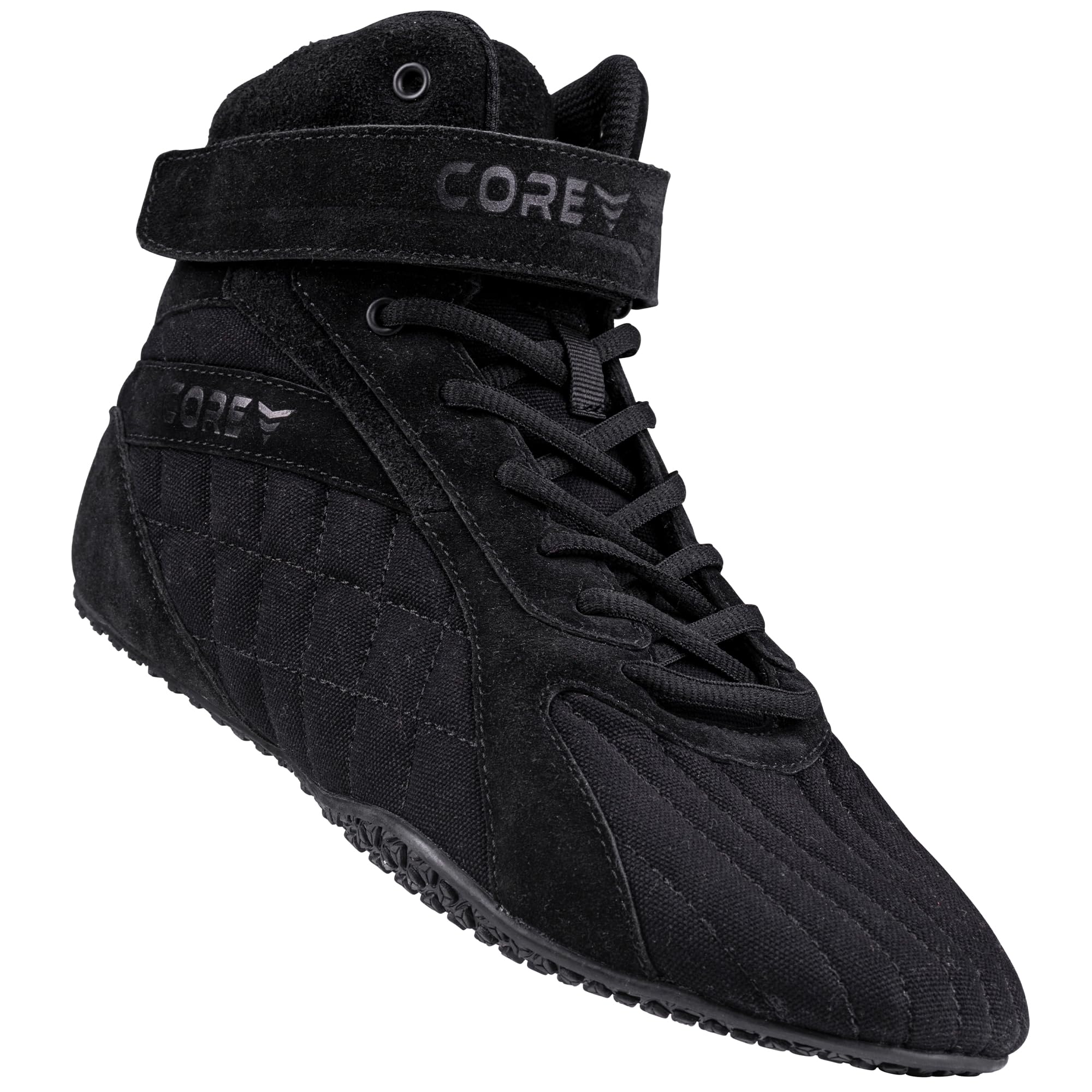
The CORE Bodybuilding shoe focuses on providing a stable, supportive platform with a moderate 0.67-inch raised heel. The upper is designed to wrap the ankle securely, offering extra confidence for lifters who struggle with balance during heavy squats. The rubber outsole is grippy and flat, and the shoe includes both laces and a strap to lock the foot in place.
Owner experiences are split between those who praise the shoe for giving them the best leg day of their career and those who find the sizing inconsistent and the toe box too narrow. Several reviews mention that the insole width is tighter than expected, making the shoe a poor choice for lifters with wide feet. For lifters with narrow-to-normal width, the support and stability are excellent, and the moderate heel height makes it versatile for both back squats and front squats.
If your foot shape matches the CORE’s dimensions, it delivers impressive stability at a competitive price point. Just be prepared to measure your foot width and size up if needed.
Why it’s great
- Excellent ankle support for balance confidence
- Moderate heel height suits multiple squat styles
- Sturdy outsole provides good grip
Good to know
- Sizing runs small and narrow; not ideal for wide feet
- Inconsistent fit across different size runs
- Material quality is decent but not premium
6. Osterland Weightlifting Shoes
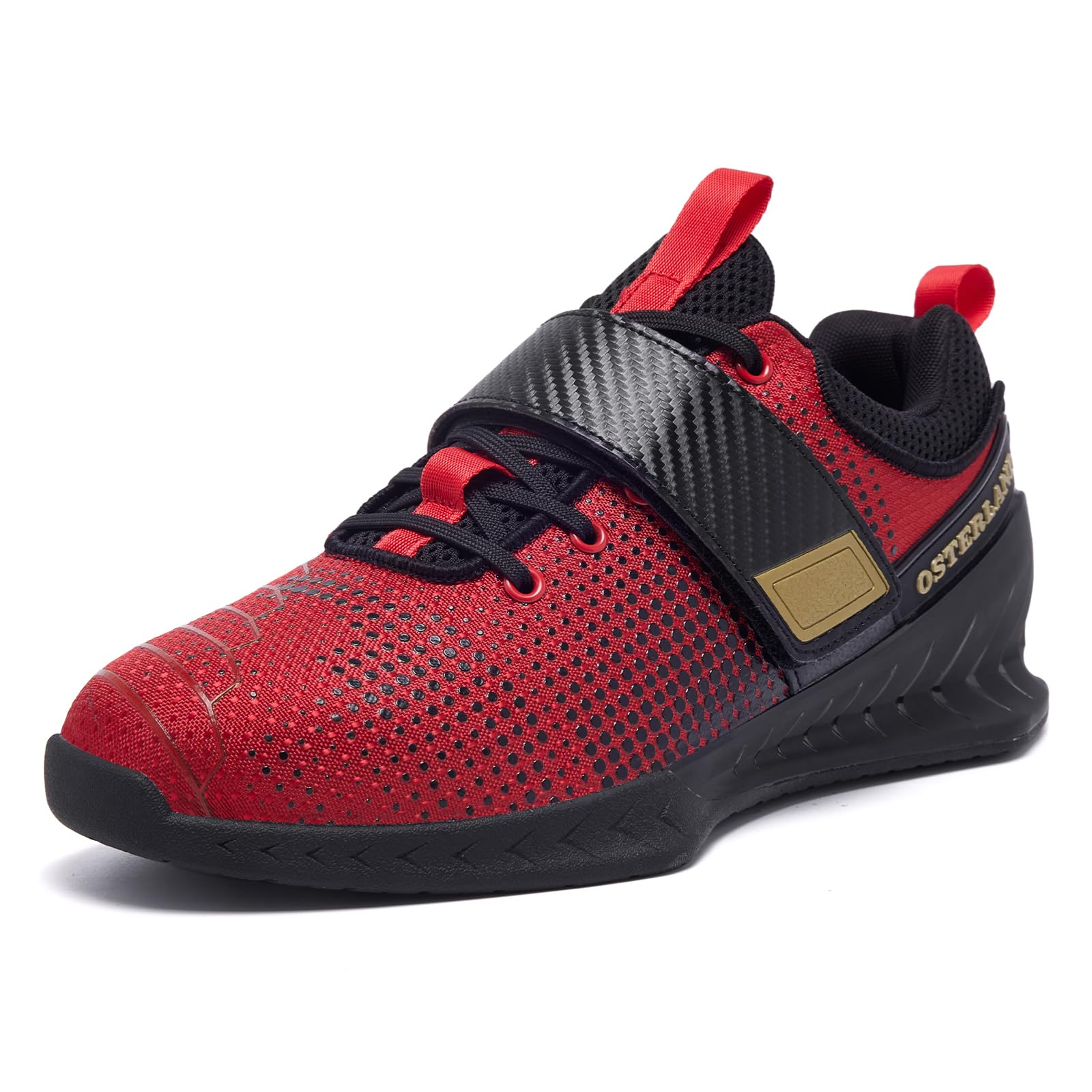
The Osterland shoe delivers the core function of a weightlifting shoe — a solid, non-compressible rubber outsole and a raised heel — at a price that undercuts most of the competition. The upper uses a breathable mesh and microfiber combination that manages moisture well during long sessions. The shoe is designed to fit true to US sizes, though the brand recommends going half a size up for wider feet.
Customers report that the shoe provides excellent stability for squats and deadlifts, with several comparing its performance favorably to much more expensive models. The moderate heel activates the quads effectively and reduces strain on the lower back. However, some users report that the toe box feels stiff and puts pressure on the toes during heavy squats, and the material does not break in easily. This makes the shoe less comfortable for lifters who prefer a roomy forefoot or who train for extended periods.
For the budget-conscious lifter who wants to test whether a raised heel improves their squat, the Osterland offers undeniable value — just be sure your toe width is compatible with its stiffness.
Why it’s great
- Non-compressible hard rubber sole for power transfer
- Breathable upper keeps feet dry
- Great price for entry into heeled squat shoes
Good to know
- Stiff toe box can cause discomfort during heavy sets
- Material does not break in easily
- Best for narrow to average foot widths
7. Castikon Lift Weightlifting Shoes
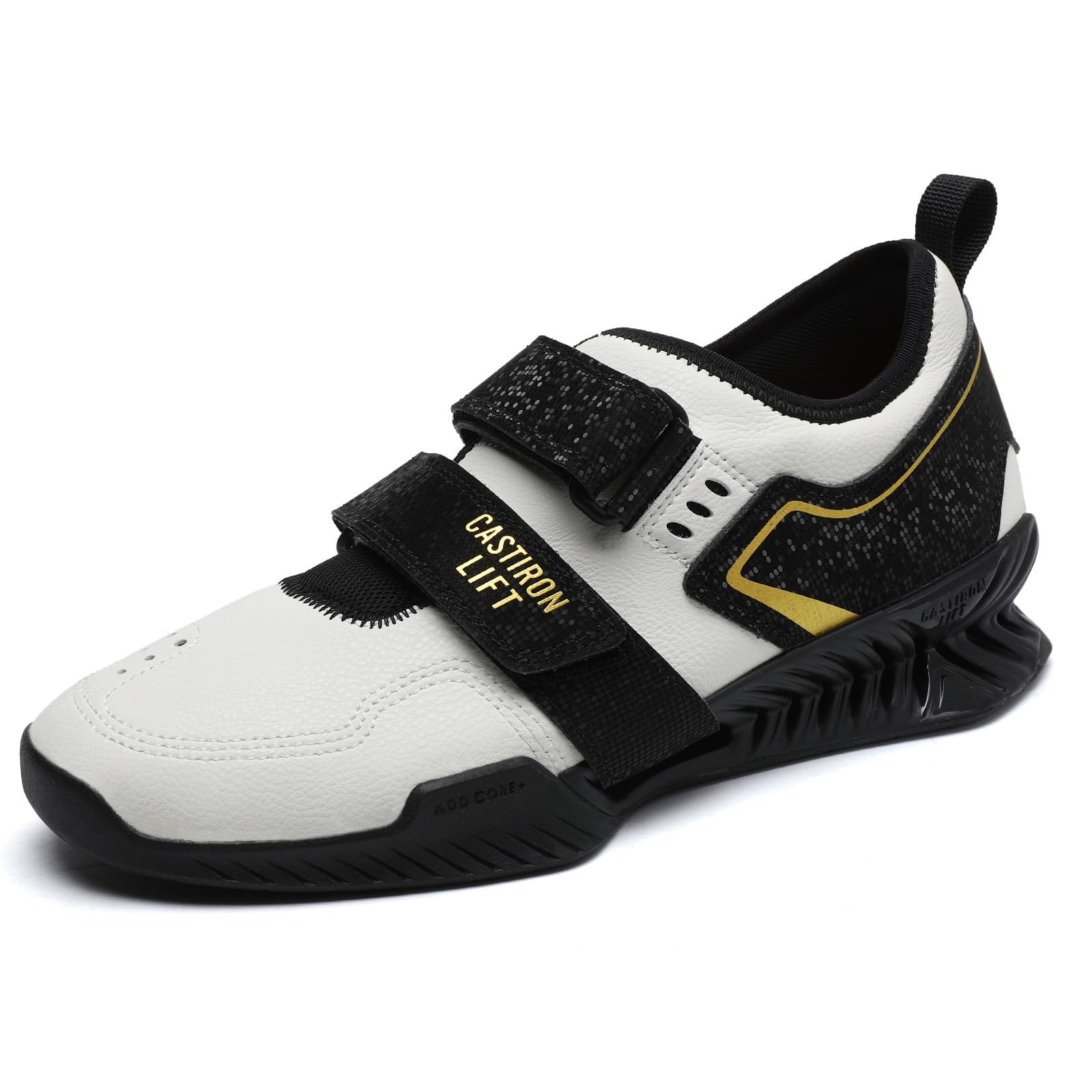
The Castikon Lift shoe is designed with a wider fit in mind, offering a comfortable experience for lifters who find many weightlifting shoes too constricting. The outsole is hard and grippy, providing a stable base for heavy lifts, while the elevated heel improves squat depth. The upper is a combination of durable materials with Velcro straps that allow for a customized, locked-in fit.
Many users report that the shoe fits true to size and provides a supportive, comfortable experience, even for lifters with wider feet. The slightly angled sole improves stability and helps with muscle focus, particularly for calves and quads. Reviews note that the shoe has lasted well through two years of use, indicating good durability. The main trade-off is moderate build quality — it lacks the premium finish of top-tier brands, but it delivers the essential function reliably.
If you have wide feet or simply prefer a roomier toe box, the Castikon Lift is a solid, durable choice that won’t break the bank.
Why it’s great
- Wider fit accommodates broader feet comfortably
- Hard, grippy outsole provides stable base
- Good durability reported over years of use
Good to know
- Moderate build quality; not as refined as premium shoes
- Sizing may require trying half size down for snug fit
- Material stretches slightly over time
FAQ
Can I squat in flat shoes like Converse instead of buying squat shoes?
How much heel height do I need for my first pair of affordable squat shoes?
Will cheap squat shoes wear out faster than premium ones?
Final Thoughts: The Verdict
For most users, the best affordable squat shoes winner is the VELAASA Strake because it offers professional-grade stability and a high, locked-in heel that transforms squat mechanics for lifters with limited ankle mobility. If you want a versatile shoe that is comfortable for walking and still stable under load, grab the Nordic Lifting VENJA. And for a starter shoe that provides a low-risk introduction to heeled lifting, nothing beats the adidas Powerlift 5.
Product prices and availability are accurate as of the date/time indicated and are subject to change. Any price and availability information displayed on Amazon at the time of purchase will apply to the purchase of this product. As an Amazon Associate I earn from qualifying purchases.
CERTAIN CONTENT THAT APPEARS ON THIS SITE COMES FROM AMAZON. THIS CONTENT IS PROVIDED "AS IS" AND IS SUBJECT TO CHANGE OR REMOVAL AT ANY TIME.
Amazon and the Amazon logo are trademarks of Amazon.com, Inc. or its affiliates.