
A restless night in a soggy bag can turn a mountain summit into a survival exercise. The difference between waking up refreshed and waking up shivering often comes down to one variable: the insulation’s loft-to-weight ratio. For a backpacker, every gram of your sleep system must earn its place in the pack, and that means measuring warmth against packed volume with surgical precision.
I’m Min — the co-founder and writer behind Gadgets Feed. I spend my days parsing datasheets, cross-referencing fill-power ratings and denier counts, and stacking real-world customer feedback against manufacturer claims to separate the genuinely lightweight from the merely marketed. After many hours of research and spec comparison in this narrow niche, this guide distills what actually works on the trail.
Whether you need a sub-two-pound summer quilt or a reliable 20-degree synthetic workhorse for three-season treks, this deep dive into the best backpacking sleeping bags will steer you toward the right choice for your pack weight and budget.
How To Choose The Best Backpacking Sleeping Bags
Weight, packed size, and warmth drive every decision in this category. Car-camping bags that weigh five pounds are non-starters here. The goal is to maximize thermal efficiency while minimizing the space the bag occupies in your pack. The three factors below will help you find the right balance for your typical conditions.
Insulation Type: Down vs. Synthetic
Down offers the best warmth-to-weight ratio and compresses smaller than any synthetic fill. Premium down bags with 800+ fill power pack down to the size of a football. The tradeoff is performance when wet — down loses nearly all insulating loft when damp. Synthetic bags like those using Cirroloft or FireLine Pro Eco retain warmth even when wet, but they weigh more and take up more space for the same temperature rating. For dry climates and ultralight objectives, choose down. For damp coastal trips or high-humidity environments, synthetic is the safer bet.
Fill Power and Loft
Fill power (FP) measures how many cubic inches one ounce of down occupies when fully lofted. A 650FP bag provides adequate warmth for three-season use at a moderate price. Bags rated at 850FP or higher use premium down that traps more air per gram, allowing manufacturers to reduce weight and packed volume significantly. The Sea to Summit Spark, for example, uses 850+FP down to achieve a sub-one-pound total weight. Lower FP bags like the Naturehike 650FP models still perform well but will be slightly bulkier. Always confirm the bag uses RDS-certified down to ensure ethical sourcing.
Temperature Ratings and Fit
ISO temperature ratings tell you the lower limit at which a person can survive without hypothermia — not the temperature for comfortable sleep. A bag rated to 20°F may feel cold to a cold sleeper at that temperature. Look for EN/ISO certification to compare apples to apples. Mummy bags taper to reduce dead air space, making them more thermally efficient than rectangular bags. Roomier cuts like the TETON ALTOS add weight but allow side sleepers to shift positions. A bag that is too large forces your body to heat extra volume; one that is too tight compresses insulation and creates cold spots.
Quick Comparison
On smaller screens, swipe sideways to see the full table.
| Model | Category | Best For | Key Spec | Amazon |
|---|---|---|---|---|
| Sea to Summit Spark | Premium Down | Ultralight Fastpacking | 850+FP, 0.91 lbs | Amazon |
| Big Agnes Anthracite | Synthetic Premium | Damp Conditions | 2.3 lbs, recycled | Amazon |
| Kelty Cosmic 20 Down | Down Classic | All-Around 3-Season | 550FP, 2.58 lbs | Amazon |
| Sea to Summit Hamelin | Synthetic Versatile | Side Sleepers | 2.48 lbs, recycled | Amazon |
| Kelty Cosmic Synthetic | Budget Synthetic | Wet Weather Value | Cirroloft fill, 2.81 lbs | Amazon |
| Naturehike CWM400 Down | Entry Down | Budget Ultralight | 650FP, 1.74 lbs | Amazon |
| ATEPA 3-in-1 Down | Multi-Function Down | Pad Attachment | 650FP, 2.5 lbs | Amazon |
| Naturehike 650FP Down | Value Down | Hybrid Envelope Fit | 650FP, 2.0 lbs | Amazon |
| TETON Sports ALTOS | Budget Synthetic | Warmth on a Budget | 3.5 lbs, 20°F | Amazon |
In‑Depth Reviews
1. Sea to Summit Spark Ultralight Down Sleeping Bag
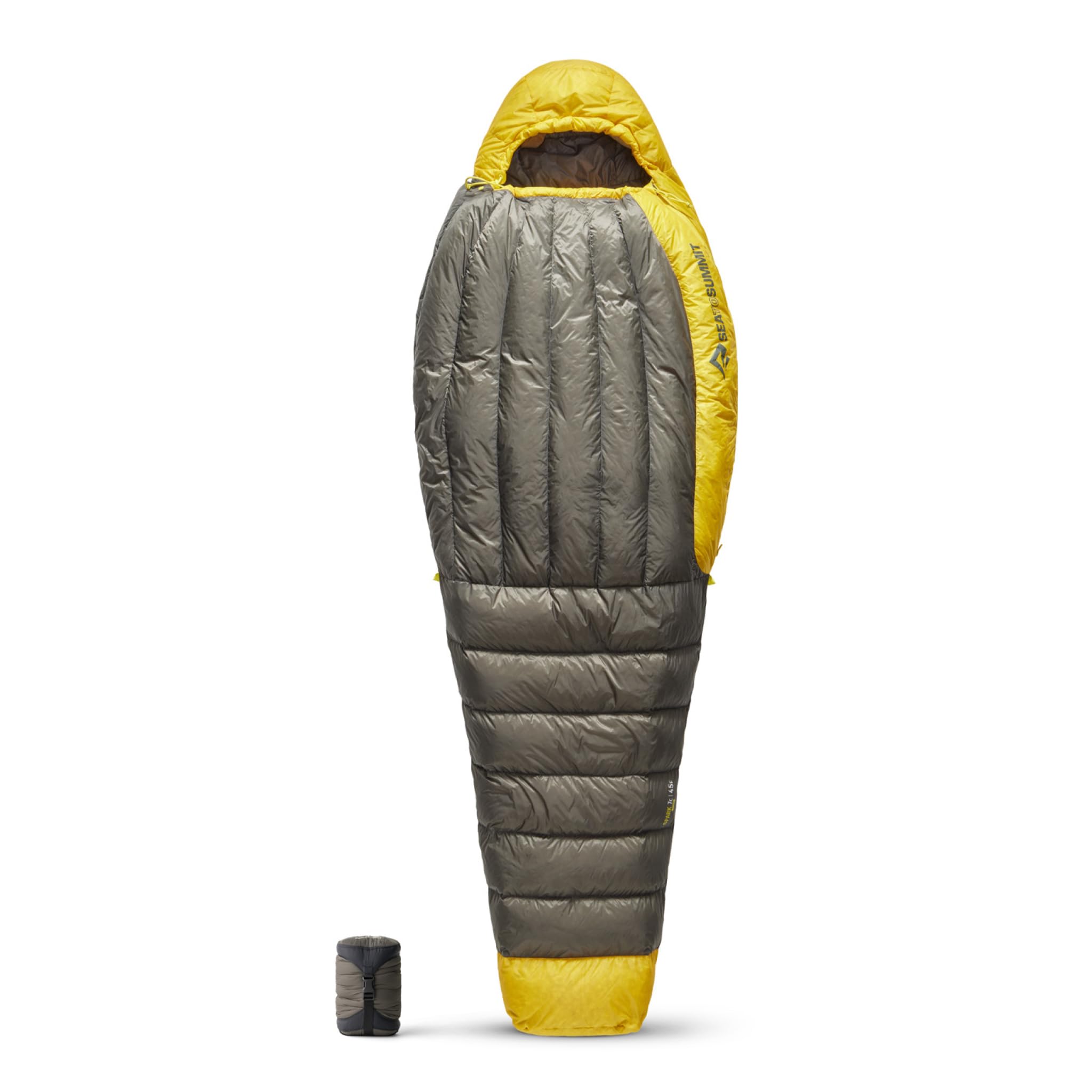
The Sea to Summit Spark is the ultralight benchmark for warm-weather backpacking. Weighing only 0.91 pounds, it uses 850+ fill-power RDS-certified down with a non-PFC Ultra-Dry treatment that improves moisture resistance without adding weight. The sewn-through baffle construction keeps production costs low and weight minimal, though it creates minor thermal bridges at the seams. The contoured mummy shape provides just enough room for a natural side-sleeping position without wasting interior volume.
The 10-denier shell is featherlight and highly compressible — the whole bag stuffs into a volume that fits in the palm of your hand. The YKK #5 zipper operates smoothly and includes an anti-snag slider. The 45°F comfort rating means this bag is best suited for summer alpine trips, bikepacking, or hut-to-hut tours where temperatures stay above 40°F. The included compression sack is minimal, which keeps weight down but offers less protection for the delicate shell fabric.
Customer feedback consistently highlights the shockingly low weight and premium materials, with users noting that the regular size fits a 5’10” sleeper with room to spare. Some report the sewn-through baffles create cold spots at the seams when temperatures approach the lower limit, so this bag works best when paired with a quality insulated pad. For ultralight purists chasing sub-10-pound base weights, this is the definitive choice in its temperature range.
Why it’s great
- Unmatched 0.91-pound weight for a full-length mummy bag
- 850+FP down offers premium loft and compressibility
- Ultra-Dry treatment improves down performance in light moisture
Good to know
- 45°F comfort limit makes it strictly a warm-weather bag
- 10D shell is delicate and requires careful handling
- Sewn-through baffles can create cold spots near the limit
2. Big Agnes Anthracite – Backpacking Sleeping Bag
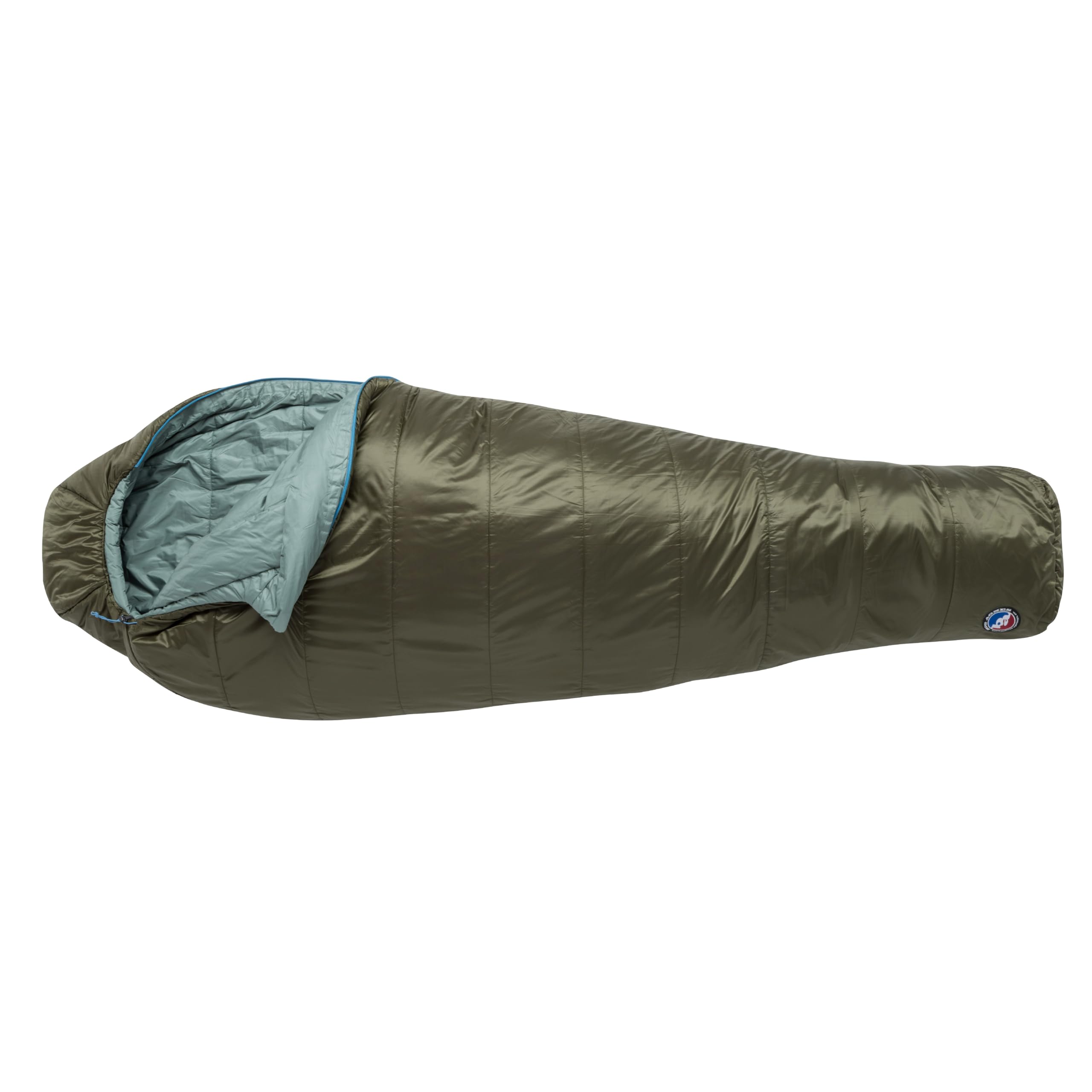
Big Agnes brings its technical design ethos to the synthetic insulation space with the Anthracite. The long model weighs just 2.3 pounds and compresses to a compact 9 x 8.5 inches — impressive for a 30°F synthetic bag. The FireLine Pro Eco insulation uses 100% recycled short-staple fibers that retain warmth even when damp, a clear advantage over down in humid conditions. The comfort-fit hood contours around the head shape and integrates a built-in oversized anti-draft collar to block cold air.
The recycled polyester ripstop shell and lining feature a PFAS-free DWR finish, aligning with modern eco-conscious manufacturing standards. The two-way anti-snag zipper allows easy foot venting and can mate with women’s bags to create a double-wide setup. The tapered cut reduces excess volume, improving thermal efficiency, but some users report the footbox feels small for larger feet. The bag pairs well with Big Agnes’s integrated pad sleeve system for restless sleepers.
Buyers appreciate the warmth-to-weight ratio, noting that the bag keeps them comfortable into the low 40s with just a base layer. The synthetic insulation does not require the same care as down — it dries faster during the day if it gets damp at night. The compressed size still exceeds a typical down bag of the same temperature rating, but for backpackers who prioritize sustainability and damp-weather reliability, the Anthracite delivers a rare combination of eco-friendly materials and trail-ready performance.
Why it’s great
- 100% recycled synthetic insulation retains warmth when damp
- Low weight and compact pack size for a synthetic design
- Excellent pad compatibility and anti-draft collar
Good to know
- Footbox runs narrow for some users
- Less compressible than premium down alternatives
- Limited temperature options in the current lineup
3. Kelty Cosmic 20 Down Mummy Sleeping Bag

The Kelty Cosmic 20 Down is a time-tested classic that bridges the gap between affordability and real backpacking performance. The 550 fill-power RDS-certified down provides reliable loft for three-season use, with an ISO limit rating of 21°F and extreme rating of -11°F. The regular size weighs 2.58 pounds — reasonable for a 20°F bag at this price point — and compresses to 13 x 7 inches. The recycled nylon shell and polyester liner incorporate a PFAS-free DWR finish, making this a more sustainable choice than many similarly priced options.
Two-way zippers allow ventilation from the foot end, and the draft tube prevents cold air from sneaking in along the zipper track. The hood cinches tightly around the head, and the draft collar adds an extra layer of warmth at the neck. The mummy cut is relatively snug in the shoulders — some broad-chested users report difficulty zipping up comfortably — but the footbox provides adequate room for natural foot splay. The stuff sack uses compression straps to reduce packed volume further.
User reviews consistently praise the warmth-to-cost ratio, with many reporting comfortable sleep in the upper 20s when wearing a base layer. The down loft holds up well over multiple seasons when properly stored uncompressed. The main compromises are the relatively low 550FP compared to premium bags and the snug shoulder fit. For backpackers who want a legitimate 20°F down bag without spending over , the Cosmic 20 remains one of the most proven options on the market.
Why it’s great
- Genuine 20°F rating at a mid-range price point
- RDS-certified down with ethical sourcing traceability
- Good compressibility for the temperature rating
Good to know
- Snug shoulder fit may not suit broad-chested users
- 550FP is less premium than higher-fill alternatives
- Down loses insulation value when wet without treatment
4. Sea to Summit Hamelin Synthetic Sleeping Bag
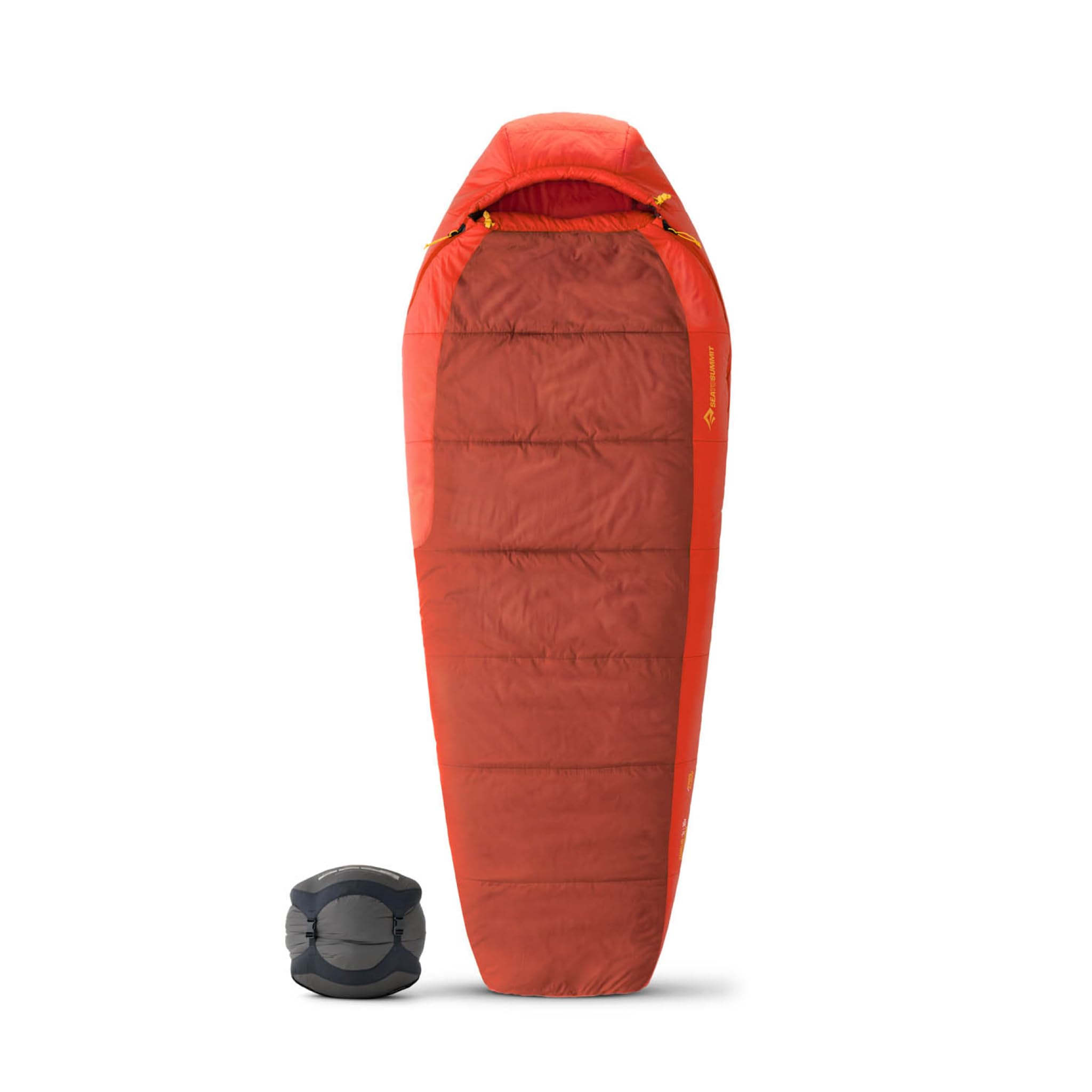
Sea to Summit’s Hamelin Synthetic balances thermal efficiency with a roomier cut that side sleepers will appreciate. The 30°F regular weighs 2.48 pounds and measures 77 x 31 inches, offering more shoulder and hip space than a typical mummy bag. The body-mapped Revive Loft insulation uses recycled polyester fibers arranged to maximize warmth over the torso while reducing bulk in less critical areas. The Free Flow full-length side zipper uses double sliders, allowing ventilation from either end or complete unzipping into a flat quilt.
One standout feature is the shoulder snap system: close the snaps at the shoulders, open the footbox zipper, and wear the bag like a poncho around camp — a clever addition for cold mornings. The recycled fabric shell and non-PFAS DWR finish make this an environmentally friendly option. The bag’s shape is thermally efficient without feeling restrictive, and the 31-inch width provides genuine room to shift sleeping positions.
Buyers note that the regular size fits a 5’10” sleeper well, while taller users should opt for the Long version. The compression sack reduces volume impressively for a synthetic bag, though it still exceeds a comparable down-packed size. The barrel locks on the drawcords are small and somewhat difficult to adjust with cold hands. For backpackers who toss and turn at night, the Hamelin offers synthetic reliability without the confinement of a traditional mummy bag.
Why it’s great
- Roomier cut ideal for side sleepers and restless movers
- Full-length zipper converts bag into a quilt or camp poncho
- Recycled synthetic insulation with good moisture resistance
Good to know
- Barrel locks on drawcords are finicky in cold weather
- Synthetic fill still larger packed than down
- 30°F rating is warm but not extreme-cold capable
5. Kelty Cosmic Synthetic Fill 20 Degree Backpacking Sleeping Bag

Kelty’s Cosmic Synthetic delivers a legitimate 20°F rating using Cirroloft synthetic insulation at a price that undercuts most down competitors. The regular size weighs 2.81 pounds without the sack — heavier than down equivalents but reasonable for synthetic, especially given the reliable warmth in wet conditions. The 380T nylon taffeta face fabric resists abrasion, and the 50D polyester taffeta lining feels smooth against skin. The integrated compression sack helps reduce packed volume, and the stuff size comes in at roughly 14 x 9.5 inches when compressed.
The tailored fit provides a natural footbox with extra toe wiggling room, a welcome change from constricting mummy designs. An exterior stash pocket holds small essentials like a phone or headlamp. The two-way zipper starts about two inches from the bottom, allowing foot venting when the temperature climbs. The draft tubes along the zipper prevent heat loss, and the left-side cinch adjusts the hood snugly. Users report that the bag feels warm in the mid-30s with a base layer and a Puffy jacket.
Reviewers highlight the excellent value, with many comparing the quality to bags costing twice as much. The synthetic fill does not require the careful storage that down demands, and it maintains loft better after repeated compression on long trips. The bag does run slightly snug for larger users — one 6’1″, 238-pound reviewer found it fitted with room but noted the mummy shape can feel restrictive. For budget-conscious backpackers who need reliable 20°F warmth in variable conditions, the Cosmic Synthetic stands out as the best-value synthetic bag in this guide.
Why it’s great
- True 20°F performance at a budget-friendly synthetic price
- Cirroloft insulation maintains loft when damp
- External stash pocket and leg vent zipper add trail-ready utility
Good to know
- Heavier and bulkier than down bags at the same rating
- Can feel snug for broad-shouldered or tall users
- Zipper can snag if zipped too quickly
6. Naturehike Ultralight Backpacking RDS Down Sleeping Bag (CWM400)

Naturehike positions the CWM400 as a professional entry-level down bag that punches well above its weight class. At just 1.74 pounds (790 grams), it undercuts many premium bags by nearly a full pound while still carrying 295 grams of 650FP RDS-certified duck down. The recommended comfort range sits at 42.8 to 51.8°F, with an extreme limit of 32°F — a solid three-season range for summer alpine and spring/fall shoulder season use. The stowed size of 13.7 x 6.3 inches fits easily into a 50-liter pack.
The 20D 400T nylon shell and lining are wear-resistant and treated with a water-repellent finish to resist ground moisture. The individual down channel design prevents the fill from migrating, ensuring even coverage across the body. The YKK two-way zipper operates smoothly and allows the bag to be mated with another CWM400 bag for a two-person setup. Lint-free Velcro closures protect the zipper from snagging, and the highly elasticized stowage opening seals heat around the neck effectively.
User reviews frequently mention the bag’s excellent warmth-to-weight ratio, with several cold sleepers reporting comfort near freezing when wearing a mid-layer. The bag opens completely flat for use as a quilt. The main criticism is a drawstring design flaw where the closure stitching is weak — some users recommend reinforcing it before the first trip. The bag runs long for shorter users. For backpackers on a tight budget who want genuine down performance without the premium price tag, the Naturehike CWM400 delivers remarkable value.
Why it’s great
- Sub-1.8-pound weight with genuine 650FP down
- Opens flat for quilt versatility and can mate with a second bag
- YKK zipper with anti-snag Velcro design
Good to know
- Drawstring closure has weak stitching reported by multiple users
- Comfort rating is limited to 42°F and above
- Long length may not suit shorter sleepers
7. ATEPA Down Sleeping Bag for Adults (3-in-1 Design)
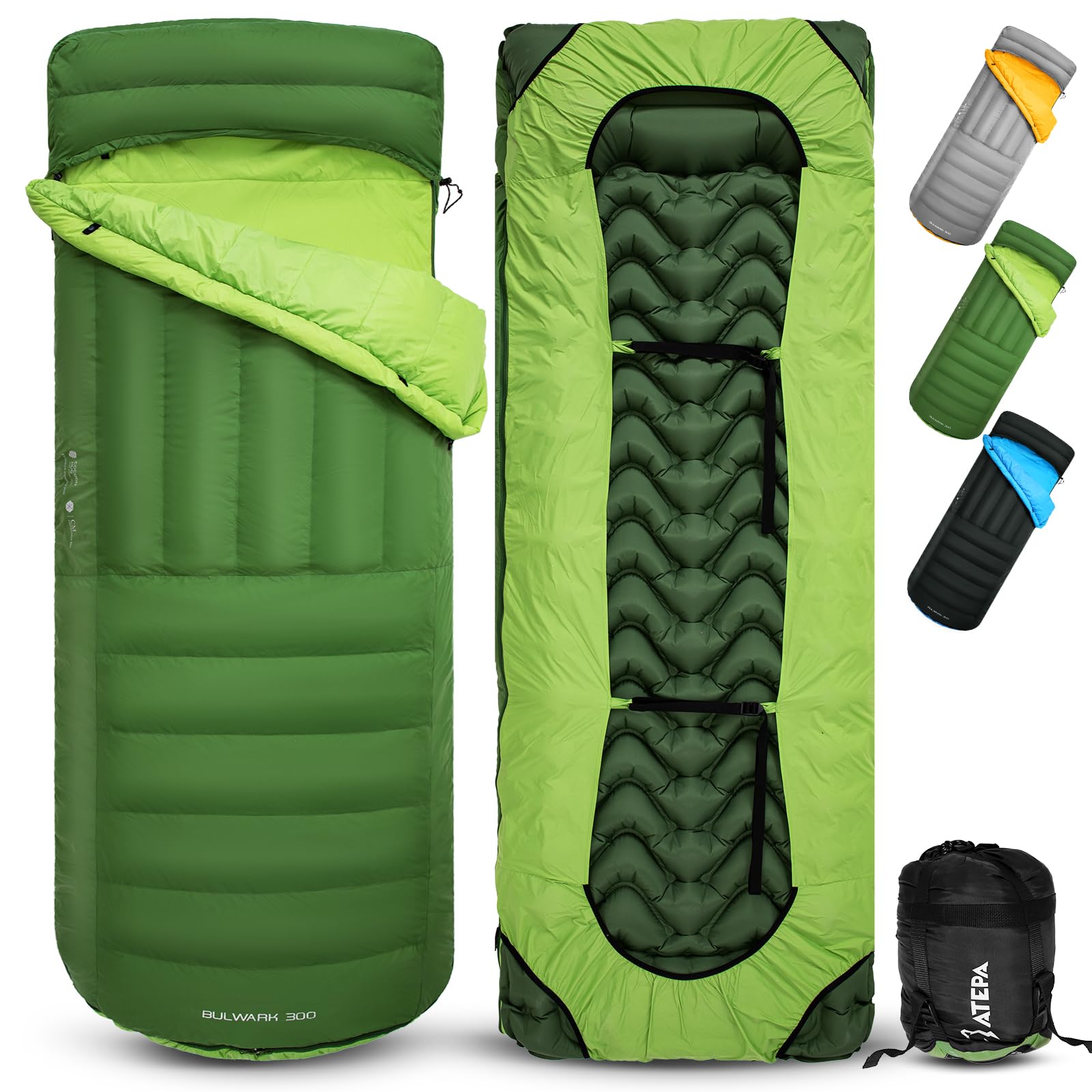
ATEPA’s 3-in-1 design brings versatility that most backpacking bags lack. The 650FP Coldmaster Down fill provides a comfort rating around 50°F with a limit at 45°F and extreme rating of 25°F. At 2.5 pounds, it is heavier than pure ultralight options, but the multi-function design compensates: it functions as a traditional mummy bag, unzips into a blanket, or converts into a poncho for campfire lounging. The pad attachment system uses reinforced corner straps for a 360-degree secure fit on an air pad.
The 3D baffle stitching uses both vertical and horizontal channels to prevent down migration and eliminate cold spots. The shell and lining use GRS-certified 20D 400T recycled nylon with a water-resistant finish, making this one of the few eco-friendly down options at this price point. The bottom zipper allows foot ventilation in warmer weather, and the windproof drawstrings seal the hood effectively. The fully zipped dimensions measure 78.7 x 33.5 inches, providing ample room for users up to 5’11”.
User feedback highlights the pad straps as a game-changer for restless sleepers who slide off their pad at night. The poncho mode adds unexpected camp comfort. Some taller users report that the 72-inch maximum height recommendation is generous — those over 6 feet may find the bag tight. The pack size is noticeably larger than premium down bags, roughly the size of a football. For backpackers who want a single piece of gear that covers sleep, camp lounging, and emergency warmth, the ATEPA delivers genuine utility.
Why it’s great
- Pad attachment system prevents nighttime sliding reliably
- 3-in-1 design (bag, blanket, poncho) maximizes trail utility
- GRS-certified recycled nylon shell reduces environmental impact
Good to know
- 2.5-pound weight is heavy for the temperature rating
- Packed size larger than comparable down bags
- Not ideal for users over six feet tall
8. Naturehike Ultralight Down Sleeping Bag (650FP, 40.4°F)

Naturehike’s hybrid envelope-mummy design aims to solve the comfort-versus-efficiency tradeoff. The upper body uses a mummy cut that cinches around the head for warmth, while the lower body opens into a rectangular shape that allows leg movement and foot exposure. The 650FP RDS-certified down fill achieves a 40.4°F comfort rating with a total weight of just 2.0 pounds (910 grams). The packed size of 13.8 x 7.1 inches is competitive for the price.
The 400T 20D ripstop nylon shell resists snags and is treated for water repellency. The YKK zipper runs the full length and includes a draft tube to block cold air. The bag is available in regular (82.7 x 29.5 inches) and large (86.6 x 33.5 inches) sizes, offering flexibility for taller users. The high-elasticity neck closure prevents heat escape, and the hood draws tight around the face. The large size provides generous room for side sleepers who find standard mummy bags too constraining.
Owners consistently praise the bag’s combination of low weight, small pack size, and roomy foot section. Several note that the bag performs well in the 45-65°F range and feels loftier than expected for a 650FP bag. The zipper can snag occasionally, though careful operation usually solves this. The included storage bag is too small for uncompressed storage — users should purchase a larger cotton storage bag for long-term loft preservation. For budget-focused backpackers who prioritize leg freedom without sacrificing packability, this Naturehike bag hits a sweet spot.
Why it’s great
- Hybrid mummy-envelope shape offers rare leg freedom
- Sub-2-pound weight with 650FP RDS-certified down
- Available in regular and large sizes for taller users
Good to know
- 40.4°F comfort rating limits use to warmer conditions
- Zipper can snag if operated too quickly
- Storage bag is too small for proper uncompressed storage
9. TETON Sports Altos 20 Degree Sleeping Bag

The TETON Sports Altos is built for budget-conscious backpackers who need genuine cold-weather performance without complex features. The 20°F rating comes from lofty synthetic fill that provides water-resistant warmth — a significant advantage over budget down bags in damp conditions. At 3.5 pounds, it is the heaviest bag in this guide by a wide margin, but the tradeoff is a spacious 84 x 32-inch interior that accommodates broad-shouldered and tall users with ease. The boxed foot design provides ample room for natural foot positioning.
The compression sack uses heavy-duty straps to minimize packed volume, though it will never match down bags for space efficiency. The hood includes a cinch cord to seal in warmth, and the draft collar at the neck prevents heat from escaping. The two-way zipper allows ventilation from the foot end, and the water-resistant shell provides a barrier against condensation inside the tent. The bag is hand-wash only, which is standard for synthetic fills but requires more care than machine-washable alternatives.
User reviews confirm the bag performs well in the 30s with appropriate thermal layers, though some find the rating optimistic for true 20°F conditions. Several long-term owners note that the bag survived soaking rain on mountains like Mount Fuji and dried well the next day — a testament to synthetic resilience. The primary downside is the weight: at over 3.5 pounds, this bag eats into a backpacker’s total weight budget quickly. For car-accessible trailheads, basecamps, or backpackers who prioritize affordability and roominess above ultralight performance, the Altos delivers proven warmth at a market-leading price.
Why it’s great
- Genuine 20°F warmth with reliable synthetic performance in damp conditions
- Spacious interior fits larger body types comfortably
- Durable construction that survives wet weather exposure
Good to know
- 3.5-pound weight is heavy for dedicated backpacking use
- Compressed size exceeds most down alternatives significantly
- Temperature rating feels optimistic near the limit without extra layers
FAQ
Is down or synthetic insulation better for backpacking in rainy conditions?
How small should a backpacking sleeping bag compress for a 50-liter pack?
Can a 40°F bag be comfortable at 30°F with extra clothing layers?
What is a good weight for a three-season backpacking sleeping bag?
How important is the hood on a backpacking sleeping bag?
Final Thoughts: The Verdict
For most backpackers seeking the best backpacking sleeping bags, the winner is the Kelty Cosmic 20 Down because it delivers a genuine 20°F rating, RDS-certified down, and a proven design at a mid-range price that outperforms more expensive alternatives in warmth-to-weight value. If you prioritize pure ultralight performance for warm-weather trips, grab the Sea to Summit Spark and shave nearly a pound from your pack. And for damp-weather reliability where down fails, nothing beats the Kelty Cosmic Synthetic for 20°F warmth that still works when soaked.