
Struggling with a slice that sends your ball into the next fairway is the universal experience of every new golfer. You need a ball that forgives an off-center strike, flies straight enough to keep you in play, and doesn’t sting your wallet when it inevitably disappears into the woods. The right choice here can actually make the game more fun, faster.
I’m Min — the co-founder and writer behind Gadgets Feed. I’ve spent countless hours digging into dimple patterns, core compression ratings, and cover durabilities across the most popular entry-level models to separate the true beginner-friendly designs from the ones that just look the part.
Whether you’re heading to the range for the first time or finally trying to break 100, this guide cuts through the marketing noise to highlight the beginner golf balls that actually deliver straighter flight, better durability, and real value for the cost-per-round.
How To Choose The Best Beginner Golf Balls
The best beginner golf balls share a few consistent traits: a two-piece construction for maximum durability, a low-compression core (under 60 compression) that activates easily with slower swing speeds, and a Surlyn cover that resists scuffs and cuts. Higher-end multi-layer urethane balls offer more spin control, but they demand consistent ball-striking that new players rarely have.
Compression Rating Matters More Than You Think
Compression measures how hard you need to swing to deform the ball at impact. Soft balls (40-60 compression) compress more easily, generating distance even when your swing speed is under 85 mph. Hard tour-level balls (90-100 compression) feel like rocks off the face for beginners. Stick to the soft end of the spectrum.
Durability Is Non-Negotiable
A beginner will send a ball into trees, cart paths, and sand traps over the course of a round. Surlyn covers — found on nearly every entry-level ball — are significantly more resistant to scuffing and tearing than urethane covers. You want a ball that can survive a few tree trunks and still roll true on the green.
Alignment Aids Are a Hidden Gem
Many beginner golf balls now include printed alignment lines or arrows designed to help you aim putts and tee shots. While they won’t fix a slice overnight, they remove one variable from the putting equation and give new players a consistent visual reference at address.
Quick Comparison
On smaller screens, swipe sideways to see the full table.
| Model | Category | Best For | Key Spec | Amazon |
|---|---|---|---|---|
| Bridgestone e6 | Mid-Range | Soft feel with slice reduction | Multi-layer / 45g weight | Amazon |
| TaylorMade Distance+ | Mid-Range | Maximum distance off tee | 2-piece / React Speed Core | Amazon |
| Wilson Duo Soft | Premium Value | Ultra-soft feel for slow swings | 2-piece / Surlyn cover | Amazon |
| Callaway Supersoft Max | Premium | Higher launch for mid-handicaps | Multi-layer / 1.68″ diameter | Amazon |
| Vice Drive | Mid-Range | Low spin with distance focus | 2-piece / 312 dimple pattern | Amazon |
| Bridgestone e12 Contact | Premium | Straighter flight with tech | Multi-layer / Flexativ cover | Amazon |
| Wilson Chaos (24-pack) | Budget | Best value for high-loss players | 2-piece / Surlyn / 24 balls | Amazon |
In‑Depth Reviews
1. Bridgestone e6 Golf Balls
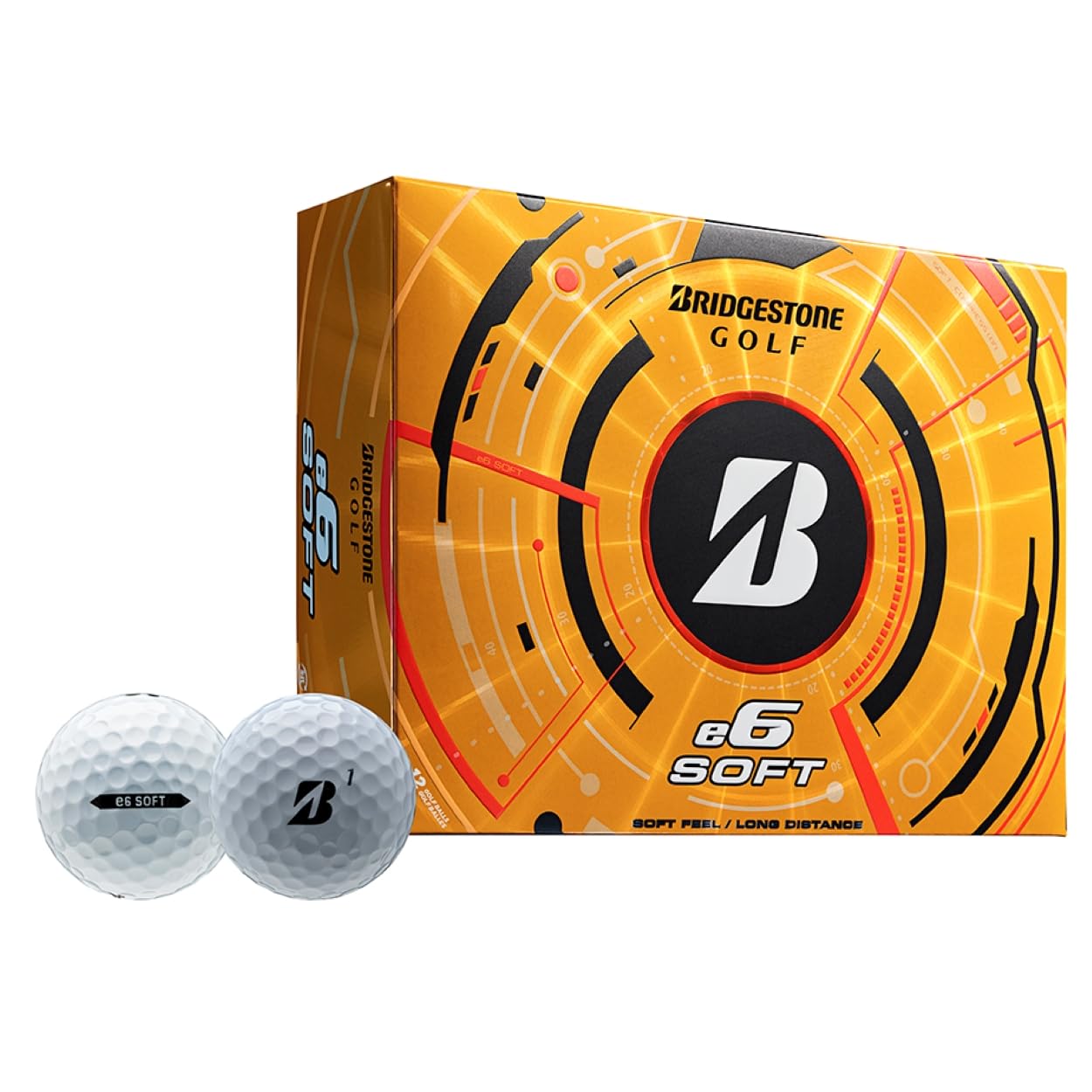
The Bridgestone e6 delivers a rare combination for this tier: a genuinely soft feel (45 grams per ball) with a multi-layer construction that actively helps reduce sidespin. High-handicap reviewers report that their natural slice becomes noticeably more manageable, and the seamless soft cover provides better control on approach shots than most 2-piece budget balls can offer.
Senior golfers and players with slower swing speeds (under 80 mph) will benefit most from the lower compression core, which compresses easily to generate ball speed without requiring a fast transition. The soft white color sits well on the green, and the durable rubber construction holds up across multiple rounds even when you catch a cart path.
At roughly per dozen, the e6 sits at the higher end of the entry-level price band but earns its spot with measurable performance gains that bridge the gap between a beginner ball and a mid-tier upgrade. It’s the single best investment for a new player who wants to improve without spending tour-ball money.
Why it’s great
- Soft seamless cover provides genuine spin control around greens
- Multi-layer design meaningfully reduces slice and hook spin for high handicappers
- Durable rubber construction survives multiple rounds without scuffing
Good to know
- Premium price compared to 24-pack budget options like the Wilson Chaos
- Soft feel may not suit players with swing speeds above 95 mph
2. TaylorMade Golf Distance+ Golf Balls
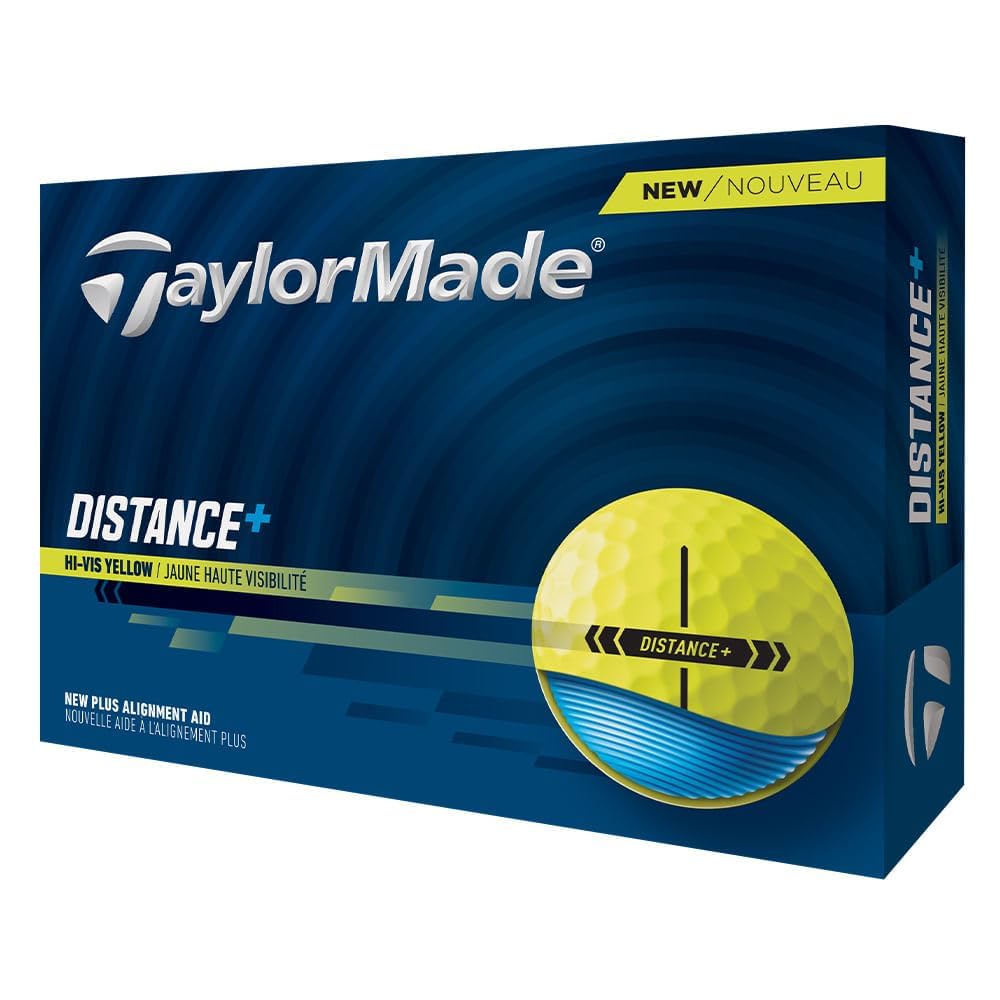
The TaylorMade Distance+ pairs a React Speed Core with an Extended Flight Dimple Pattern to maximize ball speed right off the driver face. Several verified reviewers describe this as their “daily driver” — the pearlescent yellow color is easy to track in flight and spot in the rough, and the 2-layer Ionomer cover balances moderate softness with durability that lasts multiple rounds.
Senior golfers specifically note that the low compression of this ball delivers longer carry distances with slower swing speeds. The new Plus Alignment Aid on the side helps beginners line up putts more confidently, taking one variable out of the stroke. At roughly per dozen, it undercuts most alternatives while still offering a polished feel.
The tradeoff is that the distance-first design feels firmer around the green — some users describe it as “hitting a rock” compared to soft urethane options. This ball is optimized for the tee box, not the short game, making it a better fit for players still working on getting off the tee cleanly.
Why it’s great
- React Speed Core produces noticeable distance gains for slower swing speeds
- Bright yellow color and alignment aid improve visibility and putting setup
- Ionomer cover is genuinely durable through multiple rounds
Good to know
- Harder feel off the face is not ideal for finesse shots around the green
- Distance-first design sacrifices spin control on approach shots
3. WILSON 2025 Duo Soft Golf Balls

Wilson’s 2025 Duo Soft claims the title of “world’s softest golf ball,” and the compression rating backs that up — it’s designed for players who want maximum feel at the expense of some distance. The 2-layer construction with a high-energy core generates enough ball speed for decent carry off the tee, while the Surlyn cover keeps the ball durable across multiple rounds.
A 15-handicap reviewer with above-average swing speed reported that the Duo Soft delivers “great compression and soft feel — better than Pro V1” in their experience, which speaks to how much the ultra-low compression changes the ball’s character. Senior golfers and those with arthritis or slower tempos will appreciate the lack of vibration at impact.
The catch is that the softness can work against you in windy conditions — the ball launches higher and gets pushed around more easily. Some reviewers found the feel almost too soft, noting that it lacked the feedback needed for distance control on longer putts. It’s a specialized tool for the feel-focused player, not a general daily driver.
Why it’s great
- Industry-leading soft feel reduces harsh vibrations for players with slower swing speeds
- High-energy core delivers surprisingly good distance despite low compression
- Surlyn cover holds up well through multiple rounds of play
Good to know
- Ultra-soft feel can feel mushy and lacks feedback on putts and chips
- Performs poorly in windy conditions due to higher launch and less stability
4. Callaway Supersoft Max Golf Balls

The Callaway Supersoft Max introduces a slightly larger diameter (1.68 inches) compared to standard golf balls, which users report contributes to a noticeably higher launch angle — one reviewer noted their 5-iron launched like a 7-iron in terms of trajectory. The multi-layer construction with a rubber core provides a soft feel off the clubface while maintaining enough structure for decent spin on approach shots.
Lady golfers and players with moderate swing speeds frequently mention that the Supersoft Max produces “perceived straighter, longer drives” compared to their previous ball, likely due to the combination of low spin and high launch. The soft feel extends to the putter, making lag putting feel more controlled. At roughly per dozen, it competes directly with the Bridgestone e6 but offers a different flight profile.
The main limitation is spin — it doesn’t grip the green as aggressively as multi-layer urethane balls, so approach shots from 150+ yards will release more than stop. It’s optimized for players who want help getting the ball airborne, not for those fighting a ballooning flight.
Why it’s great
- Slightly larger diameter encourages a noticeably higher launch for slow swing speeds
- Soft feel across all clubs, including the putter, for consistent feedback
- Reliable Callaway quality with strong durability on off-center hits
Good to know
- Lower spin means approach shots release more, requiring roll-out calculation
- Higher trajectory is more susceptible to wind interference
5. Vice Drive Golf Balls
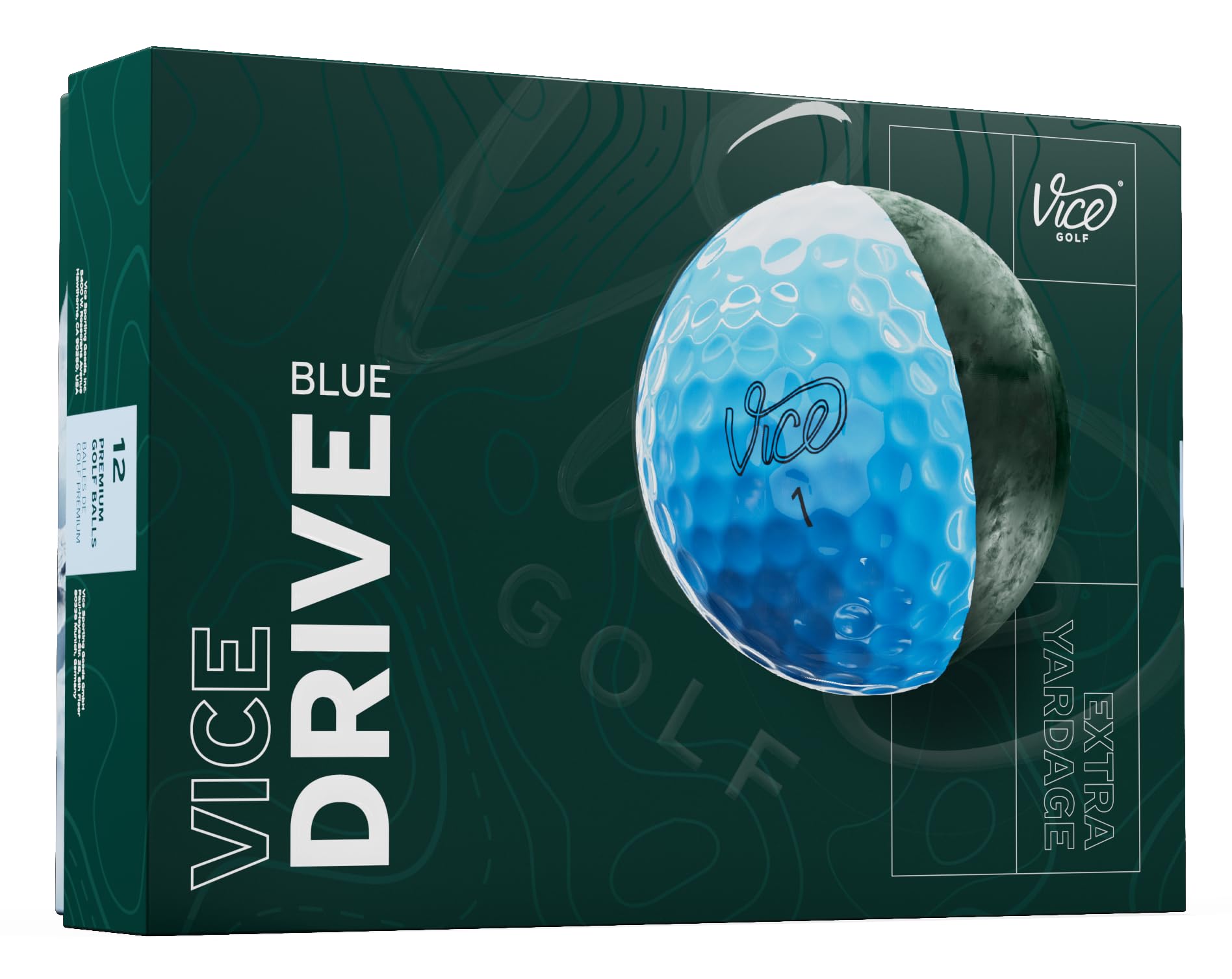
Vice Drive offers a 2-layer construction with a Surlyn cover and a 312 dimple pattern specifically designed to lower spin rate and extend flight trajectory. This makes it a strong choice for beginners whose primary goal is maximizing distance. The alignment aid on the ball features crisp edges that taper toward the target, giving you a consistent visual reference for tee shots and putts.
Reviewers consistently praise the value proposition — the ball performs comparably to more expensive options while costing noticeably less per dozen. The blue color option stands out against fairway grass, making it easier to track and find. At roughly per dozen, it’s one of the more affordable mid-range options in this list without feeling like a pure budget ball.
The tradeoff is that the low-spin design that helps with distance also limits stopping power on the green. It’s a straight-line distance tool, not a short-game weapon.
Why it’s great
- 312 dimple pattern effectively lowers spin and extends flight trajectory
- Premium alignment aid with tapered edges is genuinely useful for aim
- Competitive price point undercuts most comparable 2-piece options
Good to know
- Low-spin design means limited stopping power on approach shots
- Surlyn cover lacks the grippy feel of urethane for short-game finesse
6. 2023 Bridgestone Golf e12 Contact

The Bridgestone e12 Contact uses a Flexativ cover combined with Contact Force Dimple technology to create 46% more surface contact between the ball and the clubface, which translates to more efficient energy transfer and reduced sidespin. The multi-layer construction includes a soft core for feel and a mantle layer designed to work with the dimple pattern to cut slice and hook spin on full shots.
Reviewers who switched from Callaway Supersoft reported gaining 12 yards on drives and feeling the ball was more consistent off irons from 150 yards and in. The e12 Contact also performs well in cooler weather and fall conditions where softer balls can lose their spring — several golfers noted it kept its distance even in cold temperatures. At roughly per dozen, it’s the most expensive option here, but it packs genuine technology that makes a measurable difference.
The premium price means you’ll feel the sting a bit more when one goes into the water, which is the main argument against it for beginners who lose multiple balls per round. The performance gains are real, but the cost-per-round calculation favors cheaper options for high-loss players.
Why it’s great
- Flexativ cover and dimple tech measurably reduce slice and hook spin
- Better distance consistency in cold weather compared to softer budget balls
- Multi-layer construction offers improved feel and control around the green
Good to know
- Higher per-dozen cost makes lost balls more painful mentally
- Performance gains are marginal if swing speed is very slow
7. WILSON 2024 Chaos Golf Balls (24-Pack)

The Wilson Chaos is a 24-pack of 2-piece Surlyn balls designed for one specific purpose: keeping your round affordable when you’re losing balls every few holes. At roughly for two dozen, the cost-per-ball hovers around , which makes it the most forgiving option in this list from a financial standpoint. The multicolor assortment means you and your playing partners can easily tell your balls apart.
Reviewers highlight the solid distance off the tee and good durability for the price. The balls are bright and easy to spot in the rough, which saves time spent searching. While the Surlyn cover lacks the tackiness of premium urethane, it holds up well against tree trunks and cart paths without chunking or delaminating.
The compromise comes in feel and spin — the 2-piece construction feels harder off the putter and the ball generates very low spin, making approach shots run out more than you might want. Some reviewers note occasional burrs on the cover from manufacturing, and the firm feel may not suit players who prioritize touch over cost. But for a beginner who’s still learning to keep the ball in play, the Chaos is the economical choice that gets the job done.
Why it’s great
- 24-pack at roughly per ball makes it the best value for high-loss beginners
- Multicolor assortment helps identify your ball quickly on crowded courses
- Surlyn cover is genuinely durable against cart paths and tree trunks
Good to know
- Hard feel off the face lacks the touch needed for greenside finesse
- Low spin means approach shots release significantly on firm greens
- Occasional quality control issues with cover burrs reported
FAQ
How many golf balls should a beginner buy at once?
Do colored golf balls help beginners play better?
What compression is best for a slow swing speed under 80 mph?
Final Thoughts: The Verdict
For most users, the beginner golf balls winner is the Bridgestone e6 because it uniquely combines soft feel, genuine slice reduction, and multi-layer construction at a price that won’t make you wince when you lose one. If you want maximum distance off the tee without spending more, grab the TaylorMade Distance+. And for the player who loses a sleeve per hole and just needs affordable ammunition, nothing beats the Wilson Chaos 24-pack.