
Compressor oil isn’t just a lubricant—it’s the single component that determines whether your air compressor delivers reliable power for years or starts knocking and shedding metal flakes into your air tools after a few hard sessions. Choosing the wrong viscosity or a mineral-based blend when your pump requires synthetic can lead to carbon buildup, excessive heat, and premature seal failure.
I’m Min — the co-founder and writer behind Gadgets Feed. I’ve spent hundreds of hours breaking down technical data sheets, comparing flash points, thermal stability ratings, and load-bearing capacities across dozens of compressor oil formulations to identify what truly matters under sustained use.
This guide cuts through the marketing to deliver a practical, spec-focused breakdown of the best air compressor oil for rotary, vane, screw, and reciprocating pumps in workshop, fleet, and industrial environments.
How To Choose The Best Air Compressor Oil
Selecting the right compressor oil goes beyond grabbing a bottle of SAE 30 off the shelf. The wrong oil accelerates varnish formation, raises operating temperatures, and can void your pump warranty. Focus on these three technical parameters to match the oil to your compressor’s demands.
Viscosity Grade: ISO 46 vs ISO 68 vs ISO 100
Viscosity determines how well the oil film separates moving metal surfaces under load. ISO 46 (roughly SAE 20) is the standard for most rotary screw and vane compressors operating in moderate climates. ISO 68 (SAE 30) suits reciprocating piston pumps and warmer ambient conditions. ISO 100 (SAE 30-40) is reserved for high-temperature industrial applications and older splash-lubricated reciprocating compressors. Using a grade thinner than specified causes boundary metal contact; a grade thicker than needed starves bearings and increases startup torque.
Synthetic vs Conventional (Petroleum) Base Stocks
Full synthetic oils like polyalphaolefin (PAO) formulations withstand thermal breakdown at temperatures where conventional mineral oils begin to oxidize and form carbon deposits. Synthetic oils typically offer three to four times the service life of petroleum-based alternatives, maintain viscosity stability across wider temperature swings, and resist foaming under high-speed agitation. The trade-off is upfront cost—but annual oil change intervals (instead of quarterly) make synthetic the lower total-cost option for any compressor running more than a few hours per week.
Additive Package: Non-Detergent Is Mandatory
Air compressor oils must be non-detergent. Detergent additives found in automotive engine oils suspend contaminants and hold them in suspension so the oil filter catches them. Compressors have no oil filter, so detergent oils cause suspended particles to circulate and deposit as sludge on valves, intercoolers, and bearing surfaces. A dedicated non-detergent compressor oil contains anti-wear additives (typically zinc dithiophosphate), rust inhibitors, and foam suppressants—but nothing that keeps combustion byproducts in solution.
Quick Comparison
On smaller screens, swipe sideways to see the full table.
| Model | Category | Best For | Key Spec | Amazon |
|---|---|---|---|---|
| TRIAX Kompressor ISO 46 | Full Synthetic | Extreme temp & long life | 20,000+ hour service life | Amazon |
| Ingersoll Rand All Season Select | OEM Synthetic | Reciprocating compressors | 1L bottle covers 2 changes | Amazon |
| DEWALT D55001 | Full Synthetic | Hot-run piston pumps | Quieter operation after change | Amazon |
| Milton 1002 | Conventional | Budget fleet maintenance | 1-gallon petroleum ISO 100 | Amazon |
| Mobil Rarus 427 | Premium Synthetic | Industrial 80-gal+ units | 480°F flash point | Amazon |
In‑Depth Reviews
1. TRIAX Kompressor ISO 46 SAE 20 Full Synthetic

The TRIAX Kompressor is engineered with a full-synthetic PAO base that delivers a load-bearing capacity up to 1000% higher than conventional oils—a figure that translates directly to measurable boundary-layer protection during sustained high-pressure cycles. Its ISO 46 viscosity with true multi-vis performance means the oil remains fluid enough for startup at -49°F yet maintains film strength above 140°F, effectively eliminating the need for seasonal oil changes in unheated shops.
Customers report that the oil stays transparent even through break-in periods, and the non-detergent formulation prevents the varnish and sludge that plague mineral-based oils in rotary screw and reciprocating pumps. The 20,000-hour service interval—roughly five times longer than typical petroleum oils—means this quart outlasts most pump rebuild cycles when changed according to OEM schedules.
Compatibility across Ingersoll Rand, Atlas Copco, Quincy, DEWALT, and Sullair makes this a true one-bottle solution for shops operating multiple compressor brands. The 30% reduction in operating temperature reported by users reduces thermal stress on seals and bearings, directly extending the life of the air end.
Why it’s great
- Extreme temperature range from -49°F to 140°F+ without viscosity breakdown
- Non-detergent formula prevents carbon deposits and varnish on valves
- Compatible with rotary, vane, screw, AND reciprocating pumps
Good to know
- Not intended for oxygen or LNG compressor systems
- Transparent oil can be hard to read in sight glasses
2. Ingersoll Rand 38436721 All Season Select Synthetic

As the OEM formulation for Ingersoll Rand reciprocating compressors, the All Season Select synthetic blend is engineered specifically to combat carbon buildup in hot-running piston pumps. Users have documented head temperature reductions of 20°F after switching from generic ISO 100 mineral oil to this synthetic, which directly addresses the root cause of valve failures in high-cycle applications.
The 1-liter bottle provides exactly enough oil for two oil changes on a 60-gallon single-stage unit, making the per-change cost reasonable even though the upfront price sits at a premium level. Customer feedback consistently notes that the oil remains visually clean with no particulate formation even during the break-in period—a strong indicator of effective anti-wear additive chemistry without detergent carryover.
Performance in cold starts is particularly strong: the synthetic base maintains fluidity below freezing, reducing startup torque on the motor and preventing dry-starts that score cylinder walls. For any reciprocating compressor that cycles frequently in unheated spaces, this oil’s all-temperature stability justifies the investment.
Why it’s great
- OEM spec for Ingersoll Rand—zero warranty risk
- Reduces head temperature by 20°F compared to conventional oil
- 1L delivers two full oil changes on 60-gal compressors
Good to know
- Smaller bottle size means higher per-ounce cost
- May require early re-change if switching from mineral oil
3. DEWALT Compressor Oil 1-Quart (D55001)

The DEWALT D55001 is a full-synthetic SAE 30 (ISO 100) oil formulated specifically for the high thermal loads of reciprocating piston compressors. Users running Makita MAC700 and Chicago Pneumatic RCP220P units report that switching from conventional 20w or 40w oils to this synthetic resulted in noticeably quieter operation, cooler cylinder heads, and easier startup on 110V circuits—all direct indicators of reduced internal friction and better film retention.
A notable real-world data point from customer reviews: after 2.5 hours of continuous use over an 8-month period, the oil remained visually clean with no metal flakes or darkening, suggesting excellent oxidation resistance and anti-wear additive longevity. The blue tint makes it easy to see in the sight glass—a small but practical advantage over clear synthetics.
The ISO 100 viscosity rating makes this ideal for warmer ambient conditions and older pumps with looser tolerances. For compressors in the 2-6 HP range that see intermittent heavy use, this oil provides the thermal margin that prevents varnish formation during cooldown cycles.
Why it’s great
- Full synthetic eliminates carbon deposits and metal flaking
- Blue tint improves sight-glass visibility for level checks
- Quieter operation reported across multiple compressor brands
Good to know
- ISO 100 viscosity may be too thick for rotary screw pumps rated for ISO 46
- Premium price per quart compared to conventional alternatives
4. Milton 1002 High Performance Conventional ISO-100

The Milton 1002 is a conventional petroleum-based ISO 100 compressor oil packaged in a full gallon container, delivering the lowest cost-per-ounce in this roundup. This is not synthetic—it’s a straightforward non-detergent mineral oil designed for fleet and plant maintenance where multiple compressors consume oil at a steady rate and change intervals are short.
Customer feedback from industrial users confirms that the oil performs reliably in standard reciprocating and splash-lubricated pumps when changed at the manufacturer’s recommended intervals. One user noted that swapping all three of their shop compressors to this Milton oil resulted in one unit running visibly cooler—likely because the previous oil was either contaminated or the wrong viscosity grade.
For compressors that see light intermittent duty in climate-controlled environments, this petroleum oil provides adequate protection at a fraction of the synthetic cost. The 1-gallon jug is practical for topping off multiple units, but users should plan for 500-hour or quarterly change intervals rather than the extended schedules synthetic oils allow.
Why it’s great
- Lowest cost per ounce for high-volume users
- Non-detergent formula safe for reciprocating piston pumps
- 1-gallon jug ideal for multiple-compressor top-offs
Good to know
- Petroleum base—not synthetic—requires more frequent changes
- ISO 100 viscosity too heavy for rotary screw pumps designed for ISO 46
5. Mobil Rarus 427 Compressor Oil, 1 Gallon
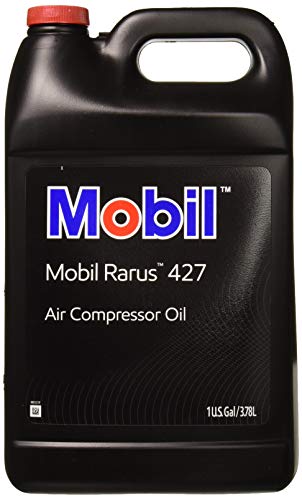
The Mobil Rarus 427 is a heavy-duty synthetic compressor oil engineered for industrial-scale reciprocating and rotary vane compressors where thermal stress is extreme. Its 480°F flash point is a full 260°F higher than standard synthetic compressor oils, providing a massive safety margin against oil vapor ignition in high-temperature discharge lines—a critical consideration for continuous-duty 80-gallon setups running at 175 PSI.
Users running Fisher 7.5 HP 80-gallon compressors report noticeably quieter operation after switching to Rarus 427, with the 1-gallon jug delivering enough oil for two complete changes plus residual volume for periodic top-offs. The synthetic base provides oxidation stability that keeps the oil from thickening or forming sludge even when the compressor cycles dozens of times per day in hot workshops.
For compressors that operate near their thermal limits or in environments where ambient temperature regularly exceeds 100°F, the Rarus 427’s high flash point and thermal stability reduce the risk of carbon deposits on discharge valves—the leading cause of efficiency loss and unplanned downtime in industrial compressed air systems.
Why it’s great
- 480°F flash point provides extreme thermal safety margin
- 1 gallon covers two changes on large 80-gal compressors
- Full synthetic resists sludge and viscosity breakdown
Good to know
- Premium pricing—overkill for small hobbyist compressors
- Not labeled for rotary screw pumps; verify OEM spec first
FAQ
Can I use SAE 30 motor oil in my air compressor?
How often should I change synthetic compressor oil?
What happens if I use the wrong viscosity in my rotary screw compressor?
Final Thoughts: The Verdict
For most users, the best air compressor oil winner is the TRIAX Kompressor ISO 46 because its full-synthetic formulation delivers 20,000+ hours of service life, extreme temperature tolerance from -49°F to 140°F+, and compatibility across rotary, vane, screw, and reciprocating pumps—all at a mid-range price point. If you want OEM peace of mind specifically for reciprocating piston compressors, grab the Ingersoll Rand All Season Select. And for industrial-grade thermal protection in large 80-gallon setups, nothing beats the Mobil Rarus 427 with its 480°F flash point and proven quieting performance.