
A 3D printer that prints flawlessly at home can still produce shifting layers and ringing artifacts if the surface underneath it vibrates even slightly during high-speed moves. The wrong table turns a precision tool into a source of constant failed prints, wasted filament, and frustration. Finding a dedicated surface that absorbs vibration, supports heavy payloads, and organizes the growing collection of spools and tools is the difference between a hobby that works and one that fights you at every layer.
I’m Min — the co-founder and writer behind Gadgets Feed. After analyzing dozens of load tests, stability ratings, and real-world user reports across workshop furniture designed for additive manufacturing, I’ve narrowed down the models that actually deliver the rigid foundation serious printing demands.
This guide breaks down the seven most reliable options on the market, covering weight capacities, vibration control, filament storage, and built-in power solutions so you can confidently pick the best 3d printer table for your specific setup.
How To Choose The Best 3D Printer Table
Picking a table for your 3D printer isn’t about finding any flat surface — it’s about finding one engineered to cancel vibration, bear static loads of 50 pounds or more, and keep your workflow organized. Three factors will determine whether your table helps or hurts your print quality.
Frame Stiffness and Vibration Damping
The frame’s structural rigidity directly affects print quality. Tables built from 25mm heavy-gauge square steel tubes resist torsional flex far better than standard 20mm tubing. Some premium stands go further by integrating high-density polymer pads that absorb up to 75% of the kinetic energy transferred from the printer’s moving gantry during rapid infill passes. Without this damping, you’ll see ghosting on vertical surfaces.
Weight Capacity and Surface Dimensions
A typical enclosed FDM printer like a Bambu Lab X1C or Creality K1 weighs around 30 to 40 pounds. Add a filament dryer, an AMS unit, and spare spools, and your total load can hit 80 pounds or more. Look for tables rated for at least 130 pounds on the top shelf, and check that the depth is at least 20 inches to accommodate the footprint of modern enclosed printers with clearance for rear cable bundles.
Storage Configuration and Accessibility
Filament spools need to stay dry and organized, not piled on a floor shelf. The best tables include dedicated spool holders or tiered racks that keep each roll accessible without unstacking. Drawers for nozzles, scrapers, and PTFE tubes prevent small parts from disappearing. Integrated power strips with USB ports also eliminate the rat’s nest of extension cords that typically collects behind a printer station.
Quick Comparison
On smaller screens, swipe sideways to see the full table.
| Model | Category | Best For | Key Spec | Amazon |
|---|---|---|---|---|
| ARTINRACK TR44 Dual Stand | Premium Dual | Two-printer farms | 580 lbs total capacity | Amazon |
| PAKASEPT Pegboard Station | Premium | LED-lit organization | 300 lbs capacity | Amazon |
| GIASSVIO SK521 4-Tier | Premium Mid | Mass filament storage | 60+ spool capacity | Amazon |
| Poweruck PRT22 | Mid-Range | Vibration-sensitive prints | 75% vibration damping pads | Amazon |
| Natwind 3-Tier Rolling Stand | Mid-Range | Height-adjustable setup | 300 lbs total load | Amazon |
| Fannova 23.6″ Square Stand | Mid-Range | Large oversized printers | 200 lbs per shelf | Amazon |
| AHOWPD AH9200 Stand | Budget | Entry-level compact | 4-row filament rack | Amazon |
In‑Depth Reviews
1. ARTINRACK TR44 Dual 3D Printer Stand
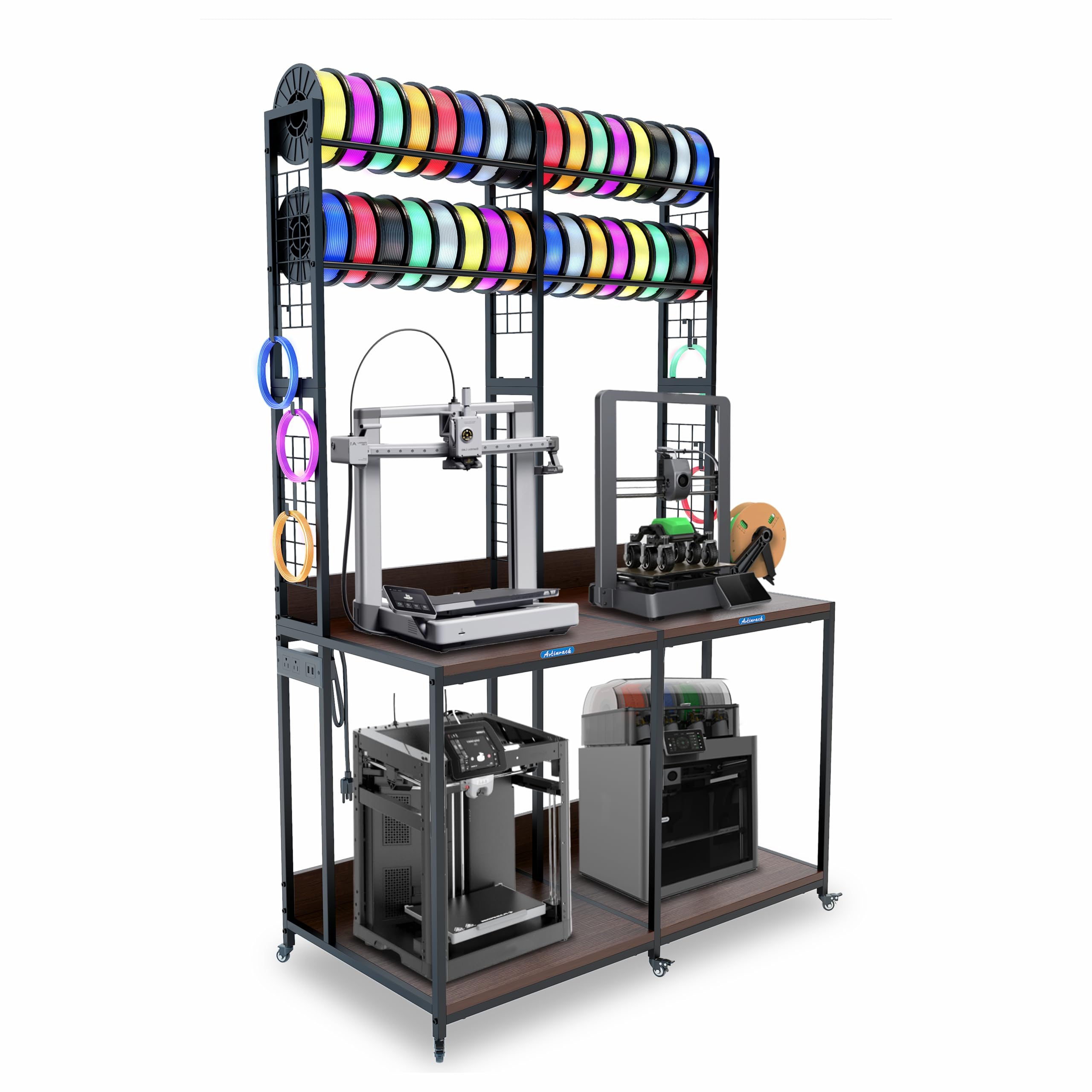
The ARTINRACK TR44 redefines what a dedicated printer table can be by merging two workbenches into a single 47-inch-wide continuous surface. This dual-station design allows you to run an FDM printer and a resin printer side by side without crowding, with a total weight capacity of 580 pounds that comfortably supports even heavy enclosed models like the Bambu Lab X1E paired with a drying chamber. The built-in power hub distributes six AC outlets and four USB ports across both stations, so you never have to reach behind the table to plug in a filament dryer or laptop.
Assembly is straightforward thanks to labeled parts and clear instructions, though a few users noted that installing the casters early in the process avoids having to flip the fully assembled unit onto its face. The heavy-duty swivel casters lock at all six wheels simultaneously, keeping the table absolutely stationary during high-acceleration prints. With a 73-pound frame and thick MDF wood panels, this stand feels planted even on carpeted workshop floors.
The generous 23.6-inch depth provides enough clearance for rear-mounted filament feeds and cable management channels. The lower shelf holds up to 60 spools without interfering with the workspace above. For anyone running a small print farm or needing a single stable platform for multiple machines, this is the most future-proof option available.
Why it’s great
- Massive 580-lb total capacity handles multiple heavy printers
- Dual-station layout with 6 AC and 4 USB ports eliminates cord clutter
- Six locking casters provide rock-solid stability during rapid prints
Good to know
- Assembly takes about 90 minutes solo
- Bent hardware has been reported in a small number of units
2. PAKASEPT 3D Printer Stand with Pegboard & LED Lights
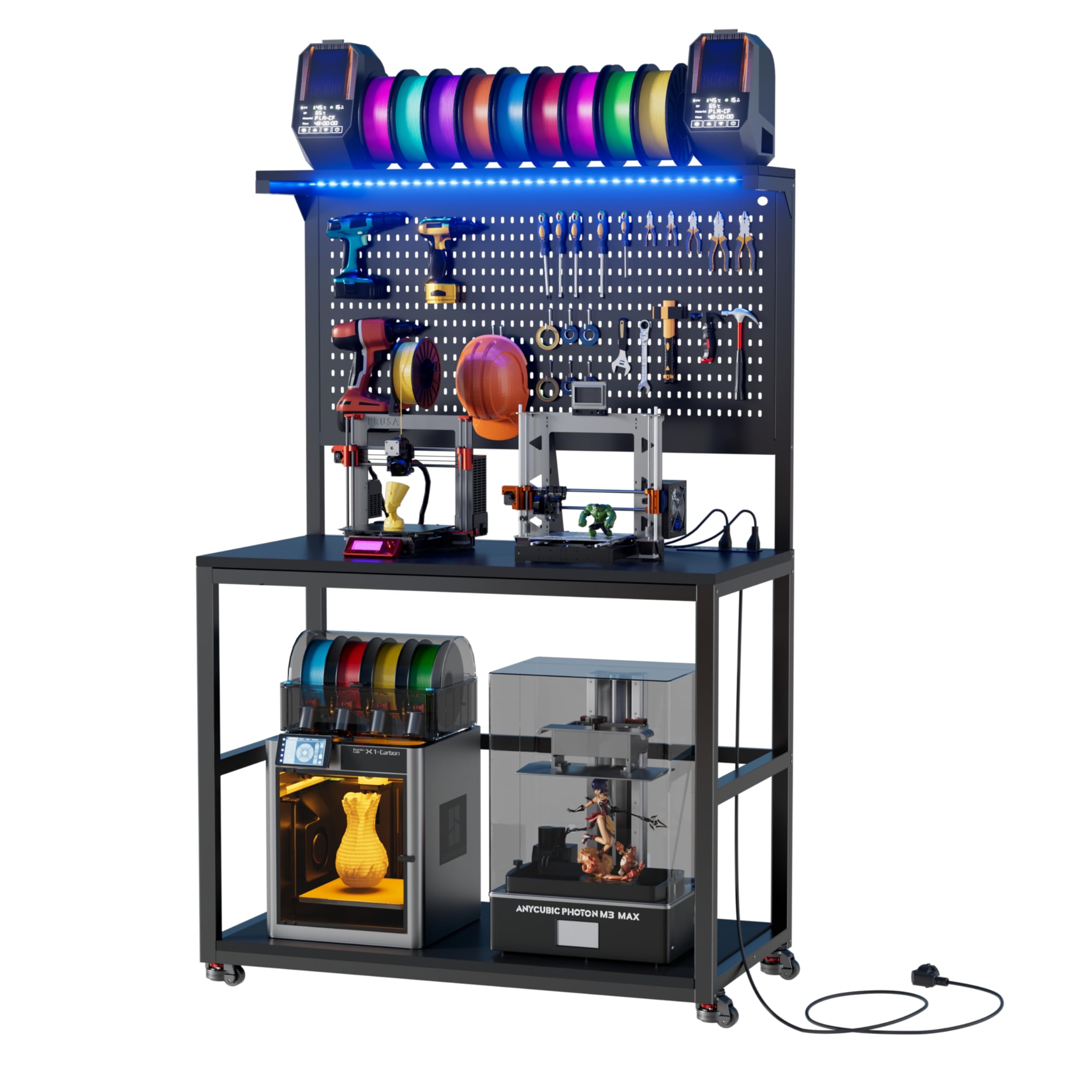
The PAKASEPT stand combines a 39.4-inch wide desktop with a rear pegboard and integrated LED light strip, creating a workstation that doubles as a display piece. The 300-pound total load capacity ensures even the heaviest resin printers or enclosed FDM units sit securely, while the leveling casters — with dual-wheel designs and positive locks — prevent any drift during long overnight prints. The pegboard uses 3/4-inch hole spacing, which is non-standard for most common tool hooks; you’ll need to source compatible accessories or use adhesive mounts.
The built-in power strip provides two AC outlets and two USB ports housed in a compartment above the desktop, keeping cords tidy and within easy reach. The LED system offers seven colors that can be cycled to match your workshop mood or to illuminate the print bed for visual inspection. The 24.4-inch depth accommodates Bambu Lab P2S and similar mid-size printers, though the top shelf may not clear an AMS Pro riser — removing the riser solves the issue.
Users consistently praise the table’s sturdiness and material quality, noting that the MDF panels resist sagging and the powder-coated metal frame shows no rust after months in a garage environment. Assembly is rated as moderate; all panels are labeled, and the included hardware fits properly without excessive force. This stand is ideal for hobbyists who want a clean, illuminated, and well-organized single-printer station.
Why it’s great
- Integrated pegboard and 7-color LED lighting enhance workspace organization
- Leveling casters with dual wheels prevent wobble on uneven floors
- 300-lb capacity handles heavy enclosed printers without flex
Good to know
- Pegboard uses non-standard 3/4-inch hole spacing
- Limited clearance for tall AMS risers on top shelf
3. GIASSVIO SK521 4-Tier 3D Printer Stand
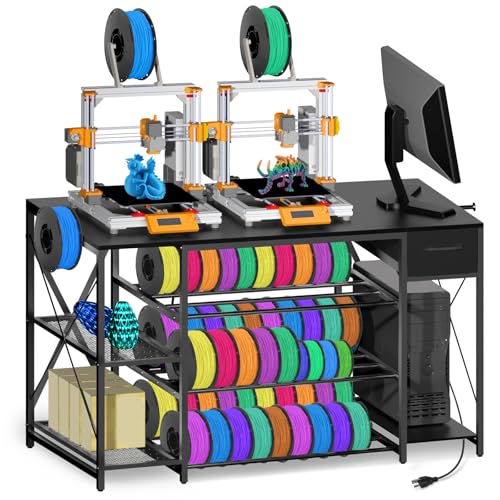
The GIASSVIO SK521 solves the chronic problem of filament overflow with a 51-inch-wide frame that holds up to 60 spools across three dedicated tiers plus a deep drawer for tools and accessories. Each side of the table features a vertical spool holder with three rods, allowing you to keep 20 rolls of 1-kilogram filament per tier without stacking them on top of each other. The desktop itself handles 132 pounds, enough for a mid-size FDM printer plus an AMS unit and a filament dryer.
A built-in charging station with four standard outlets and two USB ports sits above the desktop, powered by a 4.9-foot cord. The table includes eight adjustable feet rather than casters, giving you precise leveling on uneven workshop floors. The frame uses X-bar reinforcements on the lower shelves to prevent lateral racking, and the particle board panels are thick enough to resist bowing even under heavy spool loads.
Some users found that filament boxes stored on the lower shelves can interfere with the spools on the rods above if placed upright, but laying the boxes flat resolves the clearance conflict. The fabric drawer feels less premium than the rest of the build, but it keeps nozzles and scrapers organized. For makers who accumulate filament quickly and need every spool visible and accessible, this stand is the clear winner.
Why it’s great
- 60+ spool capacity with dedicated vertical rod racks on both sides
- Eight adjustable leveling feet for precise stability on uneven surfaces
- Built-in 4-outlet power strip with USB keeps cables managed
Good to know
- Filament boxes may interfere with spools above if stored upright
- Power cable under 5 feet; an extension is often needed
4. Poweruck PRT22 3D Printer Stand
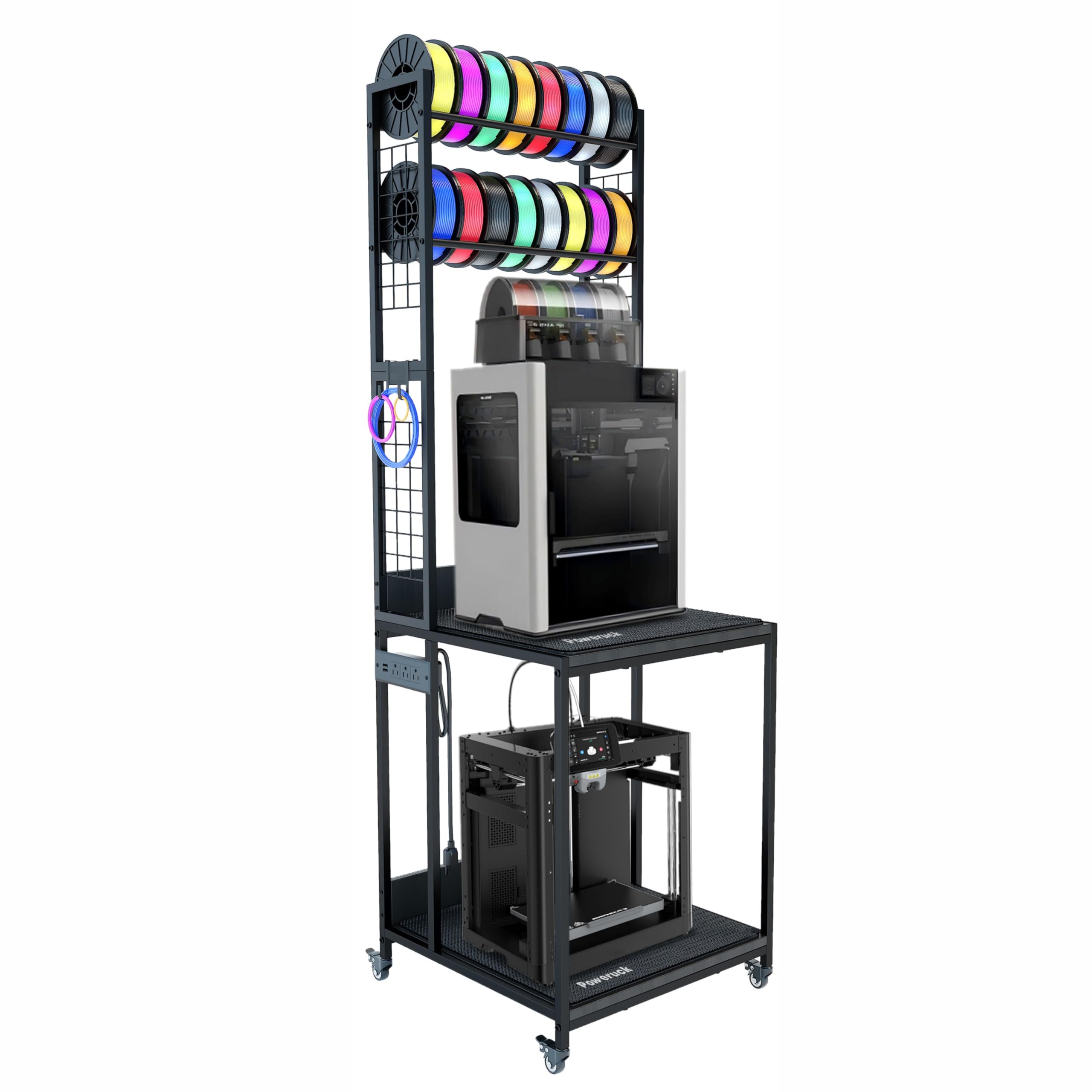
The Poweruck PRT22 is the only table in this lineup that ships with high-density polymer vibration damping pads specifically engineered for additive manufacturing. These pads sit between the frame and the floor surface, absorbing approximately 75% of the kinetic energy transferred from the printer’s moving gantry. The result is a noticeable reduction in ghosting and ringing artifacts on vertical walls, particularly during high-speed infill passes above 200 mm/s. The 24×24-inch desktop provides a square footprint that fits most enclosed printers with room to spare.
The stand includes a built-in power hub with three AC outlets and two USB ports, integrated directly into the rear of the frame. The 34-inch height between the top shelf and the lower shelf accommodates taller next-generation printers like the Bambu Lab H2D, and the lower shelf can hold a paper shredder or filament dryer without clearance issues. The frame is constructed from reinforced steel with a powder-coated finish, supporting up to 140 pounds of equipment.
Users report that the PRT22 pairs especially well with Creality and Bambu Lab machines, with assembly taking under an hour. The locking casters are smooth and secure, but the real star is the damping system — even on wooden workshop floors, vibration transmission is dramatically lower than with standard metal utility tables. For anyone chasing dimensional accuracy on functional parts, this stand delivers measurable print quality improvements.
Why it’s great
- Specialized polymer pads absorb 75% of printer vibration
- 34-inch height clearance fits tall next-gen printers
- Built-in 3-outlet power hub with USB reduces cord clutter
Good to know
- 140-lb capacity is lower than some multi-printer stands
- No height-adjustable middle shelf
5. Fannova 23.6″ Square 3-Tier Printer Stand
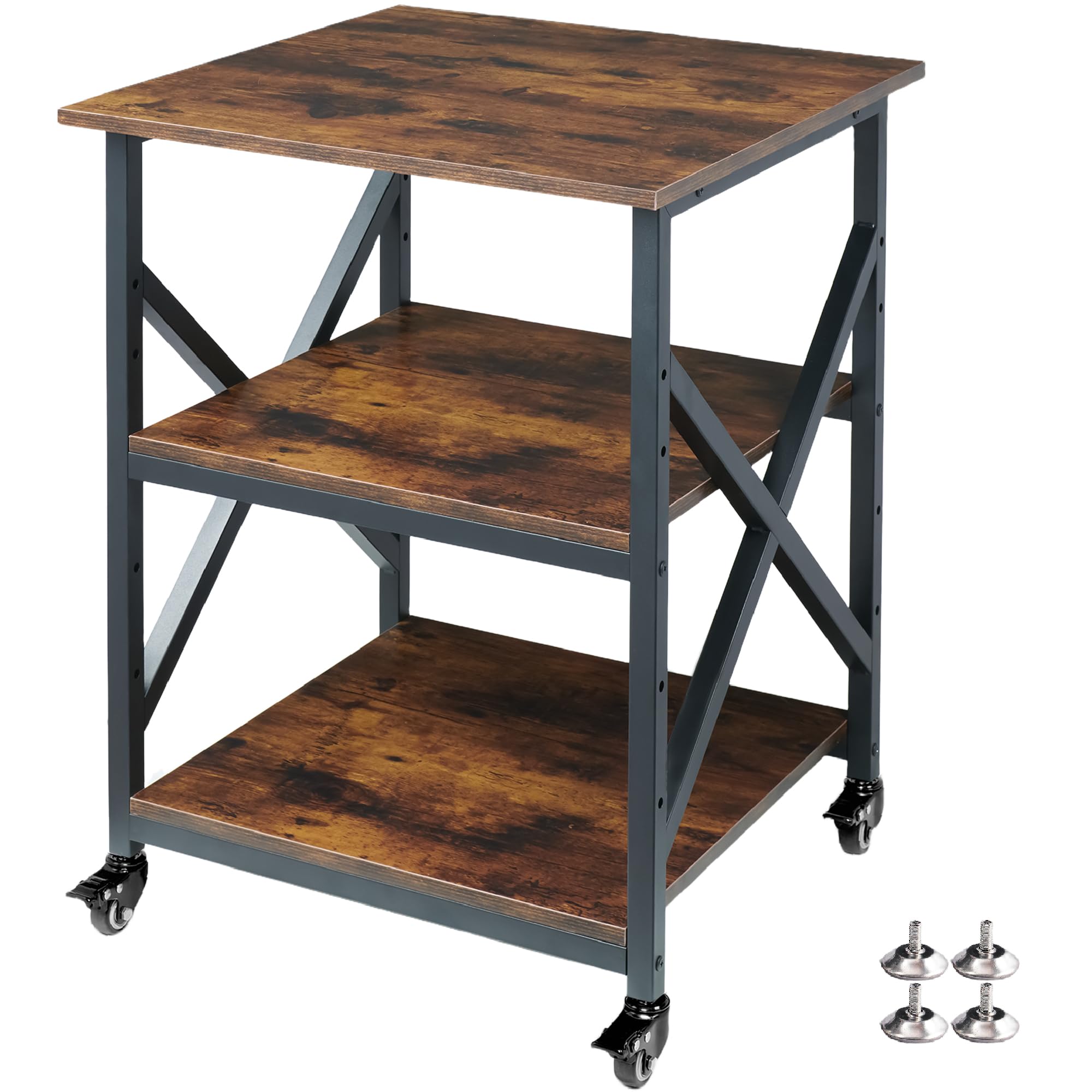
The Fannova stand punches above its segment with 25mm heavy-gauge square steel tubes — noticeably thicker than the 20mm tubes found on most competing racks at comparable pricing. Each shelf is rated for 200 pounds, supported by 15mm thick particle board with full-length under-shelf steel bars that eliminate sagging over time. The 23.6-inch square top surface provides a stable platform for oversized printers like the Bambu Lab H-Series, and the six horizontal crossbars tie the side frames into a rigid box structure that resists torsional twist.
The middle shelf offers three height adjustment positions spaced 4 inches apart, allowing you to customize the vertical clearance for tall resin printers or stacked filament dryers. All four casters feature independent locking mechanisms, a significant upgrade from the standard two-lock designs that allow the stand to drift during prints. The rustic brown finish and woodgrain texture make this table look more like furniture than industrial shop equipment, blending into home office environments seamlessly.
Assembly is simplified by threaded crossbars that screw directly into the frame without nuts or hex wrenches. Users report that the stand remains stable after six months of continuous use with no loosening at the joints. The included foot pads offer an alternative to casters for those who prefer a permanent stationary setup. For buyers who want industrial-grade strength without a premium price tag, this stand is the smartest choice.
Why it’s great
- 25mm steel tubes and 200-lb per shelf rating exceed typical mid-range specs
- Threaded crossbar assembly eliminates fiddly nuts and bolts
- Adjustable middle shelf accommodates varied equipment heights
Good to know
- 23.6-inch depth may be tight for very deep enclosed printers
- Casters lock individually rather than via a central mechanism
6. Natwind 24″x20″ 3-Tier Rolling Printer Stand
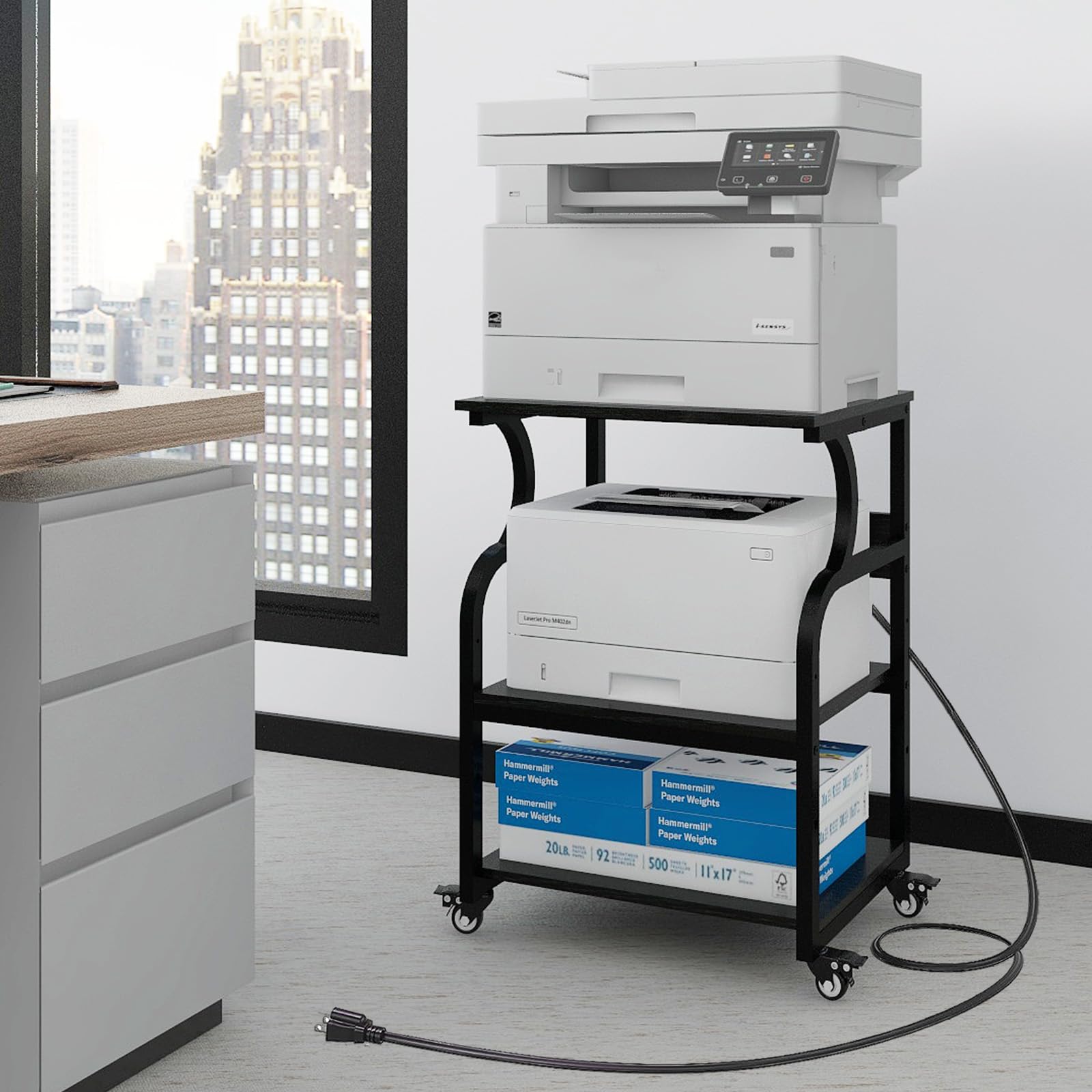
The Natwind stand brings a 300-pound total load capacity and a height-adjustable middle shelf to the mid-range segment, offering three vertical positions spaced 4 inches apart. The top shelf measures 24 inches by 20 inches, and while 20 inches of depth is tighter than the 24-inch options, it still accommodates popular FDM printers like the Creality Ender 3 series and the Bambu Lab A1 Mini without overhang. An extra load-bearing tube beneath the top shelf prevents bowing under heavy resin printers.
The built-in charging station on the rear panel provides three AC outlets with a 5-foot power cord, allowing you to plug in the printer, a filament dryer, and a laptop simultaneously. The powder-coated steel frame uses 1-inch square tubes, and the industrial-grade casters lock independently to keep the stand from rolling during active prints. Foot pads are also included for users who prefer a stationary configuration on uneven surfaces.
Users praise the easy assembly process, with all parts clearly labeled and pre-drilled holes aligning correctly. A few units arrived with small rust spots on metal components, but the overall sturdiness and stability exceed expectations at this tier. The 19.7-inch depth is the main limitation — make sure your printer’s footprint fits before purchasing. For a compact, mobile station that doesn’t compromise on strength, the Natwind delivers solid performance.
Why it’s great
- 300-lb total capacity with reinforced top shelf beam
- Height-adjustable middle shelf with three 4-inch positions
- Built-in 3-outlet power strip with 5-ft cord
Good to know
- 20-inch depth is too shallow for some large enclosed printers
- Occasional small rust spots reported on initial units
7. AHOWPD AH9200 3D Printer Stand with Filament Storage
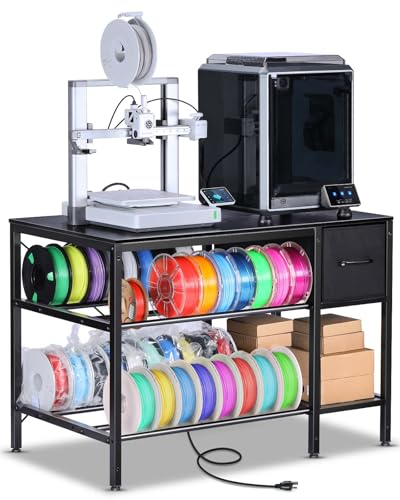
The AHOWPD AH9200 proves that an entry-level 3D printer table can still include thoughtful features like a built-in power strip and dedicated filament storage. The 39.4-inch wide desktop provides enough space for two smaller printers side by side, and the four rows of metal tube racks — two on the middle shelf and two on the bottom — keep spools organized and accessible. A fabric drawer slides out from below the desktop for storing nozzles, scraper blades, and hex keys.
The power hub includes two AC outlets and two USB ports, with a 140-centimeter power cord that offers flexibility in placement. The compact footprint of 28.4 inches deep means it fits into corners and small workshops where larger tables won’t. Assembly takes roughly 30 minutes, though some users reported missing screws — the bag should contain 40, but a few units arrived with only 34.
Stability is generally solid for the price, with most reviewers noting minimal wobble after tightening all fasteners. The table pairs especially well with the Bambu Lab A1 and Prusa CORE One, where the 37-pound frame provides enough mass to dampen light vibration. The spaced rods on the filament tiers can feel oddly positioned for larger spools, but overall this stand offers exceptional organization for the cost.
Why it’s great
- Built-in 2-outlet power strip with USB ports
- Four rows of filament tube racks for organized spool storage
- Compact 28-inch depth fits tight workshop spaces
Good to know
- Some units arrive with missing screws
- Rods on filament tiers can be awkwardly spaced for large rolls
FAQ
Can I use any heavy-duty utility table for a 3D printer?
How much weight does a 3D printer table need to support?
Should I get a table with casters or fixed legs?
What size table do I need for a dual-printer setup?
Final Thoughts: The Verdict
For most users, the 3d printer table that offers the best balance of capacity, stability, and future-proofing is the ARTINRACK TR44 Dual Stand because its 580-pound rating and dual-station power hub support both current and next-generation machines without compromise. If you want dedicated vibration damping that actively improves print quality, grab the Poweruck PRT22. And for budget-conscious makers maximizing filament storage, nothing beats the GIASSVIO SK521.