
A curved 4K gaming monitor isn’t just about resolution; it’s about how the gentle arc of the screen pulls your peripheral vision into the game, creating a sensation of depth that flat panels simply cannot match. The curve minimizes the distortion at the edges of the image, making every pixel feel more direct and every movement more visceral. For competitive and immersive gaming alike, the combination of a 1500R or 1000R curve and a crisp 3840×2160 resolution is a genuine upgrade that changes how you perceive the battleground.
I’m Min — the co-founder and writer behind Gadgets Feed. I’ve spent countless hours researching the latest display technologies, from the intricacies of QD-OLED subpixel layouts to the real-world benefits of DisplayPort 2.1 bandwidth, to deliver a guide that cuts through the marketing noise and focuses on what actually matters for a high-performance curved 4K gaming monitor.
After researching dozens of models and analyzing hundreds of verified user experiences, I’ve assembled this definitive guide to help you choose the right best curved 4k gaming monitor for your setup and budget.
How To Choose The Best Curved 4K Gaming Monitor
Selecting the right curved 4K gaming monitor means navigating a landscape of panel technologies, refresh rates, and connectivity standards. Your decision should be driven by how you balance visual fidelity, motion clarity, and budget.
Panel Technology: VA vs. OLED vs. QD-OLED
The panel type is the single most important spec. VA panels, common in budget-friendly and mid-range curved monitors, offer excellent contrast ratios (~3000:1) and deep blacks, but can suffer from slower response times and black-level smearing in dark scenes. OLED and QD-OLED panels deliver virtually infinite contrast with perfect blacks, near-instantaneous response times (0.03ms), and superior color vibrancy. The trade-off is higher cost and potential burn-in risk, though modern OLED care tools and burn-in warranties have mitigated this significantly.
Refresh Rate & Adaptive Sync: The Fluid Motion Factor
For 4K gaming, a 120Hz refresh rate is the entry-level for smoothness, but 165Hz and 240Hz provide an even more fluid experience for fast-paced shooters. Your GPU must be powerful enough to drive those frame rates at 4K. Adaptive Sync technologies—AMD FreeSync Premium Pro and NVIDIA G-SYNC Compatible—eliminate screen tearing and stutter by synchronizing the monitor’s refresh rate with your GPU’s frame output. Always verify that your monitor explicitly supports your GPU’s VRR standard.
Curvature: 1000R vs. 1500R
Curvature is measured by the radius of the circle the screen would form (in millimeters). A 1000R curve is more aggressive, designed to match the human eye’s natural field of view, creating a more immersive wrap-around effect. A 1500R curve is gentler and often a better choice for users who also do productivity work, as it introduces less distortion on straight lines. The best choice depends on your personal preference and typical viewing distance.
Quick Comparison
On smaller screens, swipe sideways to see the full table.
| Model | Category | Best For | Key Spec | Amazon |
|---|---|---|---|---|
| LG 32GX870A-B | OLED | Dual-Mode Flexibility | 0.03ms GtG Response | Amazon |
| Samsung Odyssey OLED G8 G80SH | QD-OLED | QD-OLED Clarity | DP 2.1 Connectivity | Amazon |
| ASUS ROG Swift PG32UCDM | QD-OLED | Premium Build & HDR | Graphene Heatsink | Amazon |
| Samsung Odyssey G7 G75F | VA | 37-Inch Immersion | 165Hz, 1000R Curve | Amazon |
| LG 37G800A-B UltraGear | VA | Smart Value | USB-C 65W PD | Amazon |
| ASUS ROG Strix XG27UCG | Fast IPS | Dual Mode Efficiency | FHD 320Hz Mode | Amazon |
| CRUA 32” 4K Curved | VA | Entry-Level 240Hz | HDMI 2.1 Ports | Amazon |
In‑Depth Reviews
1. LG 32GX870A-B 32-inch Ultragear OLED
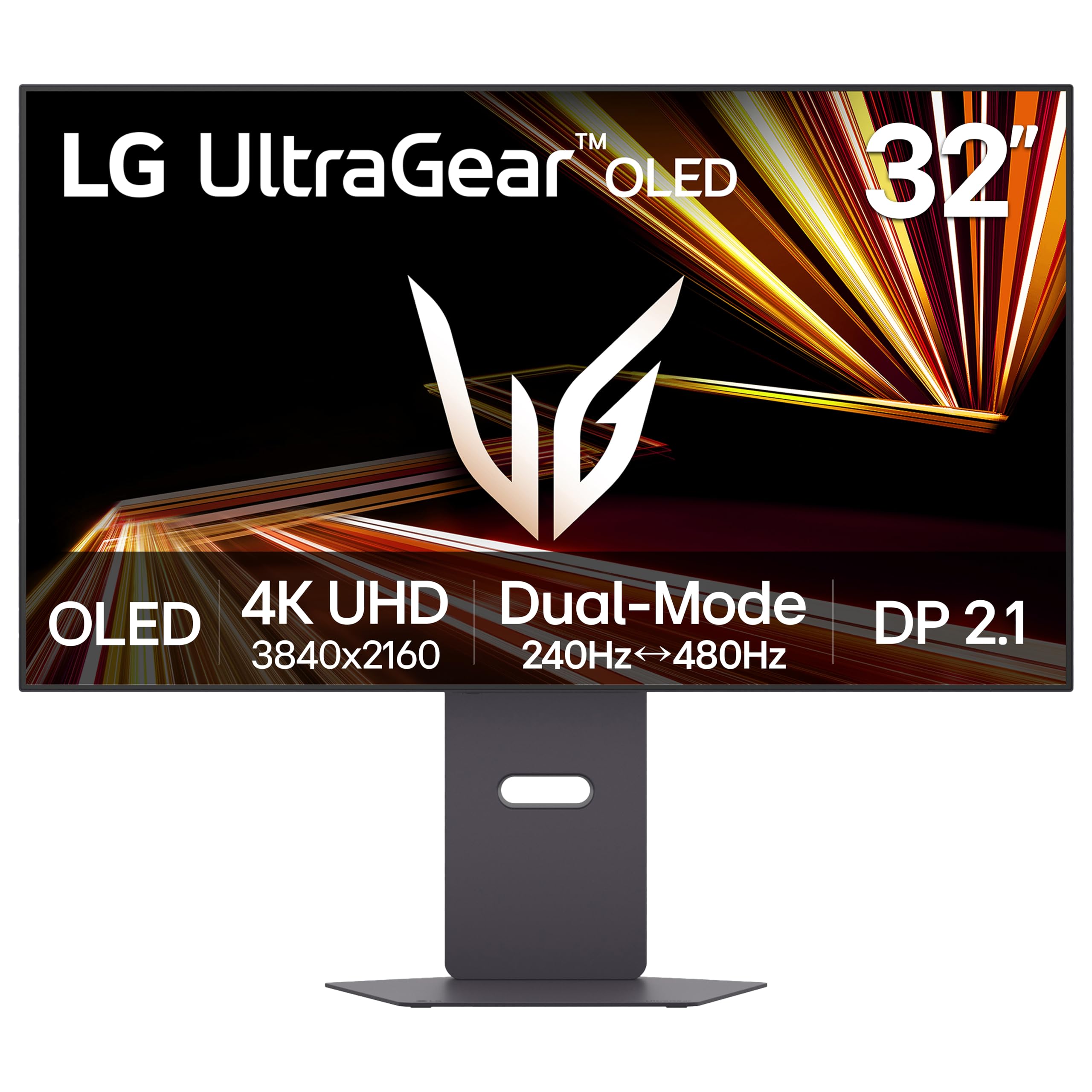
The LG 32GX870A-B is a powerhouse that redefines versatility with its Dual Mode capability, letting you toggle between stunning 4K at 240Hz for immersive single-player epics and blistering 1080p at 480Hz for ultra-competitive esports titles. This isn’t just a number game; the near-instantaneous 0.03ms GtG response time from its W-OLED panel means zero perceptible ghosting, making every frame transition feel surgically precise. The Micro Lens Array+ technology pushes peak brightness to 1300 nits, a significant leap for an OLED, allowing it to handle HDR highlights with impressive punch without sacrificing the perfect blacks that make dark scenes so compelling.
The VESA DisplayHDR True Black 400 certification ensures that the monitor meets a strict standard for low-luminance black levels, resulting in a contrast ratio of 1.5M:1 that makes standard IPS look washed out in comparison. The built-in speakers are surprisingly robust, delivering clear audio that is a cut above the typical tinny monitor speaker, and the DTS Headphone:X support for the 4-pole jack is a welcome touch for positional audio in FPS games. The anti-glare coating is effective, maintaining black levels and color saturation even in rooms with ambient light, though some users report a very slight graininess on static bright web pages.
Connectivity is future-proofed with DP 2.1, which provides the bandwidth to drive 4K at 240Hz without relying on Display Stream Compression (DSC), alongside HDMI 2.1 inputs. The stand offers full ergonomic adjustments including height, tilt, swivel, and pivot, making it easy to dial in the perfect viewing angle. The 2-year limited warranty that covers the OLED panel, combined with built-in pixel cleaning tools, gives peace of mind against burn-in, arguably the biggest concern for potential OLED buyers. For anyone wanting the absolute best combination of fluidity, image quality, and feature density, this LG is the definitive choice.
Why it’s great
- Dual Mode (4K 240Hz / 1080p 480Hz) is genuinely useful.
- Excellent HDR peak brightness for an OLED panel.
- Includes DP 2.1 for uncompressed high refresh 4K.
Good to know
- Matte coating can create a subtle grainy texture on bright static images.
- Requires a powerful GPU to fully utilize 4K 240Hz in modern titles.
2. Samsung Odyssey OLED G8 G80SH
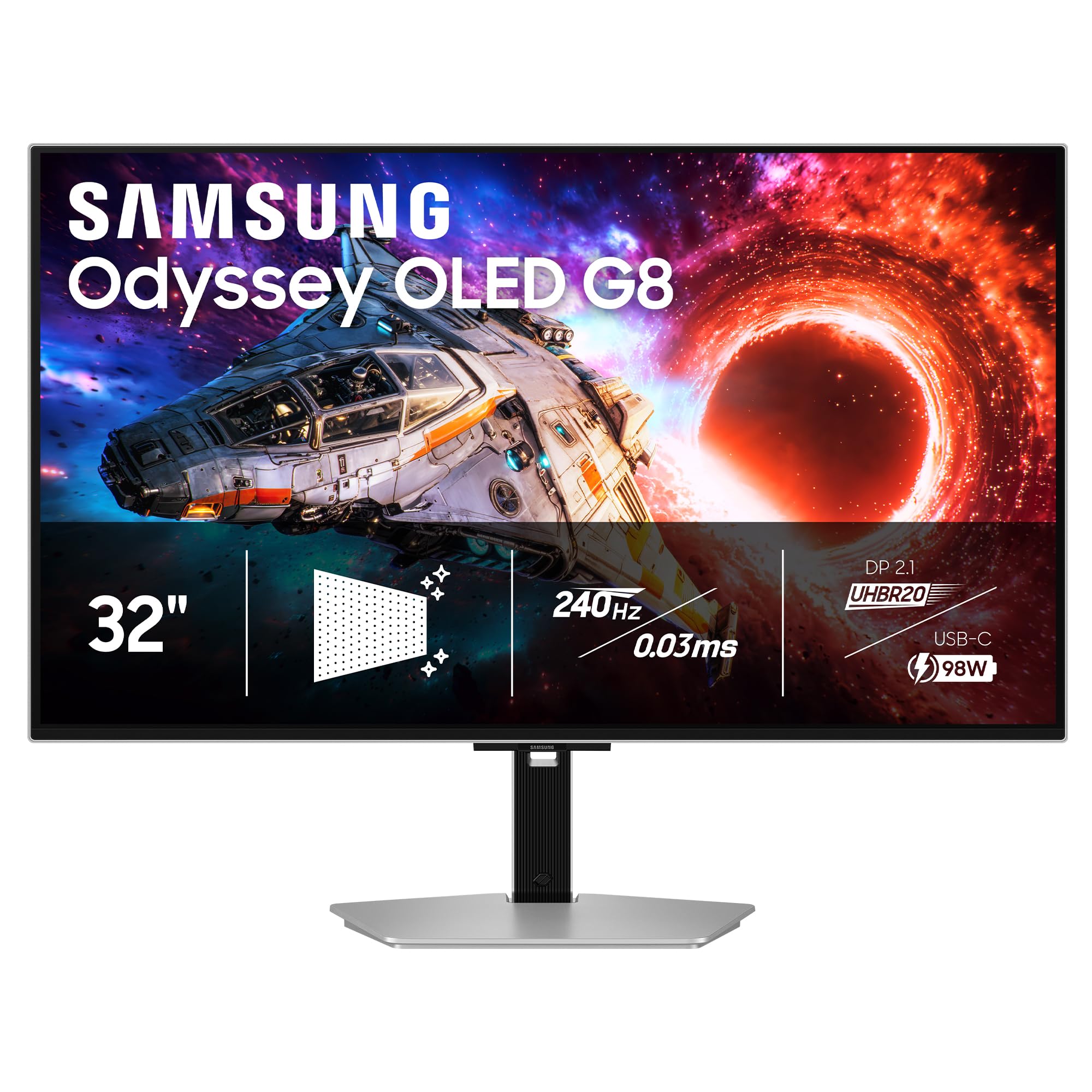
The Samsung Odyssey OLED G8 G80SH is a 32-inch QD-OLED monitor that delivers spectacular color volume and luminance, elevating the standard OLED experience with Quantum Dot technology. The 140 PPI pixel density ensures razor-sharp text and incredible detail in 4K games, making even the smallest environmental textures pop. It boasts a 240Hz refresh rate and a 0.03ms response time, ensuring buttery-smooth gameplay that feels incredibly responsive, while the VESA DisplayHDR True Black 500 certification guarantees deep, inky blacks and a peak brightness of 500 nits for a truly premium HDR experience. The Pantone Validated screen means color professionals can trust its accuracy out of the box.
The monitor’s Glare Free technology is exceptionally effective, allowing you to game in a brightly lit room without distracting reflections washing out the image—a key advantage over glossy QD-OLED panels. The design is sleek and lightweight, and the stand offers full height, tilt, swivel, and pivot adjustments for maximum ergonomic flexibility. However, it’s worth noting the monitor lacks built-in speakers, which feels like an oversight at this price point, and the external power brick is noticeably large. Color accuracy out of the box is decent but many users find a basic calibration improves it significantly.
Connectivity is a highlight, with DP 2.1 providing the necessary bandwidth for full 4K 240Hz and a USB-C port that delivers up to 96W of power delivery, making it a fantastic hub for a gaming laptop. The Advanced OLED Safeguard+ technology, including a dynamic cooling system, is designed to mitigate burn-in, which is crucial for long-term peace of mind. For a user who prioritizes a reflection-free screen with incredible color performance and the flexibility of a high-wattage USB-C connection, the G8 is a top-tier contender.
Why it’s great
- Excellent QD-OLED color vibrancy and HDR brightness.
- Highly effective Glare Free coating for well-lit rooms.
- Includes DP 2.1 and 96W USB-C Power Delivery.
Good to know
- No built-in speakers.
- Color accuracy typically requires calibration for professional use.
3. ASUS ROG Swift PG32UCDM

The ASUS ROG Swift PG32UCDM is a masterpiece of engineering, combining a 32-inch QD-OLED panel with a robust custom heatsink and graphene film to actively manage heat, reducing the risk of burn-in better than almost any other OLED monitor on the market. This proactive thermal management is a major selling point for users who keep their monitor on for long sessions. The image quality is breathtaking, with 99% DCI-P3 coverage and a true 10-bit panel that delivers smooth color gradients without banding, while the VESA DisplayHDR 400 True Black compliance ensures perfect blacks and stunning HDR highlights that make games look incredibly realistic.
The glossy screen finish is a deliberate choice that significantly enhances perceived contrast and color saturation, eliminating the graininess of matte coatings and delivering a sharp, punchy image that feels more immersive. The 240Hz refresh rate paired with a 0.03ms response time makes for impossibly smooth motion, and the inclusion of both FreeSync Premium Pro and G-SYNC Compatible ensures no tearing with either major GPU brand. The build quality is top-tier, featuring a solid metal stand with a small footprint, and the design includes a handy 1/4-inch tripod socket for mounting a camera above the screen.
ASUS backs this monitor with a 3-year warranty that explicitly covers burn-in, which is the gold standard of confidence in the OLED space. Connectivity is comprehensive, including HDMI 2.1, a 90W USB-C port for device charging, and a USB hub. While the price is undeniably premium, the combination of class-leading burn-in mitigation, spectacular glossy QD-OLED image quality, and an industry-leading warranty makes the PG32UCDM the ultimate choice for a buyer who wants the absolute best with zero compromises.
Why it’s great
- Industry-leading burn-in mitigation with custom heatsink and graphene.
- Glossy QD-OLED produces stunning contrast and color vibrancy.
- 3-year warranty with burn-in coverage for total peace of mind.
Good to know
- Glossy screen may be problematic in very bright, sunlit rooms.
- Premium price point is a significant investment.
4. Samsung 37″ Odyssey G7 G75F
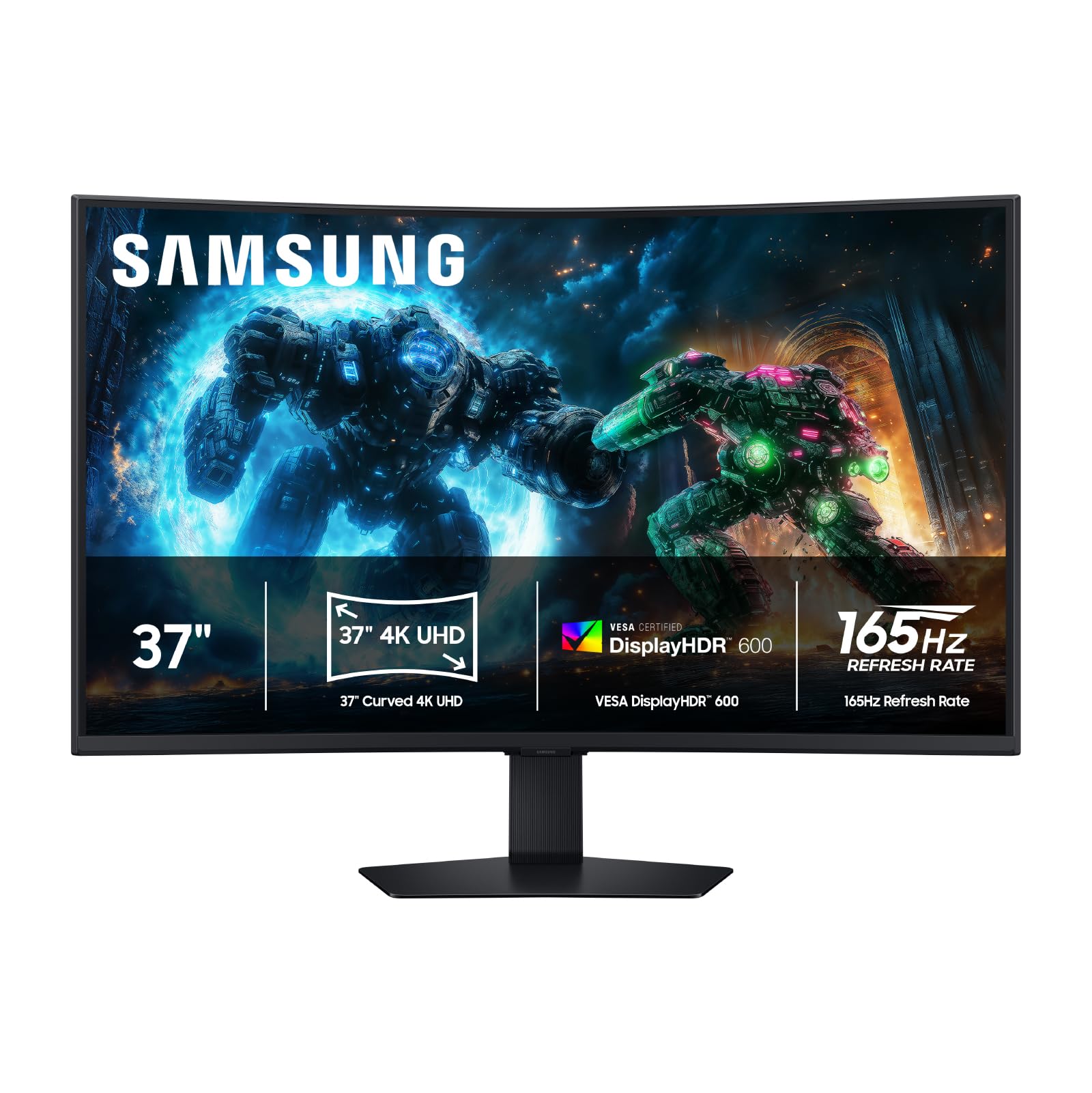
The Samsung Odyssey G7 G75F offers a unique 37-inch screen size that sits between the standard 32-inch and the massive 43-inch options, and it pairs this with an aggressive 1000R curve. This curvature matches the natural shape of the human eye, creating a deeply immersive wrap-around effect that makes you feel like you are inside the game world. The VA panel delivers a 3000:1 contrast ratio, providing deep blacks and a vivid image that is a significant step up from IPS panels, especially in darker games. With a 165Hz refresh rate and 1ms GtG response time, it handles fast-paced gameplay with minimal blur.
The VESA DisplayHDR 600 certification means it can produce brighter highlights and more defined contrast than standard monitors, making HDR content look more impactful. This model is a favorite among console gamers who connect a PS5 or Xbox Series X, as the 37-inch size and 4K resolution create a cinematic experience at a typical living room viewing distance, and the aggressive curve helps reduce glare. However, the 1000R curve can be polarizing; some users find it too aggressive for productivity work where straight lines are crucial, as it can introduce a slight distortion to document layouts.
The design is classic Odyssey, with a sleek, futuristic aesthetic and a sturdy stand that offers height and swivel adjustments. It’s a great option for a user who wants the highest level of immersion without jumping to the premium price of OLED, but you must be comfortable with the VA panel’s characteristics, including potential black smearing and more limited viewing angles. For a dedicated gaming setup where immersion is the priority, this Samsung is a compelling mid-range contender.
Why it’s great
- 37-inch size with 1000R curve offers unmatched immersion.
- VA panel provides deep, 3000:1 contrast for great blacks.
- DisplayHDR 600 delivers a noticeable HDR improvement.
Good to know
- The 1000R curve can feel too aggressive for productivity tasks.
- VA panels can exhibit black smearing in dark, fast-moving scenes.
5. LG 37G800A-B 37-Inch Ultragear
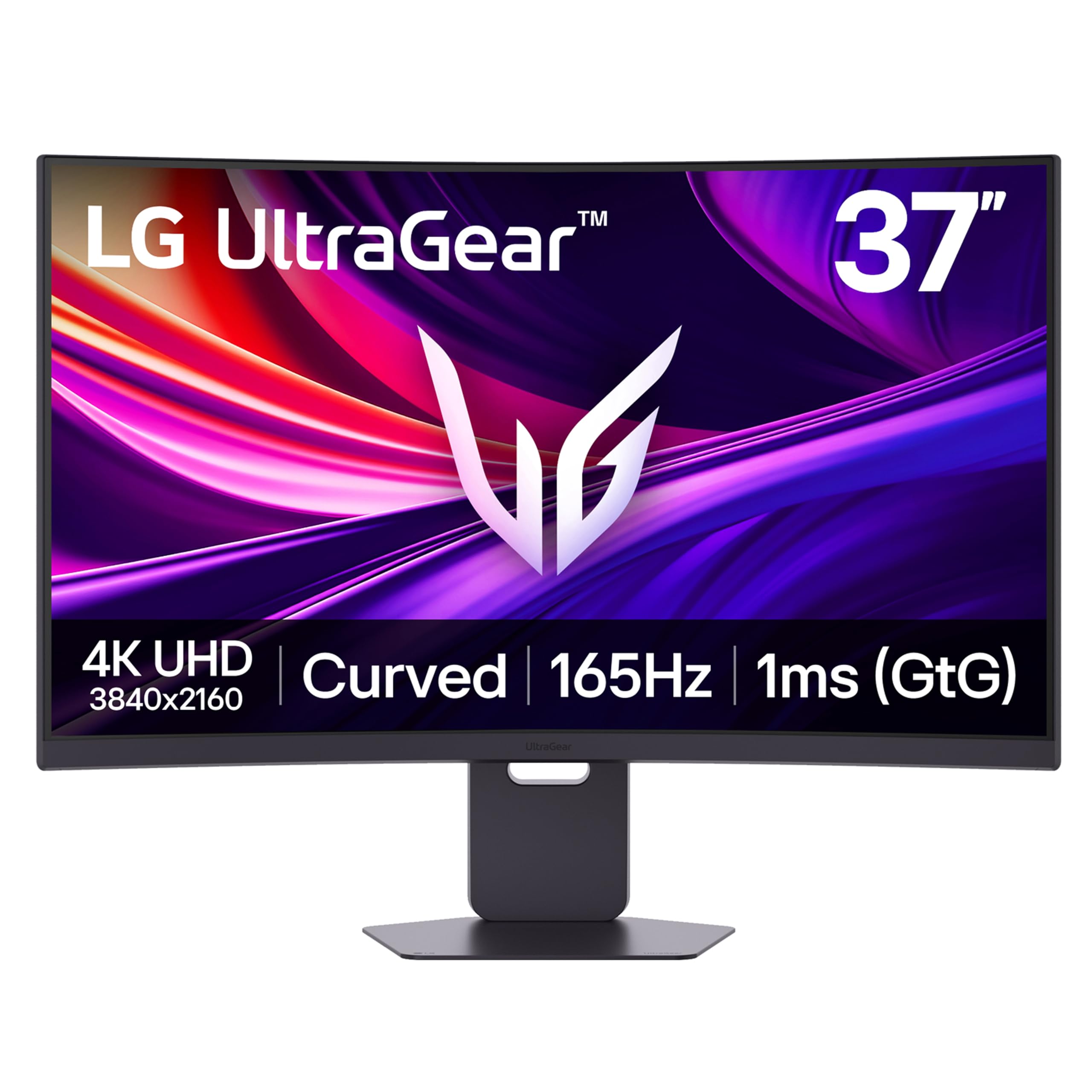
The LG 37G800A-B is a masterclass in value, offering a large 37-inch curved VA panel with a 165Hz refresh rate, 1ms response time, and VESA DisplayHDR 600 certification at a price that undercuts many smaller 32-inch competitors. It delivers a compelling mix of immersive screen real estate and high-performance specs without the premium cost of OLED. The 1500R curve is a great middle ground—immersive enough for gaming but subtle enough not to interfere with productivity work like spreadsheets or video editing. The 4000:1 contrast ratio is excellent for a VA panel, providing deep blacks that enhance the sense of depth in games like horror or space sims.
One of the standout features is the USB-C port with 65W Power Delivery, making it a fantastic hub for a gaming laptop, allowing you to charge, transfer data, and output video with a single cable. It also includes dual HDMI 2.1 ports and a DP 1.4 port, ensuring full compatibility with modern consoles and PCs. The built-in speakers are a welcome addition, offering surprisingly clear dialogue, and the Black Stabilizer feature is a classic LG gamer tool that uses algorithmic adjustments to brighten dark in-game areas without overexposing the highlights. The monitor also features dedicated gaming tools like a Dynamic Action Sync and an on-screen Crosshair.
The stand provides tilt, height, and swivel adjustments, offering good ergonomic flexibility. The main drawback is the lack of a true full-array local dimming solution; the HDR 600 certification helps with peak brightness, but the halo effect is present in high-contrast scenes. For a gamer who values a large, curved, and fast 4K panel with excellent connectivity and a sensible price, the LG 37G800A-B is an outstanding choice that doesn’t require a massive budget.
Why it’s great
- Large 37-inch curved display with great 1500R curve.
- USB-C with 65W PD makes it a perfect laptop hub.
- Excellent value for a high-refresh 4K gaming monitor.
Good to know
- HDR performance is good but lacks high-end local dimming.
- Menu system is controlled by a finicky rear joystick.
6. ASUS ROG Strix 27” XG27UCG

While not a curved panel, the ASUS ROG Strix XG27UCG earns a spot here for its incredible versatility with a Dual Mode feature that lets you switch between a native 4K at 160Hz for detailed landscapes and a full HD at 320Hz for blisteringly fast esports action. This 27-inch Fast IPS panel is a fantastic alternative for gamers who want the clarity of 4K but don’t want to commit to a single high refresh rate, as it offers an extreme speed mode for competitive play. The 1ms GtG response time is standard for Fast IPS, ensuring motion is sharp and free from ghosting, and it supports both NVIDIA G-SYNC Compatible and AMD FreeSync Premium for a tear-free experience.
The XG27UCG includes ASUS’s Extreme Low Motion Blur Sync (ELMB SYNC) technology, which allows simultaneous use of backlight strobing and variable refresh rate—a rare and powerful feature that eliminates both ghosting and tearing, resulting in exceptionally clear motion clarity. The 95% DCI-P3 color gamut and advanced gray-scale tracking ensure good color reproduction for gaming. The build quality is robust, with a fully adjustable stand that is a hallmark of the ROG Strix line, offering height, tilt, swivel, and pivot adjustments. The DisplayWidget Center software allows you to tweak settings with a mouse, which is much more convenient than diving into the on-screen display.
The main trade-off is the 27-inch screen size, which is smaller than the other options, and its flat IPS panel means you miss out on the immersive curve. Its 400:1 contrast ratio is also noticeably weaker than VA or OLED panels, leading to grayish blacks in dark scenes. The XG27UCG is best for a dual-purpose user who plays a mix of competitive esports (where the 320Hz mode shines) and single-player 4K games, and who prefers a smaller, high-density screen over a large immersive one.
Why it’s great
- Dual Mode (4K 160Hz / FHD 320Hz) for versatile gaming.
- ELMB SYNC combines blur reduction with VRR.
- Compact 27-inch size with high PPI for sharp text.
Good to know
- Flat IPS panel lacks the immersion of a curved screen.
- Poor contrast ratio leads to grayish blacks.
- 27-inch size may feel small for some users wanting an immersive setup.
7. CRUA 32” 4K Curved Gaming Monitor
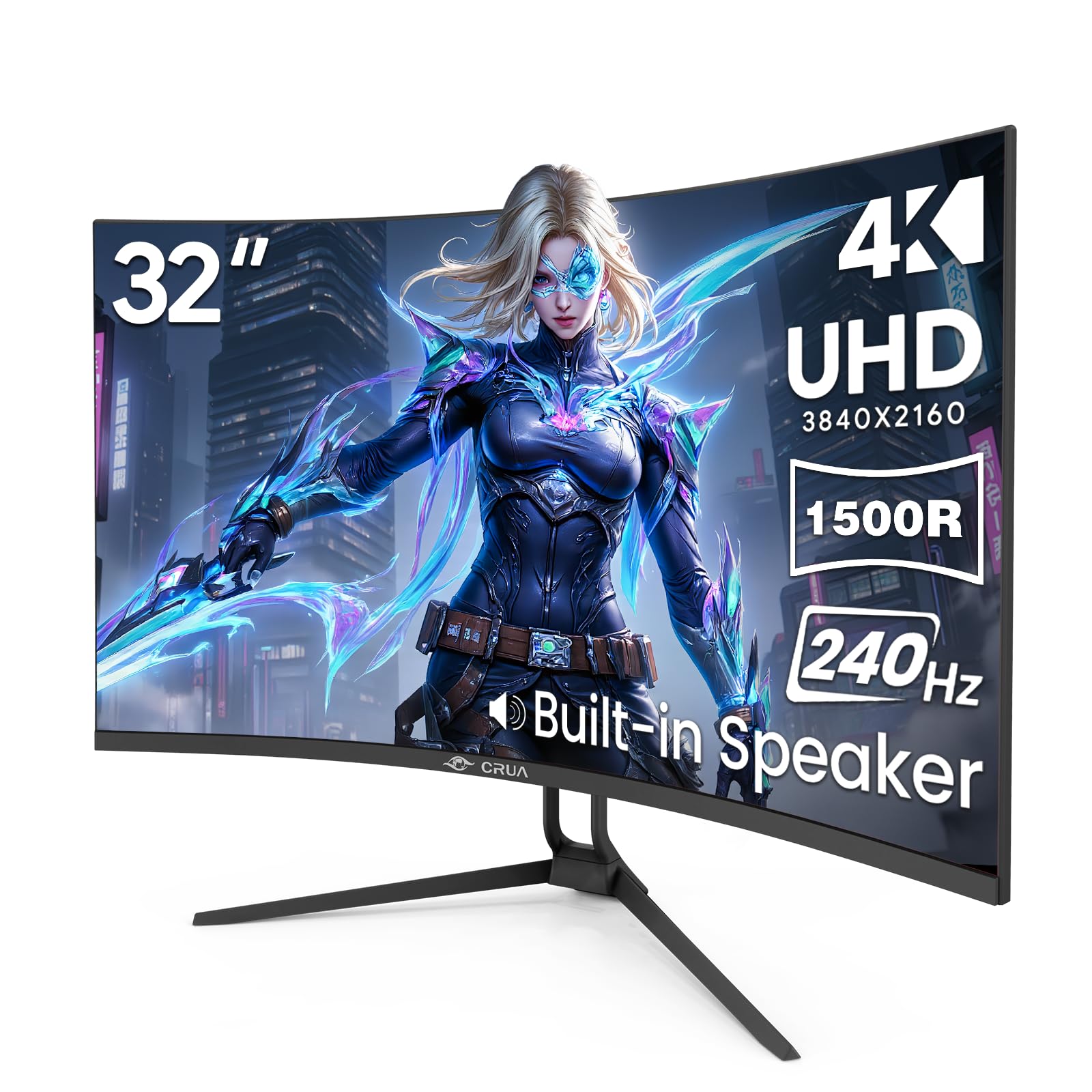
The CRUA 32” 4K Curved Gaming Monitor proves you don’t need to spend a fortune to get a large, high-refresh 4K curved display. It packs a 32-inch VA panel with a 1500R curve, a 240Hz refresh rate, and a native 4K resolution, which are remarkable specs for its price tier. The VA panel provides a solid 3000:1 contrast ratio, ensuring that blacks are deep for a more immersive gaming experience, and the 120% sRGB color gamut offers vibrant colors that look great for most gaming titles. It also includes AMD FreeSync to help eliminate screen tearing, making it a competent performer for fast-paced games where smoothness is key.
Connectivity is surprisingly robust, with two HDMI 2.1 ports and two DP 1.4 ports, allowing you to run the monitor at 4K 240Hz with modern GPUs or connect multiple consoles. The built-in speakers are a nice convenience, providing clear dialogue for system audio and video calls, and the PIP/PBP functionality is a useful bonus for multitaskers who want to view two inputs at once. The design includes a rear RGB lighting system that adds some flair to a gaming setup, and the stand offers tilt adjustment. However, the stand lacks height and swivel adjustments, so you may need a monitor arm for perfect ergonomics.
The main compromise at this price point is in the build quality and panel uniformity; you may encounter more light bleed than on premium monitors, and the color accuracy out of the box is decent but not calibrated. The 240Hz refresh rate is impressive on paper, but driving that frame rate at 4K requires a top-tier GPU. For a budget-conscious gamer who wants the core experience of a large, curved 4K display with a high refresh rate, the CRUA delivers incredible value and is the clear entry-level champion.
Why it’s great
- Unbeatable value for a 32-inch 4K 240Hz curved monitor.
- Includes two HDMI 2.1 ports for modern consoles.
- 3000:1 contrast ratio provides good black levels.
Good to know
- Stand has tilt adjustment only; no height or swivel.
- Panel uniformity and color accuracy are budget-grade.
FAQ
Is a 1000R curve too aggressive for a 32-inch monitor?
Can I run a 4K 240Hz monitor with an HDMI 2.0 cable?
Final Thoughts: The Verdict
For most users, the best curved 4k gaming monitor is the LG 32GX870A-B Ultragear OLED because it delivers the perfect balance of a stunning OLED picture, a versatile dual-mode refresh rate, and future-proof connectivity. If you want the ultimate in burn-in protection and a glossy QD-OLED image, grab the ASUS ROG Swift PG32UCDM. And for a budget-friendly entry into the world of large, curved 4K gaming, nothing beats the CRUA 32” 4K Curved.