
The $50 price point is the most competitive tier in the entire in-ear monitor market. At this level, you are no longer trading raw sound quality for affordability — you are choosing between tuning philosophies, driver configurations, and build standards that genuinely rival monitors costing three times as much. The hard part is parsing the marketing claims from the actual performance.
I’m Min — the co-founder and writer behind Gadgets Feed. I’ve spent hundreds of hours cross-referencing frequency response graphs, driver topologies, and real-world user reports to separate legitimate contenders from overhyped shells in this specific budget bracket.
This guide covers seven wired monitors under the $50 ceiling, each evaluated on soundstage width, driver coherency, and build integrity. You’ll find the definitive breakdown needed to buy the best $50 iems for your specific listening habits.
How To Choose The Best $50 IEMs
At fifty dollars, every monitor in this guide delivers competent audio, so your decision hinges on three variables: the type of driver array, the sound signature tuning, and the physical fit. Hybrid models use multiple driver types to divide the frequency spectrum, while single dynamic drivers offer superior coherency at the cost of extended treble reach. Focus on the tuning curve description — a V-shaped signature emphasizes bass and treble at the expense of midrange clarity, whereas a Harman-derived curve prioritizes vocal presence and natural timbre.
Driver Configuration vs. Driver Quality
More drivers do not automatically mean better sound. A well-tuned single dynamic driver like the 10mm DLC unit in the Kiwi Ears Belle can out-resolve a poorly implemented five-driver hybrid in terms of transient speed and bass texture. Balanced armature drivers excel at upper-frequency detail retrieval but can sound thin or metallic if the crossover is mismatched. At this budget, a two-driver hybrid (1DD + 1BA) is often the sweet spot for bass weight plus treble air without phase cancellation issues.
Impedance and Sensitivity Matching
IEMs rated at 16Ω to 32Ω with sensitivity above 110dB are designed for plug-and-play use with phones, laptops, and gaming handhelds. Low-impedance models are easier to drive but more prone to hiss from noisy sources. Higher-impedance monitors (above 32Ω) may require a USB dongle DAC to reach satisfying volume levels, especially on modern smartphones without a 3.5mm jack. Always check sensitivity in dB/mW — every 3dB increase halves the power needed for the same loudness.
Shell Build and Nozzle Dimensions
The physical ergonomics of the shell and nozzle width directly impact comfort during sessions longer than one hour. Resin shells are lightweight and warm against the skin, while metal housings offer durability but can feel cold and heavy. Nozzles wider than 6mm may cause discomfort for listeners with smaller ear canals, regardless of ear tip choice. Detachable 0.78mm 2-pin cables are the standard form factor — they allow easy replacement and aftermarket upgrades.
Quick Comparison
On smaller screens, swipe sideways to see the full table.
| Model | Category | Best For | Key Spec | Amazon |
|---|---|---|---|---|
| Linsoul KZ ZS10 PRO 2 | Hybrid | Tuning flexibility | 1DD+4BA with 4-level switch | Amazon |
| DUNU Titan X | Dynamic | Metal build & gaming | 10mm dual-magnetic DD | Amazon |
| CCA C10 | Hybrid | Instrument separation | 1DD+4BA 10-driver config | Amazon |
| Linsoul Kiwi Ears Belle | Dynamic | Vocal-centric music | 10mm DLC diaphragm DD | Amazon |
| KZ ZEX | Hybrid | Detailed soundstage | 6.8mm electrost.+10mm DD | Amazon |
| KZ ZST PRO X | Hybrid | FPS gaming | 1BA+1DD 20-40KHz range | Amazon |
| KZ ZSN PRO X | Hybrid | Budget entry point | 1BA+1DD four-layer coil | Amazon |
In‑Depth Reviews
1. Linsoul KZ ZS10 PRO 2

The KZ ZS10 PRO 2 is the most feature-rich monitor in this roundup, pairing a 10mm super-linear magnetic dynamic driver with dual 31736 balanced armature drivers per side and a four-level tuning switch. The switch lets you toggle between preset filter configurations — players who want a warmer, vocal-forward signature can flick switch 1 on, while gamers seeking sharper upper-mid presence can adjust accordingly. The three-way electronic crossover is genuinely effective at preventing the BA drivers from sounding splashy, which is a common problem in sub-$50 multi-driver designs.
The 4BA handling the highs and ultra-highs delivers decay and sparkle that single-DD monitors simply cannot match at this price. Layered strings and cymbal crashes have distinct separation rather than blending into a wash. The bass is polite by default — tight and textured rather than boomy — which suits critical listening and acoustic genres better than hip-hop. The shell is on the larger side, so listeners with smaller ears may need to test fit before committing.
Build quality is solid overall: the silver-plated cable is detachable via 0.75mm 2-pin connectors, and the resin-and-metal construction feels dense without being heavy. The included ear tips are functional but many users swap them immediately for foam or SpinFit alternatives. For listeners who want the ability to fine-tune their sound signature on the fly, the ZS10 PRO 2 is the most versatile contender in this bracket.
Why it’s great
- Four-level tuning switch offers genuine tonal variation
- BA drivers deliver exceptional high-frequency extension
- Three-way crossover prevents driver phase issues
Good to know
- Bulky shell may cause discomfort for small ears
- Included ear tips are mediocre; aftermarket upgrade recommended
2. DUNU Titan X
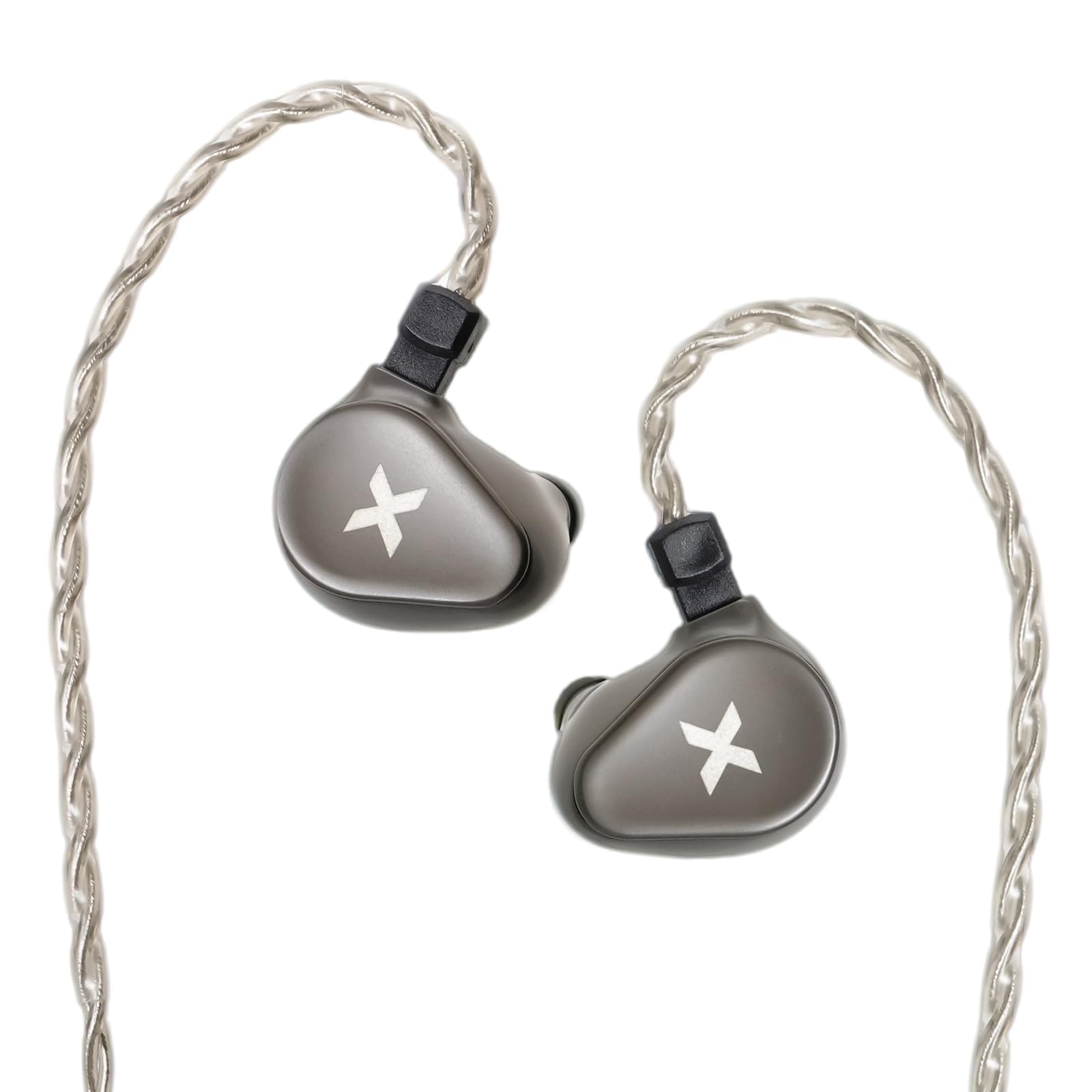
The DUNU Titan X is the only monitor in this list with a full metal housing, and that alone sets it apart in a sea of resin and polycarbonate shells. The high-density alloy cavity gives it a substantial, cold-touch feel that screams durability, and the gunmetal-gray finish resists scratches and sweat better than any painted plastic shell. Inside sits a single 10mm dual-magnetic, dual-cavity dynamic driver tuned to a modified Harman curve — slightly boosted sub-bass for impact, forward mids for vocal presence, and extended treble reaching up to 40kHz.
Sound-wise, the Titan X leans toward a fun, engaging signature without falling into outright basshead territory. Sub-bass notes in EDM tracks hit with satisfying slam and decay naturally, while the midrange stays clear enough for pop vocals and dialogue-heavy gaming. Imaging is accurate for FPS titles — you can distinguish footsteps in terms of distance and direction without the treble becoming fatiguing. At 16Ω impedance and 123dB sensitivity, it is effortlessly driven by any phone or laptop, which makes it a strong everyday carry.
The included 4-strand silver-plated OCC copper cable uses Litz construction to minimize tangling and signal loss, and the 0.78mm 2-pin connectors are standard for easy cable swaps. The package includes six pairs of silicone ear tips split into vocal-clarity and extra-bass variants, plus a drawstring storage bag. A small number of users have reported driver failure within the first week, which suggests inconsistent quality control — factor that in if you plan to use these as a daily driver without backup.
Why it’s great
- Full metal shell is rare and durable at this price
- Modified Harman tuning is engaging without fatigue
- High sensitivity makes it plug-and-play with any source
Good to know
- Reported quality control issues with early units
- No hard carrying case; only a drawstring bag
3. CCA C10
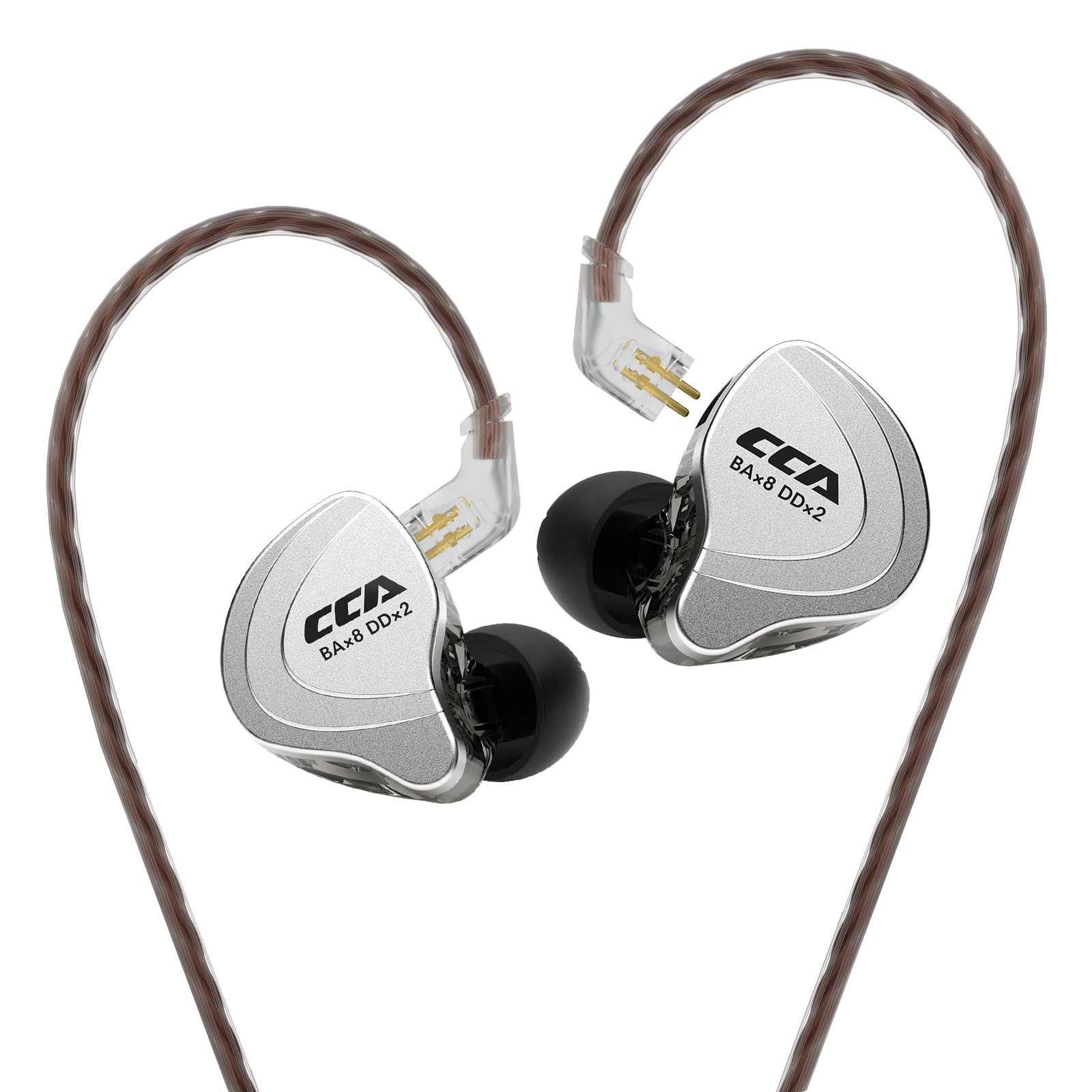
The CCA C10 packs the highest driver count of any monitor in this guide — one dynamic driver for low frequencies and four balanced armature drivers per side dedicated to mids and highs. For the price, this is a staggering amount of hardware, and when the tuning is right, the result is superb instrument separation and a spacious soundstage. Layered tracks like orchestral scores or prog rock reveal individual instrument groups without congestion, which is rare at this budget.
The zinc alloy shell combined with resin gives the C10 a durable, weighty feel that suggests it could survive daily abuse. The detachable 0.75mm gold-plated 2-pin cable is silver-plated and braided, though some users find the stock cable thin and prone to tangling. Ear tip seal is critical here — the monitors are sensitive to fit, and a poor seal will result in thin bass and harsh upper frequencies. Upgrading to SpinFit double-flange tips or memory foam tips dramatically improves isolation and low-end presentation.
Sound signature is balanced with a slight emphasis on the lower midrange, making male vocals sound full and authoritative. High-frequency extension is smooth rather than peaky, which reduces listening fatigue during long studio-style listening sessions. The MEMS noise-cancelling microphone is a welcome addition for calls, but the control method relies on an in-line remote rather than capacitive touch. For mixers, drummers, and anyone who prioritizes detail retrieval over raw bass impact, the C10 delivers performance that punches well above its price tier.
Why it’s great
- Five-driver array provides exceptional instrument separation
- Zinc alloy shell feels robust and premium
- Balanced tuning avoids fatigue for long listening sessions
Good to know
- Stock cable is thin and tangle-prone
- Requires proper ear tip seal for optimal bass response
4. Linsoul Kiwi Ears Belle
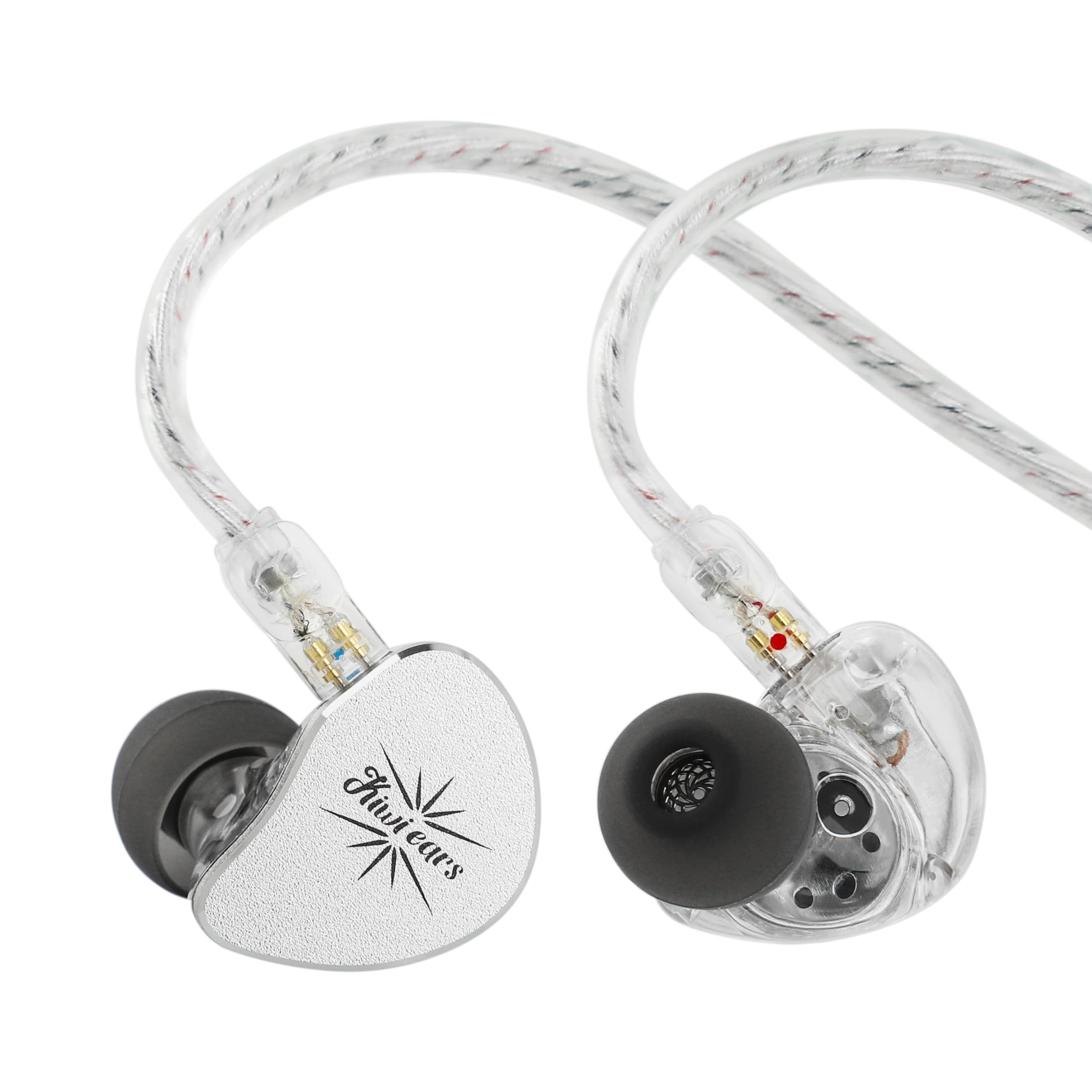
The Kiwi Ears Belle is a masterclass in single-dynamic-driver tuning at a budget price. The 10mm Diamond-Like Carbon (DLC) diaphragm is engineered for stiffness and low mass, which translates into exceptionally fast transient response — kick drums have a satisfying snap, and plucked acoustic strings decay with realistic speed. The tuning targets a warm, vocal-forward signature with a heavy bass shelf and a 3kHz pinna peak that gives vocals bite without harshness.
The DLC driver keeps total harmonic distortion below 0.1% at 1kHz, which is remarkable for a monitor in this range. This means even at high volumes, the sound remains clean and free of the grain or fuzziness common in cheaper dynamic drivers. The Belle excels at pop, hip-hop, and vocal-centric genres — the bass is deep and punchy without bleeding into the lower mids, while the treble curvature highlights micro-details like breath intakes and string resonance without sounding etched.
Build quality is split between a CNC metal faceplate and a lightweight plastic back shell, which keeps the overall weight down for portable use. The silver-plated cable is available in either 3.5mm or USB-C versions, giving smartphone users a direct digital path. The over-ear fit is secure and comfortable for extended wear. Some competitive gamers have noted that the treble is bright enough to cause fatigue during long FPS sessions, and the soundstage is more intimate than expansive. For commuting, vocal monitoring, and everyday listening, the Belle is a near-perfect execution of its design goals.
Why it’s great
- DLC diaphragm delivers sub-0.1% THD for clean output
- Warm tuning with excellent vocal presence
- Available with USB-C or 3.5mm cable option
Good to know
- Bright treble may cause fatigue in competitive gaming
- Soundstage is intimate rather than wide
5. KZ ZEX

The KZ ZEX combines a 6.8mm low-voltage electrostatic driver with a 10mm dual-magnetic dynamic driver, a hybrid topology rarely seen outside the + range. The electrostatic driver is responsible for the ultra-high frequencies above 20kHz, theoretically extending the air and shimmer that conventional balanced armatures struggle to reproduce. In practice, this manifests as a sense of space and openness — cymbals have a trailing shimmer, and ambient details in well-recorded tracks float in the background without becoming harsh.
The dynamic driver handles the lows and mids with a warm, weighty character. Bass extension is solid, though the quantity leans toward natural rather than boosted, which makes the ZEX suitable for acoustic jazz and classical as much as for pop. The shell is cast from zinc alloy combined with imported resin, creating a seamless, almost organic shape that fits the ear contour well. The rose gold version has an iridescent finish that catches light differently depending on the angle — visually distinctive without being gaudy.
The detachable silver-plated flat cable is designed to resist tangling and reduce signal loss. A point of friction for beginners: the earbuds themselves are unmarked for left and right, so orientation relies entirely on the cable markers, which can lead to accidental reversed wiring. The nozzle is relatively slim, making the ZEX comfortable for smaller ear canals where wider monitors cause pain. Overall, the ZEX rewards listeners who prioritize treble air and soundstage width over raw bass impact.
Why it’s great
- Electrostatic driver adds rare treble air at this price
- Warm midrange complements spacious soundstage
- Slim nozzle design fits small ear canals comfortably
Good to know
- No left/right markings on the shells
- Flat cable may feel unusual for first-time users
6. KZ ZST PRO X
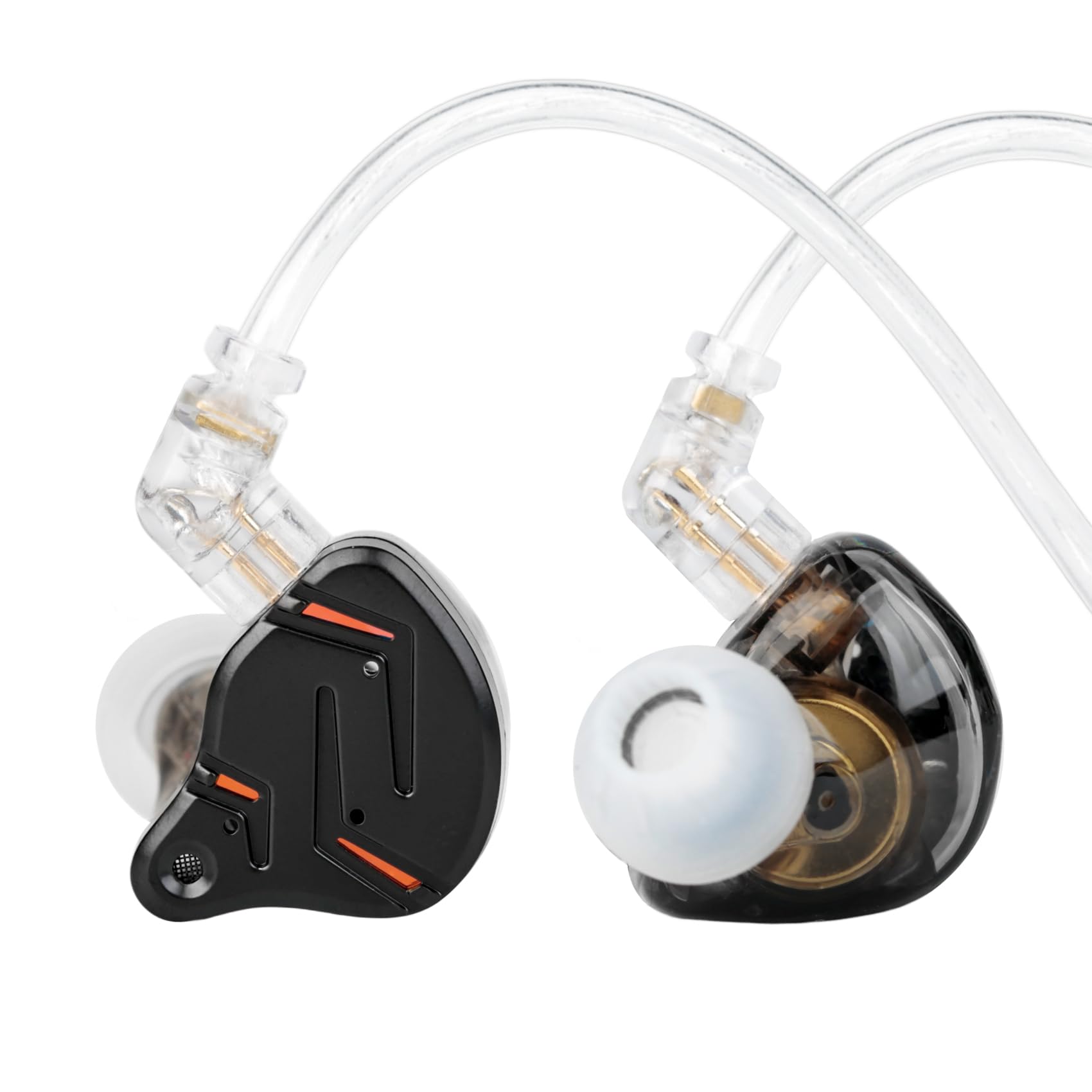
The KZ ZST PRO X is purpose-built for competitive FPS gaming, with a tuning that emphasizes precise sound imaging and transient response. The 30019 balanced armature driver handles the mid-to-high range, restoring vocal detail and instrument timbre with enough clarity to distinguish enemy footsteps from environmental noise. The dynamic driver is tuned for low distortion and tight bass control — explosions have impact without smearing into the midrange, which is critical for positional audio cues.
The shell combines a lightweight metal faceplate with a skin-friendly resin back, and the ergonomic over-ear design keeps the monitors stable during long gaming sessions. Noise isolation is above average for the price, which helps block out keyboard clatter and room noise without active cancellation. The 3.5mm plug is universally compatible with consoles, PC controllers, and mobile devices, and the omnidirectional HD microphone is a welcome addition for in-game voice comms without needing a separate headset.
Soundstage width is average — it is not the most spacious monitor here, but the imaging accuracy compensates by placing audio cues in a clear, stable position within the virtual space. The cable is detachable but slightly short, which can be a minor annoyance for desktop setups with the tower under the desk. The included ear tips are adequate, but upgrading to foam tips will improve both isolation and bass response. For the dedicated gamer who wants a wired monitor with a functional mic and reliable imaging, the ZST PRO X is a strong, purpose-driven choice.
Why it’s great
- Precise imaging for competitive FPS audio cues
- Built-in HD microphone for in-game comms
- Ergonomic shell stays secure during long sessions
Good to know
- Soundstage width is only average
- Stock cable is slightly short for desktop setups
7. KZ ZSN PRO X

The KZ ZSN PRO X is the most established model in this lineup, having been a mainstay recommendation in budget audiophile circles for years. The formula is simple: one 10mm dynamic driver with a four-layer voice coil for punchy, extended low frequencies, paired with one balanced armature driver for clean highs. The tuning is V-shaped — bass and treble are elevated relative to the mids — which gives it an immediate, exciting presentation that works well for pop, EDM, and action-heavy gaming.
The precision metal craftsmanship combined with a translucent resin shell gives the ZSN PRO X a look that is functional rather than flashy. The detachable cable uses a recessed 0.75mm 2-pin connector with a groove protection design that reduces the risk of bending the pins during insertion — a thoughtful durability feature. The cable itself is thin and may feel cheap compared to aftermarket options, but it has held up for years in many users’ daily rotation.
Soundstage width is impressive for a budget hybrid, with good left-to-right separation that makes the monitor feel open rather than cramped. The bass is boosted but controlled — it does not bleed into the lower mids, so vocals stay reasonably clear despite the V-shaped tuning. Some listeners find the upper treble slightly aggressive on poorly recorded tracks, and the metal edges of the shell can show wear after months of heavy use. For the entry-level price, the ZSN PRO X delivers a fun, energetic sound that has earned its reputation as a gateway drug into the IEM hobby.
Why it’s great
- Proven V-shaped tuning is exciting and energetic
- Groove-protected 2-pin connector improves durability
- Wide soundstage for a budget hybrid
Good to know
- Stock cable feels thin and inexpensive
- Metal edges can show wear over extended use
FAQ
Do I need a DAC or amplifier to use $50 IEMs?
How many drivers should I look for in a sub-$50 monitor?
What is the difference between 0.75mm and 0.78mm 2-pin connectors?
Can I use these IEMs for competitive gaming?
Final Thoughts: The Verdict
For most users, the best $50 iems winner is the Linsoul KZ ZS10 PRO 2 because its four-level tuning switch, 1DD+4BA driver array, and three-way crossover provide unmatched versatility for both music and gaming. If you want a metal-shell daily driver with effortless game-ready imaging, grab the DUNU Titan X. And for budget-minded listeners who want the most hardware per dollar, nothing beats the CCA C10 and its five-driver-per-side configuration.