
Scrolling through bags of compost feels like a gamble. You need something that feeds your soil without introducing weed seeds, synthetic fillers, or that overpowering barnyard odor. The real trick is separating products that genuinely improve soil biology from those that are just processed waste. A true organic compost should be dark, crumbly, and smell like a forest floor — not a feedlot.
I’m Min — the co-founder and writer behind Gadgets Feed. I’ve spent countless hours cross-referencing OMRI certifications, reading through verified buyer experiences, and breaking down the actual NPK values and microbial benefits of each formula to give you a clear, honest assessment of what works.
Whether you are reviving a vegetable patch or nursing ailing houseplants back to health, choosing the right mix changes everything. This guide helps you find the best affordable organic compost for your specific growing needs without wasting money on hype or harmful additives.
How To Choose The Best Affordable Organic Compost
The perfect compost does not just add nutrients; it restores the living biology of your soil. You need to look past the pretty bag art and dig into the feedstock, the certification, and the texture. A product that is too coarse or loaded with undecomposed wood chips will rob your soil of nitrogen rather than feed it.
Check for OMRI or Organic Certification
This is the single most important filter. OMRI (Organic Materials Review Institute) listing means the product meets strict organic standards and contains no sewage sludge, synthetic pesticides, or prohibited chemicals. Without this certification, a bag labeled “natural” or “organic” is just a marketing term with zero verification. Every product in this guide holds this certification, so you can apply it with confidence in a food garden.
Understand the Feedstock: Manure vs. Plant-Based
The starting material determines the nutrient profile and texture. Composted cow manure is rich in nitrogen and calcium, ideal for heavy feeders like tomatoes and squash. Plant-based composts, such as those from upcycled wood fines or green waste, are lighter, peat-free, and better for moisture control. Worm castings are a third category — they are odorless and packed with beneficial microbes that improve soil structure without burning delicate roots. Your choice should match the specific needs of your crop.
Quick Comparison
On smaller screens, swipe sideways to see the full table.
| Model | Category | Best For | Key Spec | Amazon |
|---|---|---|---|---|
| Espoma Land and Sea | Premium | Transplants & heavy feeders | Lobster & crab meal with mycorrhizae | Amazon |
| Back to the Roots | Mid-Range | Peat-free raised beds | 1 cubic foot, yucca extract moisture control | Amazon |
| Blue Ribbon 3-Gallon | Mid-Range | Small-scale container gardens | 3.0 gallons, OMRI certified, powder form | Amazon |
| Earth Worm Castings | Mid-Range | Indoor plants & fungus gnat control | 6 lbs, neutral 7.0 pH, slow-release NPK | Amazon |
| R&M Organics | Mid-Range | Rescuing stressed plants | 10 lbs, low odor, 5:1 mixing ratio | Amazon |
| Brut Cow Compost | Value | First-time growers & seedlings | 10 quarts, finely sifted, OMRI listed | Amazon |
| Blue Ribbon 7.9-Gallon | Premium | Large raised beds & heavy amending | 7.9 gallons, no contaminants, rich texture | Amazon |
In‑Depth Reviews
1. Espoma Organic Land and Sea Gourmet Compost

This 1 cubic foot bag weighs 24 pounds, which immediately tells you it is dense with nutrient-rich material rather than fluffy filler. The unique blend includes lobster meal and crab meal — marine-based sources that provide chitin, a compound that naturally suppresses soil-borne nematodes and fungal pathogens. Combined with a proprietary mix of endo and ecto mycorrhizae (Myco-Tone), this compost actively builds root symbiosis the moment you mix it into the soil.
Gardeners who used it for transplanting hostas, tomatoes, and zucchini reported noticeably larger fruits and more vigorous foliage compared to standard manure composts. The dry, granulated texture makes it easy to incorporate into potting mixes or to sprinkle into planting holes. Because it is OMRI listed, you can use it freely in an organic vegetable garden without worrying about synthetic residue.
The main trade-off is the upfront investment — this sits at a premium tier per bag. But given the marine-derived ingredients and the biological inoculants, a single bag goes further in improving soil health than cheaper alternatives that lack microbial additives. If you want to give your transplants the best possible start, this is the product to reach for.
Why it’s great
- Chitin from lobster & crab meal helps suppress nematodes
- Myco-Tone inoculant boosts root colonization immediately
- Dry, lightweight granules are easy to handle and mix
Good to know
- Premium price point per cubic foot compared to basic manure composts
- Marine smell may be noticeable before incorporation into soil
2. Back to the Roots Organic Premium Compost
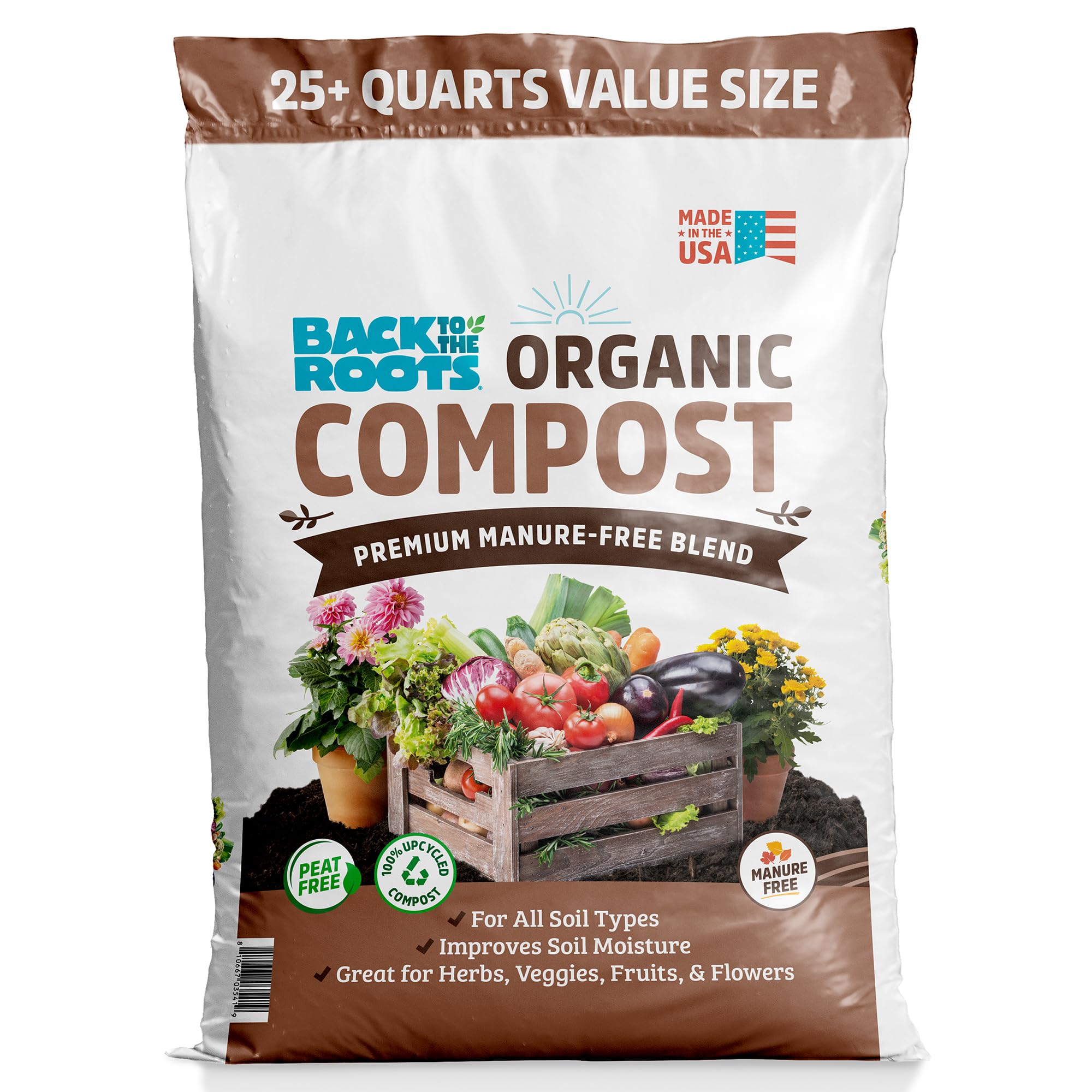
Back to the Roots delivers a full 1 cubic foot of compost with a strong environmental angle — it is 100% organic and completely peat-free. Instead of harvesting peat from fragile bogs, the base is made from upcycled plant matter and wood fines sourced in the United States. This matters because peat mining releases centuries of stored carbon, and avoiding it reduces your garden’s overall carbon footprint.
The formulation includes yucca extract, which acts as a natural wetting agent to improve water penetration, and gypsum for better water absorption. Users who mixed this 50-50 with their existing topsoil saw seeds sprout within a week and plants that were noticeably more abundant. It is ideal for raised beds where you want a light, fluffy texture that does not compact into a brick after watering.
One limitation is that this product is designed primarily as a raised bed mix rather than a concentrated soil amendment. If you need a heavy dose of nitrogen for a fruiting crop like tomatoes, you may need to supplement with a manure-based compost. But for general vegetable gardening and flower beds, this offers an excellent balance of volume, quality, and price.
Why it’s great
- Peat-free composition protects bog ecosystems
- Yucca extract and gypsum optimize moisture penetration
- Full 1 cubic foot bag covers large raised bed areas
Good to know
- Lower nutrient density than manure-based composts
- Better suited for raised beds than for direct in-ground heavy feeding
3. Blue Ribbon Organics OMRI Certified Compost (3 Gallon)

Blue Ribbon Organics has built a strong reputation for clean, consistent compost that arrives free of rocks, sticks, and plastic fragments. The 3-gallon bag (weighing about 12.7 pounds) is a manageable size for city dwellers with terrace planters or small raised beds. The compost comes in a fine, powder-like form that integrates easily into potting mixes without clumping.
Multiple users praised it for being completely free of contaminants and having no offensive odor. It is OMRI certified, so it is safe for organic vegetable production. The manufacturer recommends a mixing ratio of 1 part compost to 6 parts soil, which makes this bag stretch further than you might expect. It pairs well with worm castings or other biological builders if you want to boost microbial diversity.
The main drawback is the cost per gallon — this 3-gallon bag sits at a higher price per unit volume compared to bulk manure composts. Gardeners with large in-ground plots will find it too expensive for heavy amendment. However, for container gardeners who value cleanliness and easy storage, this is an ideal choice.
Why it’s great
- No rocks, sticks, or synthetic contaminants in the bag
- Fine powder texture blends seamlessly into potting soil
- Compact 3-gallon size is easy to carry and store
Good to know
- Higher cost per gallon than bulk compost options
- Not economical for large-scale garden amending
4. Earth Worm Castings – Organic Red Worm Compost

This is not a compost in the traditional sense — it is pure vermicompost from red wigglers, and that distinction matters. Worm castings are the most biologically dense soil amendment you can buy, containing millions of beneficial microbes, bacteria, and slow-release NPK that feeds plants without risk of burn. The bag weighs about 6 pounds and covers roughly one gallon of volume, making it a concentrated additive rather than a bulk filler.
Users reported dramatic results when repotting houseplants struggling with fungus gnats and nutrient deficiencies. The neutral 7.0 pH makes it safe for even the most sensitive seedlings and orchids. Unlike manure composts, worm castings are odorless, so they are ideal for indoor use where you do not want any earthy or barnyard smell lingering in your living space.
The downside is the high price relative to volume. One reviewer explicitly noted the product is “overpriced” and has seen price increases as demand grew. If you are amending a large vegetable garden, you will need multiple bags, and the cost adds up quickly. Use this as a soil drench (brewed into worm tea) or a top dressing for containers rather than trying to fill an entire bed with it.
Why it’s great
- Completely odorless — perfect for indoor plants
- Microbe-rich biology improves soil structure over time
- Neutral pH eliminates burn risk for delicate roots
Good to know
- High cost per pound for volume amendment
- 6-pound bag covers only a small garden or a few containers
5. R&M Organics Premium Organic Compost
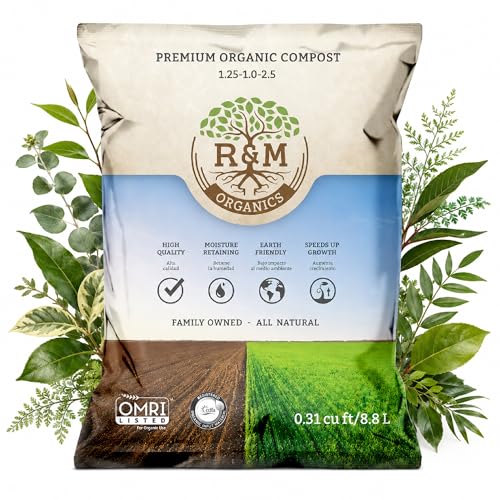
R&M Organics uses dairy cow manure that has been processed through a slow, aerated composting system to reduce odor and break down impurities. The result is a fine, soil-like texture that spreads easily and smells more like forest earth than a barn. The 10-pound bag is compact enough to carry in one hand, yet the manufacturer claims a little goes a long way — just a quarter-inch layer around plants is often enough to see results.
One verified reviewer used this to rescue azaleas that were suffering die-off after a roof cleaning chemical exposure, and the compost brought them back. Another user revived a tomato plant with yellow leaves: within one week of applying this compost, the leaves turned green and new flower buds appeared. The low odor profile makes it viable for both indoor and outdoor use.
The primary concern is the cost per bag — several users noted it is expensive compared to bulk compost from local nurseries. The mixing ratio of 5:1 (soil to compost) helps stretch the bag, but if you are amending a large area, you will need multiple units. Stick to using this as a targeted rescue treatment for struggling plants rather than a whole-bed amendment.
Why it’s great
- Ultra-low odor — suitable for indoor use near living spaces
- Fine texture with no clumps for easy spreading
- Proven to reverse chemical stress and nutrient deficiency
Good to know
- Premium pricing per pound compared to standard manure
- Not economical for broad-scale garden amending
6. Brut Cow Compost – Nutrient-Rich Organic Soil Amendment

Brut Cow Compost is a straightforward, no-nonsense product made from 100% composted cow manure with zero additives. It is finely sifted, which means you will not find large chunks of undecomposed bedding or wood chips. The 10-quart bag is a comfortable size for a beginner gardener or someone with a small flower bed. It is OMRI listed, giving you the organic certification you need for food crops.
First-time growers reported great success using this compost at a 3:2 ratio with potting soil for tomato seeds. Seedlings grew fast and transitioned to the garden without transplant shock. The compost is odor-free and gentle on roots, eliminating the burn risk that sometimes comes with fresh manure. It works equally well as a top dressing for roses and as a mix-in for vegetable beds.
One limitation is the relatively small bag size — 10 quarts fills roughly 0.31 cubic feet, which is a fraction of the volume you get from a 1 cubic foot bag. If you have a large garden, you will need to buy several bags. For small-scale growers and container gardeners, however, this is an excellent entry-level compost that delivers reliable results without breaking your budget.
Why it’s great
- Finely sifted — no woody debris or clumps
- Odor-free and safe for delicate seedlings
- OMRI listed and additive-free for pure organic growing
Good to know
- 10-quart bag is small for large raised bed projects
- Lower microbial diversity than worm castings or marine blends
7. Blue Ribbon Organics OMRI Certified Compost (7.9 Gallon)
This is the big sibling of the Blue Ribbon 3-gallon bag — a 7.9-gallon, 32-35 pound bag that represents the top end of the line in terms of value per pound. The compost is described by multiple reviewers as “black gold” — a rich, dark, crumbly material that smells like fresh earth and contains zero contaminants. No plastic, no glass, no metal, no sticks — just pure, decomposed organic matter.
Users raved about using it for container plants like Clivias, Orchids, and Epiphyllums. Mixed with perlite and orchid bark (in a 1/2 compost, 1/4 perlite, 1/4 bark ratio), it creates a perfectly aerated, moisture-retentive medium. One Southern California gardener noted it is impossible to find anything close to this quality locally, making it worth the premium. The compost rehydrates easily even after sitting in the bag for months.
The biggest downside is the sticker price. This is the most expensive bag in the lineup, and multiple users explicitly called it “very expensive.” For a single raised bed or a collection of large containers, the quality justifies the cost. But if you are amending an entire in-ground vegetable garden, you will need several bags, and the total investment becomes significant. Use this where compost quality matters most — your best containers and your most prized ornamentals.
Why it’s great
- Absolutely clean — no rocks, plastic, or contaminants
- Rehydrates quickly and evenly without clumping
- Perfect for high-value container plants and ornamentals
Good to know
- Highest price point in the guide per bag
- Heavy bag at 32-35 pounds — not ideal for casual shipping
FAQ
Can I use organic compost for indoor houseplants without attracting gnats?
How much compost should I apply to a raised vegetable bed?
Does organic compost have a strong smell?
Final Thoughts: The Verdict
For most users, the best affordable organic compost winner is the Back to the Roots because it delivers a full cubic foot of peat-free, organic material with excellent moisture control at a price that works for raised bed gardeners. If you want the highest microbial and nutrient density for transplanting and heavy feeding, grab the Espoma Land and Sea. And for indoor container gardening where cleanliness and odor are paramount, nothing beats the Earth Worm Castings.