
Pulling 240 volts through undersized or aluminum wire is a slow-motion fire waiting to happen. The difference between a circuit that runs cool for decades and one that degrades into a resistance heater comes down to one decision: the right copper gauge and insulation for your 220-volt load.
I’m Min — the co-founder and writer behind Gadgets Feed. I’ve spent hundreds of hours cross-referencing NEC ampacity tables, UL listings, and real buyer feedback to separate the wiring that actually delivers on its 600V rating from the stuff that cheaps out on copper strand count or jacket durability.
Whether you’re wiring a 50-amp EV charger, a welder outlet, or a generator interlock, this guide walks through the seven strongest contenders for the title of best 220 volt wire based on gauge, conductor count, insulation type, and real-world install feedback.
How To Choose The Best 220 Volt Wire
Selecting the right 220-volt wire means matching three variables: current draw of your device, the environmental conditions of the run, and local electrical code. A 30-amp welder needs different copper than a 50-amp EV charger, and NM-B cable cannot be buried outdoors or run through wet conduit. Get these fundamentals right and your circuit stays safe and code-compliant for its entire lifespan.
Gauge and Ampacity: Match the Breaker Size
For 220V circuits, 10 AWG copper handles up to 30 amps (dryer, small welder), 8 AWG covers 40 amps (ranges, larger welders), and 6 AWG supports 50 to 55 amps (EV chargers, generator inlets, RV pedestals). Never exceed the ampacity rating of the wire for the connected breaker — oversizing a breaker relative to the wire gauge creates a fire hazard. Always reference the NEC 310.16 table for copper conductor ampacity at 60°C or 75°C termination ratings.
SOOW vs NM-B: Indoor Dry vs Outdoor / Industrial
NM-B (non-metallic sheathed cable, often called Romex) is rated for dry indoor locations inside walls, attics, and basements. It cannot be used in wet, damp, or outdoors. SOOW (Service, Oil, and Water resistant) portable power cable has a rubber jacket rated for direct exposure to moisture, oils, UV, and abrasion — making it the correct choice for generator extension cords, shop wiring, marine environments, and any run that passes through conduit exposed to weather.
Conductor Count: 2-Wire, 3-Wire, or 4-Wire
A 2-conductor cable (black + white + ground) provides 240V between the two hots but no neutral — fine for pure 240V loads like a water heater or well pump. A 3-conductor cable adds a second hot (red) for 240V plus neutral for 120/240V combo loads like ranges or dryers with clocks and timers. A 4-conductor cable (two hots + neutral + ground) is modern code for any 240V appliance that requires a neutral, such as many EV chargers or RV outlets.
Quick Comparison
On smaller screens, swipe sideways to see the full table.
| Model | Category | Best For | Key Spec | Amazon |
|---|---|---|---|---|
| CLLOMAGY 6/4 SOOW 6ft | SOOW Portable | 50A generator / EV charger | 6 AWG, 4-conductor, 600V OFC | Amazon |
| Energeaster 10/2 NM-B 50ft | NM-B Indoor | 30A branch circuit / mini split | 10 AWG, 2-conductor, 600V solid | Amazon |
| Southwire 8/3 NM-B 25ft | NM-B Indoor | 40A range / welder outlet | 8 AWG, 3-conductor, 600V Romex | Amazon |
| Energeaster 6/3 SOOW 25ft | SOOW Portable | 50A welder / generator cord | 6 AWG, 3-conductor, 600V OFC | Amazon |
| Energeaster 10/4 SOOW 50ft | SOOW Portable | 30A 4-wire portable / outdoor | 10 AWG, 4-conductor, 600V OFC | Amazon |
| Woods 6/3 NMW/G 25ft | NM-B Indoor | 50A generator interlock / garage | 6 AWG, 3-conductor, 600V copper | Amazon |
| Kanayu 6/3 NM-B 25ft | NM-B Indoor | 50A EV charger / sub-panel | 6 AWG, 3-conductor, 600V PVC | Amazon |
In‑Depth Reviews
1. CLLOMAGY 6/4 SOOW 6ft
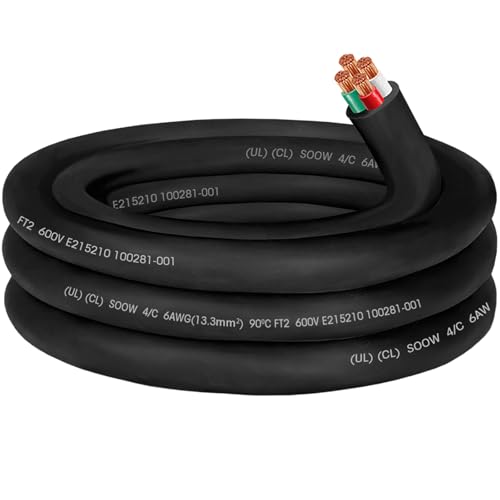
This CLLOMAGY 6/4 SOOW cable delivers six feet of heavy-duty 6 AWG oxygen-free copper with four conductors, rated for 600V and 50 amps — the exact spec needed for a NEMA 14-50 generator inlet, EV charger, or welder extension. The SOOW jacket is oil and water resistant, meaning this cord can live outdoors or in a shop environment where NM-B would degrade. Multiple buyers report using it to backfeed an RV box from a portable generator with no voltage drop issues.
The flexibility of the stranded 6 AWG conductors is a standout feature for tight spaces inside a breaker panel or generator connection box. The outer jacket is thick but pliable — though a few users caution that it can be nicked by sharp metal edges during installation, so using a bushing or grommet at any pass-through point is advisable. At just under 4 pounds for the 6-foot length, it feels robust without being unmanageable.
For anyone needing a short, high-amp 220V whip for a generator, EV charger, or welder, this cable hits the sweet spot between premium copper quality and a practical price. ETL listing and UL compliance (E1215210) provide code confidence, and the 4-conductor layout covers both 240V-only and 120/240V applications with a dedicated neutral.
Why it’s great
- Oxygen-free copper for lower resistance and heat buildup
- SOOW jacket survives oil, water, and outdoor UV exposure
- Four conductors cover modern 4-wire 50A outlets
Good to know
- Only 6ft — verify length covers your run
- Outer jacket can cut if dragged across sharp edges
2. Energeaster 10/2 NM-B 50ft
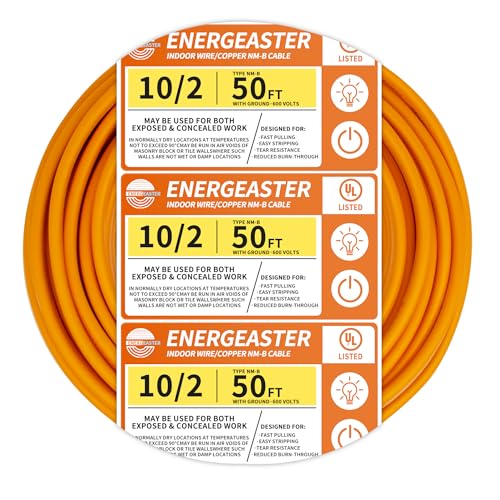
For a 30-amp 220V branch circuit inside a garage, basement, or attic, Energeaster’s 10/2 NM-B provides 50 feet of solid copper in a fire-retardant PVC jacket. The 10 AWG solid conductors handle up to 30 amps at 600V — enough for a mini-split AC, water heater, or small welder outlet. The orange outer jacket is standard color-coding for 10-gauge NM-B, making it quick to identify in a junction box.
Buyers consistently note the value proposition: this wire undercuts big-box store pricing while delivering the same UL-listed, solid-copper construction. The ground wire is also 10 AWG solid, matching the phase conductors for full current-carrying capacity in a fault condition. For a 30-amp 220V run to a shed sub-panel or a dedicated outlet, the 50-foot length gives generous slack for routing through studs and joists.
Be aware that NM-B is strictly for dry indoor locations — it cannot be buried, used outdoors, or run through damp conduit. The solid conductors are also less flexible than stranded SOOW, so plan your pull carefully around tight corners. For the intended indoor use, this is a clean, code-compliant solution at a fair price per foot.
Why it’s great
- Solid copper for stable, low-resistance connections in walls
- 50ft coil covers long indoor runs without splicing
- UL-listed and meets NM-B code requirements
Good to know
- Only 2 conductors — no neutral for 120/240V combos
- Stiff solid wire is harder to snake through tight conduit
3. Southwire 8/3 NM-B 25ft

Southwire’s 8/3 Romex is the go-to for 40-amp 220V circuits like an electric range, large welder, or a heavy-duty compressor. The 8 AWG copper conductors with a ground wire are encased in the patented SIMpull jacket, which reduces friction during wall pulls — a genuine time-saver when snaking through stud bays. Three conductors (black, red, white) plus a bare ground give you both 240V hots and a neutral for 120/240V appliances.
At 25 feet, this coil is ideal for outlet drops from a nearby panel. Buyers who used it to wire a 240V EV charging outlet report the insulation strips cleanly and the conductors hold their shape well under terminal screws. The black outer jacket signals 8 AWG or 6 AWG gauge, and the Southwire brand is widely recognized by inspectors — a non-trivial advantage for permit work.
The 25-foot length measured slightly short (about 4 inches) in one buyer’s test, which the ±5% tolerance allows, but if your run is exactly at the limit, factor in a few extra inches. For a 40A indoor branch circuit, this is a reliable, inspector-friendly choice from a major manufacturer.
Why it’s great
- SIMpull jacket reduces friction during wall installation
- 3-conductor design supports 120/240V appliances with neutral
- Southwire brand is widely recognized and inspector-approved
Good to know
- May arrive slightly below stated length due to tolerance
- Indoor dry locations only — not for outdoor use
4. Energeaster 6/3 SOOW 25ft
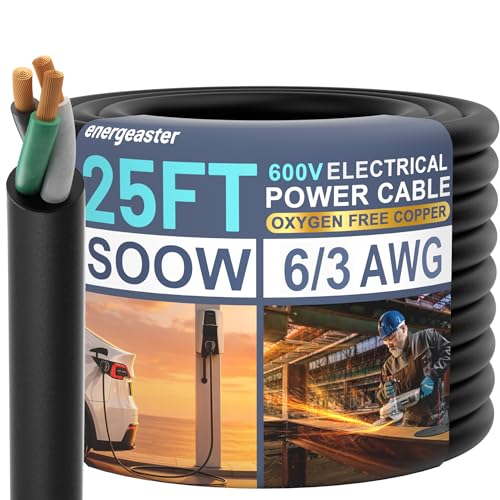
When your 220V run needs to withstand shop conditions, moisture, or direct sunlight, Energeaster’s 6/3 SOOW cable is the flexible, rugged answer. The 6 AWG stranded oxygen-free copper conductors handle up to 50 amps at 600V, and the CPE rubber jacket is rated from -40°C to 90°C with resistance to oil, battery acid, gasoline, and UV — verified by a 720-hour UV aging test. Buyers consistently praise its flexibility for conduit runs where NM-B would jam.
This 25-foot length is long enough to reach from a generator to a transfer switch or from a welder to its outlet without needing a splice. The three-conductor configuration (black, white, green) provides the two hots plus ground for 240V-only loads — perfect for a 50A welder, heat pump, or EV charger that doesn’t require a neutral. The OFC construction means significantly better heat dissipation than standard copper when under sustained high-current load.
The trade-off is weight and stiffness relative to smaller-gauge cords, though buyers describe it as “heavy duty and well made.” ETL listing gives code confidence for permanent installations in conduit or as a portable cord. If you need a 50A SOOW cable for generator backup, shop wiring, or EV charging in an exposed location, this is a top contender.
Why it’s great
- OFC copper for superior conductivity and heat management
- UV-rated rubber jacket handles outdoor and chemical exposure
- Extremely flexible for conduit pulling
Good to know
- 3 conductors only — no neutral for 120/240V applications
- Heavier than equivalent NM-B; plan support for long runs
5. Energeaster 10/4 SOOW 50ft
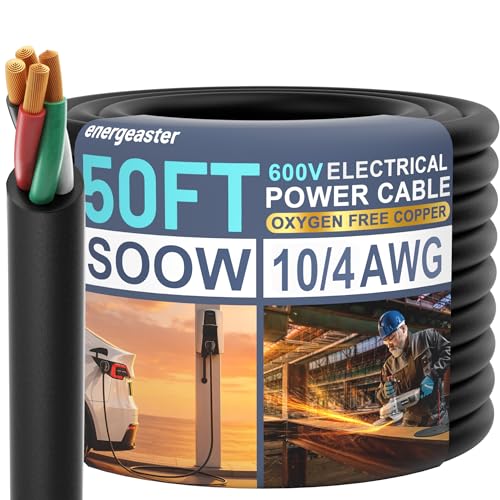
For a 30-amp 220V circuit that requires a neutral wire — such as a 4-wire 240V outlet for an RV or a generator with a bonded neutral — the Energeaster 10/4 SOOW delivers four stranded conductors in a single 50-foot run. The 10 AWG OFC copper is rated for 600V and 30 amps, making it a match for 30-amp breaker circuits powering welder outlets, mini splits, or backup generator feeds where a neutral is necessary for 120V loads within the appliance.
The SOOW jacket brings the same chemical and UV resistance as the 6/3 variant, so this cord is equally at home outdoors, in a workshop, or running through conduit in a damp basement. At 50 feet, it provides substantial reach for routing from a panel to a distant outlet or from a portable generator to a house connection. Buyers note the flexibility is excellent for pulling through tight conduit paths.
The 10 AWG gauge limits you to 30 amps, so this is not suitable for 50-amp EV chargers or large welders. But for its ampacity class, the 4-conductor configuration is a rarity at this price — most 10-gauge cords stop at 3 wires. If your 30-amp 220V device explicitly requires a neutral per its wiring diagram, this cable saves you from having to pull a separate neutral line.
Why it’s great
- 4 conductors include neutral for 120/240V compatibility
- OFC copper with UV-rated SOOW jacket for outdoor use
- 50ft length provides long reach without splicing
Good to know
- Limited to 30A — not for 50A circuits
- Heavier than equivalent NM-B for long indoor runs
6. Woods 6/3 NMW/G 25ft

Woods (a brand owned by Southwire) produces this 6/3 NMW/G cable for high-amp indoor circuits where 6 AWG copper is required — think 50-amp generator interlock feeds, EV charger runs, or large sub-panel feeds. The three conductors (two hots plus white neutral) and a bare ground are wrapped in the signature SIMpull jacket, which noticeably reduces the elbow grease needed to pull this heavy 6 AWG wire through studs and joists.
The 25-foot length is ideal for a straight run from a panel to a nearby 50-amp outlet. At 8.6 pounds, this is a heavy coil, but the copper content is exactly what you want for a 50-amp 240V circuit — no aluminum substitutes or undersized strands. Buyers specifically call out the cost savings versus local big-box stores, with several using it for generator interlock installations.
This cable is UL-listed type NM-B and is rated for dry locations only. It cannot be buried or used outdoors. The 6/3 configuration supports 120/240V appliances that need a neutral, such as some newer EV chargers. For a premium indoor 50A run from a trusted American manufacturer, this is a solid investment.
Why it’s great
- SIMpull jacket eases installation of heavy 6 AWG
- 3-conductor + ground covers 120/240V neutral needs
- Made in America by Southwire/Woods — inspector familiar
Good to know
- Indoor dry locations only — not outdoor rated
- Heavier and stiffer than SOOW; harder to maneuver in tight panels
7. Kanayu 6/3 NM-B 25ft
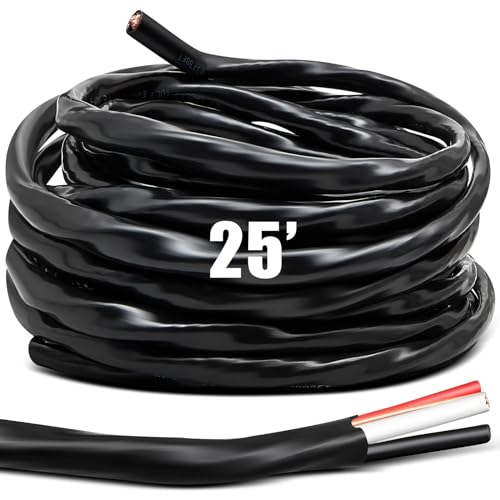
Kanayu’s 6/3 NM-B enters the budget-friendly tier with full 6 AWG copper conductors rated for 600V and 55A, all at a price that undercuts most competitors for the same gauge and length. The black PVC jacket is durable for indoor dry locations, and the three conductors plus ground deliver both 240V hots and a neutral — covering 50-amp applications like EV chargers, RV outlets, and generator interlock feeds. Users report using it for 50-amp RV outlet boxes and EV charger installs with good results.
The trade-off comes in flexibility: buyers note the wire is stiff and difficult to bend, especially when terminating into a cramped outlet box. One DIYer spent two days carefully shaping the conductors for a clean install. This is characteristic of solid-core NM-B in large gauges, but it’s worth factoring in if your workflow involves tight bends. The PVC jacket also has less abrasion resistance than a SOOW rubber jacket, so protect it at any pass-through points.
For homeowners on a budget wiring a 50-amp indoor circuit — particularly a garage EV charger or a range outlet — the Kanayu 6/3 NM-B delivers full copper capacity at a significant savings over Southwire or Woods. Just budget extra installation time for the stiffness, and verify your local inspector accepts the brand before committing to a permit job.
Why it’s great
- Full 6 AWG copper at a budget-friendly price point
- 3-conductor + ground supports 50A 120/240V loads
- Rated 600V / 90°C for high-temp environments
Good to know
- Very stiff wire — challenging to bend in tight spaces
- Indoor dry use only; PVC jacket less durable than SOOW
FAQ
Can I use 10 AWG wire for a 50-amp 220V circuit?
What is the difference between 3-wire and 4-wire 220V cable?
Is SOOW cable approved for permanent in-wall installation?
Can I bury 220V wire directly in the ground?
Do I need a neutral wire for a 220V welder outlet?
Final Thoughts: The Verdict
For most users, the best 220 volt wire winner is the CLLOMAGY 6/4 SOOW 6ft because it delivers true 50-amp OFC copper in a rugged, code-compliant SOOW jacket that works both indoors and outdoors without the limitations of NM-B. If you need a 30-amp indoor branch circuit for a mini-split or small welder, the Energeaster 10/2 NM-B 50ft offers clean, solid-copper performance at a fair per-foot price. And for a 50-amp indoor run to a garage EV charger where inspector familiarity matters, the Southwire 8/3 NM-B 25ft is the safe, trusted pick from an American brand that every inspector will pass without a second look.