
The best two-player cooperative board games ditch the zero-sum mentality for a shared challenge where you win or lose together. Unlike competitive games where one player’s clever move harms the other, these titles demand genuine collaboration, forcing you to discuss tactics, combine unique character abilities, and manage a rising threat level as a unified team. Whether you’re navigating a haunted forest, stopping a global pandemic, or surviving an alien-infested jungle, the core pleasure comes from solving a puzzle that neither of you could crack alone.
I’m Min — the co-founder and writer behind Gadgets Feed. To build this guide, I spent many hours cross-referencing playtime data, component quality reports, and the specific mechanics that make a co-op game work for exactly two players, ensuring each pick delivers genuine teamwork without quarterbacking.
For couples, friends, or roommates seeking a shared screen-free experience, this list of the best 2 player cooperative board games covers story-driven epics, quick tactical skirmishes, and classic team-based strategy.
How To Choose The Best 2 Player Cooperative Board Games
Picking the right co-op game for two people requires evaluating more than just a high rating. You must consider how the game scales from its maximum player count, whether hidden information prevents one player from dominating decisions, and how the session length fits your typical evening.
Quarterbacking and Hidden Information
In some co-op games, a stronger player can effectively direct everyone’s moves — a phenomenon called quarterbacking. For two players, this can feel especially lopsided. Games that include hidden information, such as personal hands of cards that are not shown to the partner, naturally reduce this problem by forcing each player to make decisions with incomplete knowledge of the other’s resources.
Playtime and Session Commitment
A 30-minute tile-laying game like Dorfromantik offers a quick wind-down after dinner, whereas a 3-hour campaign session like Sleeping Gods: Primeval Peril demands a full afternoon. Consider your weekly gaming window. Games with save-and-stop mechanics, such as campaign logs or progressive unlock systems, allow you to pause mid-session without losing progress.
Replayability and Campaign Depth
Pure replayability comes from randomized setups, multiple victory conditions, or branching story paths. A game like Spire’s End offers 15 unique endings across six chapters, meaning your second playthrough can diverge radically from the first. Conversely, a fixed campaign like the one in Dorfromantik rewards repeat plays with hidden content boxes and escalating scoring goals.
Quick Comparison
On smaller screens, swipe sideways to see the full table.
| Model | Category | Best For | Key Spec | Amazon |
|---|---|---|---|---|
| Pandemic | Strategy | Classic team-based defense | 45-60 min playtime | Amazon |
| Dorfromantik | Tile-Laying | Peaceful, campaign-driven fun | 5 unlockable content boxes | Amazon |
| Forbidden Jungle | Adventure | High-tension alien survival | 47 miniatures included | Amazon |
| Spire’s End Vol. 1 | Choose-Your-Path | Dark narrative & replayability | 15 unique endings | Amazon |
| Mists Over Carcassonne | Tile-Laying | Co-op twist on a classic | 45 min average playtime | Amazon |
| Sleeping Gods: Primeval Peril | Story-Driven | Shorter entry to a big universe | 3-hour campaign sessions | Amazon |
| Horrified: Greek Monsters | Family Strategy | Mythological monster defense | 60-minute game sessions | Amazon |
In‑Depth Reviews
1. Pandemic Board Game

Pandemic remains the gold standard for cooperative tabletop strategy, and it works exceptionally well as a two-player experience. Each player adopts a specialized role — Medic, Scientist, Researcher, or Operations Expert — and the asymmetric abilities force real interdependence. You cannot win by hoarding cards solo; you must physically meet on the board to share knowledge and trade cures. The escalating tension from Epidemic cards, which reintroduce cured diseases and trigger outbreaks, creates a genuine race-against-the-clock feel that keeps both players fully engaged.
The 45-to-60-minute playtime is ideal for weeknight sessions, and the adjustable difficulty via the number of Epidemic cards ensures no two games play the same. The board’s global map with 48 cities randomizes the initial infection hotspots, so you cannot memorize a perfect strategy. Veteran players appreciate how the game rewards careful card management and coordinated movement, while newcomers quickly grasp the core loop of Treat, Trade, and Cure. It also serves as the perfect gateway to the deeper Pandemic Legacy series.
Component quality is sturdy, with thick cardboard disease cubes and a durable folding board that survives repeated setups. The only minor friction is that the city spaces can feel cramped when multiple pawns and cubes occupy the same square. Players who prefer a purely analog experience will find the tactile dice-less system refreshing, while those who enjoy a narrative layer can treat each role as a character with a backstory.
Why it’s great
- Truly cooperative — every role matters for victory
- High replayability from random setup and adjustable difficulty
Good to know
- City spaces on the board are small with many components
- One player may naturally quarterback without hidden cards
2. Dorfromantik – Board Game US Edition

Dorfromantik won the Spiel des Jahres 2023 for good reason: it transforms the peaceful hex-tile-laying of the hit indie video game into a fully analog cooperative campaign. You and your partner work together to build a beautiful landscape by placing tiles that satisfy task markers for forests, villages, fields, and waterways. The campaign system rewards progress with five hidden boxes that unlock new tiles and rules, giving you a tangible sense of discovery across multiple sessions. Each game takes roughly 45 minutes, and the scoring system encourages replay without punishing failure — you can unlock campaign content even after a loss.
The hidden-information problem is elegantly avoided because each player draws their own tiles, and you are allowed to show them to your partner. This transparency actually enhances the collaborative puzzle, turning each placement into a shared spatial optimization discussion. The component quality is excellent, with thick hex tiles that press-fit cleanly and a campaign pad that tracks your unfolding journey. The artwork is charming and approachable, making it easy to introduce to friends or family members who typically avoid complex tabletop strategy.
The rulebook has a few translation quirks, but a quick online tutorial video resolves any confusion within minutes. Because the game is non-confrontational and has no direct player conflict, it suits duos who want a relaxing yet engaging experience. The campaign’s gradual difficulty ramp prevents boredom, and the campaign pad ensures you can always pick up where you left off, even after a week-long break.
Why it’s great
- Peaceful cooperative puzzle with high campaign replay value
- Transparent tile-sharing prevents quarterbacking
Good to know
- Instructions can be slightly confusing due to translation
- Best enjoyed with a relaxed, non-competitive mindset
3. Forbidden Jungle

From the creator of Pandemic, Matt Leacock, Forbidden Jungle drops you and a partner into an alien-infested jungle where you must align crystals to escape before the threat level maxes out. The twist is the alien life cycle: eggs hatch into larvae, which mature into adults that sink tiles from the board. Each turn you can move, reveal new areas, use equipment, or align crystals, but the aliens keep spawning and the sinkholes remove the ground beneath you. With 47 miniatures and a modular tile layout, no two games look identical.
Playing as a duo, you can each control one or two specialist characters with unique abilities, which adds strategic depth without requiring a full group. The 30-to-45-minute session length is snappy enough for a quick game night appetizer or a lunch break session. The difficulty is adjustable and leans harder than its predecessors Forbidden Island and Forbidden Desert, making it satisfying for experienced duos who want a real challenge. The plastic pieces are durable, and the large tiles have vibrant artwork that makes the alien threat feel immediate.
One critique is the sheer number of small components — you will want to keep the box organized with baggies to avoid losing pieces. The beginner difficulty can feel too easy, but the advanced mode ramps up sharply, so finding a sweet spot may take a few games. Despite these quirks, the cooperative tension is palpable, and the shared dread of an alien outbreak creates memorable team moments.
Why it’s great
- Intense alien-lifecycle mechanic drives constant tension
- Modular board and role abilities ensure high replayability
Good to know
- Lots of small pieces; organization is essential
- Difficulty gap between beginner and advanced levels is wide
4. Spire’s End Vol. 1

Spire’s End is a choose-your-path horror adventure designed specifically for one or two players, making it one of the most focused co-op narrative experiences on this list. The oversized 6.5-inch by 3.5-inch cards — larger than traditional tarot cards — and custom-etched dice add a premium tactile component that enhances the dark, atmospheric theme. You and your partner navigate a branching story across six chapters, encountering allies, enemies, and moral choices that lead to 15 unique endings. The luck-based dice rolls inject unpredictability, but your decisions about which path to take and which resources to spend are what ultimately determine survival.
The two-player dynamic works because each person can control a character, and the hidden goal cards mean you cannot fully optimize your partner’s turn without seeing their hand. The high stakes are genuine: even if you win every combat encounter, you can still receive a dark ending, which encourages replay. The game takes 60 to 90 minutes per session, and the save state is natural since chapters can be played sequentially. Components include 109 story cards, 24 action cards, and 115 acrylic cubes, which feel weighty and durable.
The mature themes and disturbing artwork are best suited for ages 16 and older, and the game does not pull punches — your characters may die or fail permanently. Some players may find the rulebook dense initially, but the gameplay loop becomes intuitive after the first chapter. For duos who love narrative depth and grim fantasy, this is a standout pick that delivers genuine replay value through its branching structure.
Why it’s great
- True choose-your-path with 15 distinct endings
- Oversized cards and etched dice feel premium
Good to know
- Dark themes and mature content; not for younger players
- Rulebook requires careful first read
5. Mists Over Carcassonne
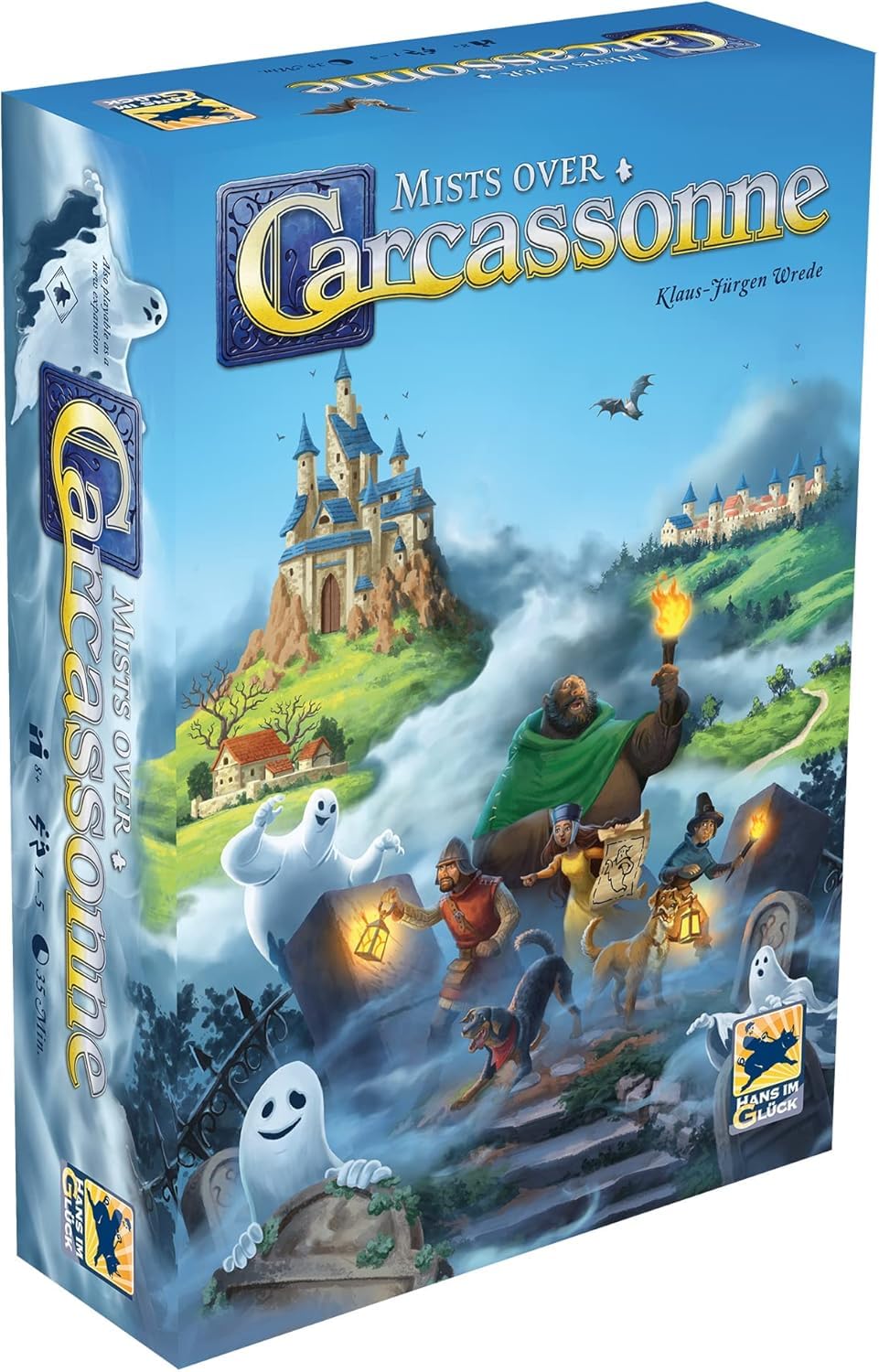
Mists Over Carcassonne takes the beloved tile-laying mechanics of the original Carcassonne and inverts them into a cooperative challenge. Instead of competing for features, you and your partner work together to place tiles, score points, and manage ghost meeples that spread like a plague across the board. Six progressive campaign levels introduce new rules gradually, ensuring beginners can start with the basics while veterans can jump to higher difficulty. The game can be played standalone or as an expansion to the original Carcassonne, adding flexibility for existing fans.
The ghost mechanic is the star: each tile may spawn ghost meeples that must be contained by placing tiles adjacent to cemeteries or by using haunted castles to your advantage. If the ghost count exceeds the threshold, you lose immediately. This creates a push-your-luck tension that forces discussion about every placement. The 45-minute playtime is tight and respectful of busy schedules, and the open-information policy — you can show your tiles to your partner — makes it easy to strategize as a duo without quarterbacking.
Component quality is typical of the Carcassonne line: thick cardboard tiles, colorful ghost meeples, and a scoreboard that tracks your progress. The rulebook is verbose but clear once you play through level one. Some experienced board gamers may find the lower difficulty levels too simple, but the later stages demand sharp coordination. It is also an excellent bridge game for partners where one is a Carcassonne veteran and the other is new to the series.
Why it’s great
- Engaging ghost-meeple containment mechanic
- Progressive campaign levels teach rules gradually
Good to know
- Lower levels may feel too easy for experienced players
- Rulebook is verbose and could be more concise
6. Sleeping Gods: Primeval Peril
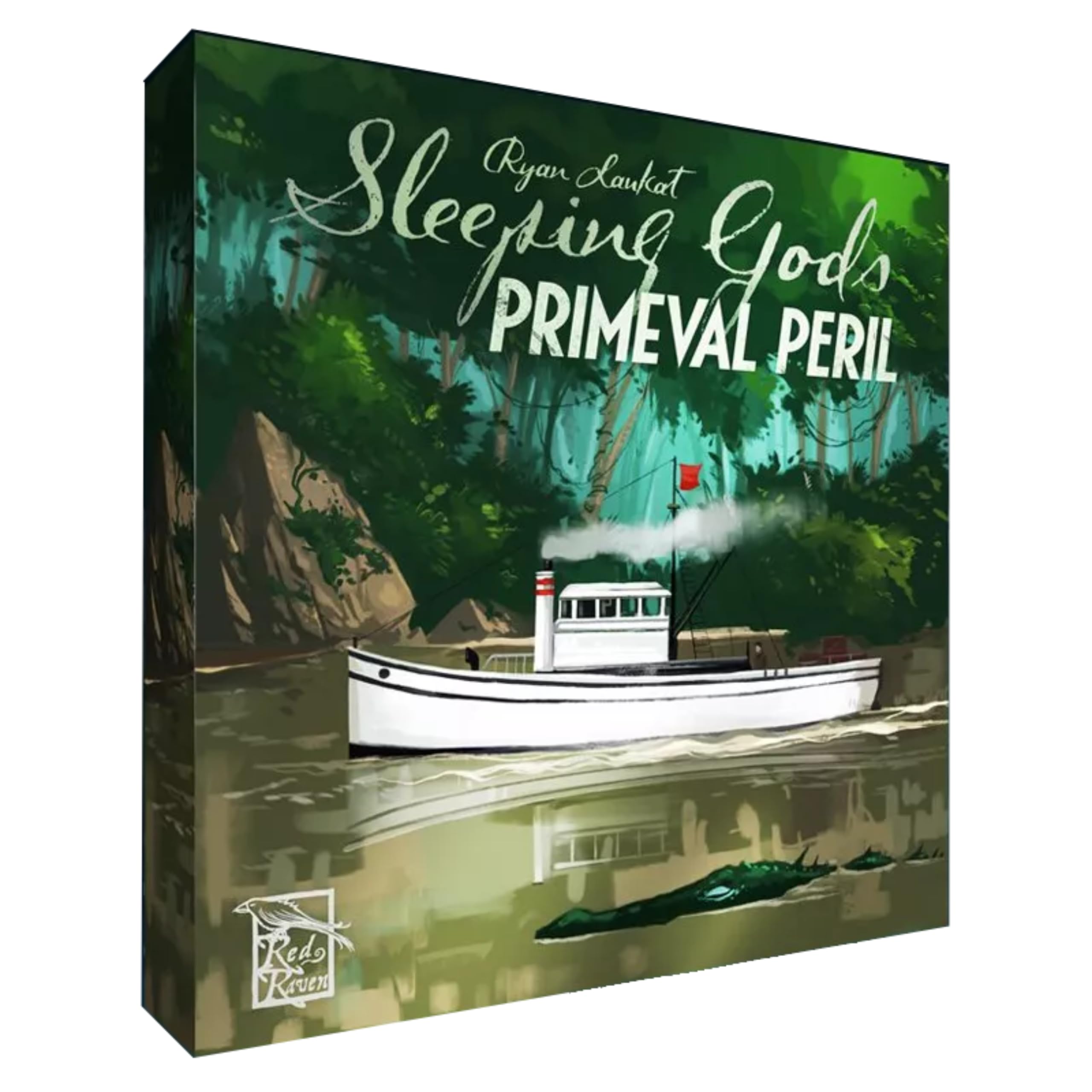
Sleeping Gods: Primeval Peril is a standalone adventure designed specifically for one or two players, set in the same universe as the acclaimed Sleeping Gods but with a shorter, more forgiving campaign. You take on the roles of Captain Sofi Odessa and her crew aboard the steamship Manticore, exploring islands, battling creatures, and seeking powerful totems while making narrative choices that affect the outcome. The game can be finished in one or two 3-hour sessions, making it far more accessible than the original Sleeping Gods which can take 15-20 hours.
The cooperative dynamic shines because each player can manage a subset of the crew, with shared resources that require negotiation. The rules are streamlined compared to the full game, and the campaign logbook allows you to save progress mid-session. The art and storytelling quality are identical to the original, with gorgeous illustrations and a well-written, immersive narrative. Beginners to adventure campaign games will find the learning curve manageable, and the forgiving difficulty means fewer frustrating restarts.
The box contains only the cards and tokens needed for this standalone campaign, so you do not need to own the base game. The cardboard components are high-quality, though the game does take up a fair amount of table space. Experienced players who already own the full Sleeping Gods may find the content somewhat derivative, but for duos looking for a manageable entry point into campaign-style co-op, this is an excellent choice.
Why it’s great
- Shorter, more forgiving campaign perfect for two players
- Rich storytelling with gorgeous artwork
Good to know
- Takes up significant table space during play
- Content may feel familiar to owners of original Sleeping Gods
7. Horrified: Greek Monsters
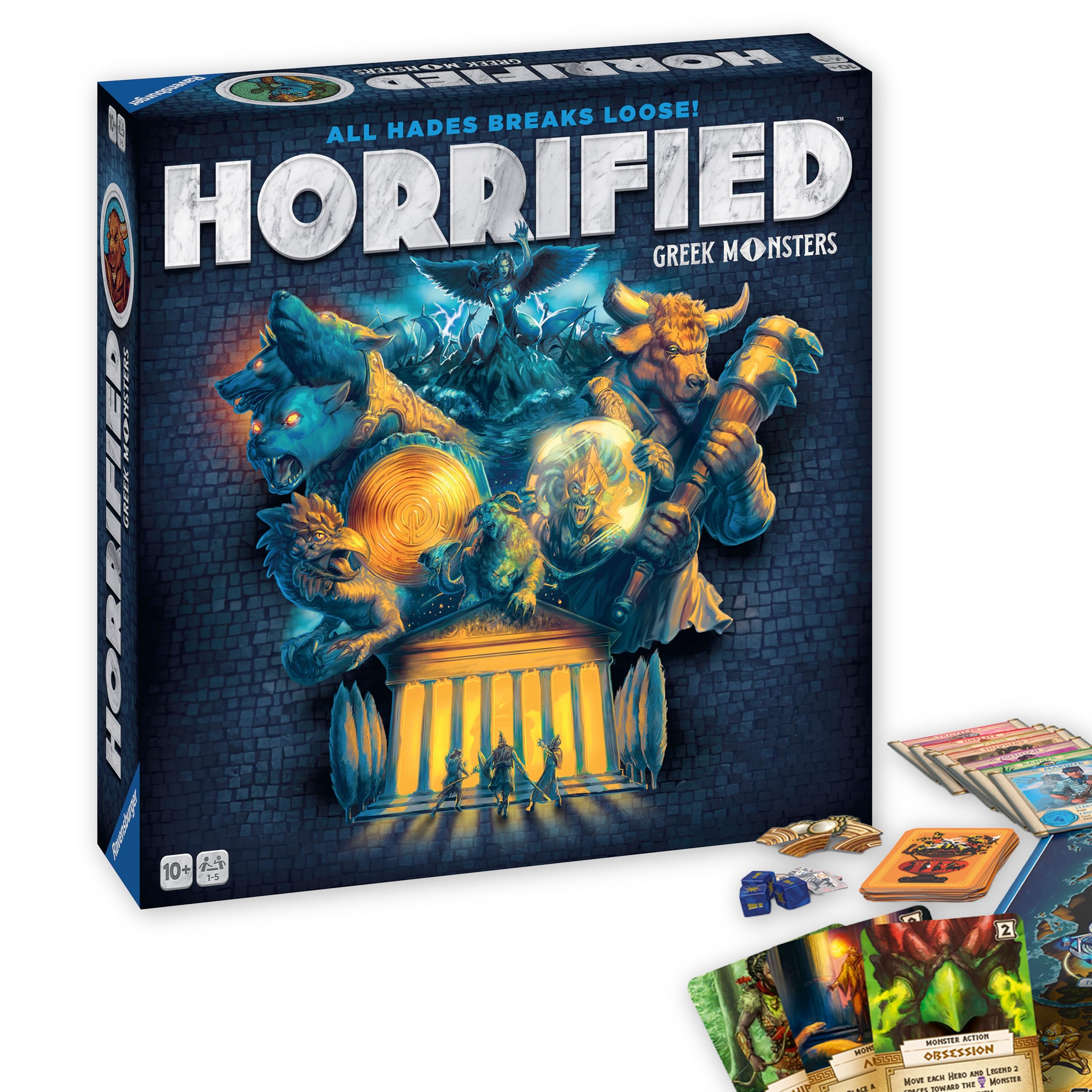
Horrified: Greek Monsters brings the cooperative monster-defeating formula to Greek mythology, challenging you and your partner to defend Elysium from six unique mythical beasts including Medusa, Cerberus, and the Chimera. Each monster has its own challenge, requiring different tactics to defeat — Medusa may petrify heroes, while Cerberus demands a specific dice-rolling sequence. The 60-minute game time is long enough to feel epic but short enough for a weeknight, and the adjustable difficulty via selecting which monsters to include keeps the experience fresh.
The two-player experience works well because heroes have unique Favor of the Gods abilities that create asymmetric roles. You must coordinate who tackles which monster and who manages the item bag and perk cards. The components are colorful and sturdy, with detailed monster figures and thick hero tiles, though the monster mats are slightly flimsy and can catch in the bag. The pick-up-and-deliver core mechanic combined with puzzle-solving for each monster creates a satisfying loop that rewards team planning.
One downside is that all Horrified games share a similar mechanical skeleton, so if you already own the original Horrified or the American Monsters version, the Greek re-skin may feel too familiar. The rulebook is streamlined, which helps with setup but omits some monster-specific clarifications that may require online lookup. Despite these issues, the game remains a solid choice for duos who love Greek mythology and want a cooperative strategy game with clear win conditions and minimal quarterbacking.
Why it’s great
- Unique monster challenges require different tactics each game
- Colorful, high-quality components and figures
Good to know
- Monster mats are somewhat flimsy
- Mechanics feel similar to other Horrified games
FAQ
Can I play these games with just two players even if the box says 1-5?
What is quarterbacking and how do I avoid it in a two-player co-op game?
How long does a typical session last for a two-player cooperative board game?
Final Thoughts: The Verdict
For most users, the best 2 player cooperative board games winner is the Dorfromantik Board Game because it combines peaceful tile-laying with a rewarding campaign system that avoids quarterbacking entirely. If you want classic high-tension team strategy, grab the Pandemic Board Game. And for a dark narrative adventure with genuine replayability, nothing beats the Spire’s End Vol. 1.