
A lawn that looks like a putting green from the street but turns into a muddy, scalped mess the moment it rains is the daily reality of owning a sloped property. Standard push mowers and two-wheel-drive robot mowers slip, stall, or simply refuse to climb, leaving you to finish the job by hand or risk injury dragging heavy equipment up a wet grade. All-wheel-drive technology changes that equation entirely, delivering torque to every wheel so the mower maintains forward bite on compacted clay, loose topsoil, and slopes that would stop a conventional machine cold.
I’m Min — the co-founder and writer behind Gadgets Feed. I’ve spent hundreds of hours poring over drivetrain specs, slope-angle ratings, battery capacities, and real-world traction data to separate the machines that truly conquer hills from those that only claim to.
Whether your yard has a gentle 15-degree roll or a punishing 40-degree escarpment, understanding the differences in wheel motors, suspension design, and cutting-deck geometry is the only way to buy with confidence. This guide breaks down the five best robot mowers with true all-wheel drive so you can match the best all-wheel-drive lawn mower to the exact challenges of your property.
How To Choose The Best All-Wheel-Drive Lawn Mower
When you’re shopping for an AWD robot mower, the headline feature — all-wheel drive — is only the starting point. The real distinctions live in how that drive system is engineered, how the mower navigates when the terrain tilts, and how much work the battery and cutting deck can handle before needing a recharge.
Slope Angle Ratings: Degrees vs. Percent
Manufacturers advertise slope capability in both degrees and percentages, and the two are not interchangeable. A 70% slope equals roughly 35 degrees. A 45% slope equals about 24 degrees. If your yard has a single steep section, look for a mower rated at least 10 degrees higher than that section’s actual incline — the margin accounts for wet grass, soft soil, and battery weight shifting during a turn.
Suspension and Ground Clearance
On uneven terrain, wheel-to-ground contact is everything. A rigid chassis lifts a wheel off the ground over a dip, losing traction entirely. Mowers with independent suspension or ORV-tuned dual-suspension systems keep all four wheels planted, maintaining drive power through ruts, roots, and transitions between flat and sloped zones. Ground clearance between 2 and 3 inches lets the mower crest small obstacles without the underside dragging.
Navigation Tech Under Canopy and on Slopes
RTK (Real-Time Kinematic) satellite positioning offers centimeter-level accuracy, but it relies on a clear view of the sky. Tree cover, house shadows, and deep fence lines can degrade the signal. Mowers that combine RTK with AI vision, LiDAR, or visual-inertial odometry maintain stable navigation in partial shade or along the base of a wall. If your yard has dense tree cover, a LiDAR-based system or one with 360-degree vision typically holds the line better than RTK alone.
Battery Capacity and Real-World Range
Climbing hills consumes significantly more energy than mowing flat ground. A 2.5Ah battery that covers 1,350 square feet on level terrain may only handle 800–900 square feet on a sloped lot. Look for mowers with at least a 5Ah battery if your yard exceeds a quarter acre with significant grade, or models that can recharge mid-job and resume automatically to cover larger areas in stages.
Quick Comparison
On smaller screens, swipe sideways to see the full table.
| Model | Category | Best For | Key Spec | Amazon |
|---|---|---|---|---|
| Segway Navimow X430 | Premium | Extreme slopes, large yards | 84% slope, 17″ cut, dual 180W motors | Amazon |
| Sunseeker X7 | Mid-Range | Steep hills, large properties | 70% slope, 14″ cut, binocular AI vision | Amazon |
| Segway Navimow i210 AWD | Mid-Range | Medium slopes, no-wire setup | 45% slope, 7.1″ cut, 5.1Ah battery | Amazon |
| DREAME LiDAR 3500 A3 AWD Pro | Premium | Complex yards with obstacles | 80% slope, 15.8″ cut, 360° LiDAR | Amazon |
| Segway Navimow i206 AWD | Entry-Level | Small sloped yards, budget-friendly | 45% slope, 7.1″ cut, 2.5Ah battery | Amazon |
In‑Depth Reviews
1. Segway Navimow X430 Robot Lawn Mower
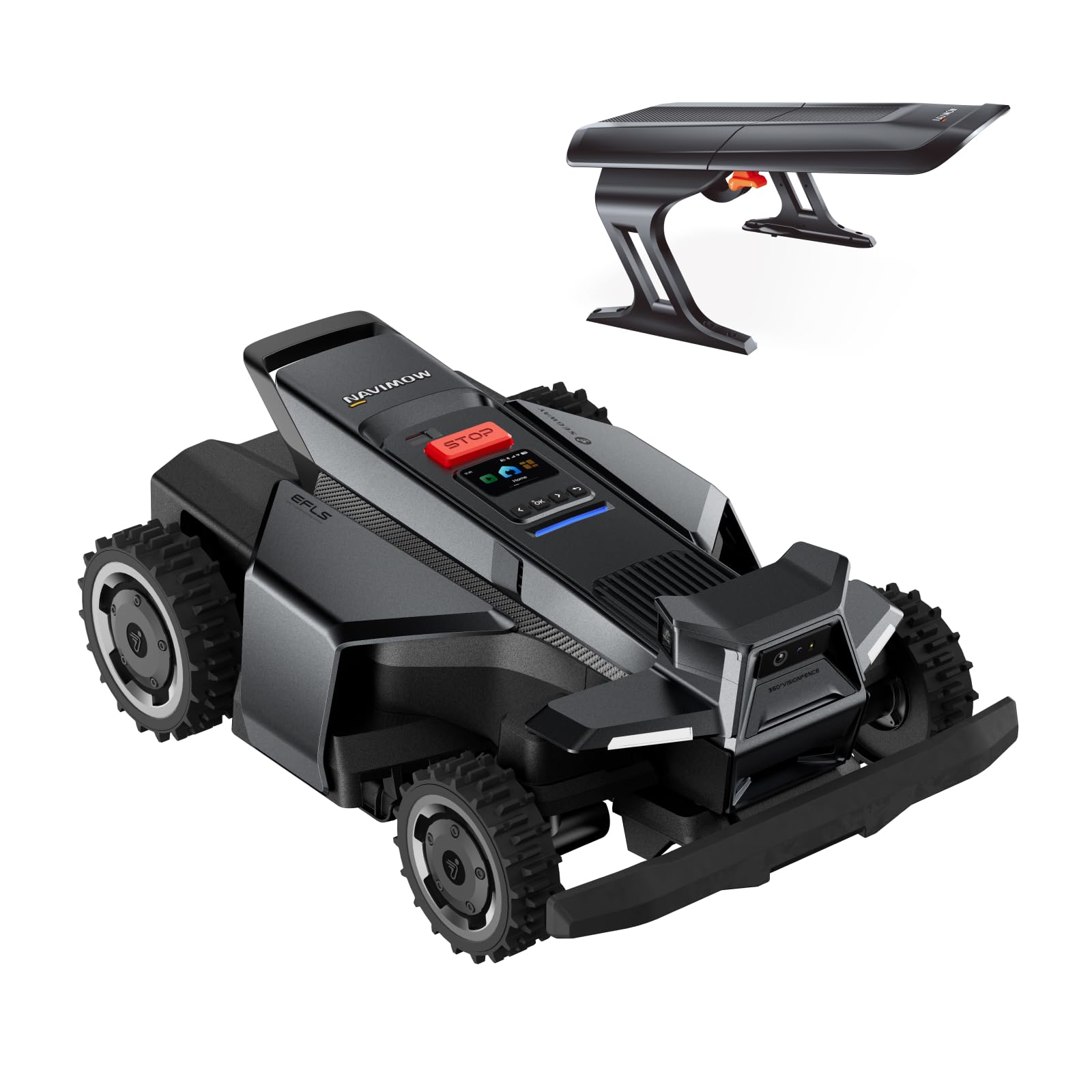
The X430 is the most capable AWD robot mower in this lineup, and the engineering justification starts with its ORV-tuned dual suspension system. While most robot mowers rely on rigid axles that lift a wheel over bumps, the X430’s independent suspension keeps all four wheels in contact with uneven ground — critical for maintaining traction on the 84% (40°) slopes it’s rated to climb. The dual 180W motors driving the cutting discs also mean this machine chews through tall, dense grass without bogging down, a common failure point for smaller single-motor designs when they encounter overgrown sections at the base of a hill.
Navigation is handled by Segway’s EFLS tri-frequency Network RTK paired with 360° Vision and VIO, a combination that holds centimeter-level accuracy even under dense tree canopy — a scenario where pure RTK systems often drop signal. The Xero-Turn AWD steering uses eccentric front-wheel geometry that pivots without dragging turf, so you don’t get scuff marks on the lawn after the mower finishes its pattern. With a 17-inch cutting width and EdgeSense trimming that leaves margins under two inches, this mower covers a full acre on a single charge cycle, though actual runtime on steep terrain will require midday recharging for yards near the upper end of that range.
Setup is genuinely wire-free: one-tap auto mapping deploys without any ground antenna or boundary wire, and the GeoSketch map editor lets you fine-tune zones directly in the app. Voice control via Alexa and Google Home adds convenience, and the anti-theft GPS tracking with GeoFence alerts provides peace of mind for the investment. The optional garage is expensive, but the core machine justifies its premium position through sheer slope-holding ability and cut quality.
Why it’s great
- Unmatched 84% slope rating with dual suspension keeps tire contact on uneven terrain
- 17-inch dual-motor cutting deck handles tall, dense grass without stalling
- Tri-frequency RTK plus vision maintains accuracy under trees and along fences
Good to know
- Battery drains faster on steep hills; full-acre jobs may need a midday recharge
- Optional garage is pricey and shipped separately
2. Sunseeker X7 Wireless Robot Lawn Mower
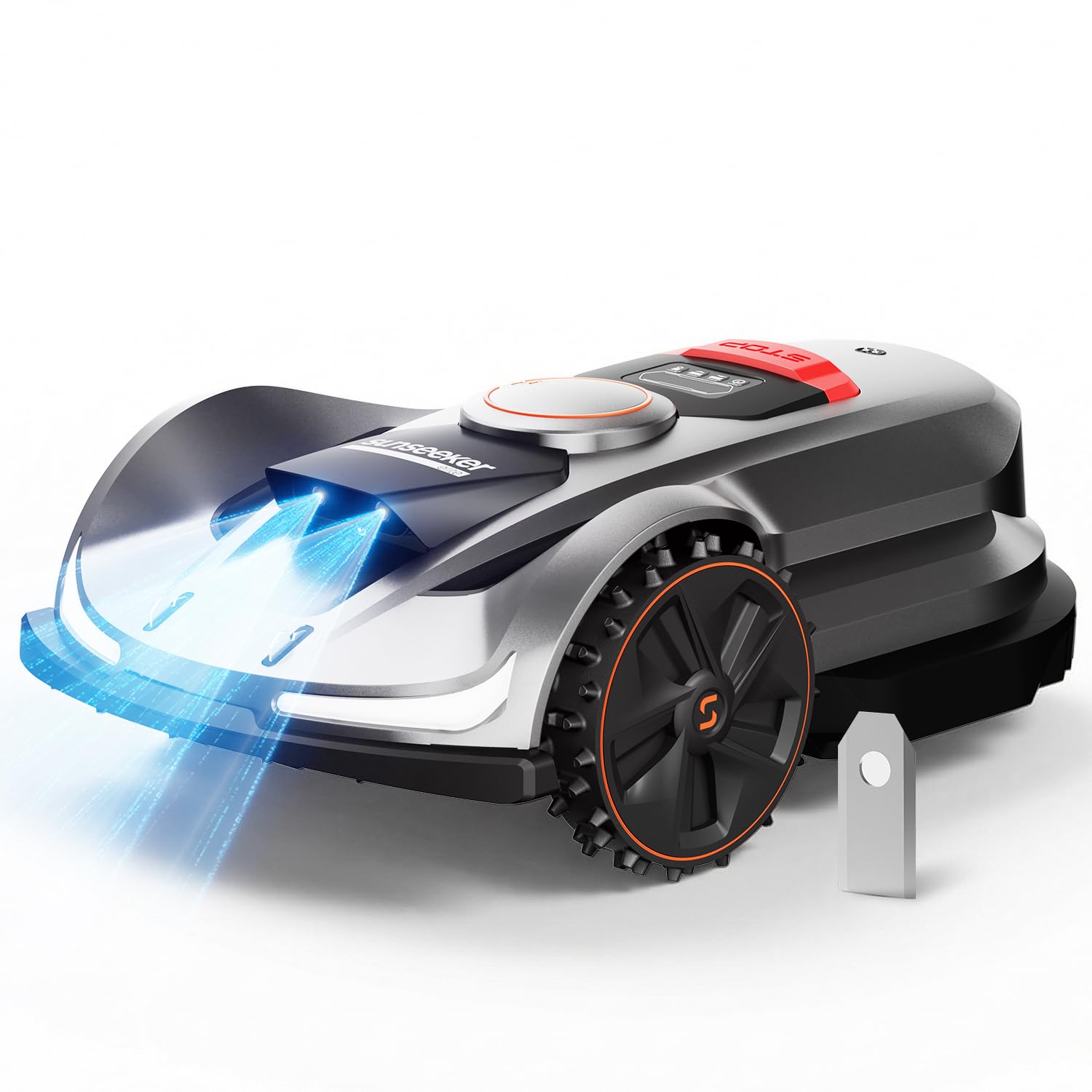
The Sunseeker X7 is engineered for properties where the slope is severe and the yard is measured in fractions of an acre closer to three-quarters. Its rugged AWD chassis with deep-tread off-road tires climbs up to 70% (35°) slopes without slipping, and the binocular 3D AI vision system uses two cameras to perceive depth — unlike single-camera setups that misjudge the distance to obstacles and either bump into them or leave wide safety margins. The floating cutting deck automatically follows the contour of uneven ground, preventing scalping on rises and delivering micro-clippings back to the soil as fertilizer.
With a 14-inch cutting width and coverage rated at 0.75 acres, the X7 is sized for medium-to-large yards where a smaller robot would need multiple recharge cycles to finish. The multi-zone scheduling handles up to 20 zones with optimized paths, and the mower resumes automatically after charging, so you don’t have to manually send it back to a missed section. The bank-grade security package includes 4G+GPS real-time tracking, an anti-theft alarm, and a geofence lockout — features that matter when a machine this capable sits unattended in an exposed yard.
Some users report that the satellite navigation can be finicky in areas with heavy tree cover or when the antenna isn’t roof-mounted, and the app interface has a learning curve that isn’t as polished as the Segway ecosystem. However, the traction and slope recovery performance are consistently praised in reviews, with owners noting that the X7 climbs and recovers from spots where their previous robot mower failed entirely. For steep lots where the priority is conquering the grade rather than app elegance, this is the strongest mid-range contender.
Why it’s great
- Binocular vision provides real depth perception, reducing collisions and improving navigation around obstacles
- Floating deck prevents scalping on uneven terrain and returns fine clippings as natural fertilizer
- Built-in 4G tracking and alarm deter theft on large, exposed properties
Good to know
- GPS signal can be unreliable in deep shade or without a roof-mounted antenna
- App interface is less intuitive than competitors and may require extra setup time
3. Segway Navimow i210 AWD Robot Lawn Mower
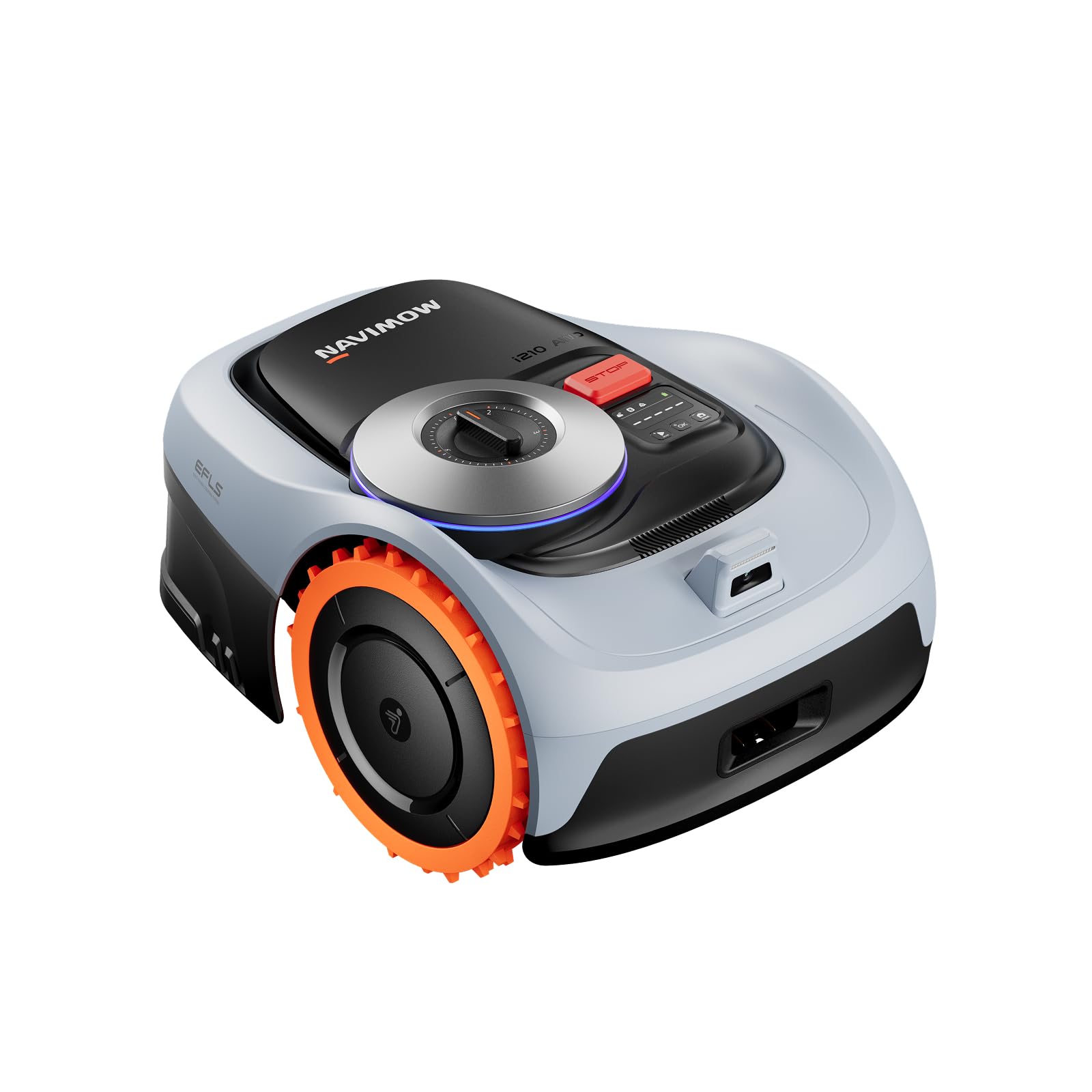
The i210 AWD occupies the sweet spot in Segway’s Navimow lineup for homeowners with medium sloped lawns who want the convenience of a wire-free system without the high price of the X-series flagship. The all-wheel-drive system here uses automotive-grade electronic stability control to maintain traction on 45% (24°) slopes, and the third-wheel zero-turn design steers without scraping or tearing the turf — a common issue with differential-steer robots on soft ground. The 5.1Ah battery provides enough capacity to cover up to 2,690 square feet per charge, which maps well to quarter-acre yards with moderate grades.
The standout feature is the built-in 4G NetRTK module that eliminates the need for a separate GNSS antenna and base station. You open the box, place the mower in the yard, and one-tap auto mapping establishes centimeter-accurate positioning wherever there’s cellular signal. This is a significant reduction in setup friction compared to RTK systems that require you to mount and calibrate an antenna. The on-demand drive algorithm also extends runtime by delivering full torque only when the mower detects resistance — helpful for keeping the 5.1Ah battery from draining too fast on the first steep pass of the day.
Real-world feedback from users highlights the mower’s ability to handle uneven terrain without getting stuck, but some owners report that the satellite navigation can drift by a few inches, which matters if your yard has narrow pathways or you’ve mapped boundaries close to flower beds. The 7.1-inch cutting width is narrow compared to the premium models in this list, meaning it takes longer to cover larger zones. For a quarter-acre lot with gentle-to-moderate slopes, however, the i210 AWD delivers a reliable, hands-off experience at a mid-range price.
Why it’s great
- Built-in 4G NetRTK eliminates the need for a separate antenna or base station setup
- Zero-turn steering prevents turf scuffing common with differential-steer mowers
- On-demand drive conserves battery on flat sections, extending coverage per charge
Good to know
- GPS accuracy can drift a few inches near edges, requiring careful map buffer zones
- 7.1-inch cutting width is narrower than premium models, increasing mow time for larger lawns
4. DREAME LiDAR 3500 A3 AWD Pro
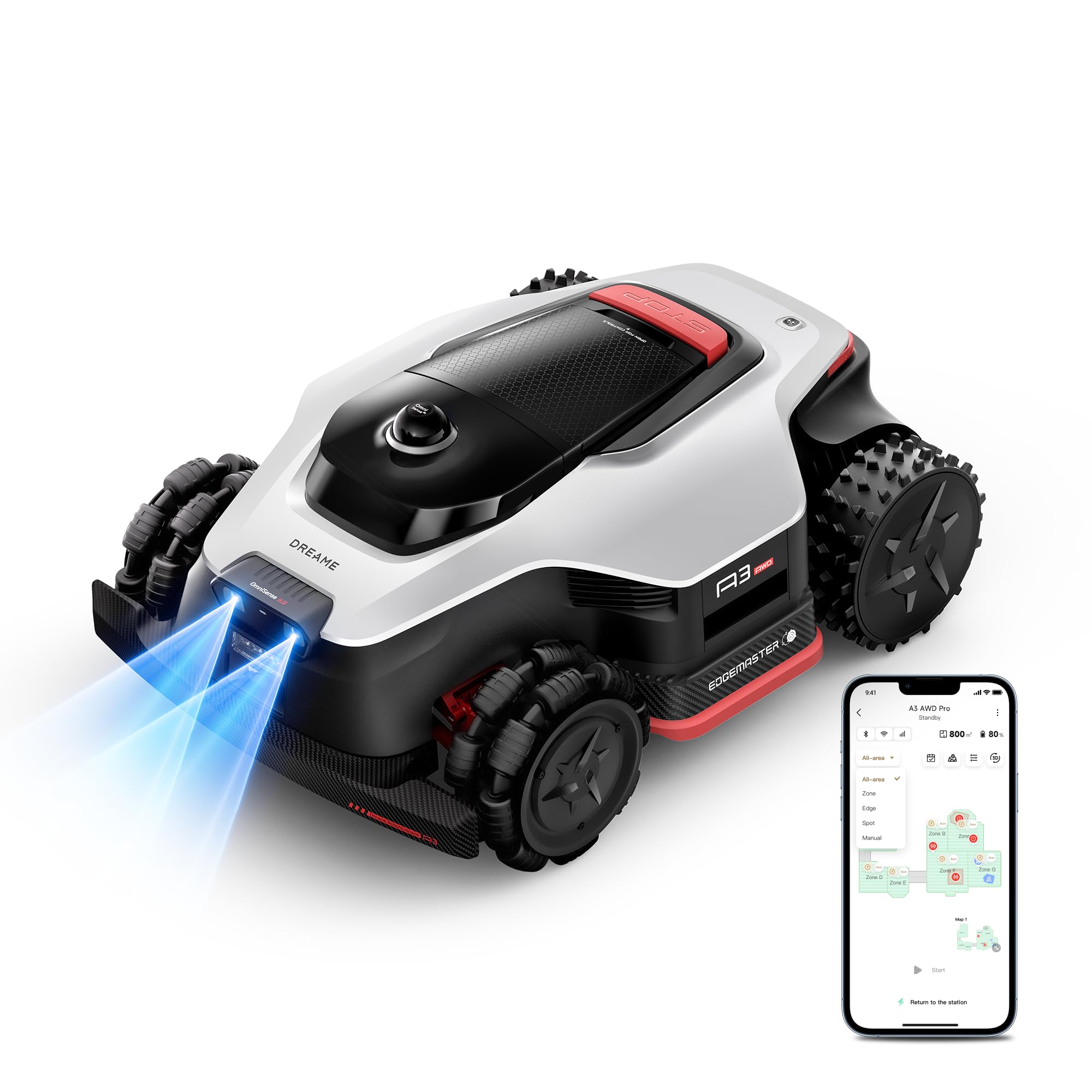
The DREAME A3 AWD Pro takes a fundamentally different approach to navigation than the RTK-based mowers on this list. Instead of relying on satellite positioning, it combines 360-degree 3D LiDAR with binocular AI vision — a system that maps the yard by scanning physical features rather than triangulating from satellites. This makes it the strongest choice for lawns with heavy tree canopy, narrow passages between buildings, or deep fence lines where RTK signals degrade. The 4WD hub motors climb slopes up to 80% (38.7°), and the off-road tires with a suspension system clear obstacles up to 2.2 inches without getting stuck.
The cutting performance is driven by dual floating discs delivering a 15.8-inch width, and the EdgeMaster 2.0 system cuts close to borders with minimal leftover trimming. The 4-position cutting height adjustment spans 1 to 4 inches, and the mower handles both warm-season and cool-season grass types. The LiDAR provides 240-foot long-range detection, identifying over 300 obstacle types in real time — including pets, children, and yard furniture — so the mower slows and redirects rather than bumping into objects. The app supports up to 100 mowing zones, 100 no-go areas, and 50 custom paths, which is the most granular control in this group.
Setup, however, can be challenging on imperfect lawns with existing bumps, weeds, or irregular border shapes. Some users report that the mower rolls over tall weeds, spewing clippings unevenly, and the app lacks an editing feature — if the initial map has errors, you restart mapping from scratch. The unit weighs 26.4 pounds, which is light for its capability, but the lightweight build means it can be easier to dislodge in very aggressive terrain. For tech-savvy owners with yards that have multiple obstacles and poor GPS reception, the LiDAR-based navigation is a genuine advantage over every other mower here.
Why it’s great
- 360° LiDAR maintains precise navigation in heavy tree cover and narrow passages where RTK fails
- 15.8-inch dual-disc cutting width covers large areas efficiently with EdgeMaster border trimming
- Supports 100 mowing zones and 50 custom paths for the most granular lawn control available
Good to know
- Initial mapping is unforgiving; errors require a full remap rather than in-app edits
- Light weight can cause instability on extremely aggressive terrain compared to heavier models
5. Segway Navimow i206 AWD Robot Lawn Mower
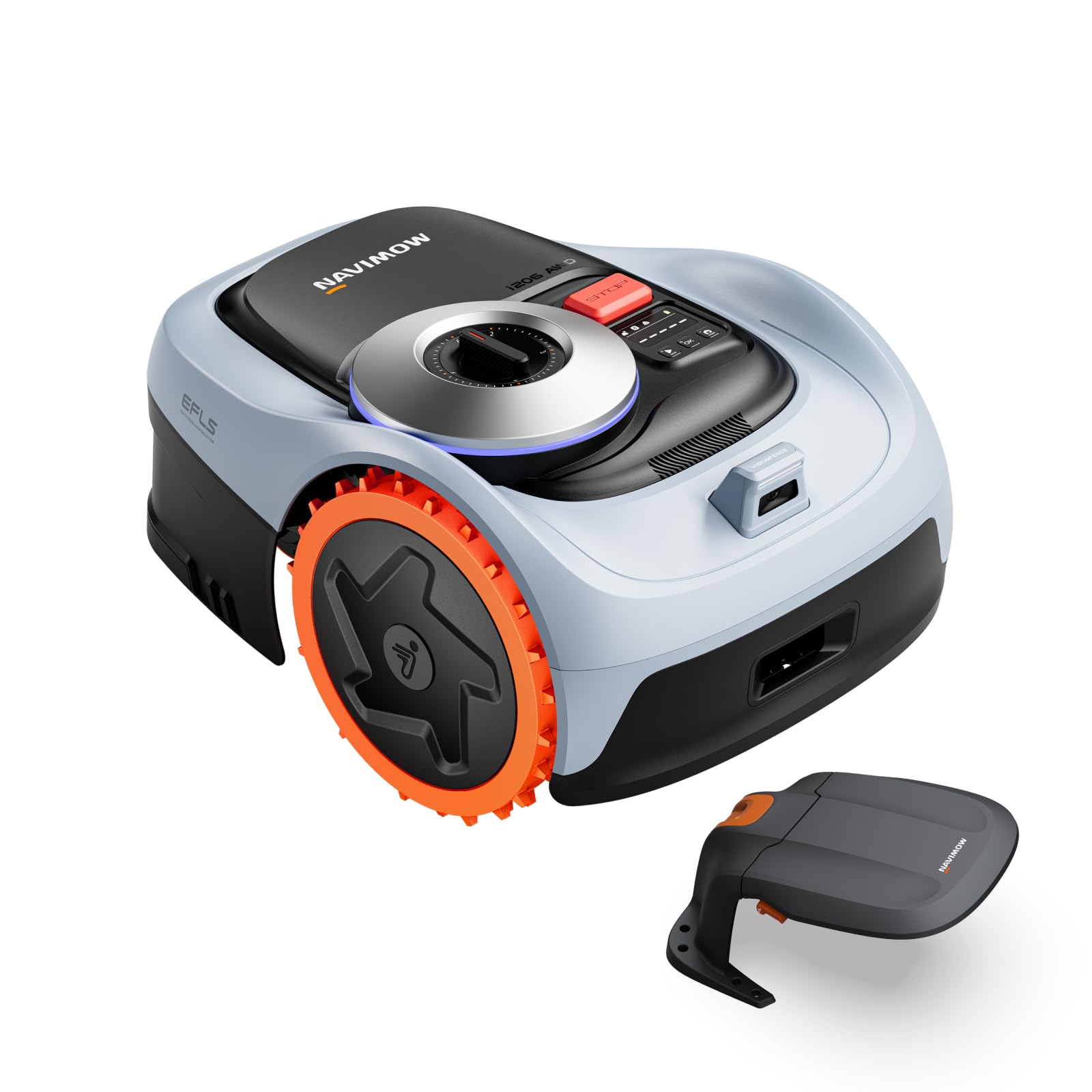
The i206 AWD is the entry point to the Segway Navimow ecosystem, and it shares the same core drivetrain architecture as the i210 — same 45% slope rating, same automotive-grade stability control, same zero-turn steering — but with a smaller 2.5Ah battery that limits coverage to 1,350 square feet per charge. This makes it the right fit for small sloped yards, townhouse lots, or front lawns where the total area is modest but the grade is too steep for a conventional mower. The 7.1-inch cutting width and adjustable height from 2 to 3.6 inches deliver a clean, even cut on the same terrain that would stall a standard brick-pattern robot.
The wire-free EFLS Network RTK with one-tap auto mapping is identical to the i210’s system, so you get the same centimeter-level accuracy without boundary wires or a separate antenna. The multi-zone control supports up to 20 zones with optimized mowing paths and auto-resume after charging. The 26.56-pound weight is manageable for carrying it between front and back yards if you don’t have a connecting path, and the compact 21.4-by-15.1-inch footprint fits through standard gates without clearance issues.
Where the i206 falls short is runtime on real-world sloped lawns. The 2.5Ah battery is adequate for flat properties near the 0.15-acre rating, but owners report that the mower struggles to complete even a modestly sloped 0.12-acre yard on a single charge — requiring a mid-session recharge to finish. The programming interface also drew criticism from some users who found the app difficult to navigate during initial setup. For the price, however, it remains the only way to get proven Segway AWD performance in a small-yard package without stepping up to the i210.
Why it’s great
- Same proven AWD drivetrain and zero-turn steering as the more expensive i210
- Compact footprint and lightweight build fit through standard gates and are easy to relocate
- Wire-free RTK setup with centimeter accuracy at the most affordable price in the Navimow AWD line
Good to know
- 2.5Ah battery often requires a mid-session recharge to complete a sloped 0.15-acre yard
- App programming and initial setup can be unintuitive for first-time robot mower users
FAQ
Can an AWD robot mower handle wet grass on a slope without slipping?
Do AWD robot mowers require boundary wires?
How long does an AWD robot mower battery last on a sloped lawn?
Final Thoughts: The Verdict
For most users, the best all-wheel-drive lawn mower winner is the Segway Navimow X430 because its dual suspension, 84% slope rating, and 17-inch dual-motor cutting deck deliver unmatched climbing power and cut quality across large, demanding yards. If you want the best mid-range value with wire-free convenience for moderate slopes, grab the Segway Navimow i210 AWD. And for properties with heavy tree cover where satellite signals struggle, nothing beats the LiDAR-based navigation of the DREAME LiDAR 3500 A3 AWD Pro.