
A 10-inch miter saw blade is the single most influential component between you and a perfect joint. The wrong tooth geometry, kerf width, or carbide grade turns a crisp crosscut into a charred, splintered mess that wastes material and ruins the rhythm of a project. Whether you’re ripping hardwoods or trimming finish work, the right blade translates motor torque into a clean edge that requires minimal sanding.
I’m Min — the co-founder and writer behind Gadgets Feed. For this guide, I spent hours cross-referencing customer reviews, analyzing carbide compositions, tooth counts, and arbor sizes to separate the performers from the pack.
A sharp blade makes or breaks a cut. After comparing dozens of options across budget, mid-range, and premium tiers, I’ve assembled the definitive list of the best 10 miter saw blade models you can buy right now.
How To Choose The Best 10 Miter Saw Blade
Matching a 10-inch blade to your saw’s arbor and your material’s density is the difference between a glue-ready edge and a burned, tear-out surface. Tooth count, kerf thickness, and the carbide formulation all interact with your saw’s horsepower to define the cut quality. Here’s what to check before you buy.
Tooth Count and Grind Geometry
24-tooth blades with ATB (Alternate Top Bevel) or flat-top grinds excel at ripping through thick hardwoods quickly because they have large gullets that eject sawdust efficiently. Moving to 60 or 80-tooth blades with ATB or TCG (Triple Chip Grind) refines the cut edge, making them the go-to for crosscutting melamine, plywood, and molding where a splinter-free finish is mandatory. A 40-tooth general-purpose blade is a compromise that handles both tasks without excelling at either.
Kerf Width and Arbor Compatibility
Thin-kerf blades (under 0.090 inches) remove less material per revolution, which reduces strain on lower-horsepower saws and produces less waste. Full-kerf blades (0.098 to 0.126 inches) are more stable, resist deflection during heavy rip cuts, and typically have thicker carbide teeth that can be resharpened multiple times. Every 10-inch miter saw blade in this guide uses a 5/8-inch arbor — the standard for virtually all 10-inch miter saws, sliding compound miter saws, and table saws.
Carbide Grade and Coatings
C3/C4 micro-grain carbide is the baseline for entry-level blades, but premium picks use TiCo (Titanium Cobalt) blends that hold an edge significantly longer. Anti-friction coatings like Silver Ice or Perma-Shield reduce heat buildup and prevent pitch adhesion, which directly reduces burning on dense woods like oak and maple. Anti-vibration slots laser-cut into the steel plate dampen harmonic resonance, delivering a quieter, more accurate cut.
Quick Comparison
On smaller screens, swipe sideways to see the full table.
| Model | Category | Best For | Key Spec | Amazon |
|---|---|---|---|---|
| Freud LM74R010 | Premium | Glue-line ripping, heavy hardwoods | 30T, TCG, 0.126″ kerf | Amazon |
| Oshlun SBW-100060N | Premium | Finish cuts on sliding/radial saws | 60T, ATB, negative hook | Amazon |
| Freud LM72M010 | Premium | Ripping, dados, splines | 24T, FLAT, 0.126″ kerf | Amazon |
| Bosch DCB1024 | Mid-Range | Fast ripping, general DIY | 24T, ATB, thin kerf | Amazon |
| CMT 250.024.10 | Mid-Range | Ripping hardwoods, box dados | 24T, ATB, 0.102″ kerf | Amazon |
| DEWALT DW3112 | Budget | Home use, pressure-treated lumber | 24T, ATB, thin kerf | Amazon |
| FOXBC 80T Ultra Finish | Budget | Fine crosscuts, melamine, plywood | 80T, ATB, 0.098″ kerf | Amazon |
In‑Depth Reviews
1. Freud Industrial LM74R010 30-Tooth Glue Line Ripping Blade
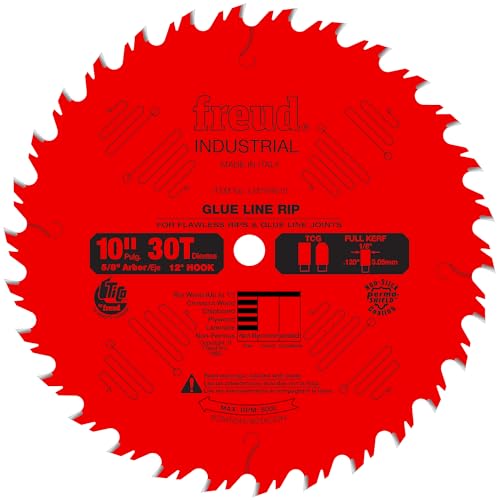
The LM74R010 is the blade you reach for when a ripped edge must meet the glue line without sanding. Its 30-tooth Triple Chip Grind (TCG) geometry produces a flat-bottom kerf that locks into a joint perfectly, and the thick 0.126-inch kerf resists deflection even when plowing through 8/4 white oak or hickory. The TiCo high-density carbide blend holds its edge far longer than standard C3/C4 grades, so you’re not resharpening after every project.
Laser-cut anti-vibration slots and the Perma-Shield non-stick coating work together to minimize harmonic chatter and heat buildup. Users report zero burn marks on popular and maple, which is a common frustration with thinner or lower-grade blades. The reinforced plate adds noticeable weight — this blade feels substantial in hand, and that mass contributes to stability during heavy cuts.
On a SawStop or comparable high-torque saw, the LM74R010 delivers glue-ready surfaces straight off the arbor. It’s not a thin-kerf blade, so it demands more from your motor, but the trade-off is industrial-grade flatness and longevity. For anyone who regularly rips thick hardwoods and expects joint-ready edges, this is the benchmark.
Why it’s great
- TCG grind leaves glue-ready flat-bottom kerf
- TiCo carbide stays sharp through heavy use
- Perma-Shield coating prevents pitch buildup and burning
Good to know
- Thick kerf requires more saw power
- Not ideal for thin plywood or melamine crosscuts
2. Oshlun SBW-100060N 60-Tooth Negative Hook Finishing Blade

The Oshlun SBW-100060N is engineered specifically for sliding miter saws and radial arm saws where a positive hook angle can cause the blade to climb or self-feed aggressively. Its negative hook angle eliminates that dangerous tendency, giving you controlled, safe cuts on crosscuts and miters. The 60-tooth ATB configuration delivers a very clean edge on pine, cedar, poplar, and engineered wood with minimal splintering on the top surface.
Professional-grade C-4 carbide tips are brazed onto a laser-cut plate with anti-vibration slots, which keeps the cut smooth and the noise level down. Users consistently note that the blade feels well-balanced and produces little to no ringing during operation. The thin-kerf design helps the blade move through material without bogging down lower-horsepower saws.
While it’s not marketed as a glue-line blade — some users report slight tooth marks on hard maple — it excels at finish cabinetry work and trim where a quick pass with sandpaper is acceptable. The mothball odor reported from the packaging fades quickly. For radial arm saw owners who need safety and finish quality in one package, this is the strongest choice available.
Why it’s great
- Negative hook prevents climbing on radial saws
- Clean crosscuts with minimal tear-out
- Anti-vibration slots reduce noise and chatter
Good to know
- Not intended for glue-line ripping
- Slightly wider kerf than some finish blades
3. Freud LM72M010 24-Tooth Heavy-Duty Rip Blade
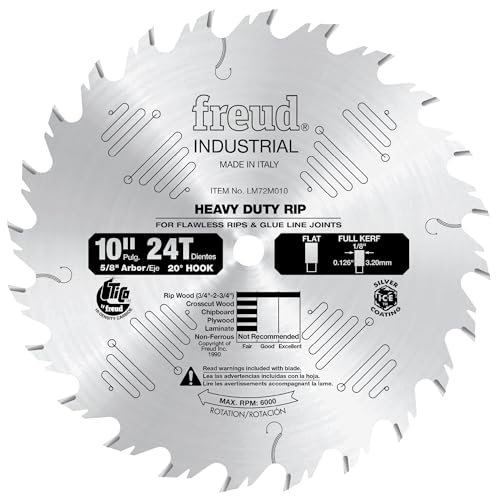
The LM72M010 is the flat-grind specialist that produces a dead-flat bottom kerf ideal for dados, rabbets, and spline grooves. Its 20-degree hook angle pulls material aggressively, making it one of the fastest ripping blades in this class when paired with a saw that has sufficient torque. The TiCo HI-Density carbide teeth are noticeably thicker than budget alternatives, translating into multiple resharpenings before replacement is needed.
Laser-cut anti-vibration slots stabilize the blade through cherry, walnut, and maple, and the Silver Ice coating resists pitch accumulation that causes burning. Users report glue-ready rip cuts with zero tear-out on plywood and minimal sanding required on hardwoods up to 2 inches thick. On a 1.75-HP saw, it cuts cleanly without bogging unless you force the feed rate.
This is a full-kerf blade at 0.126 inches, so it generates more waste and requires more power than thin-kerf options. Some users note it runs slightly louder than thinner blades, but the cut quality and longevity justify the noise. For dedicated ripping and joinery work, the LM72M010 outperforms combo blades at a fraction of the cost of boutique brands.
Why it’s great
- Flat-top grind produces square-bottom grooves for joinery
- TiCo carbide holds edge through dense hardwoods
- Anti-vibration slots maintain cut stability
Good to know
- Thick kerf reduces efficiency on underpowered saws
- Not ideal for thin-stock crosscuts
4. BOSCH DCB1024 24-Tooth Daredevil Ripping Blade

Bosch’s Daredevil series uses a Brute Carbide micro-grain formulation that resists impact damage better than standard C3/C4 carbide, making the DCB1024 a rugged choice for jobsite cutting where nails or debris are a real risk. The 24-tooth ATB geometry with a thin kerf rips through 2x4s, pressure-treated lumber, and plywood quickly while keeping waste to a minimum. The Speed Coat anti-friction finish reduces heat buildup, which directly prevents the burning that plagues slower blades.
The extra-hard steel blade body resists bending and deflection, maintaining true cuts even under aggressive feed rates. Users transitioning from stock blades report noticeably cleaner cuts with less sanding required. On a 7-1/4-inch cordless miter saw, the thin kerf helps preserve battery runtime by reducing motor load.
While it’s marketed as a ripping blade, several users find it performs well as an all-arounder for DIY woodworking, crosscutting, and trim work on softer woods. It’s not the best choice for ultra-fine finish work — tooth marks appear on hard maple — but its speed, durability, and the ability to survive occasional jobsite hazards make it a versatile mid-range staple.
Why it’s great
- Brute Carbide resists chipping from debris
- Thin kerf reduces motor strain and waste
- Speed Coat prevents burning on fast rip cuts
Good to know
- Not a finish-grade blade for hardwoods
- Some deflection reported on very thick stock
5. CMT Orange Tools 250.024.10 24-Tooth Ripping Blade
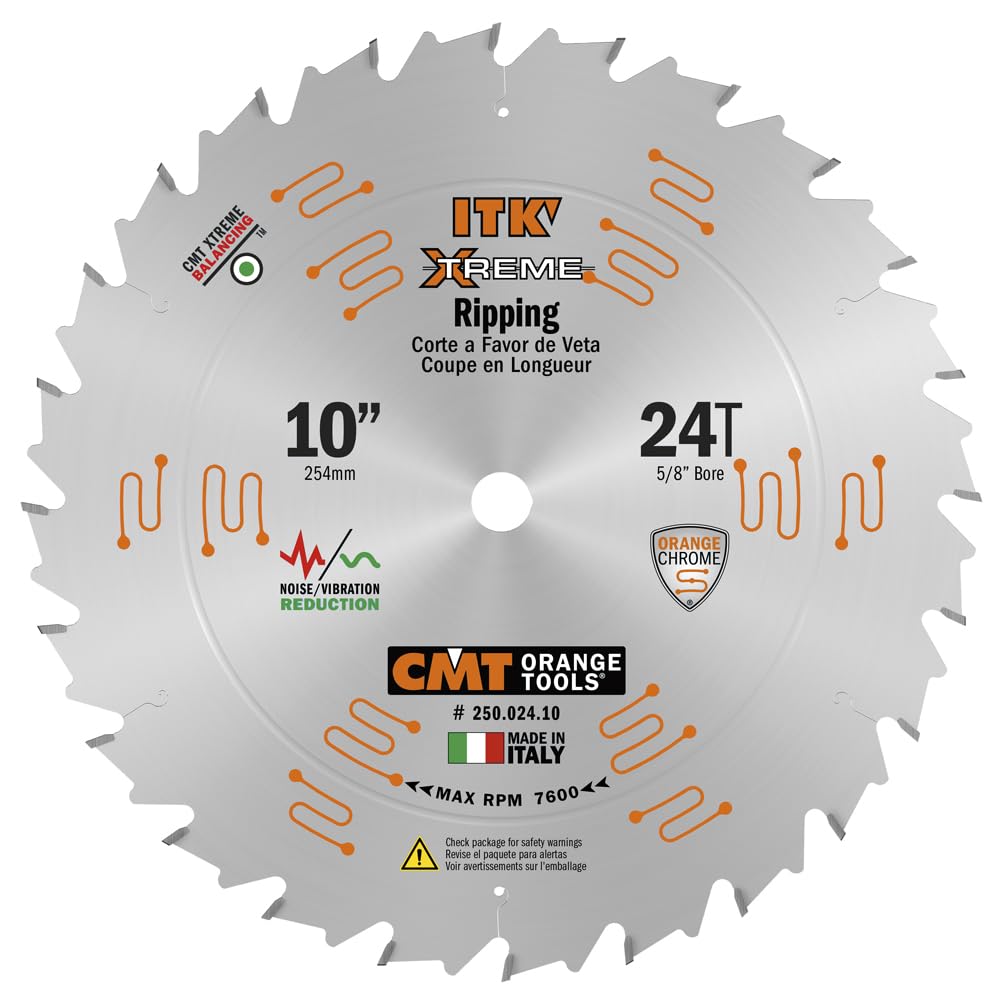
CMT’s 250.024.10 punches well above its price point with industrial chrome carbide that cuts through 8/4 walnut and maple with the same ease as blades costing twice as much. The 24-tooth ATB geometry is optimized for rip cutting, but the real story is the laser-cut polymer-filled sound-dampening slots — this blade runs noticeably quieter than comparable mid-range options. The tensioning ring and tri-metal brazing keep the carbide tips locked in place under heavy loads.
Users switching from Diablo and Irwin report that the CMT produces smoother rip cuts with fewer tooth marks, matching the speed of dedicated glue-line blades without the premium price tag. The thin kerf at 0.102 inches strikes a clever balance: it removes less material than full-kerf blades, reducing drag on the motor, while still maintaining enough plate thickness to resist deflection during aggressive feeding.
One limitation is that this blade is not ideal for veneer plywood crosscuts — the ATB geometry can cause tear-out on the bottom face. For rip cuts, box dados, and general hardwood dimensioning, however, the 250.024.10 is one of the strongest values on the market. It’s also resharpenable, extending its lifespan well beyond disposable thin-kerf alternatives.
Why it’s great
- Industrial chrome carbide stays sharp on dense hardwoods
- Polymer-filled slots reduce operational noise
- Excellent value priced below premium competitors
Good to know
- Not suited for veneer plywood crosscuts
- Some users prefer full-kerf for maximum stability
6. DEWALT DW3112 24-Tooth Thin Kerf Blade

The DW3112 is the entry-level benchmark that proves you don’t need to spend a lot for reliable cuts on construction lumber and pressure-treated 4x4s. Its thin kerf and 24-tooth ATB design deliver fast, clean cuts on 2x4s, hardboard, and treated pine with minimal bogging on saws in the 15-amp range. The computer-balanced plate reduces vibration noticeably, which helps extend blade life and improves cut accuracy.
What sets this blade apart from other budget options is its Wedge shoulder design that places more steel behind each carbide tip. This added support makes the tips more resistant to snapping off when hitting a knot or unexpected fastener. One user reported running this blade through Brazilian walnut for five months of heavy use with no chipping — a testament to the durability of the high-speed steel construction.
At this price point, the carbide grade is not as refined as TiCo blends, so resharpening intervals are shorter on dense hardwoods. But for the home DIYer who needs a reliable general-purpose blade for weekend projects, the DW3112 delivers performance that punches above its cost. It’s hard to beat for the money.
Why it’s great
- Wedge shoulder design adds tip durability
- Thin kerf reduces strain on lower-power saws
- Computer-balanced plate minimizes vibration
Good to know
- Carbide edge wears faster on exotic hardwoods
- Not a finish-grade blade for melamine or plywood
7. FOXBC 80-Tooth Ultra Finish Miter Saw Blade

For fine crosscuts on melamine, plywood, and hardwood moldings, the FOXBC 80-tooth blade delivers an Ultra Finish that rivals blades costing three times as much. High-density tungsten carbide tips on a thin 0.098-inch kerf plate produce zero tear-out on the top face and very little on the bottom, making it a strong option for cabinet and trim work. The ATB geometry is optimized for crosscutting, so it leaves a surface that requires minimal sanding.
Users consistently note that this blade cuts hardwood smoothly, quietly, and without wandering or vibration — some report it outperforms high-end brands they’ve used in the past. The thin kerf keeps waste low and works well on sliding miter saws where every millimeter of clearance matters. It’s compatible with DeWalt, Makita, Skil, and Metabo 10-inch saws right out of the box with the standard 5/8-inch arbor.
The main trade-off at this price point is that the carbide is not industrial-grade, so resharpening cycles are shorter, and it’s not recommended for heavy ripping tasks. Some users found the kerf was thinner than expected, but for its intended role as a finish crosscut blade, the FOXBC 80-tooth is an exceptional value that punches far above its weight class.
Why it’s great
- Ultra-fine finish on melamine and hardwood moldings
- 80 teeth minimize tear-out on crosscuts
- Excellent value for finish-quality cuts
Good to know
- Not designed for rip cutting or thick hardwoods
- Thin kerf limits resharpening lifespan
FAQ
How many teeth do I need for a 10-inch miter saw blade?
Can I use a thin kerf blade on a sliding miter saw?
What does a negative hook angle do on a miter saw blade?
Final Thoughts: The Verdict
For most users, the best 10 miter saw blade winner is the Freud Industrial LM74R010 because its 30-tooth TCG grind and TiCo carbide deliver glue-ready rip cuts that hold up through dense hardwoods. If you need splinter-free finish cuts on melamine and trim, grab the Oshlun SBW-100060N for its negative hook safety and clean crosscut performance. And for the budget-conscious DIYer who wants reliability without breaking the bank, nothing beats the DEWALT DW3112 for fast, smooth cuts on construction lumber.