
Our readers keep the lights on and my morning glass full of iced black tea. As an Amazon Associate, I earn from qualifying purchases.
You reach for a handful of rods for a weekend project or a full day of repair work. You need one that lights up fast, lays down a clean bead, and does not leave you chipping slag for half the job. The wrong rod turns a simple weld into a frustrating fight with your arc, your metal, and your patience. This guide covers seven proven options so you know exactly which rod to grab for mild steel, rusty farm equipment, or structural beams.
I’m Min — the co-founder and writer behind Gadgets Feed. This guide is built by comparing the manufacturers’ published specifications and the patterns across verified customer reviews, so you get each pick’s real strengths and trade-offs instead of marketing spin.
If you run a 110V (volt) buzz box in the garage or a commercial machine on a jobsite, the best all around welding rod handles a mix of metals, positions, and power sources without needing a second trip to the supply store.
How To Choose The Best All Around Welding Rod
Picking a welding rod is about matching the flux coating (the outer layer that protects the weld from air) and the tensile strength (how much force the weld can take before breaking) to your base metal, your machine, and the position you are welding in. The four main numbers in the rod classification (like E6013) tell you the tensile strength in thousands of PSI (pounds per square inch), the positions the rod works in, and the flux type. Once you decode that, you can rule out half the shelf in seconds.
Understand the “E” Code
The first two digits after the “E” tell you the tensile strength of the weld deposit (the metal the rod lays down) in thousands of PSI. For example, an E6013 rod deposits weld metal with a minimum of 60,000 PSI tensile strength, making it a strong, general-purpose choice for mild steel. The third digit tells you the welding positions the rod can handle. A “1” means all positions (flat, horizontal, vertical, and overhead), while a “2” limits you to flat and horizontal only.
Match the Flux to Your Job
The last digit indicates the flux coating type (the chemical layer that shields the weld pool) and the kind of electrical current the rod works with. E6013 rods use a rutile (titanium dioxide) flux that produces a soft, stable arc with little spatter (tiny metal droplets that fly off). This makes them ideal for sheet metal and thin-wall tubing. E7018 rods use a low-hydrogen iron powder flux that resists cracking on high-carbon or thick steels, but they require DC reverse polarity (electrode positive, where the rod is positive and the work is negative) and must be kept dry. Moisture in the flux causes hydrogen cracking (tiny cracks from hydrogen gas in the weld pool).
Diameter and Amperage
A rod’s diameter directly affects the amperage you need and the heat you put into the metal. A 3/32-inch (2.4 millimeters) rod typically runs between 60 and 110 amps, making it a great all-around size for 1/8-inch to 1/4-inch (3 to 6 millimeter) mild steel on a 110V or 230V welder. A 5/32-inch rod like the Forney 30910 demands up to 210 amps, so you need a heavier machine and thicker metal to avoid burning through.
Quick Comparison
On smaller screens, swipe sideways to see the full table.
| Model | Category | Best For | Key Spec | Amazon |
|---|---|---|---|---|
| TOOLIOM E7018 10LB | Low Hydrogen | Structural repair and thick plate | 10 lb, 3/32 inch | Amazon |
| Forney 32005 E7014 | Iron Powder | Dirty/rusty steel and new welders | 5 lb, 3/32 inch | Amazon |
| Hobart 770466 6013 | General Purpose | Home, farm, and shop projects | 5 lb, 3/32 inch | $27.09Amazon |
| E6013 5lb | Budget All-Position | Budget-friendly general fabrication | 5 lb, 3/32 inch | Amazon |
| ARCCAPTAIN E7018 | Low Hydrogen | High-quality X-ray welds on structural steel | 5 lb, 3/32 inch | Amazon |
| Forney 30910 E7018 | Heavy Duty | Thick sections and restrained joints | 10 lb, 5/32 inch | Amazon |
| Hobart 770476 7018 | Premium All-Rounder | Versatile household and hobbyist welding | 10 lb, 3/32 inch | Amazon |
In‑Depth Reviews
1. TOOLIOM E7018 Low Hydrogen Welding Rod 3/32″ 10LB
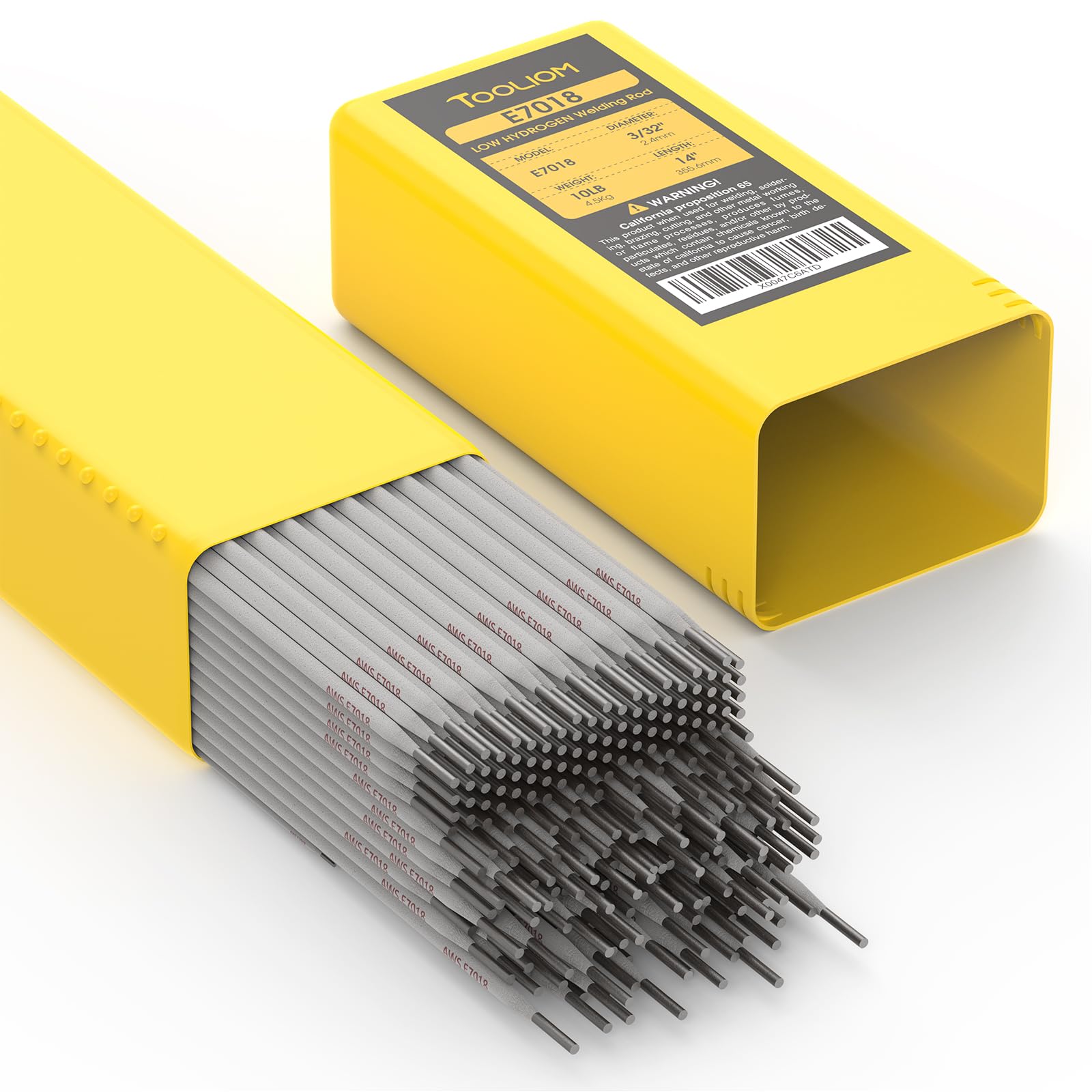
The TOOLIOM E7018 takes the top spot because it gives you a full 10 pounds of low-hydrogen rods at a weight that is double the 5-pound budget packs—a 2.0x material gap for serious work. The versatile 3/32-inch diameter runs smoothly on both AC and DC welders, so you get reliable X-ray-quality welds on structural beams, I-beams, or shipbuilding steel without constantly running back to the supply store. This pick is for the welder who needs a full day’s supply of low-hydrogen rods for structural or code-level jobs.
Buyers report that “8/10 rods light up without issue,” which means you get consistent arc strikes with the low-hydrogen iron powder flux. This flux produces clean weld paths with very low spatter and excellent crack resistance. At 10.17 pounds total, the package is heavy enough for a full day of welding yet compact enough to stash in a truck box. The TOOLIOM holds that 2.0x weight advantage over a standard 5-pound E6013 pack, meaning fewer reorders on big jobs.
The honest trade-off is that a few rods arrived with damaged ends in some shipments due to the plastic container being tossed around. If you buy this, you may want to inspect the tips before striking. But given the price per rod and the arc quality, this is still the best value-per-pound in the roundup.
Why it’s great
- 10-pound pack lasts through multi-day structural projects
- Low-spatter flux makes slag peel off cleanly
- Works in all positions on AC or DC current
Good to know
- Shipping container can damage rod ends on rough handling
- Must be stored in a dry rod oven or sealed tube with desiccant
2. Forney 32005 E7014 Welding Rod, 3/32-Inch, 5-Pound

Compared to the TOOLIOM E7018, which demands proper storage and a steady hand, the Forney E7014 is the rod that owners mention “if you’re a Newbie skip the infamous 6013 and 7018 and start with this.” The iron powder flux makes striking an arc almost effortless, even on a cheap 110V welder, and it burns as low as 60 amps without sticking or burn-through. The Hobart 6013 at 3/32-inch struggles with thin metal at low amperage in the same situation.
One reviewer noted that the rod “holds nice arch with small welder, no sticking or burn-through,” and it handles dirty, rusty, and painted steel with minimal surface prep. That makes it a fantastic choice for farm repairs on old tractor frames and boat trailers where you cannot grind every spot of rust. The slag removal is nearly self-cleaning in vertical-down fillets, so you spend less time chipping and more time laying beads.
If you are a beginner running an entry-level AC-only welder that cannot push the amperage required by a 5/32-inch rod like the Forney 30910, the E7014 is the most forgiving rod you can buy. Choose this over the TOOLIOM E7018 if you weld mostly thin, rusty, or galvanized steel and want an arc that starts on the first tap every time.
Where it shines
- Extremely easy arc strike on low-voltage welders
- Deep penetration cuts through rust and paint without grinding
- Light slag that pops off with a tap
Worth noting
- Not ideal for overhead or vertical welding on thick plate
- Only a 5-pound pack — you will reorder faster on big jobs
3. Hobart 770466 6013 Stick, 3/32-5lbs

You are in a farm shop patching a disc blade or welding a trailer hitch. You need a rod that runs on AC or DC, burns predictably at low amperage, and gives you a clean bead without deep penetration that would burn through a 1/8-inch wall. The Hobart 6013 is the rod buyers reach for in that exact scenario. One reviewer put it simply: “I use 6013 for most things around the house that don’t need crazy penetration.”
This rod delivers a 60,000 PSI tensile strength weld and runs on AC or DCEP (direct current electrode positive) polarity or DCEN (direct current electrode negative) polarity, so it fits just about any machine in a typical garage. The rutile (titanium dioxide) flux produces a soft, stable arc with very little spatter, and the 3/32-inch diameter is the sweet spot for 1/8-inch to 1/4-inch mild steel on a 110V welder. Customers note that “Hobart is a great price and so far has been very reliable and predictable.”
The standout spec here is the 60,000 PSI tensile strength. It matches the E6013 and E7014 rods pound-for-pound on strength, but the Hobart name carries a consistency that cheaper generics cannot match. If you want a rod you can trust every time you strike an arc on a home project, this is it.
What stands out
- Consistent arc quality from a trusted brand
- Works on AC, DCEN, or DCEP for maximum machine compatibility
- Light penetration perfect for sheet metal and thin tubing
The trade-offs
- Some rods arrived with banged-up ends from shipping
- Not ideal for thick plate over 1/4 inch where deeper puddle control is needed
4. E6013 Welding Rod 3/32″, 5lb Carbon Steel Welding Sticks
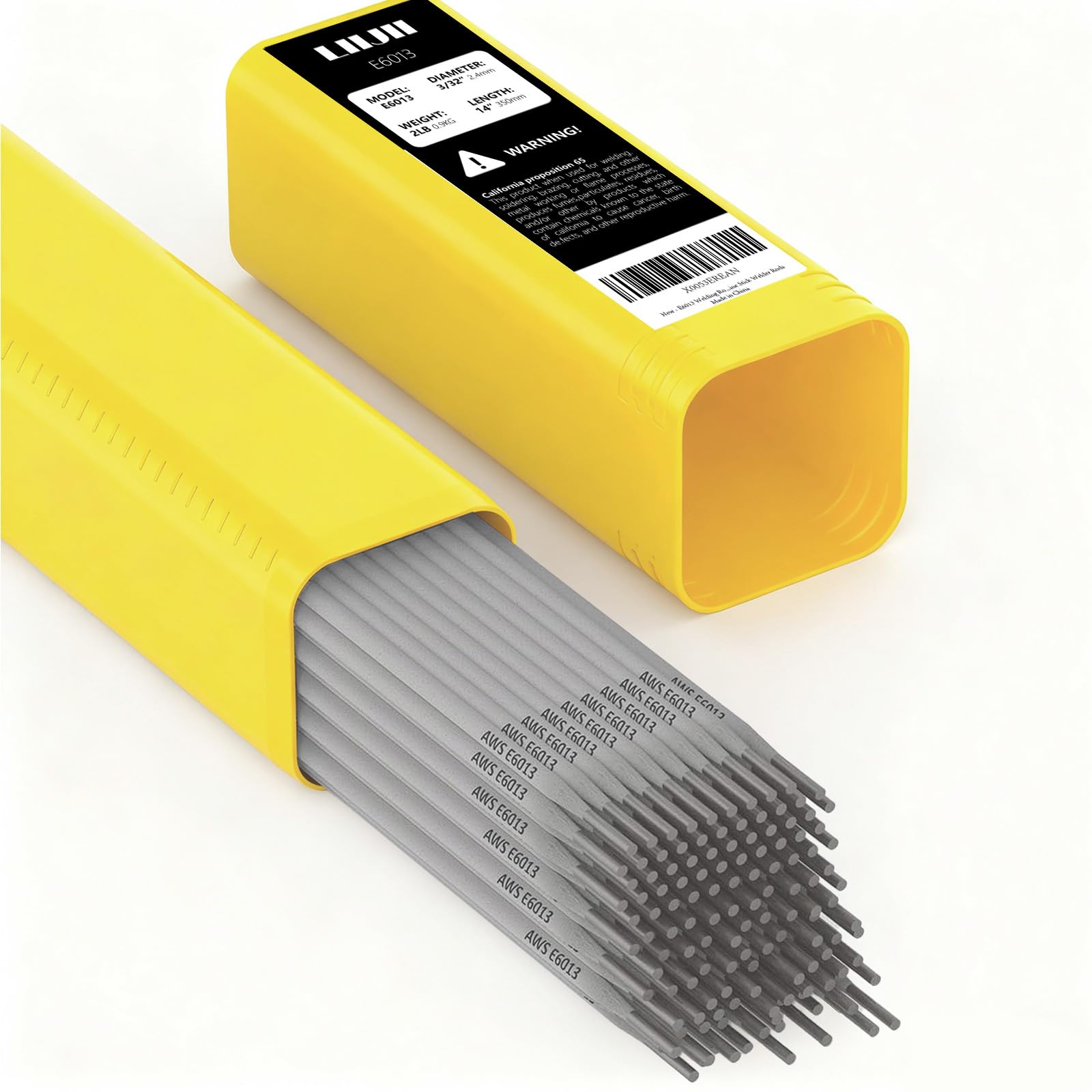
The single number that matters most in the budget rod category is cost per rod, and this 5-pound pack of E6013 rods lands at a price that undercuts the Hobart by a few dollars while still delivering the same 3/32-inch diameter and 60,000 PSI tensile strength. If you go through rods fast — one buyer says “I go through about 50 pounds of this particular solder a year” — the savings add up quickly on high-volume work.
The catch you accept is a slightly more temperamental arc on the first strike. One buyer mentioned that “you have to tap the end of the stick a few times to get a spark going then you’re good,” whereas the Forney E7014 and the Hobart 6013 tend to light on the first contact. Once the arc is established, the rod burns smoothly with little spatter and a readily removable slag.
For the budget-conscious weekend welder who keeps a rod stash for quick repairs on gates, brackets, and light structural work, this pack delivers excellent value. You lose a little starting consistency compared to the Hobart 770466, but you gain twice as many rods for the same money on a per-pound basis.
The upsides
- Very low per-rod cost for high-volume consumable welding
- Clean weld bead with easy slag removal
- Works well on 110V welders after the initial arc strike
Keep in mind
- Arc can be reluctant on the first tap on some machines
- Rods burn faster than premium options on continuous beads
5. ARCCAPTAIN E7018 Welding Rod 3/32” 5LB Low Hydrogen

What you actually get at this lower price is a 5-pound pack of ARCCAPTAIN E7018 low-hydrogen rods that deliver professional-grade arc stability and high-quality X-ray welds on structural components like steel bridges, ship hulls, and high-pressure pipelines, undercutting premium 10-pound options. Compared to the TOOLIOM E7018, the ARCCAPTAIN comes in a 5-pound pack rather than 10 pounds, so it is a better fit if you do not need a full 10-pound box for the job at hand.
The ARCCAPTAIN delivers outstanding X-ray values and high tensile strength for critical welds.
If you are welding structural frames, heavy equipment, or any joint where cracking is not an option, the ARCCAPTAIN E7018 gives you professional rod performance without the professional rod price tag. Just remember to store these rods in a sealed container with desiccant (a moisture-absorbing material). The low-hydrogen flux absorbs moisture fast, and wet rods cause porosity (tiny gas holes) in the weld. This is the exact budget buyer it is perfect for: the welder who needs professional-grade low-hydrogen rod performance for critical structural work but only has a small job and does not want to pay for a full 10-pound box.
Why we’d pick it
- Excellent X-ray quality welds on structural and pressure-rated steel
- Easy arc strike and stable puddle for low-hydrogen rod class
- Great value compared to premium commercial brands
A few caveats
- Moisture-sensitive — must be stored in a dry environment with desiccant
- Only 5 pounds if you need a full workday supply for big projects
6. Forney 30910 E7018 Welding Rod, 5/32-Inch, 10-Pound
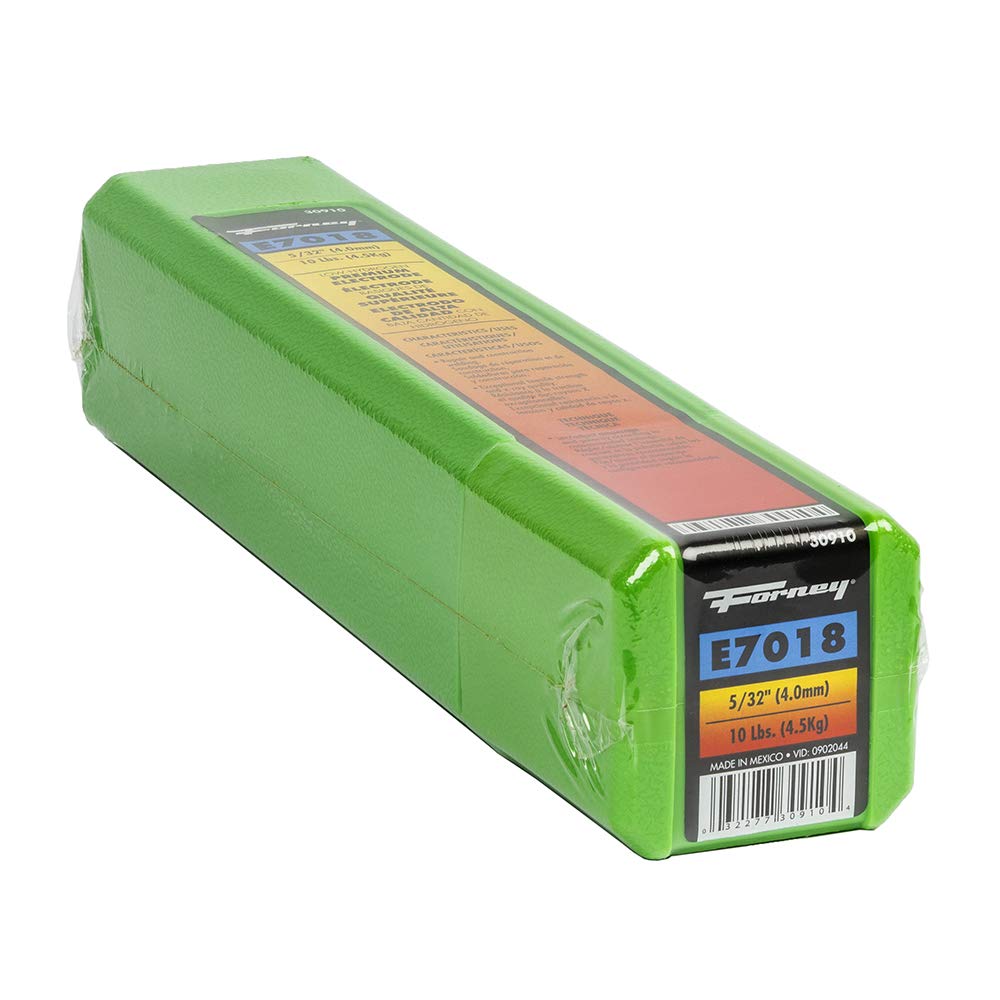
The Forney 30910 is the specialist you call when the base metal is thick, the joint is restrained, and you need deep penetration to avoid cracking—perfect for welding hard-to-weld steels like high-carbon or cold-rolled steel in sections over 1/4 inch.
At 5/32-inch (a 67% larger diameter than the 3/32-inch E6013), this rod demands a machine that can push up to 210 amps. Reviewers report that it runs beautifully at 120 amps on 3/16-inch pipe with good penetration and easy puddle control, and the slag peels off almost effortlessly. The iron powder flux produces a smooth, flat bead with excellent wetting action even on poorly fitted joints. The 10-pound pack is heavy enough for serious fabrication work, and the plastic bin packaging keeps the rods protected if the shipping box survives handling.
If you weld thick plate, pipe, or restrained joints on a regular basis and your machine can handle the 210-amp capacity this rod asks for, the Forney 30910 is a specialist you cannot replace with a thinner rod. However, for light farm work or 110V welders, stick with the 3/32-inch options above.
Strong points
- Deep penetration on thick sections and hard-to-weld steels
- Self-cleaning slag in vertical-down fillets saves cleanup time
- Excellent wetting action for flat, smooth beads on poorly fitted joints
Before you buy
- Requires a high-amperage machine (up to 210 amps)
- Overkill for thin sheet metal or light hobby work
7. Hobart 770476 7018 Stick, 3/32-10 lb.

At the premium end of the price spectrum, the Hobart 770476 gives you a full 10 pounds of 3/32-inch E7018 rods from one of the most trusted names in welding consumables. Compared to the TOOLIOM E7018, the Hobart carries a higher per-pound cost, but buyers consistently praise its versatility and smooth arc. One reviewer sums it up as “the best rods to have around the house due to their versatility.”
Reviewers point out that “the rods burn smoothly as expected” and that they are “great value, smooth, and durable.” The 3/32-inch diameter works on 2-millimeter to 6-millimeter mild steel with amperage settings around 100 amps for the thicker material and 30-60 amps for the thin stuff. The low-hydrogen flux gives you crack-resistant welds on structural steel, while the 10-pound pack lasts through multiple projects without needing a restock.
If you want a single rod that covers everything from thin wall tubing to thicker structural sections and you are willing to pay a bit more for the Hobart consistency and brand reliability, the 770476 is the set-and-forget choice. The only reason to skip it is if you need the 5/32-inch diameter of the Forney 30910 for heavy plate work, or if you are on a tight budget and the E6013 option covers your needs just fine.
What we like
- Trusted Hobart quality with consistent arc performance
- 10-pound pack balances cost and quantity for regular use
- Versatile enough for thin tube and structural steel welding
The downsides
- Some rods arrived with cracked slag coating from shipping
- Premium price compared to generic E7018 options
Understanding the Specs
Rod Classification Code
The “E” in E6013 or E7018 stands for electrode (the rod itself). The first two digits tell you the tensile strength (how much force the weld can take before breaking) in thousands of PSI. E6013 delivers at least 60,000 PSI of tensile strength, while E7018 delivers 70,000 PSI. The third digit (1 or 2) tells you the welding positions. “1” means all positions (flat, horizontal, vertical, overhead), “2” means flat and horizontal only. The last digit and the flux type (the chemical coating that shields the weld pool) define the alloy. “13” is a rutile (titanium dioxide) flux that produces a soft arc with light slag. “18” is a low-hydrogen iron powder flux that resists cracking on thicker steels.
Rod Diameter and Amperage
Rod diameter directly determines the amperage range you need to run a stable arc. A 3/32-inch rod (2.4 millimeters) typically runs between 60 and 110 amps, making it ideal for 1/8-inch to 1/4-inch (3 to 6 millimeter) mild steel on small to medium welders. A 5/32-inch rod (4.0 millimeters) like the Forney 30910 needs up to 210 amps and works best on plate over 1/4 inch thick where deep penetration is required. Using a rod that is too large for your machine results in a cold arc that sticks and produces poor fusion.
FAQ
What does E7018 low hydrogen mean for my welds?
Can I use a 3/32-inch rod on a 110-volt welder?
What is the difference between E6013 and E7018 for home use?
Final Thoughts: The Verdict
For the majority of shoppers, the best all around welding rod winner is the TOOLIOM E7018 10LB because it delivers a full 10 pounds of low-hydrogen reliability in the versatile 3/32-inch diameter, balancing price, quality, and pack size for structural and repair work alike. If you want a rod that starts on the first tap every time and cuts through rust without grinding, grab the Forney 32005 E7014. And for a budget-friendly everyday rod that keeps the arc stable on a 110V welder, the standout is the Hobart 770466 6013.
Product prices and availability are accurate as of the date/time indicated and are subject to change. Any price and availability information displayed on Amazon at the time of purchase will apply to the purchase of this product. As an Amazon Associate I earn from qualifying purchases.
CERTAIN CONTENT THAT APPEARS ON THIS SITE COMES FROM AMAZON. THIS CONTENT IS PROVIDED "AS IS" AND IS SUBJECT TO CHANGE OR REMOVAL AT ANY TIME.
Amazon and the Amazon logo are trademarks of Amazon.com, Inc. or its affiliates.