
Our readers keep the lights on and my morning glass full of iced black tea. As an Amazon Associate, I earn from qualifying purchases.
You are not at the grocery store. Camp food has to solve for weight, calories, prep time, and cleanup, all at once. Grab a heavy meal that needs a full cook setup, and it turns from fuel into a liability on the trail. This guide shows you which packs actually deliver when you are hungry and miles from anywhere — and which ones will leave you reaching for a snack bar.
I’m Min — the co-founder and writer behind Gadgets Feed. This guide is built by comparing the manufacturers’ published specifications and the patterns across verified customer reviews, so you get each pick’s real strengths and trade-offs instead of marketing spin.
You need a balance of calories per ounce, shelf life, and how much work you want to do at the campsite. After looking at the numbers and honest buyer feedback, these are the best camp food picks worth knowing about.
How To Choose The Best Camp Food
Buy camp food without knowing a few key numbers, and you can end up hungry with a heavy pack. You need to match the food type to your activity level, how much weight you will carry, and whether you have time or fuel to cook. Here is what matters before you buy.
Calorie Density — The Real Metric
You want calories per ounce more than total calories. A 700-calorie bag is useless if it weighs a full pound. For backpacking, aim for at least 100 calories per ounce. Meal bars and liquid meals often deliver 120–140 calories per ounce. Freeze-dried meals with rehydrated water usually land around 80–100. Your body burns more energy hiking, so calorie-dense, light food helps you keep moving without a heavy pack.
Preparation Style — No-Cook vs. Stove Required
Covering long miles or hiking in cold weather? A no-cook meal that just needs water — or nothing at all — saves you the weight of a stove, fuel canister, and pot. Freeze-dried meals taste better but need boiling water. Bars and liquid meals skip the stove completely. If you are car camping, the stove weight does not matter, so focus on taste and variety. If you are thru-hiking (a long-distance hike where you carry everything), every ounce counts, and no-cook becomes a serious advantage.
Serving Size Reality Check
Manufacturers often inflate serving sizes. A “2-serving” pouch is often a single adult portion, especially if you are active. Read labels: if one serving is 300 calories and you need 600 per meal, that pouch is really one serving. Buyers report that many freeze-dried pouches labeled for 2.5 servings only satisfy one hungry adult. Plan for double portions if you are hiking hard or have a big appetite.
Quick Comparison
On smaller screens, swipe sideways to see the full table.
| Model | Category | Best For | Key Spec | Amazon |
|---|---|---|---|---|
| Greenbelly Backpacking Meals | Meal Bars | Stoveless lightweight hiking | 650 calories per pouch | $49.00Amazon |
| RecPak | Liquid Meal | Athletes and technical climbs | 700 cal / 42g protein | $38.99Amazon |
| Mountain House Spaghetti | Freeze-Dried | Classic trail meal | 2.5 servings per pouch | Amazon |
| Mountain House 3-Day Kit | Freeze-Dried Kit | Emergency + camping combo | 30-year shelf life | $68.79Amazon |
| ReadyWise Favorites Box | Freeze-Dried Kit | Budget emergency prep | 18 servings, 25yr shelf life | Amazon |
| 4Patriots Emergency Bars | Food Bars | Compact no-cook backup | 400 cal per bar | Amazon |
| Inspection MRE 24-Pack | MRE Case | High-calorie bulk ready meals | 1000–1300 cal per meal | $98.99Amazon |
In‑Depth Reviews
1. Greenbelly Backpacking Meals

650 calories per pouch in two soft meal bars — no stove, no pot, no cleanup — makes the Greenbelly Backpacking Meals the top pick for the hiker who values trail time over a hot meal at camp.
The math is simple: 650 calories per pouch in a box of 5 that weighs just over 2 pounds. That works out to roughly 120 calories per ounce, outperforming most freeze-dried meals that land around 80–90 when you add water. The bars use natural, gluten-free ingredients. One reviewer noted that a single pouch kept them full for 7.5 hours on a hike. Another reviewer who did the Amazon Jungle Ultra said these bars survived jungle humidity without melting, which is rare for a food bar.
The catch is that the bars are dry and dense — you will need water nearby to wash each bite down. A few buyers also note the packaging is hard to open without a knife. But for a hiker who wants to skip the stove entirely and keep moving, this is the most efficient camp food you can buy.
Why it’s great
- 650 calories per pouch in a no-cook, no-cleanup bar format
- Resealable packaging keeps bars crisp on multi-day trips
- All-natural gluten-free ingredients, easy on the stomach
Good to know
- Bars are dry and require water to swallow comfortably
- Packaging is tough — bring a knife or scissors
- Flavors are subtle and muted compared to freeze-dried meals
2. RecPak
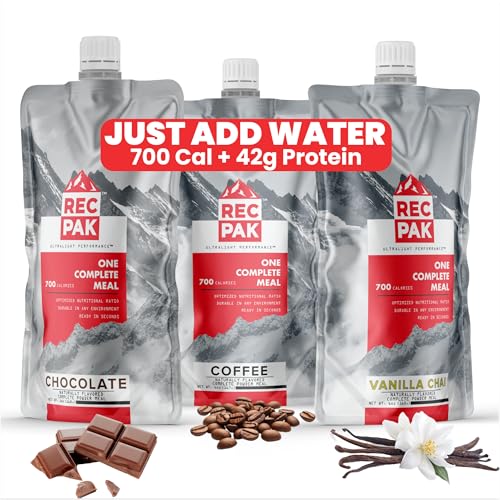
The RecPak beats Greenbelly on protein and calorie density — 700 calories and 42g of protein in a 5.6-ounce pouch gives you 125 calories per ounce, even better than the bars, and you drink it. Where Greenbelly needs chewing and water, RecPak just needs water added, shaken, and swallowed as you walk. This is the pick for athletes, climbers, and backcountry skiers who cannot stop to eat a meal.
It is a no-cook liquid meal designed for sustained output. The nutrition blend is 50% carbs, 25% protein, and 25% fat, plus 25% of your daily vitamins and minerals. The pouches are resealable and the spout is compatible with Sawyer water filters, so you can fill and drink on the move. Owners mention steady energy on long-distance trail runs without stomach distress. One buyer mentioned they actually had leftover food on a 4-day hike because the RecPaks were so filling.
If you are doing a technical climb or an ultra-run where stopping to chew a bar is not practical, this is the smarter choice over Greenbelly. The shelf life of 18 months is shorter than freeze-dried food, but for active use, that is rarely a problem. The pouches are taller than expected — about 11 inches — but lightweight enough to tuck into side pockets.
Where it shines
- 700 calories and 42g protein in a portable 5.6oz drink pouch
- No-cook, no-chew — ideal for high-exertion scenarios
- Resealable spout is Sawyer filter compatible for on-the-go hydration
Worth noting
- Pouches are tall (11 inches) and bulkier than expected
- 18-month shelf life is short compared to freeze-dried options
- Subtle flavors — not a replacement for a hot savory meal
3. Mountain House Classic Spaghetti with Meat Sauce
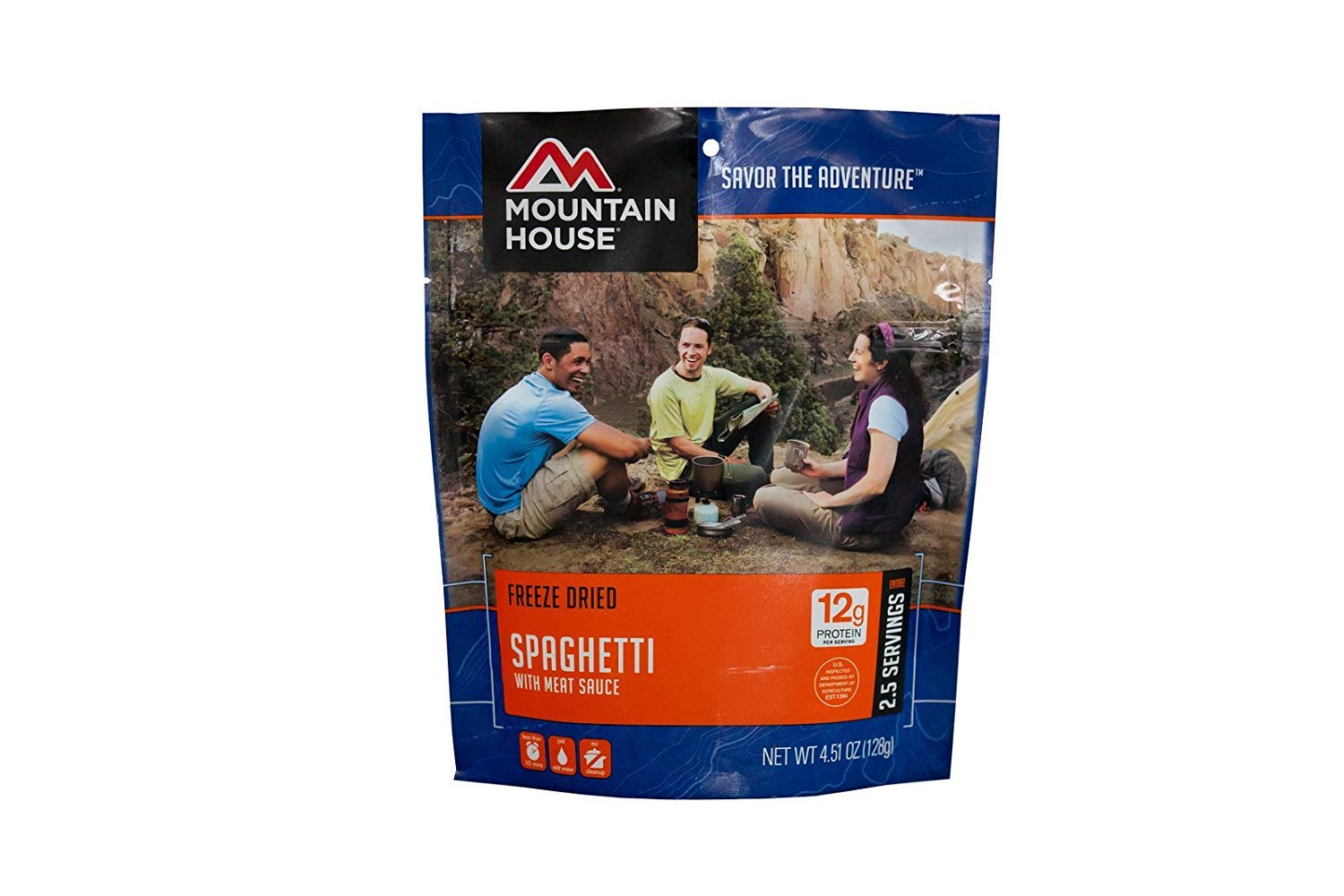
You want a warm, familiar meal at the end of a long hike — and you are okay carrying a stove. Mountain House Spaghetti is the standard-bearer. This pouch holds 2.5 servings of tender spaghetti with real beef chunks in a marinara sauce, and it rehydrates in about 10 minutes with hot water. The 25-year shelf life unopened makes it as useful for emergency kits as for trail dinners.
Buyers call the taste “gourmet after hiking,” though they also note it is more of a “spaghetti-inspired soup” than restaurant spaghetti. One owner reported “kids will go camping for this,” which is high praise for any camp food. The pouch is lightweight at 0.34 pounds dry, but once you add water and a stove, the total gear weight is higher than no-cook options like Greenbelly or RecPak.
The standout spec here is the 30-year taste guarantee: Mountain House backs their food longer than almost anyone.
What stands out
- Real beef and tender spaghetti — tastes better than most freeze-dried meals
- 25-year unopened shelf life and 30-year taste guarantee
- Easy prep: just add hot water and wait 10 minutes
The trade-offs
- Low calories per serving — you may need two pouches for one hungry adult
- Sauce can be runny; less water and longer sit time helps
- Requires a stove and fuel, adding to pack weight
4. Mountain House 3-Day Emergency Kit
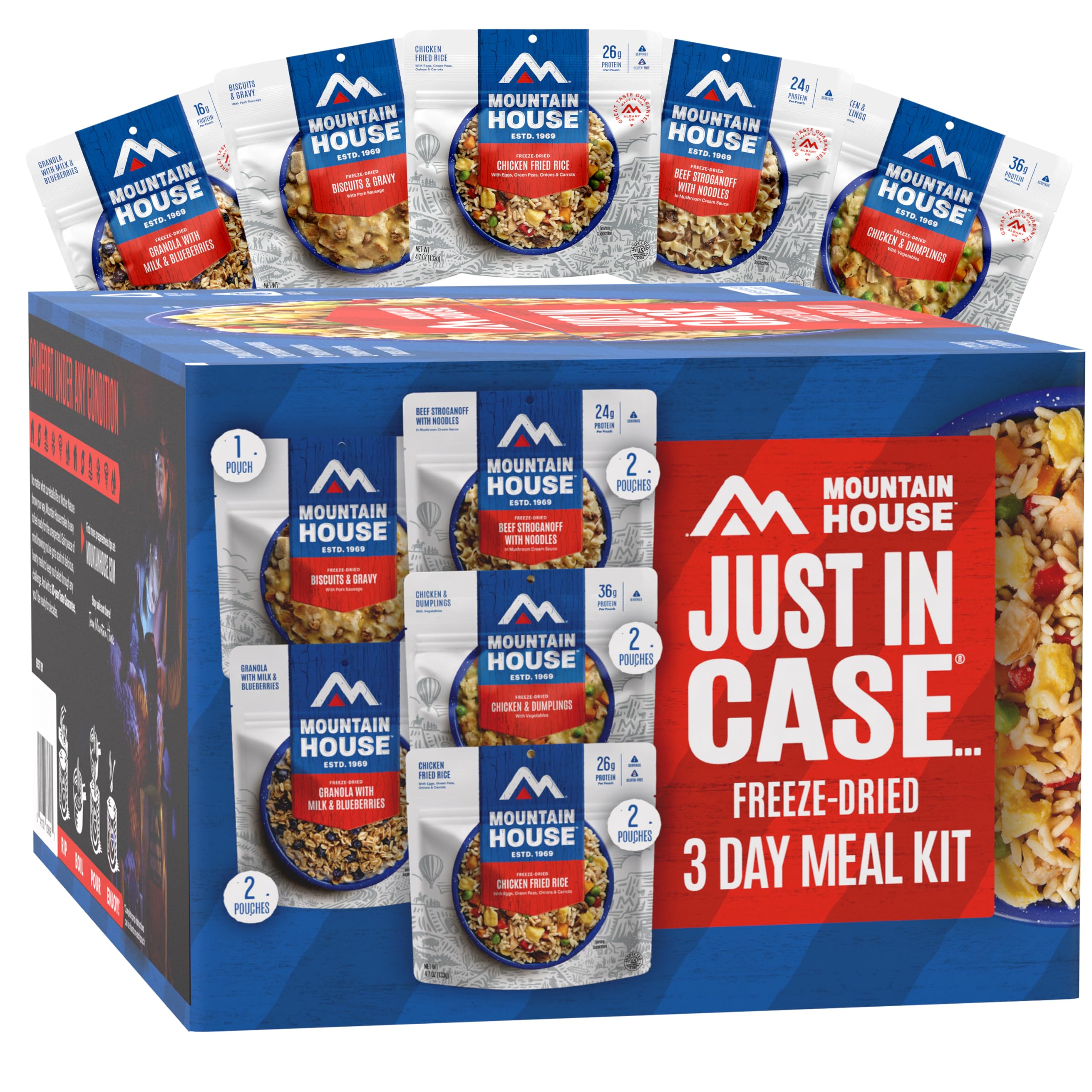
The number that matters most here is 30 — the 30-year shelf life backed by Mountain House’s taste guarantee makes this kit a true set-it-and-forget-it emergency supply. At 3.6 pounds for 9 pouches covering 3 days (1,706 calories per day), this kit is priced to be the best value in the premium freeze-dried category. It blends camping-friendly meals with disaster-prep practicality.
The downside is that you do not get to choose the menu — the kit includes Biscuits & Gravy, Granola with Milk & Blueberries, Chicken Fried Rice, Chicken & Dumplings, and Beef Stroganoff with Noodles. Customers note the Chicken Fried Rice and Beef Stroganoff are the standouts, while the Biscuits & Gravy is less popular. One reviewer suggested using less water and a longer sit time to avoid a soupy texture, especially with the gravy dishes.
At around retail, you are paying a modest premium over buying individual pouches — but the convenience of a complete kit with a 30-year guarantee makes this a solid buy for anyone building a car kit or cabin pantry. If you want variety in a single box that tastes good, this is the one. It is a stronger value than the ReadyWise box if taste matters more to you than upfront cost per serving.
The upsides
- 30-year shelf life with a taste guarantee — the longest proven in the industry
- 9 pouches with actual variety in American and Asian flavors
- Lightweight 3.6lb kit is easy to store or backpack
Keep in mind
- Menu is fixed — you cannot exclude the Biscuits & Gravy pouch
- Calories per serving are modest; plan for extra snacks
- Some meals need extra seasoning for flavor
5. ReadyWise Emergency Food Supply Favorites Box

What you actually get at this lower price is 18 servings across three pouch flavors: Creamy Pasta & Vegetables, Cheesy Lasagna, and Tomato Basil Soup with Pasta, plus a 25-year shelf life for long-term storage. The per-serving cost is the lowest in this lineup, making it the clear choice for anyone building a sizable emergency pantry on a tight budget.
What you give up is taste and honest portion sizes. Reviewers point out that the “serving size” claims are optimistic — one customer observed “serving size count is a joke” and noted you often need twice the stated amount for a full meal. Compared to Mountain House meals, the ReadyWise food is blander. One reviewer described it as “flour water” despite the added seasoning. The food also has high sodium due to preservatives, which can be a concern for daily emergency use.
For the budget-conscious prepper who just wants food in the pantry that will last 25 years, this box does the job. It is not the best-tasting camp food and you need to double the portions, but the shelf life and cost per serving are hard to beat. Spend more on Mountain House if you actually plan to eat it on a trip — use this box for the pantry.
Why we’d pick it
- 18 servings at the lowest per-serving cost in this guide
- 25-year shelf life for long-term pantry storage
- Stackable boxes fit neatly in a pantry or bug-out bag
A few caveats
- Flavor is bland compared to Mountain House meals
- Serving sizes are overstated — expect half the claimed portions
- High sodium content from preservatives
6. 4Patriots Emergency Food Bars

The 4Patriots Emergency Food Bars are perfect for the prepper or backcountry traveler who wants a zero-effort, shelf-stable calorie source that can sit in a glovebox or go-bag for years without rotation. Each 400-calorie bar needs no water or prep, and the entire 9-pack weighs just 1.32 pounds with a five-year storage life.
The bars taste vanilla-sweet with a lemon kiss, like a not-too-sweet cookie rather than a military ration. One user highlighted a single 400-calorie bar lasted through a 4-hour technical hike. However, the bars are crumbly and messy to eat, and the pack of 9 is not individually wrapped — once opened, the exposed bars can dry out or get crushed in your pack.
They are not a replacement for a hot dinner, but as an absolute last-resort calorie source that fits in a pocket, they outperform any other option here on portability. The lack of resealable packaging makes them hard to use in portions over multiple days — a gentle caution about their one weakness.
Strong points
- 400 calories per bar with zero prep required — not even water
- 5-year shelf life, compact and lightweight for a go-bag
- Decent shortbread-vanilla taste for an emergency ration
Before you buy
- Bars are crumbly and messy to eat without a plate
- No individual wrappers — opened pack needs careful storage
- Not ideal as a regular camp meal; best for backup only
7. Inspection MRE 24-Pack
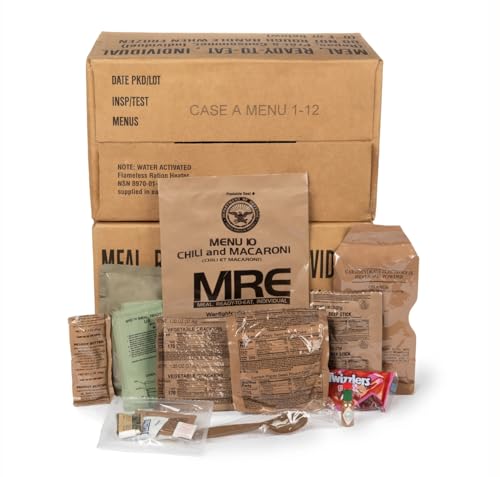
This 24-pack of U.S. military-grade MREs (Meals Ready-to-Eat, a full meal in a sealed pouch that needs no cooking) offers the highest calorie count per meal in this guide — each pouch delivers 1000 to 1300 calories — making it the best field-value option when you need serious energy without any cooking. Each meal is a complete package with an entrée, side or bread, dessert, and accessory pack like coffee or snacks. Some include a flameless ration heater (FRH) so you can eat hot without a stove.
At under for 24 full meals, the per-meal cost is outstanding. Buyers confirm these are authentic military MREs with inspection dates matching the listing. One reviewer called them “cheap lunch” and another noted they are ideal for a broke college student wanting no-cook food. However, some buyers reported missing items like coffee or creamer, and out-of-date candy in one pack caused mild stomach issues. The packaging is waterproof and durable, designed for rough conditions.
If you want the raw calorie efficiency of an MRE with zero cooking and a 10-year shelf life (from the inspection date), this pack delivers the most per dollar. It is less about gourmet taste and more about sheer caloric survival — but at under per meal, it is the field-value king.
What we like
- 1000–1300 calories per meal — highest in this guide
- No cooking or refrigeration required; some come with flameless heaters
- 24 meals at a per-meal cost that beats most single-serve pouches
The downsides
- Variety pack contents can differ; some items may be missing
- High sodium and sugar content for daily use
- Candy and snack freshness depends on inspection date
Understanding the Specs
Calorie Density
This is the most important number for backpacking. Calorie density means calories per ounce — the higher the number, the more energy you carry per pound of pack weight. Greenbelly delivers roughly 120 calories per ounce, RecPak hits 125, and freeze-dried meals like Mountain House land around 80–100 once you add water. A high calorie density allows you to carry lighter packs and cover more miles between food resupply points.
Shelf Life and Storage
Freeze-dried food lasts 25–30 years when unopened, making it ideal for emergency kits and long-term pantry storage. MREs last around 10 years from an inspection date. RecPak and meal bars last 1–5 years depending on the product. If you are buying food to stash in a car or bug-out bag (a bag packed for a quick emergency evacuation), prioritize shelf life. If you are buying for a trip next week, freshness and taste matter more than long-term storage.
FAQ
How many calories per day should I pack for backpacking?
Are Mountain House meals worth the premium over ReadyWise?
Can I eat MREs cold?
What is the lightest camp food option?
Final Thoughts: The Verdict
Across the board, the best camp food winner is the Greenbelly Backpacking Meals because it balances high 650-calorie density, no-cook convenience, and a reasonable price for the quality. If you want a liquid meal for technical climbs or ultra-runs, grab the RecPak. And for a warm, familiar dinner that tastes like real food at camp, the standout is the Mountain House Spaghetti.
Product prices and availability are accurate as of the date/time indicated and are subject to change. Any price and availability information displayed on Amazon at the time of purchase will apply to the purchase of this product. As an Amazon Associate I earn from qualifying purchases.
CERTAIN CONTENT THAT APPEARS ON THIS SITE COMES FROM AMAZON. THIS CONTENT IS PROVIDED "AS IS" AND IS SUBJECT TO CHANGE OR REMOVAL AT ANY TIME.
Amazon and the Amazon logo are trademarks of Amazon.com, Inc. or its affiliates.