
Our readers keep the lights on and my morning glass full of iced black tea. As an Amazon Associate, I earn from qualifying purchases.
You are riding down a road and a driver speeds up behind you. Without a bike radar, you have no idea they are there until you hear them. A bike radar is basically a second set of eyes on the back of your helmet—it uses radio waves (the same kind your car uses for parking sensors) to detect vehicles coming up from behind, then sends you a beep or a visual alert on your cycling computer or phone so you know exactly when and how fast something is approaching. The real question is which one actually works without giving you false alarms every five minutes, draining its battery before you finish a long weekend ride, or requiring a PhD to pair with your bike computer. This guide cuts through the noise by comparing the hard numbers—detection range, battery life, light brightness, and weight—across seven of the most popular models, so you know exactly what you are getting before you click “buy.”
I’m Min — the co-founder and writer behind Gadgets Feed. This guide is built by comparing the manufacturers’ published specifications and the patterns across verified customer reviews, so you get each pick’s real strengths and trade-offs instead of marketing spin.
The honest answer is that the COOSPO TR70 delivers the best balance of range, battery life, and brightness for the vast majority of riders, but the best bike radar for you depends entirely on whether you need a camera, want the longest possible battery, or are trying to keep costs down.
How To Choose The Best Bike Radar
The most important thing to understand is that every bike radar in this category does the same basic job—it sends out a radio signal and listens for it bouncing back off objects behind you. But the real-world difference comes down to four factors: how far it detects (range), how long it lasts (battery), how bright the tail light is (lumens), and whether it plays nicely with your existing bike computer or phone. Here is what each number actually means for your ride.
Detection Range and Beam Angle
Detection range is the distance behind you that the radar can spot a car—measured in meters or yards. A longer range gives you more time to react, especially on fast descents. The beam angle (usually 40° to 45°) determines how wide the radar sees; a wider angle helps catch cars approaching from a bend rather than just straight behind you. On open roads, 140 meters (about 153 yards) is plenty. In twisty, tree-lined routes, a wider beam angle matters more than a longer range because the radar needs to catch vehicles as they come around the corner.
Battery Life and Light Modes
Battery life is always quoted in “best-case” mode (usually just the radar without the brightest light setting). If you plan to use the tail light on high brightness for daytime visibility, expect real-world battery life to be roughly half the advertised number. The catch is simple: longer battery usually means a physically larger and heavier unit. A 40-hour claim like the COOSPO TR70’s is genuinely useful for multi-day touring where charging is inconvenient.
Compatibility: Is Your Bike Computer Supported?
Not all bike radars pair with all bike computers. Most use the ANT+ wireless protocol—an industry-standard that works with Garmin Edge, Wahoo ELEMNT, Hammerhead Karoo, Bryton, and iGPSPORT computers. Some also support Bluetooth, which lets you use your phone as a display. The common mistake is buying a radar without checking if your specific computer model supports it. All the products in this guide support standard ANT+ or Bluetooth protocols, but the Magene L508 has a notably wide compatibility list including older Garmin watches and Fenix models.
Light Output: Lumens and Visibility
Light output is measured in lumens (the total amount of visible light). For daytime riding, you want at least 40-50 lumens to cut through bright sunlight. The Bryton GARDIA R300L at 73 lumens is the brightest in this list, while the Magene L508 at 40 lumens is on the lower end. For a tail light, more lumens directly translates to being seen from further away, which is your primary safety goal.
Quick Comparison
On smaller screens, swipe sideways to see the full table.
| Model | Category | Best For | Key Spec | Amazon |
|---|---|---|---|---|
| COOSPO TR70 | Mid-Range | Best all-round value | 40 hours / 80 lumens | $74.99$99.99PrimeAmazon |
| iGPSPORT SR mini | Mid-Range | Maximum detection range on a budget | 160m range / 0.15 kg | $75.98$79.99PrimeAmazon |
| Magene L508 | Mid-Range | Wide computer compatibility | 140m range / 0.18 kg | $99.99Amazon |
| Bryton GARDIA R300L | Mid-Range | Brightest tail light | 73 lumens / 190m range | $129.98Amazon |
| Garmin Varia RVR315 | Premium | Proven reliability and brand ecosystem | 153 yard range / 8 hours | $128.99$149.99Amazon |
| Wahoo TRACKR | Premium | Best for Wahoo ecosystem users | 150m range / 99g weight | $270.60Amazon |
| Garmin Varia RCT715 | Premium | Radar with built-in camera | 1080p camera / 153 yards | $367.42$399.99Amazon |
In‑Depth Reviews
1. COOSPO TR70 Bike Radar Tail Light
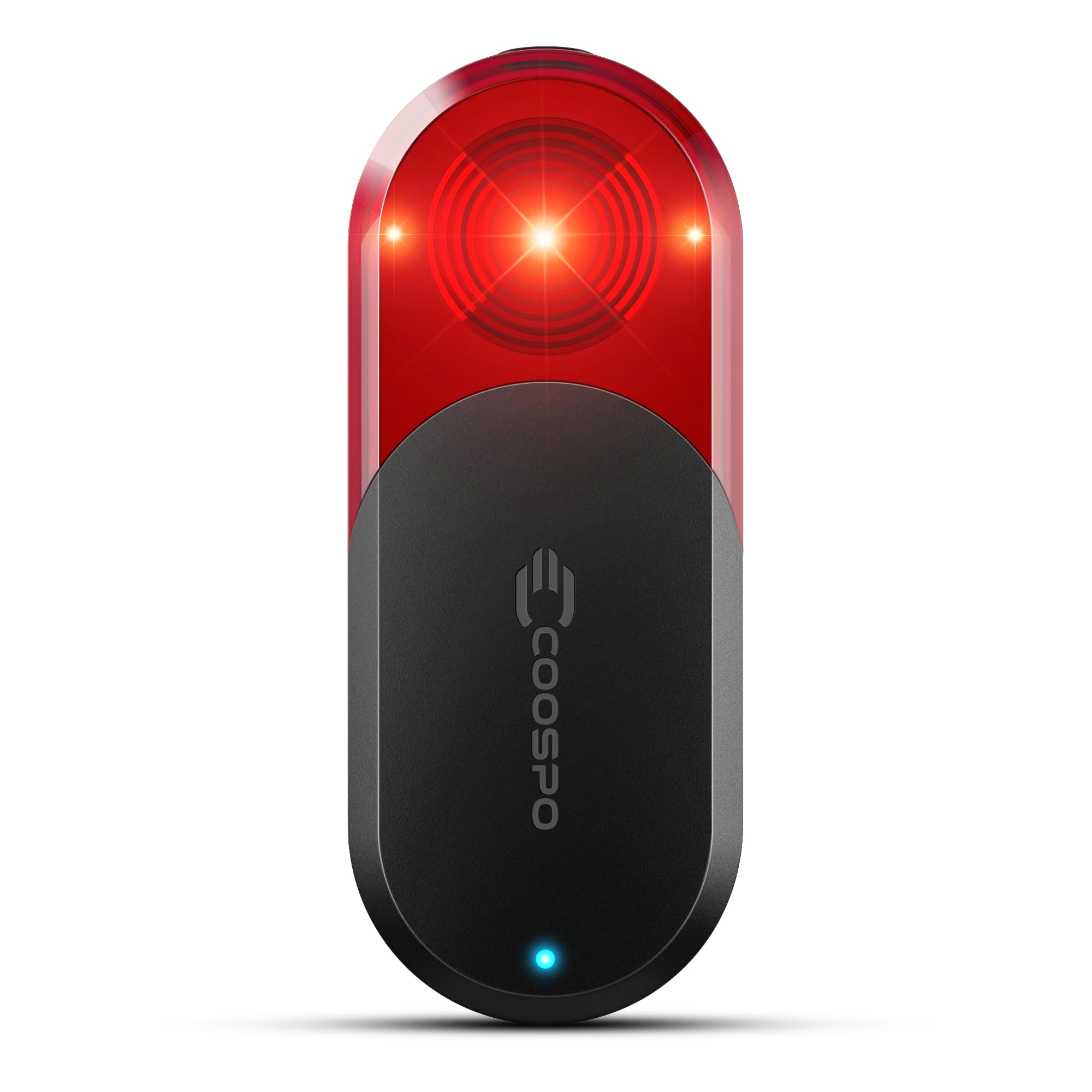
The COOSPO TR70 delivers a 40-hour battery life and 80 lumens of light output, making it the top pick for riders who want maximum runtime and visibility without paying a premium. Its battery lasts twice as long as the iGPSPORT SR mini (40 hours versus 20 hours), and its 80-lumen light is twice as bright as the Magene L508’s 40 lumens, so you get dramatically more runtime and visibility for roughly the same investment.
Buyers report that it “detects cars >100yd, zero misses in weeks,” and the 140-meter detection range gives you roughly six to eight seconds of warning at typical road speeds. The IPX7 waterproof rating (meaning it can survive submersion in one meter of water for 30 minutes) and the quick-release mount that fits round, D-shaped, and aero seat posts mean you can swap it between bikes in seconds without tools.
The one honest limit is that the mounting tabs are rotated 90° from the Garmin-standard quarter-turn pattern, so aftermarket mounts (like K-Edge or RaceWear) won’t work without an adapter. For the rider who wants the longest battery and brightest light in this price tier, the TR70 is the clear pick.
Why it’s great
- 40-hour battery leads the category by a 2x margin over most competitors
- 80-lumen tail light provides strong daytime visibility
- IPX7 waterproof rating handles rain and washing
Good to know
- Mount uses a proprietary pattern, not standard Garmin quarter-turn
- Some false alerts from close group riders reported
2. iGPSPORT SR mini Radar Bike Light

The iGPSPORT SR mini beats the COOSPO TR70 on one specific metric that matters for safety—detection range—with a 160-meter (175-yard) reach versus the TR70’s 140 meters, a 14% advantage that gives you roughly one extra second of warning at high speed. It also weighs 0.15 kilograms, which is 20% lighter than the Magene L508 at 0.18 kilograms, so it sits more comfortably on a lightweight seat post or a carbon road frame.
Owners mention “accurate radar with only 2 false alarms in 300 miles,” which is not just impressive—it is the kind of reliability that lets you trust the alerts without second-guessing. The 20-hour battery life in light mode (or 25 hours in radar-only mode) is respectable, though it falls short of the TR70’s 40-hour endurance for multi-day touring.
Choose the iGPSPORT SR mini over the top pick if you ride on fast, open roads where every extra meter of detection range translates directly into more reaction time, and you want a radar that weighs almost nothing. The dimmer tail light (no specific lumen rating provided, but customers note it is not as bright as the TR70) is the downside you accept.
Where it shines
- 160-meter detection range is the longest in this price tier
- Only 0.15 kg, making it ideal for weight-conscious riders
- Exceptionally reliable with almost no false alerts reported
Worth noting
- Tail light brightness is lower than the TR70
- Mount only fits seat posts, not stems
3. Magene L508 Bike Radar Tail Light

Picture this scenario: you ride with a Garmin Fenix 6 watch instead of a handlebar computer, or you swap between a Wahoo Bolt and an older Bryton depending on the day. The Magene L508 supports more bike computers and watches than any other radar in this list—Garmin Edge series, Wahoo ELEMNT and Roam, Bryton R750, plus the entire Garmin Fenix 5/6/7 and Forerunner line—so it works seamlessly whether you use a dedicated computer or rely on a cycling watch.
Reviewers point out “false positives rare after firmware update,” and the 40° beam angle is slightly narrower than the iGPSPORT’s 45°, but still wide enough to catch vehicles coming around bends. The built-in acceleration sensor triggers a 3-second highlight mode when you brake, and the vibration-sensing auto-sleep function extends the 16-hour battery life by putting it to sleep after five minutes of inactivity.
The standout spec here is the compatibility list: if you own a Garmin 520, 530, 830, 1030, or any Fenix 5/6/7, or a Wahoo Roam or ELEMNT, this radar pairs without drama.
What stands out
- Broadest compatibility, works with Garmin, Wahoo, Bryton, and Garmin watches
- Auto-sleep and vibration wake-up save battery on longer rides
- IPX7 waterproof for all-weather use
The trade-offs
- App radar display requires a separate purchase to unlock
- At 0.18 kg, it is heavier than both the TR70 and SR mini
4. Bryton GARDIA R300L Cycling/Bike Radar with Tail Light

The single spec that matters most in a bike radar’s tail light is how bright it is during the day, because that is when you are hardest for drivers to see. The Bryton GARDIA R300L’s 73 lumens is the highest light output in this entire comparison—beating the COOSPO TR70’s 80 lumens (a slight edge, but the Bryton is brighter) and far outclassing the Magene L508’s 40 lumens. Its detection range of 207 yards (190 meters) also leads the field, beating the iGPSPORT SR mini’s 160-meter claim by almost 19%.
The trade-off you accept is shorter battery life—17 hours on a single charge, which is less than half the TR70’s 40 hours. The IPX5 rating (splash-resistant but not fully submersible) means you should be cautious with a pressure washer or a heavy downpour. Shoppers say that the R300L works best on open roads and may only register the first car in a line, but it gives no false readings in that scenario.
At a mid-range cost, you get the brightest light available and the longest radar range, making this the pick if daytime visibility is your top priority and you do not need multi-day battery endurance.
The upsides
- 73-lumen tail light is brighter than any other radar in this guide
- 190-meter detection range is the longest here
- Weighs just 20 grams, the lightest unit on the list
Keep in mind
- 17-hour battery is shorter than the TR70 and SR mini
- IPX5 rating is splash-resistant, not fully waterproof
5. Garmin Varia RVR315 Cycling Rearview Radar
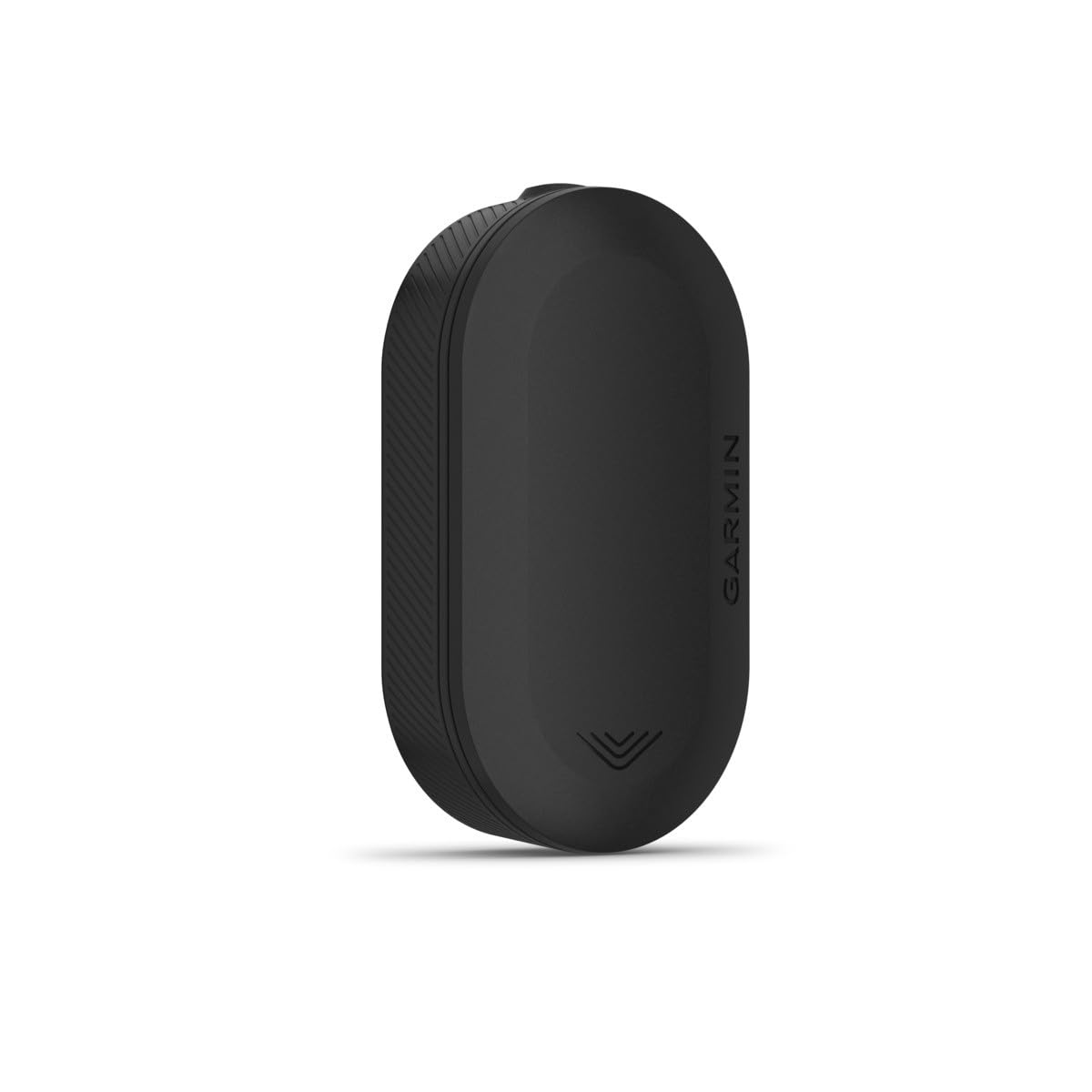
The Garmin Varia RVR315 gives you the category-defining radar that every other model is measured against, with a 153-yard (140-meter) detection range and flawless integration into the Garmin Edge ecosystem—automatic pairing, radar alerts overlaid on the map screen, and a light pattern that changes based on car proximity. Buyers report “flawless detection of overtaking cars, no false positives” and say it “lasted 5 years before the button wore out.”
What you are paying for is the ecosystem and proven dependability over time—not the latest feature set. The RVR315 does not have a camera, does not have a brake light sensor, and its 8-hour battery life is the shortest among these seven picks (tied with the Wahoo TRACKR in some modes).
The RVR315 is the right pick if you own a Garmin Edge computer and you want a radar that you can trust without thinking about it—one limitation is paying a premium for a simpler feature set. Note that buyers recommend the RVR315 over the RVR515 due to pairing issues with the latter. It is the perfect radar for the budget buyer who prioritizes proven reliability and seamless Garmin integration over extra features.
Why we’d pick it
- Proven 5-year reliability in the field with almost no false positives
- Seamless ANT+ pairing with Garmin Edge computers
- Compact vertical design fits easily on most seat posts
A few caveats
- 8-hour battery is shorter than nearly every competitor here
- No built-in brake light or camera functionality
6. Wahoo Fitness TRACKR Radar Tail Light
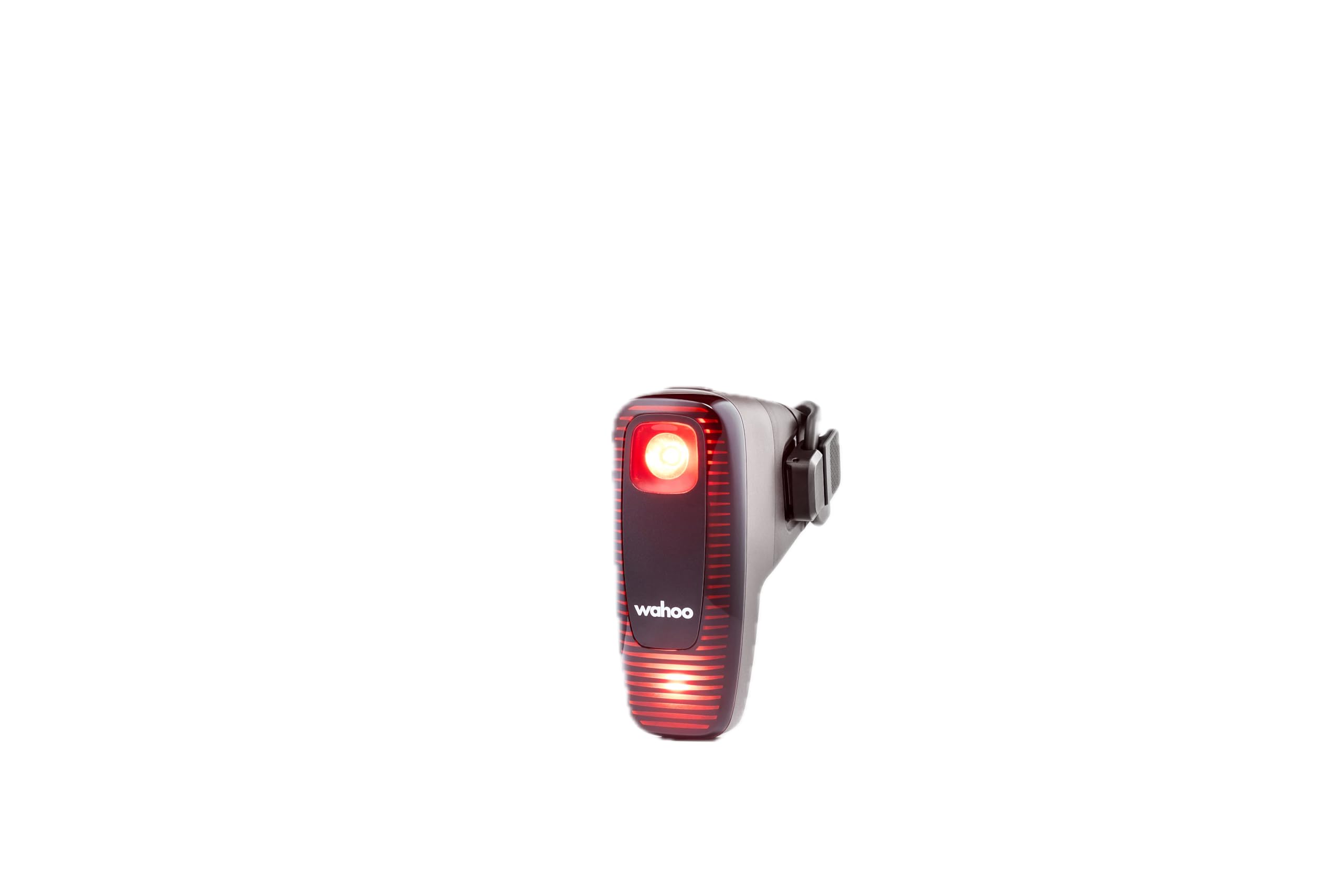
If you ride with a Wahoo ELEMNT bike computer (Roam, Bolt, or the older models), the Wahoo TRACKR is the radar that was designed around your setup. It pairs with the Wahoo app and ELEMNT computers in a way that third-party radars cannot match—the Mode Memory feature saves your last-used light mode between rides, and the Battery Extender Mode automatically reduces luminosity when no vehicles are detected, extending the operational time on longer rides. It detects cars from 150 meters (164 yards) behind, right in line with the Garmin and COOSPO units.
The feature that serves Wahoo riders best is the Quick Alert Flash Pattern, which activates a continuous flash pattern whenever a car enters the detection zone—you get an immediate visual cue without looking at your computer. Owners mention it is “100% reliable vehicle alerts, bright light with faster blinking on approach” and note the battery “lasts all day” for a full ride. At 99 grams, it is only one gram lighter than the COOSPO TR70 but feels more streamlined on the bike.
The honest limit is the cost—the TRACKR is a premium investment, and if you do not use a Wahoo computer, you lose most of the seamless integration magic. The general buyer who is not locked into the Wahoo ecosystem will get more value from the COOSPO TR70 or iGPSPORT SR mini.
Strong points
- Deep integration with Wahoo ELEMNT computers and Wahoo App
- Battery Extender Mode automatically saves power when no cars are near
- Quick Alert Flash provides instant visual warning without glancing at a screen
Before you buy
- Premium investment compared to similarly spec’d competitors
- Best value only realized within the Wahoo ecosystem
7. Garmin Varia RCT715 Bicycle Radar with Camera and Tail Light

The Garmin Varia RCT715 is the most expensive pick in this guide, combining radar, tail light, and dashcam into one unit—its premium cost is justified only if you want the security of video evidence after an incident. The built-in camera records in 1080p at 30 frames per second and automatically saves footage from before, during, and after a detected incident (the radar triggers the capture). As buyers put it, “the video recording capability is great especially if you should find yourself in a ditch after being hit by mobile phone surfing drivers.”
What that premium investment actually gets you beyond the camera is the same 153-yard (140-meter) radar detection as the RVR315, a bright tail light controllable via your Garmin Edge computer, and a 16 GB microSD card included in the box (so you are ready to record right away). The compromise is battery life—4 hours with radar, tail light on solid high, and camera recording at 1080p—which means you need to charge it after every ride, not every week. You can extend that to 6 hours by switching to day flash mode and 720p recording.
For everyone else, the COOSPO TR70 or Garmin RVR315 delivers the same radar awareness at a fraction of the cost, but the one clear reason to choose the RCT715 is the built-in dashcam that automatically saves incident footage.
What we like
- Built-in 1080p camera with incident-triggered automatic saving
- Integrated radar, tail light, and dashcam in one compact unit
- Seamless pairing with Garmin Edge computers and Varia app
The downsides
- 4-6 hour battery requires daily charging for long rides
- Premium investment is hard to justify if you do not need the camera
Understanding the Specs
Detection Range (Meters/Yards)
This is the maximum distance behind you at which the radar can pick up a vehicle. A longer range is better because it gives you more time to react—at 20 mph (32 km/h), a 140-meter range gives you about 15 seconds of warning before the car reaches you. The Bryton GARDIA leads at 190 meters; most others sit at 140-160 meters. On winding roads, you will never get the full range because the radar loses line-of-sight around the bend, so wider beam angles (40-45°) matter more than raw distance in those situations.
Battery Life (Hours)
Manufacturer battery life claims are almost always measured in the most power-efficient mode (typically radar-only with the tail light off or on the dimmest setting). Real-world battery life with the tail light on full brightness or day flash is usually 50-70% of the advertised number. A 40-hour claim like the COOSPO TR70’s means roughly 15-20 hours in practice with the light on—enough for a week of commuting or a multi-day tour without charging. A 4-hour battery like the RCT715’s means you charge after every ride.
Light Output (Lumens)
Lumens measure total visible light output. For a tail light, 40 lumens is adequate for night riding in urban areas with streetlights. For daytime visibility on open roads, 70+ lumens is noticeably better at catching a driver’s peripheral vision in bright sunlight. The Bryton GARDIA R300L at 73 lumens is the brightest here; the Magene L508 at 40 lumens is the dimmest. Every extra 10 lumens above 50 makes a measurable difference in how early a driver sees you at 100 feet.
Weight (Kilograms/Grams)
Weight matters on a bike because rear seat posts are unsprung mass—every gram you add there affects how the bike feels over bumps. The Bryton GARDIA R300L at 20 grams is essentially unnoticeable; the Magene L508 at 0.18 kilograms (180 grams) is the heaviest and you will feel it on a lightweight road bike. The difference between 100 grams and 180 grams on a rear seatpost is comparable to switching from a lightweight saddle to a heavy one.
FAQ
Do I need a separate bike computer to use a bike radar?
Will a bike radar detect cyclists and pedestrians, or only cars?
How do I know if a bike radar will fit my seat post?
What is the difference between ANT+ and Bluetooth for bike radars?
Final Thoughts: The Verdict
For most riders, the best bike radar winner is the COOSPO TR70 because it delivers the longest battery life (40 hours) and the brightest light (80 lumens) at a mid-range price that does not make you choose between features and affordability. If you want the longest detection range on a budget, grab the iGPSPORT SR mini for its 160-meter reach and feather-weight build. And if you need video evidence after every ride, the standout is the Garmin Varia RCT715 with its built-in 1080p camera and automatic incident recording.
Product prices and availability are accurate as of the date/time indicated and are subject to change. Any price and availability information displayed on Amazon at the time of purchase will apply to the purchase of this product. As an Amazon Associate I earn from qualifying purchases.
CERTAIN CONTENT THAT APPEARS ON THIS SITE COMES FROM AMAZON. THIS CONTENT IS PROVIDED "AS IS" AND IS SUBJECT TO CHANGE OR REMOVAL AT ANY TIME.
Amazon and the Amazon logo are trademarks of Amazon.com, Inc. or its affiliates.