
You want a battery that keeps your fridge running at night, your phone charged during a blackout, or your off-grid cabin lit for days. The choices come down to chemistry (lithium vs. lead-acid), capacity (measured in amp-hours, or Ah) and the battery management system (the BMS, an internal circuit that prevents damage). This guide compares real specifications and verified customer reviews so you see each battery’s true strengths and trade-offs.
I’m Min — the co-founder and writer behind Gadgets Feed. This guide is built by comparing the manufacturers’ published specifications and the patterns across verified customer reviews, so you get each pick’s real strengths and trade-offs instead of marketing spin.
From lightweight lithium options that let you use 100% of their rated capacity to heavy-duty lead-acid units that handle big power demands for less upfront cash, the right batteries for solar panels comes down to matching your energy needs with the right chemistry and budget tier.
How To Choose The Best Batteries For Solar Panels
The biggest decision you will make is between lead-acid (AGM or flooded) and lithium iron phosphate (LiFePO4). Lead-acid costs less upfront but weighs more, has a shorter lifespan, and you can only safely use about 50% of its rated capacity. Lithium costs more initially but lasts about 10 times longer, weighs much less, and lets you drain it to 100% without damage. After that, you match the voltage (12V, 24V) and capacity (amp-hours, or Ah) to your solar panel’s output and the appliances you want to run.
Battery Chemistry: Lead-Acid vs. Lithium
Lead-acid batteries (like the AGM type, which stands for Absorbent Glass Mat) lose charge at about 15-30% per month when sitting idle and last for roughly 200-500 charge cycles. They are heavy — a 100Ah lead-acid battery weighs around 63 pounds. Lithium LiFePO4 batteries lose only about 3% per month, last for 4,000 to over 15,000 cycles, and weigh about one-third as much for the same capacity. For solar setups where you rarely move the battery, lead-acid can work. For RVs, boats, or any place where weight and usable capacity matter, lithium is almost always the better long-term value.
Capacity: Amp-Hours (Ah) and Watt-Hours (Wh)
Amp-hours (Ah) tells you how much current a battery can supply over time — a 100Ah battery can deliver 1 amp for 100 hours or 10 amps for 10 hours. Watt-hours (Wh) gives you the total energy: multiply Ah by the voltage (12V x 100Ah = 1,200Wh). For lead-acid, you cut that number in half to get usable energy. For lithium, you use the full number. A 100Ah lithium battery gives you 1,200 usable watt-hours, while a 100Ah lead-acid gives you only about 600 usable watt-hours before you start damaging the battery.
Depth of Discharge (DoD) and Cycle Life
Depth of Discharge (DoD) means how much of the battery’s capacity you use before recharging. A lead-acid battery should not go past 50% DoD, or its lifespan drops fast. A lithium battery can handle 100% DoD every cycle without issue. Cycle life is the number of full charge-discharge cycles a battery can handle before its capacity drops to 80% of its original rating. Lithium batteries are rated for 4,000 cycles at 100% DoD; lead-acid batteries are rated for 200-500 cycles at 50% DoD. Over a decade, a single lithium battery can replace six to ten lead-acid batteries.
Quick Comparison
On smaller screens, swipe sideways to see the full table.
| Model | Category | Best For | Key Spec | Amazon |
|---|---|---|---|---|
| ECO-WORTHY 12V 280Ah | Premium | Large off-grid RVs and home backup | 280Ah capacity / 3584Wh energy | Amazon |
| Litime 12V 200Ah Mini | Premium | Compact setups needing Bluetooth monitoring | 200Ah capacity / 2560Wh energy | Amazon |
| Dumfume 12V 300Ah (314Ah) | Premium | High-capacity single-battery solar setups | 314Ah capacity / 3840Wh energy | Amazon |
| Battle Born 100Ah | Premium | Reliable premium drop-in replacement for RVs | 100Ah capacity / 10-year warranty | Amazon |
| Dumfume 24V 100Ah | Mid-Range | 24V solar systems and home backup | 25.6V voltage / 2560Wh energy | Amazon |
| Redodo 12V 100Ah | Mid-Range | Value-conscious buyers wanting lithium performance | 100Ah capacity / 22 lbs weight | Amazon |
| Power Queen 12V 100Ah | Mid-Range | RV and marine upgrades with easy installation | 100Ah capacity / 24.25 lbs weight | Amazon |
| WEIZE 12V 100Ah | Budget | Budget-friendly backup for garages and cabins | 100Ah capacity / 63 lbs weight | Amazon |
In‑Depth Reviews
1. ECO-WORTHY 12V 280Ah Metal Case LiFePO4 Battery with Bluetooth
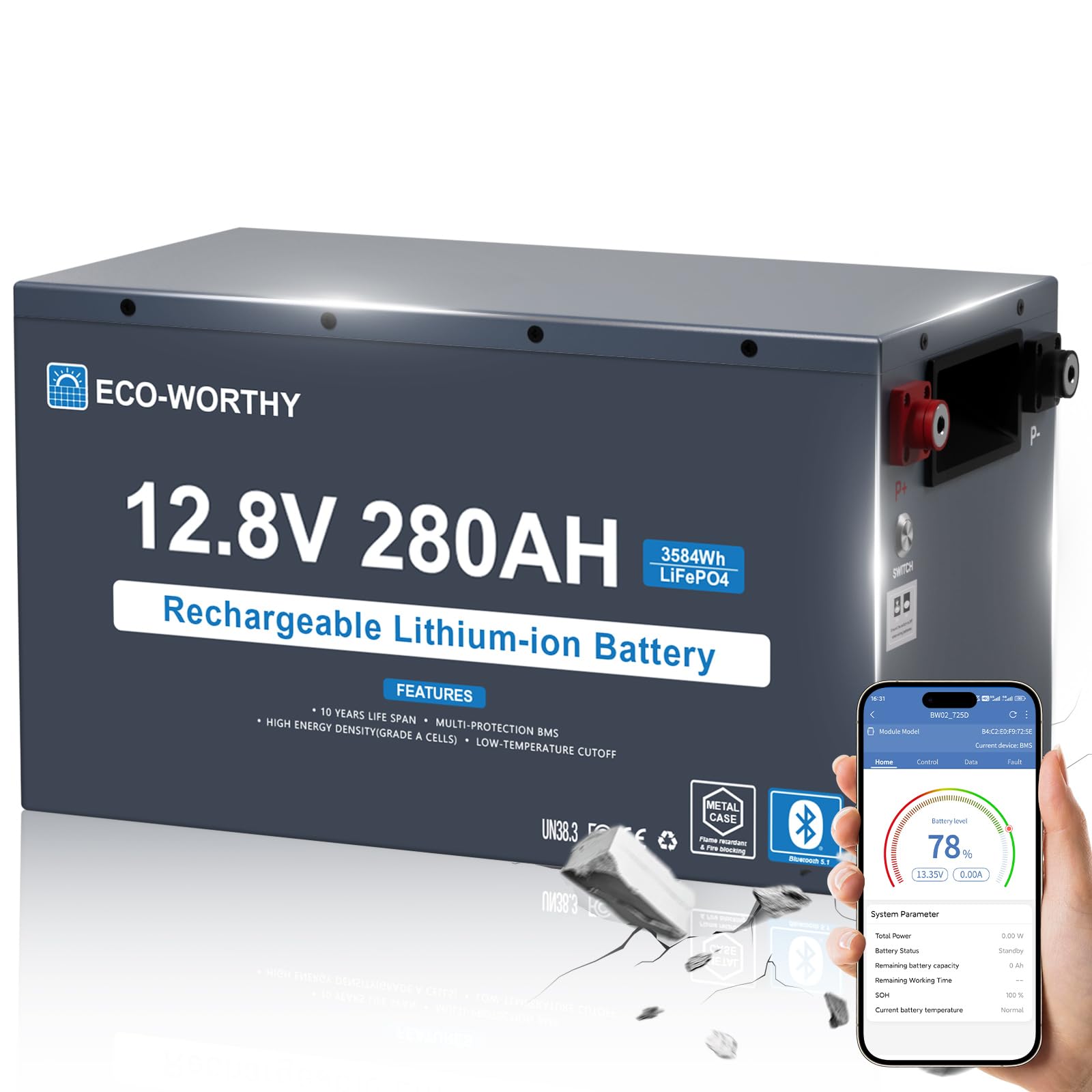
280Ah (3,584 watt-hours) — the highest single-battery capacity on this list — makes the ECO-WORTHY the top pick for RVers and off-grid homeowners running heavy loads who want serious power in one box without wiring multiple batteries together; buyers report connecting two to get 560Ah for travel trailers, powering everything including rooftop air conditioners overnight.
This battery packs a 200A BMS inside a heavy-duty metal case that resists heat and vibration during travel, plus a built-in on/off switch. The Bluetooth monitoring via app lets you check voltage, capacity, and charge status from your phone — a detail reviewers call the “best value on the market.” At 68.5 pounds, it is heavier than smaller lithium batteries, but owners mention the metal case allows screwing it directly to the floor without a separate battery box. Customers note using the built-in low-temperature protection (cutoff at 20°F) during snowy camping trips without issues.
At this capacity level, the ECO-WORTHY is the balanced choice — you get 280Ah, Bluetooth, active safety features, and a rugged enclosure for a mid-range budget, without paying the premium for a brand like Battle Born. This is the single best all-around battery for serious solar storage.
Why it’s great
- Massive 280Ah capacity (3,584Wh) in one battery reduces need for parallel wiring
- Bluetooth app for real-time monitoring of voltage, capacity, and charge status
- Metal case with mounting feet and on/off switch for safe, simple installation
Good to know
- Heavy at 68.5 pounds despite lithium chemistry
- May arrive in multiple packages due to shipping regulations
2. Litime 12V 200Ah Mini LiFePO4 Battery with Bluetooth (Group 31+)
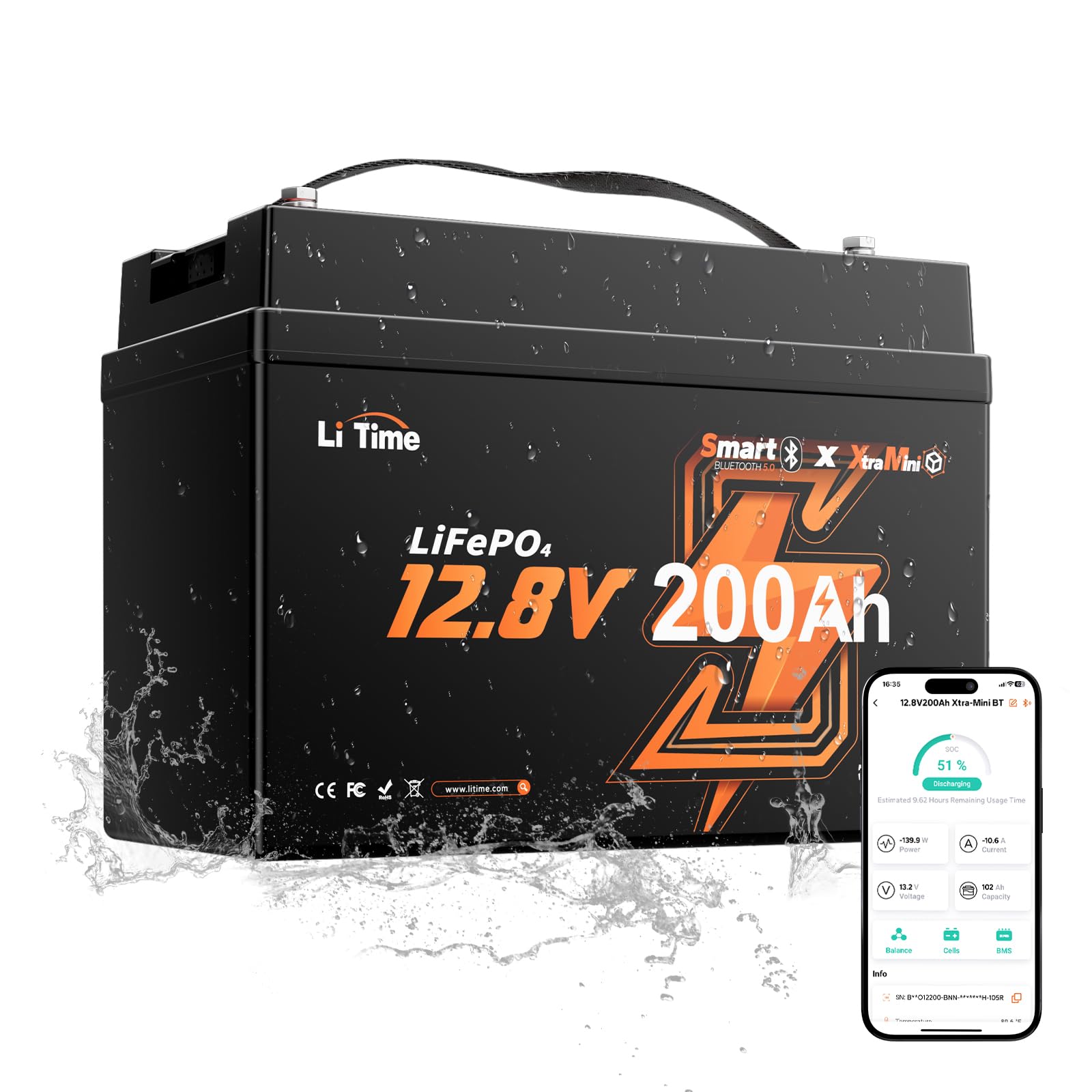
The Litime 200Ah Mini beats the ECO-WORTHY on size but loses on raw capacity — it holds 200Ah vs. 280Ah, which means about 640 fewer watt-hours of usable energy. However, it is a smarter fit for tight RV battery trays because it is 40.8% smaller than a standard 200Ah battery and weighs only 44.5 pounds. That is 24 pounds lighter than the ECO-WORTHY despite having only 80 fewer amp-hours. For anyone squeezing a battery into a campervan or marine compartment, this is the better physical fit.
The built-in Bluetooth 5.0 connects to the LiTime app so you can check state of charge and voltage from your phone — especially helpful for preventing unexpected shutdowns while camping. Reviewers point out that the 200A continuous discharge (with 1000A surge capacity) easily runs 30-70 lb trolling motors and RV solar systems. Reviewers upgrading from four 100Ah LiTime Minis found this single 200Ah unit gave them more capacity with a smaller footprint.
If the bulky size or weight of the ECO-WORTHY is a problem for your space, the Litime 200Ah Mini is the battery to choose over the top pick. Its compact Group 31+ footprint and integrated Bluetooth make it the best option for tight installations where every inch counts.
Where it shines
- Compact design fits standard Group 31 battery trays (40.8% smaller than standard 200Ah)
- Bluetooth 5.0 monitoring via LiTime app for real-time SOC and voltage
- 200A continuous discharge with 1000A surge handles heavy appliances and motors
Worth noting
- Lower capacity (200Ah) than the top pick’s 280Ah
3. Dumfume 12V 300Ah (314Ah) Lithium LiFePO4 Battery, 200A BMS
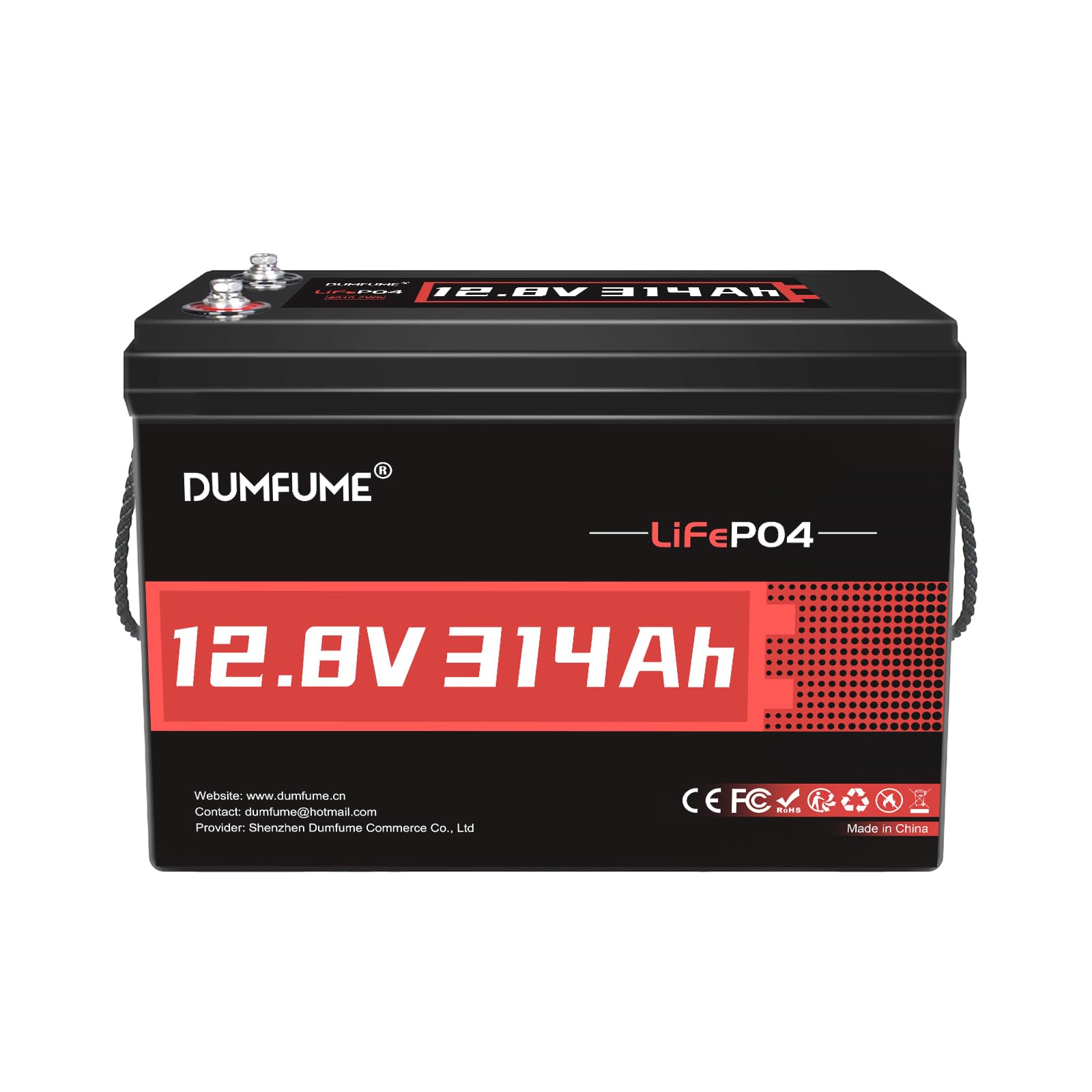
If you need the absolute maximum energy from a single 12V battery without wiring multiple units together, the Dumfume gives you an actual 314Ah of rated capacity — providing up to 3,840 watt-hours of total energy. That beats the ECO-WORTHY by 34Ah and roughly 256 watt-hours, making this the battery for a garage workshop running power tools or a home backup system where you want one unit handling the entire load.
The 200A BMS protects against overcharge, overdischarge, overcurrent, overheating, and short circuits, with automatic shutoff at high and low temperatures. The battery itself is encased in an impact-resistant ABS (acrylonitrile butadiene styrene) shell that resists heat and flame. Shoppers say these units successfully powering fridges, microwaves, and inverter systems, with several exceeding their rated capacity by about 7Ah. One reviewer praised the build quality, noting the internal components include ring terminals, foam padding, and silicone adhesive for shock protection.
The key spec here is 314Ah — this gives you the largest single-battery capacity in the 12V category, beating the ECO-WORTHY by 34Ah.
What stands out
- Highest single-battery 12V capacity on this list at 314Ah (3,840Wh)
- 200A BMS with full protection against overcharge, overdischarge, and temperature extremes
- Impact-resistant ABS casing with good internal build quality for shock absorption
The trade-offs
- Some units arrived below 12.5V requiring a jump charge from another battery
- No Bluetooth monitoring — you need external hardware to track state of charge
4. Battle Born 100Ah 12V LiFePO4 Battery
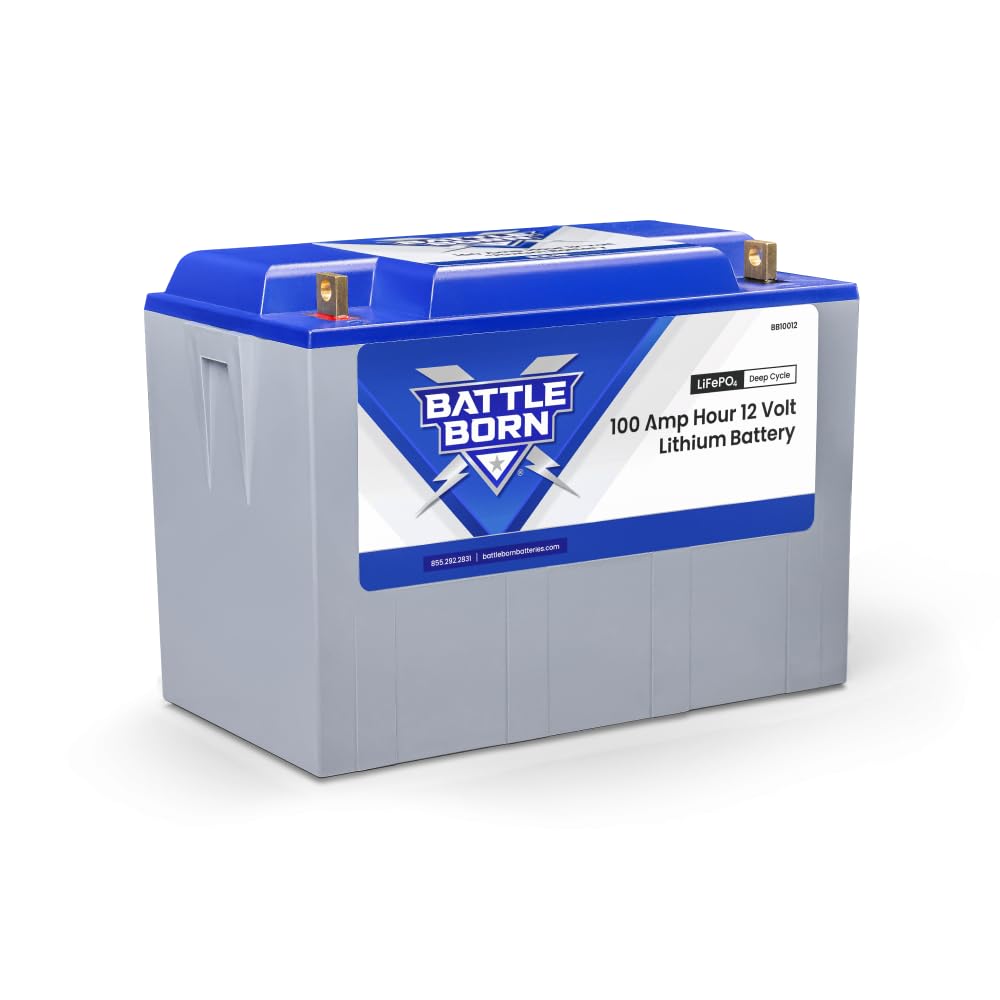
At 31 pounds, the Battle Born 100Ah is roughly 29 pounds lighter than a similar lead-acid battery, making it the lightest weight-to-capacity ratio in this category. What you pay for here is reliability: a 10-year warranty (the longest on this list) and a reputation for customer service that buyers consistently praise. One reviewer, after a minor BMS failure at the one-year mark, received a free replacement shipped quickly.
The catch is simple: you pay a significant premium for the brand. While it offers the same usable capacity (100Ah, 1,200Wh) and similar internal BMS protection, the warranty and support are the main justification for the higher cost. Buyers report that it lasts 28 hours of typical RV use compared to 8 hours with a lead-acid battery of the same rating, and the lighter weight improves ride quality in campers.
For a price-to-value read, the Battle Born is the premium choice — you get a bulletproof reputation and a decade-long warranty, but you give up capacity per dollar compared to mid-range competitors like the Redodo or Power Queen. It is worth it for buyers who prioritize peace of mind and excellent support over upfront savings.
The upsides
- 10-year comprehensive warranty — longest coverage on this list
- Lightweight at 31 pounds for easy drop-in replacement in RVs and boats
- Proven U.S.-based customer support that sends free replacements for failures
Keep in mind
- Significantly higher price per amp-hour than mid-range lithium batteries
- Warranty process can be slow (up to 8 weeks) and requires original packaging
5. Dumfume 24V 100Ah LiFePO4 Lithium Battery
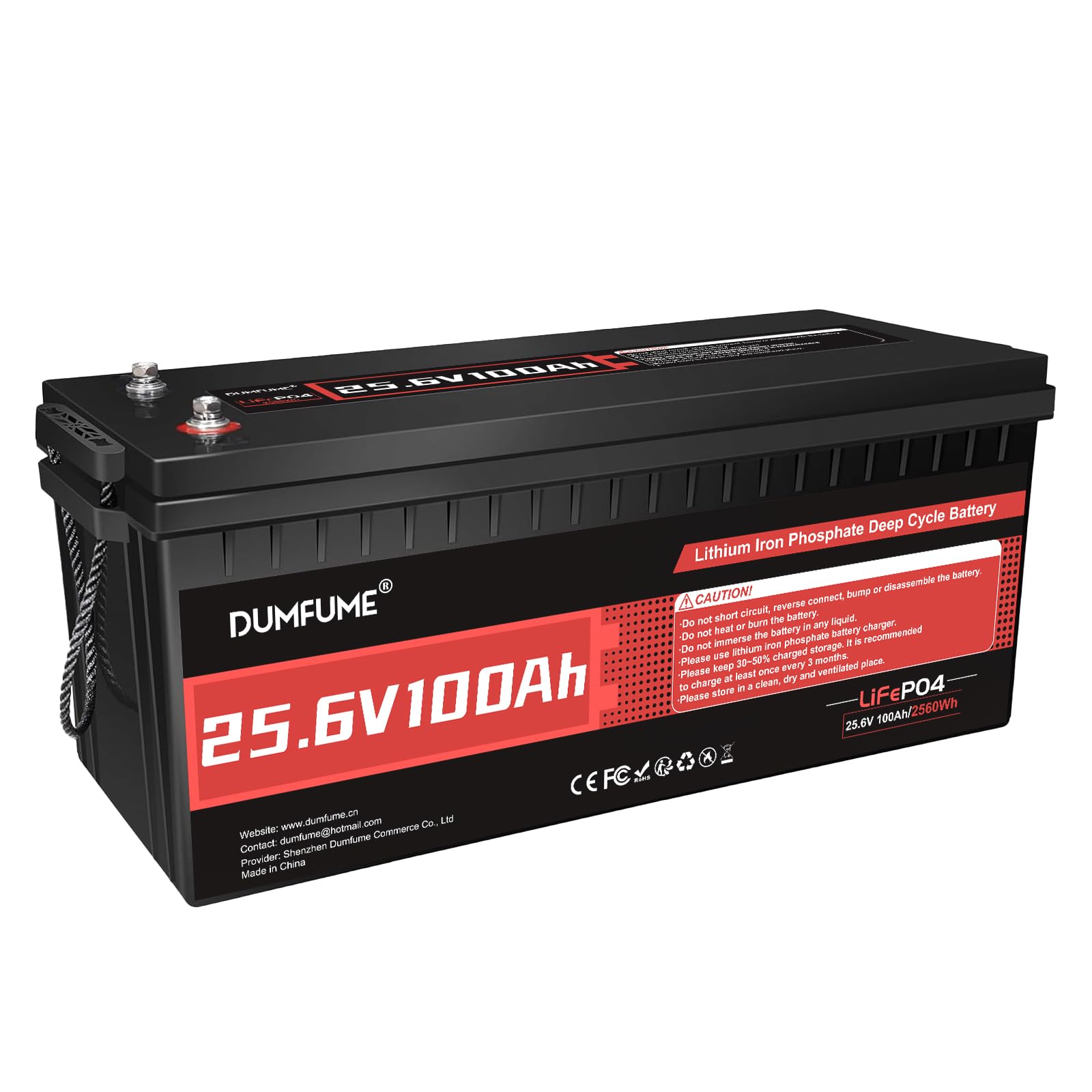
At this lower price, you get a 24V LiFePO4 battery with a 25.6V nominal voltage — double the standard 12V system — which delivers the same power with half the current, allowing thinner, less expensive copper wiring and reduced voltage drop over long cable runs. For a cabin or larger solar installation where wires travel 20-30 feet from panels to battery, this is a meaningful advantage over any 12V battery on this list, including the ECO-WORTHY.
The battery packs 2,560 watt-hours (100Ah at 25.6V) in a body that is 70% lighter than a comparable lead-acid unit. Owners mention using it for home solar with a 2,000W inverter, powering routers, WiFi, desktops, refrigerators, and fish tank equipment 24/7 without dropping below 80% charge. Fast charging is a highlight: paired with a 29.2V 20A lithium charger, you get a full recharge in about 5 hours instead of 10+ hours for lead-acid. Reviewers mention the build quality as excellent for the price point.
The 24V format is the standout callout here — for an off-grid build where you are starting fresh with a 24V solar charge controller, this battery delivers more efficient power transfer and lower wiring costs than any 12V battery on this list at a value-driven price. It is the perfect choice for the budget-conscious buyer building a new 24V system from scratch.
Why we’d pick it
- 25.6V voltage delivers power with half the current of 12V systems, reducing wiring cost and voltage drop
- 2,560Wh of usable energy in a body 70% lighter than lead-acid
- 5-hour full recharge with recommended 29.2V 20A charger
A few caveats
- Requires 24V solar charge controller and inverter — not a drop-in replacement for 12V setups
- No Bluetooth or advanced monitoring features
6. Redodo 12V 100Ah LiFePO4 Battery, Rechargeable Lithium Iron Phosphate
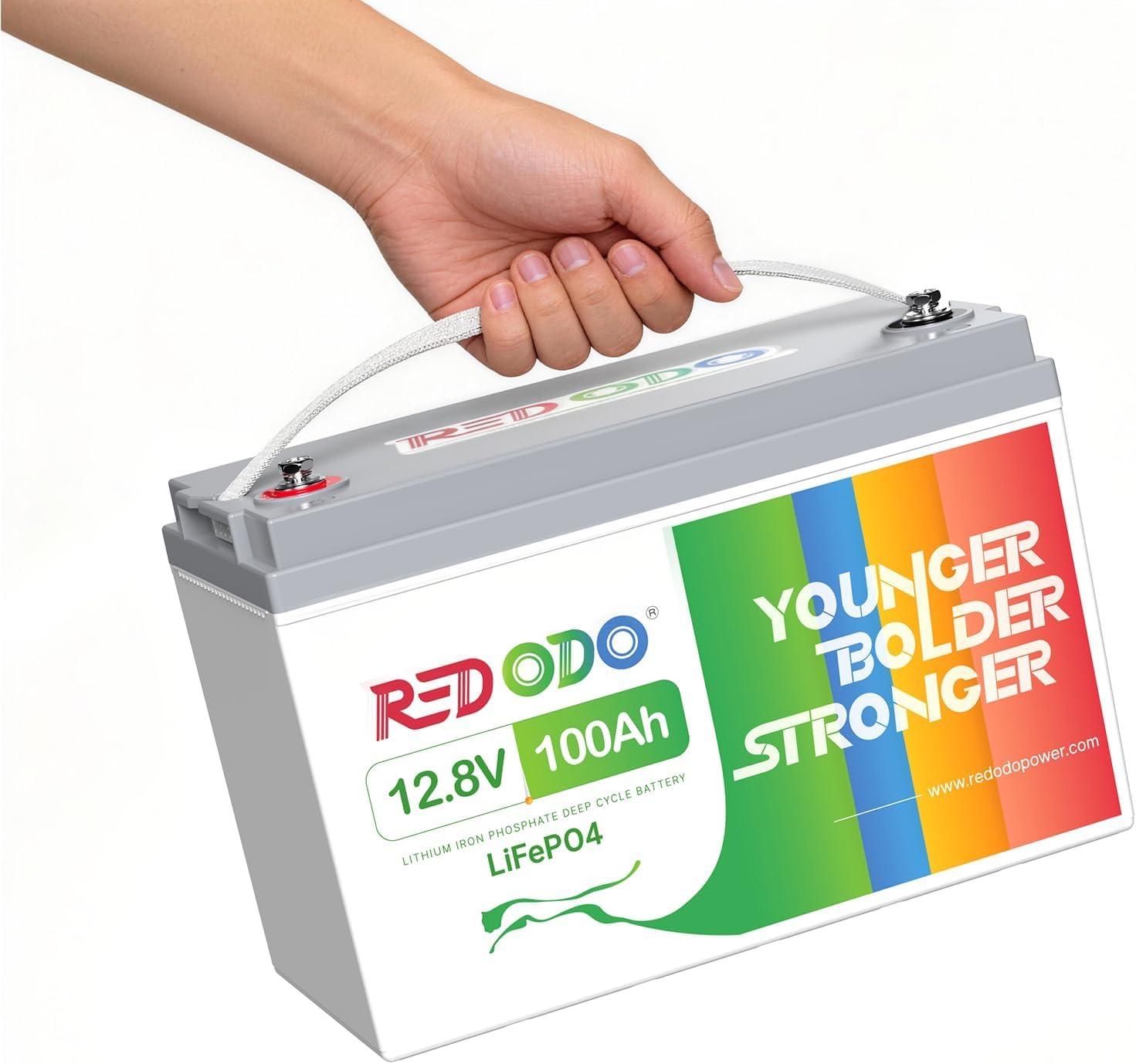
The Redodo 12V 100Ah LiFePO4 battery is perfect for RV owners or trolling motor users upgrading from lead-acid who want the lightest possible drop-in replacement without paying a premium. At just 22 pounds, it is 60% lighter than a comparable lead-acid battery and about 2 pounds lighter than the Power Queen, with dimensions roughly 5% smaller for fitting into tight compartments.
Its real-use strength is versatility in charging, supporting four methods: a dedicated LiFePO4 charger (14.6V 20A recommended), a solar panel with a charge controller, a vehicle alternator, or a generator. This flexibility exceeds the Power Queen, which customers note has BMS quirks with certain chargers. One reviewer successfully replaced the failing lead-acid battery in a Ryobi RM480e electric mower with four of these Redodo batteries, extending runtime from 20 minutes to a full lawn with 90% remaining charge.
Choose the Redodo over the Power Queen if you want slightly lighter weight and more flexible charging options—it is the better choice for tinkerers and anyone who does not want to fight with BMS compatibility on their existing solar charger. However, be aware that its BMS may still present compatibility challenges with some older or non-standard charging equipment, so verify your charger’s compatibility before purchase.
Strong points
- Weighs only 22 pounds — 2.5x lighter than comparable lead-acid and slightly lighter than the Power Queen
- Supports four charging methods: LiFePO4 charger, solar, alternator, and generator
- Can be wired in series or parallel up to 48V for expanded systems
Before you buy
- 100A BMS may limit high-draw applications like large inverters
- Some charge controllers (like Renogy 40A Rover MPPT) require manual configuration for LiFePO4 charging
7. Power Queen LiFePO4 Battery 12V 100Ah, Group 31 Lithium Battery
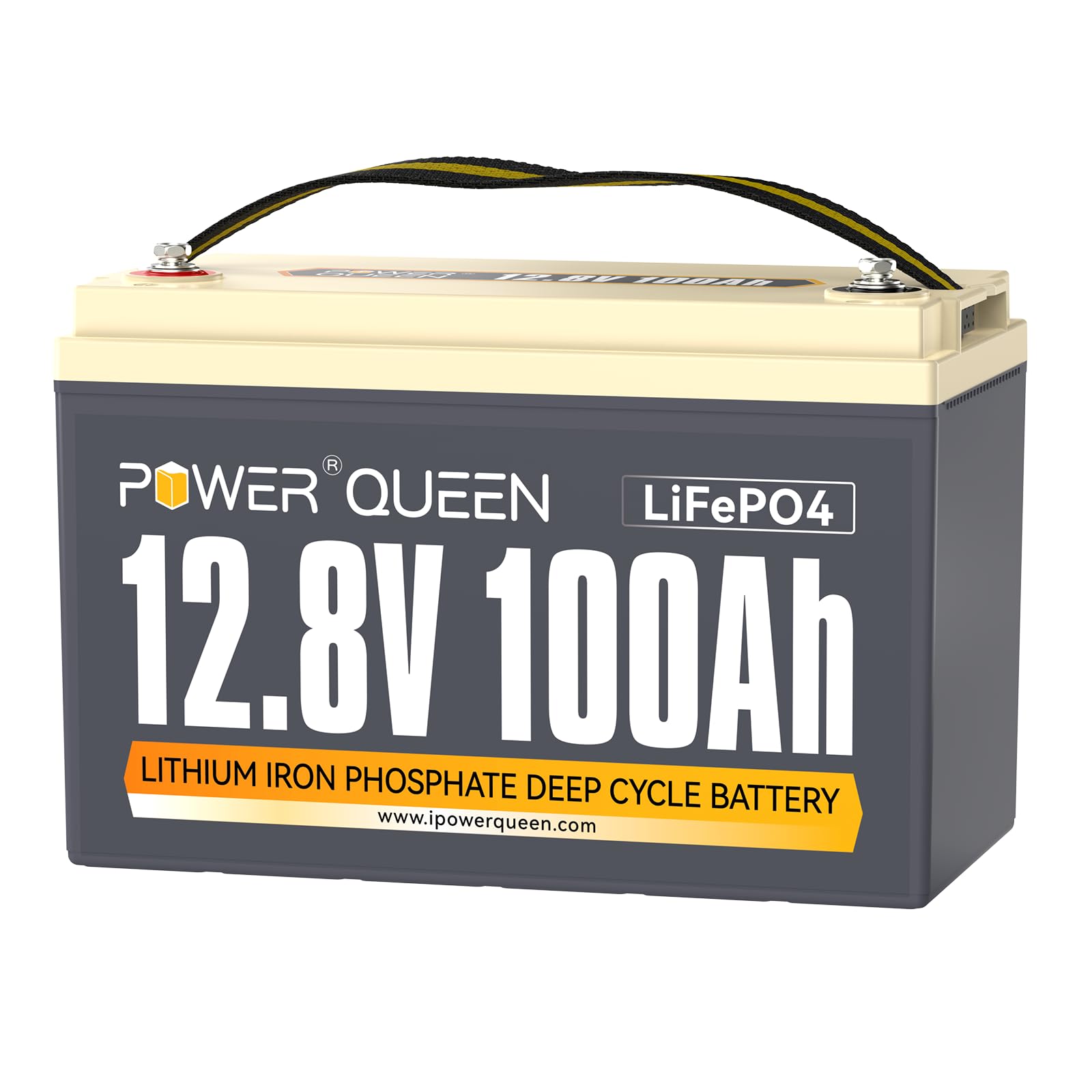
On a value-for-money basis, the Power Queen 100Ah delivers lithium performance — 4,000 cycles at 100% DoD, a five-year warranty, and a 24.25-pound build that is about one-third the weight of lead-acid — at a mid-range price that is lower than the Redodo. This makes it an excellent entry point for anyone wanting to move from lead-acid to lithium without spending the premium for a Battle Born. It is the most price-competitive 100Ah lithium option on this list relative to its specs.
What that mid-range cost actually gets you is the full 1,280Wh of usable energy (12.8V x 100Ah) in a standard Group 31 case that fits existing battery trays. Reviewers point out replacing lead-acid panels in travel trailers and getting double the usable power at half the weight — one reviewer noted, “half the weight, double usable power: full 100Ah usable vs. 50Ah from lead-acid.” The smart BMS has over 20 protections against overcharge, over-discharge, over-current, and short circuits. The battery supports expansion up to 4P4S (51.2V 400Ah or 20.48kWh total capacity) for scaling up later.
A real-world trade-off: some shoppers say the BMS cuts off charging at around 14.2V, which means certain 14.4V or 14.6V chargers cannot fully top off the battery, leaving it at about 95% charge. If you already own a specific lithium charger, check compatibility first. For the price, though, the Power Queen is the best entry-level lithium battery for a first-time solar upgrade.
What we like
- Excellent value for lithium — 4,000 cycles at 100% DoD with a five-year warranty
- Full 1,280Wh usable energy at 24.25 pounds (one-third the weight of lead-acid)
- Standard Group 31 footprint makes installation simple in existing battery trays
The downsides
- BMS may cut off charge at ~14.2V, preventing some chargers from reaching full battery capacity
- Requires minimum 6-gauge wiring for full performance in some applications
8. WEIZE 12V 100Ah Deep Cycle Battery, Group Size 31

63 pounds and roughly half the upfront cost of a comparable lithium battery make the WEIZE 12V 100Ah AGM the top pick for a budget-conscious buyer who needs stationary backup power in a garage, cabin, or workshop where weight is not an issue.
What you give up with lead-acid chemistry: only about 50% of the rated 100Ah is usable (about 600Wh of usable energy) because discharging below 50% depth of discharge rapidly shortens battery life. The WEIZE lasts for roughly 200-500 cycles versus 4,000+ for a lithium battery. However, one buyer mentioned running four of these in parallel for a 4.8kWh backup power system, powering a 2,000W inverter running 120V outlets, fans, and garage door openers — but warned they cannot run a stove, dryer, HVAC, or a 1,800W microwave. Another reviewer said two of these batteries have powered their off-grid RV for two years using two 150W solar panels, running a 700W inverter for a crock pot and TV.
It gets the job done for a fraction of the lithium cost, as long as you understand you can only safely use half its rated capacity and will need to replace it in a few years.
Why it’s great
- Budget-friendly price — cheapest upfront cost for 100Ah of storage capacity
- Maintenance-free AGM design — no water refills, no acid spills, works in any position
- Reliable performance for emergency backup, powering furnace, fridge, and basic 120V loads
Good to know
- Weighs 63 pounds — roughly 2.5-3x heavier than equivalent lithium batteries
- Only about 50Ah (600Wh) usable capacity — must avoid draining below 50% to preserve life
- Short lifespan of 200-500 cycles compared to 4,000+ cycles for lithium
Understanding the Specs
Depth of Discharge (DoD)
Depth of Discharge means the percentage of the battery’s total capacity you use before recharging. Lead-acid batteries like the WEIZE should not be discharged past 50% DoD — go lower and you permanently damage the internal plates, dramatically shortening the battery’s life. Lithium iron phosphate (LiFePO4) batteries like the ECO-WORTHY, Litime, and Redodo can be discharged to 100% DoD safely every single cycle with no damage. This means a 100Ah lithium battery delivers twice the usable energy of a 100Ah lead-acid battery: 1,200 watt-hours vs. 600 watt-hours.
Battery Management System (BMS)
The BMS is an internal electronic circuit board that acts as the brain and guardian of a lithium battery. It continuously monitors voltage, current, and temperature. If anything goes wrong — overcharging, over-discharging, a short circuit, or extreme cold — the BMS automatically disconnects the battery to prevent fire, cell damage, or total failure. Every lithium battery on this list (Power Queen, Redodo, Dumfume, ECO-WORTHY, Litime, Battle Born) includes a BMS. Lead-acid batteries like the WEIZE do not have a BMS, which is one reason they are cheaper but require more careful usage.
FAQ
Can I mix a lithium battery with my existing lead-acid solar charger?
How many amp-hours do I need for my solar setup?
Final Thoughts: The Verdict
If you want one dependable pick, the batteries for solar panels winner is the ECO-WORTHY 12V 280Ah because it delivers the highest single-unit capacity, Bluetooth monitoring, and a rugged metal case at a fair price point for what you get. If you need a compact fit for tight RV trays with app-based monitoring, grab the Litime 12V 200Ah Mini. And for a budget-conscious backup power setup in a garage or cabin where weight is not a concern, the WEIZE 12V 100Ah AGM delivers reliable storage for a fraction of lithium’s upfront cost.