
You lean into a turn and your backpack shifts, your work shirt gets soaked on the way, and you have to stop to grab your water bottle — that is the daily frustration this guide solves. After comparing the published specs and reading verified commuter reviews on five serious cycling backpacks, the real difference comes down to three things: how the bag fits your riding posture, how it handles rain, and whether the pockets actually make sense when you are on the move.
I’m Min — the co-founder and writer behind Gadgets Feed. This guide is built by comparing the manufacturers’ published specifications and the patterns across verified customer reviews, so you get each pick’s real strengths and trade-offs instead of marketing spin.
Your ride might be 2 miles or 20 miles. These five options cover the best backpack for cycling commute for your daily route and gear.
How To Choose The Best Backpack For Cycling Commute
Buying a bag just because it looks good is a common mistake. A cycling backpack must work with your bike, your body, and the weather, so a few specific features matter more than brand names.
Fit and Riding Posture
A standard school backpack hangs low on your back. That shifts your center of gravity backward when you lean forward on a bike. Look for a “dropped-lumbar” fit (a design that places the pack lower on your back) or a dedicated bike-back system that keeps the weight centered over your sit bones, so the pack moves with you instead of fighting your balance.
Weather Protection
Not all rain covers are equal. A high-visibility rain cover (a bright-colored waterproof hood that stows in its own pocket) that deploys quickly is essential for a commuter who rolls out in sunshine and hits a storm ten minutes later. Some bags also use water-repellent fabric coatings (a chemical layer on the outside fabric). Those handle light drizzle but are no substitute for a proper cover.
Access and Organization While Riding
The best commuter backpacks let you grab a snack, phone, or bike lock without taking the bag off. Side pockets for water bottles you can reach while pedaling, a front stash pocket for a jacket, and a top quick-access compartment for keys and phone all save you from stopping and unzipping the whole main compartment every time you need something small.
Quick Comparison
On smaller screens, swipe sideways to see the full table.
| Model | Category | Best For | Key Spec | Amazon |
|---|---|---|---|---|
| Osprey Metron 24L | Premium | Rain-or-shine commuters with a change of clothes | 24L capacity, separate shoe compartment, Hi-Vis raincover | Amazon |
| Osprey Escapist 20L | Mid-Range | Riders who want a bike-specific fit with great organization | 20L capacity, dropped-lumbar fit, LidLock helmet attachment | Amazon |
| Deuter Modern 14+3 L | Premium | Hot-weather riders who need back ventilation | 14+3L expandable, Aircomfort back system, includes 2L hydration bladder | Amazon |
| The North Face Borealis 28L | Mid-Range | Versatile commuters who also use the bag for school or travel | 28L capacity, FlexVent suspension, 16-inch laptop sleeve | Amazon |
| Basil Cycling 18L | Value | Riders with a rear rack who want quick attachment and detachment | 18L capacity, rack-attachment system, integrated USB charging port | Amazon |
In‑Depth Reviews
1. Osprey Metron 24L Commuter Bike Backpack
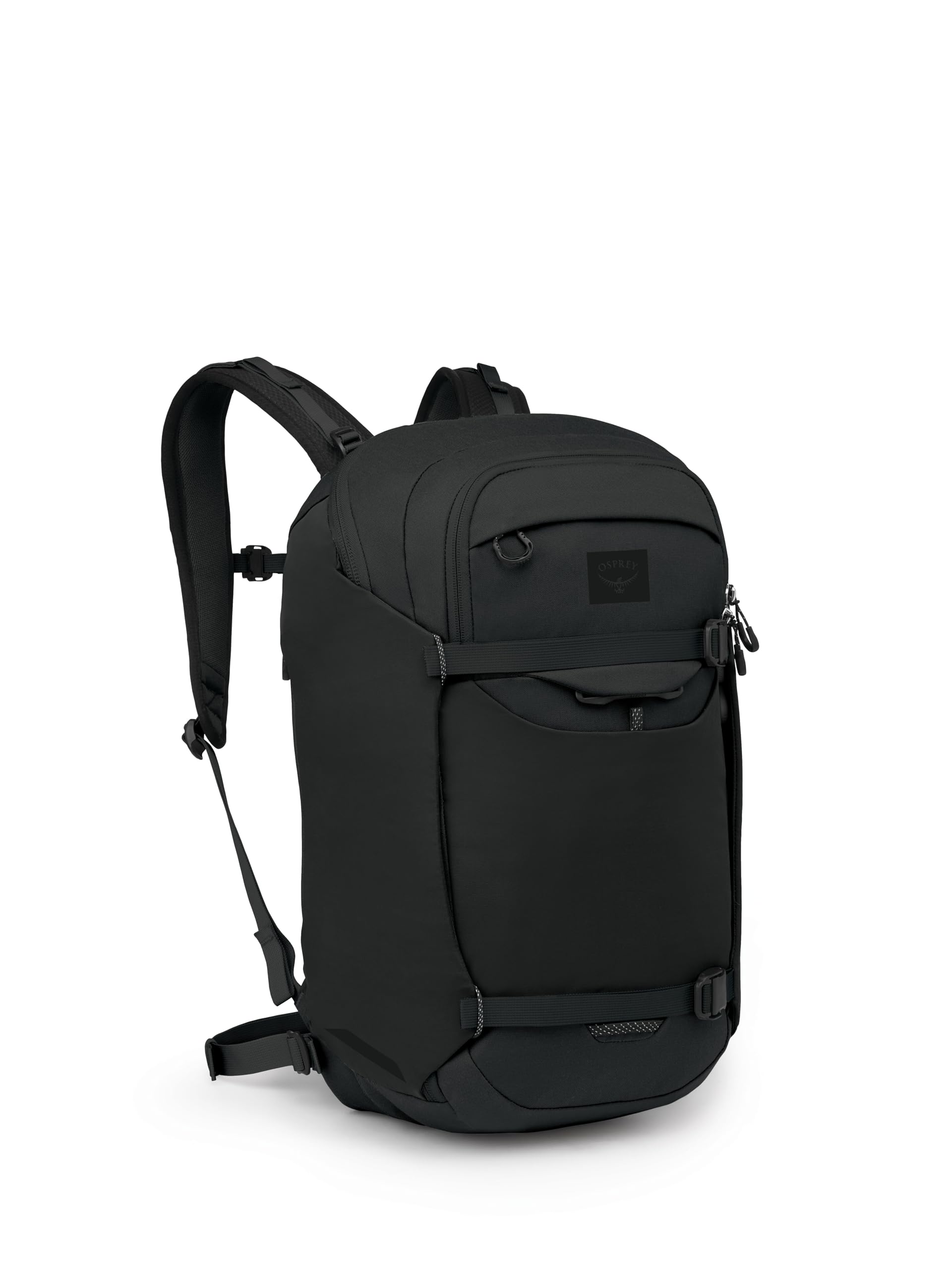
24 liters and a dedicated J-zip compartment for dirty gear make the Osprey Metron 24L the top pick for commuters who need to separate sweaty cycling clothes from clean work attire.
At 2.5 pounds, the 24-liter capacity fits a full workday load, including most 16-inch laptops in a padded sleeve. Reviewers praise the pocket organization—one buyer calls it “pockets, pockets, pockets”—and note the glove-friendly buckles and included Hi-Vis raincover add all-weather convenience.
Some buyers find the slim waist strap less useful than the belt on the Osprey Escapist 20L, and a few mention front pockets can be fiddly when compression straps are tight. But the Metron solves the “wet clothes in the office” problem better than any other bag here, making it the top pick for daily rain-or-shine commuters.
Why it is great
- Separate shoe and clothes compartment keeps dirty gear away from clean items
- Hi-Vis raincover offers dependable water resistance in a downpour
- Excellent pocket organization with dedicated sleeves for a 16-inch laptop and tablet
Good to know
- Thin waist strap is mostly decorative and struggles to stabilize heavy loads
- Front pockets can be tricky to open when compression straps are cinched down
- No external water bottle pocket despite the large size
2. Osprey Escapist 20L Biking Backpack
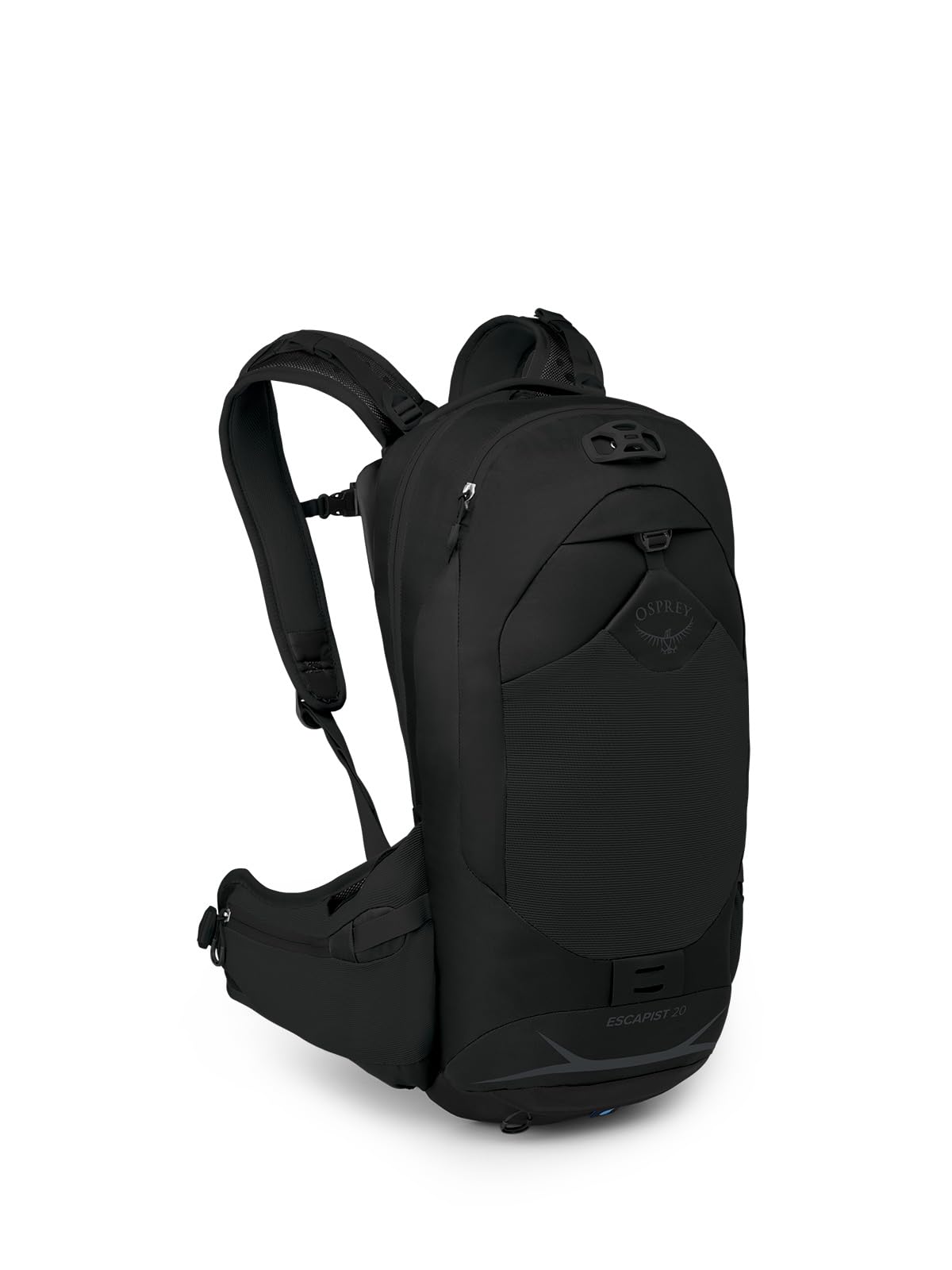
The Osprey Escapist 20L beats the Metron on two key fronts for riders who lean into a tuck. Its dropped-lumbar fit (a design that places the load lower on your back, centered on your sit bones) keeps the pack stable when you ride aggressively. And its padded hipbelt has dual large zippered pockets that the Metron’s thin strap cannot match — you can stash snacks or tools there without stopping.
At 2.21 pounds it is also slightly lighter than the Metron’s 2.5 pounds, and at 21.7 inches tall it is nearly identical in height. The LidLock helmet attachment (a clip that holds your helmet on the outside of the pack) clips your helmet to the bag when you stop, and the included high-visibility raincover keeps everything dry. Reviewers call it a “do it all pack” with a slim profile that “carries a lot without bulk.” One buyer who compared it to the CamelBak MULE (another popular hydration pack) called it a “great bag for a day ride or hike.” This bag is for riders who want a true bike-specific suspension and hipbelt pockets, then take the same pack on a trail ride after work.
The honest catch is that reviewers report the side water bottle holders are “easy to retrieve but too shallow; bottles fall out when bending over.” On a bike, that is a real safety hazard. Choose the Escapist over the Metron if you prioritize a bike-specific fit and want hipbelt pockets, and you are willing to use a hydration bladder instead of external bottles.
Why it is great
- Dropped-lumbar fit centers the load on your sit bones for aggressive riding posture
- Padded hipbelt with dual large zippered pockets for snacks, tools, or phone
- LidLock helmet attachment and included high-visibility raincover add bike-specific utility
Worth noting
- Side water bottle holders are too shallow and can eject bottles when you bend over
- Complex pocket layout feels heavy for the 20-liter storage space
- No separate compartment for a change of clothes or shoes
3. Deuter Modern 14+3 L

If you arrive at work with a soaked shirt, the Deuter Modern fixes that. Its Aircomfort back system uses a permanently elastic spring steel frame and special airy mesh to create a ventilation space between your back and the pack, so moist air evaporates instead of pooling against your spine. One reviewer says “forget it’s there while riding, excellent back ventilation.”
This bag starts at 14 liters of storage, but you can unzip an expansion panel to add 3 more liters — a feature one buyer calls a “lifesaver” when you need to pick up groceries on the way home. It also includes a 2-liter hydration bladder (a water pouch that fits inside the bag with a drinking tube), reflective details for visibility, a detachable rain cover, and an integrated mesh helmet holder. At 2 pounds 1 ounce, it is the lightest premium bag in this lineup and measures 18 by 10 by 7 inches.
The expandable capacity is unique here. No other bag in this price tier lets you go from a sleek 14-liter commuter pack to a 17-liter errand-runner with one zipper. If back sweat is your number-one complaint about your current bag, this is the fix. Riders who carry very little and prioritize a dry back will love it — but if you need to carry a laptop daily, the lack of a dedicated padded compartment is a real miss.
Why it is great
- Aircomfort back system creates ventilation space to dramatically reduce back sweat
- Expandable from 14 to 17 liters with one zipper for a quick capacity boost
- Includes a 2-liter hydration bladder, rain cover, and helmet holder
The trade-offs
- At 14 liters base capacity, it is smaller than most commuter bags
- Some tall riders (over 6 feet) report back pain due to unbalanced fit
- No dedicated laptop compartment despite advertised 39.62 cm device compatibility
4. The North Face Borealis Commuter Laptop Backpack
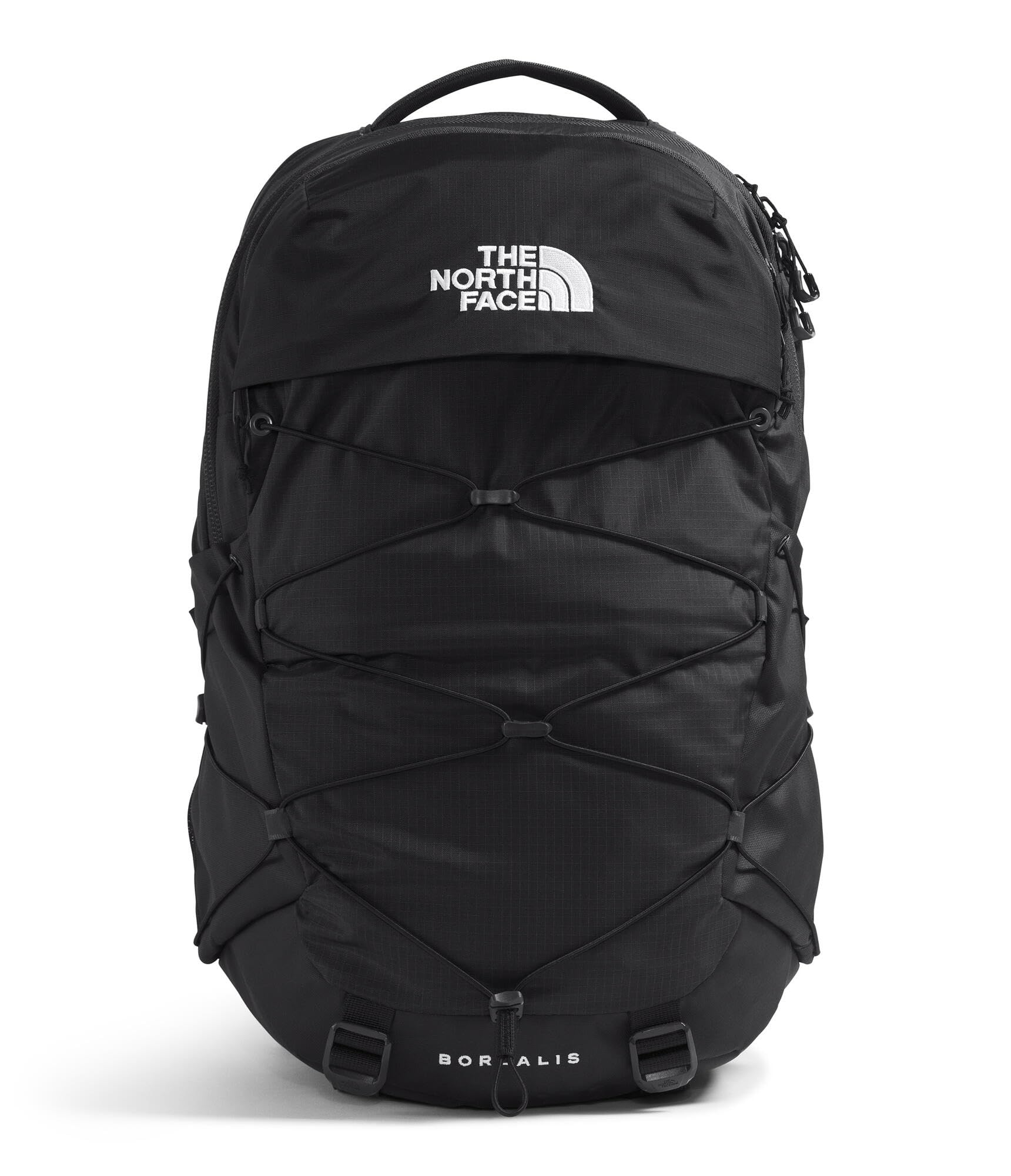
The single most important number in a commuter backpack is how much it carries, and the Borealis leads this whole lineup with a 28-liter capacity. That beats the Osprey Metron by 4 liters and the Escapist by 8 liters. You can easily fit a 16-inch laptop, books, folders, and a change of clothes without compressing anything.
The catch for that capacity is that the Borealis is a generalist backpack adapted for a bike, not a pure cycling pack. It has a FlexVent suspension system (a padded back panel and curved shoulder straps) certified by the American Chiropractic Association (ACA). Reviewers call it “extremely comfortable,” and it includes 360-degree reflective details for safety. But it lacks bike-specific features like a rain cover, a helmet holder, or hydration bladder preparation, so you have to buy those separately. The Borealis is for anyone who wants the largest capacity here and a comfortable all-day carry for classes, travel, and commuting, and is happy to add their own rain gear.
At its price point, the Borealis gives you the most storage and the best laptop protection of any bag here. It is a solid pick for a one-bag solution, but if you ride in rain often, factor in the cost of an aftermarket rain cover.
Why it is great
- 28-liter capacity is the largest in this comparison, fitting a 16-inch laptop, books, and clothes
- FlexVent suspension system is certified by the American Chiropractic Association for all-day comfort
- Durable water-repellent fabric and 360-degree reflective details for safety
Keep in mind
- No rain cover, helmet holder, or hydration bladder prep included
- Larger and heavier than dedicated cycling backpacks
- Not specifically designed for an aggressive bike riding posture
5. Basil Cycling 18L
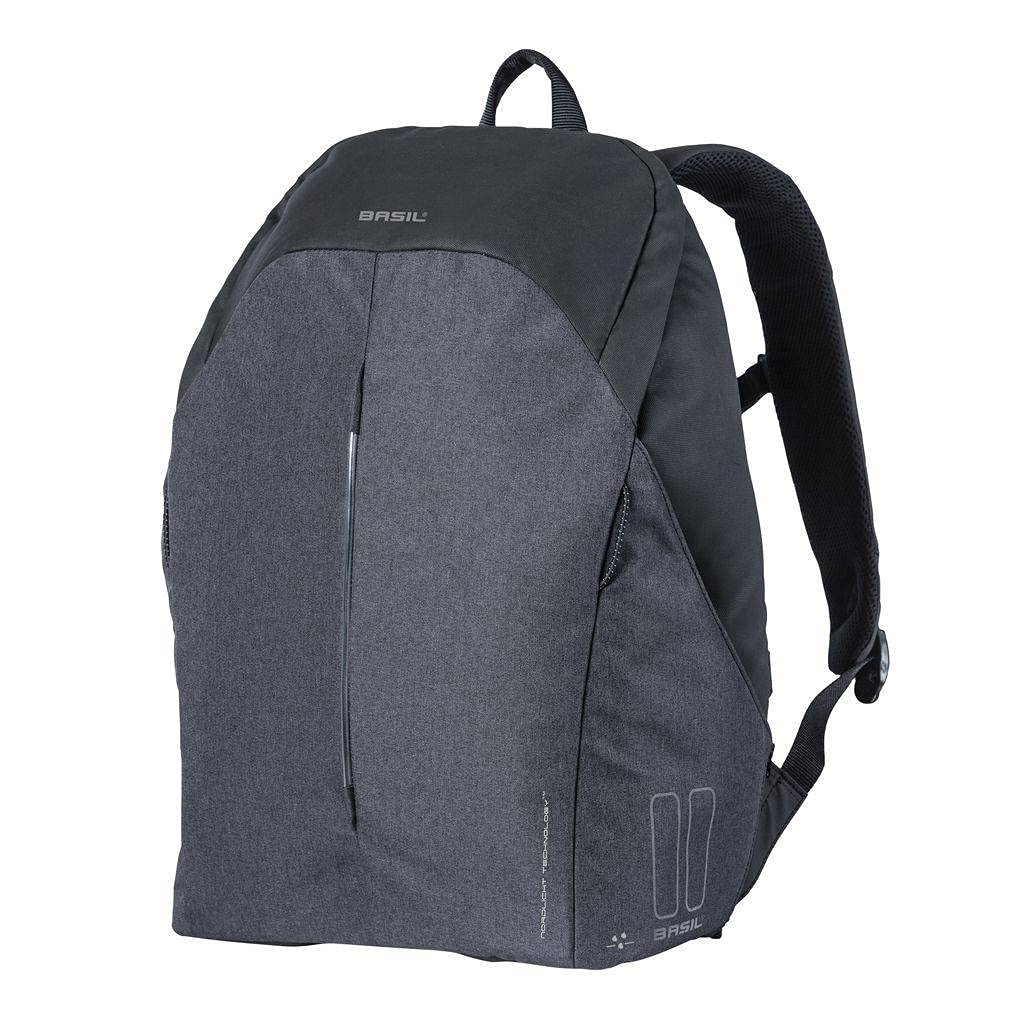
What you actually get at this price point is one of the most thoughtful rack-attachment systems in the category — a clip-on mechanism that, as one reviewer puts it, “attaches/removes in 1 second” and turns your rear rack into a trunk. That saves you from carrying a sweaty backpack on your shoulders during hot rides, which is a standout for commuters who hate arriving with a wet back.
What you give up is on-body carry comfort: the same reviewer notes that when you do wear it on your back, the internal hook “digs in” and makes it uncomfortable. The Basil measures only 5.5 inches deep, 11.5 inches wide, and 17.7 inches tall — a full 36% shallower than the Osprey Escapist 20L, which limits how much you pack. It does include an integrated USB charging port and a Nordlicht LED light strip on the front for visibility, plus a rain cover and a laptop compartment for devices up to 15.6 inches.
For the commuter who already has a rear rack and wants to stop wearing a backpack, the Basil is the budget-savvy choice — just leave it clipped to the bike and walk in hands-free.
Why it is great
- Rack-attachment system clips on and off in about one second
- Integrated USB charging port for charging devices on the go
- Nordlicht LED light strip and rain cover included for visibility and weather protection
A few caveats
- Uncomfortable to carry on your back due to a digging hook mechanism
- 18-liter capacity is on the smaller side for a full workday load
- No dedicated laptop sleeve; a 12-inch laptop fits tightly in the zippered pocket
Understanding the Specs
Dropped-Lumbar Fit vs Standard Backpack Fit
A dropped-lumbar fit shifts the weight of the pack lower on your body, centering it on your sit bones rather than your shoulders. That matters on a bike because when you lean forward, a standard backpack pulls away from your back and swings with every pedal stroke. A bike-specific fit like the Osprey Escapist’s keeps the load stable, so you can ride aggressively without fighting the bag’s momentum.
Ventilated Back Panel
Most cycling backpacks use mesh or a suspended frame to create a gap between your back and the pack. The Deuter Modern’s Aircomfort system uses a spring steel frame to hold the bag away from your spine, letting sweat evaporate rather than pool against your shirt. If you arrive at work drenched in back sweat with your current bag, a ventilated back panel is the single upgrade that fixes it.
FAQ
Should I get a rack-attachment backpack or a traditional backpack for bike commuting?
How much capacity do I really need for a daily bike commute?
Final Thoughts: The Verdict
For most commuters, the backpack for cycling commute winner is the Osprey Metron 24L because its dedicated shoe compartment solves the problem of separating wet clothes from clean ones, backed by excellent organization and a proper rain cover. If you want outstanding back ventilation for hot rides, grab the Deuter Modern 14+3 L. And for the rack-attachment crowd who want to leave the bag on the bike, the Basil Cycling 18L is the most practical option here.