
You want an American washing machine that cleans the dirtiest clothes, fits your space, and doesn’t break down after a year. The real challenge is that “American” covers everything from a cheap plastic agitator to a smart front-loader with steam jets. This guide compares five specific, currently sold models so you see exactly which one matches your laundry room and your budget.
I’m Min — the co-founder and writer behind Gadgets Feed. This guide is built by comparing the manufacturers’ published specifications and the patterns across verified customer reviews, so you get each pick’s real strengths and trade-offs instead of marketing spin.
After looking at capacity, cycles, and owner feedback across these five machines, here are the models that actually deliver on the american washing machine promise — deep cleaning, long-term durability, and a fit for real family laundry.
How To Choose The Best American Washing Machine
Your choice comes down to three things: how much laundry you do per load, whether you want a tall agitator or an open tub, and if smart features like delay start save you a trip back to the basement. Here is what to look at.
Capacity: The Cubic Feet Rule
The drum’s internal volume — measured in cubic feet — decides how much you can wash at once. A 4.8 cu. ft. machine (like the GE Profile front-loader) fits a king-sized comforter in one go, while a 4.1 cu. ft. model might need two loads for the same blanket. For a family of four, target at least 4.4 cu. ft. or you will wait for a second cycle.
Agitator vs Impeller: How It Moves Your Clothes
A top-loader with a central agitator (a tall post with fins) physically pushes clothes through the water — it is aggressive and good for heavy soil and tough stains. An impeller (a low-profile cone or disc at the bottom) creates a frictionless motion that is gentler on fabrics but can miss ground-in dirt. If you have kids or work in the yard, an agitator is likely your pick.
Front Load vs Top Load: The catch
Front-load washers use less water and tumble clothes more gently through a shallow pool. But cycles run longer, and you must keep the door seal (the rubber gasket) dry or mold can grow inside it. Top-load washers are faster to load and unload, but they use more water and can be rougher on delicates like lace or silk.
Quick Comparison
On smaller screens, swipe sideways to see the full table.
| Model | Category | Best For | Key Spec | Amazon |
|---|---|---|---|---|
| Kenmore 4.4 cu. ft. Top Load | Top Load | Heavy soil & large families | 4.4 cu. ft., Triple Action Agitator | Amazon |
| GE GTW500ASNWS Top Load | Top Load | Stainless tub & simple controls | 4.6 cu. ft., Dual-action Agitator | Amazon |
| GE Profile GFW550SSNWW Front Load | Front Load | Smart control & large capacity | 4.8 cu. ft., WiFi, Quick Wash 20 Min | Amazon |
| Kenmore 4.5 cu. ft. Front Load | Front Load | Steam stain removal | 4.5 cu. ft., Steam Treat, 12 Cycles | Amazon |
| BLACK+DECKER BTLW41MW Top Load | Top Load | Compact homes & scheduling | 4.1 cu. ft., 24-hour Delay Start | Amazon |
In‑Depth Reviews
1. Kenmore 4.4 cu. ft. Top Load Washer with Triple Action Agitator

4.4 cubic feet and a Triple Action Agitator make the Kenmore 4.4 cu. ft. Top Load Washer the top pick for families who regularly tackle grass-stained jeans and muddy socks and want to skip pre-treating most stains. At 4.4 cubic feet, it holds a queen-size comforter in one load, and its 44-inch height fits under standard countertops.
Buyers report the Express Wash cycle finishes a small 3-pound load in 28 minutes, while Accela Wash handles a full 8-pound load up to 51% faster than a standard cycle — that means an entire evening saved on busy weeknights. The soft-close lid with tempered glass won’t slam shut, and the LED display keeps you updated on the remaining cycle time.
A few buyers received units with shipping damage, and one reviewer noted the machine failed to rinse out water entirely. But the overwhelming majority praise its quiet operation and intuitive knob-and-touch controls. This is the most balanced pick for real-world laundry: aggressive cleaning power, reasonable capacity, and straightforward usability.
Why it’s great
- Triple Action Agitator (sprays, rotates basket, and moves fins) pounds out tough stains without pre-soaking
- Express Wash finishes small loads in 28 minutes — saves you an entire evening
- Cold Clean uses up to 90% less energy than a normal warm cycle
Good to know
- Some units arrived with shipping damage, so inspect the box before accepting delivery
- At 30 inches deep it needs a bit more floor space than some ultra-compact models
2. GE GTW500ASNWS Top Loading Washer
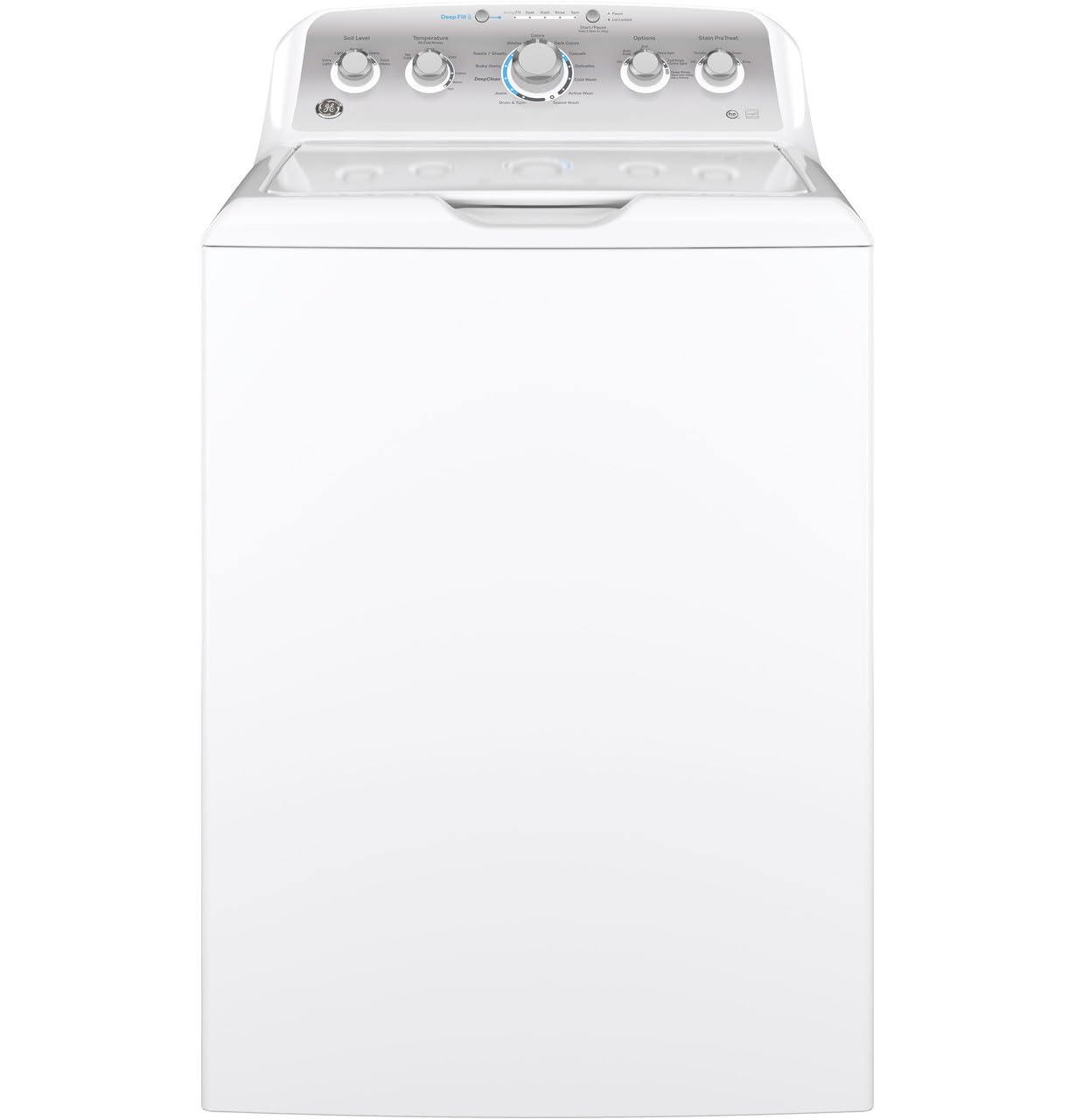
The GE GTW500ASNWS gives you a 4.6 cubic feet stainless steel tub — 4.5% more drum space than the Kenmore’s 4.4 cu. ft. That extra space matters when you stuff in a bulky winter coat. But the dual-action agitator (a single post that rotates and has fins on two levels) is less aggressive than the Kenmore’s triple-action design, so heavily soiled loads may need a second pass or pre-treatment.
The stainless steel tub will not chip, rust, or snag your clothing, and the dedicated 2nd rinse option flushes out every trace of detergent and bleach — a lifesaver for households with sensitive skin. At 27 inches deep, it is 3 inches shallower than the Kenmore, making it a better fit for tighter laundry closets.
If you want a simple, no-app washer with a robust tub and have a medium-sized family that does not deal with extreme mud or grass stains every day, this GE is the smarter buy over the Kenmore. However, one buyer mentioned a hot water valve failure after a month, and another noted the lid-lock knob feels fragile, so consider an extended warranty for peace of mind. Skip this if you need a fabric softener dispenser — it does not include one.
Where it shines
- Stainless steel tub resists rust and won’t snag delicate fabrics like lace or silk
- 2nd rinse cycle is perfect for families with babies or anyone sensitive to detergent residue
- At 27 inches deep it fits tighter laundry spaces better than deeper top-loaders
Worth noting
- No fabric softener dispenser included — you will need a downy ball or add it manually
- Owners mention mixed reliability with the hot water valve and locking mechanism over time
3. GE PROFILE 28 Inch Smart Front Load Washer GFW550SSNWW

If you want to start a load from your office desk and never worry about mildew smell, the GE PROFILE GFW550SSNWW front-loader is the match for you. Its 4.8 cubic feet drum is the biggest in this lineup — it swallows a king-sized comforter with room to spare, giving you 0.4 cu. ft. more than the next-largest top-loader here.
The UltraFresh Vent System with OdorBlock automatically tumbles the drum with the door slightly ajar after every cycle, eliminating the moisture that causes musty odors in front-loaders. For time-crunched mornings, the Quick Wash cycle finishes a lightly soiled load in 20 minutes, while Time Saver Mode delivers a deep clean in 35 minutes. Built-in WiFi via the SmartHQ app lets you start, stop, and receive cycle alerts from anywhere.
Real buyers warn that you must remove the four transport bolts from the back before first use — skip this and the machine will shake violently. Also, full spin cycles take noticeably longer than top-loaders, and the 54.5-inch depth with the door open requires leaving substantial clearance in front. Despite that, its combination of capacity, smart features, and anti-mold design makes it the premium choice for tech-savvy households. The UltraFresh Vent System with OdorBlock is the only one in this guide that actively prevents mold without requiring you to leave the door open.
What stands out
- UltraFresh Vent System (a fan that dries the drum after each cycle) prevents mildew smell
- 4.8 cu. ft. is the biggest drum here, swallowing king-sized comforters with room to spare
- SmartHQ WiFi integration lets you start, stop, and monitor cycles from your phone
The trade-offs
- Transport bolts MUST be removed before first use or the machine will shake violently and may break
- At 54.5 inches deep with the door open, you need substantial clearance in front of the washer
4. Kenmore 4.5 cu. ft. Front Load Washer with Steam Treatment

The single number that matters most in this category is 4.5 cubic feet — this Kenmore sits a half-step below the GE Profile’s 4.8 cu. ft. capacity but still handles most loads. If you have kids who come home with grass stains, grease spots, or marker marks, the Steam Treat option on this Kenmore front-loader injects steam directly into the drum to loosen embedded dirt before the wash starts — something no top-loader on this list can do.
The downside: front-loaders take longer — the Express Wash runs 25 minutes, but normal cycles often exceed an hour — and the dark door window makes it impossible to see your clothes tumbling, which one reviewer disliked. On the plus side, buyers consistently call this machine a “work horse” that cleans stained coats spotless and runs remarkably quiet, even installed near living areas.
At a mid-range price, this Kenmore delivers 12 wash cycles including Kids Wear, Whites, Delicates, and a Sani Rinse that reaches hospital-level sanitation temperatures (the brand states it kills 99.9% of bacteria). If steam cleaning and fabric-specific cycles matter more than absolute drum size, this washer offers better stain-fighting value than the GE Profile for less money. Skip this if you prefer faster top-loader cycles — expect normal loads to take over an hour.
The upsides
- Steam Treat option loosens tough stains like grass, grease, and blood without pre-scrubbing
- 12 wash cycles including Kids Wear and Sani Rinse cover every fabric type you own
- Energy Star certified and uses up to 90% less energy on Cold Clean vs normal warm cycles
Keep in mind
- Normal cycles run longer than top-loaders — budget over an hour for a full wash
- Dark window makes it hard to see inside, and a few units arrived with shipping damage
5. BLACK+DECKER 4.1 Cu. Ft. Top Loading Washing Machine BTLW41MW

At this lower price you get a 4.1 cu. ft. stainless steel tub with an agitator, an LED display, and a 24-hour delay start — all packed into the most compact machine here at 26.93 inches deep and 25.75 inches wide. It is the only one that slides into a standard 27-inch-wide laundry closet without sticking out.
What you give up is setup nuance: multiple buyers warn the drain hose must be elevated to roughly 34 inches or the machine will auto-siphon water out mid-cycle, and the weight-based water detection can be finicky about load size. One owner reported an E1 error (a drain issue) after just a few uses, though others say once you master the quirks, the spin cycle leaves clothes dry enough to air-dry in about 24 hours.
This pick is perfect for renters, apartment dwellers, or anyone squeezing a full-size washer into a tight space where a 30-inch-deep machine won’t fit.
Why we’d pick it
- At 26.93 inches deep it is the most compact full-size washer — fits in tight closets and alcoves
- 24-hour delay start lets you schedule laundry to finish exactly when you get home
- Powerful spin cycle extracts enough water that clothes air-dry in roughly 24 hours
A few caveats
- Drain hose MUST be elevated to about 34 inches or water will siphon out before the cycle ends
- Some customers note an E1 error (drain pump issue) after a few months of use
Understanding the Specs
Capacity (Cubic Feet)
The drum volume, measured in cubic feet, tells you how much laundry fits in one load. A 4.8 cu. ft. drum holds a king-sized comforter plus sheets; a 4.1 cu. ft. drum fits a queen comforter but will struggle with bulky winter blankets. For a family of three or more, 4.4 cu. ft. is the practical minimum so you aren’t running two loads for one bed.
Agitator vs Impeller
An agitator is the tall plastic post in the center of a top-loader that physically rotates and pushes clothes through the water — it is aggressive and excellent for heavy soil. An impeller is a low-profile disc at the bottom that creates a gentle, friction-based wash motion — it is gentler on fabrics but can leave heavily stained items partially clean. If your household deals with mud, grass, or work stains, you want an agitator.
Steam Treatment
Some front-load washers inject steam into the drum before or during the wash cycle to loosen dried-on stains like spaghetti sauce or chocolate. Steam penetrates fabric fibers more effectively than water alone, so you can skip pre-soaking or stain sticks for most common stains. It adds about 10–15 minutes to the cycle but saves you manual scrubbing time.
Soft-Close Lid
A soft-close lid uses a dampened hinge mechanism that slows the lid as it closes, preventing it from slamming shut. This is valuable in homes where laundry is done during early mornings or late nights — one person in the kitchen won’t wake up the whole floor. It also reduces wear on the hinge over the machine’s lifespan.
FAQ
What size washing machine do I need for a family of four?
Is a front loader or top loader more reliable for an American washing machine?
How do I prevent my washing machine from smelling musty?
Final Thoughts: The Verdict
The american washing machine that covers the most ground is the Kenmore 4.4 cu. ft. Top Load Washer because it combines the strongest physical stain-fighting action (Triple Action Agitator) with a large drum and an energy-saving Cold Clean mode at a sensible price. If you want the largest capacity and smart-home control, the GE PROFILE 4.8 cu. ft. Front Load Washer is worth the premium for its WiFi connectivity and anti-mold vent. And for a tight laundry closet that cannot fit a 30-inch machine, the BLACK+DECKER 4.1 cu. ft. Top Load Washer wins on compact footprint and scheduling flexibility.