
Our readers keep the lights on and my morning glass full of iced black tea. As an Amazon Associate, I earn from qualifying purchases.
You need tires that won’t wobble under load or leave you stranded on the shoulder — and car tires just aren’t built for that. This guide compares six of the strongest 13-inch trailer tires, so you match the right ply rating and load capacity to your trailer’s weight and the speeds you travel. Every pick here has a real strength for a specific towing job, and a real trade-off you should know about before you buy.
I’m Min — the founder and writer behind Gadgets Feed. This guide is built by comparing the manufacturers’ published specifications and the patterns across verified customer reviews, so you get each pick’s real strengths and trade-offs instead of marketing spin.
You pull a boat, a utility trailer, or a camper — and picking the best 13 inch trailer tires means matching the right ply rating and load capacity to the weight you haul every trip.
Quick Picks
- Free Country Premium Trailer Tires ST175/80R13 8-Ply Load Range D 97N w/Scuff Guard, Set 2 — Best Overall
- ROCKMAN Trailer Tire ST175/80R13 8-Ply Load Range D 97M Steel Belted Radial 11169, Set2 — Best Tread Life
- Set of 2 (TWO) Transeagle ST Radial II Premium Trailer Radial Tires-ST175/80R13 175/80/13 175/80-13 97/93L Load Range D LRD 8-Ply BSW Black Side Wall — Premium Set
- Kenda K550 ST175/80D13 Loadstar Trailer Tire Bias-Ply Tire for Superior Towing Performance with Enhanced Stability for Utility Trailers, Cargo Trailers, and Boats — Premium Bias-Ply
- Suntek HD Trail 2 Semi Steel Premium Trailer Radial Tire-ST175/80R13 175/80/13 175/80-13 97/93M Load Range D LRD 8-Ply BSW Black Side Wall — Mid-Range Radial
- Roundrule ST Hikee Semi Steel Premium Trailer Radial Tire-ST175/80R13 175/80/13 175/80-13 91/87L Load Range C LRC 6-Ply BSW Black Side Wall — Budget Champ
How To Choose The Best 13 Inch Trailer Tires
Picking the right 13-inch tire isn’t about brand loyalty — it’s about matching three key numbers to your trailer’s weight and the speeds you’ll travel. Skip any one, and you risk poor handling or a dangerous blowout.
Ply Rating & Load Range: The Real Strength of the Tire
Ply rating (the number of rubber-coated layers inside the tire casing) determines how much weight the tire can carry at its maximum air pressure. A Load Range C 6-ply tire is fine for lighter utility trailers, but if you’re hauling a boat or camper near 3,000 pounds, a Load Range D 8-ply tire gives you a much bigger safety margin. Each tire’s load index — the two-digit number on the sidewall — translates directly into a max weight in pounds.
Radial vs. Bias-Ply: How the Tire Handles at Highway Speed
Radial tires have steel belts running across the tread, which keeps the footprint flatter on the road — meaning less sway and longer tread life at highway speeds. Bias-ply tires have crisscrossed layers that make them stiffer side-to-side, so they tend to wobble more at speed but can be tougher against sharp curb strikes. For any trip that regularly hits 55 mph or above, radial construction is the safer choice.
Tread Depth & Scuff Protection
Deeper tread (anything at 7 millimeters or above) gives you more miles before replacement, but on a trailer tire the real enemy is sidewall damage from rubbing against curbs or debris. Some premium tires add a raised rubber ring called a scuff guard that protects both the tire sidewall and the rim edge from scrapes. It’s a small feature that can save you from buying a new tire after one tight turn in a parking lot.
Speed Rating: How Fast You Can Safely Roll
Every trailer tire has a speed letter stamped on the sidewall — L (75 mph), M (81 mph), or N (88 mph). If you regularly tow at 65 mph on the interstate, a tire with an M or N rating gives you a solid safety buffer so overheating at sustained speeds doesn’t become a risk.
Quick Comparison
On smaller screens, swipe sideways to see the full table.
| Model | Best For | Load Capacity (lbs) | Ply / Load Range | Max Pressure (PSI) | Amazon |
|---|---|---|---|---|---|
| Free Country Premium Trailer Tires | Best Overall Highway | 1,610 | 8-Ply / Load Range D | 65 | $114.99Amazon |
| ROCKMAN ST175/80R13 Set2 | Best Tread Life | — | 8-Ply / Load Range D | — | $106.69Amazon |
| Transeagle ST Radial II | Premium Set of Two | 1,609 | 8-Ply / Load Range D | — | $112.93Amazon |
| Kenda K550 Loadstar | Bias-Ply Stability | 1,710 | Bias / Load Range D | 50 | from $98.99Amazon |
| Suntek HD Trail 2 | Mid-Range Radial | 1,609 | 8-Ply / Load Range D | 65 | $49.93Amazon |
| Roundrule ST Hikee | Budget 6-Ply | 1,356 | 6-Ply / Load Range C | 51 | $48.93Amazon |
In‑Depth Reviews
1. Free Country Premium Trailer Tires ST175/80R13 8-Ply Load Range D 97N w/Scuff Guard, Set 2

The 8-ply highway tire that defends your rims with an extra rubber ring.
This tire gives you a huge safety margin from its 65 PSI max pressure — 30% more than the Kenda K550 bias-ply tire, which maxes out at 50 PSI — so you can run a heavier load without overheating at highway speeds. The nylon cap ply overlay across the entire tread area (instead of just the shoulders) is an extra layer of blowout protection that most budget tires skip. The Scuff Guard ring on the sidewall takes the scrape when you rub a curb or concrete pylon, saving the tire body and the rim. Buyers report this tire handles 2,000-pound loads across multiple 300-500 mile trips on a Lund Tyee 16.5′ boat trailer without any uneven wear. At 25 inches in diameter, it’s nearly double the 13.04-inch diameter of the Kenda bias-ply tire, so it offers a taller rolling radius that can help with ground clearance.
Why it’s great
- Speed rating N handles sustained 88 mph towing
- Full cap ply overlay across entire tread — rare at this level
- Scuff Guard protects sidewall during tight maneuvers
Good to know
- Shipped shrink-wrapped flat; may need a ratchet strap to seat beads
- At 35 pounds per set, you’ll need a helper to lift into place
Best for: Boat and camper owners who regularly tow at highway speeds and want rim protection.
Skip if: You only haul light loads under 1,000 pounds — the extra ply rating and weight are overkill for a small utility trailer.
2. ROCKMAN Trailer Tire ST175/80R13 8-Ply Load Range D 97M Steel Belted Radial 11169, Set2
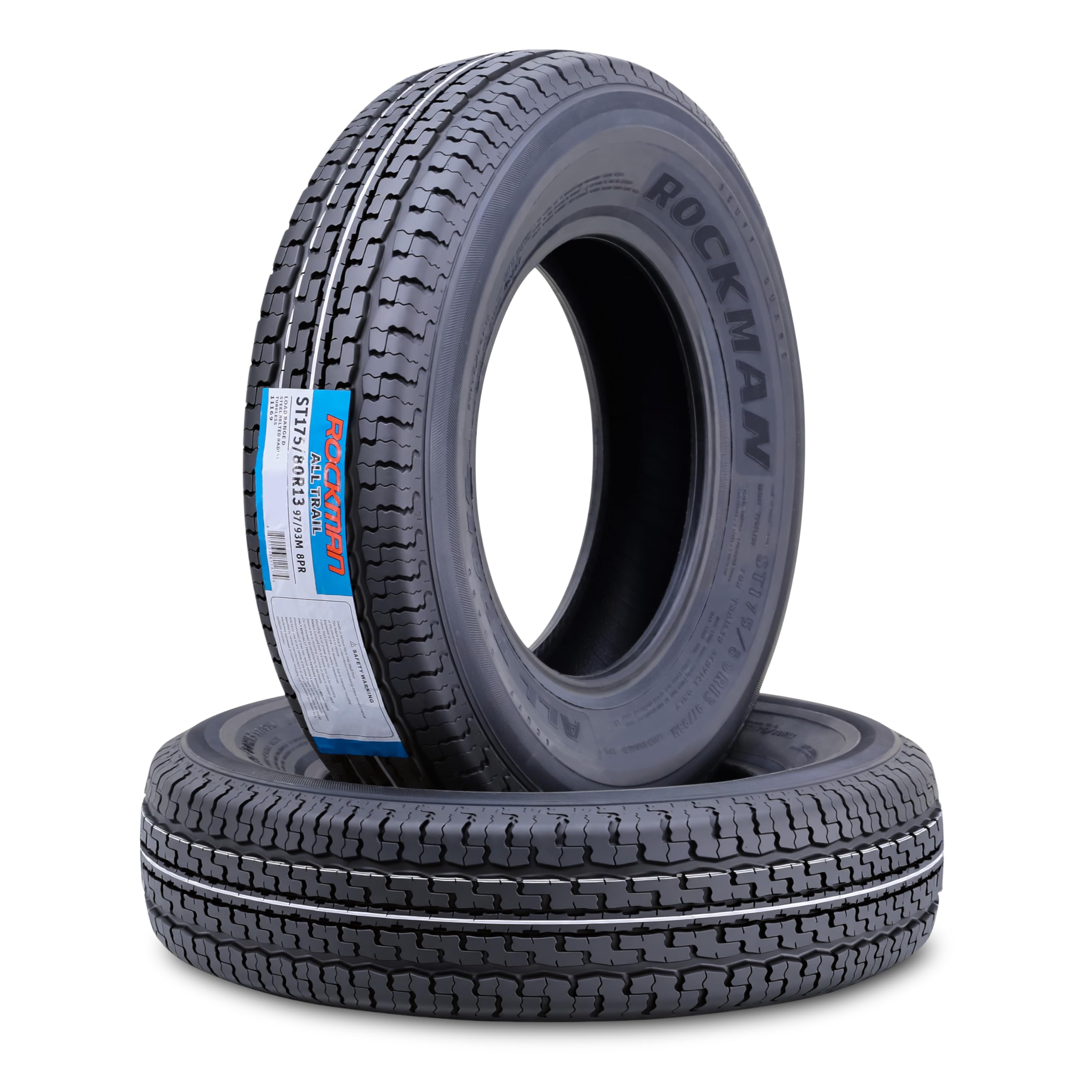
Deepest tread in the lineup designed to outlast cheap rival tires by miles.
The ROCKMAN delivers 7 millimeters of tread depth — noticeably deeper than the typical 5.6 mm you’d find on entry-level trailer tires — which means more seasons of towing before the tread bars show. The nylon cap ply overlay runs across the entire tread area, not just the shoulders — the same critical safety feature you get on the Free Country pick above. Owners mention these mount easily, hold pressure perfectly, and show good tread wear after 1,000 miles of highway towing at 60 mph with a travel trailer. At 35 pounds for a set of two, they match the Free Country on weight but come with a speed rating of M (81 mph) instead of the faster N rating. If you never push past 75 mph, the ratio of tread depth to price is hard to beat.
Why it’s great
- 7 mm tread depth — longest-lasting rubber in this guide
- DOT-certified steel-belted radial construction
- Full cap ply overlay adds heat and blowout resistance
Good to know
- Max speed rating is 81 mph vs 88 mph on Free Country
- No factory scuff guard ring on the sidewall
Best for: Owners who want maximum miles per dollar on a medium-duty trailer.
Skip if: You regularly tow at 80 mph or above — the M rating (81 mph) leaves no safety margin at top speed.
3. Set of 2 (TWO) Transeagle ST Radial II Premium Trailer Radial Tires-ST175/80R13 175/80/13 175/80-13 97/93L Load Range D LRD 8-Ply BSW Black Side Wall
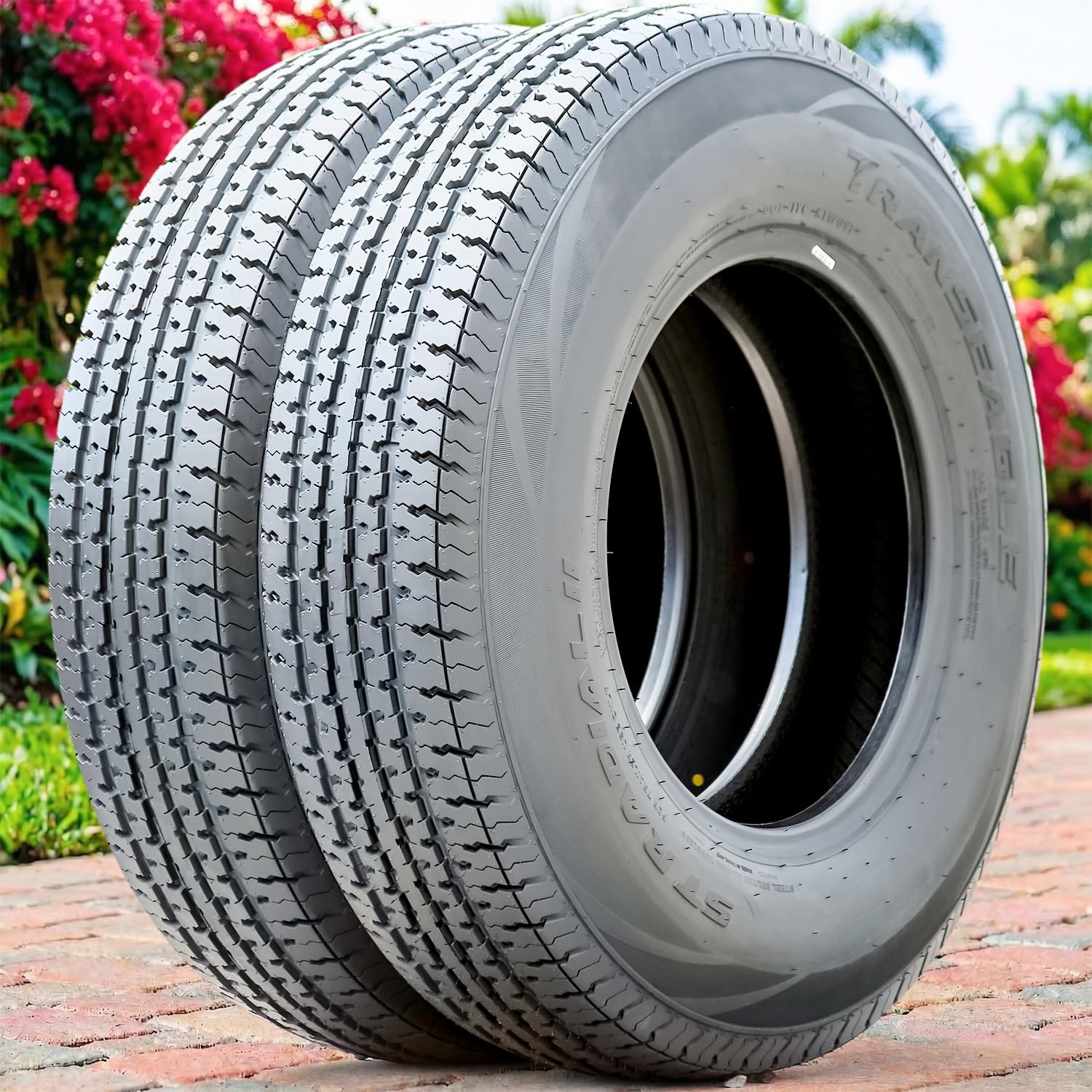
Heavy 36-pound radial with a massive 1609-pound load floor per tire.
The Transeagle ST Radial II is the heavyweight of this list — a set of two tips the scales at 36 pounds, more than double the 16-pound weight of the Roundrule ST Hikee — and that bulk comes from the 8-ply Load Range D construction, which gives each tire a 1,609-pound load capacity. If your trailer often sits near its max GVWR, that extra tire structure means less flex and less heat buildup at highway speeds. Customers note these tires perform flawlessly on boat trailers and smaller campers, arriving fast and mounting without complaint. The catch is obvious: at 36 pounds per set, you’re carrying significantly more rotating mass than lighter options, which will slightly impact your tow vehicle’s fuel economy.
Why it’s great
- Heavy-duty radial casing built for sustained highway runs
- Dependable 1,609-pound load capacity per tire
- Arrives earlier than expected in most buyer reports
Good to know
- No cap ply or scuff guard — basic sidewall protection
- At 36 pounds, noticeably heavier than competitors like the Suntek HD Trail 2
Best for: Anyone who wants a no-surprises Load Range D radial with verified buyer satisfaction.
Skip if: You’re looking for extra sidewall protection features or a faster speed rating than L (75 mph).
4. Kenda K550 ST175/80D13 Loadstar Trailer Tire Bias-Ply Tire for Superior Towing Performance with Enhanced Stability for Utility Trailers, Cargo Trailers, and Boats

Highest single-tire load rating in the group at 1,710 pounds.
The Kenda K550 Loadstar uses a bias-ply design — crisscrossed layers of rubber and polyester cord — that makes it stiffer side-to-side than a radial. This matters most if your trailer tends to sway at speed or if you often tow on rough roads. The flatter contact patch is designed to reduce trailer sway at highway speeds, which some buyers find gives them more confidence than they get from a radial. Where this tire stands out is load: 1,710 pounds per tire is 354 pounds more capacity than the Roundrule ST Hikee (1,356 pounds), a 26% advantage. That means two Kendas can support up to 3,420 pounds total — enough for a heavier boat or loaded utility trailer. Reviewers point out these are “durable tires for yard cart” and easy to hand-mount using soapy water without needing inner tubes. The downside is the bias-ply design: it tends to ride stiffer and build more heat on long highway stretches compared to a radial like the Free Country. Also, at 13.04 inches in diameter, it is significantly smaller than the Free Country’s 25 inches, so it sits lower.
Why it’s great
- Highest load capacity (1,710 lbs) among the 13-inch options here
- Bias-ply construction helps reduce trailer sway at highway speed
- Includes a free Kenda keychain — a small but appreciated extra
Good to know
- Bias-ply runs hotter on long trips vs radial designs
- Only 50 PSI max pressure — less air volume than D-rated competitors
- Some shoppers say tires shipped flat and needed a strap to seat beads
Best for: Heavy loads where maximum carrying capacity per tire outweighs long-distance heat management.
Skip if: Most of your driving is 100+ mile highway trips — a radial tire will run cooler and last longer at speed.
5. Suntek HD Trail 2 Semi Steel Premium Trailer Radial Tire-ST175/80R13 175/80/13 175/80-13 97/93M Load Range D LRD 8-Ply BSW Black Side Wall
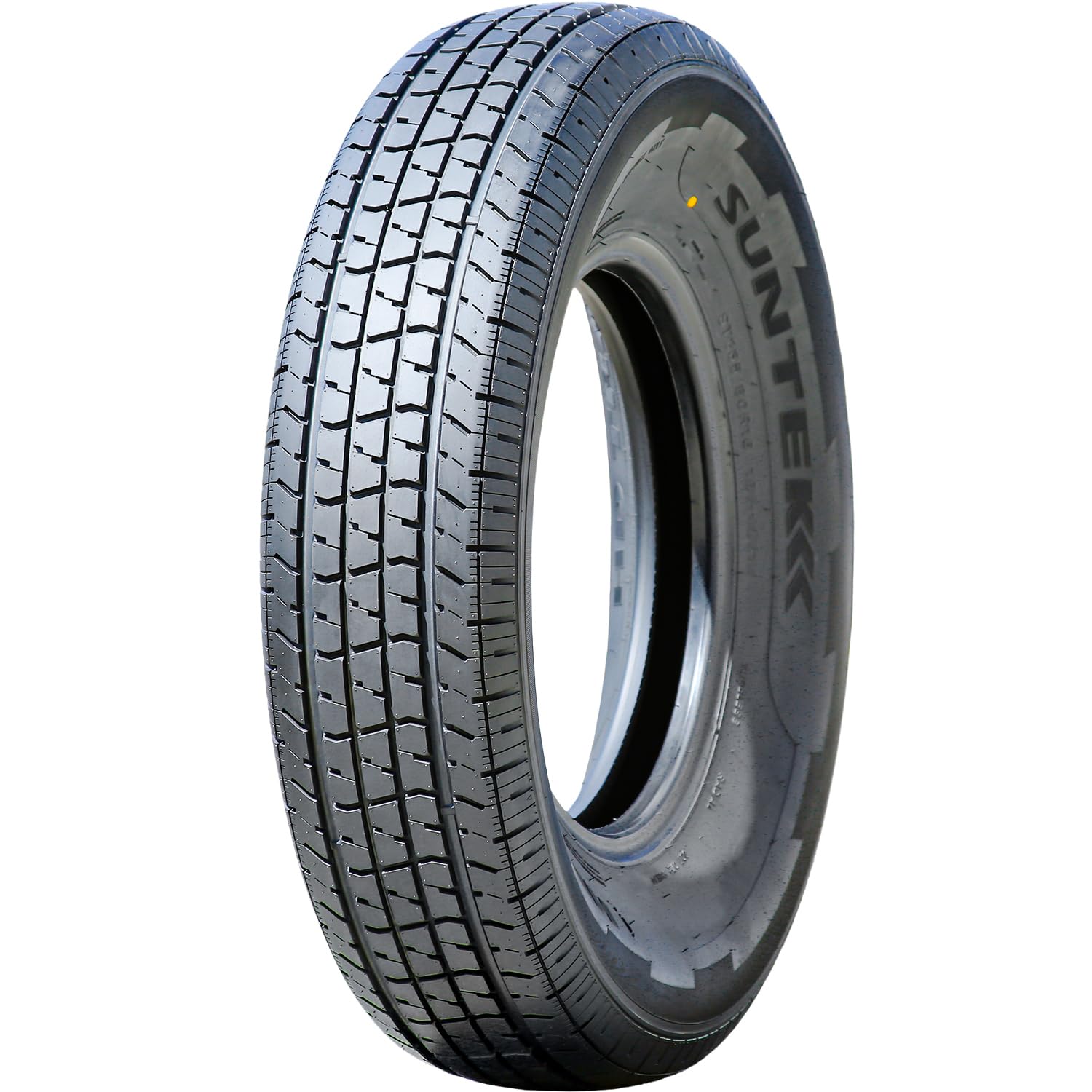
A solid 8-ply radial that punches at 65 PSI without the heavier price tag.
The Suntek HD Trail 2 matches the Free Country on maximum inflation pressure (65 PSI) and load capacity (1,609 pounds), but comes in at 19 pounds per tire — noticeably lighter than the Transeagle and Free Country sets. That lower weight means less rotational mass for your tow vehicle and easier handling when you’re mounting them. As a Load Range D 8-ply tire, it is built for highway towing. Buyers report fast shipping and tires that look excellent out of the box. The trade-off is the lack of standout extra features — there’s no cap ply overlay, no scuff guard ring, and no special tread depth claim. It’s a straightforward, well-built radial that gets the job done at a balanced price point, but it lacks the extra protection layers of the premium picks above.
Why it’s great
- 65 PSI max pressure matches premium-tier tires for heavy loads
- 8-ply Load Range D rated for upto 1,609 lbs per tire
- 19 lb weight — easier to mount than heavier competitors
Good to know
- No cap ply overlay across the tread area
- No scuff guard sidewall protection
Best for: Budget-minded buyers who still need a genuine 8-ply Load Range D radial for highway towing.
Skip if: You want extra peace-of-mind features like a cap ply overlay or scuff guard — those only come on the Free Country or ROCKMAN.
6. Roundrule ST Hikee Semi Steel Premium Trailer Radial Tire-ST175/80R13 175/80/13 175/80-13 91/87L Load Range C LRC 6-Ply BSW Black Side Wall
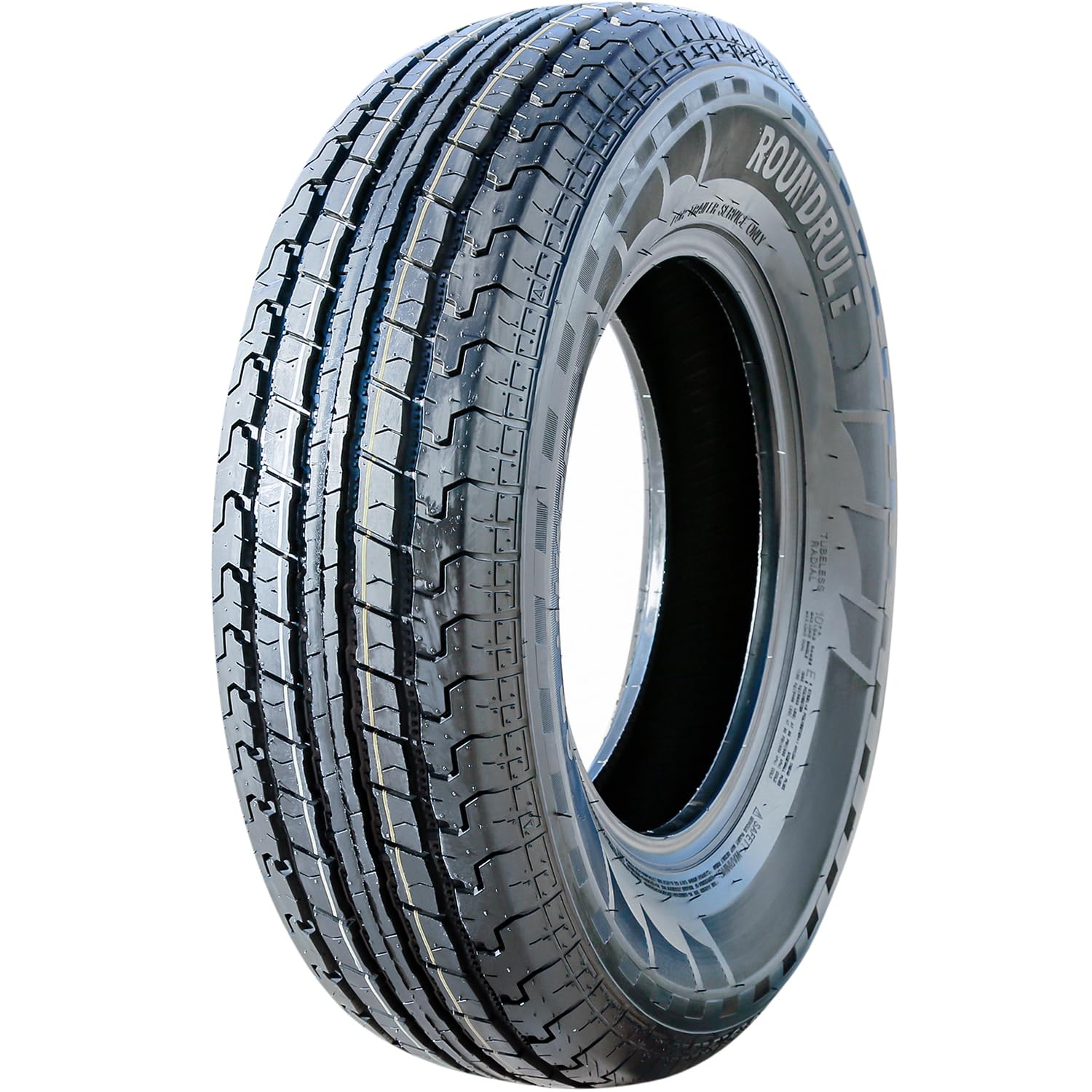
A 16-pound radial that’s light on the wallet and light on the trailer.
The Roundrule ST Hikee is the lightest tire in this guide at 16 pounds — more than 2.2 times lighter than the 36-pound Transeagle set — making it incredibly easy to handle during mounting and swaps. The Load Range C 6-ply construction is perfectly adequate for lighter utility trailers, small boat trailers, and camper frames that don’t push the weight limits. The maximum pressure of 51 PSI is lower than the 8-ply competitors, which is normal for this load range. Owners mention this tire “supports 3,800+ lbs” on sets of four and passes a 40-mile test ride with no bounce after balancing. One reviewer noted: “After mounting all 4 on my camper I took my camper for a 40 mile test ride.” The 1,356-pound load capacity per tire is the lowest in this guide — a critical fact: if your trailer’s gross weight per tire exceeds that number, you need at least a Load Range C tire with a higher load index, or step up to a Load Range D.
Why it’s great
- Only 16 lbs — easiest tire to lift and mount in this guide
- Radial construction for stable highway ride
- Great budget option for light loads and short trips
Good to know
- Lowest load capacity at 1,356 lbs per tire
- Load Range C means less margin for heavy cargo than an 8-ply tire
Best for: Light-duty trailers, small campers, and dump-run utility trailers that stay under 2,700 lbs total.
Skip if: You’re regularly hauling more than 2,700 lbs total or towing long highway miles — step up to a Load Range D.
Understanding the Specs
Load Range & Ply Rating
This is the tire’s toughness rating. “Load Range C” means 6 plies (layers) of rubber inside the casing, while “Load Range D” means 8 plies. More plies let you run higher air pressure — 65 PSI vs 50 PSI — which supports more weight and reduces heat buildup. If your trailer’s gross vehicle weight rating (GVWR) is over 3,000 pounds, go straight to an 8-ply Load Range D tire to keep a safety margin.
Radial vs. Bias-Ply
Radial tires have steel belts that run perpendicular to the tread direction, which keeps the tire footprint flat on the road for less rolling resistance and longer tread life at highway speeds. Bias-ply tires have layers running diagonally, making them stiffer against sidewall damage but more prone to sway and heat at speed. For any highway towing, a radial is the safer bet; for low-speed rough terrain, a bias-ply can be more resistant to punctures.
FAQ
What does ST175/80R13 mean on a trailer tire?
Is Load Range C (6-ply) good enough for a boat trailer?
Can I use car tires on my trailer instead of special trailer tires?
How much air pressure should I run in my 13-inch trailer tires?
How long do 13-inch trailer tires typically last?
Do I need to balance my trailer tires?
What is the speed rating on a trailer tire and why does it matter?
Should I buy a set of two or four tires for my trailer?
Can I mount a 13-inch trailer tire myself?
What is the difference between 6-ply and 8-ply trailer tires?
Final Thoughts: The Verdict
For most people, the 13 inch trailer tires winner is the Free Country Premium Trailer Tires because it combines an 8-ply Load Range D rating, a useful Scuff Guard sidewall protector, and the highest speed rating (N up to 88 mph) in this group. If you value maximum tread life above all else, grab the ROCKMAN ST175/80R13 with its 7 mm tread depth. And for light-duty trailers on a tighter budget, the standout is the light and capable Roundrule ST Hikee.
How We Picked
We do not accept paid placement, and we did not hands-on test every unit. Instead, we match each pick to a real buyer and use-case by comparing the manufacturers’ published specifications against the patterns in verified customer reviews — so you get each pick’s real strengths and trade-offs instead of marketing copy.
Sources & Methodology
Specifications: manufacturer listings and product documentation. Review insights: verified customer reviews, as of June 2026. Pricing: not shown on this page (it changes often); check the current price via the retailer link.
As an Amazon Associate, Gadgets Feed earns from qualifying purchases. This does not affect which products we feature.
Product prices and availability are accurate as of the date/time indicated and are subject to change. Any price and availability information displayed on Amazon at the time of purchase will apply to the purchase of this product. As an Amazon Associate I earn from qualifying purchases.
CERTAIN CONTENT THAT APPEARS ON THIS SITE COMES FROM AMAZON. THIS CONTENT IS PROVIDED "AS IS" AND IS SUBJECT TO CHANGE OR REMOVAL AT ANY TIME.
Amazon and the Amazon logo are trademarks of Amazon.com, Inc. or its affiliates.