
Our readers keep the lights on and my morning glass full of iced black tea. As an Amazon Associate, I earn from qualifying purchases.
You keep pausing your show every time a car drives past the window. That glare washes out the picture and makes you miss half the scene. An anti-glare TV uses a special screen finish that scatters light instead of bouncing it straight back at you, so you can watch in a bright room without squinting.
I’m Min — the founder and writer behind Gadgets Feed. This guide is built by comparing the manufacturers’ published specifications and the patterns across verified customer reviews, so you get each pick’s real strengths and trade-offs instead of marketing spin.
For a sunlit living room, a bright kitchen, or a home theater that doubles as a daytime den, finding the right anti glare tv protects your viewing from ambient light. The Hisense U6 Pro is the best-value pick because it hits 1100 nits of peak brightness with a glare-free screen and a 144Hz refresh rate for less than premium rivals.
Quick Picks
- Hisense 55″ U6 Pro Series Mini‑LED ULED 4K UHD HDR Gaming AI Smart Fire TV (55U6SF Pro) — Best Value
- Hisense 50″ Hi-QLED S7 CanvasTV Series 4K UHD Google Smart Art TV (50S7SG) — Art Gallery Pick
- Samsung 55-Inch Class The Frame LS03F 4K QLED Smart TV (2025 Model) — Premium Design
- Sony BRAVIA 3 II 65 Inch 4K HDR LED Smart Google TV with Gemini (K-65XR30M2, 2026 Model) — Top Performer
- SAMSUNG 65-Inch Class QLED 4K LS03D The Frame Series Quantum HDR Smart TV (QN65LS03D, 2024 Model) — Largest Art TV
- TCL 65 Inch Class QM8K Series Mini LED QLED 4K HDR (65QM8K, 2025 Model) — Bright Room Gaming
How To Choose The Best Anti Glare TV
Not every anti-glare screen works the same way. Some use a simple matte filter that softens reflections but can also dull the picture. Others pair a premium coating with very high peak brightness (measured in nits) so the image stays punchy even when light hits the screen. Here are the three things to look for.
Peak Brightness (Nits)
Brightness is your TV’s first defense against glare. A screen that can hit 1100 nits or more, like some Mini-LED models, cuts through ambient light better than a set that tops out at 400 nits. The higher the brightness, the less the reflection dominates — in a sunlit room, aim for at least 500 nits and ideally over 800.
Screen Finish: Matte vs. Anti-Reflective Coating
A true matte display has a textured surface that physically scatters light. That kills reflections but can soften the sharpness of the image. Many premium TVs use a more advanced anti-reflective coating instead — a multi-layer chemical treatment that cuts reflections without the haze. A UL-certified glare-free matte display (like the one on some Samsung models) is currently the gold standard.
Refresh Rate for Gaming and Sports
If you watch fast sports or game, a screen that refreshes at 120Hz or 144Hz keeps motion blur-free. Anti-glare TVs offer these refresh rates too, and a higher native rate (144Hz vs. 120Hz) makes a difference in competitive gaming. Just check that the TV supports Variable Refresh Rate (VRR) and Auto Low Latency Mode (ALLM) for a smooth experience.
Quick Comparison
On smaller screens, swipe sideways to see the full table.
| Model | Best For | Screen Size | Peak Brightness | Refresh Rate | Amazon |
|---|---|---|---|---|---|
| Hisense U6 Pro | Best Value | 55″ | 1100 nits | 144Hz Native | $529.99$849.99Amazon |
| Hisense CanvasTV | Art Gallery Look | 50″ | — | 60Hz | Amazon |
| Samsung The Frame 55 | Premium Design | 55″ | — | 144Hz | $897.99$1,097.99Amazon |
| Sony BRAVIA 3 II | Cinema & Gaming | 65″ | — | 120Hz | Amazon |
| Samsung The Frame 65 | Largest Art TV | 65″ | — | 60Hz | Amazon |
| TCL QM8K | Bright Room Gaming | 65″ | — | 144Hz | Amazon |
In‑Depth Reviews
1. Hisense 55″ U6 Pro Series Mini‑LED ULED 4K UHD HDR Gaming AI Smart Fire TV (55U6SF Pro)
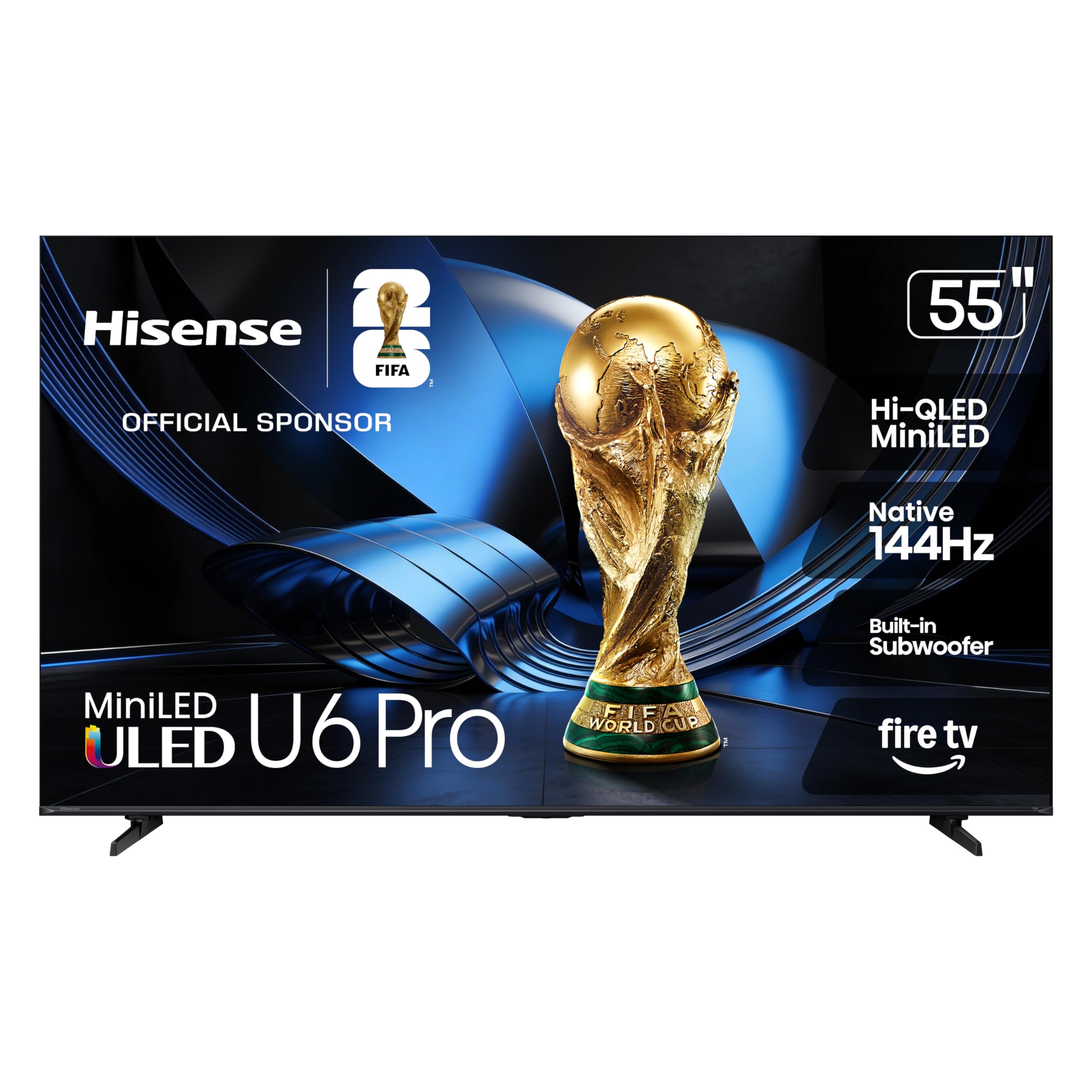
Mini-LED brightness that punches through sunlight without breaking your budget.
This Hisense delivers a glare-free picture at a value price because it pairs an anti-reflection coating with 1100 nits of peak brightness — high enough to keep details visible when light pours in from a window. The Mini-LED backlight uses hundreds of precise zones to produce deep blacks, and buyers report “OLED blacks with 600k:1 contrast.” That makes dark movie scenes watchable in daytime for a fraction of an OLED’s cost.
The native 144Hz refresh rate keeps fast sports and competitive gaming smooth without motion blur. Unlike the 60Hz Hisense CanvasTV, this set handles PlayStation 5 and Xbox Series X with ease. The built-in subwoofer adds bass for explosions and action scenes, though several owners mention the sound is good for the price but recommend a soundbar for serious listening. The catch is that budget upscaling softens lower-resolution content like 480p DVDs.
Why it’s great
- Glare-free screen keeps the picture clear in bright rooms
- Native 144Hz refresh reduces blur during gaming and sports
- Mini-LED delivers deep blacks and vibrant colors for a mid-range price
Good to know
- Upscaling for low-resolution content is only decent
- Built-in sound is fine but a soundbar improves movies and music
- Remote feels cheap compared to premium alternatives
Best for: Anyone wanting a bright-room TV with high refresh rate gaming at a compelling price.
Skip if: You watch a lot of older DVDs or standard-def content that needs strong upscaling.
2. Hisense 50″ Hi-QLED S7 CanvasTV Series 4K UHD Google Smart Art TV (50S7SG)
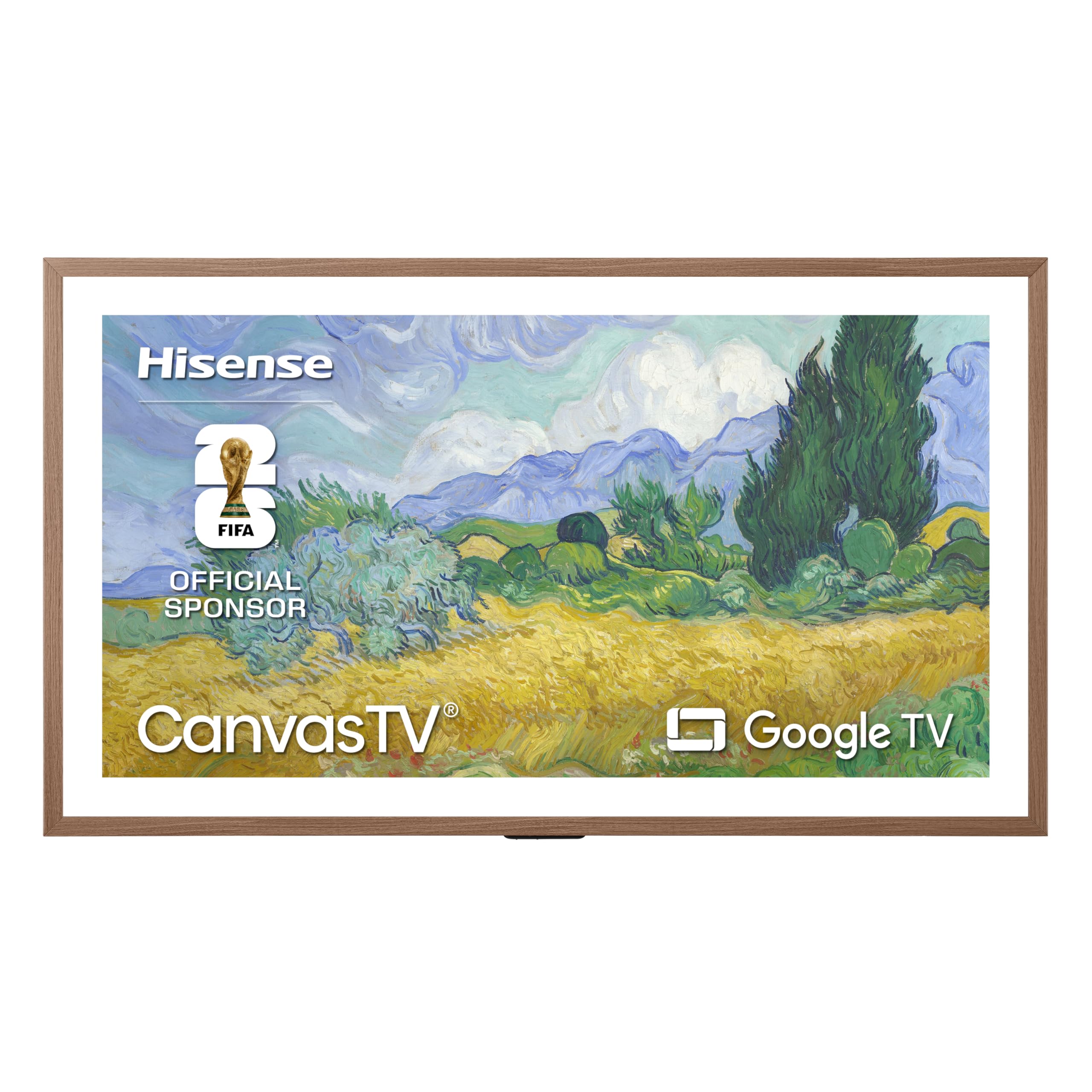
This TV hides as a painting on your wall and kills glare at the same time.
The CanvasTV exists for its Hi-Matte display, a dedicated anti-glare panel that makes the screen look like a real print when it is in Art Mode. One reviewer confirmed the “anti-glare screen works well in light,” which matters for a TV designed to hang in a bright living room or hallway. When you are not watching, it displays over 1,000 free artworks, and the included teak magnetic frame and ultra-slim flush wall mount complete the gallery look.
Picture quality is strong for the price — the 4K Hi-QLED panel delivers vibrant colors and sharp detail. At about half the cost of the Samsung The Frame models, buyers often call it excellent value. However, the 60Hz refresh rate means it is not the best for fast-paced gaming, and the built-in sound is decent but improved with a soundbar. The Wi-Fi 6 support and Google TV interface are fast and snappy.
Why it’s great
- Hi-Matte anti-glare display works well in bright rooms
- Flush wall mount and included frame make it look like real wall art
- Over 1,000 free artworks with no subscription required
Good to know
- 60Hz refresh rate limits high-frame-rate gaming
- Sound is decent but a soundbar improves the experience
- Only 50 inches — smaller than many competitors in this price range
Best for: Buyers who want a TV that doubles as art without the premium price of a Samsung Frame.
Skip if: You need a large screen for high-refresh-rate gaming or competitive esports.
3. Samsung 55-Inch Class The Frame LS03F 4K QLED Smart TV (2025 Model)

The quintessential glare-free matte screen that looks like a museum print.
Samsung’s Frame lineup is known for its virtually glare-free matte screen, which uses a subtle textured finish to make art look like a real canvas. Customers note the “impressive lack of glare with overhead lights/sun” is a standout for bright rooms. The NQ4 AI Gen2 processor uses scene recognition to optimize color, contrast, and clarity in real time. The set comes with a slim-fit wall mount and the One Connect box that hides all cables behind a single wire.
At 144Hz native, this Frame finally meets gamers’ needs with VRR support — a clear upgrade over the 60Hz Hisense CanvasTV. If you want art mode and smooth gaming, Samsung is the better fit. The downside is the premium pricing and some notable frustrations: some reviews mention forced Samsung TV Plus ads on the home screen and a paid subscription for the full Art Store library. Dark scenes also show blooming on some units, so check the return window carefully.
Why it’s great
- Glare-free matte screen makes art look like a real print
- 144Hz refresh rate supports smooth gaming and sports
- Flush mount and One Connect box keep cables completely hidden
Good to know
- Art Store requires a paid subscription for full access
- Some units show blooming in very dark scenes
- Forced Samsung TV Plus ads annoy some owners
Best for: Those who want the best-looking gallery TV with top-tier gaming support.
Skip if: You dislike being upsold ads or subscriptions on your TV home screen.
4. Sony BRAVIA 3 II 65 Inch 4K HDR LED Smart Google TV with Gemini (K-65XR30M2, 2026 Model)
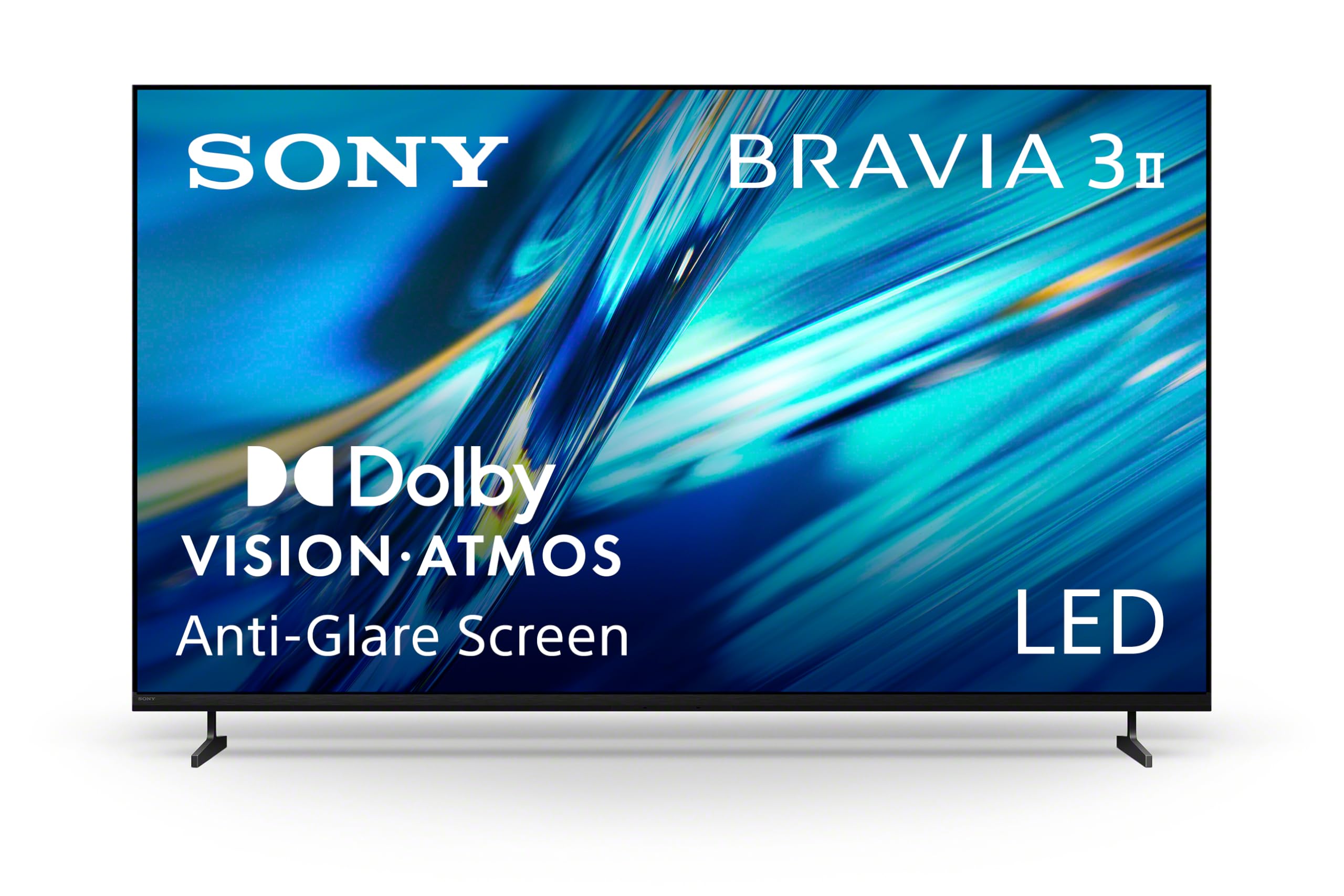
Sony’s AI brains and anti-glare screen that thinks for you.
Sony’s BRAVIA 3 II uses its XR Processor with AI scene recognition to optimize color, contrast, and clarity in every frame. The anti-glare screen cuts reflections from windows and lamps, so you watch clearly without shifting furniture. Reviewers point out the picture is “super clear and fantastic sound,” and the set includes Sony Pictures CORE — 5 free credits for new-release movies plus 12 months of classic streaming.
At 65 inches and 120Hz with HDMI 2.1, this Sony is built for cinephiles and PlayStation 5 gamers. It auto-detects a PS5 and adjusts HDR tone mapping and picture mode. Note that the anti-glare coating is available on the 65-inch and 75-inch sizes only — the 55-inch version misses out. Some shoppers say software bugs with casting and occasional Google TV stutter, so a firmware update may be needed. The viewing angles are narrower than OLED panels.
Why it’s great
- XR Processor uses AI to optimize every scene in real time
- Anti-glare screen works well in rooms with ambient light
- Perfect integration with PlayStation 5 for automatic HDR and picture settings
Good to know
- Viewing angles are narrower than OLED alternatives
- Some casting/streaming software issues reported by buyers
- Anti-glare feature only on 65-inch and 75-inch models
Best for: PS5 gamers and movie fans who want excellent picture processing in a bright room.
Skip if: You sit far off-center, as the viewing angles are tight for larger groups.
5. SAMSUNG 65-Inch Class QLED 4K LS03D The Frame Series Quantum HDR Smart TV (QN65LS03D, 2024 Model)

The bigger Frame with a UL-certified matte screen that truly kills reflections.
The 2024 LS03D Frame features a UL-certified glare-free matte display, meaning it has been independently tested to reduce reflections rather than just claim it. In a bright room, the matte finish scatters light so the screen looks like a printed poster — buyers report it “blends in beautifully” and “doesn’t even feel like a TV.” The One Connect Box keeps wires tidy, and the slim-fit wall mount leaves zero gap.
At 65 inches, this is one of the largest art-matte TVs available, and the Quantum HDR and Pantone-validated color keep artwork accurate. However, the refresh rate is 60Hz, so gamers will prefer the 144Hz LS03F 2025 Samsung model. The Art Store subscription frustrates some owners: many like the idea of rotating 2500+ artworks, but uploading your own photos is convoluted and the subscription costs extra. Some buyers use their own photos and Etsy downloads instead.
Why it’s great
- UL-certified glare-free matte display for true reflection reduction
- Largest art-matte size at 65 inches for a gallery look
- Quantum HDR and Pantone-validated color keep artwork accurate
Good to know
- 60Hz refresh rate is slower than the 2025 144Hz Frame model
- Art Store requires a paid subscription for full library access
- Uploading own photos feels convoluted to some buyers
Best for: Those who prioritize a museum-grade matte screen at a large size for art display.
Skip if: You want to game at high frame rates — the 60Hz panel will feel sluggish.
6. TCL 65 Inch Class QM8K Series Mini LED QLED 4K HDR (65QM8K, 2025 Model)
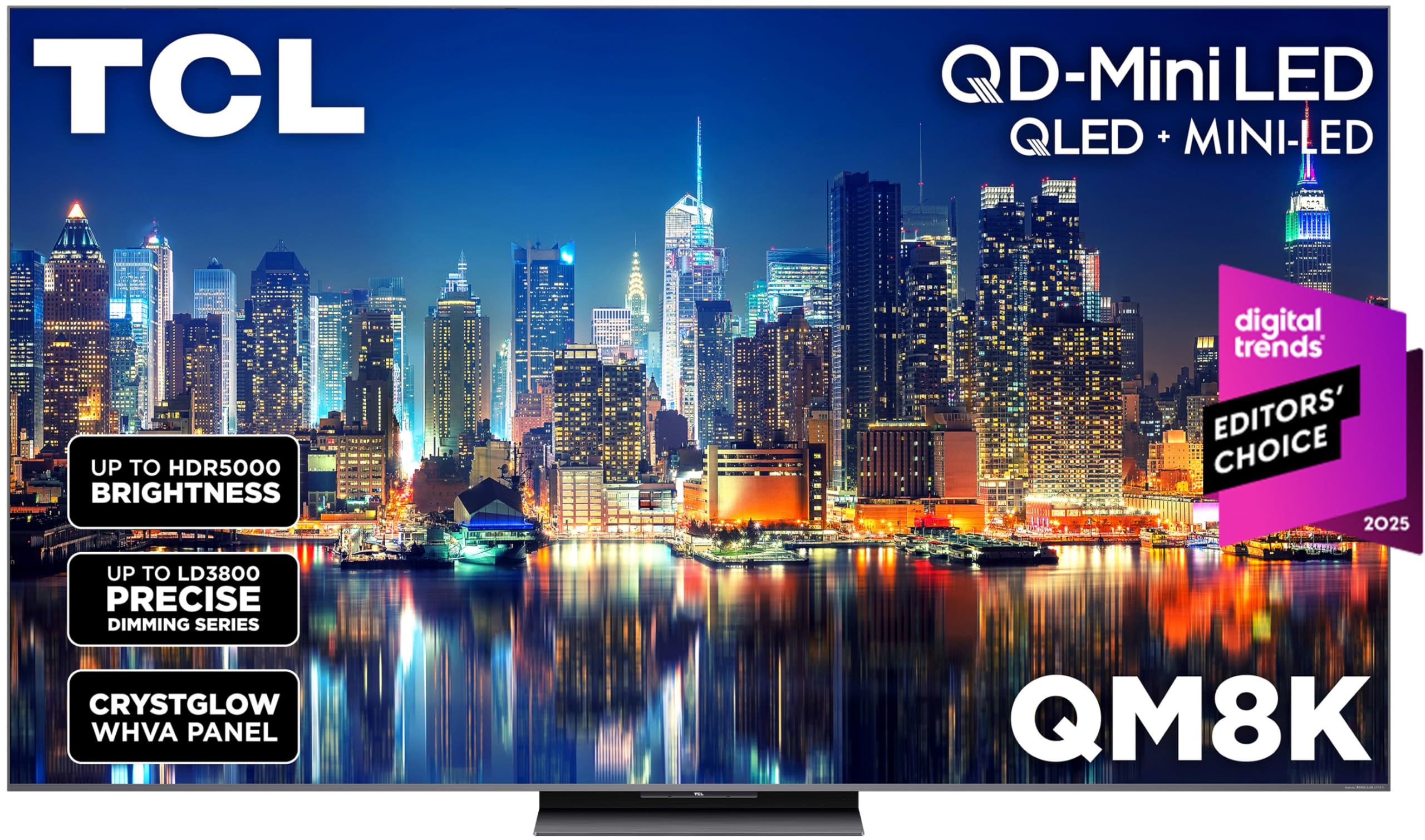
The Mini-LED beast that shrugs off glare while running 288Hz gaming.
TCL’s QM8K uses an anti-reflective wide-angle screen to keep the picture clear in bright rooms, and it backs that up with the Game Accelerator 288 — a variable refresh rate (VRR) that hits 288Hz at 1440p for competitive gaming. Owners mention it “beats mid-range OLEDs” on brightness and color, and the QD-Mini LED panel can be set at only 60% brightness to outperform other sets at maximum. That is a big advantage if your living room gets direct sunlight.
The CrystGlow HVA panel has an anti-reflective coating edge-to-edge, and the Bang & Olufsen audio delivers clear dialogue with enough bass for standard viewing. A handful of customers note Hulu sync problems, though other streaming apps run fine. The Google TV interface is responsive, and the backlit premium voice remote is a welcome upgrade. Compared to the Hisense U6 Pro, the TCL QM8K costs a bit more but offers a wider anti-reflective panel and higher peak brightness for gaming.
Why it’s great
- Anti-reflective screen cuts glare while maintaining deep blacks
- 288Hz VRR at 1440p makes it one of the best gaming TVs available
- QD-Mini LED panel achieves stunning brightness without blooming
Good to know
- Some streaming apps like Hulu have reported sync issues
- Sound is good but lacks deep bass — a soundbar helps
- Premium price reflects its top-tier gaming specs
Best for: Competitive gamers who want a bright-room TV that handles 288Hz VRR without lag.
Skip if: You mainly stream via Hulu — some users find the app buggy on this model.
Understanding the Specs
Peak Brightness (Nits)
This is the TV’s maximum luminance, measured in nits. A higher number means the screen can shine through sunlight or overhead light better. For an anti-glare TV, look for at least 500 nits to keep detail visible in daytime. The Hisense U6 Pro hits 1100 nits, which is excellent for mid-range. A TV with 400 nits or less will struggle in a bright room.
Refresh Rate (Hz)
Refresh rate measures how many times per second the screen updates the image. Standard TVs run at 60Hz, which is fine for movies and casual viewing. For sports or gaming, 120Hz or 144Hz (native) keeps motion smooth. The Game Accelerator 288 on the TCL QM8K is a variable refresh rate that hits 288Hz at 1440p, meaning it adapts the rate to match your game’s frame output for stutter-free play.
FAQ
Is an anti-glare TV the same as a matte screen?
Does an anti-glare TV make the picture look dull?
Can I use an anti-glare TV in a sunroom or kitchen?
Do anti-glare TVs work for gaming?
Is an anti-glare screen better for watching movies at night?
Does a higher refresh rate reduce glare?
Are anti-glare TVs more expensive than regular TVs?
How do I clean an anti-glare TV screen without damaging it?
Can I make my existing TV anti-glare with a screen protector?
Does the anti-glare feature matter for a TV mounted on a wall?
Final Thoughts: The Verdict
For most buyers, the anti glare tv winner is the Hisense U6 Pro because it offers a glare-free screen, 1100 nits peak brightness, a native 144Hz refresh rate, and Mini-LED contrast at a mid-range price that beats competitors in value. If you want a TV that doubles as art, grab the Hisense CanvasTV for its Hi-Matte anti-glare display at half the price of Samsung’s Frame. And for bright-room gaming, the standout is the TCL QM8K with its 288Hz VRR and QD-Mini LED panel that cuts through sunlight.
How We Picked
We do not accept paid placement, and we did not hands-on test every unit. Instead, we match each pick to a real buyer and use-case by comparing the manufacturers’ published specifications against the patterns in verified customer reviews — so you get each pick’s real strengths and trade-offs instead of marketing copy.
Sources & Methodology
Specifications: manufacturer listings and product documentation. Review insights: verified customer reviews, as of June 2026. Pricing: not shown on this page (it changes often); check the current price via the retailer link.
As an Amazon Associate, Gadgets Feed earns from qualifying purchases. This does not affect which products we feature.
Product prices and availability are accurate as of the date/time indicated and are subject to change. Any price and availability information displayed on Amazon at the time of purchase will apply to the purchase of this product. As an Amazon Associate I earn from qualifying purchases.
CERTAIN CONTENT THAT APPEARS ON THIS SITE COMES FROM AMAZON. THIS CONTENT IS PROVIDED "AS IS" AND IS SUBJECT TO CHANGE OR REMOVAL AT ANY TIME.
Amazon and the Amazon logo are trademarks of Amazon.com, Inc. or its affiliates.