
Our readers keep the lights on and my morning glass full of iced black tea. As an Amazon Associate, I earn from qualifying purchases.
You are paddling out, the set arrives, and your camera fogs up — that is a lost wave you cannot get back. A camera for surfing needs to be waterproof without a case, have electronic stabilization (a system that smooths out jittery motion) to tame the ocean chop, and keep a wide enough lens to catch both your board and the wave face. This guide compares four action cameras that fit that brief, looking at their waterproof depth, sensor size (the part that captures light), image stabilization type, and battery life so you can pick the right one for your next session.
I’m Min — the founder and writer behind Gadgets Feed. This guide is built by comparing the manufacturers’ published specifications and the patterns across verified customer reviews, so you get each pick’s real strengths and trade-offs instead of marketing spin.
From a dawn patrol to a reef pass, the right camera for surfing must handle immersion, vibration, and changing light without missing a moment of the ride.
Quick Picks
- DJI Osmo Action 6 Enhanced Combo — Top Performer
- DJI Osmo Action 5 Pro Bundle — Best Value
- Insta360 X5 Essentials Bundle — 360° Pick
- Xtra Edge Standard Bundle — Budget Champion
How To Choose The Best Camera For Surfing
Picking a camera to take into the ocean means ignoring the flashy specs that do not matter under a wave and focusing on three things: decent waterproof depth without a housing, stabilization that handles the unpredictable chop, and a battery that lasts a long session. Here is what to look for.
Waterproof Depth
The single most important number for a surfer is how deep the camera can go without an external case. A camera rated to 33 feet (10 meters) or more is the baseline — anything shallower and you risk water damage from a splash or a tumble. The DJI Osmo Action 5 Pro and the DJI Osmo Action 6 both go to 20 meters (about 65 feet) without a housing, way past the depth most surfers ever see. The Insta360 X5 is waterproof to 49 feet (15 meters), enough for wipeouts and duck dives. All four picks here meet the 30-foot minimum.
Stabilization
You are bobbing in the lineup, paddling hard, and then popping up — your camera sees all that vibration. Electronic stabilization (sometimes called HyperSmooth, RockSteady, or FlowState) is what turns that shaky mess into a smooth ride. The best systems — HorizonSteady on the DJI models and FlowState on the Insta360 — even keep the horizon level when you are rotating mid-wave, so your footage does not look like a tilt-a-whirl.
Sensor Size and Low Light
A bigger sensor collects more light, which matters at dawn, dusk, or on overcast days. The DJI Osmo Action 6 uses a 1/1.1-inch square sensor, while the Xtra Edge and DJI Osmo Action 5 Pro use a 1/1.3-inch sensor. The Insta360 X5 uses dual 1/1.28-inch sensors for its 360-degree capture. In murky water or flat evening light, a larger sensor means less grainy footage and better color.
Mounting Options
A surf-specific mount (like a board mount or a mouth mount) keeps the camera attached to you or your board. Many of these models come with magnetic quick-release mounts that make it easy to switch between a helmet strap, a board mount, or a hand grip. Look for a universal quick-mount system so you can use standard action camera accessories.
Quick Comparison
On smaller screens, swipe sideways to see the full table.
| Model | Best For | Waterproof Depth | Max Video Resolution | Battery Life | Amazon |
|---|---|---|---|---|---|
| DJI Osmo Action 6 Enhanced Combo | Surfers who want 8K quality and low-light versatility | 20 m | 8K | 4 hours | $496.00Amazon |
| DJI Osmo Action 5 Pro Bundle | Surfers who need a proven performer and long battery | 20 m | 4K / 120fps | 4 hours | $464.99Amazon |
| Insta360 X5 | Surfers who want 360° footage and AI reframing | 15 m | 8K / 30fps | ~3 hours (208 min) | $659.99Amazon |
| Xtra Edge Standard Bundle | Budget-focused surfers who still want solid 4K and waterproofing | 52 ft (approx. 15.8 m) | 4K | ~3 hours (160 min) | $199.00$299.00Amazon |
In‑Depth Reviews
1. DJI Osmo Action 6 Enhanced Combo
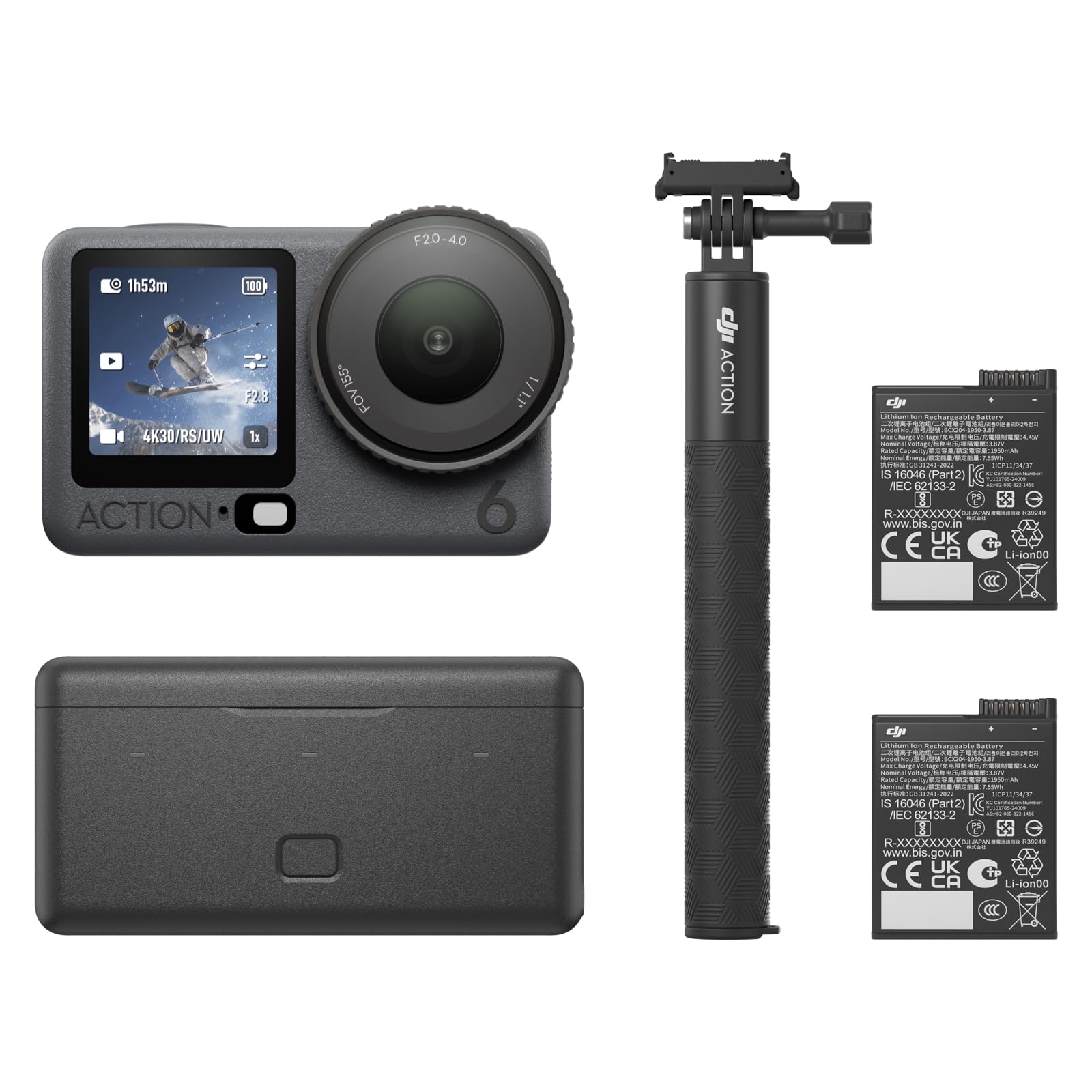
It adjusts its aperture (the opening that lets in light) from f/2.0 to f/4.0 and shoots 8K video, so you get sharp footage from bright midday to fading evening light.
This camera is the most versatile in the lineup because it adjusts its aperture (the opening that lets in light) from f/2.0 to f/4.0. That helps you get a sharp image whether the sun is bright overhead or the light is fading at sunset. It shoots up to 8K video using a new 1/1.1-inch square sensor, giving you room to crop and reframe without losing detail — useful if the wave did not cooperate with your framing. The waterproof depth of 20 meters (about 65 feet) without a housing means you can take it straight into the shore break.
The 360° HorizonSteady stabilization (a system that keeps the horizon level during full-roll wipeouts) works alongside RockSteady 3.0 to handle the jitter of a paddle-out. It has 50GB of built-in storage, which gives you a safety net if you forget a microSD card. Buyers report that the image quality underwater is sharp and colors are true, which is critical when filming reef or sandy bottoms. Unlike the Xtra Edge, this one also supports direct connection to two DJI microphones, so if you narrate your surf sessions, audio quality is a step up.
One caveat from a reviewer: the microphone quality is a weak point, and they recommend an external mic for better sound if voice is important.
The case for it: The variable aperture and 8K sensor give you the best image flexibility for changing light — sunrise glassy waves and afternoon choppy conditions.
The catch: The built-in microphone is weak for outdoor narration; you will want an external mic if you plan to add voice-over to your edits.
Best for: Advanced surfers and content creators who want 8K flexibility and top-tier low-light performance.
Skip if: You need simple footage straight out of the box without editing; the 8K files are large and require post-processing.
2. DJI Osmo Action 5 Pro Bundle
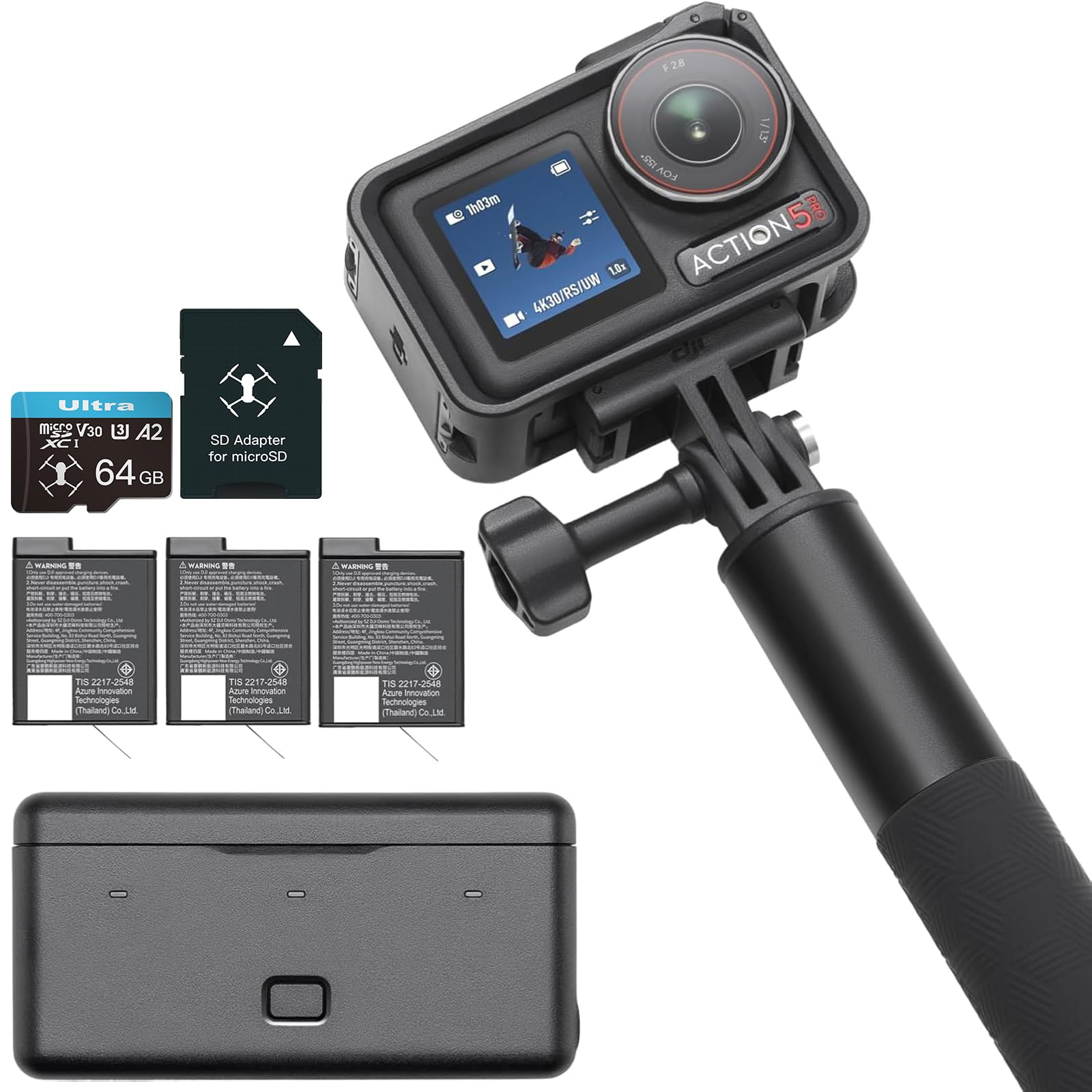
You get 4 hours of battery per battery and HorizonSteady that stays level through a 360-degree wipeout — the safest bet for a reliable surf camera.
This camera handles the harsh contrast between a bright sky and the dark slick of a wave face using a 1/1.3-inch sensor with 2.4 µm large pixels and a 13.5-stop dynamic range (the range of light it can capture from dark shadows to bright highlights). It records 4K at 120 frames per second (frames per second, which means it captures 120 still images each second) for smooth slow-motion footage of turns and barrels. It is waterproof to 20 meters without a housing — the same depth as the pricier Action 6 — so you do not need to buy a separate dive case for a surf trip.
The bundle includes three batteries, a multifunctional battery case, and a 64GB microSD card, so you have 4 hours of recording time per battery. The 360° HorizonSteady stabilization keeps the horizon level even if you are rotated 360 degrees mid-wave, which is a major advantage over the Xtra Edge’s simpler Hyper Stabilization system. Reviewers report stunning 4K video with vibrant colors and excellent stabilization, and one reviewer noted it is “significantly cheaper than GoPro 9 with accessories.” However, one owner reported an overheating error and shutdown after about 15 minutes of recording; they noted they hope it is a defective unit. The Action 5 Pro has 47GB built-in storage, but the Action 6 has 50GB. That is a small difference, but the Action 5 Pro’s 47GB is slightly less.
Compared to the Xtra Edge, this camera is in a different class for stabilization and color science. For a surfer who wants reliable footage of a dawn patrol session, the Action 5 Pro is the safer, proven bet.
Why it’s great
- 4-hour battery life per battery, with three batteries in the bundle
- 360° HorizonSteady stabilization keeps level footage during wipeouts
- 47GB built-in storage as a memory card backup safety net
Good to know
- One buyer experienced an overheating shutdown after ~15 minutes, though it was flagged as possibly a defective unit
- The small USB port side-access panel can be lost after rugged mountain biking, which is a concern for surf use too
Best for: Surfers who want a reliable, feature-dense camera that lasts multiple sessions on a single charge and delivers proven stabilization.
Skip if: You absolutely need 8K resolution; this camera tops out at 4K, which is still excellent for social media and personal edits.
3. Insta360 X5 Essentials Bundle

It captures a full sphere of video with dual sensors, so you can reframe your best wave angle after paddling back out — no need to frame the shot mid-ride.
This camera captures 360-degree video with dual 1/1.28-inch sensors at up to 8K30fps (30 frames per second). For a surfer, that means you can mount it on your board or your mouth and worry less about framing the perfect shot — you can choose your angle later in the Insta360 app. The invisible selfie stick effect means you can get a third-person view of yourself on the wave without the pole appearing in the shot, which is unique in this lineup.
It is waterproof to 49 feet (15 meters) without a housing, which is enough for most surf situations, and the battery lasts up to 208 minutes — close to 3.5 hours. The FlowState stabilization combined with 360° Horizon Lock keeps the horizon perfectly level even if the camera is rotating 360 degrees. It charges to 80% in just 20 minutes, so you can top up between sessions. Reviewers love the easy reframing, saying you just turn it on and edit the footage later to find the best clips. One buyer mentioned the battery life does not seem as long as expected, though they are still learning the features.
The one trade-off is that 360° video requires editing — you cannot just upload the raw file and expect a perfect shot. The Insta360 app makes it simple with AI-assisted reframing, but it is an extra step compared to a standard 16:9 action camera like the DJI Osmo Action 5 Pro. If you want a low-maintenance camera, this is more work. But if you want the freedom to reframe a barrel from any angle, it is unmatched.
The case for it: The 360° capture lets you reframe your best wave angle after the fact — perfect for surfers who want a unique, cinematic look without perfect pre-shot framing.
The downside: Raw footage needs editing in the app before it is shareable, which is an extra step compared to a traditional wide-angle action camera.
Best for: Experimental surfers and content creators who want creative reframing options and third-person perspectives without a visible selfie stick.
Skip if: You prefer a simple, point-and-shoot experience with no post-editing; the Insta360 is designed for post-processing.
4. Xtra Edge Standard Bundle
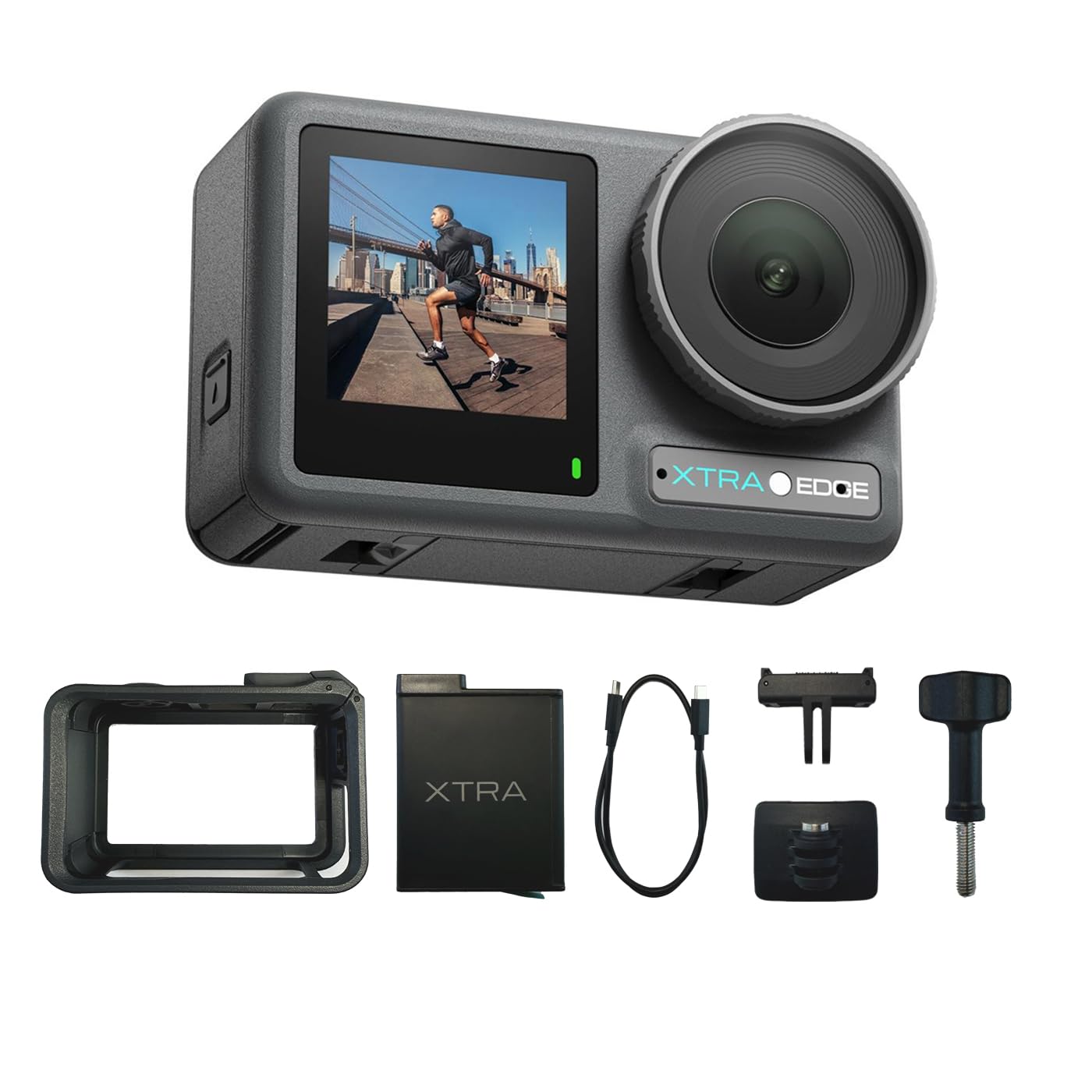
It gives you a 1/1.3-inch sensor and waterproofing to 52 feet for far less money — daytime surf footage that looks good without the premium price tag.
The Xtra Edge is the entry-level option in this list, but it does not skimp on the essentials for surf filming. It has a 1/1.3-inch sensor — the same size as the DJI Osmo Action 5 Pro — which helps with color and detail in bright daylight. It shoots 4K video with Hyper Stabilization that handles the bounce of a surfboard paddle-out, and it is waterproof to 52 feet (about 15.8 meters) without an external housing, which is deeper than the Insta360 X5’s 49 feet. The battery lasts about 3 hours (160 minutes), which one owner reported is “longer battery life than GoPro.”
The magnetic quick mount makes it easy to switch between a board mount and a head strap. Reviewers report a premium feel and solid build for the price, with one calling it “great quality already color graded” and comparing it to a Canon T7i. The kit includes a cold-resistant battery and a dual-orientation protective frame, so you can shoot in cold water without worrying about a battery drain. It also comes with a dual-facing mount adapter for easy angle switching.
Where it falls short of the DJI models is low-light performance — owners mention “dim night footage” — and the lack of advanced features like HorizonSteady or 360° stabilization. For a surfer on a budget who mainly shoots in good light, this is a perfectly capable option. The 1/1.3-inch sensor here is the same size as the one in the DJI Osmo Action 5 Pro, so daytime quality is competitive.
Why it’s great
- Long battery life (~3 hours) outlasts many similarly priced competitors
- Waterproof to 52 feet without a housing — deeper than the Insta360 X5
- 1/1.3-inch sensor delivers vibrant daytime footage comparable to premium cameras
Good to know
- Night footage is dim and lacks the clarity of the DJI models
- Slow recharge time means you cannot quickly top up between sessions
Best for: Budget-conscious surfers who need a waterproof, stable 4K camera for daytime sessions, the Xtra Edge offers the same sensor size as the far pricier DJI Osmo Action 5 Pro.
The trade-off: You often film at dawn, dusk, or in overcast conditions? The Xtra Edge’s low-light performance is noticeably weaker than the DJI alternatives.
Understanding the Specs
Waterproof Depth
This is the depth the camera can survive without a separate waterproof housing. For surfing, you want at least 10 meters (33 feet) — enough for a wipeout or a duck dive. The DJI models go to 20 meters (65 feet), which is overkill for most waves but gives confidence. The Insta360 X5 goes to 15 meters (49 feet), and the Xtra Edge goes to 52 feet (about 15.8 meters). All are more than enough for standard surf use, but if you do heavy barrel diving or shoot in the shore break, the deeper rating is better.
Stabilization
Electronic stabilization is what makes the footage look smooth rather than like a shakycam. The DJI models use HorizonSteady, which keeps the horizon level even if the camera is rotating 360 degrees — great for wiping out. The Insta360 uses FlowState Stabilization with full 360° Horizon Lock, which does the same thing for 360° video. The Xtra Edge uses Hyper Stabilization, which smooths out walking and cycling-level shake but will not keep the horizon level in a full rotation. For surfing, HorizonSteady or FlowState is a significant advantage.
Battery Life
Battery life is measured in minutes of continuous recording. A surf session can be 2-3 hours, so having a camera that can shoot that long without swapping a battery is convenient. The DJI models claim 4 hours per battery, which is enough for most surf trips. The Insta360 X5 lasts up to 208 minutes (about 3.5 hours), and the Xtra Edge lasts about 160 minutes (around 3 hours). All four can handle a typical session, but the DJI models have the edge if you are surfing from dawn to lunch.
Sensor Size
Measured in inches, the sensor size determines how much light the camera can capture. A bigger number (1/1.1 vs 1/1.3) means a larger sensor and better performance in low light. The DJI Osmo Action 6 uses the largest sensor here (1/1.1-inch), followed by the dual 1/1.28-inch sensors in the Insta360. The DJI Osmo Action 5 Pro and Xtra Edge both use a 1/1.3-inch sensor. For midday surfing, the 1/1.3-inch sensor is fine, but for dawn patrol, the 1/1.1-inch sensor gives a cleaner image.
FAQ
Do I need a waterproof housing for these cameras to surf?
Which camera has the best stabilization for wipeouts?
Can I mount these cameras to my surfboard?
Will 4K footage from these cameras look good on social media?
How long does the battery last in cold water?
Is the Insta360 X5 hard to edit for a beginner?
Do these cameras come with a memory card?
Which camera is best for slow-motion footage of a barrel ride?
Can I use these cameras for vlogging on land too?
Final Thoughts: The Verdict
For most surfers, the best camera for surfing is the DJI Osmo Action 5 Pro because it offers the best balance of waterproof depth (20m), proven stabilization (360° HorizonSteady), long battery life (4 hours per battery, three included), and a reasonable price. If you want the absolute best image quality in low light and are willing to edit 8K files, grab the DJI Osmo Action 6 for its variable aperture and larger 1/1.1-inch sensor. And for a creative angle that no other camera can match, the standout is the Insta360 X5 with its 360° capture and reframing capabilities.
How We Picked
We do not accept paid placement, and we did not hands-on test every unit. Instead, we match each pick to a real buyer and use-case by comparing the manufacturers’ published specifications against the patterns in verified customer reviews — so you get each pick’s real strengths and trade-offs instead of marketing copy.
Sources & Methodology
Specifications: manufacturer listings and product documentation. Review insights: verified customer reviews, as of July 2026. Pricing: not shown on this page (it changes often); check the current price via the retailer link.
As an Amazon Associate, Gadgets Feed earns from qualifying purchases. This does not affect which products we feature.
Product prices and availability are accurate as of the date/time indicated and are subject to change. Any price and availability information displayed on Amazon at the time of purchase will apply to the purchase of this product. As an Amazon Associate I earn from qualifying purchases.
CERTAIN CONTENT THAT APPEARS ON THIS SITE COMES FROM AMAZON. THIS CONTENT IS PROVIDED "AS IS" AND IS SUBJECT TO CHANGE OR REMOVAL AT ANY TIME.
Amazon and the Amazon logo are trademarks of Amazon.com, Inc. or its affiliates.