
Our readers keep the lights on and my morning glass full of iced black tea. As an Amazon Associate, I earn from qualifying purchases.
A bad night’s sleep on a thin, cold pad can wreck an entire backpacking trip. The right backpacking mattress does two things at once: it lifts your hips off the rocks and roots, and it blocks the ground chill that steals your body heat. This guide compares the warmest, lightest, and most durable inflatable pads so you know exactly which one fits your pack and your sleeping style.
I’m Min — the founder and writer behind Gadgets Feed. This guide is built by comparing the manufacturers’ published specifications and the patterns across verified customer reviews, so you get each pick’s real strengths and trade-offs instead of marketing spin.
If you sleep cold or hot, side or back, every ounce matters on the trail. That is why we dug into the insulation ratings, thicknesses, and real-world durability reports to find the backpacking mattress that earns its spot in your pack.
Quick Picks
- Elegear CumbreX Sleeping Pad — Best Overall
- Sea to Summit Ether Light XR Pro Insulated Sleeping Pad — Premium Pick
- ATEPA ThermAir Pro Insulated Sleeping Pad — Best Value
- Elevate X Inflatable Sleeping Pad — Compact Pick
- Hikenture Camping Sleeping Pad — Budget Durable
- Therm-a-Rest NeoAir Xlite NXT — Ultralight Champ
- NEMO Tensor All-Season Ultralight Insulated Sleeping Pad — Quiet Insulation
- Big Agnes Rapide SL Insulated Sleeping Pad — Three-Season Comfort
How To Choose The Best Backpacking Mattress
Picking a backpacking mattress means balancing warmth, weight, and comfort. Understanding R-value (how well the pad stops heat loss to the ground), thickness, and packed size will steer you to the right choice.
R-Value: The warmth number you cannot ignore
R-value measures how well the pad resists heat loss to the cold ground. The higher the number, the warmer you stay. For summer-only trips, an R-value of 2 to 3 works fine. For three-season use, look for 4 to 5. If you plan to camp in winter or at high altitude, you want an R-value of 6 or higher. In the list below, you will see certified ratings from 4.5 all the way up to 9.
Thickness and air-cell design: why 3 inches is the bare minimum
A thicker pad keeps your hips and shoulders off the ground so you do not feel every rock and root. Most backpacking pads range from 3 to 4 inches thick. The internal air-cell structure — I-beam, air sprung cell, or spaceframe baffles — determines stability. A good design prevents the “hammock effect” (where you roll off the sides) and stops the pad from bottoming out when you shift weight.
Weight and packed size: the backpacker’s compromise
Every ounce you carry on your back matters. Ultralight pads weigh around 1 pound (16 oz) and pack down to about the size of a 1-liter water bottle. More insulated pads with higher R-values tend to be heavier, often 1.5 to 2 pounds. You have to decide whether warmth or pack weight matters more for your specific trip. A good pump sack saves your breath and keeps moisture out of the pad, so it is a feature worth prioritizing.
Quick Comparison
On smaller screens, swipe sideways to see the full table.
| Model | Best For | R-Value | Thickness | Weight | Amazon |
|---|---|---|---|---|---|
| Elegear CumbreX | Cold-weather / side sleepers | 9 | 4 in | 2 lbs | Amazon |
| Sea to Summit Ether Light XR Pro | 4-season alpine / plush comfort | 7.4 | 3.9 in | Not specified | Amazon |
| Elevate X Inflatable Sleeping Pad | Winter treks / ultralight packers | 7.5 | 3.5 in | 16 oz | Amazon |
| ATEPA ThermAir Pro | Wide side sleepers / quiet sleep | 6.6 | 3.94 in | 1.7 lbs | Amazon |
| Hikenture Camping Sleeping Pad | Budget durability / family camping | 6.2 | 3.2 in | 1.6 lbs | Amazon |
| NEMO Tensor All-Season | Ultralight / quiet insulation | 5.4 | 3.5 in | 400 Grams | Amazon |
| Big Agnes Rapide SL | Three-season / bike packing | 4.8 | 4.25 in | Not specified | Amazon |
| Therm-a-Rest NeoAir Xlite NXT | Ultralight standard / year-round | 4.5 | 3 in | 16 oz | Amazon |
In‑Depth Reviews
1. Elegear CumbreX Sleeping Pad
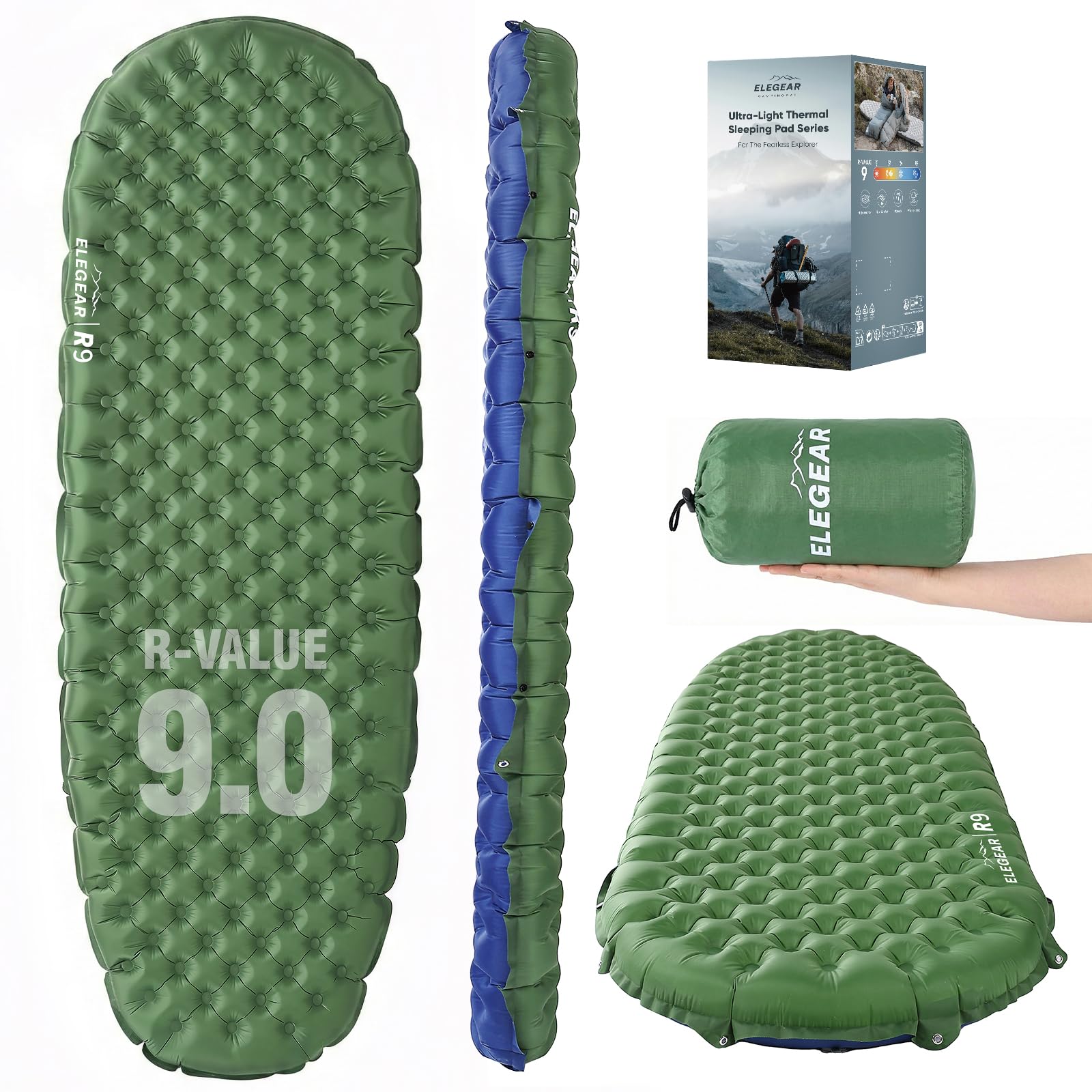
The thickest, warmest inflatable that handles heavy side sleepers without bottoming out.
If you sleep cold or camp in deep winter, the Elegear CumbreX is the warmest pad on this list. Its independently tested R-value (a measure of insulation certified by SGS under the ASTM F3340-22 standard) of 9 means it blocks ground chill even in conditions down to -40°C. At 4 inches thick, it is a full 0.8 inches thicker than many standard pads, and the densely distributed support cells keep your head, back, hips, and legs elevated off uneven ground all night.
Buyers report that at 278 lbs as a side sleeper, the pad does not bottom out on the hip — a common failure point on thinner, cheaper pads. Weighing just 2 lbs, it still packs down compactly for backpacking, and the included pump sack inflates in 4 to 6 pumps. Reviewers also note it is quieter than other insulated pads and connects to a second pad for couples. The 20D tear-resistant nylon fabric with a reinforced TPU layer handles rocky terrain.
Compared to the Hikenture pad which has a 6.2 R-value, the Elegear delivers a 45% greater R-value for serious cold-weather trips. The catch is weight — at 2 lbs it is heavier than ultralight options, but for four-season warmth it is tough to top.
Why it’s great
- Highest R-value of 9 certified by SGS and ASTM F3340-22
- 4-inch thickness prevents bottoming out for heavy side sleepers
- Quick inflation with pump sack in 4 to 6 pumps
Good to know
- Weighs 2 lbs, heavier than ultralight competitors
- Some users report inner reflective material can block the exhaust hole during deflation
Best for: Cold-weather, four-season camping and heavy side sleepers who need maximum ground insulation
Skip if: You need the lightest possible pad for ultralight backpacking
2. Sea to Summit Ether Light XR Pro Insulated Sleeping Pad
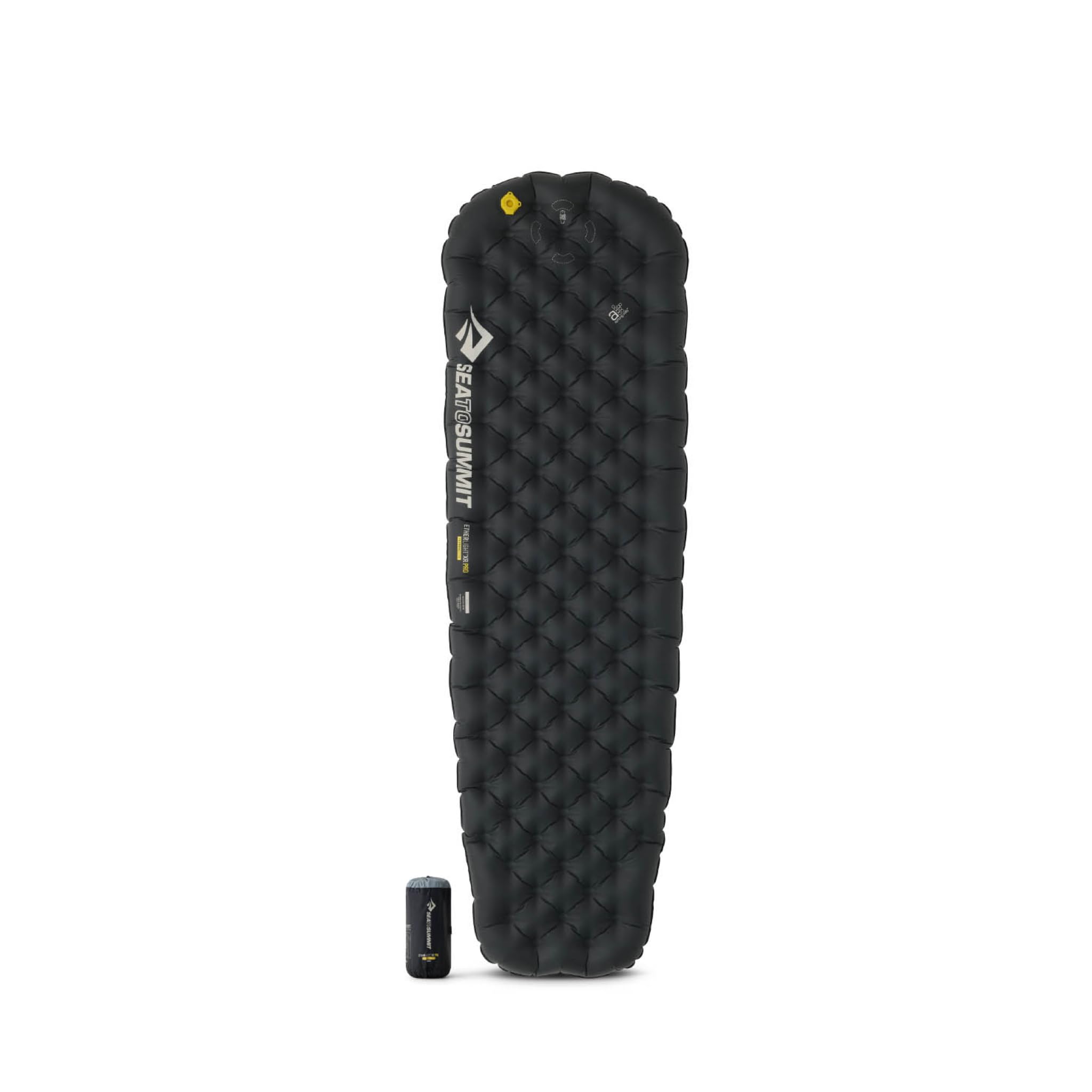
Alpine warmth with Air Sprung Cell support that cradles every sleeping position.
For serious four-season adventurers, the Sea to Summit Ether Light XR Pro delivers an ASTM-tested R-value of 7.4 and a plush 3.9-inch thickness that adapts to side, back, and stomach sleepers. Its ThermalCore insulation uses multiple TRM layers to reflect infrared heat back to your body while staying quiet and low-bulk. The Air Sprung Cell construction creates a stable, adaptive support that moves with you at night without the hammock feeling.
Owners mention it is very warm with minimal noise, and one owner called it “the ONE” after trying several brands. The integrated Airstream Pumpsack and high-airflow XPRESS valve let you inflate fast, adjust pressure easily, and deflate quickly. At 72 x 21.7 x 4 inches in the tapered regular, it offers generous width without excess weight. One reviewer noted the R-value is not printed on the pad or bag, so you need to remember the spec or look it up online — a small but notable oversight.
With a 7.4 R-value, it falls just short of the Elegear’s 9, but its weight-to-warmth ratio is exceptional for alpine expeditions and winter camping. It is the choice if you want premium insulation with plush comfort and do not mind paying for it.
Why it’s great
- ASTM-tested 7.4 R-value for reliable four-season insulation
- Air Sprung Cell construction for adaptive, stable comfort
- Fast inflation and deflation with integrated Airstream Pumpsack and XPRESS valve
Good to know
- R-value not printed on the pad or bag, easy to forget
- Slightly heavier than some ultralight competitors, though not by much
Best for: Winter camping, alpine expeditions, and side sleepers with hip problems needing high loft
Skip if: You want the absolute lightest pad for ultralight backpacking
3. ATEPA ThermAir Pro Insulated Sleeping Pad
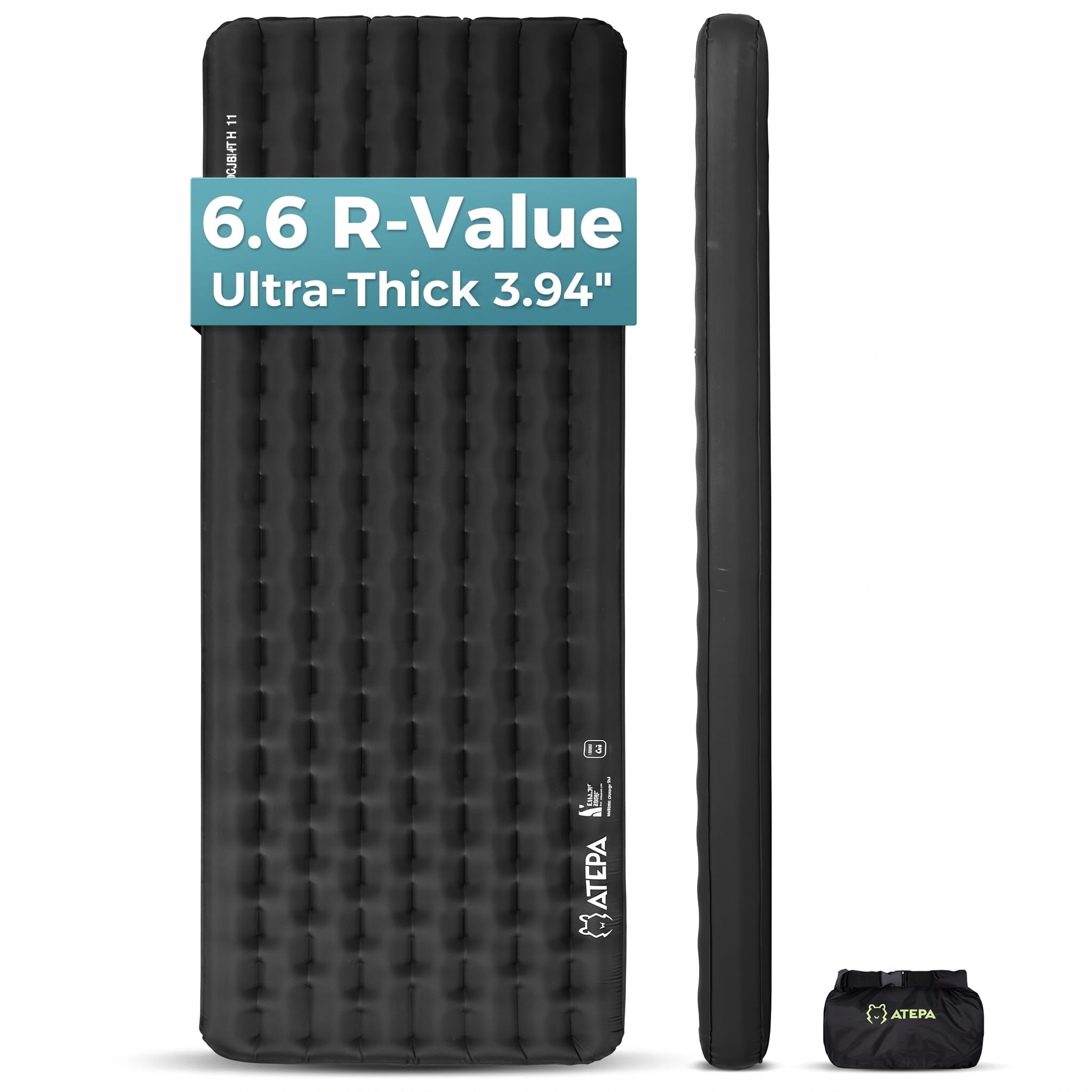
A wide, quiet, thick pad for side sleepers at a price that undercuts the big brands.
The ATEPA ThermAir Pro strikes a rare balance between comfort, warmth, and cost. With a tested 6.6 R-value from its 7-layer thermal insulation, it blocks cold ground temperatures for four-season use. Its 77 x 25 inch rectangular footprint is wider than mummy-shaped pads, giving active sleepers room to stretch and roll without sliding off. At 3.94 inches thick, the I-beam structure keeps hips, shoulders, and knees off the ground.
Customers note great insulation tested on snow, and that it is thick, quiet, and comfortable for side sleeping — unlike the Nemo Tensor, which some found louder. Owners note it does not sink to the ground like some competitors and that it stayed inflated with no air loss over 4 nights. The 20D ripstop nylon is quiet, reducing the crinkling noise common in insulated pads. It weighs 1.7 lbs including the pump sack, making it reasonable for backpacking.
Compared to the Elegear’s 9 R-value, the ATEPA’s 6.6 is still warm enough for most winter camping, and at 77 x 25 inches it offers more length than the Elegear’s 72 x 25 inch dimensions — a 7% gap in length for taller sleepers. It is a smart mid-range choice that delivers premium features without the premium price.
Why it’s great
- 6.6 R-value with 7-layer thermal insulation for four-season warmth
- Generous 77 x 25 inch rectangular design for freedom to move
- Quiet 20D ripstop nylon with minimal crinkling noise
Good to know
- Measured width is 25 inches, not the 27 inches some claims suggest
- Inflation valve is incompatible with Flextail Zero pump
Best for: Tall side sleepers who want a wide, quiet pad for year-round backpacking
Skip if: You rely on a specific rechargeable pump that may not fit the valve
4. Elevate X Inflatable Sleeping Pad
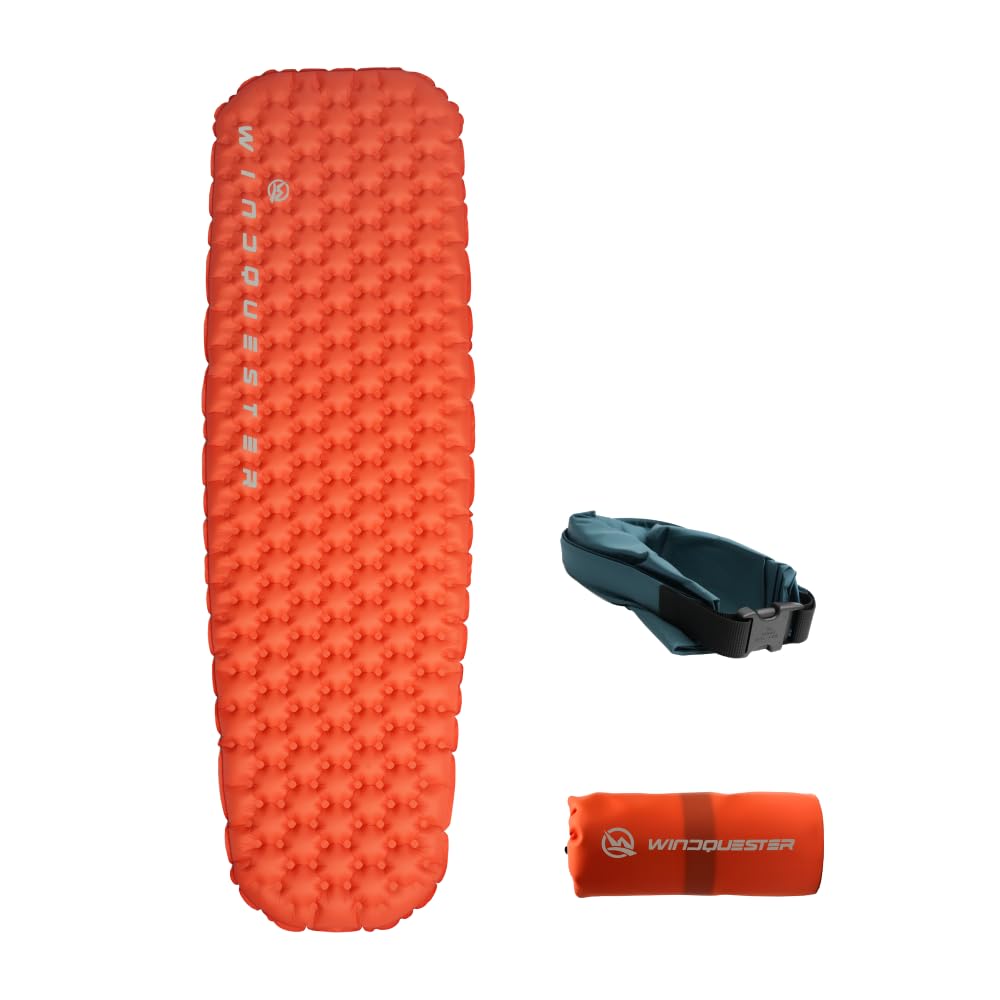
Ultralight winter insulation that packs smaller than a water bottle.
The Elevate X from WINDQUESTER is built for backpackers who need serious warmth without the weight. Its ASTM R-value of 7.5 provides outstanding ground insulation for extreme cold, snow camping, and high-altitude adventures. Yet it weighs only 16 oz and packs down to a compact 3.94 x 10.63 inch cylinder — ideal for multi-day treks where space is tight. The precision air chamber layout evenly distributes body weight for stable support.
Reviewers point out it performed well tested at 8°F with no cold spots, and that it is comfortable for both side and back sleeping. The 20D to 40D nylon with TPU coating handles rugged use, and the integrated valve allows rapid inflation and deflation. Some reviewers noted that the width of 23 inches feels narrower than ideal for larger users, and the pump sack quality is described as good but heavier than a rechargeable pump. One owner mentioned the package may show “HorizonX” due to a past printing issue, but the product inside is the authentic Elevate X.
With a 7.5 R-value at 16 oz, it offers a better warmth-to-weight ratio than the ATEPA’s 6.6 R-value at 1.7 lbs, making it a top pick for winter ultralight backpacking where every ounce counts.
Why it’s great
- ASTM R-value of 7.5 for extreme cold and snow camping
- Ultralight at 16 oz with compact 3.94 x 10.63 inch packed size
- Durable 20D–40D nylon with TPU coating
Good to know
- Width of 23 inches is narrower than many competitors at 25 inches
- No included pillow or patch kit, so you need to bring your own
Best for: Ultralight backpackers trekking in extreme cold who prioritize pack size and weight
Skip if: You need a wide sleeping surface or want a patch kit included
5. Hikenture Camping Sleeping Pad
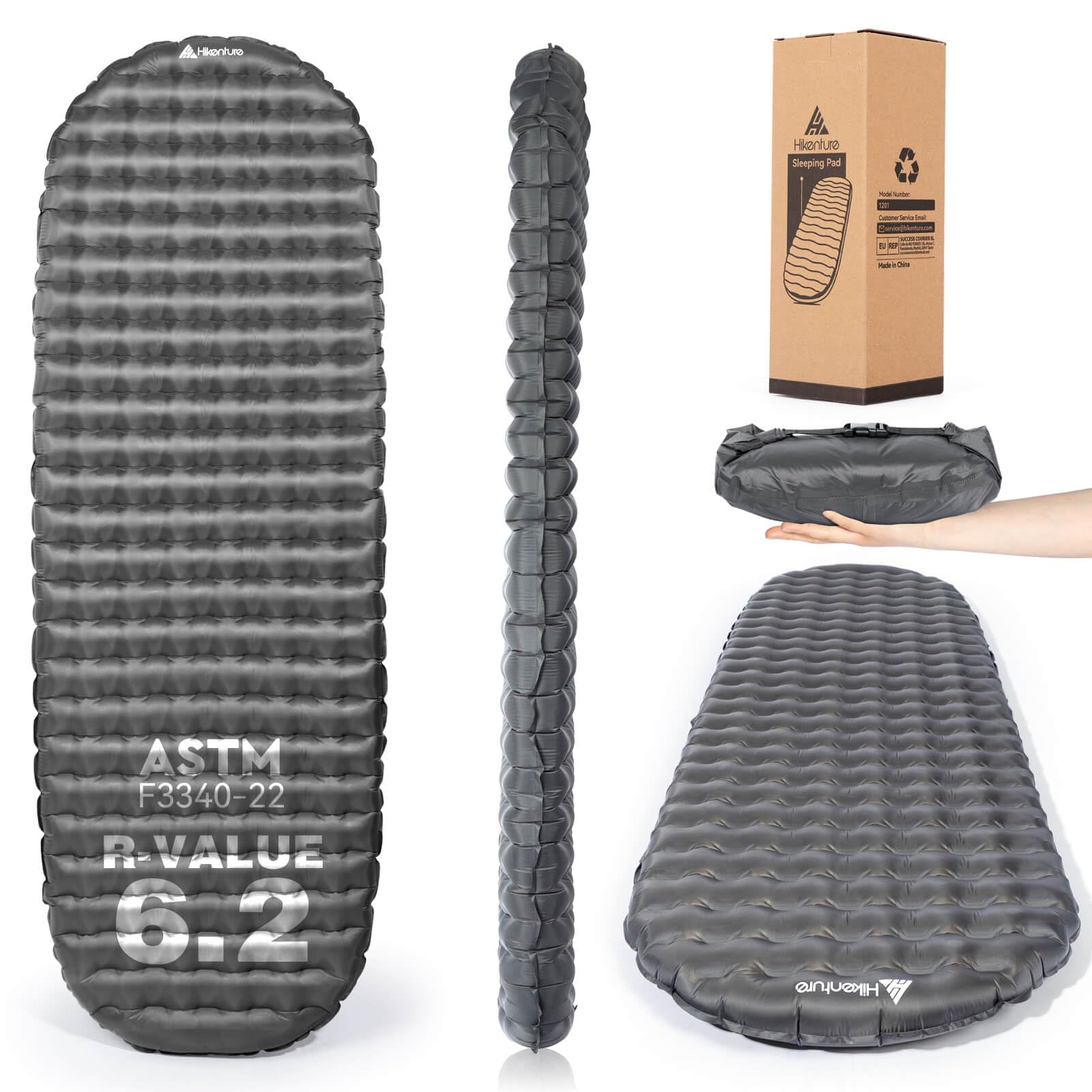
A tough, reliable pad that survives kids jumping and dog nails.
The Hikenture pad is a budget-friendly option that does not skimp on warmth or durability. With an ASTM-tested R-value of 6.2, its aluminum film construction reflects body heat effectively for all-season use. At 3.2 inches thick, the unique airbag structure distributes pressure to prevent bottoming out. It weighs 1.6 lbs and packs down small, making it a realistic choice for backpacking.
Shoppers say it survived kids jumping on it and that even dog nails caused a slice that was easily repaired with the included kit. One owner used it in a snowstorm and said it was warm while on the pad, though cold when legs hung off. The storage bag doubles as a 40L pump sack, inflating the pad in just 3 pumps. Some users note the nozzle at the foot end is hard to reach and open one-handed, and there is no rapid deflate valve. The TPU liner is an environmentally friendly material, and Hikenture uses eco-friendly cardboard packaging.
At 1.6 lbs it is slightly lighter than the ATEPA’s 1.7 lbs, though it is 3.2 inches thick versus the ATEPA’s 3.94 inches — a noticeable difference in ground clearance for rocky sites. It is the right pick if you want proven durability at a lower price.
Why it’s great
- ASTM-tested 6.2 R-value for reliable all-season insulation
- Very durable — survived kids bouncing and dog nails
- 40L pump sack inflates pad in 3 pumps
Good to know
- 3.2 inch thickness is less than premium pads, so you may feel rocks on uneven ground
- Nozzle at foot end is hard to open one-handed
Best for: Budget-conscious campers and family trips where the pad will get rough treatment
Skip if: You need maximum thickness for side sleeping on rocky terrain
6. Therm-a-Rest NeoAir Xlite NXT

The ultralight gold standard that packs to the size of a 1-liter bottle.
The Therm-a-Rest NeoAir Xlite NXT has long been the benchmark for ultralight backpacking. Its foam-free NeoAir design weighs just 16 oz in size Regular and rolls up as small as a 1-liter water bottle. The 3-inch thick profile with a baffled internal structure provides stability and support for most sleepers. Reflective ThermaCapture technology traps radiant heat while the Triangular Core Matrix construction minimizes convective heat loss, delivering a 4.5 R-value that is warm enough for year-round adventures.
Buyers report the NXT version is nearly silent — a huge improvement over the crinkly earlier models — and that it is comfortable and warm in temperatures down to the 30s. One buyer mentioned it is lighter and packs smaller than their Sea to Summit pad. The WingLock valve provides easy inflation and lightning-fast deflation. Some owners mention the fabric feels fragile, so careful use on rough ground is advised. One owner reported a malfunctioning valve that prevented inflation, though most praise its quality.
At 16 oz and a 4.5 R-value, it is less insulated than the Elevate X’s 7.5 R-value or the Elegear’s 9, making it better suited for three-season use with mild winter trips. For the weight-conscious backpacker who wants a proven, trusted brand, this pad remains the standard.
Why it’s great
- Ultralight at 16 oz with a packed size of a 1-liter bottle
- Baffled internal structure provides stable, supportive sleep
- WingLock valve for easy inflation and rapid deflation
Good to know
- 4.5 R-value is good for three-season, less ideal for deep winter
- Fabric is thin and requires careful handling on rough ground
Best for: Ultralight backpackers who want the most packable, proven pad for three-season use
Skip if: You need high R-value for extreme cold or prefer a thicker, more cushioned pad
7. NEMO Tensor All-Season Ultralight Insulated Sleeping Pad
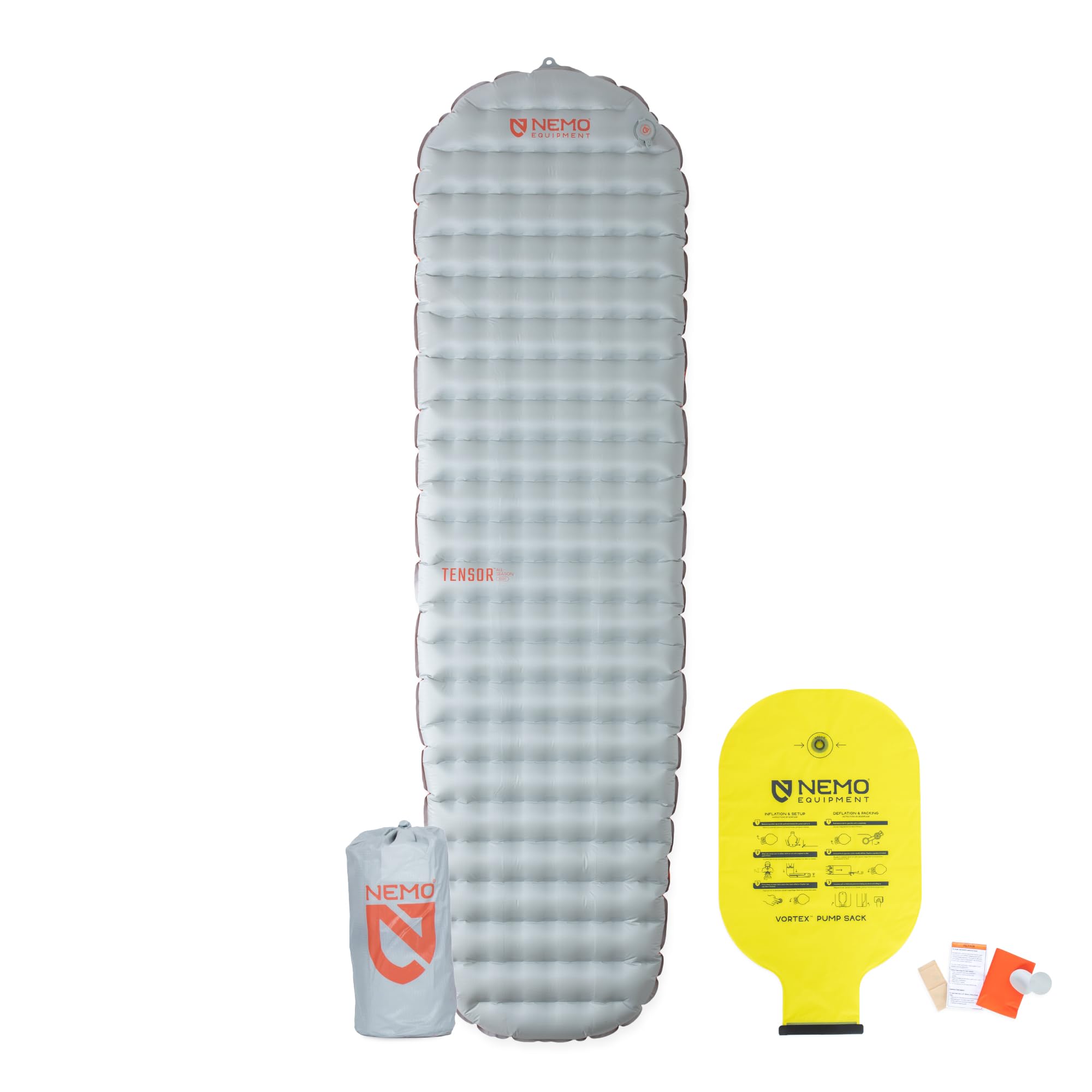
Ultralight warmth with Spaceframe baffles that eliminate springiness.
The NEMO Tensor All-Season is built for backpackers who want a quiet, stable pad without the weight penalty. It features two layers of floating Thermal Mirror metallized film for quiet insulation with an impressive weight-to-warmth ratio. The Spaceframe baffles use low-stretch, die-cut trusses to eliminate springiness, giving you stable support without the bouncy feeling of some air pads. With a 5.4 R-value and 3.5 inches of cushioned loft, it is warm enough for most three-season and mild winter conditions.
Owners mention it survived 18°F hammock camping without cold spots, and that it is durable yet lightweight for its warmth. bluesign approved premium nylon fabrics shave grams while offering superior puncture and tear resistance. The inflation sack makes setup easy, and the pad packs down compactly. Some reviewers found the regular mummy width of 20 inches a bit narrow in the shoulders for larger users, and noted the wide version would be a better fit. It comes with a lifetime warranty against defects in workmanship and materials.
At 400 grams, it is lighter than the Therm-a-Rest NeoAir Xlite NXT while offering a higher R-value of 5.4 versus 4.5, making it a strong choice for weight-conscious hikers who want more warmth. The narrow width is the primary trade-off to consider.
Why it’s great
- 5.4 R-value with quiet Thermal Mirror insulation
- Spaceframe baffles eliminate springiness for stable support
- Ultralight at 400 grams with bluesign approved fabrics
Good to know
- Regular mummy width of 20 inches is narrow in the shoulders for larger users
- Wide version recommended for bigger sleepers, which adds weight
Best for: Ultralight hikers who want a quiet, stable pad with more warmth than the NeoAir Xlite NXT
Skip if: You are a broad-shouldered sleeper or need a wider sleeping surface
8. Big Agnes Rapide SL Insulated Sleeping Pad

A thick, pillowy pad with edge chambers that keep you centered all night.
The Big Agnes Rapide SL is a comfort-first sleeping pad for three-season backpackers who refuse to sacrifice sleep quality. With a quilted top and proprietary offset I-beam construction, it creates a cushioned, pillowy surface that reduces side-to-side movement. At 4.25 inches thick with larger 4.25 inch outer chambers, this pad cradles you comfortably without the typical air mattress bounce. The R-value of 4.8 comes from two layers of heat-reflective film that keep you warm as temperatures drop.
Customers note it is comfortable, quiet, and holds air overnight with no deflation. One customer observed it saved 14 oz and reduced pack size compared to their Thermarest Trail Pro, calling it worth the money. The Pumphouse high-volume inflation sack inflates the pad in seconds without introducing moisture. High-volume valves with micro-adjustment let you fine-tune firmness. It comes with a lifetime quality guarantee, and every pad undergoes individual inflation testing at the factory. At 20 x 72 inches in the regular size, it is narrower than some, but the edge chambers keep you centered without reducing usable area.
With a 4.8 R-value, it is best suited for three-season use rather than deep winter. It is thicker than most pads on this list at 4.25 inches, but its warmth rating trails behind the winter-focused options. For spring through fall backpacking where comfort is the priority, this pad excels.
Why it’s great
- 4.25 inch thickness with larger outer chambers prevents bounce and keeps you centered
- Quilted top and offset I-beam construction for a plush, pillowy feel
- Pumphouse sack inflates in seconds, lifetime quality guarantee
Good to know
- 4.8 R-value limits it to three-season use, not ideal for deep winter
- Regular size is 20 inches wide, which may feel narrow for broad-shouldered sleepers
Best for: Comfort-focused three-season backpackers who want a thick, quiet, stable pad
Skip if: You need a high R-value for winter camping or prefer a wider sleeping surface
Understanding the Specs
R-Value (Thermal Insulation)
R-value measures how well a sleeping pad resists heat loss to the cold ground. The higher the number, the warmer you stay. For summer-only trips, an R-value of 2 to 3 is fine. For three-season backpacking, look for 4 to 5. If you camp in winter, below freezing, or at high altitude, you need an R-value of 6 or higher. Certified tests like ASTM F3340-22 give you a reliable number you can trust across brands.
Thickness and Air-Cell Design
Thickness determines how much cushion you get between your body and the ground. A pad that is 3.5 to 4 inches thick keeps your hips, shoulders, and knees off rocks and roots. The internal air-cell structure — I-beam, air sprung cell, or spaceframe baffles — controls stability and prevents the “hammock effect” where you slide off the edges. A well-designed pad distributes your weight evenly and does not bottom out when you shift at night.
Weight and Packed Size
Every ounce you carry on your back matters. Ultralight pads weigh around 1 pound and pack down to the size of a 1-liter water bottle, making them ideal for fast-moving backpackers. More insulated pads with higher R-values often weigh 1.5 to 2 pounds because they use more materials. A good pump sack saves your breath, keeps moisture out of the pad, and inflates the pad in just a few pumps — a feature that makes a real difference after a long day of hiking.
Material Durability
Backpacking mats take abuse from rocky ground, sharp sticks, and rough terrain. Look for materials like 20D to 40D ripstop nylon with a TPU coating. This combination resists punctures, abrasion, and moisture. Some pads include repair patches for fixing small holes on the trail. Durable materials add a bit of weight, but they also mean you will not wake up on the cold ground because of a leak.
FAQ
What R-value do I need for winter backpacking?
Can I use a backpacking mattress on snow?
How thick should a backpacking pad be for side sleepers?
What is the difference between a pump sack and blowing up the pad with your mouth?
Are wider sleeping pads worth the extra weight?
How do I fix a leak in my sleeping pad?
Can I use a regular sleeping pad for backpacking, or do I need a specialized one?
How long do inflatable backpacking pads last?
What does “mummy shape” mean for a sleeping pad?
Is a higher R-value always better?
Final Thoughts: The Verdict
For most backpackers, the backpacking mattress winner is the Elegear CumbreX because it offers the highest R-value of 9 and the most comfortable 4-inch thickness for side sleepers at a mid-range price. If you want the lightest possible pad for ultralight treks, grab the Therm-a-Rest NeoAir Xlite NXT. And for year-round alpine warmth with premium plush comfort, the Sea to Summit Ether Light XR Pro is the clear choice with its 7.4 R-value and Air Sprung Cell construction.
How We Picked
We do not accept paid placement, and we did not hands-on test every unit. Instead, we match each pick to a real buyer and use-case by comparing the manufacturers’ published specifications against the patterns in verified customer reviews — so you get each pick’s real strengths and trade-offs instead of marketing copy.
Sources & Methodology
Specifications: manufacturer listings and product documentation. Review insights: verified customer reviews, as of July 2026. Pricing: not shown on this page (it changes often); check the current price via the retailer link.
As an Amazon Associate, Gadgets Feed earns from qualifying purchases. This does not affect which products we feature.
Product prices and availability are accurate as of the date/time indicated and are subject to change. Any price and availability information displayed on Amazon at the time of purchase will apply to the purchase of this product. As an Amazon Associate I earn from qualifying purchases.
CERTAIN CONTENT THAT APPEARS ON THIS SITE COMES FROM AMAZON. THIS CONTENT IS PROVIDED "AS IS" AND IS SUBJECT TO CHANGE OR REMOVAL AT ANY TIME.
Amazon and the Amazon logo are trademarks of Amazon.com, Inc. or its affiliates.