
Our readers keep the lights on and my morning glass full of iced black tea. As an Amazon Associate, I earn from qualifying purchases.
Specs are compiled from manufacturer listings and verified buyer reviews and can change over time — please confirm the key details on the product page before buying.
If you own tile floors, you know the deal: dust settles in the grout lines, footprints show after a few hours, and hand-mopping a whole house is a back-aching chore you are sick of. A robot mop that actually respects tile and grout changes that — it does the scrubbing while you do literally anything else. The trick is picking one that navigates around your furniture, holds enough water for the whole kitchen, and won’t leave puddles that seep into the grout and cause damage.
I’m Min — the founder and writer behind Gadgets Feed. This guide is built by comparing the manufacturers’ published specifications and the patterns across verified customer reviews, so you get each pick’s real strengths and trade-offs instead of marketing spin.
Whether your floors are porcelain, ceramic, or natural stone, the right robot mop for tile floors will keep them clean without you touching a sponge again.
Quick Picks
- iRobot Roomba 105X Combo — Best Overall
- Roborock Q7 M5+ — Top Performer
- MONSGA Self-Emptying MR7PRO — Best Battery Life
- Tikom L8000 Plus — Best Value Self-Empty
- ILIFE A30 Pro — Budget Self-Empty
- Tikom G8000 Max — Mid-Range Power
- MONSGA MS1 Max — Best Runtime
- Kilgone G20 — Budget Champion
How To Choose A Robot Mop For Tile Floors
Tile is hard and non-porous when sealed, but the grout lines between tiles are porous and can trap moisture. That makes water management the single most important feature — too much water and your grout stays damp, which can lead to discoloration. Here is what to check before you buy.
Navigation System: Random vs Smart Mapping
A robot that bumps around randomly misses spots and takes longer to finish. Look for LiDAR (a spinning laser sensor that builds a map of your home) or camera-based navigation. These systems let the robot clean in straight, efficient rows and remember where it has been. Most models also let you set no-go zones so the robot stays off a wet rug or away from pet bowls.
Water Tank Size and Flow Control
On tile, you want a tank that holds enough water for the whole floor without needing a refill mid-job — 200ml to 300ml is typical. Adjustable water flow is even better because you can dial down the moisture for a quick dry finish or increase it for sticky spots. Some robots use an electronic pump for precise control instead of a gravity drip.
Self-Emptying Base
A self-emptying dock automatically sucks the dust and debris from the robot’s bin into a larger bag inside the dock, sometimes lasting weeks or months before you need to swap the bag. This feature is a major convenience upgrade — you might not touch the robot beyond refilling the water tank and occasionally rinsing the mop pad.
Quick Comparison
On smaller screens, swipe sideways to see the full table.
| Model | Best For | Suction | Water Tank | Battery Life | Amazon |
|---|---|---|---|---|---|
| Roborock Q7 M5+ | High-end pet homes | 10000Pa | — | 150 min | $299.99$359.99Amazon |
| iRobot Roomba 105X | Hands-off families | 70x Power-Lifting | — | 100 min | $379.99$469.99Amazon |
| MONSGA Self-Empty | Large homes, max suction | 8000Pa | 460 ml | 160 min | $289.99$459.99Amazon |
| ILIFE A30 Pro | Budget self-emptying | 5000Pa | 200 ml | 150 min | $189.99$239.99PrimeAmazon |
| Tikom L8000 Plus | Mid-price self-emptying | 6000Pa | — | 150 min | $208.95$279.99Limited time dealAmazon |
| Tikom G8000 Max | Strong suction on a budget | 5000Pa | 300 ml | 150 min | $108.23$149.99Limited time dealAmazon |
| MONSGA MS1 Max | Long runtime, LiDAR | 7000Pa | 270 ml | 180 min | $99.44$110.49Limited time dealAmazon |
| Kilgone G20 | Budget entry | 2300Pa | 230 ml | 120 min | $99.99$109.99PrimeAmazon |
In‑Depth Reviews
8. iRobot Roomba 105X Combo
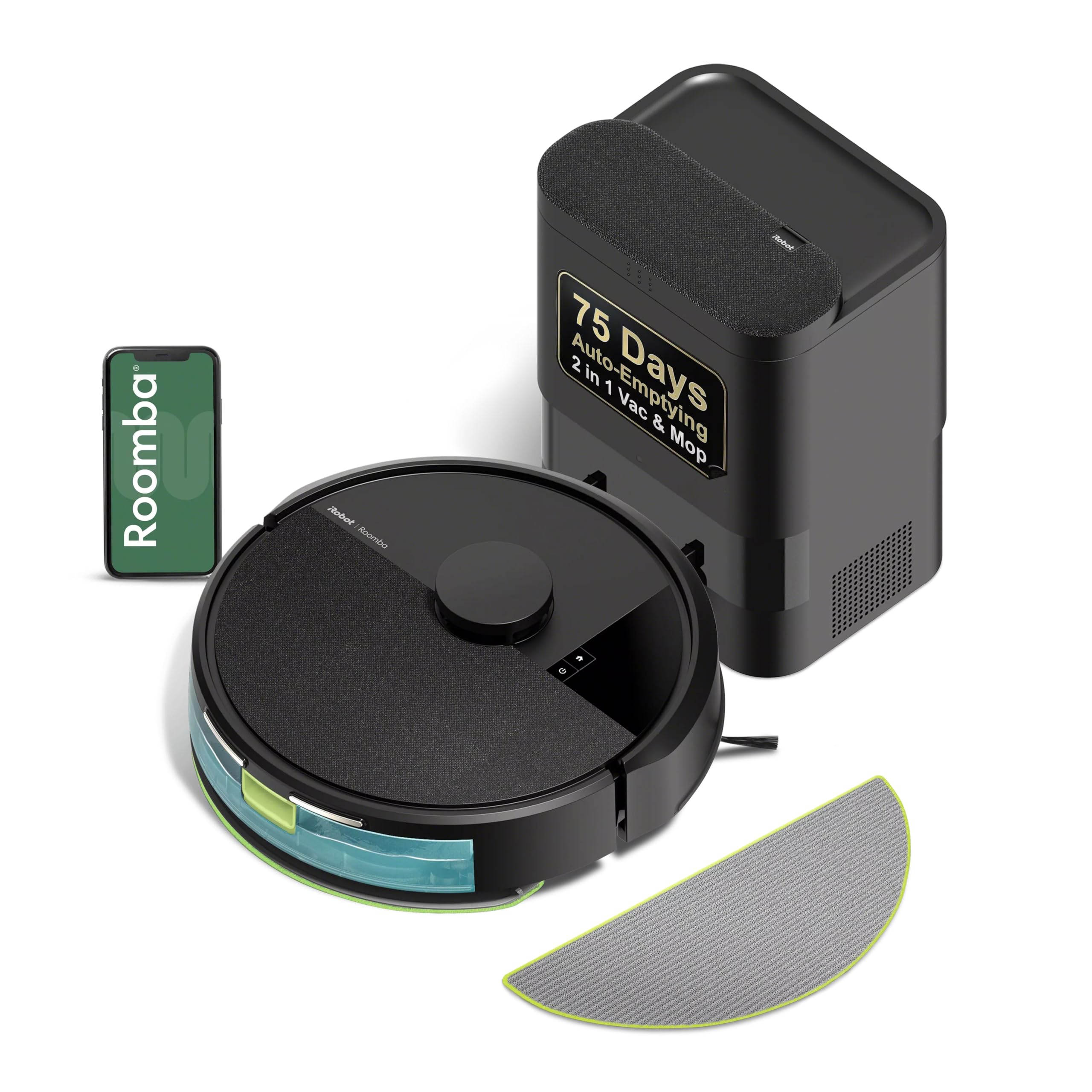
The iRobot that vacuums and mops together and empties itself for weeks so you don’t have to.
This robot is built for the person who wants to set it up once and forget about it. The AutoEmpty Dock captures dirt in a sealed bag that locks in 99% of allergens down to 0.7 microns — meaning you are not breathing in whatever dust it just sucked up when you later toss the bag. The maker claims the suction is 70x Power-Lifting compared with the Roomba 600 series, which buyers confirm picks up deeply embedded pet hair and crumbs from both tile and low-pile carpet.
The mop uses a feature called SmartScrub, which uses a micro-pump (a small electronic pump) to keep the mop pad evenly moist so it scrubs footprints and dried-on spills on tile without flooding the grout. Buyers report that the auto-empty base is noisy when it cycles but lasts weeks without attention. The 100-minute battery life is shorter than many competitors — a trade-off for the brand’s proven reliability and obstacle avoidance, even in low light.
Hands-off hero: The 75-day hands-free cleaning cycle thanks to the sealed bag in the dock is the longest among the picks here.
The catch: At 100 minutes, the battery will not cover a very large home on one charge, and it needs a 2.4GHz network for setup.
Reach for this if: you want iRobot’s reliable navigation, a dock that keeps dust locked away, and a robot that handles both vacuuming and mopping on tile without you lifting a finger for weeks.
Look elsewhere if: your home is larger than about 1500 square feet and you need longer uninterrupted runtime on a single charge.
7. Roborock Q7 M5+

The self-emptying workhorse with the strongest suction in this round-up and a dual anti-tangle system.
If your tile floors are in a home with long-haired pets or shedding family members, the Roborock Q7 M5+ brings 10000Pa suction — the highest published figure here — to pull stuck pet hair from grout lines and rug edges. The Dual Anti-Tangle Design uses a JawScrapers main brush and a side brush that the maker claims resists wrapping at a 0% hair-tangling rate, so you are not constantly pulling fur off the roller. The 2.7L sealed dust bag in the dock means up to 7-9 weeks of hands-free cleaning before you swap the bag.
The PreciSense LiDAR navigation (a laser mapping system) creates a precise map of your home and cleans in efficient rows, not random patterns. It also vacuums and mops in one pass with three adjustable water flow settings — useful for dialing down moisture on tile so grout dries quickly. Owners mention the mapping is fast and the app is easy to use, though the dust bin fills quickly and the robot occasionally gets tangled in loose cords left on the floor.
What stands out
- 10000Pa suction is the highest among these picks, effective on deep grime.
- Dual Anti-Tangle design resists pet hair wrap better than most.
- 7-9 weeks of self-emptying between bag changes.
Watch out
- Bin fills quickly on very dusty homes — requires more frequent robot maintenance.
- Customers note occasional tangling in power cords if not prepped.
Who it fits: Pet owners who struggle with fur wrapped around their old robot’s brush and want a self-emptying dock for real hands-off cleaning. The strong suction also helps on tile that gets tracked-in dirt from outdoors.
Who might pass: If 10000Pa feels like overkill for your small apartment, you can save money with a less powerful model.
6. MONSGA Self-Emptying MR7PRO
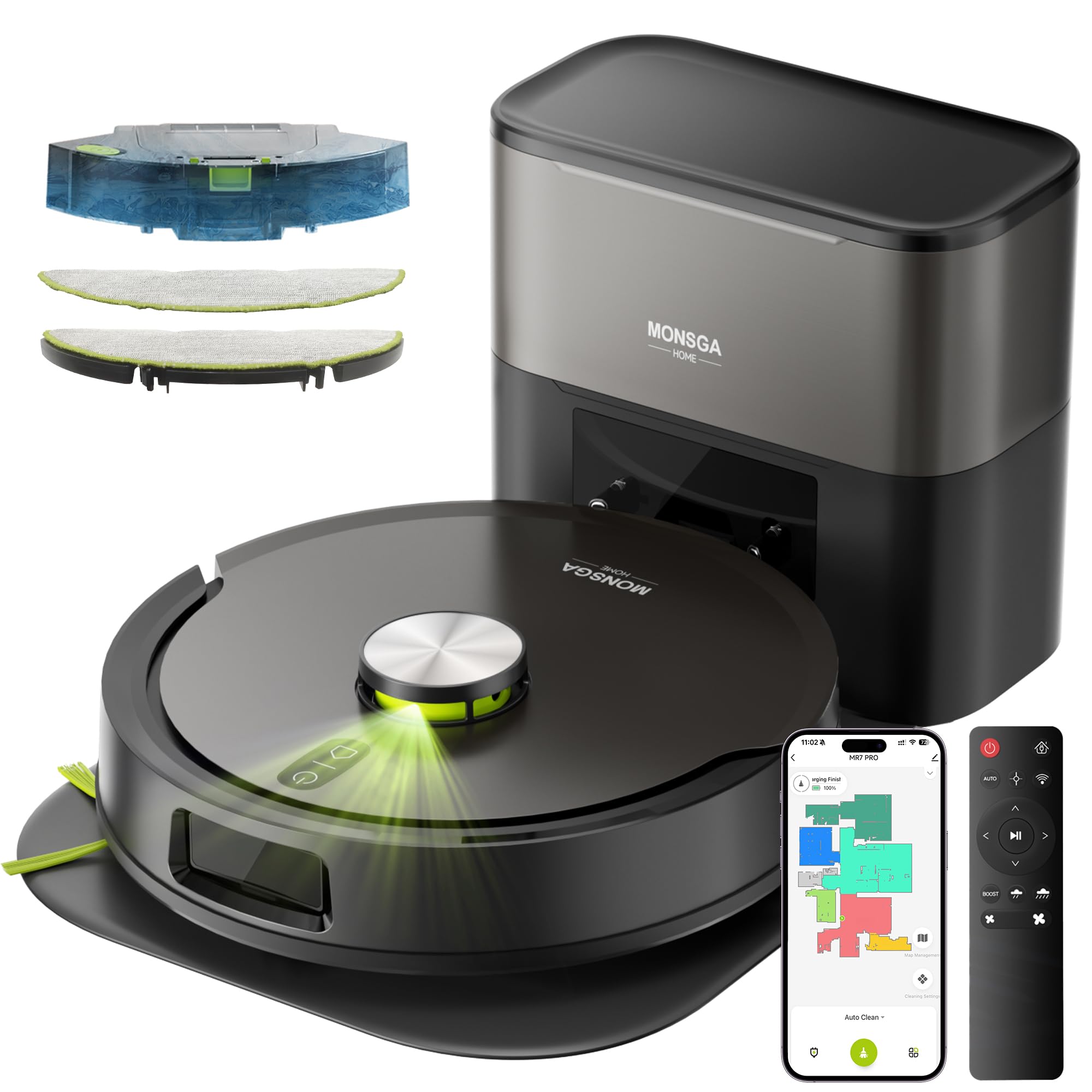
A self-emptying robot with an 8000Pa suction, a huge 460ml water tank, and 160 minutes of runtime.
This MONSGA model is a direct competitor to the Roborock above but with a bigger water tank — 460ml versus the typical 200ml-300ml you see on most competitors — meaning it can mop a larger area of tile before you need to refill. The 8000Pa suction auto-boosts when it detects carpet, and the Dual Anti-Tangle brush system with an all-rubber main roller aims to reduce hair wrap. The self-emptying base holds a 4L dust bag that lasts up to 90 days, which is the longest claimed bag life in this round-up.
Reviewers point out that the LiDAR mapping is fast and the robot navigates furniture well, and several mention the mop function handles surface dirt effectively on tile floors. One reviewer noted they were hesitant to use the mop because of their carpets, but the robot lets you set no-mop zones in the app to keep rugs dry. The 160-minute runtime with a 3200mAh battery is generous — it covers up to 2690 square feet in one go.
Big tank, long run: The 460ml water tank is larger than standard 200ml tanks on tile floors.
Consider this: While the mopping is effective for daily maintenance, shoppers say it does not deep-scrub stuck-on messes.
Pick this if: you have a large home with a lot of tile and want a self-emptying base that can go months without a bag change, plus a battery that runs for almost three hours.
skip it if: you only have a small apartment — the features are over-built for a single room.
5. Tikom L8000 Plus
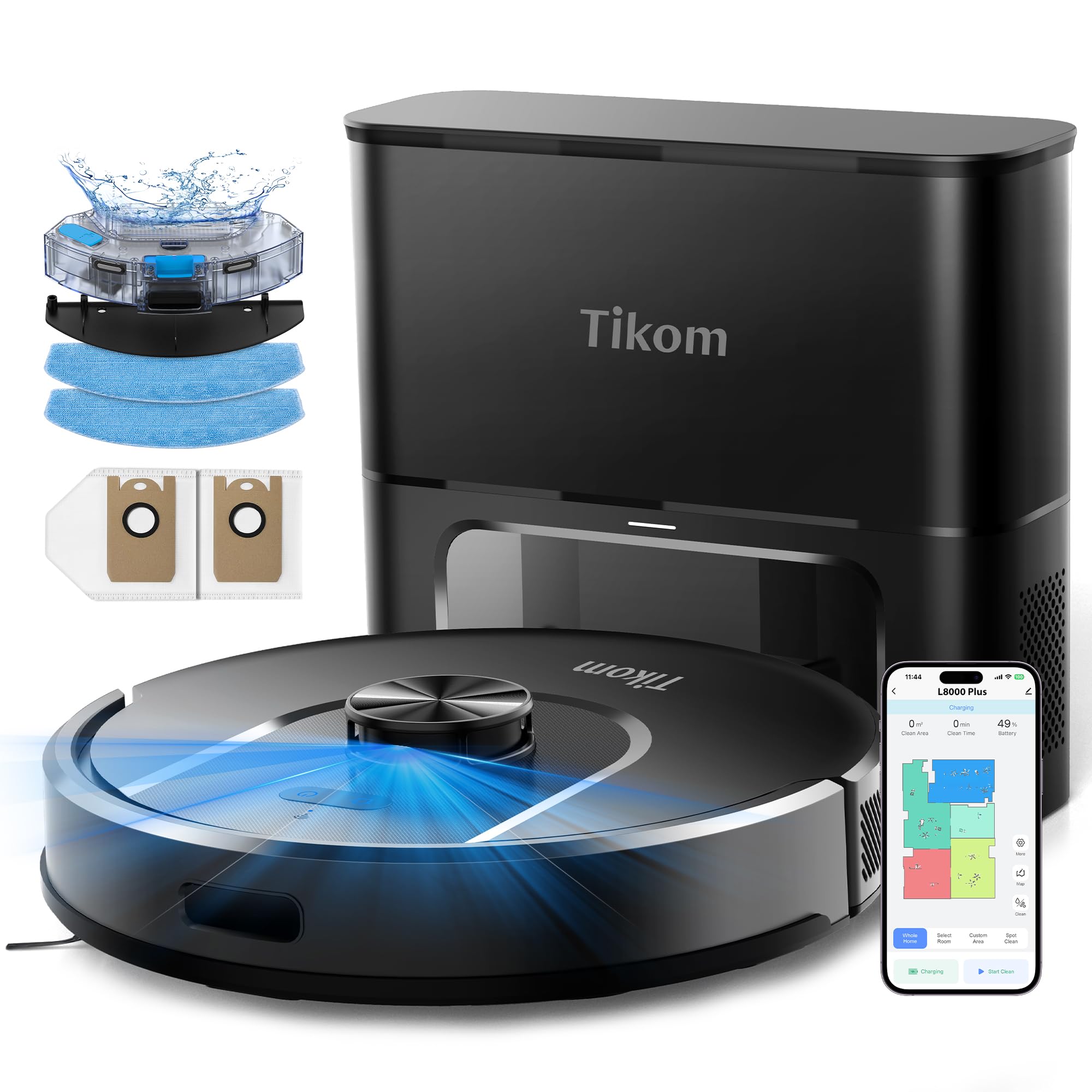
The self-emptying Tikom brings 6000Pa suction and a 90-day dust bag at a mid-range price point.
If you want the convenience of a self-emptying base but do not need the absolute highest suction, the Tikom L8000 Plus strikes a nice balance. The 3L dust bag holds up to about 90 days of debris, and the 6000Pa suction auto-boosts on carpet to pull embedded dirt from rug fibers. The 360° LiDAR navigation creates maps and saves up to five floor plans, which is handy if you have a multi-level home with different tile layouts on each floor.
The 2-in-1 vacuum and mop design lets you customize with 3 suction levels and 3 water flow settings. In mop mode, you need to remove the mop holder or set a no-go zone in the app to keep the robot off your carpet. Buyers report the app is user-friendly with good scheduling and no-go zone features, and one buyer mentioned the mop function is just a damp cloth rather than a true scrub — fine for light maintenance on tile.
The strong points
- Self-emptying base with a 3L bag reduces dust bin trips for weeks.
- LiDAR navigation with multi-floor memory for homes with different levels.
- 6000Pa suction is strong for both tile and low-pile carpet.
The weaker points
- Mop function is a damp cloth, not suitable for scrubbing sticky messes.
- Reviewers occasionally mention the robot getting stuck under low furniture.
Great for: someone moving up from a basic robot vacuum who wants self-emptying convenience without paying premium Roborock or iRobot prices.
Not ideal for: heavy mopping duties — this is a light maintenance mop, not a scrubbing machine.
4. ILIFE A30 Pro
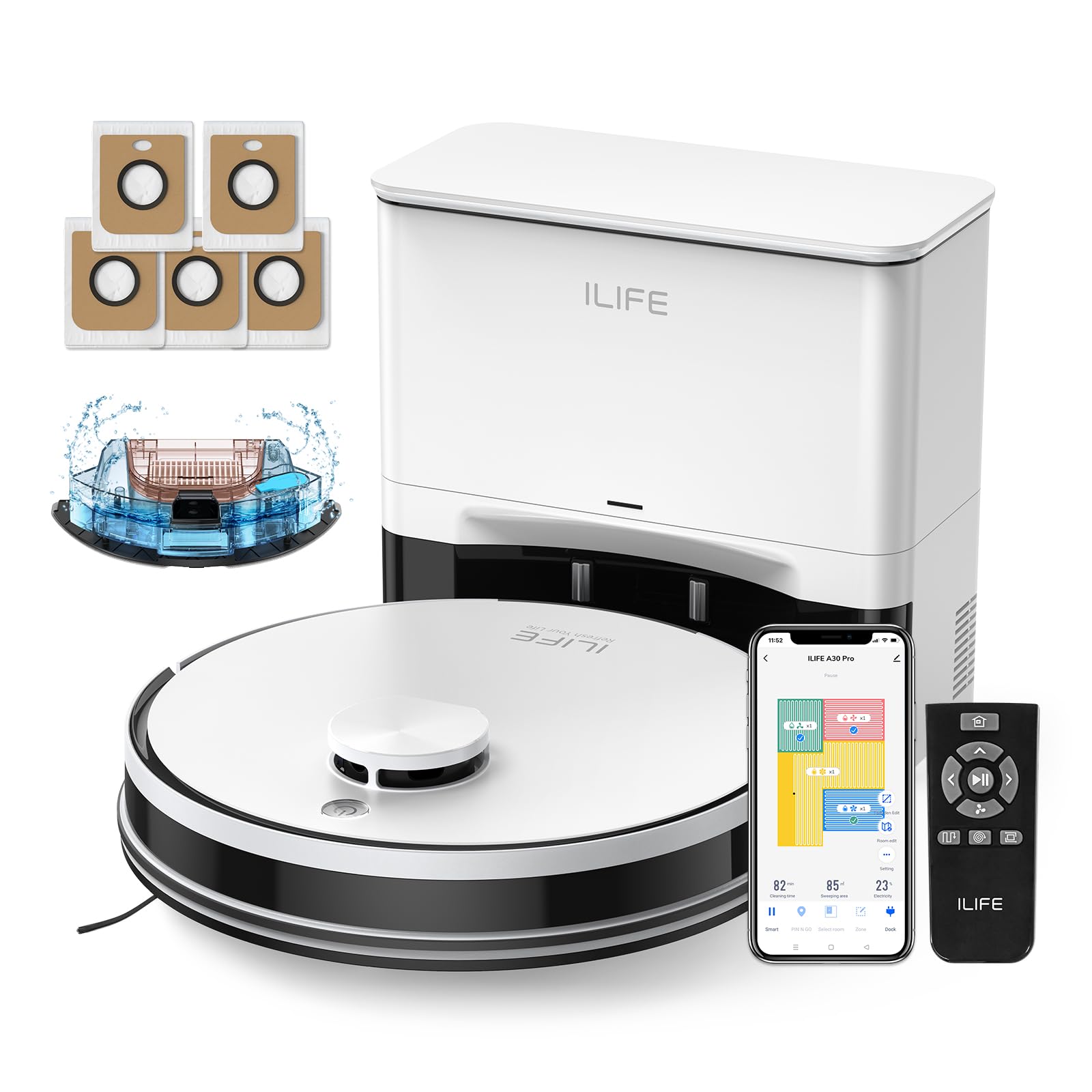
A self-emptying robot with five dust bags good for up to 40 weeks — the longest bag kit here for the price.
The ILIFE A30 Pro uses LiDAR navigation with the Slam algorithm to map your home and clean in efficient paths. Its 5000Pa suction has four modes: Quiet at 500Pa, Standard at 1000Pa, Strong at 1800Pa, and Max at 5000Pa — so you can save battery on tile where less suction is needed. The 2-in-1 water tank holds 200ml each for the dustbin and water tank, letting it vacuum and mop simultaneously without swapping parts.
The headliner feature is the self-emptying base that uses 5 x 2.5L capacity dust bags — each bag lasts up to 8 weeks, so the included five bags cover about 280 days of cleaning before you need to buy more. Owners mention the setup is easy, the mapping is good, and the robot handles thresholds up to 3/4 inch without trouble. The mopping is considered suitable for daily maintenance rather than deep cleaning, and the robot does not clean corners perfectly.
Long value: Five dust bags included means almost a year of cleaning before you spend a cent on refills.
Keep in mind: The mopping function is basic — owners say the pad dries out quickly and the damping is sporadic.
Who it fits: Budget-conscious buyers who still want a self-emptying dock and are willing to accept basic mopping in exchange for a great price.
Who might skip: If mopping is your primary need rather than vacuuming, the weak mopping performance will disappoint.
3. Tikom G8000 Max

A straightforward robot mop with strong 5000Pa suction and a 300ml water tank at a reasonable price.
The Tikom G8000 Max keeps things simple: 5000Pa suction for tile and carpet, a 450ml dustbin paired with a 300ml water tank for simultaneous vacuuming and mopping, and 150 minutes of battery in quiet mode. The ultra-slim design at 2.99 inches tall means it slides under most sofas and bed frames where dust collects on tile. It also has anti-collision and anti-fall sensors (sensors that detect drops like stairs) so it does not tumble off a step on a split-level tile floor.
Buyers consistently mention that the 5000Pa suction picks up dust, crumbs, and pet hair very well on hard floors, and the vacuum and mop combo saves time compared to doing two separate passes. Some note that the robot occasionally gets stuck under sofas with low clearance and that the app cannot schedule specific rooms — a limitation if you want to clean the kitchen tile but skip the bedroom. The included remote control is a nice touch for less tech-savvy users.
What works
- 2.99-inch height fits under most furniture for tile dust collection.
- 5000Pa suction is strong enough for daily tile cleaning.
- 150-minute runtime covers typical homes without recharge.
What does not
- App lacks room-specific scheduling — you get whole-home or zone cleaning only.
- Some units reported charging issues after less than a month of use.
Solid pick for: someone who wants a simple, powerful robot mop for tile without paying extra for a self-emptying dock or complex app features they will not use.
Skip if: you need precise room-by-room scheduling in the app, or you are wary of early failure reports from some buyers.
1. MONSGA MS1 Max
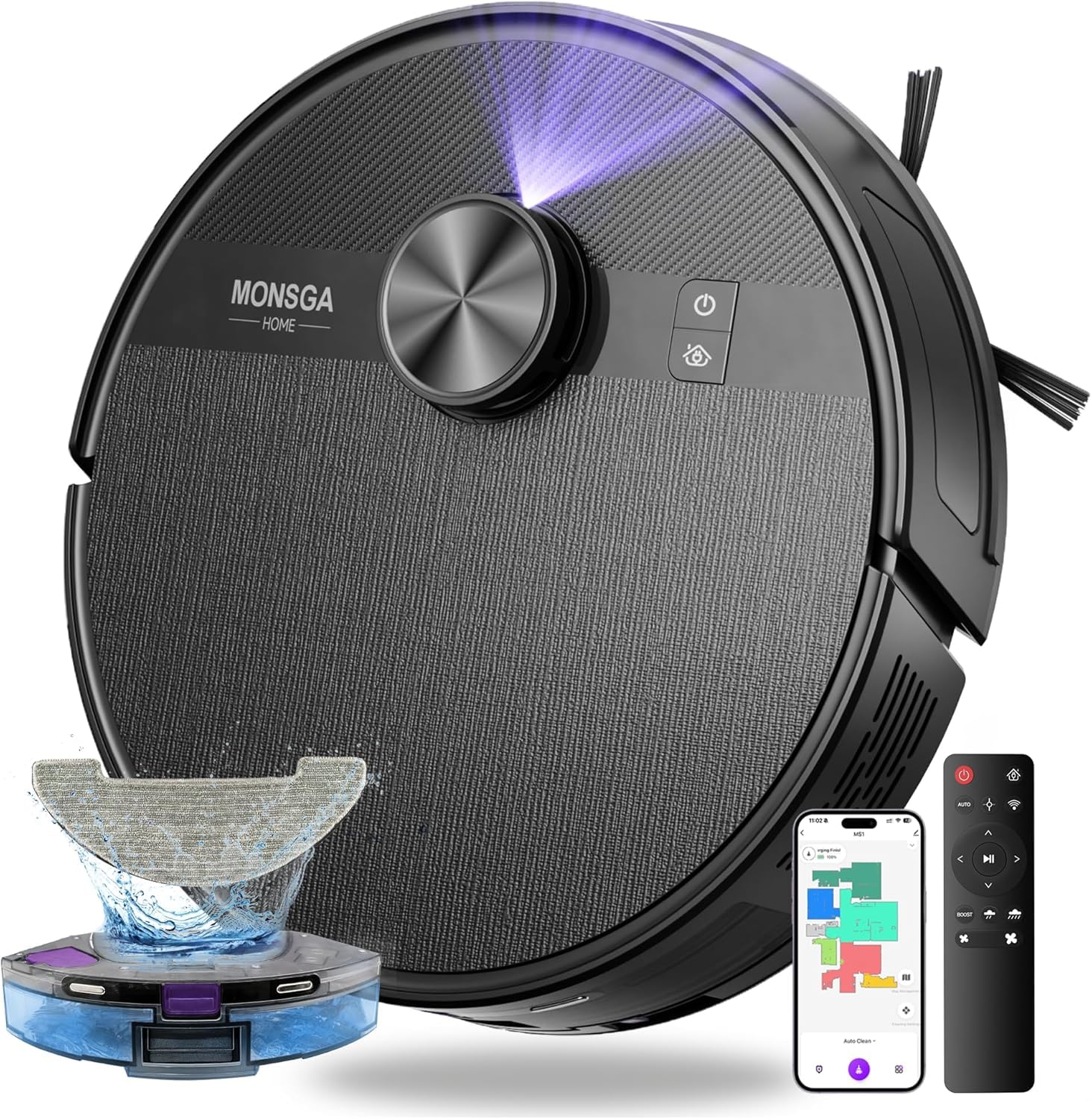
The MONSGA with LiDAR navigation, 7000Pa suction, and a class-leading 180-minute battery for large tile homes.
The advanced laser mapping (LiDAR) builds a full floor plan in about 10 minutes and supports up to five saved maps for multi-level homes. The 340ml dustbin and 270ml water tank let it sweep, vacuum, and mop in one pass over tile without stopping to empty or refill constantly.
Customers note that the robot picks up dirt and pet hair efficiently and that the app offers good customization with no-go zones and room-specific cleaning modes. However, some users experienced a frustrating issue: after about two weeks, the unit stopped charging on the dock. The manufacturer includes a 2-year full warranty, and one owner reported that a replacement unit worked fine afterward. At under 55dB (quieter than a normal conversation), it is one of the quieter options on this list.
Runtime king: 180 minutes is the longest battery life among any pick here — great for large open-plan tile areas.
The reliability watch: Multiple verified reviewers point out charging dock failures within weeks of use, though the warranty covers replacements.
Pick it for: large single-story tile homes where you want maximum runtime and smart mapping with multi-floor support.
Hesitate if: you need absolute reliability from the start — the charging dock issue appears in several reviews.
2. Kilgone G20
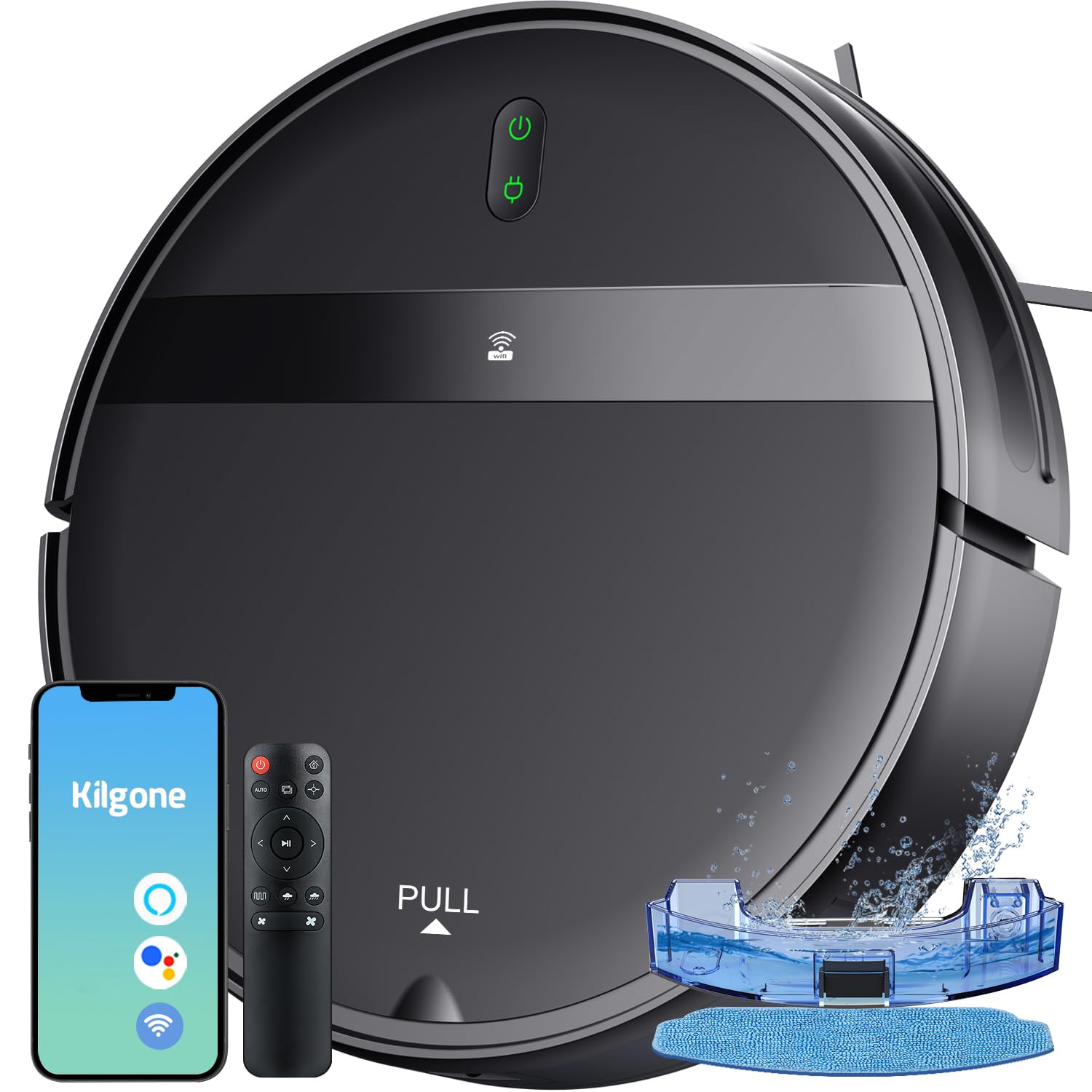
The cheapest entry point that still delivers a satisfying deep clean on tile floors.
At 2300Pa suction, the Kilgone G20 is the least powerful robot here, but on sealed tile floors, that is enough for daily dust and dirt — and one customer observed they ran it once as a vacuum only and it “sucked up so much dirt from the tile floor that I was impressed.” The 230ml smart water tank evenly mops hardwood and tile with a streak-free finish, and the 120-minute battery covers about 1290 square feet, which is typical for a small to medium apartment.
The robot has four cleaning modes: Zig-Zag, Auto, Spot, and Edge. It connects to the Tuya Smart app for scheduling and voice control via Google Assistant. Some buyers struggled with the iPhone app pairing — one user with an iPhone 14 reported the scan bar was not catching — and a few noted the robot gets stuck under low cabinets.
Unexpected strong points
- Buyers consistently say the suction impresses on tile despite the lower spec.
- 120-minute runtime covers typical apartment layouts adequately.
- Four cleaning modes including Zig-Zag for faster coverage.
Watch out for
- Some iPhone users report difficulty connecting to the app initially.
- Low clearance threshold means it gets stuck under short cabinets.
Perfect for: a first-time robot mop buyer on a tight budget who has mostly tile floors and wants a surprisingly effective cleaner.
Not the one if: you have thick carpet or a large home over 1300 square feet — the battery and suction will come up short.
Understanding the Specs
Suction Power in Pascal (Pa)
This number tells you how much pulling force the vacuum motor generates. On sealed tile floors, you do not need the highest possible suction — 2000Pa to 5000Pa is usually enough for dust, crumbs, and pet hair. Higher suction matters more if you have medium-pile carpet or rugs where dirt gets embedded deeper. The Roborock Q7 M5+ at 10000Pa is overkill for bare tile but excellent for homes with a mix of carpet and hard floors.
Water Tank and Mop Flow Control
The water tank capacity, measured in milliliters (ml), determines how much area the robot can mop before you need to refill. For tile, 200ml to 300ml is typical, but the MONSGA MR7PRO’s 460ml tank covers almost twice the area per fill. Adjustable water flow is important because you can use a lower flow for routine dust mopping and higher flow for sticky spots — grout lines absorb water, so you do not want the robot dumping too much moisture.
FAQ
Is a robot mop safe for all tile floor types?
Can a robot mop replace my regular deep mopping?
Will the robot mop wet my rugs or carpets?
How long does a robot mop battery last on tile?
Do I need LiDAR navigation for tile floors?
Can I use cleaning solutions in the robot’s water tank?
How often do I need to clean the robot mop itself?
Will a robot mop damage my grout over time?
What is the difference between a robot vacuum with a mop attachment and a dedicated robot mop?
Do all robot mops work with Amazon Alexa and Google Home?
Final Thoughts: The Verdict
Across the board, the robot mop for tile floors winner is the iRobot Roomba 105X because it combines strong suction for tile and carpet with a 75-day self-emptying dock and a micro-pump mop that scrubs without soaking grout. If you want maximum battery life and a huge water tank, grab the MONSGA Self-Emptying MR7PRO. And for the best value on a tight budget, the Kilgone G20 punches above its weight on tile.
How We Picked
We do not accept paid placement, and we did not hands-on test every unit. Instead, we match each pick to a real buyer and use-case by comparing the manufacturers’ published specifications against the patterns in verified customer reviews — so you get each pick’s real strengths and trade-offs instead of marketing copy.
Sources & Methodology
Specifications: manufacturer listings and product documentation. Review insights: verified customer reviews, as of July 2026. Pricing: not shown on this page (it changes often); check the current price via the retailer link.
As an Amazon Associate, Gadgets Feed earns from qualifying purchases. This does not affect which products we feature.
Product prices and availability are accurate as of the date/time indicated and are subject to change. Any price and availability information displayed on Amazon at the time of purchase will apply to the purchase of this product. As an Amazon Associate I earn from qualifying purchases.
CERTAIN CONTENT THAT APPEARS ON THIS SITE COMES FROM AMAZON. THIS CONTENT IS PROVIDED "AS IS" AND IS SUBJECT TO CHANGE OR REMOVAL AT ANY TIME.
Amazon and the Amazon logo are trademarks of Amazon.com, Inc. or its affiliates.