
Our readers keep the lights on and my morning glass full of iced black tea. As an Amazon Associate, I earn from qualifying purchases.
Specs are compiled from manufacturer listings and verified buyer reviews and can change over time — please confirm the key details on the product page before buying.
If you just bought new furniture, finished a renovation, or live where off-gassing is real, the smell and invisible formaldehyde floating through your rooms isn’t just annoying—it is a health worry that standard HEPA (high-efficiency particulate air) filters barely touch. This guide looks at purifiers built with a specialized carbon or catalytic filter to actually trap or break down that specific gas, and we separate the ones that just claim it from the ones that deliver a measurable difference.
I’m Min — the founder and writer behind Gadgets Feed. This guide is built by comparing the manufacturers’ published specifications and the patterns across verified customer reviews, so you get each pick’s real strengths and trade-offs instead of marketing spin.
if you need a budget-friendly unit for a single bedroom or a premium machine for an open-concept home, pick the best air purifier for formaldehyde from this list that matches your room size, noise tolerance, and long-term filter costs.
Quick Picks
- Wyze Air Purifier with Formaldehyde Filter (Premium) — Best Overall
- Air Purifiers for Home Large Rooms SIESEAN AP-400 — Best Value
- WINIX 5510 Air Purifier — Smart Pick
- AirDoctor AD2000 — Compact & Clinical
- AirDoctor AD3500 — Large-Room Performer
- Dyson Purifier Cool Formaldehyde TP09 — Fan + Purifier
- Austin Air HealthMate Plus B450 — Carbon King
- Dyson Purifier Big+Quiet Formaldehyde BP03 — Air Mover
How To Choose The Best Air Purifier For Formaldehyde
Removing formaldehyde requires a filter stage that tackles gases, not just particles. Here is what to check before you buy.
Look for a dedicated carbon or catalytic filter
A standard HEPA filter catches dust and pollen but lets formaldehyde molecules pass right through. You need a thick activated-carbon layer, a carbon-and-zeolite mix, or a catalytic filter (like Dyson’s selective-catalytic-oxidation filter) that is designed to trap or break down gaseous VOCs (volatile organic compounds — the chemicals that off-gas from new furniture, paint, and cleaning products). The heavier the carbon load, the longer it lasts against formaldehyde.
Match the CADR to your room size
CADR (clean air delivery rate) measures how many cubic feet of air the unit cleans per minute. For formaldehyde, you want a high CADR for the room you are treating. A unit rated for 500 square feet will cycle the air about four times per hour in a room of that size, which is ideal for keeping VOC levels low.
Check filter replacement frequency and cost
Carbon filters saturate over time — once they are full of captured gases, they stop working and can even re-release them. Some filters need replacing every 3-6 months, while others last up to 5 years. Calculate the annual cost (filter price divided by years of life) to avoid surprises.
Quick Comparison
On smaller screens, swipe sideways to see the full table.
| Model | Best For | Room Coverage | Weight | Filter Type | Amazon |
|---|---|---|---|---|---|
| Wyze Air Purifier Premium | Formaldehyde-specific filter at a smart-home price | 500 ft² | 9 lbs | HEPA 13 + Formaldehyde Filter | $180.98Amazon |
| Air Purifiers for Home SIESEAN AP-400 | Value large-room coverage | 3500 ft² | 11.25 lbs | H13 True HEPA + Carbon | $149.97$249.99Limited time dealAmazon |
| WINIX 5510 | Smart app control & wildfire smoke | 1881 ft² | 13.3 lbs | True HEPA + Carbon + Plasmawave | $179.99Amazon |
| AirDoctor AD2000 | Hospital-grade filtration for small-medium rooms | 1220 ft² | 12.9 lbs | UltraHEPA + Carbon/VOC | from $449.00Amazon |
| AirDoctor AD3500 | Large-room UltraHEPA with real-time VOC monitoring | 2520 ft² | 24 lbs | UltraHEPA + Carbon/VOC | $559.00Amazon |
| Dyson Purifier Cool TP09 | Fan + catalytic destruction of formaldehyde | — | 11 lbs | HEPA + Catalytic Formaldehyde | $735.36Amazon |
| Austin Air HealthMate Plus B450 | Massive carbon load for heavy VOCs & smoke | 1500 ft² | 47 lbs | Activated Carbon + Zeolite + HEPA | $895.00Amazon |
| Dyson Purifier Big+Quiet BP03 | Top-tier large-space purification with permanent catalytic filter | 32 ft projection | 26.24 lbs | HEPA H13 + Catalytic Formaldehyde | $929.99$1,099.99Amazon |
In‑Depth Reviews
1. Wyze Air Purifier with Formaldehyde Filter (Premium)

This Wyze unit earns the best-overall spot because its dedicated formaldehyde filter resolves VOC reactions in days, per buyer feedback, and it weighs 9 lbs versus the WINIX 5510 at 13.3 lbs.
You get three filter options with this machine — Standard, Special, and Premium — and it is the Premium filter that directly targets formaldehyde and heavy odors. At 9 pounds and 11.8 x 11.6 x 20.9 inches, you can move it from a bedroom to a living room easily. It cleans a 500 ft² room over three times per hour, with a CADR (clean air delivery rate, cubic feet per minute) of 350 m³/h.
The laser dust sensor scans air down to 0.3 microns and auto-adjusts the fan speed. On low, it runs at 21 decibels (whisper-quiet, so you can sleep right beside it); on high, it reaches 54 decibels (about the level of a normal conversation). The app tracks indoor and outdoor air quality in real time. Buyers report that the formaldehyde filter resolved a VOC reaction from a new closet within days — air quality dropped from 60 to single digits, and symptoms disappeared in 2-3 days.
It also weighs 9 lbs versus the WINIX 5510 at 13.3 lbs, and it is more compact than the AirDoctor AD2000, making it a great fit for someone who needs effective formaldehyde control without dedicating a huge corner of the room. If you want the best all-rounder with a formaldehyde-targeting filter, this is the one to pick over the larger WINIX.
What you gain
- Dedicated formaldehyde filter option that works fast
- Smart WiFi and app control for real-time monitoring
- Quiet 21 dB on low, good for sleeping
What to watch
- Higher fan speeds produce noticeable vibration
- Only the Premium filter targets formaldehyde — standard filter does not
2. Air Purifiers for Home Large Rooms SIESEAN AP-400
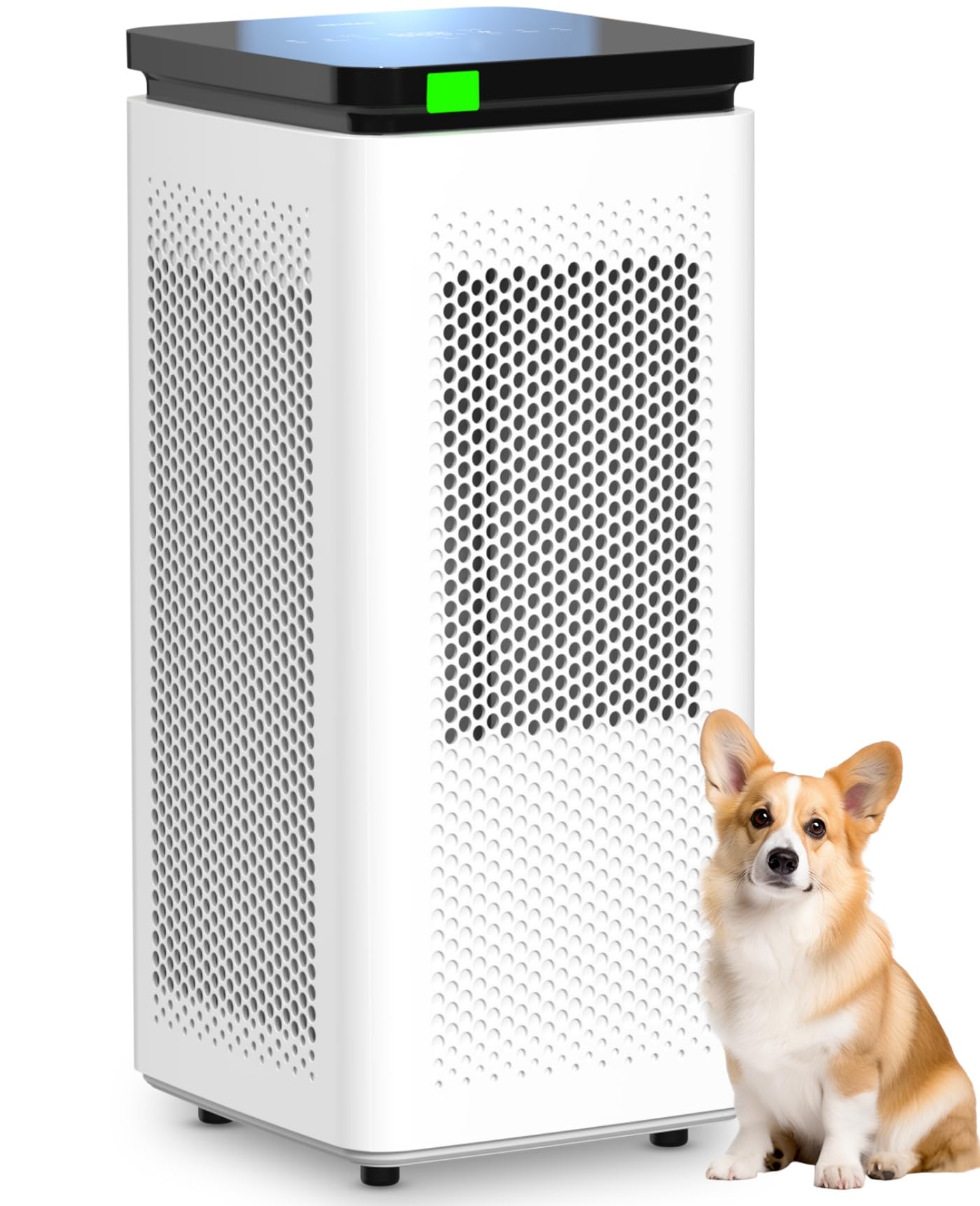
This unit covers 3500 ft², while the Wyze Premium covers 500 ft², making it the best value for large homes.
It uses an H13 True HEPA filter combined with a carbon filter to tackle particles down to 0.3 microns (99.97% filtration) and to absorb VOCs (volatile organic compounds) and odors. The built-in PM2.5 sensor (measures particles as small as 2.5 microns) shows real-time particulate levels on the digital display, and Auto Mode adjusts the fan speed based on what the sensor reads. It has a 235 CFM CADR (cubic feet per minute of clean air).
Owners mention that Auto Mode adjusts to the particle count and reduces high levels to sub-5 PM in minutes. At 10.04 x 10.04 x 18.9 inches, it is compact for its coverage area. Sleep mode drops noise to 30 decibels — about the level of a quiet library — and the dimmer turns off those bright panel lights at night. A child lock and timer add safety for homes with kids or pets. The maker recommends replacing the filter every 3-4 months.
Compared to the Wyze Premium, this one covers 3500 ft² while the Wyze covers 500 ft², and it weighs 11.25 lbs versus 9 lbs for the Wyze, making it a better choice for open floor plans. However, its carbon filter handles VOCs generally and is not specifically optimized for formaldehyde; you rely on the general carbon layer.
Why it works
- Massive 3500 ft² coverage for large homes
- Real-time PM2.5 display gives you immediate feedback
- Dual-sided intake doubles the filtration speed
Note
- Carbon filter handles VOCs but is not specifically optimized for formaldehyde — you rely on the general carbon layer
3. WINIX 5510 Air Purifier

The WINIX weighs 13.3 lbs while the Wyze weighs 9 lbs, and it offers a washable pre-filter to save replacement costs and a near-silent 23.5 dB sleep mode for bedrooms.
The WINIX 5510 uses a washable fine mesh pre-filter, an advanced odor control carbon filter (designed to reduce VOCs and household odors), a True HEPA filter, and a Plasmawave ionizer. This combination captures pet dander, smoke, and cooking smells. It is AHAM-verified for 392 sq ft but can cycle air in rooms up to 1,882 sq ft in one hour (941 sq ft in 30 minutes).
At 13.3 pounds and 15.9 inches deep, it is larger than the Wyze Premium. The Winix Smart App lets you control the unit remotely, and it works with Alexa and Google Home. The light-automated sleep mode kicks on when the room darkens and returns to Auto Mode when lights come back on. Customers note that it greatly reduced wildfire smoke symptoms, and one noted the 1-inch thick HEPA plus carbon filter lasts about 12 months.
Compared to the Wyze at 9 lbs, this unit weighs 13.3 lbs, reflecting the larger carbon filter and the extra filtration stage. It is quieter on its lowest speed at 23.5 dB than the Dyson TP09 on its general running mode. However, Alexa integration is not a native skill — it works through a third-party service, which may need extra setup.
Strong points
- Smart app + voice control for convenience
- Washable pre-filter reduces replacement cost
- Auto sleep mode is nearly silent
Downsides
- Alexa integration is not a native skill — it works through a third-party service
- Large footprint (15.9 inches deep) may crowd a small room
4. AirDoctor AD2000
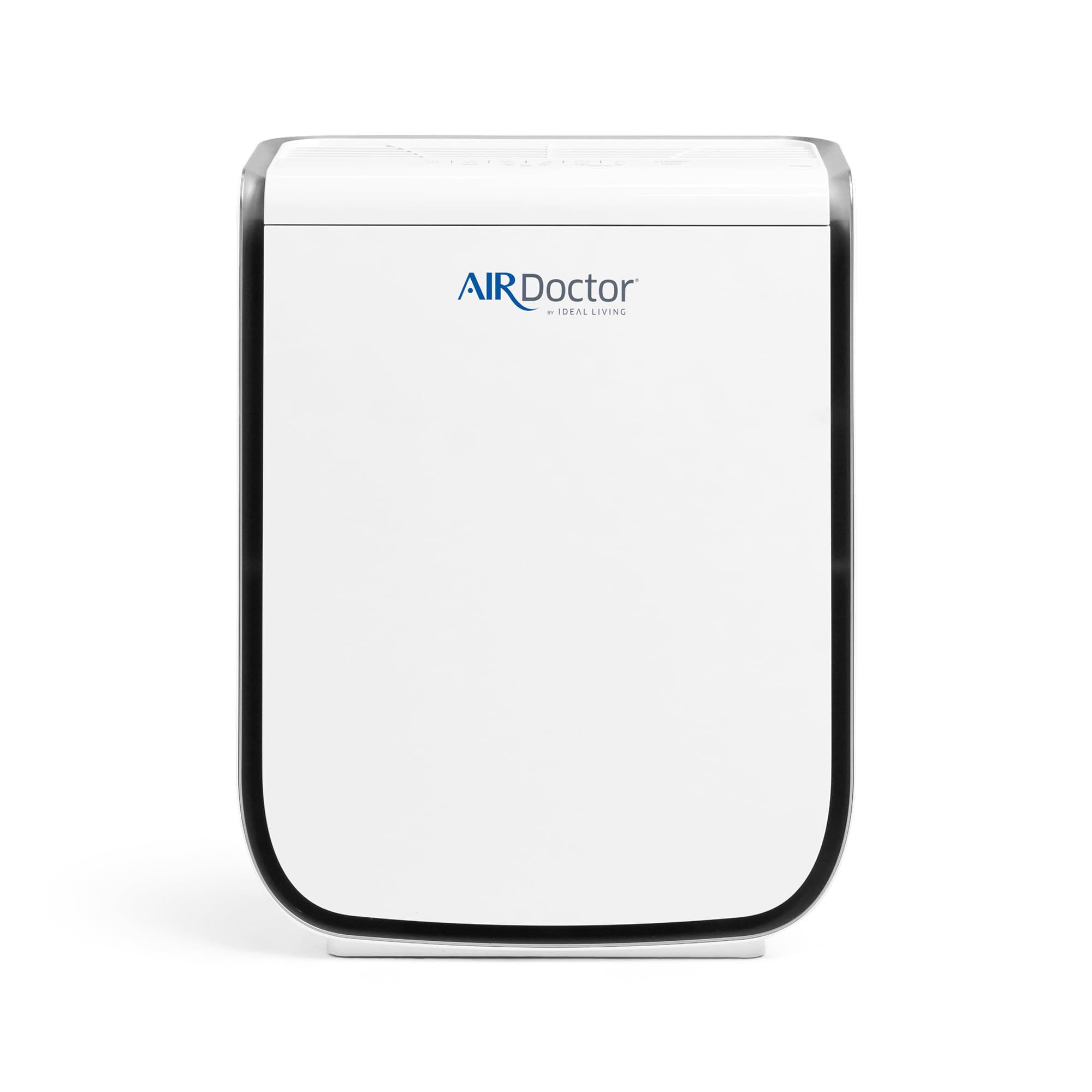
At 9.1 inches wide, the AD2000 packs an UltraHEPA filter that captures 99.99% of particles at 0.003 microns, compared with the standard HEPA benchmark of 0.3 microns.
The AirDoctor AD2000 is built for small to medium rooms (305 ft² in 15 minutes, up to 1,220 ft² in 1 hour). Its 3-stage filtration includes a pre-filter, a Premium Activated Carbon filter (loaded with carbon and potassium permanganate to break down gases and VOCs), and an UltraHEPA filter that captures 99.99% of particles at 0.003 microns, compared with the standard HEPA benchmark of 0.3 microns. At 12.9 pounds and 9.1 inches wide, it is the narrowest of the mid-range picks and slides into tight bedroom corners easily.
The AirDoctor Halo display uses PM2.5 sensors to show real-time air quality with color-coded levels, and Auto Mode ramps up to Boost when it detects a spike. The maker recommends replacing the Carbon filter every 6 months and the UltraHEPA every 12 months. One reviewer noted that after a first unit had sensor issues, the replacement was quiet and responsive to smoke. Another owner noted a noticeable difference in air quality for a sick relative, saying it kept the air crisp and clean.
Compared to the larger AirDoctor AD3500, the AD2000 covers 1,220 ft² while the AD3500 covers 2,520 ft², and it weighs 12.9 lbs versus 24 lbs, making it the better choice for a single bedroom or home office. If your space is under 1,220 ft² and medical-grade particle removal matters, go with this over the heavier AD3500.
What stands out
- UltraHEPA captures 99.99% at 0.003 microns — well beyond typical HEPA
- Carbon + potassium permanganate for effective VOC/odor reduction
- FSA/HSA eligible for pre-tax purchase
What holds it back
- Premium filter replacements are pricey
- Some units have had sensor inconsistency issues
5. AirDoctor AD3500
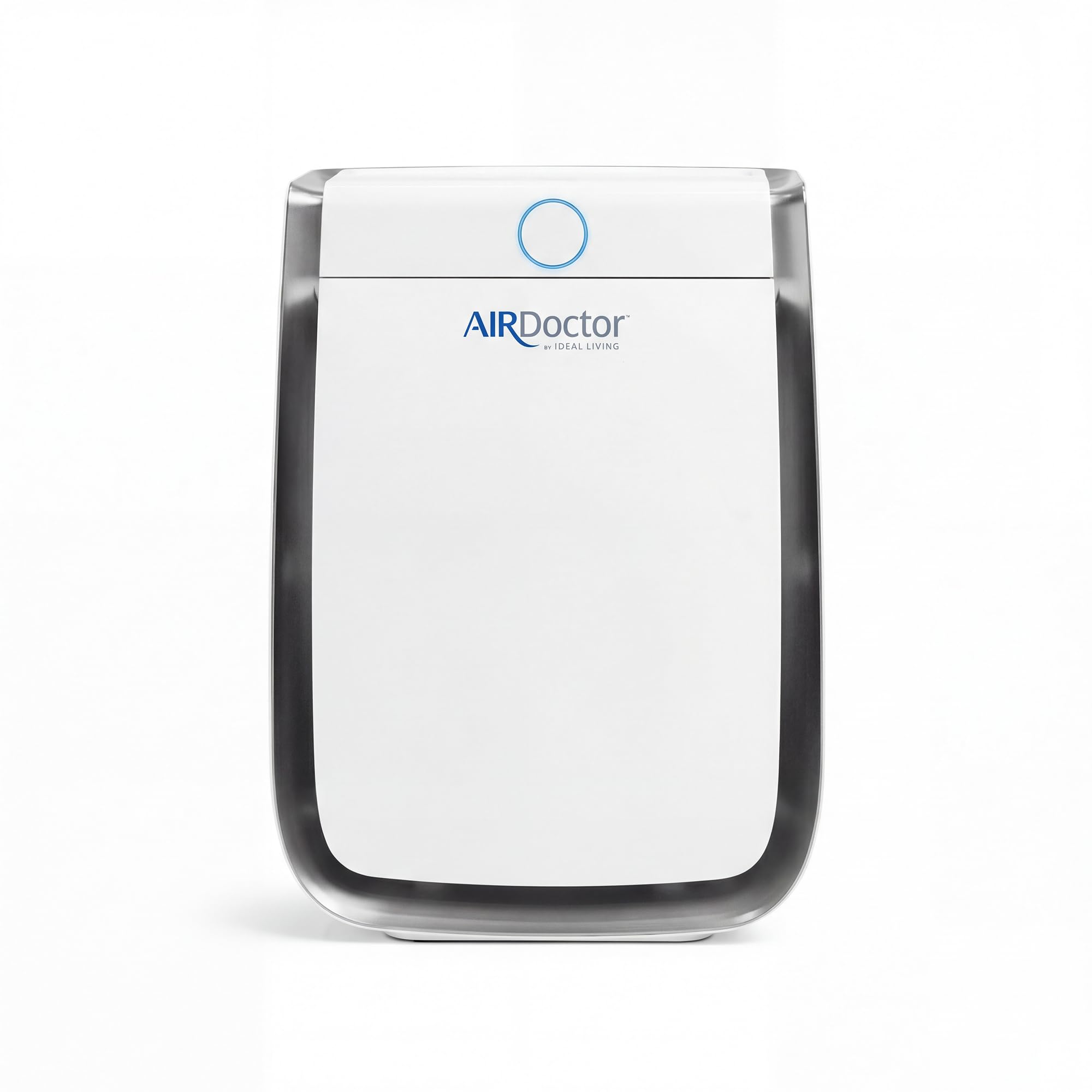
The AD3500 scrubs a 2,520 ft² area using the same UltraHEPA system as the AD2000, but reviewers point out it removes about 90% of cooking smells — a concrete benefit the smaller unit cannot match at scale.
The AirDoctor AD3500 uses the same 3-stage system as the AD2000 — pre-filter, Premium Activated Carbon with potassium permanganate, and UltraHEPA — but scaled up for much larger rooms. It cleans 630 ft² in 15 minutes and up to 2,520 ft² in one hour. The Halo PM2.5 sensor monitors air quality in real time, and Auto Mode with a Boost setting kicks in when it detects a spike. At 24 pounds and 19.87 x 27.16 x 12.38 inches, it is a substantial machine meant for living rooms, open kitchens, or large master bedrooms.
The activated carbon and potassium permanganate filter is specifically designed to reduce VOCs, wildfire smoke, cooking fumes, and pet smells. Shoppers say that it removes about 90% of cooking smells and that the two 3500 units in a home reduced dry throat and stuffiness noticeably. One owner with asthma and COPD said it worked better than whole-house REME systems. The downside is filter cost — UltraHEPA replacement every 12 months and Carbon every 6 months add up, though the maker recommends buying genuine AirDoctor filters.
Compared to the AD2000, the AD3500 covers 2,520 ft² while the AD2000 covers 1,220 ft², and it weighs 24 lbs versus 12.9 lbs, so it is not a machine you will move room to room daily. Open-concept homes will get the most from this pick over the lighter AD2000.
Reasons to buy
- Massive coverage suitable for open-concept homes
- UltraHEPA + potassium permanganate for aggressive VOC removal
- Real-time sensor with Auto Boost handles spikes well
Trade-offs
- Pricey filter replacements (Carbon every 6 months, UltraHEPA every 12 months)
- Heavy and large — not a portable machine
6. Dyson Purifier Cool Formaldehyde TP09
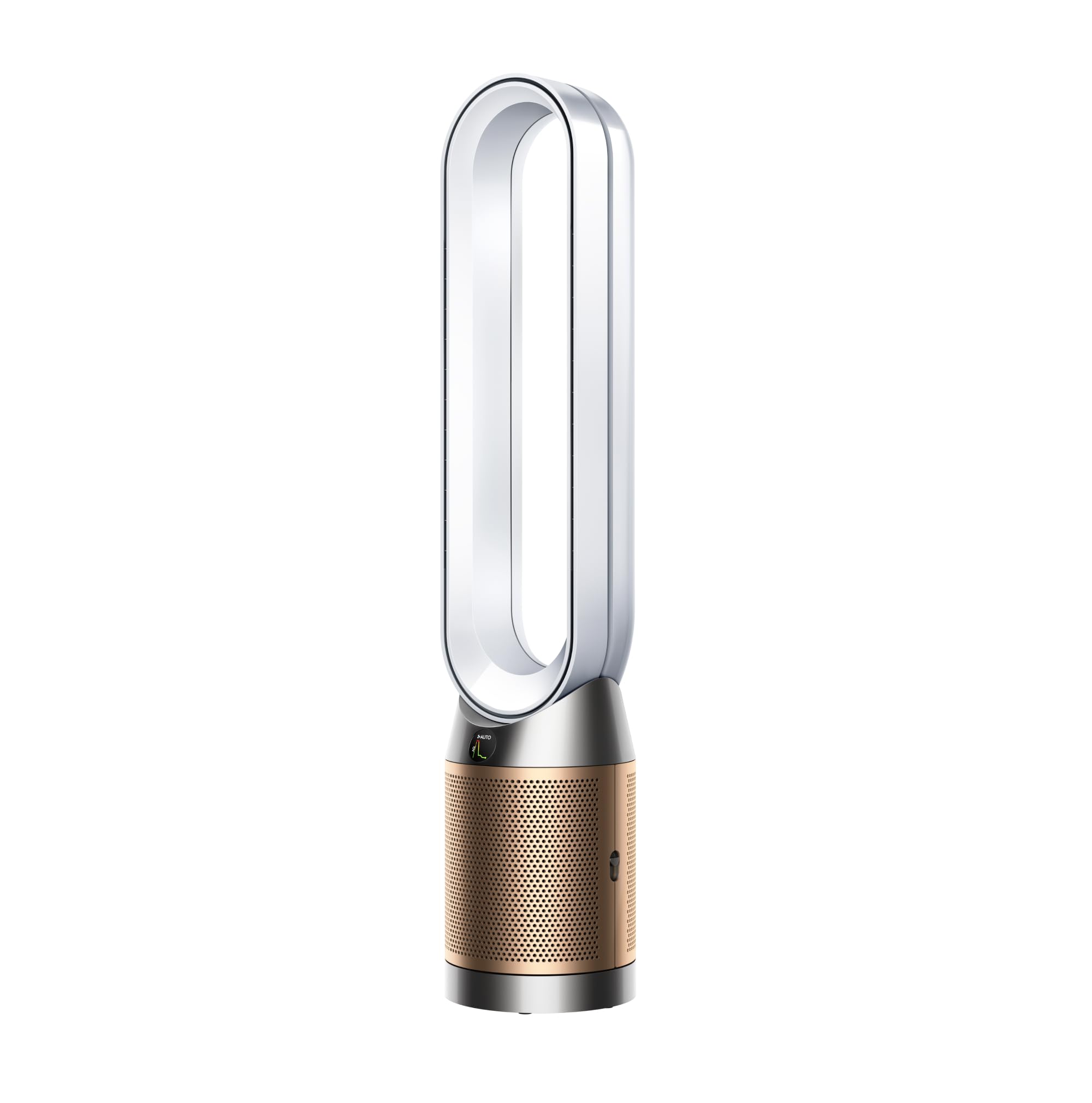
The TP09 destroys formaldehyde permanently using a catalytic (SCO) filter that never needs replacing — and it doubles as a cooling fan.
The Dyson TP09 uses a selective-catalytic-oxidation (SCO) filter that permanently breaks down formaldehyde molecules into harmless carbon dioxide and water vapor — the filter does not get “full” of formaldehyde like a carbon layer does. It also includes a 360° HEPA filter that captures 99.97% of pollutants as small as 0.3 microns. The Air Multiplier technology projects purified air across the room with oscillation from 0 to 350 degrees.
At 11 pounds and with a slim tower design, it doubles as a fan with cooling mode and Backwards airflow mode (purification without a breeze). The MyDyson app tracks indoor NO2, VOCs, humidity, and formaldehyde levels in real time. It is 20% quieter than the previous Dyson model, and Night Mode dims the display while running on the quietest settings. One buyer mentioned the formaldehyde sensor revealed high HCHO readings in their home that they had not been aware of before.
Be aware that some users report reliability issues after a few months — one review noted the air quality reading stopped changing and a motor whirring sound started around 3 months. It is not a silent machine on higher fan speeds, either.
what separates it
- Catalytic filter destroys formaldehyde permanently — never needs replacement
- Dual function as a fan and purifier saves space
- Real-time VOCs and NO2 monitoring through the app
What to consider
- Some units develop a humming noise around 6 months
- Does not cover as large an area as dedicated purifiers
7. Austin Air HealthMate Plus B450

With 15 lbs of activated carbon and zeolite — more than any other unit here — the Austin Air HealthMate stops neighbor smoke that other purifiers cannot handle, per buyer reports.
The Austin Air HealthMate Plus uses a 4-stage filtration system that starts with a large-particle pre-filter, moves through a 15-pound blend of Activated Carbon and Zeolite (natural minerals that trap gases), then a HEPA filter, and finishes with a final carbon-impregnated cloth layer. This massive carbon load is what separates it — most purifiers use an ounce or two of carbon, while this one uses over 15 pounds specifically to handle VOCs (volatile organic compounds), smoke, and odors. It covers up to 1,500 square feet.
At 47 pounds and 14.5 inches square, it is the heaviest unit in this list. The maker claims the filter lasts up to 5 years, which brings the annual cost down significantly. Buyers report it removes 90%+ of neighbor’s pot smoke seeping through walls where other brands failed. Another owner noted that their spouse started breathing better after introducing it to the household. The trade-off is noise — the highest setting is loud, and the fan flutters on low and medium speeds.
Compared to the SIESEAN AP-400 at 11.25 lbs, the Austin Air weighs 47 lbs, and compared to the Dyson TP09 at 11 lbs, it weighs 47 lbs. That weight is the carbon, and it delivers results for heavy VOC and smoke loads. A buyer who needs the deepest carbon bed and can leave the unit in one place will get the most from this, while someone who moves between rooms should look at the SIESEAN instead.
Standout features
- 15 lbs activated carbon + zeolite for aggressive gas/VOC removal
- Filter lasts up to 5 years — low annual maintenance cost
- Proven to stop neighbor smoke that other purifiers could not handle
Limitations
- Heavy (47 lbs) and difficult to move between rooms
- Noisy on high setting; fan flutters on low/medium
8. Dyson Purifier Big+Quiet Formaldehyde BP03

The BP03 projects air over 32 feet, and its catalytic formaldehyde filter never needs replacing, saving ongoing costs.
The Dyson BP03 is built for large open spaces. It uses a HEPA H13 grade filter, lasting up to 5 years, and a catalytic filter that detects and destroys formaldehyde permanently without needing to be replaced. The unit projects air over 32 feet across the room, making it ideal for high ceilings or open-concept layouts. It weighs 26.24 pounds and moves easily on built-in casters.
The MyDyson app tracks PM2.5, PM10, NOx, VOCs, and formaldehyde in real time. Breeze Mode creates a natural-feeling airflow, and Do Not Disturb mode monitors and purifies with a dimmed display at the quietest settings. One owner reported that it cleared air spikes from a paper shredder and nail polish twice as fast as their previous units. Another owner with 12-foot ceilings said it was quieter at max speed than their Coway or Mila while moving more air. The HEPA filter costs about and lasts up to 5 years, and the carbon filter costs about and lasts about 2 years.
Compared to the Dyson TP09 at 11 lbs, the BP03 weighs 26.24 lbs, and it has the H13-rated HEPA instead of the TP09’s general HEPA. It is the better choice for large rooms where you want the longest filter life and the most air projection. A homeowner with open-concept floors or high ceilings should choose this over the TP09, while someone in a single room should save space with the smaller Dyson.
Strengths
- Permanent catalytic destruction of formaldehyde — no replacement needed for that filter
- HEPA H13 filter lasts up to 5 years, cutting annual costs
- Projects air 32+ feet, ideal for large rooms with high ceilings
Weaknesses
- Large and heavy — not for small spaces
- Premium price point, even among Dyson products
Understanding the Specs
CADR (Clean Air Delivery Rate)
This number measures how many cubic feet of clean air the unit delivers per minute. A higher CADR means faster filtration. For formaldehyde, look for a unit with a high enough CADR to cycle your room’s air at least 4 times per hour. For example, a 500 sq ft room needs a CADR of roughly 200 CFM or more for effective VOC control.
Filter types for formaldehyde
Standard HEPA filters do not catch gases. For formaldehyde, you need either a thick activated carbon layer (like the 15 lbs in the Austin Air), a carbon-and-zeolite blend, or a catalytic filter (like Dyson’s selective-catalytic-oxidation filter) that breaks down formaldehyde permanently. Look for filters described as “VOC,” “formaldehyde,” “carbon,” or “catalytic” in the product specs.
FAQ
Will a standard HEPA filter remove formaldehyde?
How often should I replace the formaldehyde filter?
Can I use an air purifier with a formaldehyde filter in a new home?
What is the difference between activated carbon and a catalytic filter for formaldehyde?
How do I know if my air purifier is actually removing formaldehyde?
Is a higher CADR always better for formaldehyde?
Can I use an air purifier with a formaldehyde filter while sleeping?
How much does it cost to run an air purifier for formaldehyde per year?
Final Thoughts: The Verdict
For most people, the best air purifier for formaldehyde is the Wyze Air Purifier with Formaldehyde Filter (Premium) because it offers a dedicated formaldehyde-specific filter, app control, whisper-quiet operation, and a compact footprint that works well in a bedroom or living room. If you need massive coverage for an open-concept home and want the deepest carbon bed available, grab the Austin Air HealthMate Plus B450 with its 15 pounds of activated carbon. And for permanent formaldehyde destruction that never needs filter replacement, the Dyson Purifier Big+Quiet BP03 is the premium no-compromise pick.
How We Picked
We do not accept paid placement, and we did not hands-on test every unit. Instead, we match each pick to a real buyer and use-case by comparing the manufacturers’ published specifications against the patterns in verified customer reviews — so you get each pick’s real strengths and trade-offs instead of marketing copy.
Sources & Methodology
Specifications: manufacturer listings and product documentation. Review insights: verified customer reviews, as of July 2026. Pricing: not shown on this page (it changes often); check the current price via the retailer link.
As an Amazon Associate, Gadgets Feed earns from qualifying purchases. This does not affect which products we feature.
Product prices and availability are accurate as of the date/time indicated and are subject to change. Any price and availability information displayed on Amazon at the time of purchase will apply to the purchase of this product. As an Amazon Associate I earn from qualifying purchases.
CERTAIN CONTENT THAT APPEARS ON THIS SITE COMES FROM AMAZON. THIS CONTENT IS PROVIDED "AS IS" AND IS SUBJECT TO CHANGE OR REMOVAL AT ANY TIME.
Amazon and the Amazon logo are trademarks of Amazon.com, Inc. or its affiliates.