
Our readers keep the lights on and my morning glass full of iced black tea. As an Amazon Associate, I earn from qualifying purchases.
Specs are compiled from manufacturer listings and verified buyer reviews and can change over time — please confirm the key details on the product page before buying.
A 50mm prime lens is the lens that teaches you to see. It forces you to move your feet, not your zoom ring, and the result is sharper, more intentional portraits and street shots. But the real question isn’t which one works — it’s which one works for your camera mount, your budget, and your need for autofocus speed versus pure image quality.
I’m Min — the founder and writer behind Gadgets Feed. This guide is built by comparing the manufacturers’ published specifications and the patterns across verified customer reviews, so you get each pick’s real strengths and trade-offs instead of marketing spin.
Whether you are on Canon EF, Nikon Z, Sony E, or Leica L, the best 50mm prime lens for you balances aperture brightness, autofocus speed, and physical weight against the camera you already own.
Quick Picks
- Nikon NIKKOR Z 50mm f/1.8 S — Top Performer
- Canon EF 50mm f/1.8 STM — Best Value
- Sony FE 50mm F1.8 Standard Lens (SEL50F18F) — Compact Carry
- Panasonic LUMIX S 50mm F1.8 (S-S50) — Video Star
- Canon RF50mm F1.2L USM — Pro Depth
- VILTROX 50mm F2 Full Frame Lens for Sony — Ultra-Compact
- Meike 50mm F1.8 Full Frame AF STM Lens for Nikon Z — Budget Z Mount
- TTArtisan 50mm F1.4 Tilt Manual Lens — Creative Tilt
- YONGNUO YN50mm F1.8 Auto Focus Lens for Canon EF — Budget Champion
How To Choose The Best 50mm Prime Lens
The right 50mm prime depends on three decisions: your camera mount, your preferred aperture, and your tolerance for manual focus. Here is what to look for.
Match the Mount First
A Canon EF lens will not fit a Sony E-mount camera without an adapter that can slow autofocus. Start by confirming your camera’s mount — Canon EF, Nikon F or Z, Sony FE, or Leica L — then look for a native 50mm lens. Third-party brands like VILTROX, Meike, and YONGNUO make excellent lenses for each system, but a native lens from Canon or Nikon guarantees full electronic communication.
Aperture Matters More Than You Think
The maximum aperture (f/1.2, f/1.8, or f/2.0) controls how much light hits the sensor and how blurred the background, or “bokeh,” looks. An f/1.2 lens collects more than twice as much light as an f/1.8, which helps in dim rooms but adds serious weight and cost. For everyday portraits and street photography, an f/1.8 lens offers an excellent balance of low-light ability and a compact, manageable size.
Autofocus Motor Type
Stepping Motor (STM) lenses focus near-silently, making them ideal for video. A standard DC motor is louder and tends to “hunt” (search back and forth) in low light. Some creative lenses, like tilt-shift designs, are fully manual — you get total control but no autofocus at all. If you shoot moving subjects or record video, prioritize an STM or fast DC motor lens.
Quick Comparison
On smaller screens, swipe sideways to see the full table.
| Model | Best For | Max Aperture | Weight | Min Focus Dist. | Amazon |
|---|---|---|---|---|---|
| Nikon NIKKOR Z 50mm f/1.8 S | Nikon Z shooters wanting ultimate sharpness | f/1.8 | ~415g | 0.4m | $466.95Amazon |
| Canon EF 50mm f/1.8 STM | Canon DSLR owners on a budget | f/1.8 | ~160g | 0.35m | $169.00Amazon |
| Sony FE 50mm F1.8 | Sony E-mount everyday carry | f/1.8 | 186g | 0.45m | $198.00Amazon |
| Panasonic LUMIX S 50mm F1.8 | L-Mount video-first shooters | f/1.8 | 300g | 0.45m | $313.64$347.99Amazon |
| Canon RF50mm F1.2L USM | Pro portrait depth-of-field | f/1.2 | 2.09 lbs | 0.4m | $2,599.00Amazon |
| VILTROX 50mm F2 FE | Sony shooters wanting a tiny, sharp prime | f/2.0 | 205g | 0.51m | $199.00Amazon |
| Meike 50mm F1.8 AF STM | Nikon Z budget portrait lens | f/1.8 | 300g | — | $159.99Amazon |
| TTArtisan 50mm F1.4 Tilt | Creative miniature/tilt-shift effects | f/1.4 | — | — | $229.00Amazon |
| YONGNUO YN50mm F1.8 | Entry-level Canon EF owner | f/1.8 | 120g | 0.45m | $82.00Amazon |
In‑Depth Reviews
1. Nikon NIKKOR Z 50mm f/1.8 S
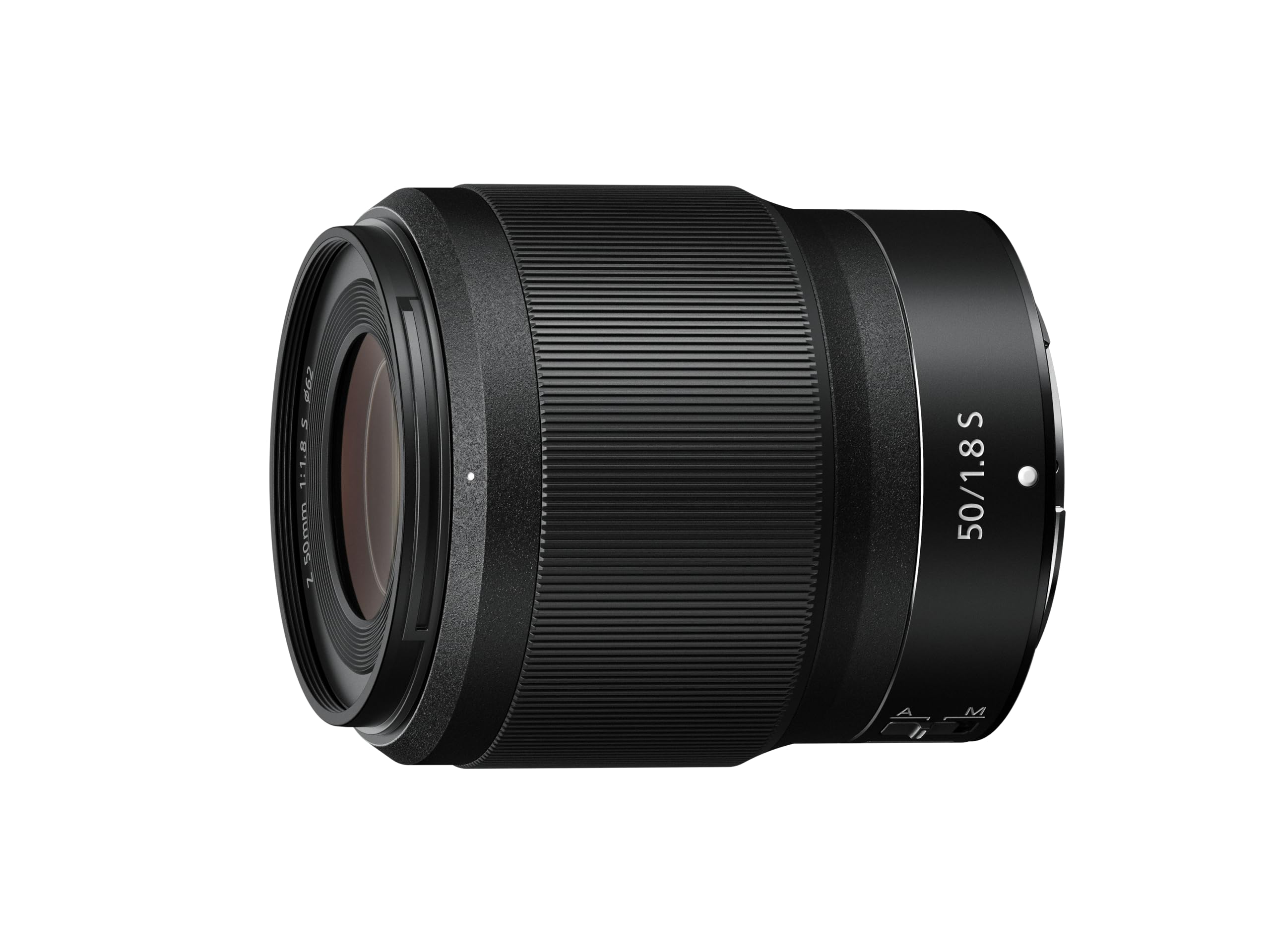
Razor-sharp edges and silent focus make this Nikon Z bench-mark lens the one to beat for anyone chasing the highest image quality.
This lens gives Nikon Z shooters extreme sharpness right from f/1.8, with buyers reporting “virtually zero distortion” and no chromatic aberration. The ultra-quiet stepping motor (a near-silent autofocus motor ideal for video work) locks on fast, and the 5-axis Dual Detect Optical VR (vibration reduction that steadies the image using the camera’s built-in stabilization) keeps handheld shots crisp in low light.
Compared to the older 50mm f/1.8D, the Z model is optically superior — reviewers call it a “new era for the nifty fifty.” It’s larger and pricier than basic 50mm lenses, but the optical quality rivals premium Zeiss glass at a fraction of that cost.
Sharpness king: Tack-sharp wide open with silent focus and beautiful bokeh — the best 50mm Nikon has made, according to buyers. The Nikon NIKKOR Z 50mm f/1.8 S is the go-to for travel, graduation, and street photography on Z mirrorless cameras.
Grab this if: You own a Nikon Z camera and want the sharpest, most corrected 50mm lens possible without stepping up to the f/1.2 S-line. It is the dedicated overall winner for anyone prioritizing optical perfection over price.
Look elsewhere if: You are on a tight budget — this is premium-tier pricing for an f/1.8 lens, or if you prefer a smaller, lighter carry; some buyers returned it for the compact 40mm f/2.
2. Canon EF 50mm f/1.8 STM

At 0.35m minimum focus distance versus the YONGNUO YN50mm’s 0.45m, you can fill the frame with a face more easily.
At 0.35m minimum focus distance (meaning you can get as close as about 14 inches from your subject), the Canon STM focuses closer than the YONGNUO YN50mm at 0.45m, letting you fill the frame with a face more easily. The maximum magnification is 0.21x versus the VILTROX 50mm F2’s 0.11x, so small details like a ring or an eye catch more detail.
Buyers report “sharp center even at f/1.8” and praise the silent STM autofocus for smooth video. The 7-blade circular aperture (the number of blades that shape the out-of-focus light) creates a smoother background blur than older 5-blade designs. It weighs about 160g — lightweight and compact enough to toss in any bag.
The upgrade that matters: This STM version replaces the older f/1.8 II with a metal mount, faster autofocus, and a closer minimum focus. Owners mention it “outperforms the older f/1.8 II and f/1.4 models” for less money. The Canon EF 50mm f/1.8 STM remains the go-to value choice for any Canon DSLR owner.
Buy this if: You shoot a Canon EOS DSLR and want the single best value lens in the entire Canon lineup — a lens that improves your photos more than a zoom. It is the obvious pick over the YONGNUO if you can stretch a little further.
skip it if: You need corner-to-corner sharpness at f/1.8; corners are soft wide open, and there is no image stabilization.
3. Sony FE 50mm F1.8 Standard Lens (SEL50F18F)

At just 186 grams on a full-frame body, you barely notice it — but its buzzy autofocus motor is a trade-off for the weight savings.
At just 186 grams, the Sony FE 50mm F1.8 is lighter than many zoom lenses’ front lens caps. The large f/1.8 aperture combined with a 7-blade circular aperture produces that defocused background, or bokeh, that separates a subject from the background in portraits. The double-gauss optical design (a symmetrical lens layout that reduces image distortion and field curvature) keeps straight lines looking straight.
Customers note a real trade-off: “Autofocus hunts in low light but works after firmware update.” The DC motor (a standard autofocus motor type) is buzzy and not ideal for video, but for still portraits and street photography, the image quality — sharp at f/2.8 to f/5.6, solid center sharpness at f/1.8 — is excellent for the price.
Why it wins
- Ultra-light at 186g — comfortable for all-day carry
- Sharp center at f/1.8 and very sharp stopped down to f/2.8
- Beautiful bokeh and subject isolation for portraits
The catch
- Autofocus is noisy and can hunt (search) in dim light
- Not the best choice for video work due to the buzzy motor
Best for: Sony E-mount photographers who want a lightweight, affordable prime for everyday portraits, street photography, and travel — you will barely notice it in your bag.
Look elsewhere if: You need silent, reliable autofocus for video or fast-action shooting; the VILTROX 50mm F2 below offers quieter AF in a similar size.
4. Panasonic LUMIX S 50mm F1.8 (S-S50)
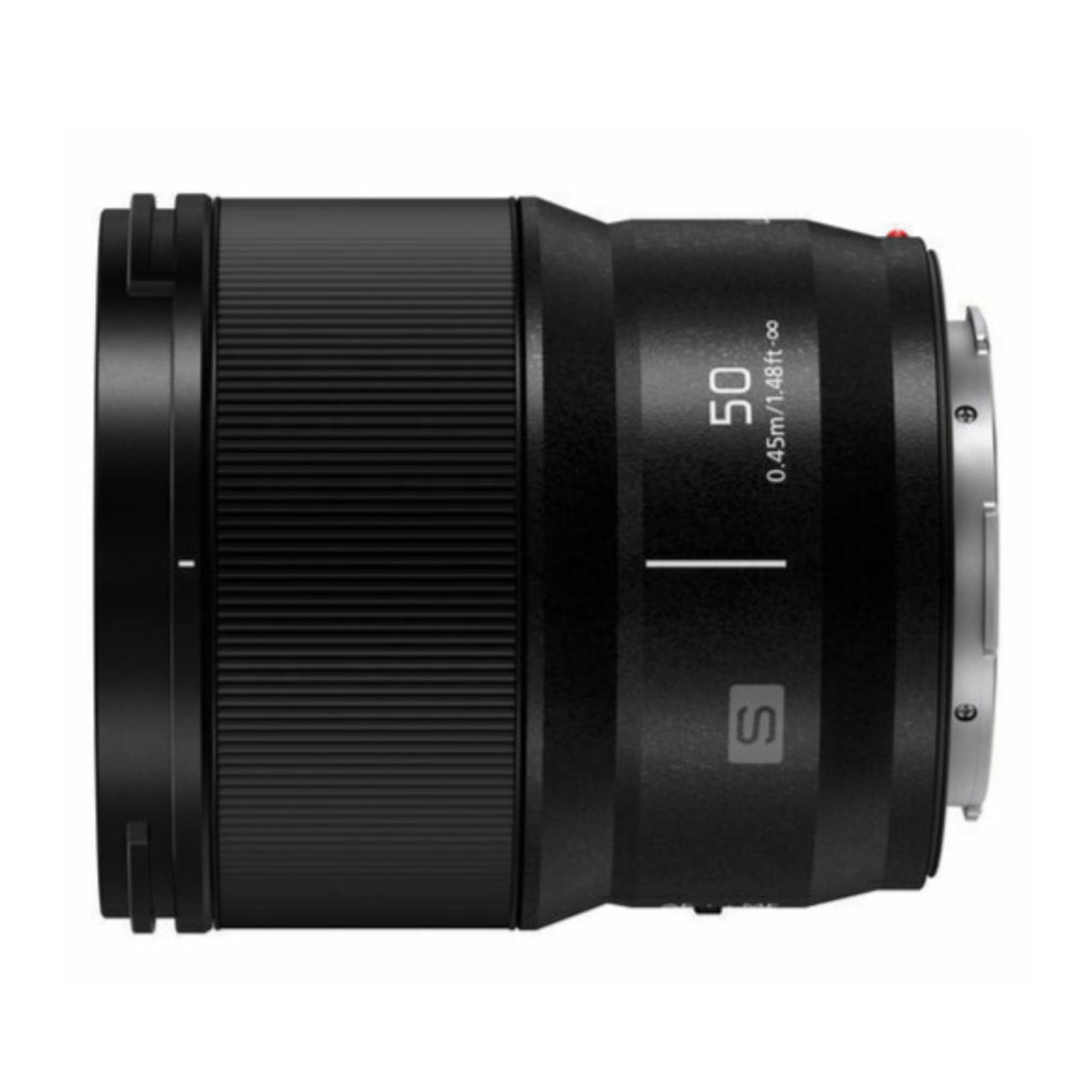
Engineered to suppress focus breathing, this L-Mount lens keeps your rack focuses stable — a rare feature for a stills lens that filmmakers prize.
The Panasonic LUMIX S 50mm F1.8 works with all L-Mount full-frame digital cameras, including Leica and Sigma bodies, not just Panasonic’s S series. It is specifically engineered to suppress focus breathing (the unwanted change in the angle of view as you adjust focus), so video footage stays at the same field of view during rack focuses — a critical detail for filmmakers that most stills lenses ignore.
Weighing 300 grams, it is slightly heavier than the Sony FE but feels well-balanced on bodies like the S5. Reviewers point out “sharp at f/1.8, beautiful bokeh, fast/quiet autofocus” plus weather sealing (a rubber gasket that protects against dust and light moisture) that gives you confidence shooting in light rain. The physical size is consistent with other LUMIX f/1.8 primes, so swapping lenses on a gimbal requires minimal re-balancing.
Video-friendly
- Minimal focus breathing for stable video rack focuses
- Smooth aperture control for exposure changes during recording
- Weather-sealed build, consistent size with other S f/1.8 primes
Not ideal if
- You are not in the L-Mount ecosystem — it only fits L-Mount cameras
- Physically larger than some Sigma DG DN contemporary lenses
Reach for this if: You shoot with an L-Mount full-frame camera (Panasonic S5/S5II, Leica SL, Sigma fp) and want a 50mm that excels in video as much as stills — the quiet, breathing-free autofocus is a clear advantage.
Look elsewhere if: You are not on L-Mount or need the absolute smallest 50mm for travel; the Sony FE is lighter.
5. Canon RF50mm F1.2L USM

With an f/1.2 maximum aperture and a 2.09-pound weight, your arm will feel the weight before your eyes see the bokeh.
With a maximum aperture of f/1.2 rather than f/1.8, this lens delivers extremely shallow depth-of-field (a very narrow slice of the image in sharp focus) that separates your subject from the background with a creamy, ethereal look. The optical design uses three aspherical elements and one UD (Ultra-low Dispersion) element to suppress chromatic aberration and distortion to near-zero levels.
The trade-off is weight: at 2.09 pounds (950 grams), it is noticeably heavy. Shoppers say “excellent build, massive for 50mm” and “superior corner-to-corner sharpness versus Sigma Art.” The 12-pin communication system (a faster electronic link between lens and camera) allows lightning-fast autofocus on Canon R-series bodies. This lens is not cheap, but for portrait pros who want the shallowest depth-of-field and sharpest f/1.2 performance Canon makes, it is class-leading.
Optical masterwork: “Darn near perfect” image quality with magnificent depth of field, extremely sharp at f/1.2, and minimal chromatic aberration. One buyer called the Canon RF50mm F1.2L USM a lens that “lives on my R5 90% of the time.”
For dedicated professionals: If you shoot Canon RF and your portraits or event work demands the absolute best shallow depth-of-field available, this lens is the clear choice — nothing else in the RF lineup matches it at f/1.2.
pass on it if: You are on a budget or value mobility; the weight (950g) becomes noticeable after 30 minutes, and there is no tripod collar, so balancing it on a long plate is tricky.
6. VILTROX 50mm F2 Full Frame Lens for Sony

At 205g versus the Sony FE f/1.8 at 186g, it trades a wider aperture for a 9-blade diaphragm that some buyers find smoother than the Sony’s.
The VILTROX AF 50mm F2 FE weighs 205g, while the Sony FE 50mm F1.8 weighs 186g. It also has a maximum aperture of f/2.0 versus the YONGNUO’s f/1.8. The 9-blade circular aperture creates a smoother, rounder background blur, ideal for portraits.
Buyers rave about the optics: “Excellent sharpness wide open, solid build, great for portraits.” The optical construction includes 3 ED (Extra-low Dispersion) elements and 4 HR (High Refractive) elements to suppress color fringing and aberrations.
Why it stands out
- Ultra-compact 205g design — great for travel and street photography
- Quiet, fast STM autofocus that handles low light well
- Solid metal build with impressive image quality at f/2
The compromise
- Longer minimum focus distance (0.51m) limits close-up detail shots
- No function button, MF/AF switch, or aperture ring
Best for: Sony E-mount shooters who want a small, sharp prime for everyday carry and portraits — at the price, buyers report it “outperforms expectations vs Sony Zeiss 55mm f/1.8.” It is a stronger pick than the Sony FE for anyone who values quiet autofocus over maximum aperture.
Look elsewhere if: You need the widest possible aperture (f/1.8 or f/1.2) for extreme low-light shooting; this lens is f/2.0.
7. Meike 50mm F1.8 Full Frame AF STM Lens for Nikon Z

A metal mount and USB-C firmware updates at a much lower price than the Nikon NIKKOR Z 50mm f/1.8 S — that is the trade-off for a slower autofocus in dim light.
At 300 grams, the Meike is heavier than the YONGNUO lens at 120 grams, but it offers a metal mount and USB-C port for firmware updates, a feature normally found on pricier lenses. Owners mention “fast, quiet AF; sharp at F1.8 with good bokeh and color; decent build; flare resistant.” It works on Nikon Z full-frame cameras (Z5, Z6, Z7, Z9) and APS-C cameras (Z30, Z50, Z fc) where the 50mm becomes roughly a 75mm equivalent — ideal for portraits.
The key limit is the longer minimum focus distance, which some buyers noted as a minor drawback. The autofocus is less confident in low light than the Nikon NIKKOR Z 50mm f/1.8 S, but at a much lower price than that Nikon OEM lens, buyers call it “tough to top performance at the price point.”
Price-to-performance champion: “Way better than the price” — buyers love the sharp images on ZF bodies and the lightweight build. The Meike 50mm F1.8 AF STM’s metal mount and USB-C firmware upgrade path add premium touches at a budget cost.
Reach for this if: You own a Nikon Z mirrorless camera and want an f/1.8 prime without paying for the Nikon OEM lens — it is a solid entry-level portrait lens for the Z mount.
Look elsewhere if: You need a shorter minimum focus distance or more confident low-light autofocus; the Nikon NIKKOR Z lens is sharper and faster but more expensive.
8. TTArtisan 50mm F1.4 Tilt Manual Lens

The only lens here that lets you physically tilt the optics for a diagonal focus plane — but a fully manual lens means no autofocus, no electronic contacts, and an extra step in setup.
Unlike every other lens here, the TTArtisan 50mm F1.4 Tilt has no autofocus and no electronic contacts. It is a fully manual tilt-shift lens, meaning you physically tilt the front of the lens to make a plane of focus that runs diagonally, creating the “Lilliput” miniature-world effect. The f/1.4 maximum aperture (which is one stop brighter than f/2.0) brings in extra light for a more transparent image when shooting the tilt effect in dim settings.
Because the camera cannot detect the lens electronically, you must set the camera to “shoot without lens” in the menus. A critical warning from buyers: one reviewer noted that “a screw fell out of the lens and damaged my camera’s sensor,” so inspect the lens carefully upon arrival. For static subjects like landscapes and still-life, the tilt effect is genuinely unique and fun.
Creative tool
- Unique tilt-shift effect for miniature landscapes and artistic portraits
- Solid all-metal build with f/1.4 aperture
- Video-optimized focus and aperture rings fit standard follow-focus systems
Limitations
- Fully manual focus — no autofocus at all; takes time to set up
- Not suitable for fast action or subjects that move
- Quality control concerns per buyer reviews (screw issue reported)
Best for: Creative photographers who want an affordable tilt-shift effect for miniature landscapes, product shots, or artistic portraits where a narrow in-focus band adds a dreamy look.
it’s not for you if: You need autofocus, shoot fast-moving subjects, or want a general-purpose 50mm prime — this lens is a specialized creative tool, not an everyday carry.
9. YONGNUO YN50mm F1.8 Auto Focus Lens for Canon EF

At 120g, it is so light you might forget it is on the camera — but buyers caution the build quality and autofocus are a step below the Canon EF 50mm f/1.8 STM.
This makes it barely noticeable on the front of a Canon EF DSLR. It offers the same f/1.8 aperture as the Canon EF 50mm f/1.8 STM at a fraction of the cost, making it a popular starter lens for beginners on the Canon EOS system.
The trade-offs are real. The maximum magnification is 0.15x versus the Canon’s 0.21x, so you cannot get as close for detail shots. The autofocus is slower and noisier than the Canon STM, and customers note the “build quality lower than OEM Canon.” One owner noted a “used unit seized after 6 weeks due to prior damage,” so buy new or inspect carefully. Still, for a beginner on a Canon Rebel or 5D who just wants to try a prime lens, this lens produces “clear, high-quality photos of people” at the lowest possible cost, according to buyers.
Why newcomers love it
- Ultra-lightweight 120g design for all-day carry
- Sharp f/1.8 aperture with clean foreground focus and nice bokeh
- Lowest cost option for Canon EF mount — great for beginners
Where it falls short
- Autofocus is slow and noisy compared to Canon’s STM
- Plastic build is less durable; quality control varies
- Usable on Canon EF-S DSLRs; compatible with Canon EOS 1200D, 500D, 5D, 6D, 7D
Reach for this if: You are a beginner on a Canon DSLR who wants an extremely budget-friendly 50mm prime to learn portrait photography and experience a fast aperture without spending much. The YONGNUO YN50mm F1.8 gets you into the game for the lowest possible price.
Look elsewhere if: You need reliable autofocus, silent operation for video, or better build quality — the Canon EF 50mm f/1.8 STM is worth the upgrade for most shooters.
Understanding the Specs
Maximum Aperture (f-stop)
The maximum aperture, written as f/1.2, f/1.8, or f/2.0, controls how much light the lens lets in at its widest setting. A lower number means a larger opening — f/1.2 is wider than f/2.0, which helps you shoot in dim conditions without raising the ISO (the camera’s sensitivity to light, which adds grain at high levels). It also creates shallower depth-of-field, meaning the background blurs more, which is why portrait photographers love fast lenses. The trade-off is physical size and cost: f/1.2 lenses are significantly larger and more expensive than f/1.8 lenses.
Minimum Focus Distance & Magnification
The minimum focus distance tells you the closest distance you can be to your subject while still achieving sharp focus. A shorter distance (like 0.35m on the Canon EF STM) lets you fill the frame with a smaller object — ideal for detail shots like a ring or an eye. Maximum magnification gives you a sense of how large the subject appears on the sensor compared to real life. A 0.21x magnification means the image on the sensor is 21% of the actual size of the subject. Lenses with higher magnification are better for close-up work.
FAQ
What is the difference between a 50mm f/1.8 and a 50mm f/1.2 lens?
Will a Canon EF 50mm lens work on a Sony camera?
What does “STM” mean in a lens name?
Is a 50mm prime lens good for portraits?
How do I know if a 50mm lens will fit my camera?
What does “full-frame” mean in a lens description?
Why is the VILTROX 50mm F2 cheaper than the Sony FE 50mm F1.8?
Can I use a manual focus 50mm lens for video?
What is a tilt-shift lens, and why would I choose a 50mm one?
How long does a 50mm prime lens typically last?
Final Thoughts: The Verdict
The Nikon NIKKOR Z 50mm f/1.8 S is the consistent overall winner because it delivers near-flawless optical quality, silent autofocus, and zero distortion in a well-balanced package — it is the benchmark for modern 50mm primes. If you want a compact, travel-friendly 50mm for Sony, the VILTROX 50mm F2 delivers quiet autofocus and sharp images at 205g. And for the best value in a Canon DSLR, the Canon EF 50mm f/1.8 STM remains the lens that will change how you see photography for the least money.
How We Picked
We do not accept paid placement, and we did not hands-on test every unit. Instead, we match each pick to a real buyer and use-case by comparing the manufacturers’ published specifications against the patterns in verified customer reviews — so you get each pick’s real strengths and trade-offs instead of marketing copy.
Sources & Methodology
Specifications: manufacturer listings and product documentation. Review insights: verified customer reviews, as of July 2026. Pricing: not shown on this page (it changes often); check the current price via the retailer link.
As an Amazon Associate, Gadgets Feed earns from qualifying purchases. This does not affect which products we feature.
Product prices and availability are accurate as of the date/time indicated and are subject to change. Any price and availability information displayed on Amazon at the time of purchase will apply to the purchase of this product. As an Amazon Associate I earn from qualifying purchases.
CERTAIN CONTENT THAT APPEARS ON THIS SITE COMES FROM AMAZON. THIS CONTENT IS PROVIDED "AS IS" AND IS SUBJECT TO CHANGE OR REMOVAL AT ANY TIME.
Amazon and the Amazon logo are trademarks of Amazon.com, Inc. or its affiliates.