
Our readers keep the lights on and my morning glass full of iced black tea. As an Amazon Associate, I earn from qualifying purchases.
Specs are compiled from manufacturer listings and verified buyer reviews and can change over time — please confirm the key details on the product page before buying.
You have the perfect design ready, but the wrong cardstock can ruin the whole project — it might jam your printer or feel too flimsy in someone’s hands. The real trick is matching the weight and finish to both your printer’s limits and the feel you want your recipient to hold. This guide breaks down six cardstock options, each suited to a different approach, from premium heavyweight sheets to versatile budget-friendly packs.
I’m Min — the founder and writer behind Gadgets Feed. This guide is built by comparing the manufacturers’ published specifications and the patterns across verified customer reviews, so you get each pick’s real strengths and trade-offs instead of marketing spin.
You need a thick, sturdy card for a special occasion or a lighter stock that handles intricate die-cuts (shaped cuts from a cutting machine like Cricut) with ease. The right cardstock for printing greeting cards depends on your printer’s paper path and the project’s finish.
Quick Picks
- Cranium Press 80lb Heavyweight White Cardstock — Best Overall
- Goefun 65lb Cream Cardstock — Vintage Feel
- Cricut Value Cardstock Rainbow Sampler — Cricut Choice
- Weyew 110lb Cream Cardstock — Premium Pick
- PENPRIS 85lb White Cardstock (120 Sheets) — Bulk Value
- Weyew 65lb Cream Cardstock (100 Sheets) — Budget Cream
How To Choose The Best Cardstock For Printing Greeting Cards
Picking the right cardstock for handmade greeting cards depends on three factors: weight (measured in pounds or GSM), color, and printer compatibility. You want a sheet thick enough to feel substantial but not so thick that your printer refuses to pull it through. Here is what to check before you buy.
Weight and GSM — The Backbone of Your Card
Cardstock weight is listed in pounds (lb) for cover stock and in grams per square meter (GSM). For a standard greeting card that stands up in an envelope without bending, aim for 65lb to 110lb cover (about 176 to 300 GSM). Lighter 65lb stock folds and cuts easily but feels less substantial. Heavier 110lb stock gives a premium, rigid feel — but many standard printers struggle to feed sheets over 100lb, so you may need to feed them manually one at a time through a straight paper path.
Color — White vs Cream vs Rainbow
White cardstock makes colors pop and is ideal for vibrant designs, photographs, and deep black text. Cream or ivory cardstock gives a vintage, warm look that is popular for wedding invitations and formal notes — it mimics the feel of a published novel, as one reviewer noted. Rainbow samplers are great for crafters who want multiple colors without buying separate packs, but you cannot match a specific brand color across projects.
Printer Compatibility and Finish
Not all printers handle thick paper the same way. Inkjet printers with a rear or straight-through paper tray manage heavier cardstock better than front-loading trays. Before you buy, check your printer manual for the maximum weight it accepts — many home printers top out at around 80lb to 90lb cover. A smooth, matte finish prints cleanly and takes ink without smudging, while textured finishes can cause skipping or ink pooling on detail-heavy designs.
Quick Comparison
| Model | Best For | Weight | Sheets | Color | Amazon |
|---|---|---|---|---|---|
| Cranium Press 80lb | Versatile Premium Feel | 80lb / 216 gsm | 50 | White | $12.99Amazon |
| Goefun 65lb Cream | Novel-Style Textures | 65lb / 180 gsm | 50 | Cream | $14.39$15.99Amazon |
| Cricut Rainbow Sampler | Cricut Die-Cutting | 65lb / 176 gsm | 125 | Rainbow | $14.99Amazon |
| Weyew 110lb Cream | Premium Sturdy Cards | 110lb / 300 gsm | 50 | Cream | $14.99Amazon |
| PENPRIS 85lb White | High-Volume Projects | 85lb / 230 gsm | 120 | White | $15.99Amazon |
| Weyew 65lb Cream 100pk | Budget Bulk Cream | 65lb / 180 gsm | 100 | Cream | $15.99Amazon |
In‑Depth Reviews
1. Cranium Press 80lb Heavyweight White Cardstock

The 80lb balance that feels premium without fighting your printer.
This cardstock hits the ideal balance for most home printers and greeting card makers. At 80lb (216 gsm), it is thick enough to hold a sturdy shape for a folded card. Buyers report it feeds smoothly through printers with no jamming — one reviewer wrote “I used it to print 100 bookmarks” with zero feed issues. The bright white shade and smooth finish help ink stay crisp without bleeding through to the other side, so you can print on both sides for a neat interior message.
Unlike the lighter Goefun 65lb cream stock, which feels closer to a novel page, the Cranium Press 80lb gives you a more rigid, professional card feel right from the start. It also cuts cleanly with a Cricut or scissors, and the FSC certification (meaning the paper comes from responsibly managed forests) is a plus. The only trade-off is the 50-sheet count — for high-volume projects you will need to restock sooner than with the 120-sheet PENPRIS pack.
Why it wins the top spot: Perfect balance of thickness and printer compatibility — 80lb (216 gsm) white cardstock that runs through inkjets without manual feeding, with excellent print sharpness and a premium hand feel.
Reach for this if: You want one reliable white cardstock for general-purpose greeting cards, invitations, and craft projects — it handles printing, cutting, and folding equally well.
Look elsewhere if: You need a cream/ivory tone for a vintage wedding or formal invite, or you want a higher sheet count for a tight budget.
2. Goefun 65lb Cream Cardstock

65lb cream stock that mimics the warm, creamy pages of a classic novel.
If you are making greeting cards with a vintage or literary feel, this cream cardstock delivers the right tone without being overly yellow. One buyer wrote: “I used this paper to print my body of text on because after some research I saw that cream paper around ~60lbs weight tends to be what a published novel is printed on.” At 65lb (180 gsm), it feels lighter than the Cranium Press 80lb, but that is a feature if you want a card that folds easily without a bulky spine. It handles inkjet and laser printers smoothly, and the cream shade hides minor smudges better than bright white.
The 50-sheet pack keeps costs low, but for greeting card bodies you often need at least two sheets per card (front and inside), so you will work through a pack faster than with the 100-sheet Weyew 65lb cream option. It also lacks the crisp white contrast that makes photos pop — better for text-heavy or minimalist designs.
What works well
- Authentic cream color that looks professional and book-like
- Printer-friendly 65lb weight feeds easily in most inkjets and lasers
- Folds cleanly with no white core showing at the crease
What to note
- Lighter weight feels less substantial than premium 80lb+ stock
- Only 50 sheets — may need multiple packs for batch card making
Pick this when: You want a warm, cream-toned cardstock that prints text beautifully and folds like a book page — great for formal invitations and literary-themed cards.
Skip this if: You need a stiff, premium card that stands up on a shelf, or your design uses bright watercolor or photos that need a white backdrop.
3. Cricut Value Cardstock Rainbow Sampler

125 vibrant sheets built for Cricut machines with clean, chip-free cuts.
This is the cardstock for crafters who use Cricut cutting machines (Explore, Maker, Joy Xtra) to cut shaped card fronts and intricate die-cuts (precisely cut shapes). At 65lb (176 gsm), it is a light cardstock that cuts cleanly without stray fibers — one buyer mentioned “use medium card stock setting – nice clean cuts.” The solid core means the color runs all the way through, so folds and score lines stay colorful instead of showing a white break. With 125 sheets in one pack, you get more total paper than the Cranium Press 80lb pack (125 vs 50 sheets), which is a big value advantage for multi-color projects.
The trade-off is that 176 gsm is noticeably thinner than the 216 gsm Cranium or 300 gsm Weyew 110lb — it feels more like a sturdy card than a rigid board. It is also a rainbow sampler with mostly bright colors, so it works best for fun, colorful greeting cards, not neutral or formal designs. It is acid-free and lignin-free, so colors stay bright for years.
Who it fits best: Cricut owners who want a bulk pack of colorful cardstock that cuts, scores, and folds without white core showing — especially for layered card fronts and party invites.
Choose this if: You regularly use a Cricut machine for cardmaking and want a budget-friendly sampler of 125 sheets in multiple bright colors.
Pass on this if: You need a single color (white or cream) for formal cards, or you prefer a heavier weight for a more premium card feel.
4. Weyew 110lb Cream Cardstock
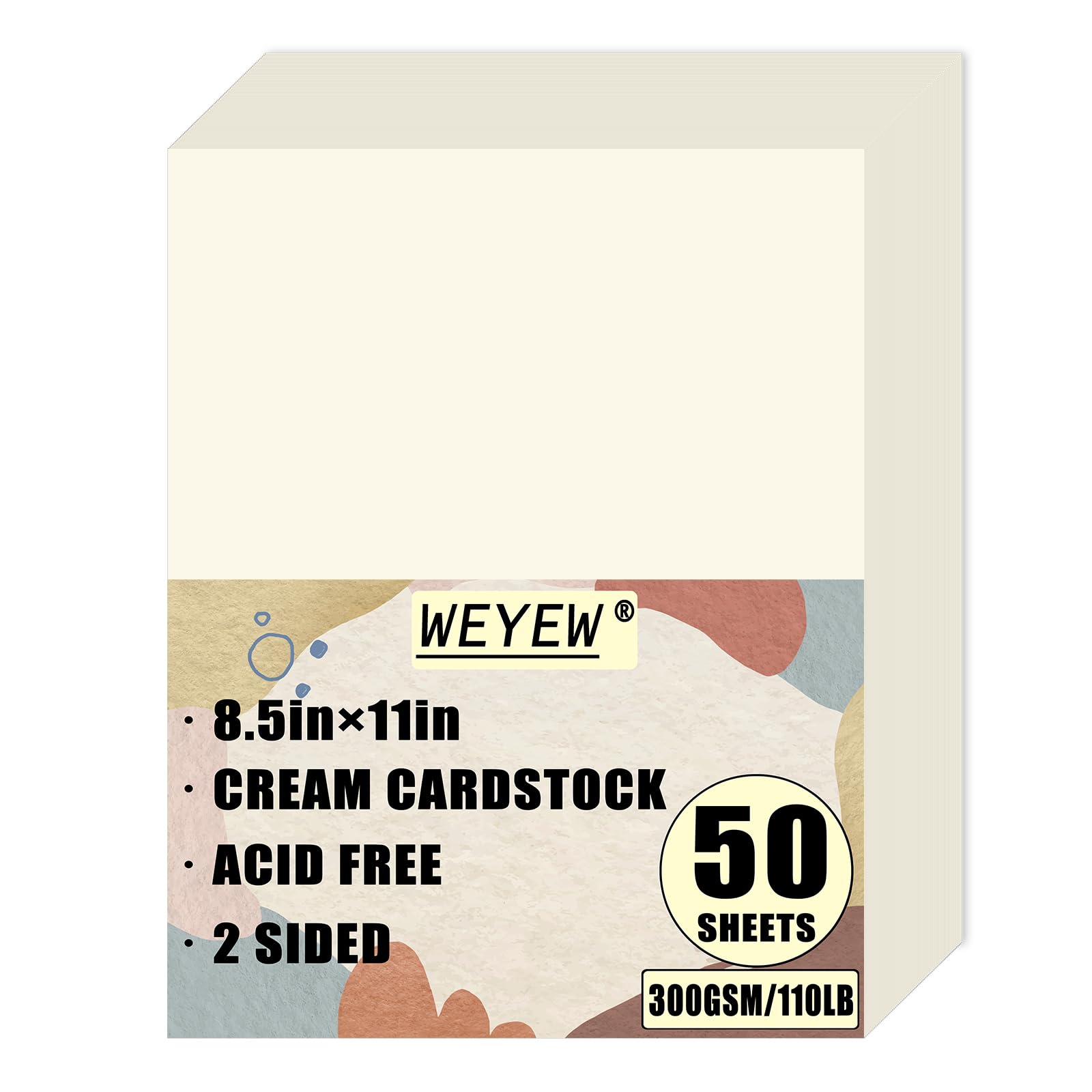
110lb cream cardstock with a rigid, board-like feel for high-end cards.
For greeting cards that feel as substantial as a store-bought premium boxed set, this 110lb (300 gsm) cream cardstock delivers serious weight. It is 70% heavier than the 176 gsm Cricut Rainbow Sampler — a difference you feel immediately when you hold the finished card. Buyers agree it looks and feels premium: one owner reported that with their Epson ET-2800 “it struggled unless you help feed it through,” which is the honest trade-off for this thickness. You will likely need to use the rear manual-feed slot and feed sheets one at a time.
It comes packed in a cardboard box that keeps sheets flat and unbent — a detail one reviewer praised after receiving bent paper from other sellers. The cream shade is a natural off-white that is not overly yellow, making it suitable for wedding invitations, graduation announcements, and formal cards. The 50-sheet count is low, but each sheet feels too premium to waste on test prints.
What stands out
- 110lb (300 gsm) gives a rigid, high-end card feel unlike lighter stocks
- Box packaging protects sheets from bending in transit
- Neutral cream color suits formal events without looking yellow
What to plan for
- Most standard printers need manual feeding — check printer specs before buying
- Only 50 sheets; works best for small-batch premium projects
Grab this when: You want the most rigid, board-like cream cardstock for special occasion cards — and you are comfortable hand-feeding sheets through your printer.
Avoid if: Your printer has a front-only paper path or a low maximum paper weight (under 100lb).
5. PENPRIS 85lb White Cardstock (120 Sheets)

85lb white stock with 120 sheets — the high-count workhorse for serious card makers.
When you are making greeting cards in bulk for a wedding, holiday, or small business, sheet count matters. This PENPRIS pack gives you 120 sheets of 85lb (230 gsm) white cardstock, which is more than double the 50-sheet packs from Cranium Press and Weyew 110lb — and at a weight that sits between the 80lb Cranium and the 110lb Weyew. Buyers describe it as “thick and sturdy” and note that it works well for flash cards, Cricut projects, and general card making. The smooth white surface gives sharp, clean prints with both inkjet and laser printers, and the paper is acid-free for archival quality.
The catch is that 85lb is still thick enough to be picky about printer trays — it works best in rear-feed slots or multipurpose trays, similar to the 80lb Cranium. It also comes as crisp white only, so if you are after cream-toned stock for a vintage look, the Goefun or Weyew cream options are better matches.
Standout feature: 120 sheets at 230 gsm offer the best balance of thickness and volume — enough for layered card fronts, inserts, and envelopes without running out mid-project.
Pick this if: You make a high volume of cards and want a reliable white cardstock with a substantial but printer-friendly weight.
Choose another if: You specifically need cream/ivory paper or a rigid 110lb board-feel for premium single cards.
6. Weyew 65lb Cream Cardstock (100 Sheets)
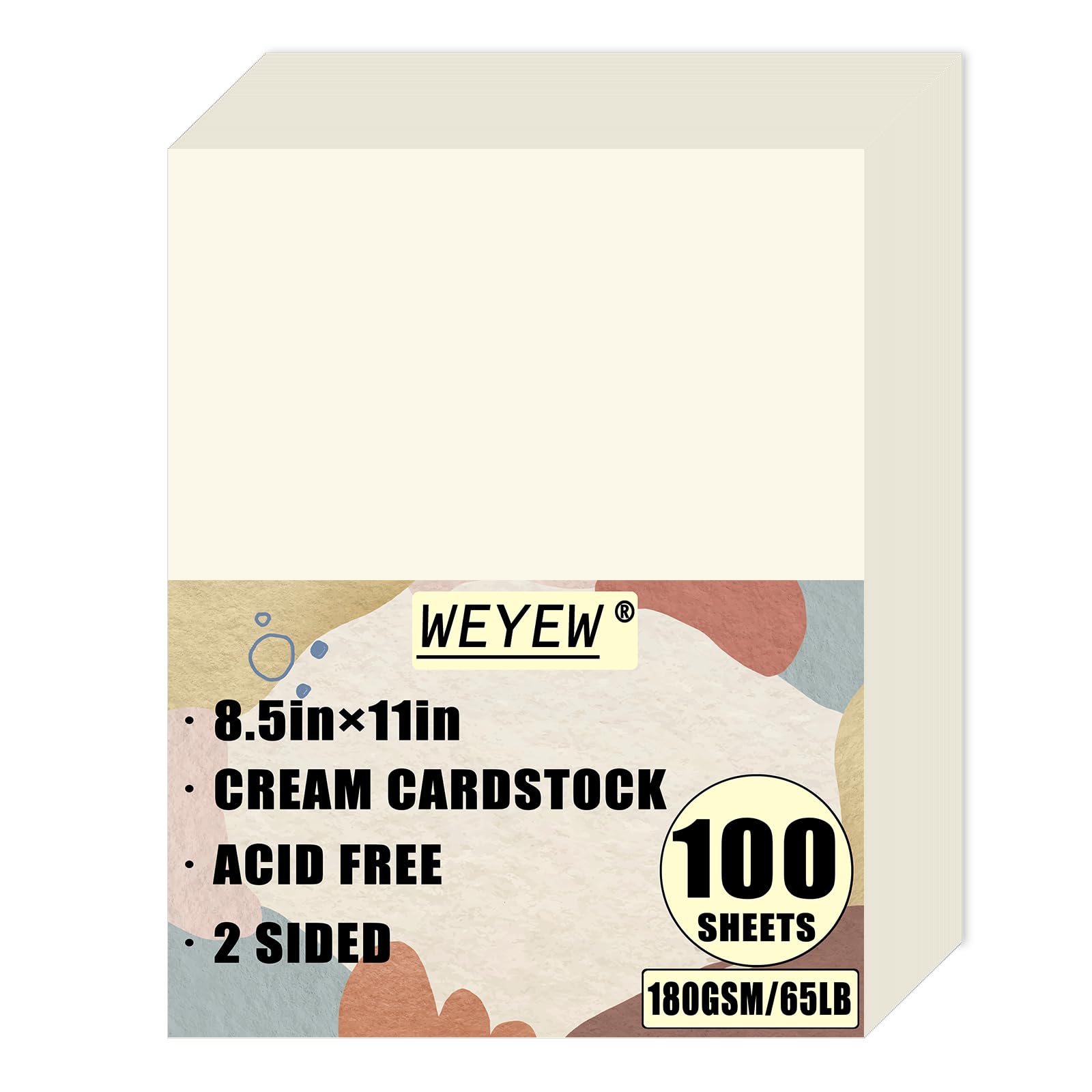
100 cream sheets at 65lb — the budget stock that keeps your project moving.
If you want cream-toned cardstock for a series of cards without spending per-sheet, this 100-sheet pack of 65lb (180 gsm) from Weyew is the same color and finish as its 110lb sibling but at half the weight and double the sheet count. At 65lb, it is 69% lighter than the 110lb cover stock (180 gsm vs 300 gsm), which makes it much easier to feed through regular inkjet and laser printers. Owners mention it worked well for grad announcements printed on a copy machine’s multipurpose tray — just feed one side at a time. The cream shade is a warm off-white that works for DIY card making, calligraphy projects, and embossing without looking overly yellow.
The downside is the same as any lighter cardstock: it does not have the rigid, board-like feel of heavier 110lb stock. For a single card that needs to stand tall on a mantelpiece, you may want to double-layer the sheets or pick the Weyew 110lb cream instead. For bulk invitations where each card will be displayed flat or in a lay-flat envelope, this is a cost-effective choice.
Why it works
- 100 sheets for a small premium — excellent value for batch card making
- Printer-friendly 65lb weight feeds in most home and office printers
- True cream color that works for formal and vintage designs
Keep in mind
- Lighter weight feels less premium for single, stand-alone greeting cards
- Does not support heavy ink coverage without slight show-through
Best for: Budget-conscious crafters who want a full 100-sheet cream cardstock pack that prints without fuss — ideal for invitations and newsletter-style cards.
Not for: Projects that demand a thick, rigid card with a luxury hand feel.
Understanding the Specs
Cardstock Weight — lb vs GSM
Cardstock weight is expressed in pounds (lb) for cover stock and in grams per square meter (GSM). In the US, “80lb cover” means a ream of 500 sheets weighs 80 pounds. GSM is the international standard that measures the mass of one square meter of paper. A higher number in either system means a thicker, heavier sheet. For greeting cards, 65lb to 110lb cover (roughly 176 to 300 GSM) is the typical range. Lighter stock folds and prints easily but lacks rigidity; heavier stock feels premium but may require manual feeding in home printers.
Sheet Count and Value
Sheet count directly affects the cost per card. A 50-sheet pack gives you enough for about 25 double-sided cards (or 50 single-sided card fronts). A 120- or 125-sheet pack stretches further for multi-color designs, test prints, and larger projects. Check the sheet count against your project batch size to avoid running out mid-run — you usually need two sheets per folded card plus a sheet for envelopes if you make your own.
FSC Certification
The Forest Stewardship Council (FSC) certification means the paper comes from responsibly managed forests that meet strict environmental and social standards. Several cardstocks in this list carry FSC certification, which is important if your project or brand values sustainable sourcing. This is a small-box label on the package, but it confirms the pulp did not come from illegal or endangered-forest logging.
Printer Compatibility — Paper Path Matters
Not all printers handle thick paper the same way. Look for a rear or straight-through paper feed slot — these accept thicker cardstock because the paper does not have to bend around rollers. Front-loading trays that curve the paper path often struggle with anything over 80lb. Before you buy a heavy 110lb cardstock, check your printer manual for the maximum paper weight it supports. Many home printers accept up to 100lb index weight, which is different from 100lb cover weight — cover weight is denser.
FAQ
What weight cardstock is best for printing greeting cards at home?
Can I use 110lb cardstock in my home printer?
What is the difference between 65lb and 110lb cardstock?
Should I choose cream or white cardstock for greeting cards?
How many sheets do I need for a batch of greeting cards?
Is Cricut cardstock compatible with regular printers?
What does GSM mean for cardstock?
Can I use cardstock in an inkjet printer without smudging?
How do I cut cardstock without ragged edges?
What is the best cardstock for double-sided printing?
Final Thoughts: The Verdict
For the majority of shoppers, the cardstock for printing greeting cards winner is the Cranium Press 80lb White Cardstock because it delivers that premium card feel (80lb / 216 gsm) while feeding smoothly through standard home printers — a rare balance that avoids the manual-feed hassle of heavier stocks. If you want a warm cream tone plus a high sheet count for bulk invitations, grab the Weyew 65lb Cream 100-Sheet Pack. And for Cricut users who need vibrant multi-color sheets that cut cleanly, the Cricut Rainbow Sampler (125 sheets) gives you the most cuts per dollar.
How We Picked
We do not accept paid placement. Every pick is matched to a real buyer and a real use-case; we do not hands-on test units.
Sources & Methodology
Specifications: manufacturer listings and product documentation. Review insights: verified customer reviews, as of July 2026. Pricing: not shown on this page (it changes often); check the current price via the retailer link.
As an Amazon Associate, Gadgets Feed earns from qualifying purchases. This does not affect which products we feature.
Product prices and availability are accurate as of the date/time indicated and are subject to change. Any price and availability information displayed on Amazon at the time of purchase will apply to the purchase of this product. As an Amazon Associate I earn from qualifying purchases.
CERTAIN CONTENT THAT APPEARS ON THIS SITE COMES FROM AMAZON. THIS CONTENT IS PROVIDED "AS IS" AND IS SUBJECT TO CHANGE OR REMOVAL AT ANY TIME.
Amazon and the Amazon logo are trademarks of Amazon.com, Inc. or its affiliates.