
Our readers keep the lights on and my morning glass full of iced black tea. As an Amazon Associate, I earn from qualifying purchases.
Specs are compiled from manufacturer listings and verified buyer reviews and can change over time — please confirm the key details on the product page before buying.
You step up to the tee, watch an experienced player send their disc 350 feet, and then yours wobbles, stalls, and dives hard left after 150 feet. The disc is the problem, not your form. Most distance drivers are built for fast arms and punish a beginner with early fade (the sharp leftward curve at the end of flight) that kills distance. A beginner-friendly distance driver is designed to stay in the air longer with less power, turning what feels like a weak throw into a smooth S-curve that actually goes somewhere.
I’m Min — the founder and writer behind Gadgets Feed. This guide is built by comparing the manufacturers’ published specifications and the patterns across verified customer reviews, so you get each pick’s real strengths and trade-offs instead of marketing spin.
The four discs here all share one critical trait: they are understable, meaning they want to turn right (for a right-hand, backhand throw) rather than diving left, which is exactly what a developing arm needs to open up real distance. This breakdown of the best beginner distance driver disc golf picks covers flight numbers, plastic types, and real buyer feedback to help you choose the right first driver.
Quick Picks
- Latitude 64 Opto Sapphire — Best Overall
- Latitude 64 Opto Diamond — Most Forgiving
- Prodigy Disc 400 F9 — Straightest Flier
- Remix Spartan Disc Golf Distance Driver — Night Rounder
How To Choose The Best Beginner Distance Driver Disc Golf
A distance driver for a beginner is not the same disc a pro throws. The key is picking a disc that works with your current arm speed, not against it. Here is what actually matters when you are shopping for your first driver.
Flight Ratings: The Four Numbers That Tell You Everything
Every PDGA-approved disc has four flight ratings printed on it. The first number, Speed, tells you how hard you need to throw to make the disc fly as designed. A Speed 9 or 10 disc (common for beginner distance drivers) gives you room to grow without demanding a pro-level throw. The second number, Glide, is how long the disc stays in the air — higher glide means more hang time and more distance potential for a lighter throw. Turn, the third number, is the critical one for beginners: a negative turn (like -2 or -3) means the disc naturally curves right during the high-speed part of the flight, counteracting the common beginner problem of the disc fading hard left too early. Fade, the fourth number, is how sharply the disc dives left at the end — a low fade (1 or below) keeps the disc straight longer and prevents it from crashing early.
Why Understable Discs Are A Beginner’s Best Friend
When a new player throws a stable or overstable driver, the disc wants to fight back to the left (for a right-hand backhand throw) almost immediately. That early fade robs you of both distance and confidence. An understable disc — one with a Turn rating of -2 or more negative — actually turns the opposite direction during its flight. This lets you throw with less power and still see the disc carve a smooth S-curve. It also makes hyzer flips (tilting the disc edge-down on release so it flattens out mid-flight) achievable without perfect form. Buyers report that the Prodigy F9 “changed my (beginner) game” precisely because it stays straight without needing a fast arm speed.
Plastic Quality And Weight Matter More Than You Think
Budget-friendly plastics work fine for casual rounds, but premium blends like Latitude 64’s Opto plastic are translucent, grippy even in wet conditions, and significantly more resistant to tree hits. The trade-off is a slightly higher price, but one reviewer noted Opto “is fantastic” and “among the most consistent discs in my bag.” Weight is another factor beginners often overlook: a lighter disc (under 170 grams) is noticeably easier to get up to speed, which means it flies closer to its intended flight path. Heavier discs (170g and up) are more wind-resistant but demand more arm speed to turn over. Many beginners find the lighter end of the weight spectrum the fastest path to seeing a disc actually fly the way the numbers predict.
Quick Comparison
| Model | Best For | Speed / Glide / Turn / Fade | Plastic | Weight | Amazon |
|---|---|---|---|---|---|
| Latitude 64 Opto Sapphire | Transition from fairway to distance driver | 10 / 6 / -2 / 1.5 | Opto | 165g and under | $18.99Amazon |
| Latitude 64 Opto Diamond | True beginners and lighter-weight throwers | 8 / 6 / -3 / 1 | Opto | 160g and under | $18.99Amazon |
| Prodigy Disc 400 F9 | Learning hyzer flips and turnover shots | 8 / 6 / -4 / 0.5 | 400 | 170-176g | $15.99Amazon |
| Remix Spartan | Night rounds and budget-friendly distance | 9 / 6 / -2 / 1 | Glow plastic | 170-179g | $12.95Amazon |
In‑Depth Reviews
1. Latitude 64 Opto Sapphire

The step-up distance driver that actually keeps going straight when you do.
Once you have outgrown a fairway driver but are not ready for a high-speed destroyer, the Sapphire fills that gap perfectly. Its Speed 10 (the highest of these four picks) adds real distance potential, while the -2 Turn and 1.5 Fade keep the flight predictable — it turns smoothly right before a gentle fade brings it back. The slim rim supports a confident grip and clean release, which matters when you are still building your release timing. Owners mention it “is my longest driver” and that it lands softer than other drivers they tried. The Opto plastic is scuff-resistant and translucent, so the disc holds its flight path even after bouncing off a few trees. The Sapphire has a 3.0x gap in Fade (1.5 vs 0.5 on the Prodigy F9), meaning it provides a slightly stronger, more predictable finish at the end of its flight. It also has a Speed of 10 versus 8 on both the Diamond and the F9 — a 25% more gap — which gives you more room to grow into faster throws without switching discs.
The catch: at 165g and under, this is a lightweight disc that can get knocked around in heavy wind. If you play on consistently gusty courses, you may find it less stable than a heavier option. One buyer mentioned they hoped for the image shown but liked the stamp they received instead, so expect some color and stamp variation.
Why It Works for Beginners
- Highest speed (10) in this lineup, giving the most distance growth
- Opto plastic withstands tree hits well
- Gentle fade (1.5) prevents early left dive
What to Watch For
- Lightweight gets pushed around in strong wind
- Color and stamp vary from the product image
Reach for this if: you have some disc golf experience and want a controllable distance driver that grows with your arm speed.
Look elsewhere if: you need a disc for very windy conditions — a heavier, more stable driver may help.
2. Latitude 64 Opto Diamond
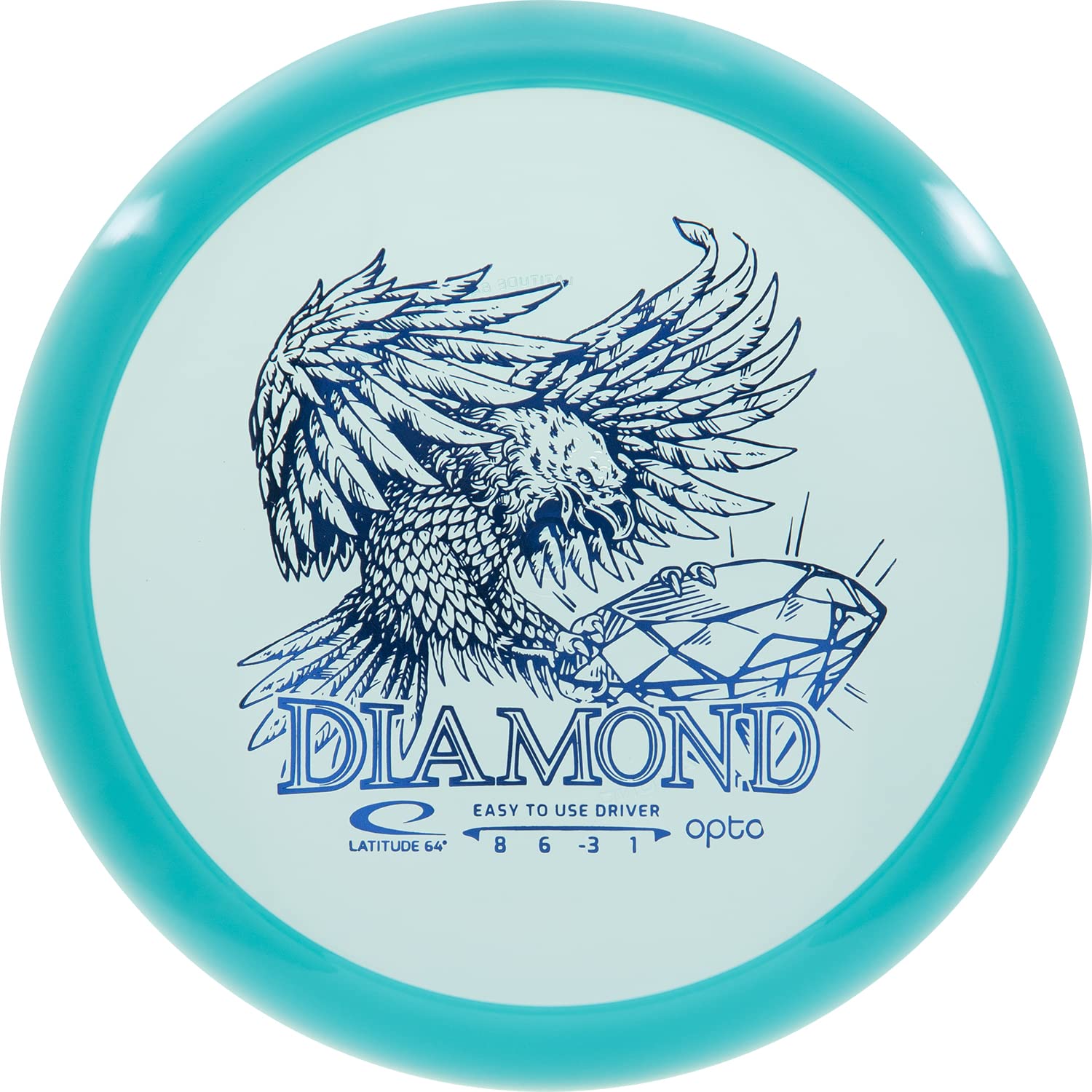
The disc that forgives bad form and turns it into a flyable line.
The Diamond is part of Latitude 64’s Easy to Use line, and that is not marketing — it is engineering. With a Turn of -3 (the most understable of the two Latitude 64 options here), it actively fights the beginner’s tendency to throw nose-up and stall out. The disc wants to glide: Speed 8, Glide 6 means it hangs in the air with very little effort. One reviewer calls it “forgiving beginner driver with smooth, controlled flight” and notes “it holds a straight line, doesn’t punish mistakes.” That forgiving nature makes it the best disc in this list for someone who has only thrown mid-ranges and putters so far. The Opto plastic is described as “grippy” even in Colorado winters — a note from a buyer who plays year-round. At 160g and under, this is the lightest pick, which is exactly what you need if you lack raw arm speed.
There is a trade-off: the Diamond is a fairway driver (Speed 8), not a true distance driver (Speed 10 like the Sapphire). As you improve, you will want something faster. Also, some buyers reported receiving the non-lightweight version, so check the listing carefully if weight is critical to your purchase.
Beginner-First Design
- Highest understability (-3 Turn) for easy hyzer flips
- Lightweight (160g and under) means you can actually accelerate the disc
- Opto plastic feels great in hand year-round
Limitations
- Speed 8 means you may outgrow it as you advance
- Weight variant may not match the listing
This one is for: the absolute beginner who has never thrown a driver and wants the disc to do most of the work.
skip it if: you already throw over 300 feet — you need the Sapphire’s extra speed instead.
3. Prodigy Disc 400 F9
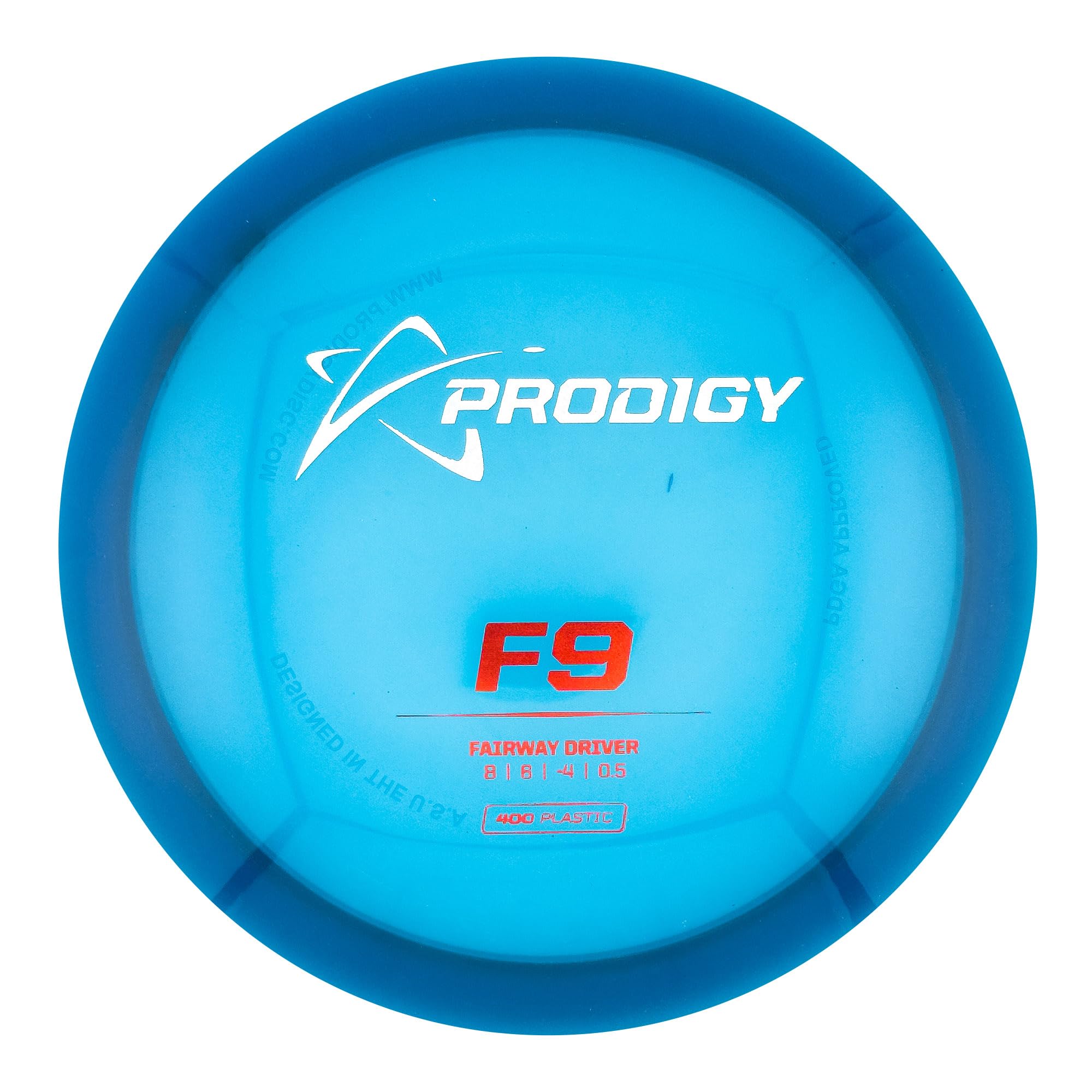
The understable fairway driver that flies arrow-straight right from the start.
The F9 is Prodigy’s most understable fairway driver — and it shows in the flight ratings: Speed 8, Glide 6, Turn -4, Fade 0.5. That -4 Turn is the most extreme understability in this entire lineup, meaning it is designed to flip up and turn right with virtually no effort. Customers note it “changed my (beginner) game” and “it stays straight as an arrow.” One reviewer who previously fought a hard left-fading disc said this disc “actually went where I aimed it.” The 400 plastic is gummy and flexible, with a feel that provides reliable grip even in wet conditions. That fade rating represents a 3.0x gap versus the Sapphire’s 1.5, which directly translates to less unwanted left drift at the end of your throw.
One honest buyer note: a reviewer commented that “it doesn’t Anhyzer yet” with a right-hand backhand throw, suggesting the heavier 170-176g version may take a few rounds to beat in before reaching full understability. If you want immediate max turn, look for a lighter weight or consider the Diamond instead.
Why It Flies So Straight
- Turn -4 is the most understable rating in this group — maximum right-turning potential
- Fade 0.5 barely pulls left at the end
- 400 plastic offers great grip in wet weather
Potential Hiccups
- Heavier weight (170-176g) takes longer to beat in for full turn
- Not a true distance driver — Speed 8 keeps it in fairway territory
Best suited for: the player who struggles with discs fading left and wants a fairway driver that stays dead straight.
pass on it if: you already have a fast arm — the extreme understability may turn over too much and become a roller disc.
4. Remix Spartan Disc Golf Distance Driver
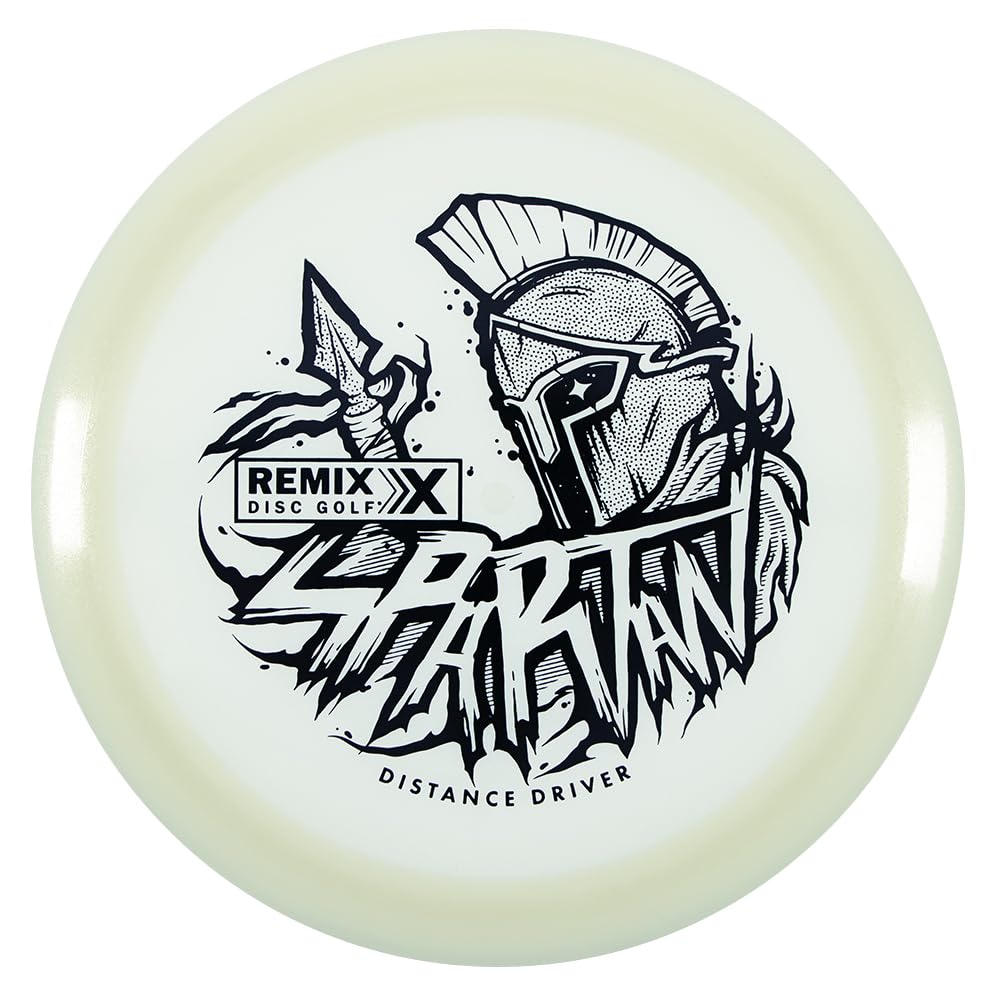
The budget-friendly distance driver that glows so you can keep playing after sunset.
The Spartan is Remix’s first understable distance driver, and it fills a particular niche: night golf. The glow plastic — hit it with a light source and it carries a bright glow for night rounds — lets you extend your game past dusk. But even if you never play at night, the flight numbers (Speed 9, Glide 6, Turn -2, Fade 1) make it a very usable pick for a beginner who wants a true distance driver without the premium plastic price tag. At 0.17 kilograms, it is lighter than the Sapphire and Diamond (both 0.21 kilograms), meaning it is easier to accelerate for a new thrower. Reviewers point out being “stunned by how great these are for the price” and note the disc “flies like Mint Freetail at 40% discount.” If you lose discs frequently (and every beginner does), the Spartan’s price point makes it a low-anxiety choice.
There are two real caveats. First, the glow plastic is not the premium Opto or 400 blend — it is more basic and may show wear faster. Second, buyers mention “color luck poor (gray/black)” and recommend hoping for bright colors if that matters to you. One reviewer described getting a “gray/black” disc, which is hard to spot in the rough during daytime.
Why It Stands Out
- Glow plastic enables night golf without a separate flashlight
- True distance driver (Speed 9) at a budget-friendly entry point
- Lightweight (0.17 kg) helps new throwers reach full flight
Where It Falls Short
- Plastic is less durable than Opto or 400
- Color and stamp are random — you may receive a hard-to-see dark disc
Grab this if: you play twilight rounds or want an inexpensive first distance driver to take the sting out of losing a disc in the water.
it’s not for you if: premium plastic feel and predictable color are important to you — the Opto Diamond or Sapphire is a better long-term investment.
Understanding the Specs
Flight Ratings (Speed / Glide / Turn / Fade)
These four numbers are the universal language of disc golf discs. Speed tells you how hard you need to throw for the disc to behave as designed — a Speed 8 needs less arm than a Speed 10. Glide is how long the disc stays in the air; higher numbers (5-6) mean more hang time and more distance for a lighter throw. Turn (-1 to -4) is the critical number for beginners: a negative Turn means the disc naturally turns right during the high-speed part of the flight, which counteracts the early left fade that plagues new players. Fade (0.5 to 2) is how sharply the disc dives left at the very end — lower fade keeps the flight straighter longer.
Plastic Types
Plastic is not just cosmetic — it determines grip, durability, and how long the disc stays true to its original flight. Budget plastic (like basic glow blends) works well but may beat in and change flight characteristics faster. Premium plastics like Latitude 64’s Opto are translucent, grippy in wet conditions, and highly resistant to scuffs and cracks. Prodigy’s 400 plastic offers a gummy, flexible feel that provides excellent wet-weather grip and beats in gradually without becoming floppy. Premium plastics cost more upfront but keep their flight path longer, meaning fewer replacement discs over time.
FAQ
What does understable mean in disc golf?
What speed rating should a beginner choose?
Is a heavier or lighter disc better for a beginner?
What is a hyzer flip and why is it useful?
What is the difference between Opto plastic and 400 plastic?
Will an understable disc become unusable as I improve?
Can a beginner use a Speed 10 driver like the Sapphire?
Does glow plastic disc golf disc work well in daytime?
What disc golf driver should I buy after a mid-range disc?
Why does my distance driver keep fading hard left?
Final Thoughts: The Verdict
Across the board, the best beginner distance driver disc golf winner is the Latitude 64 Opto Sapphire because it sits at the perfect intersection of speed (10), understability (-2 Turn), and premium plastic (Opto) — it grows with you longer than a fairway disc will, while still forgiving beginner mistakes. If you want the most forgiving first driver possible with maximum glide and turn, grab the Latitude 64 Opto Diamond. And for night rounds or budget-conscious beginners, the standout is the Remix Spartan with its glow plastic and low entry cost.
How We Picked
We do not accept paid placement. Every pick is matched to a real buyer and a real use-case; we do not hands-on test units.
Sources & Methodology
Specifications: manufacturer listings and product documentation. Review insights: verified customer reviews, as of July 2026. Pricing: not shown on this page (it changes often); check the current price via the retailer link.
As an Amazon Associate, Gadgets Feed earns from qualifying purchases. This does not affect which products we feature.
Product prices and availability are accurate as of the date/time indicated and are subject to change. Any price and availability information displayed on Amazon at the time of purchase will apply to the purchase of this product. As an Amazon Associate I earn from qualifying purchases.
CERTAIN CONTENT THAT APPEARS ON THIS SITE COMES FROM AMAZON. THIS CONTENT IS PROVIDED "AS IS" AND IS SUBJECT TO CHANGE OR REMOVAL AT ANY TIME.
Amazon and the Amazon logo are trademarks of Amazon.com, Inc. or its affiliates.