
Our readers keep the lights on and my morning glass full of iced black tea. As an Amazon Associate, I earn from qualifying purchases.
Specs are compiled from manufacturer listings and verified buyer reviews and can change over time — please confirm the key details on the product page before buying.
You have about $500 to spend on a graphics card, and you want smooth 1440p gaming, 16GB of video memory (VRAM), and a cooler that will not blast jet-engine noise into your room for years. At this exact price, the difference between a smart buy and a regret depends on small details: how the cooler works, what the clock speeds deliver in real games, and how much noise you will actually hear.
I’m Min — the founder and writer behind Gadgets Feed. This guide is built by comparing the manufacturers’ published specifications and the patterns across verified customer reviews, so you get each pick’s real strengths and trade-offs instead of marketing spin.
Quick Picks
- Sapphire 11350-03-20G Pulse AMD Radeon RX 9060 XT Gaming OC — Best Overall
- ASRock Radeon RX 9060 XT Challenger 16GB OC — Compact Champ
- XFX Swift AMD Radeon RX 9060 XT OC Gaming Edition — Top Performer
- GIGABYTE Radeon RX 9060 XT Gaming OC 16G — Premium Build
- PowerColor Reaper AMD Radeon RX 9060 XT 16GB GDDR6 — Smallest Fit
- ASUS Prime AMD Radeon RX 9060 XT 16GB GDDR6 OC Edition — Dual-Personality
How To Choose The Best $500 GPU
At this price, you are buying the top end of the mid-range. These cards handle almost any game at 2560×1440 resolution with high settings and give you enough VRAM headroom for texture-heavy mods, video editing, or running small AI models on your own PC. The trick is knowing which specs truly affect your experience and which are just numbers on a box.
VRAM Capacity: 16GB Is the New Baseline
Every card on this list comes with 16GB of GDDR6 memory (the current graphics memory standard). That is the magic number for this generation — it gives you enough space for high-resolution textures in modern games and for running larger AI models locally. Anything less will feel tight within a couple of years as game textures grow.
Cooling Design: Dual-Fan vs Triple-Fan
A dual-fan card is shorter and lighter, so it fits easily into smaller cases. A triple-fan card runs quieter under heavy load because it can spin the fans slower to move the same amount of air. If your case has room, the extra fan usually means a more pleasant gaming session. Many cards also feature a 0dB mode where the fans stop entirely under light use, making your PC silent during everyday tasks like web browsing or watching videos.
Power Connectors and PSU Requirements
Most cards in this tier use a single 8-pin power connector, which works with older power supplies. Some premium models might use a 6+2 pin setup (a common power cable configuration for graphics cards). Always check the recommended power supply wattage — 500W to 550W is the typical minimum, but having a 650W unit gives you more room for overclocking (running the card faster than stock) and future upgrades.
Quick Comparison
| Model | Best For | Boost Clock | Memory | Cooler Type | Amazon |
|---|---|---|---|---|---|
| PowerColor Reaper | Smallest Footprint | 2620 MHz | 16GB GDDR6 | Dual Fan | Amazon |
| ASRock Challenger | Budget Builds | 3290 MHz | 16GB GDDR6 | Dual Fan, 0dB | Amazon |
| Sapphire Pulse | Quiet 1440p Gaming | 3290 MHz | 16GB GDDR6 | Dual Fan | Amazon |
| XFX Swift OC | Highest Boost Out of Box | 3320 MHz | 16GB GDDR6 | Dual Fan | Amazon |
| GIGABYTE Gaming OC | Premium Build Feel | 2700 MHz | 16GB GDDR6 | Triple Fan, RGB | Amazon |
| ASUS Prime OC | Dual BIOS & Long Life | 7000 MHz | 16GB GDDR6 | Triple Fan, 0dB | Amazon |
In-Depth Reviews
1. Sapphire 11350-03-20G Pulse AMD Radeon RX 9060 XT Gaming OC

This card proves quiet cooling and strong 1440p performance can live in a compact frame — it earns the top spot.
You get strong 1440p gaming from the Sapphire Pulse thanks to a boost clock of 3290 MHz on the core (the processor) and a memory clock of 20 GHz (20 billion cycles per second) on the 16GB GDDR6 memory. One buyer described it simply: “Sapphire RX 9060 XT: full PCIe 5×16, 16GB VRAM.” The card uses just a single 6+2 pin power connector and is capped at 182W of power draw — less than the XFX Swift or GIGABYTE cards, which keeps your electricity bill lower and puts less strain on your power supply.
Buyers report that under load, the GPU edge temperature stays in the mid-high 50s degrees Celsius, with memory hitting up to 70 degrees Celsius — both well within safe limits. Another owner running an i3-12100 CPU said they get 90 fps (frames per second) on ultra settings in most games and 150-220 fps with tune settings, which shows the card does not need an expensive high-end CPU to shine. The 128-bit memory bus (the data highway width between the VRAM and the GPU) is the main spec limit here — it is narrower than some competing designs, but the 20 GHz memory speed helps compensate in real games.
Why It Wins the Slot
- Compact physical size fits in tighter cases
- Excellent heat levels with edge temps in the mid-50s degrees Celsius under load
- Low power draw of 182W means strong compatibility with older power supplies
One Trade-off
- 128-bit memory bus is narrower than some competing cards, which can limit very high-resolution texture loading
Reach for this if: you want a quiet, cool-running card that fits a standard ATX case without struggle and delivers smooth 1440p framerates from the start. Compared to the XFX Swift, the Sapphire Pulse runs quieter and draws less power, though the XFX has a slightly higher peak clock speed at 3320 MHz.
Look elsewhere if: you need the absolute highest memory bandwidth for compute-heavy workloads like 4K texture packs or large AI models that benefit from a wider bus — the GIGABYTE Gaming OC with its superior cooling may sustain its speed longer.
2. ASRock Radeon RX 9060 XT Challenger 16GB OC
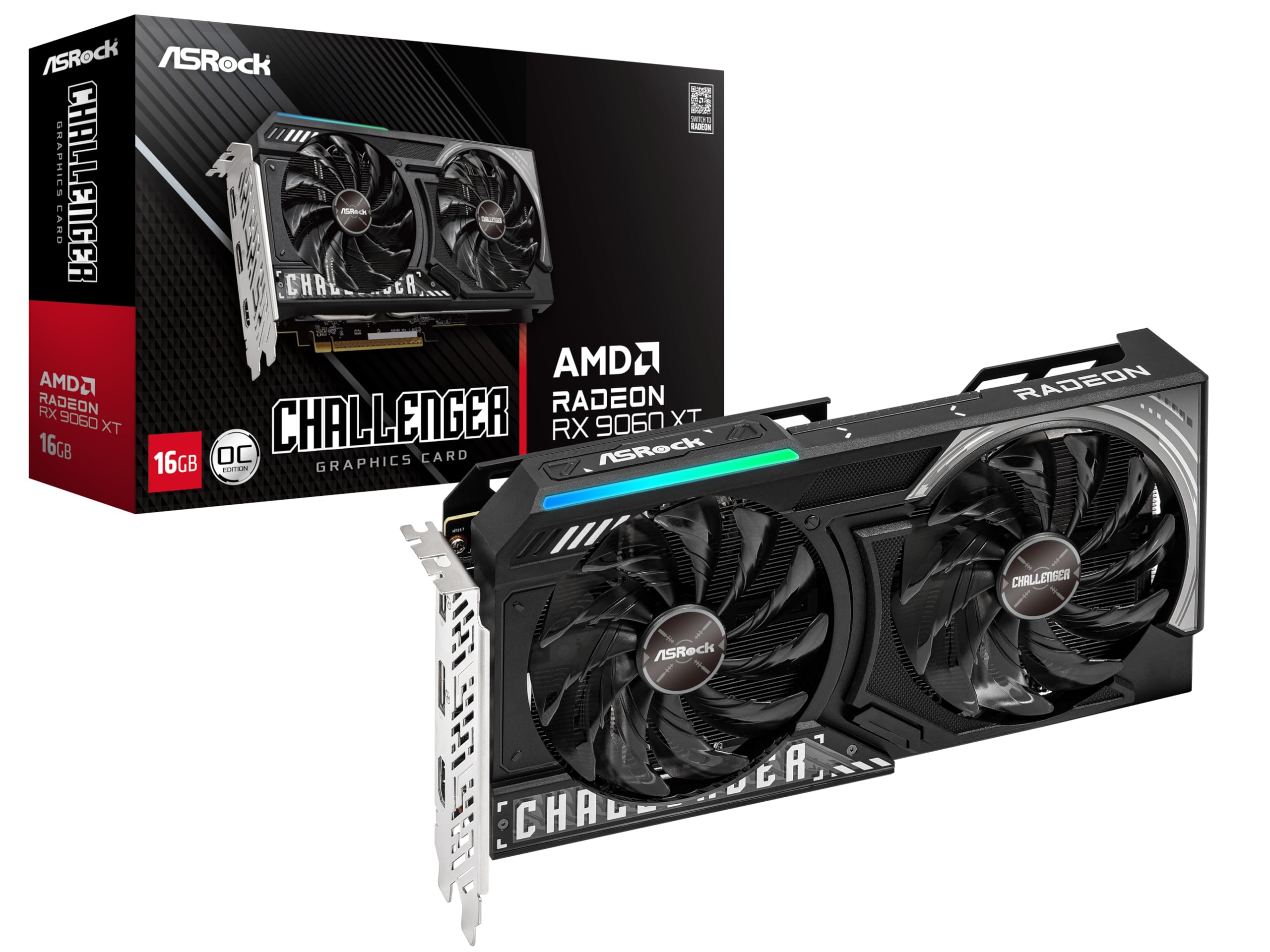
A smaller, lighter card that fits where your old GPU lived — weighing 0.98 kg versus 1.31 kg for the XFX Swift, so it puts less stress on the PCIe slot over time.
At 0.98 Kilograms, this ASRock Challenger is significantly lighter than the XFX Swift (1.31 kg) — this lower weight makes installation easier and reduces strain on the PCIe slot (the slot you plug the card into on the motherboard) over years of use. It measures just 249mm long, fitting into a wider range of cases. One reviewer noted: “I bought this to replace my 3060, and it fit much better in my system being of smaller size, it runs games perfectly, pushing 165 fps on high settings, and it is ultra quiet.” The core clock boosts to 3290 MHz with a game clock of 2700 MHz (the speed you get during sustained gameplay), which keeps high framerates smooth.
The card uses a dual-fan design with 0dB Silent Technology, meaning the fans stop completely when you are browsing or doing light work — your PC stays dead silent. It also has a convenient LED on/off switch so you can disable the light bar if you prefer a stealthy look. The 128-bit GDDR6 memory running at 20 Gbps (gigabits per second) is the same setup as the Sapphire Pulse, so expect similar memory bandwidth. ASRock recommends a 550W power supply, so check your existing unit before buying — if you have a 500W unit, it may be tight.
Strong Points
- Very light at 0.98 kg makes it easy to handle and install
- 0dB fan stop keeps the PC silent under low load
- LED on/off switch for customizing the look
Consider This
- Dual-fan design means slightly warmer temps under sustained heavy load vs triple-fan cards like the GIGABYTE Gaming OC
Ideal for: anyone upgrading from a smaller card like a GTX 3060 who wants a drop-in replacement that runs cool and quiet without any case modifications. The ASRock Challenger is a better fit for compact builds than the larger XFX Swift, though the XFX offers a slightly higher peak clock speed at 3320 MHz.
Not ideal for: builders who want the absolute lowest noise levels at full load — a triple-fan card like the GIGABYTE Gaming OC will spin slower and quieter under the same heat output.
3. XFX Swift AMD Radeon RX 9060 XT OC Gaming Edition
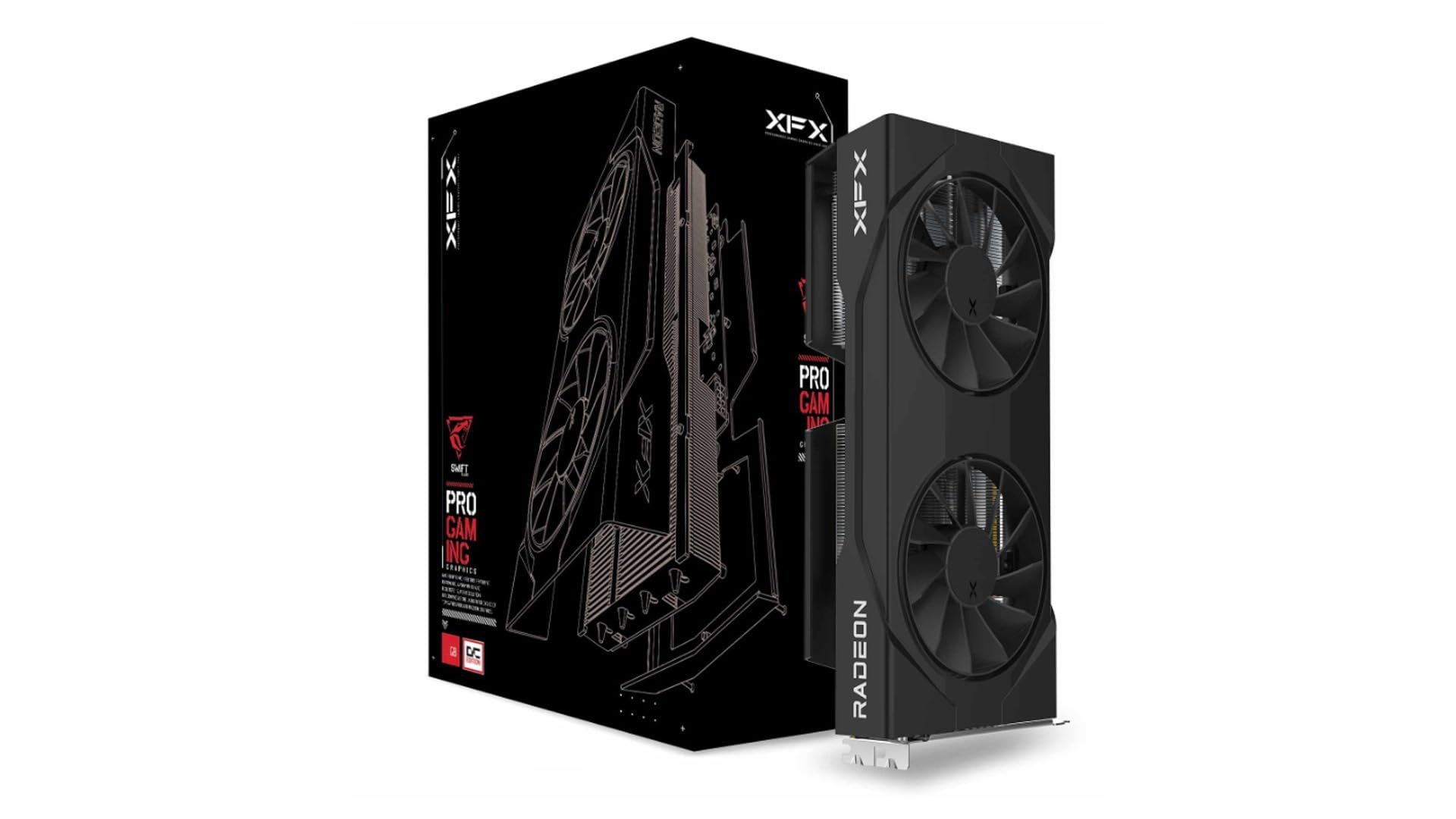
The highest out-of-box boost clock in the lineup at 3320 MHz — 30 MHz faster than the Sapphire Pulse, giving you maximum factory-overclocked performance.
XFX pushes the boost frequency up to 3320 MHz, which is 30 MHz higher than the Sapphire Pulse and ASRock Challenger. That is a small difference on paper, but it means you are getting the maximum factory-overclocked version of the RX 9060 XT chip (the graphics processor). One buyer called it a “Budget beast: ~60 degrees Celsius, Timespy ~17000,” confirming the card runs cool even under synthetic benchmarking stress. At 1.31 Kilograms, this is a heavier card, so check that your case has a sturdy PCIe slot or use a support bracket to prevent sagging over time.
The 16GB of GDDR6 memory runs on a 128-bit bus, and the card measures 10.63 inches long — a standard size that fits in most mid-tower cases. Owners mention it handles 1080p max settings on 95% of modern AAA games without breaking a sweat and delivers solid 1440p performance as well. The XFX Swift dual-fan cooling solution keeps noise under control; one owner said it was “super quiet” even after all-day gaming sessions, which is a common positive point in reviews.
What Stands Out
- Highest factory boost clock at 3320 MHz for maximum out-of-box performance
- Stays cool around 60 degrees Celsius under heavy load according to verified reviews
- Plug-and-play stability with no driver issues reported by buyers
What to Watch
- Slightly larger and heavier than some rivals at 1.31 kg — may need a support bracket
Grab this for: the highest guaranteed clock speeds straight from the factory — ideal if you do not plan to manually overclock and want every frame the chip can give. If you want a similar boost in a more compact package, the ASRock Challenger is lighter at 0.98 kg, but the XFX gives you that extra edge in peak speed.
skip it if: you have a smaller case or a lower-wattage power supply; the added mass and 550W recommended PSU mean it needs more breathing room than the compact PowerColor Reaper at 200mm long and 658 grams.
4. GIGABYTE Radeon RX 9060 XT Gaming OC 16G

Triple-fan cooling with Hawk fans and server-grade thermal gel means a quieter gaming room — the fans can spin slower to move the same heat.
The GIGABYTE Gaming OC stands apart with its WINDFORCE 3X cooling system, featuring three Hawk fans and server-grade thermal conductive gel instead of standard thermal paste. This combination is designed to move more heat away from the GPU chip more efficiently, which translates to lower fan speeds and less noise under load. The card supports up to 7680×4320 resolution, giving you 8K output capability through its DisplayPort video outputs — handy if you ever connect it to an 8K monitor.
The core runs with a boost clock of 2700 MHz, which is lower than the XFX Swift at 3320 MHz and the ASRock Challenger at 3290 MHz. However, the triple-fan cooler means this card can sustain that boost for longer without thermal throttling (slowing down to avoid overheating). It measures 11.06 inches long, so you will need a roomier case — it is 2.5 inches longer than the compact PowerColor Reaper. There are currently no verified customer reviews for this specific model at the time of writing, so the performance picture comes purely from the specs — the 16GB GDDR6 on a 128-bit bus is the same foundation as the others, but the cooler is the headline feature here.
Build Highlights
- Triple-fan Windforce 3X system for quieter sustained operation
- Server-grade thermal gel for better long-term heat transfer vs standard paste
- RGB lighting adds customizable flair to a windowed build
Build Caution
- Longer card at 11.06 inches may not fit in compact mid-tower cases — measure your space first
Choose this for: the best cooling solution in the class — ideal if you game for hours and value a quieter experience over a slightly higher peak clock speed. Compared to the Sapphire Pulse, the GIGABYTE runs quieter under heavy load but takes up more space in your case.
Think twice if: case clearance is tight; measure your available space before buying because this is the longest card on the list at 11.06 inches — the PowerColor Reaper is much shorter at 8.66 inches.
5. PowerColor Reaper AMD Radeon RX 9060 XT 16GB GDDR6

The tiniest 16GB card in the group at just 200mm long and 658 grams — it fits where other cards simply will not.
The PowerColor Reaper is the card you reach for when your case is already cramped. It measures only 8.66 inches long and weighs just 658 grams — barely more than some high-end CPU coolers. The dual-fan design and 2-slot thickness (it takes up two expansion slots inside your case) mean it fits into smaller form factor cases that reject the bigger triple-fan cards like the GIGABYTE Gaming OC at 11.06 inches. The boost clock is rated at 2620 MHz, which is lower than the 3320 MHz on the XFX Swift, but the power efficiency of the RDNA 4 architecture means it still delivers solid 1440p performance — think smooth framerates in most games, just not the absolute highest possible.
One 8-pin PCI Express power connector powers the whole thing, and PowerColor recommends a minimum 500W system power — the lowest requirement on this list, so it is friendly to older or smaller power supplies. It supports up to 7680×4320 resolution and includes one HDMI 2.1b and two DisplayPort 2.1a outputs. No customer reviews are available for this specific model yet, so the recommendation is based purely on the physical specs — if you need the smallest card that still packs 16GB of VRAM, this is the one to beat.
Physical Edge
- Only 200mm long — fits in cases that reject standard-length GPUs
- Lightest card at 658 grams, almost no sag risk
- Lowest system power recommendation at just 500W
Performance Note
- Lower boost clock at 2620 MHz than most rivals — leaves performance on the table vs the XFX Swift at 3320 MHz or the Sapphire Pulse at 3290 MHz
Perfect if: you are building in a compact ITX (small form factor) case or a small mid-tower and need a full-fat 16GB GPU that physically fits without removing drive cages.
Not for: competitive overclockers or anyone who wants the highest possible framerate — the lower clock speed means the XFX Swift or Sapphire Pulse will give you faster performance in demanding games.
6. ASUS Prime AMD Radeon RX 9060 XT 16GB GDDR6 OC Edition

A triple-fan card with a Dual BIOS switch that lets you choose between quiet and performance modes — a versatility edge over the single-mode Sapphire Pulse.
The ASUS Prime OC Edition uses three axial-tech fans with a smaller fan hub design that allows for longer blades, creating more downward air pressure for better cooling. It comes with a Dual BIOS switch (a physical toggle on the card), letting you pick between a Quiet profile for low-noise gaming and a Performance profile for maximum clock speeds. The fans also feature dual-ball bearings, which ASUS claims last up to twice as long as standard conventional sleeve bearings — a longevity bonus if you keep the card for several years. One verified buyer confirmed the card’s consistency: “3DMark Steel Nomad score 3,696 (average 3,731), ~36.96 FPS.” They noted consistent performance with no thermal throttling and stable clock speeds during their test.
The GPU clock speed is listed at an unusual 7000 MHz — this number is likely a marketing quirk or a confusion between the GPU clock and the memory clock on the spec sheet, as the memory clock is stated at 2800 MHz. Stick with the real-world performance customers note: the card handles Bluestacks 5 (Android emulation), creative apps, and FSR4 (AMD’s upscaling technology) gaming without issues. It measures 12 inches long, so measure your case carefully — it is the longest card here by about an inch. The card is a 2.5-slot design, offering a middle ground between thin dual-slot and chunky triple-slot cards.
Unique Features
- Dual BIOS switch lets you tune for quiet or performance on the fly
- Dual-ball bearing fans are rated for longer lifespan by the maker
- 0dB technology stops fans under light load for silent everyday use
Physical Considerations
- At 12 inches, it is the longest card here and needs a spacious case — the PowerColor Reaper is 4 inches shorter at 200mm
Reach for this if: you want the flexibility of a quiet mode for browsing and a performance mode for gaming, all backed by a proven cooling system with what the maker says are long-life bearings. The Dual BIOS is a feature you will not find on the simpler Sapphire Pulse or XFX Swift.
pass on it if: your case has less than 12 inches of clearance for the GPU — the length is the most restrictive spec of any card on this list, and the PowerColor Reaper or ASRock Challenger are much shorter options that will fit more easily.
Understanding the Specs
Boost Clock & Game Clock
Boost clock is the maximum speed the GPU can reach under ideal cooling conditions. It is the number manufacturers use for marketing — the headline figure you see on the box. Game clock is a more honest spec: it reflects the speed you can expect during sustained gameplay, not just in short bursts. A card with a 3320 MHz boost clock will feel faster in short moments, but the game clock dictates your real-world framerate over a long gaming session when the card is warm.
128-bit Memory Bus & 16GB VRAM
All six cards here use a 128-bit wide memory bus (the data path between the VRAM and the GPU) paired with 16GB of GDDR6 memory. The bus width controls how much data can move between the memory and the processor at once. 128-bit is narrower than the 256-bit bus on higher-tier cards, meaning it can be a bottleneck for very high-resolution textures like 4K. But 16GB of VRAM is generous for this price class, ensuring you will not run out of memory for modern game assets even at 1440p resolution.
FAQ
Will any of these RX 9060 XT cards fit in my existing mid-tower case?
Do I need a PCIe 5.0 motherboard to use these cards?
Which card draws the least power from my power supply?
Can I run AI models or local LLMs (large language models) on these 16GB cards?
Is 16GB of VRAM enough for 4K gaming?
What does 0dB fan stop mean?
How do I power these cards if my PSU only has one 8-pin connector?
Which card is the quietest under heavy gaming load?
Final Thoughts: The Verdict
Across the board, the best $500 gpu winner is the Sapphire Pulse RX 9060 XT because it nails the balance of quiet operation, strong 1440p performance, low power draw, and a compact size that fits most builds without drama. If you want the highest factory clock speeds and a proven track record, grab the XFX Swift OC. And for fitting into the tightest case, the standout is the PowerColor Reaper at just 200mm long.
How We Picked
We do not accept paid placement. Every pick is matched to a real buyer and a real use-case; we do not hands-on test units.
Sources & Methodology
Specifications: manufacturer listings and product documentation. Review insights: verified customer reviews, as of July 2026. Pricing: not shown on this page (it changes often); check the current price via the retailer link.
As an Amazon Associate, Gadgets Feed earns from qualifying purchases. This does not affect which products we feature.
Product prices and availability are accurate as of the date/time indicated and are subject to change. Any price and availability information displayed on Amazon at the time of purchase will apply to the purchase of this product. As an Amazon Associate I earn from qualifying purchases.
CERTAIN CONTENT THAT APPEARS ON THIS SITE COMES FROM AMAZON. THIS CONTENT IS PROVIDED "AS IS" AND IS SUBJECT TO CHANGE OR REMOVAL AT ANY TIME.
Amazon and the Amazon logo are trademarks of Amazon.com, Inc. or its affiliates.