
Our readers keep the lights on and my morning glass full of iced black tea. As an Amazon Associate, I earn from qualifying purchases.
Specs are compiled from manufacturer listings and verified buyer reviews and can change over time — please confirm the key details on the product page before buying.
If you have ever spent an afternoon scrubbing caked-on brake dust or engine grease that just will not budge, you know the frustration. You need a cleaner that cuts that job from a chore to a quick spray-and-wipe. The real question is which formula and size actually save you time without leaving a chemical smell that lingers in the garage for days.
I’m Min — the founder and writer behind Gadgets Feed. This guide is built by comparing the manufacturers’ published specifications and the patterns across verified customer reviews, so you get each pick’s real strengths and trade-offs instead of marketing spin.
Matching the solvent type (non-chlorinated vs. chlorinated) and format (aerosol can vs. liquid jug) to your most common mess is how you choose the right automotive parts cleaner for your garage.
Quick Picks
- DENCO DISTRIBUTING, INC. #1930-50 Brake & Parts Cleaner Spray, 50-State (Case of 6) — Best Overall
- CRC Brakleen Non-Chlorinated Brake Parts Cleaner – 50 State Formula, 1 Gal, 05051 — Best Value Jug
- Aerosol CRC 05084 BRAKLEEN Brake Parts Cleaner – Non-Chlorinated 2 Pack — Compact Starter
- Quinton Hazell Brake Cleaner Spray Can, 20.3 fl oz (6 Pack) – QH6 Non-Chlorinated — Pro-Grade Power
- Malco Red Thunder – Automotive Degreaser and Cleaner – 1 Gallon (102301) — Versatile Concentrate
How To Choose The Best Automotive Parts Cleaner
Before you pick a product, you need to know what kind of mess you are cleaning and where you live. The differences in solvent formulas, can sizes, and application methods can make one cleaner feel easy and another feel like a battle.
Non-Chlorinated vs. Chlorinated Formulas
Chlorinated brake cleaners (solvents with chlorine compounds) used to be the gold standard for raw dissolving power, but they have been largely phased out due to environmental and health regulations. Most products you see today are non-chlorinated (without those compounds) and 50-state compliant (legal to sell in all U.S. states). The trade-off is that non-chlorinated formulas are a touch weaker on heavy, baked-on crud — one CRC Brakleen reviewer noted it is “not as strong as the chlorinated version.” In everyday use, though, the difference is small, and you avoid the harsh fumes and legal restrictions of the older stuff.
Aerosol Cans vs. Liquid Jug for Refillable Sprayers
Aerosol cans (pressurized spray cans with propellant) are the easiest grab-and-go option. They spray on with even pressure and are easy to aim into tight spots like caliper gaps. The downside is cost per ounce — you pay a premium for the can and the propellant. A 1-gallon jug of cleaner, like the CRC Brakleen gallon, is significantly cheaper per ounce, but you need a separate sprayer (a simple garden pump or pressurized hand sprayer) to apply it. Buyers report that the gallon format “lasted a good while” and is “much cheaper than trying to buy all the cans.” If you clean parts more than once a month, the jug saves real money.
Evaporation Speed and Application Technique
Parts cleaners dry very quickly — that is the point: a dry surface means no residue left behind. But some formulas evaporate so fast that you barely have time to scrub. One Quinton Hazell buyer said the cleaner “evaporates so quick you have to pretty much spray it inches away from the surface in order to use a cleaning brush.” If you like to spray, brush, and wipe, a slower-evaporating product or a liquid concentrate you dilute yourself gives you more working time. For brake jobs where you spray and blow off, fast-drying is exactly what you want.
Quick Comparison
| Model | Best For | Format | Total Volume | Weight | Amazon |
|---|---|---|---|---|---|
| Denco #1930-50 (6-Pack) | Home mechanics doing frequent brake jobs | Aerosol Can | 6 x 13 oz net wt | 6.44 Pounds | $29.99Amazon |
| CRC Brakleen 1 Gal (05051) | Budget-conscious buyers with a sprayer | Liquid Jug | 1 Gallon (128 fl oz) | 4.5 Pounds | $42.83Amazon |
| CRC 05084 BRAKLEEN 2-Pack | Quick spot-cleaning on single brakes | Aerosol Can | 2 cans (size not stated) | 2.27 Pounds | $13.75Amazon |
| Quinton Hazell QH6 (6-Pack) | Professional shops needing fast-drying power | Aerosol Can | 6 x 20.3 fl oz (121.73 fl oz total) | 2.4 Kilograms (5.29 Pounds) | $32.99Amazon |
| Malco Red Thunder 1 Gal | Degreasing engines, wheels, and tires | Liquid Concentrate | 1 Gallon (128 fl oz) | — | $39.97Amazon |
In‑Depth Reviews
1. DENCO DISTRIBUTING, INC. #1930-50 Brake & Parts Cleaner Spray, 50-State (Case of 6)

A 50-year veteran’s pick that cuts grease without the harsh smell.
You get six full 15.3 oz aerosol cans in this case, so you have a standing supply if you do brake jobs often. Each can uses a non-chlorinated, low-odor formula that is 50-state compliant (legal in all states, including California), so you never have to check local laws. The cleaner targets brake dust, grease, oil, and general grime, and The maker claims it reduces brake noise and vibration by eliminating residue that causes squeaking.. A buyer with 50 years of brake-job experience called it “THE best Brake Cleaner available.”
At 6.44 pounds for the case, this is the heaviest pack on the list — it is 2.8 times heavier than the CRC 05084 2-pack (at 2.27 pounds) — because you get six full cans instead of two. Home shop owners mention that a 12-pack lasts roughly a year, so the 6-pack gives a solid half-year supply for the typical DIYer. The CRC 2-pack is better if you just need a can for a single job, but the Denco case wins on per-can value and consistent performance.
The spray format delivers even pressure, so you can aim into tight caliper gaps. The low-odor claim matters in a home garage where you cannot ventilate like a commercial shop. Customers note it “cuts through grease easily” and is “excellent” for the price, with no complaints about weak spray or fast evaporation.
Case-Quality Value
- Low-odor formula is garage-friendly
- 50-state compliant — legal everywhere
- Buyers praise its grease-cutting power
One Limitation
- Heavier case (6.44 lbs) than multi-packs with fewer cans
Reach for this if: you do brakes every few months and want a steady supply that works without a heavy chemical smell.
Look elsewhere if: you only need one can for a quick, one-time job — a smaller pack will cost you less upfront.
2. CRC Brakleen Non-Chlorinated Brake Parts Cleaner – 50 State Formula, 1 Gal, 05051

One gallon that replaces a dozen aerosol cans and goes further for less.
If you have a refillable sprayer (a simple pressurized hand sprayer works), this 1-gallon bottle of CRC Brakleen turns into many more applications than any single aerosol can. The liquid formula removes brake fluid, grease, oil, and general contaminants from brake parts, linings, calipers, drums, and more. At 4.5 pounds, the jug is nearly 2 pounds lighter than the Denco 6-pack case yet holds 128 fluid ounces (a fluid ounce is a volume measurement for liquids), giving you far more cleaner per dollar. Reviewers point out the jug “lasted a good while” in a pressurized sprayer and is “much cheaper than trying to buy all the cans.”
The non-chlorinated formula is 50-state compliant, so it is legal nationwide (except Catalina Island, per the listing). One owner uses it in a sprayer to wash down engine areas, cleaning off grease and oil to find the source of a leak — a smart trick that a smaller aerosol could not handle. The big caveat is that you need your own sprayer, and the liquid does not have the propellant of a can, so the spray pattern depends on your tool. If you prefer grab-and-go convenience, an aerosol is faster, but this jug is the most economical way to keep a shop running.
The product is extremely flammable, so you must use it in a ventilated area. One buyer warns that the fumes “will take your breath away,” so a respirator (a mask that filters out organic vapors) or good airflow is not optional.
Why It Saves You Money
- Dramatically lower cost per ounce than aerosol cans
- Versatile enough for leak-detection washing
- One-gallon supply lasts a long time in a home shop
Two Practical Downsides
- Requires a separate sprayer — not ready to use from the start
- Strong fumes demand good ventilation
Best for: the home mechanic who cleans parts regularly and does not mind keeping a refillable sprayer.
Not for you if: you want a single can to spray and toss — the aerosol packs above are more convenient.
3. Aerosol CRC 05084 BRAKLEEN Brake Parts Cleaner – Non-Chlorinated 2 Pack

A two-can starter perfect for cleaning one set of brakes without overspending.
If you just need a can of brake cleaner for a single job — a weekend pad swap or a quick degrease on a rusty caliper — this CRC Brakleen 2-pack is the lightest option here at 2.27 pounds. That makes it about 2.8 times lighter than the Denco 6-pack case, and its compact dimensions (9.49 x 5.47 x 2.6 inches) mean it tucks easily into a toolbox or a small shelf. The non-chlorinated formula follows the 50-state standard and works well on brake fluid, grease, oil, and general grime.
Buyers consistently rate it highly for cleaning garage-door tracks and greasy parts. One reviewer gave a helpful reality check: “Great product but not as strong as the chlorinated version. If you can’t get the chlorinated version this works very well too.” For everyday brake dust and moderate buildup, this CRC formula handles it well. For caked-on, years-old crud, you may need a second pass or a different approach.
Note from the listing: this item cannot be sold in California (CA) and is not for sale in Catalina Island, so if you live there, check the Denco case above that is explicitly 50-state compliant.
The honest take: If you do brakes once or twice a year, this 2-pack saves you from buying a case that collects dust. For regular use, the per-can cost is higher than the Denco case, but you pay less upfront.
Pick this when: you need a clean set of brakes this weekend and do not want to commit to a bulk case.
skip it if: you live in California — this specific formula is restricted there.
4. Quinton Hazell Brake Cleaner Spray Can, 20.3 fl oz (6 Pack) – QH6 Non-Chlorinated
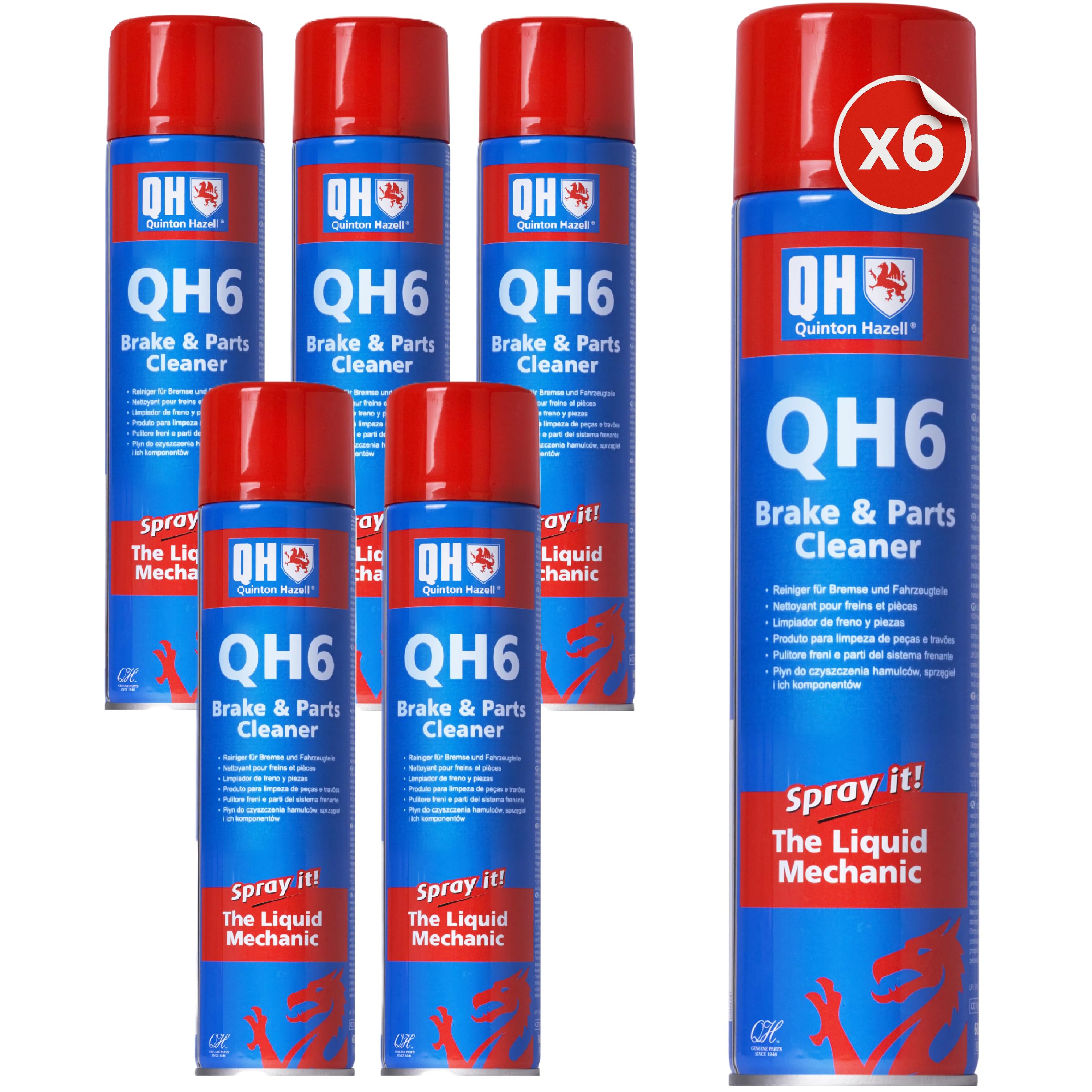
Big cans with a precision nozzle that blast grime off fast — but watch your timing.
Each can in this 6-pack holds 20.3 fl oz, making them noticeably larger than the standard 15-oz cans. That gives you a total of 121.73 fl oz across the pack — more volume than the Denco 6-pack (which has roughly 91.8 fl oz total based on its 15.3 oz per can). The non-chlorinated, chlorine-free formula is 30% VOC (volatile organic compounds — chemicals that evaporate easily and can be regulated for air quality), fast-drying, and eco-friendly. The built-in spray nozzle (no straw needed) delivers a powerful, targeted blast, which shoppers say is “much better than the local auto supply store brands.” This product is designed for brake pads, calipers, rotors, clutches, drums, and metal components on cars, bikes, vans, and karting vehicles.
The fast-evaporating formula is a double-edged sword. One reviewer noted it “evaporates so quick you have to pretty much spray it inches away from the surface in order to use a cleaning brush.” So if your technique involves spraying and then scrubbing with a brush, this cleaner may be gone before the bristles touch the part. For spray-and-blow-off jobs, the quick drying is exactly right. The lid on one can arrived cracked in a reviewer’s double-boxed shipment, but they still called the product “great” overall.
A home-mechanic reviewer called it “a must have for any mechanic at home,” praising the power output and low odor. The formula is also eco-friendly, which matters if you are conscious about solvent runoff in a home shop.
Why Professionals Like It
- Larger 20.3 oz cans mean fewer can changes during a job
- Nozzle sprays with force and does not need a separate straw
- Low odor for a work environment
The Technique Issue
- Evaporates extremely fast — very little brushing time
Reach for this if: your cleaning style is spray, let dry, and blow off — you will love the speed.
Not the best fit if: you rely on soaking and scrubbing; the quick evaporation fights that method.
5. Malco Red Thunder – Automotive Degreaser and Cleaner – 1 Gallon (102301)
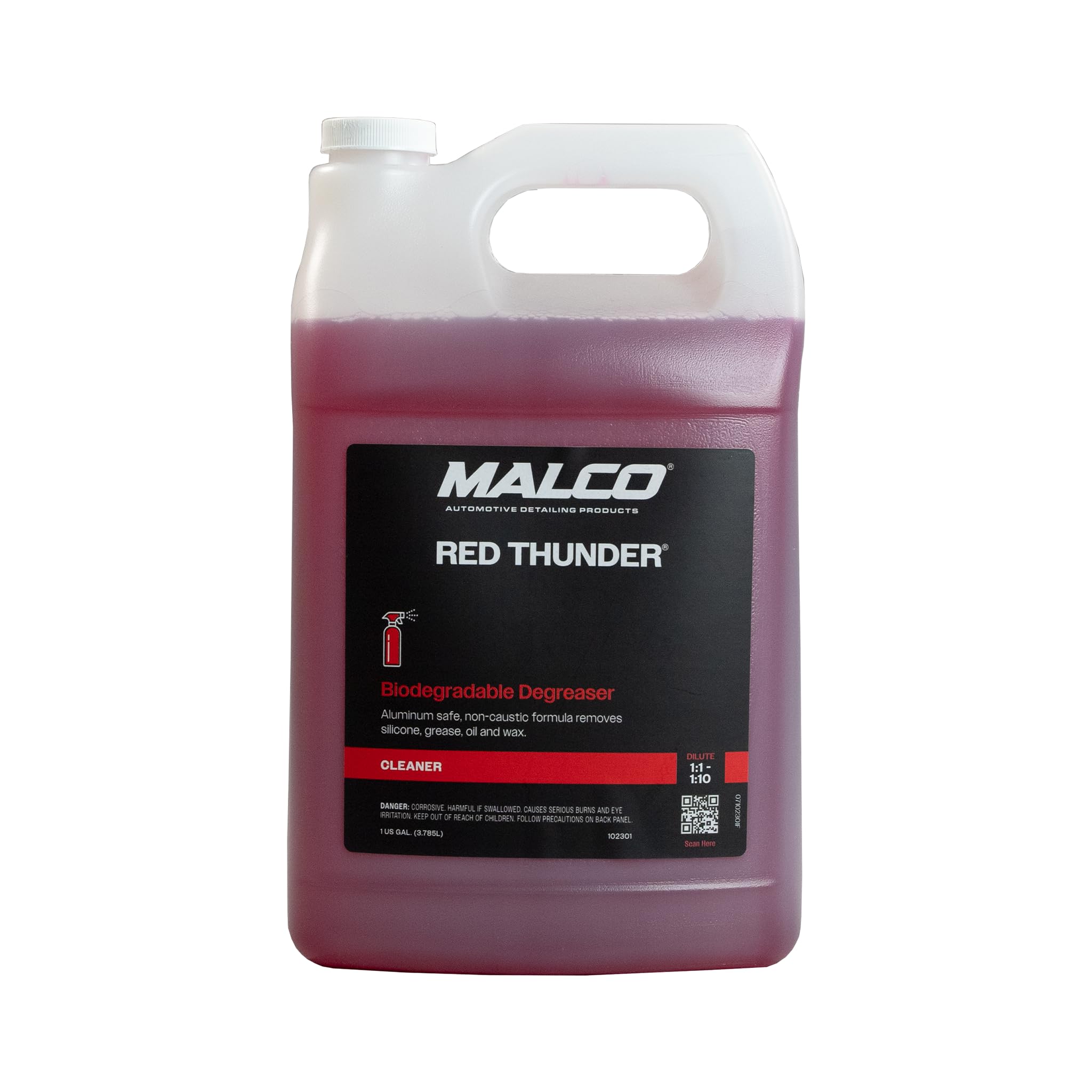
The degreaser that goes beyond brakes — engines, wheels, carpets, and aluminum safe.
Malco Red Thunder works differently from the solvent-based aerosol cleaners above. It is a concentrated liquid degreaser you dilute with water (a 1:1 mix works well, buyers report) and apply with a spray bottle or pressure washer. It is built for heavy buildup on engines, tires, wheels, and even interior surfaces like carpets and upholstery. A buyer said a 1:1 mix effectively cleaned months of grime from truck fender wells and tires with light scrubbing — and they noted it was easier than past products they had tried.
This is the only cleaner on this list that is biodegradable (can break down naturally in the environment) and phosphate-free (no phosphates, which can harm waterways), so you can rinse it down the driveway without worrying about harsh chemical runoff — a real benefit if you clean vehicles in your own yard. The formula is also safe on aluminum, which matters because some strong alkaline degreasers (high-pH cleaners) can etch bare aluminum parts. The scent is unscented, so there is no lingering chemical perfume in your garage. The gallon jug holds 128 fl oz, the same volume as the CRC Brakleen jug, but because it is a concentrate, you get significantly more cleaning solution when diluted.
The catch is that Red Thunder is not a fast-drying solvent. It works by soaking and emulsifying grease (turning it into a liquid that rinses away), which you then rinse off with water. That makes it ideal for engine bays and wheel wells but less suitable for brake rotors and pads where you need a clean, dry surface fast. If brake parts are your main job, stick with the aerosol solvent-based cleaners above. For everything else — engine degreasing, wheel cleaning, sap removal — this is the most versatile option here.
Where It Shines
- Safe on aluminum and plastic surfaces
- Biodegradable and phosphate-free
- Concentrated — diluting makes it economical
Where It Falls Short
- Not a quick-drying brake parts solvent — needs rinsing
- You must mix it yourself; not ready to spray from the jug
Grab this for: full-vehicle detailing — engine bay, undercarriage, wheels, and carpets — all with one bottle.
Choose something else if: you only need to degrease brake calipers and rotors — an aerosol solvent is faster for that job.
Understanding the Specs
Non-Chlorinated vs. Chlorinated
Chlorinated solvents (which contain chlorine compounds) dissolve heavy grease faster, but they are heavily restricted by environmental laws. Non-chlorinated formulas are legal in all 50 states and are safer to use in a home garage. The trade-off is a slight reduction in edge-cleaning power — one CRC buyer called it “not as strong as the chlorinated version” — but in practice, non-chlorinated cleaners handle 95% of brake and parts jobs just fine.
Aerosol vs. Jug/Concentrate
An aerosol can is a self-contained tool — point, spray, done. The cost per ounce is higher because you are paying for the can and propellant. A gallon jug of liquid cleaner is much cheaper per ounce, but you need a separate sprayer to apply it. Concentrates like Malco Red Thunder let you dilute the product with water, which stretches a single gallon into several gallons of usable cleaner — great for degreasing large engine bays and wheels, but not for cleaning brake rotors where a solvent is needed.
FAQ
Can I use an automotive parts cleaner on brake pads and rotors?
Is non-chlorinated brake cleaner as good as the old chlorinated version?
Why do some brake cleaners say they cannot be sold in California?
Can I use an aerosol parts cleaner as a general degreaser on my engine?
How do I choose between a 2-pack and a 6-pack of aerosol cleaner?
What does “fast-drying” mean in a brake cleaner?
Is a gallon jug of brake cleaner cheaper than aerosol cans?
Can a biodegradable degreaser like Malco Red Thunder replace brake cleaner?
What safety gear do I need when using automotive parts cleaner?
Final Thoughts: The Verdict
Across the board, the automotive parts cleaner winner is the DENCO #1930-50 6-Pack because it delivers six full cans of low-odor, 50-state-compliant cleaner at a price that makes sense for anyone who does brakes regularly. If you want to save the most money per ounce and already own a sprayer, grab the CRC Brakleen 1-Gallon Jug. And for degreasing an entire engine bay or cleaning months of grime from wheel wells, the standout is the Malco Red Thunder biodegradable concentrate.
How We Picked
We do not accept paid placement. Every pick is matched to a real buyer and a real use-case; we do not hands-on test units.
Sources & Methodology
Specifications: manufacturer listings and product documentation. Review insights: verified customer reviews, as of July 2026. Pricing: not shown on this page (it changes often); check the current price via the retailer link.
As an Amazon Associate, Gadgets Feed earns from qualifying purchases. This does not affect which products we feature.
Product prices and availability are accurate as of the date/time indicated and are subject to change. Any price and availability information displayed on Amazon at the time of purchase will apply to the purchase of this product. As an Amazon Associate I earn from qualifying purchases.
CERTAIN CONTENT THAT APPEARS ON THIS SITE COMES FROM AMAZON. THIS CONTENT IS PROVIDED "AS IS" AND IS SUBJECT TO CHANGE OR REMOVAL AT ANY TIME.
Amazon and the Amazon logo are trademarks of Amazon.com, Inc. or its affiliates.