
Our readers keep the lights on and my morning glass full of iced black tea. As an Amazon Associate, I earn from qualifying purchases.
Specs are compiled from manufacturer listings and verified buyer reviews and can change over time — please confirm the key details on the product page before buying.
You are stuck on the side of the road with a flat, and the factory wrench just spins on a lug nut that has not moved in years. That is the moment you realize a 4 way tire iron is not a luxury — it is the difference between a ten-minute swap and calling for a tow. These cross-shaped wrenches give you four socket sizes in one tool and, more importantly, the extra leverage to crack loose the rusted-on bolts that a single-arm wrench simply cannot handle.
I’m Min — the founder and writer behind Gadgets Feed. This guide is built by comparing the manufacturers’ published specifications and the patterns across verified customer reviews, so you get each pick’s real strengths and trade-offs instead of marketing spin.
The five models here cover every need from daily-driver confidence to heavy-truck duty, and this rundown of the best 4 way tire iron focuses on length, weight, socket sizes, and real-world buyer experience so you know exactly which one belongs in your trunk.
Quick Picks
- Powerbuilt 25-Inch 4-Way Lug Wrench, Universal, Heavy-Duty, Cross Design – 640870 — Master Pick
- Performance Tool W11 Black 27-Inch Truck SAE/Metric 4-Way Cross Lug Wrench — Light Truck Specialist
- Performance Tool W9A 20-Inch SAE/Metric 4-Way Cross Lug Wrench with Spade Tip — Smart Balance
- Powerbuilt 20-Inch Universal Lug Wrench, Metric and SAE 4-Way Cross Wrench – 940559 — Daily Driver
- CARTMAN 18 Inch Universal Heavy Duty Lug Wrench Non Slip 4 Way Tire Iron Wrench — Budget Champion
How To Choose The Best 4 Way Tire Iron
The core job of a 4 way tire iron is simple: crack stubborn lug nuts loose and get you back on the road. But the right one depends on the vehicles you own and how much arm strength you want to use. A few key specs separate a tool you reach for from one that frustrates you.
Arm Length and Leverage
The longer each arm is, the more leverage you get. A 25-inch wrench (measured diagonally across the cross) generates significantly more torque than an 18-inch model — which matters when a tire shop zipped your lug nuts on with an impact gun. But longer arms also weigh more and take up more space in the trunk. For a compact car, an 18- or 20-inch length is usually enough. For a heavy truck or van, the extra reach of a 25-inch (or longer) wrench is the difference between walking and driving.
Socket Sizes and Measurement Standard
Most 4 way tire irons include four sockets, one at each end. Common metric sizes are 17mm, 19mm, 21mm, and 22mm. Common SAE sizes are 11/16″, 3/4″, 13/16″, and 7/8″. Many wrenches cover both standards on one tool, giving you eight possible fits across four arms. If you drive a full-size truck or a heavy-duty pickup, look for larger SAE sockets like 15/16″, 1″, and especially 1-1/16″ — those are less common on smaller wrenches and exactly what you need for bigger hardware.
Build Materials and Finish
The best 4 way tire irons are made from drop-forged or heat-treated carbon steel or alloy steel. These materials resist bending or snapping under high torque. A chrome-plated finish resists rust and wipes clean easily, while a powder-coated finish (usually black) provides a tough layer of corrosion protection that also reduces glare. Cheaper wrenches use thinner steel that can twist under pressure — avoid anything that feels lightweight or hollow.
Weight and Portability
Heavier tools (around 5-6 pounds) are reassuringly solid and handle heavy-duty jobs without flexing. Lighter tools (around 3-3.5 pounds) are easier to handle for quick roadside swaps and take up less trunk space. Consider where you will store the wrench — some are bulky enough to require dedicated space, while others slip into a corner of your spare tire well.
Quick Comparison
| Model | Best For | Length | Weight | Socket Sizes | Amazon |
|---|---|---|---|---|---|
| Powerbuilt 25-Inch | Heavy-Duty Trucks & Farm Gear | 25 Inches | 5.94 Pounds | 7/8″, 15/16″, 1″, 1-1/16″ | $46.97Amazon |
| Performance Tool W11 | Light/Medium Trucks With Large Nuts | 27 Inches | 3.3 Pounds | 7/8″, 15/16″, 1″, 1-1/16″ | $38.02Amazon |
| Performance Tool W9A | General Cars & SUVs | 20 Inches | 3.65 Pounds | — | $37.58Amazon |
| Powerbuilt 20-Inch | Daily Driver Roadside Kit | 20 Inches | 3.5 Pounds | 17mm/11/16″, 19mm/3/4″, 21mm/13/16″, 22mm/7/8″ | $34.97Amazon |
| CARTMAN 18 Inch | Compact Car Backup Tool | 18 Inches | 3.4 Pounds | 17mm/11/16″, 19mm/3/4″, 21mm/13/16″, 22mm/7/8″ | $22.99Amazon |
In‑Depth Reviews
1. Powerbuilt 25-Inch 4-Way Lug Wrench, Universal, Heavy-Duty, Cross Design – 640870
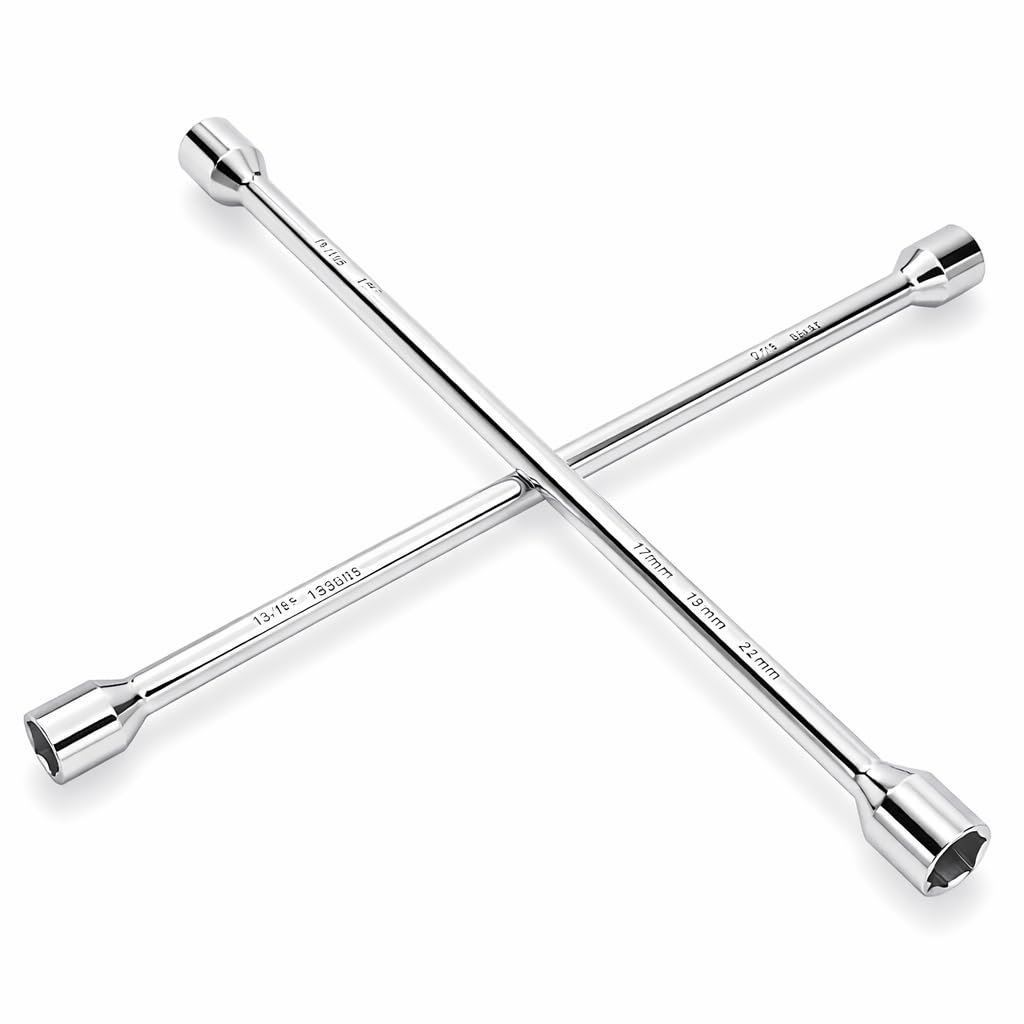
The brute-force champion that eats farm-truck lug nuts for breakfast.
This is the heaviest-duty tool on the list at 5.94 pounds, and you feel every ounce when you put your weight into a seized bolt. The 25-inch cross-length gives you tremendous leverage, and the drop-forged chrome-plated steel construction resists twisting even under extreme torque. It includes large SAE sockets — 7/8″, 15/16″, 1″, and 1-1/16″ — that cover the big hardware found on heavy trucks, tractors, and construction equipment.
Buyers report that it successfully removed rusted-on lug nuts from a farm truck after 6-7 years, which is exactly the kind of job that would stall smaller wrenches. Unlike the lighter 27-inch Performance Tool W11 below, this wrench is much heavier (5.94 lbs vs 3.3 lbs) — that mass works in your favor if you need raw breaking force, but it makes the tool noticeably bulkier to store in a passenger car trunk. The manufacturer backs it with a lifetime warranty.
Raw torque verdict: If you work on heavy trucks, farm equipment, or any vehicle where lug nuts have been untouched for years, this is the wrench that gets the job done. But the heavy weight and large sockets mean it is overkill for a compact sedan — you will be paying for capability you do not use.
Reach for this if: You own a full-size truck, an RV, or farm machinery and want the maximum possible cracking force in a one-piece cross wrench.
Look elsewhere if: You drive a small car and want a lighter, more compact tool for emergency roadside use.
2. Performance Tool W11 Black 27-Inch Truck SAE/Metric 4-Way Cross Lug Wrench
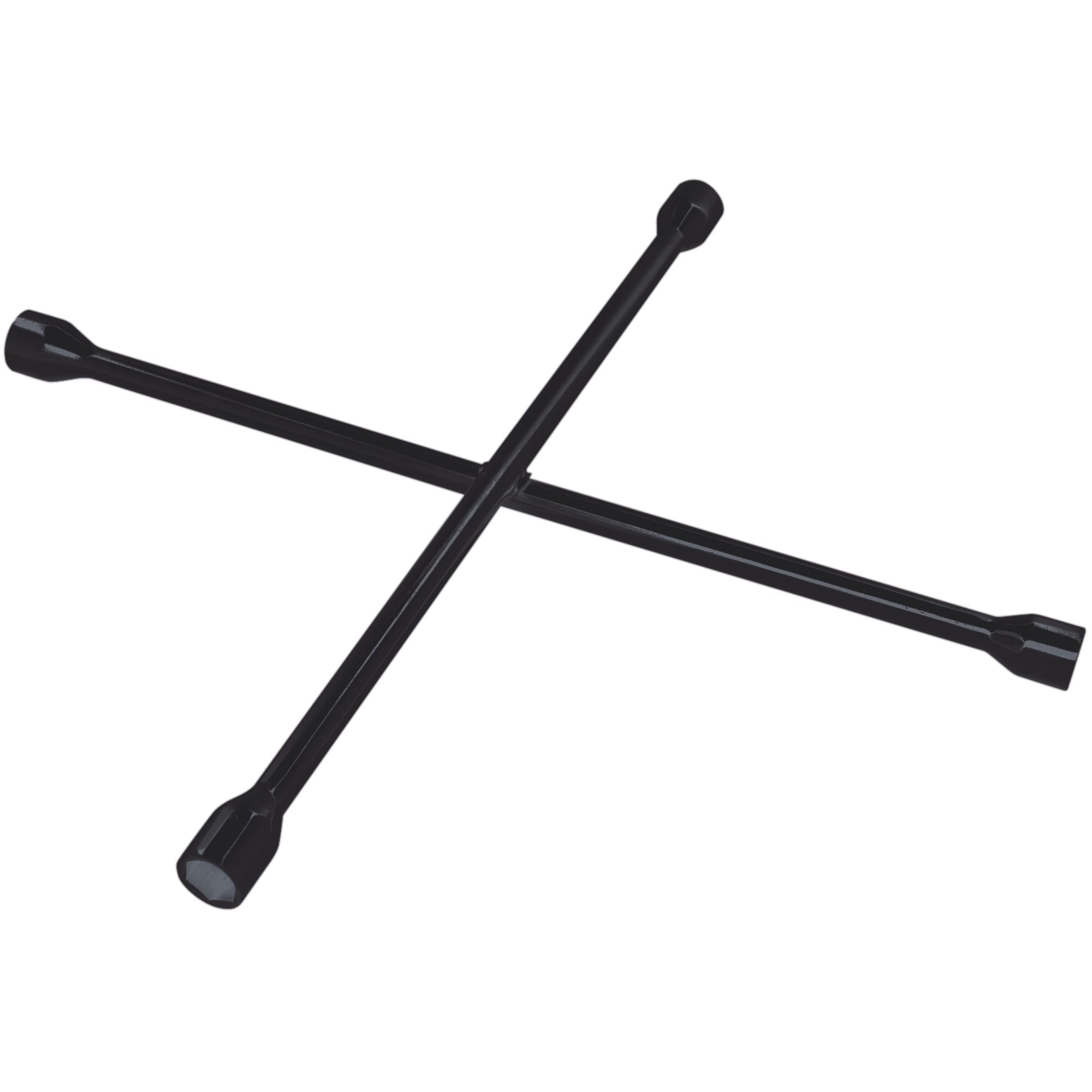
The lightest long-arm that still fits those massive 1-1/16″ truck nuts.
Despite measuring the longest on the list at 27 inches, this Performance Tool wrench weighs just 3.3 pounds — significantly lighter than its 25-inch Powerbuilt cousin at 5.94 pounds. That makes it easier to handle for a roadside swap, and the extra length still gives you excellent mechanical advantage. It is drop-forged steel with a black powder-coated finish for corrosion protection.
The socket set matches the Powerbuilt 25-inch — 7/8″, 15/16″, 1″, and 1-1/16″ — so it fits the same heavy-duty applications. One reviewer noted that their 1988 and 1990 Ford F350 Duallies have 1.062″ lug nuts, and this wrench was a rare find that actually worked. The trade-off is that the lighter steel has less raw mass behind it; if you need to break loose deeply rusted hardware, the heavier Powerbuilt is the safer bet. Still, at 27 inches, you have more leverage reach than any other pick here.
Long-reach lightweight: This is the ideal pick for truck owners who want big socket sizes but do not want to lug a 6-pound tool around. The powder-coat finish resists corrosion well, though some users note the black coating can chip over time.
Best for: Light trucks, vans, and heavy-duty pickups where you need large SAE sockets and maximum reach but prefer a manageable weight.
skip it if: You need to bust through rusted-on nuts daily — the lighter steel frame has less inertia than the Powerbuilt 25-inch.
3. Performance Tool W9A 20-Inch SAE/Metric 4-Way Cross Lug Wrench with Spade Tip

The no-drama choice that one buyer mentioned you can stand on at 250 pounds.
At 20 inches and 3.65 pounds, this Performance Tool sits in the just-right zone — long enough to provide good leverage for most cars and SUVs, but compact enough to stow without wrestling. The alloy-steel construction and powder-coated black finish give it a rugged feel that inspires confidence. One owner reported that if you weigh 250 pounds and stand on it, you have a real chance of removing a wheel installed by a tire shop — a vivid testament to its strength.
The spade tip on one arm is a thoughtful addition that lets you pry off hubcaps or wheel covers, something the other wrenches here do not offer. It is heavier than the lighter 20-inch Powerbuilt below (3.65 lbs vs 3.5 lbs), but the difference is minimal. The main catch is that it does not come with clearly published socket sizes in the specs, so check the product photos carefully to confirm it matches your vehicle’s lug nuts before buying.
What stands out
- Alloy-steel build handles serious torque without flexing
- Spade tip adds pry-bar utility for hubcaps
- Compact 20-inch length balances leverage and storage
What to watch
- Socket sizes are not listed clearly, requiring visual confirmation
- Powder-coated finish can chip under heavy use
Who this suits: Everyday drivers and SUV owners who want a tough, midsize wrench with an extra prying tool built in.
Who should pass: Anyone who drives a full-size truck with large 1-1/16″ lug nuts — the socket selection may not cover that size.
4. Powerbuilt 20-Inch Universal Lug Wrench, Metric and SAE 4-Way Cross Wrench – 940559
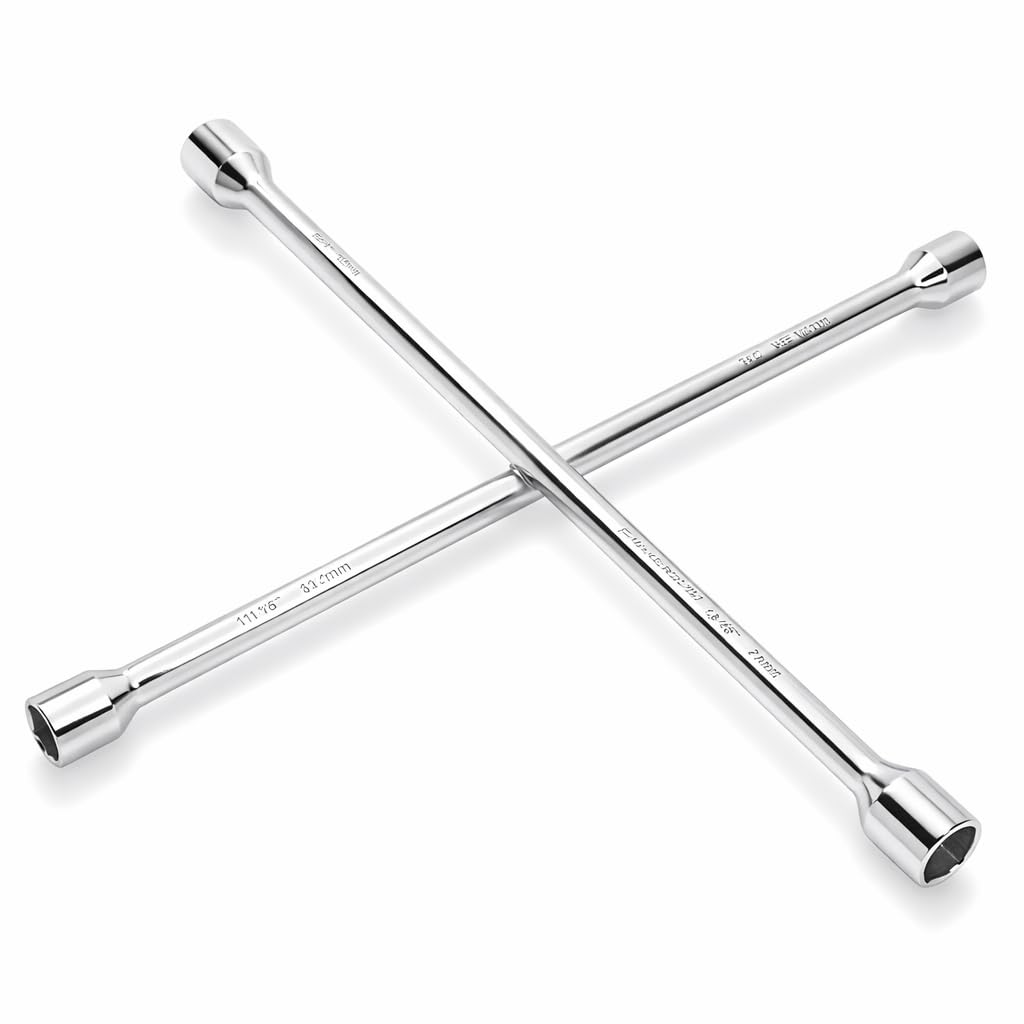
The compact workhorse that yanked 6-to-7-year-old rusted nuts off an 89 F350.
This Powerbuilt 20-incher is a strong contendor for the best bang-for-buck pick in the category. It weighs 3.5 pounds — two-thirds of a pound lighter than the Performance Tool W9A — and its cross-wrench design includes dual-size sockets (17mm/11/16″, 19mm/3/4″, 21mm/13/16″, 22mm/7/8″) that cover almost any car or light truck on the road. The forged and heat-treated carbon steel with a polished chrome finish resists rust and cleans up easily.
Owners mention that it removed rusted lug nuts that had been on for 6-7 years, which is impressive for a 20-inch tool. One owner specifically noted it works on their 1989 F350 pickup, showing it can handle heavy-duty work despite the shorter length. The catch is that at 20 inches, you have less mechanical advantage than the 25-inch or 27-inch options — some reviewers mentioned they wished they bought the next size up for even more leverage on severely stuck bolts.
Why it works
- Covers the most common metric and SAE sizes in one tool
- Proven ability to remove years-old rusted lug nuts
- Chrome finish is easy to wipe down and resists corrosion
The trade-off
- 20-inch arms provide less torque than longer models for extreme cases
- Does not include large truck sockets (15/16″, 1″, 1-1/16″)
Reach for this if: You want a reliable, lightweight everyday wrench that fits most passenger cars and light trucks and has been battle-tested on rusted hardware.
Look elsewhere if: You own a heavy-duty truck with large 1-inch or 1-1/16″ lug nuts, or you face insanely tight bolts regularly and need maximum leverage.
5. CARTMAN 18 Inch Universal Heavy Duty Lug Wrench Non Slip 4 Way Tire Iron Wrench

A compact, budget-friendly cross wrench that punches above its size.
At 18 inches and 3.4 pounds, this CARTMAN wrench is the most compact and one of the lightest options here. It is shorter than the 27-inch Performance Tool W11, at 18 inches versus 27 inches, which means it stores easily in small trunks or under seats. Despite the smaller footprint, it is built from chrome-plated carbon steel and includes the four most common sizes: 17mm/11/16″, 19mm/3/4″, 21mm/13/16″, and 22mm/7/8″. The non-slip handle pattern helps you maintain grip even with greasy or wet hands.
One buyer used it during a tire change on their SUV and found the grip gave them good leverage and a secure feel, though they noted the larger size makes storage a little tricky for such a compact tool. The short arms mean you will need more muscle effort to crack tight lug nuts compared to the 20-inch or 25-inch models. However, buyers consistently describe it as strong and sturdy, and for typical roadside emergencies on cars and light SUVs, it does the job reliably.
Small-package performer: If you drive a compact car or a crossover and just want a dependable emergency wrench that does not take up half your trunk, this is a smart choice. The short arms trade leverage for portability — so pass on it if you often work on vehicles with overtightened or rusted hardware.
Best for: Compact car owners and anyone who wants a lightweight, space-saving backup tool for emergency tire changes.
it’s not for you if: You drive a heavy truck, live in the rust belt where lug nuts seize, or want maximum breaking torque without a mini workout.
Understanding the Specs
Leverage and Arm Length
The length of each arm (measured diagonally corner to corner across the cross) directly determines how much torque you can generate. A 25-inch wrench gives you more leverage than an 18-inch wrench, at 25 inches versus 18 inches — that means less grunt work to break loose a stubborn lug nut. But longer wrenches weigh more and take up more trunk space. For passenger cars, 18-20 inches is usually enough. For trucks and vans, look for 25 inches or more.
Socket Sizes and Dual Measurement
Most 4 way tire irons use a dual-size design: each arm has a metric socket on one side and an SAE socket on the other. Common combos include 19mm / 3/4″ and 21mm / 13/16″. This lets one tool cover both import and domestic vehicles. Heavy-duty truck wrenches skip the small sizes and go straight to 7/8″, 15/16″, 1″, and 1-1/16″ — check your vehicle’s lug nut size before buying a truck-oriented wrench for a passenger car.
Drop Forged vs. Cast Steel
A drop-forged tool is shaped under extreme pressure while hot, creating a denser, stronger grain structure than cast steel. That translates to a wrench that is less likely to bend or snap when you lean on it. Almost every quality 4 way tire iron uses drop-forged carbon steel or alloy steel. Cheaper cast-steel wrenches may crack under the same load — avoid unlabeled or suspiciously light tools.
Finish and Corrosion Resistance
Chrome plating is the traditional finish: it is shiny, wipes clean easily, and resists rust well as long as the plating is not chipped. A powder-coated finish (typically black) is thicker and more impact-resistant against chips, but once the coating is breached, rust can creep underneath. Both finishes are durable on a well-made tool, but chrome tends to last longer in wet trunk environments.
FAQ
Will a 4 way tire iron fit in my trunk?
Can I use a 4 way tire iron on a truck with 1-inch lug nuts?
How much torque can a 4 way tire iron produce compared to a breaker bar?
Is a longer tire iron always better?
What is the difference between chrome plating and powder coating?
Can I use a 4 way tire iron to remove wheels on an RV or trailer?
Will a 4 way tire iron work on alloy wheels without scratching them?
How do I store a 4 way tire iron so it does not rust in the trunk?
Can a 4 way tire iron break or snap under heavy pressure?
Are 4 way tire irons the same as cross lug wrenches?
Final Thoughts: The Verdict
For most buyers, the best 4 way tire iron winner is the Powerbuilt 20-Inch because it balances compact size, reasonable weight, and proven ability to break loose rusted lug nuts — and it covers the most common car and light-truck socket sizes in one tool. If you need to handle heavy-duty truck hardware with 1-inch or 1-1/16″ nuts, grab the Powerbuilt 25-Inch for maximum cracking force. And for a budget-friendly compact backup that disappears into a small trunk, the standout is the CARTMAN 18 Inch.
How We Picked
We do not accept paid placement. Every pick is matched to a real buyer and a real use-case; we do not hands-on test units.
Sources & Methodology
Specifications: manufacturer listings and product documentation. Review insights: verified customer reviews, as of July 2026. Pricing: not shown on this page (it changes often); check the current price via the retailer link.
As an Amazon Associate, Gadgets Feed earns from qualifying purchases. This does not affect which products we feature.
Product prices and availability are accurate as of the date/time indicated and are subject to change. Any price and availability information displayed on Amazon at the time of purchase will apply to the purchase of this product. As an Amazon Associate I earn from qualifying purchases.
CERTAIN CONTENT THAT APPEARS ON THIS SITE COMES FROM AMAZON. THIS CONTENT IS PROVIDED "AS IS" AND IS SUBJECT TO CHANGE OR REMOVAL AT ANY TIME.
Amazon and the Amazon logo are trademarks of Amazon.com, Inc. or its affiliates.