
Our readers keep the lights on and my morning glass full of iced black tea. As an Amazon Associate, I earn from qualifying purchases.
Specs are compiled from manufacturer listings and verified buyer reviews and can change over time — please confirm the key details on the product page before buying.
A 35 lb plate sits in a weird spot. It is heavy enough to challenge your squats and deadlifts, yet light enough to load onto a bar without feeling punishing. The problem is you can not tell from a listing photo whether the hole fits your Olympic bar, whether the rubber coating will stink up your garage, or whether the weight is accurate within a reasonable margin. You need to know which ones hold up, which ones slide on smoothly, and which ones are just cast iron lumps that chip on day one.
I’m Min — the founder and writer behind Gadgets Feed. This guide is built by comparing the manufacturers’ published specifications and the patterns across verified customer reviews, so you get each pick’s real strengths and trade-offs instead of marketing spin.
Every lifter, whether you are building a home gym or topping off a commercial rack, needs to know which 35 lb plate delivers accurate weight, a snug fit, and a finish that does not flake off after a few drops.
Quick Picks
- Yes4All Tri-Grip Handles Cast Iron Olympic Weight Plates — Best Overall
- SPART Weight Plate 2-Inch Rubber Coated Olympic Grip Plate — Quiet Power
- JFIT Olympic 2 Inch Grip Plates and Bumper Plates for Barbell — Pro Finish
- Steelbody Olympic Rubber Bumper Weight Plate — Bounce-Proof
How To Choose The Best 35 Lb Plate
Picking the right 35 lb plate is simpler than you think. Focus on three things: the material, the grip style, and how the plate fits your bar. Here is what each means for your workout.
Cast Iron vs. Rubber Coated vs. Bumper
Cast iron plates are the standard. They are dense, take up less space on the bar, and cost less per pound. The trade-off is noise — they clang loudly when loaded or dropped — and they can chip or rust in humid garages if the paint finish is thin. Rubber-coated plates wrap a cast iron core in a rubber shell. That layer cuts the noise, protects your floor from dings, and feels more pleasant to handle. Bumper plates are a thicker, solid-rubber design meant for Olympic lifts where you drop the bar from overhead. They are quiet and bouncy, but a 35 lb bumper is much wider than a 35 lb iron plate, so you will run out of sleeve space faster.
Grip Design: Tri-Grip vs. Finger Holes vs. Raised Ridges
Every plate in this guide offers some kind of handle, but they differ. Tri-grip plates have three cut-out slots around the edge so you can grab them like a dumbbell handle — stable for one-handed carrying. Finger-hole plates have small round cutouts along the rim for your fingers to hook into; they are quick for loading but less comfortable for carrying a single plate. Raised ridges are molded into rubber coatings and give you traction without cutting into the plate’s structure. Pick based on what you do: tri-grip is best if you often walk plates across the room, finger holes work fine for bar-loading speed.
Weight Accuracy and the 2-Inch Hole
Home-gym plates are not competition-calibrated, so a 35 lb plate might be off by half a pound or more. That matters less for general strength training than for progressive overload programs where small increments count. The center hole must be exactly 2 inches to fit a standard Olympic barbell sleeve. A hole that is too tight makes loading frustrating; one that is too loose causes the plate to wobble during lifts. Look for reviews that mention fit — “slides on easily” or “snug but not stuck” — as a real-world check.
Quick Comparison
| Model | Best For | Material | Grip Type | Weight Accuracy (Approx.) | Amazon |
|---|---|---|---|---|---|
| Yes4All Tri-Grip Cast Iron | Versatile home gym value | Cast Iron | Tri-grip handles | ±0.5 lb | $43.99Amazon |
| SPART Rubber Coated | Noise reduction and floor protection | Rubber over Cast Iron | Finger holes + ridges | Close to stated (buyer reports) | $58.99Amazon |
| JFIT Olympic Grip Plate | Durable iron with a pro look | Cast Iron | Ergonomic grip holes | Solid (multiple sizes available) | $64.99Amazon |
| Steelbody Rubber Bumper | Quiet Olympic lifts and drops | Solid Rubber | None (flat edge) | Spot on (buyer report at 25 lb) | $80.32Amazon |
In‑Depth Reviews
1. Yes4All Tri-Grip Handles Cast Iron Olympic Weight Plates
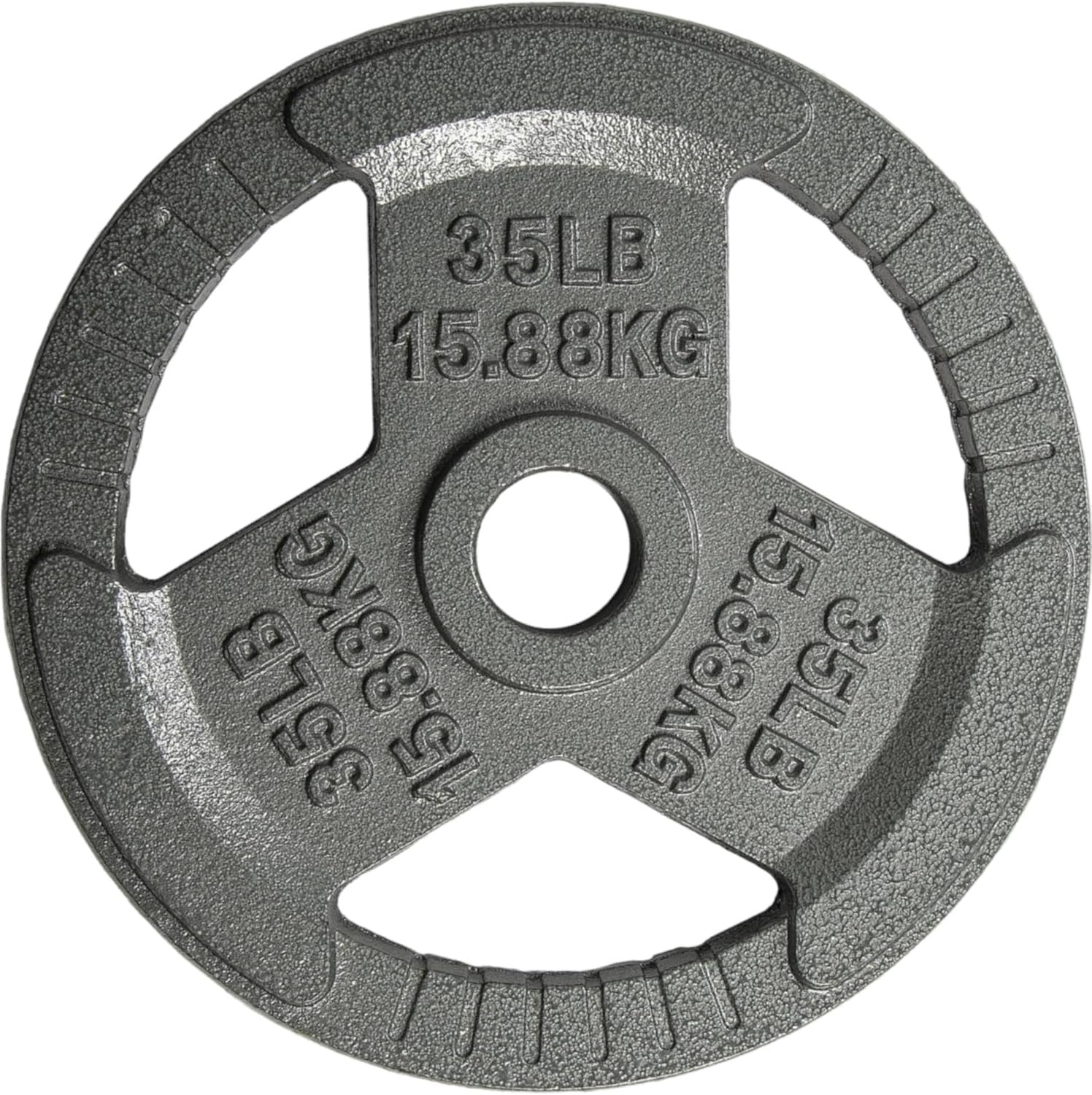
Accurate weight within about half a pound and a tri-grip design (three cut-out slots around the edge) so you carry and load plates like a dumbbell handle — more stable than finger holes on the JFIT or SPART.
You get three cut-out handles around the edge of each plate, which makes carrying, loading, and unloading noticeably easier than pinching a flat iron disc. The 35-pound single plate is built from high-quality cast iron with a smooth, durable finish that one reviewer noted arrived with only “very minor dings or chips in the finish coat.” The 2-inch center hole fits standard Olympic bars smoothly — the same buyer mentioned the “center holes were nicely finished and smooth.” That fit matters because a plate that sticks or wobbles ruins the rhythm of deadlifts.
Weight accuracy on the Yes4All is a strong point. One buyer weighed four 25-pound plates and got readings of 24.9, 25.0, 25.1 and 25.4 — all within a narrow tolerance that most home gyms will never feel. The printed weight numbers in pounds and kilograms on the face are easy to spot, so you are not squinting at a rack to find your 35s. A separate reviewer noted the plates were “very ergonomically correct,” meaning the tri-grip slots line up naturally with your hand. Unlike the thicker rubber of the Steelbody bumper plate, this cast-iron design takes up less space on the bar sleeve, so you can load heavier total weight before running out of room.
The catch? Cast iron is loud. Dropping these will produce a sharp clang, and the paint finish is not indestructible — buyers report minor surface chips that do not affect function. Also, the color described in the listing (Gray) actually shows up as a black/grey mix per one reviewer, which may bother you if you are trying to color-code your rack.
What Works
- Tri-grip handles make one-handed carrying stable
- Weight accurate within ~0.5 lb of stated (buyer data confirms)
- Smooth center hole slides onto Olympic bar easily
- Priced competitively — owners mention saving vs. brand-name alternatives
Trade-Offs
- Loud when dropped (cast iron clangs)
- Finish can chip in transit — purely cosmetic
- Gray color in photos differs from actual black/grey tone
Reach for this if: you want a versatile, cost-effective cast-iron plate with a genuine grip advantage and solid weight accuracy for everyday deadlifts, squats, and presses.
Look elsewhere if: you need dead-silent plates for a shared living space or apartment gym — the clang of cast iron on a bare floor will carry.
2. SPART Weight Plate 2-Inch Rubber Coated Olympic Grip Plate
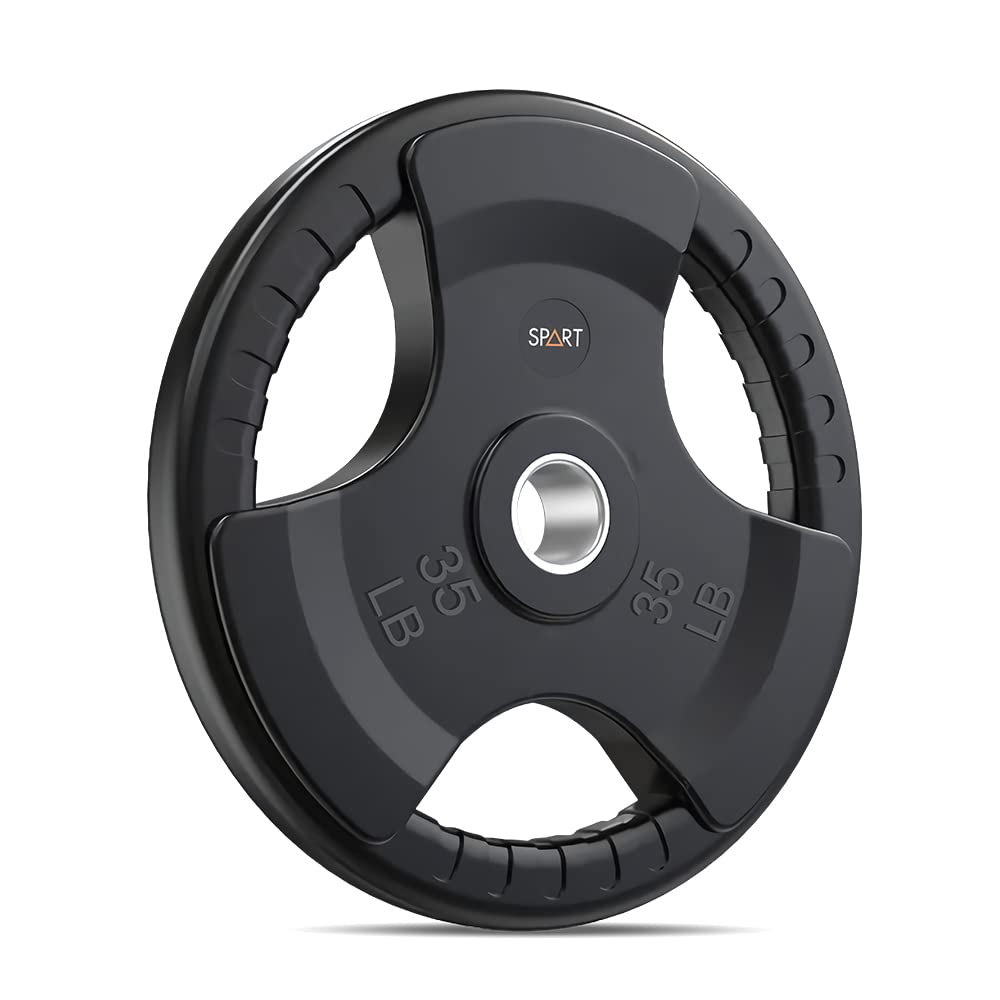
A rubber shell over a solid iron core that protects your floor and cuts the noise without bulking up the plate — quieter than the Yes4All cast iron, and thinner than the Steelbody solid-rubber bumper.
This is the middle ground between raw cast iron and a full bumper. The core is solid cast iron, so you get the same weight density as the Yes4All plate — a 35 lb plate is not overly thick. But the rubber coating changes how it behaves: you can set the plate down on a vinyl or concrete floor without denting the surface, and the loud metallic clang is replaced by a dull thud. Multiple buyers confirm the plates “fit Olympic bar without damage” and that the “coating is durable.”
The grip comes from three finger holes arranged along the rim plus molded ridges on the rubber surface. That makes it easy to hook two or three fingers into the plate for quick bar changes. One reviewer described the “finger ridges for easy handling” as a key feature. At for a single 35 lb plate, it sits in the mid-range tier — noticeably pricier than the cast-iron Yes4All but cheaper than the full rubber Steelbody bumper. A buyer noted the “initial rubber odor” fades after a few days, and some excess oil may appear on arrival; a quick wipe solves it.
The trade-off is minor: the finger holes are less comfortable than the tri-grip design if you plan to carry a single plate across the room. The weight accuracy is reported as accurate by buyers, though no exact scale numbers were shared for the 35 lb version.
Why It Works
- Rubber coating protects floors and reduces noise vs. bare iron
- Finger ridges and holes for easy, secure handling
- Fits 2-inch Olympic bars without damage (buyers confirm)
- Value pricing compared to name-brand rubber-coated sets
Known Quirks
- Initial rubber odor — fades after a few days in open air
- Excess oil on arrival — plan to wipe each plate
- Finger holes less stable than tri-grip for carrying one plate
Pick this if: you lift in a garage or basement with a non-carpeted floor and want the bump-and-noise protection of rubber without paying bumper-plate prices.
skip it if: you prefer the cleaner one-handed carry of a tri-grip design — the finger holes are fine for loading but less comfortable for walking a plate across the room.
3. JFIT Olympic 2 Inch Grip Plates and Bumper Plates for Barbell
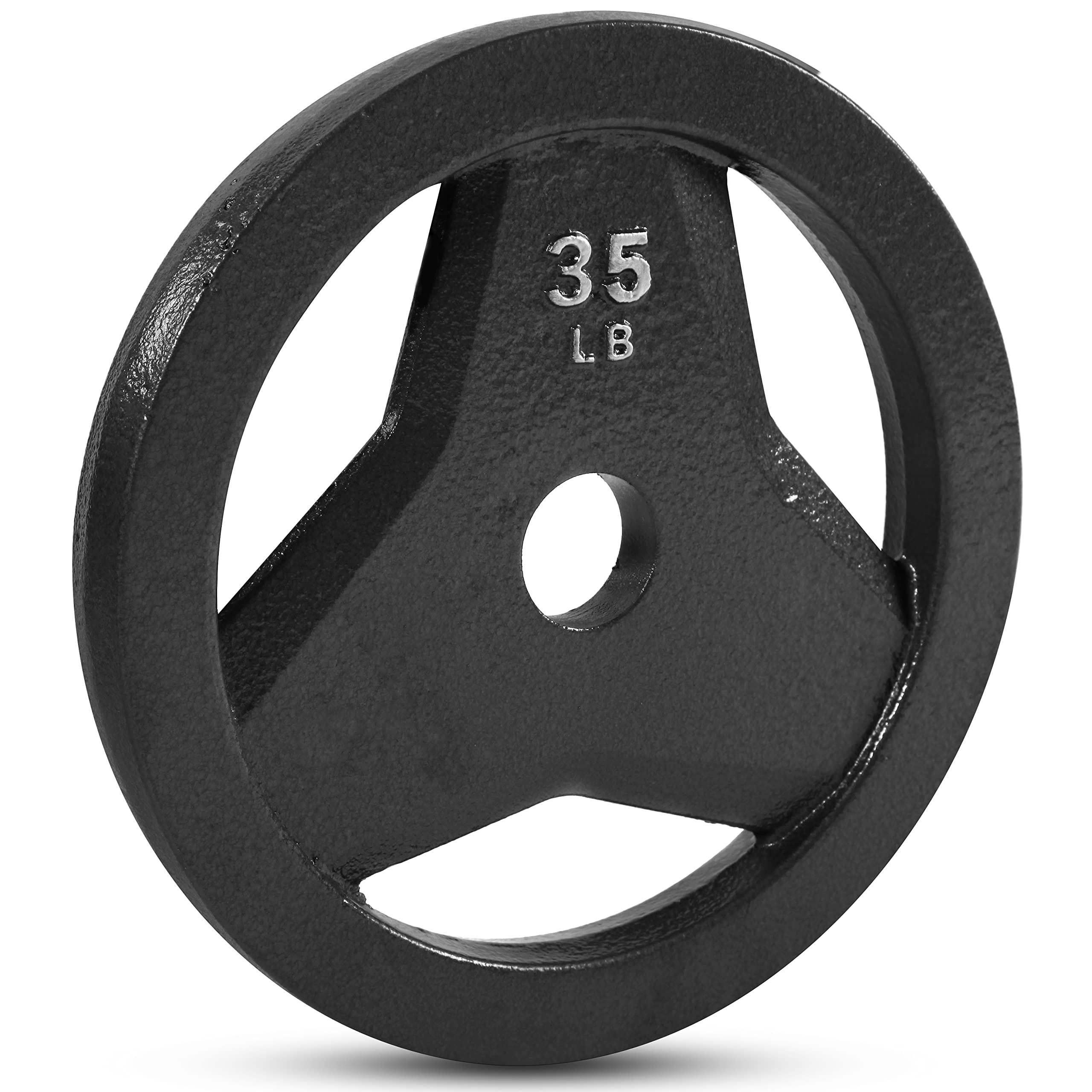
Cast iron with a clean semi-gloss face and grip holes built for heavy, frequent loading — the snug 2-inch hole wobbles less on the bar than the slightly looser fit some customers note with the Yes4All.
JFIT went for a professional aesthetic here. The plate has a semi-gloss black finish that looks at home on a rack in a commercial gym or a well-lit home setup. The weight numbers are printed clearly on the surface, and one buyer mentioned the “weight size is easy to read” — a small detail that matters when you are rushing between sets. The 2-inch center hole is designed to fit standard Olympic bars snugly, and the customer review confirms they “fit standard Olympic barbells” with a “snug fit ensures stability.”
The grip design uses multiple cut-out holes around the perimeter, similar to finger holes but arranged so you can hook in from various angles. That design, per JFIT’s literature, is meant to “make moving, loading and storage smooth.” One reviewer simply called it “good weight and the holes in the weights make them easier to handle.” Compared to the Yes4All tri-grip, these holes are slightly smaller and positioned differently — you hook your fingers rather than wrap your palm around a handle. That works well for quick bar changes but feels less secure for carrying a single plate to a different station.
The downside is that cast iron remains cast iron. These plates are “durable, solid” per the top review, but they will clang on the bar and can chip if you drop them. The JFIT sits in the premium cast-iron tier — more expensive than the Yes4All but delivering a more refined finish and a very similar functional experience. Weight accuracy was not explicitly measured by reviewers, but the consensus is that the plates are solid and well-made. One buyer who reordered simply said “quality plates at a good price.”
Standout Points
- Semi-gloss professional finish resists rust better than flat paint
- Grip holes provide multiple hand positions for easy loading
- Snug 2-inch hole eliminates wobble on the bar
- Available in multiple sizes to match an entire set
Limitations
- Cast iron still loud when dropped or set down hard
- Finger holes less comfortable than Yes4All tri-grip for one-handed carries
- Price premium over standard cast-iron alternatives
Best for: lifters who want a clean, consistent look across their rack and a snug bar fit, and are willing to pay a modest premium for the finish and ergonomic holes.
Not for: anyone who needs rubber protection for floors or wants the most affordable option — the Yes4All delivers similar performance for less.
4. Steelbody Olympic Rubber Bumper Weight Plate

A solid rubber bumper plate built for drops — silent, floor-friendly, and built around a stainless steel sleeve that resists rust better than the painted steel sleeves on all three other picks.
This is the only true bumper plate in the lineup. Instead of a cast iron core wrapped in rubber, the Steelbody is dense solid rubber all the way through. That means you can drop it from overhead during a clean or snatch without damaging the plate, the bar, or your floor. The 2-inch center sleeve is stainless steel, which resists rust far better than the painted steel sleeves on the other plates here. One buyer verified the 25 lb version was “spot on weight at 25 lbs,” so the 35 lb version should track closely. Buyers also appreciate that the “rubber tire smell went away in few days” — consistent with the SPART rubber odor experience.
The big difference versus the cast iron and rubber-coated plates is thickness. A solid rubber bumper is much wider than a cast iron plate of the same weight because rubber is less dense. On a standard 16-inch barbell sleeve, you will run out of room faster if you load multiple bumper plates. That is a trade-off you accept if your training is built around Olympic lifts where the bar is meant to be dropped. For deadlifts and squats, you might prefer the space-saving cast iron of the Yes4All or JFIT.
The grip situation is different, too. The Steelbody plate has no cut-out handles or finger holes — just flat edges. That makes it slightly less convenient to grab and carry than any of the other three plates here, though the rubber texture provides some traction. It is the most expensive pick, reflecting the premium of solid-rubber construction. The warranty is a notable advantage: Steelbody includes a 2-year manufacturer warranty, which no other plate in this article offers.
Why It Stands Out
- Solid rubber absorbs drops without damage to plates or floor
- Stainless steel center sleeve resists rust and slides smoothly
- 2-year manufacturer warranty — best coverage in this list
- Weight accurate — buyer confirmed spot-on at 25 lb
What To Consider
- Thicker per pound — less sleeve space for heavy total loads
- No grip handles or finger holes (flat rubber edge only)
- Highest price in this roundup
- Initial rubber smell in garage — fades over a few days
Grab this if: you do Olympic lifts (cleans, snatches) and need to drop the bar regularly — the solid rubber and stainless sleeve are built for that abuse.
Pass if: your training is mostly deadlifts and squats where the bar stays on the floor — the extra thickness and cost of a bumper are wasted on static lifts.
Understanding the Specs
Cast Iron vs. Rubber vs. Bumper
Cast iron is dense and cheap but loud and prone to chipping. Rubber-coated plates wrap a cast iron core in a rubber shell — quieter, floor-friendly, but still compact. Full bumper plates are solid rubber — silent on drops and safe for floors, but each plate is much thicker for the same weight, so you fit fewer plates on the bar before the sleeve fills up. For general strength training (squats, deadlifts, presses), cast iron or rubber-coated is the right call. For Olympic weightlifting (cleans, snatches, jerks), bumpers are the standard.
The 2-Inch Center Hole
All Olympic plates use a 2-inch hole to fit the barbell sleeve. A hole that is too tight makes loading frustrating — you have to force the plate on and off between sets. A hole that is too loose causes the plate to wobble during lifts, which feels unstable and can be dangerous on squats. The data shows the Yes4All, SPART, and JFIT plates all fit “smoothly” or “snugly” per buyers. The Steelbody uses a stainless steel sleeve for the same fit with added rust resistance. If you buy a plate not on this list, check the reviews for “fit” mentions specifically.
FAQ
Will a 35 lb plate fit a standard Olympic barbell?
Are rubber-coated 35 lb plates quieter than cast iron?
How accurate is the weight on a 35 lb home gym plate?
Can I drop a rubber-coated 35 lb plate from overhead?
Will a 35 lb bumper plate take up more space on the bar than a cast iron one?
Do these plates smell like rubber when new?
Which grip style is best for one-handed carrying?
What is the warranty on these 35 lb plates?
Can I mix different brands of 35 lb plates on the same bar?
Why is a 35 lb plate sometimes called a 35 lb plate instead of 35 lbs?
Final Thoughts: The Verdict
For most home gym setups, the best 35 lb plate is the Yes4All Tri-Grip Cast Iron Plate because it delivers accurate weight within ~0.5 lb, a smooth-fitting 2-inch hole, and a tri-grip design that makes handling genuinely easier — all at a competitive price backed by buyer confidence. If you train in a shared space and need to cut noise and protect the floor, grab the SPART Rubber Coated Plate. And for Olympic lifts where you drop the bar from overhead, the standout is the Steelbody Rubber Bumper Plate with its solid rubber construction and 2-year warranty.
How We Picked
We do not accept paid placement. Every pick is matched to a real buyer and a real use-case; we do not hands-on test units.
Sources & Methodology
Specifications: manufacturer listings and product documentation. Review insights: verified customer reviews, as of July 2026. Pricing: not shown on this page (it changes often); check the current price via the retailer link.
As an Amazon Associate, Gadgets Feed earns from qualifying purchases. This does not affect which products we feature.
Related Guides
Product prices and availability are accurate as of the date/time indicated and are subject to change. Any price and availability information displayed on Amazon at the time of purchase will apply to the purchase of this product. As an Amazon Associate I earn from qualifying purchases.
CERTAIN CONTENT THAT APPEARS ON THIS SITE COMES FROM AMAZON. THIS CONTENT IS PROVIDED "AS IS" AND IS SUBJECT TO CHANGE OR REMOVAL AT ANY TIME.
Amazon and the Amazon logo are trademarks of Amazon.com, Inc. or its affiliates.