
Our readers keep the lights on and my morning glass full of iced black tea. As an Amazon Associate, I earn from qualifying purchases.
Specs are compiled from manufacturer listings and verified buyer reviews and can change over time — please confirm the key details on the product page before buying.
A robot that sweeps while you sleep sounds great — until the brush tangles with hair, the battery dies mid-room, or you are emptying the bin every other day. The best automatic sweeper juggles three things: enough suction to pull pet hair from carpets, a battery that finishes the whole floor, and a self-emptying dock so you actually stay hands-off.
I’m Min — the founder and writer behind Gadgets Feed. This guide is built by comparing the manufacturers’ published specifications and the patterns across verified customer reviews, so you get each pick’s real strengths and trade-offs instead of marketing spin.
These seven models were ranked by real-world suction, battery life, navigation smarts, and how often you have to intervene, so you can find the best automatic sweeper for your home without the guesswork.
Quick Picks
- Kilgone Robot Vacuum and Mop Combo — Best Overall
- MONSGA Robot Vacuum and Mop Combo (MR7PRO) — Max Suction
- Tikom Robot Vacuum and Mop — Best Value Self-Empty
- iRobot Roomba 105 Combo Robot Vacuum & Mop — Carpet Smart
- Shark Matrix Plus | 2-in-1 Robot Vacuum & — Sonic Scrubber
- uninell Robot Vacuum and Mop Combo (UR1) — Battery Champion
- MANVN Robot Vacuum and Mop Combo for Pet Hair — Slim Fit
How To Choose The Best Automatic Sweeper
Not every robot vacuum is built the same. Before picking one, focus on the few specs that actually determine whether it will keep your floors clean or drive you crazy.
Suction power and floor type
Suction is measured in Pascals (Pa), a unit of air pressure. For hard floors, 2000Pa to 3000Pa is plenty to lift crumbs. For carpets with embedded pet hair, look for 5000Pa or higher so debris gets pulled from deep in the fibers. A few models auto-boost to max suction when they detect a rug — a useful trick that saves battery on hard floors.
Navigation: LiDAR vs. random bumping
LiDAR navigation uses a spinning laser to map your rooms in real time, so the robot cleans in straight rows instead of bouncing around randomly. It also remembers your floor plan, lets you set no-go zones, and is much less likely to get stuck under furniture. Budget robots skip LiDAR and use bump sensors, which work okay on open floors but miss spots in complex layouts.
Battery runtime and self-emptying
Battery life matters more than you think. A 100-minute battery will handle a small apartment, but a 2000-square-foot home needs 150 minutes or more so the robot finishes in one go. Look for a self-emptying base if you do not want to empty the bin daily — these models transfer debris into a sealed bag in the dock, giving you weeks of hands-free cleaning.
Quick Comparison
| Model | Best For | Suction | Runtime | Self-Emptying | Amazon |
|---|---|---|---|---|---|
| Kligone Robot Vacuum | Deep carpet cleaning | 6000Pa | 200 min | Yes (90 days) | Amazon |
| MONSGA MR7PRO | Highest suction, large homes | 8000Pa | 160 min | Yes (90 days) | Amazon |
| Tikom L8000 Plus | Hands-off self-emptying | 6000Pa | 150 min | Yes (90 days) | Amazon |
| iRobot Roomba 105 Combo | Brand reliability, carpet avoidance | 70x Power-Lifting | 100 min | Yes (75 days) | Amazon |
| Shark Matrix Plus AV2610WA | Sonic mopping, edge cleaning | Strong (matrix grid) | 110 min | Yes (60 days, bagless) | Amazon |
| Uninell UR1 | Long battery life on a budget | 5000Pa | 180 min | No | Amazon |
| MANVN Racing | Ultra-slim under furniture | 2300Pa | 100 min | No | Amazon |
In‑Depth Reviews
1. Kilgone Robot Vacuum and Mop Combo with Self Emptying Station
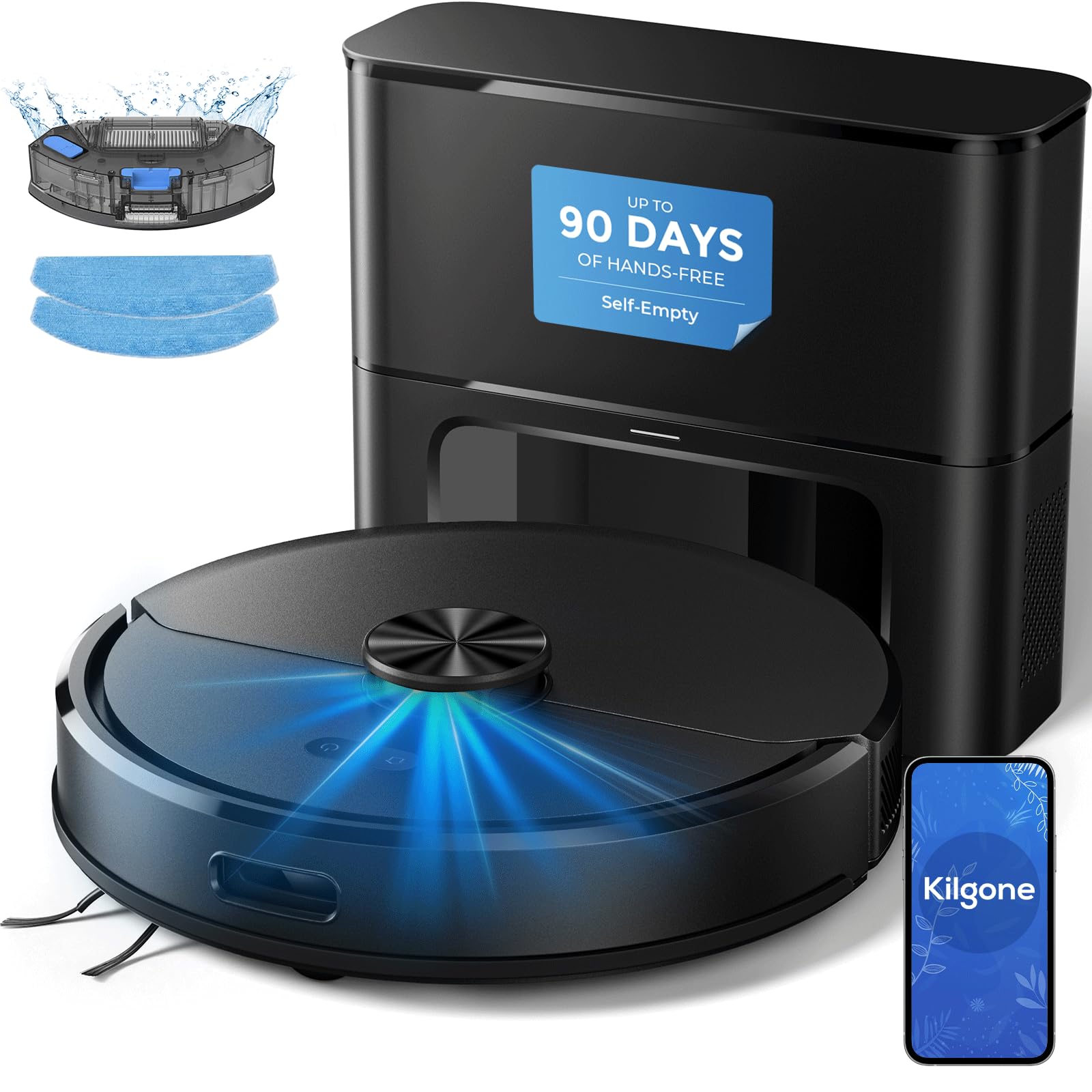
the balance where high suction, long runtime, and a self-emptying dock meet without a premium price tag.
You get 6000Pa of suction (enough to lift pet hair from deep in carpets) with the Kilgone — the same power as the Tikom — but the battery stretches to 200 minutes, a full 50 minutes more. That covers up to 1,615 square feet on one charge. When the battery runs low, the robot returns to its 2.5L self-emptying station (a dock that automatically pulls dirt into a sealed bag), recharges, and resumes cleaning exactly where it stopped. You go about 90 days before touching a bag.
LiDAR navigation maps your home in row-by-row patterns and stores up to 5 floor plans. It climbs 18mm thresholds (about the height of a thick door strip) to move from hard floors to rugs. At 65dB, buyers report it is quiet enough to run while watching TV. The anti-tangle roller brush stops long fur from wrapping around the spindle, so you are not cutting hair off the brush every week.
Why it stands out
- 6000Pa suction lifts embedded pet hair from carpets
- 200-minute runtime is the longest in this lineup — beats the Tikom by a 20% margin
- Self-emptying base stores 90 days of debris in a sealed 2.5L bag
- Quiet 65dB operation won’t disturb daily life
One trade-off
- No mopping mode separation for carpets — you must remove the mop pad or set a no-go zone to keep rugs dry
Who it fits: Households with pets and carpets who want to empty the bin less than once a season.
One real catch: The mop pad can wet area rugs if you do not manually remove it or configure a no-go zone in the app first.
2. MONSGA Robot Vacuum and Mop Combo (MR7PRO)
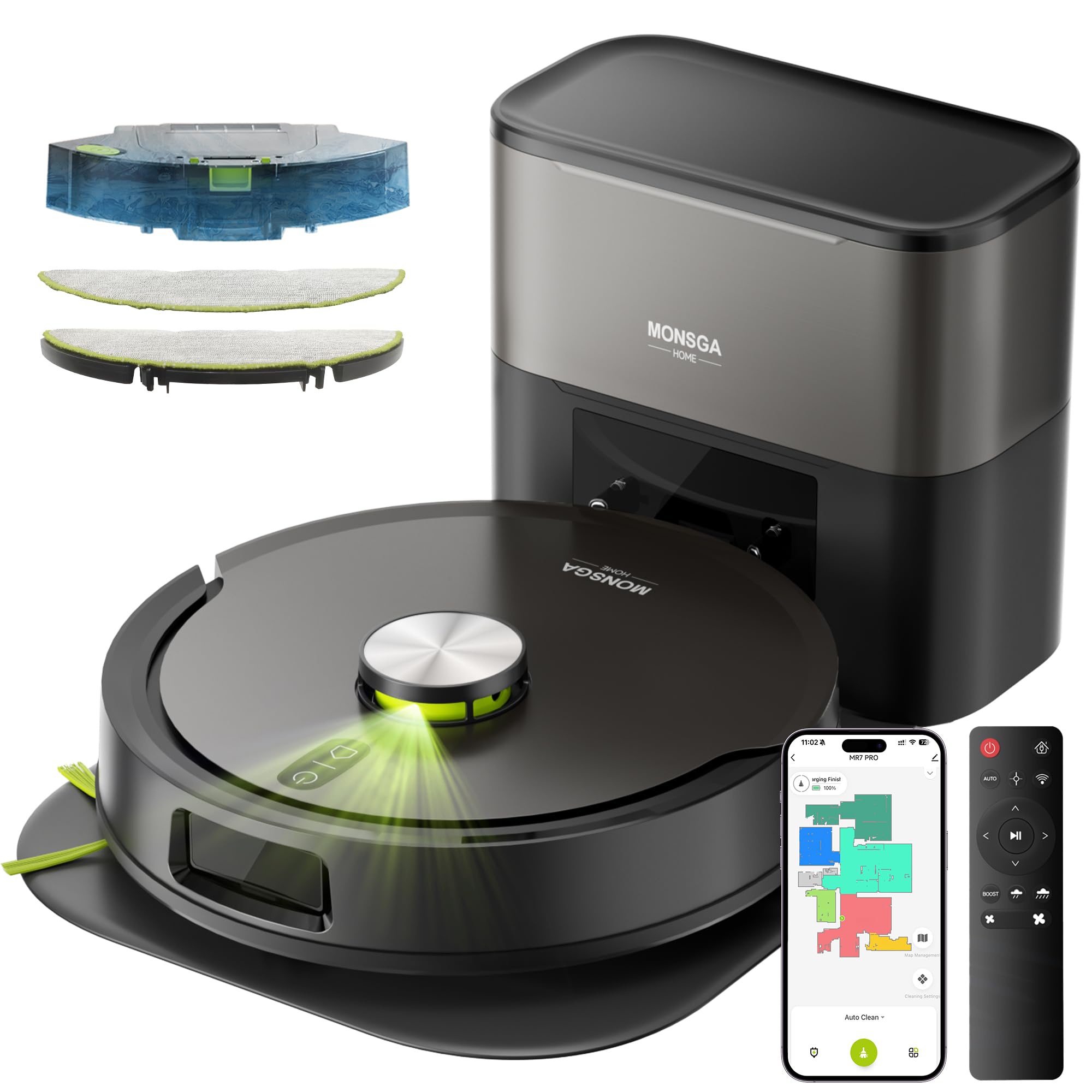
With the strongest suction in the roundup, this one pulls deeply embedded debris out of high-pile carpets.
The MONSGA MR7PRO packs 8000Pa of suction — noticeably stronger than the 6000Pa on the Kilgone and Tikom. On carpets, it auto-boost suction to rip out buried pet hair and dust. Its dual anti-tangle system uses an all-rubber main roller and a zero-tangle side brush to reduce hair wrap, which buyers confirm works as advertised.
Battery runs 160 minutes on a 3200mAh cell, covering up to 2,690 square feet in one pass. The self-emptying base holds a 4L dust bag (the largest in this lineup) for about 90 days of hands-off cleaning. LiDAR mapping memorizes up to 5 floor plans, and the 460ml water tank covers twice as much mopping area per fill as standard tanks — useful for whole-floor mopping without refills.
What gives it the edge
- 8000Pa suction beats every other robot here — pulls deep dirt from carpets
- 4L dust bag holds more debris than any competitor’s self-emptying base
- 460ml water tank doubles mopping coverage per refill
- 160-minute runtime covers large homes in one go
What to note
- Supports only 2.4GHz Wi-Fi for app and voice control
Best for: Homes with thick carpets and heavy shedding pets where maximum suction is the priority.
Skip if: You have a multi-story house with 5GHz-only Wi-Fi — you will need to adjust your network setup.
3. Tikom Robot Vacuum and Mop, 6000Pa Robotic Vacuum Cleaner with Self-Emptying Base (L8000 Plus)
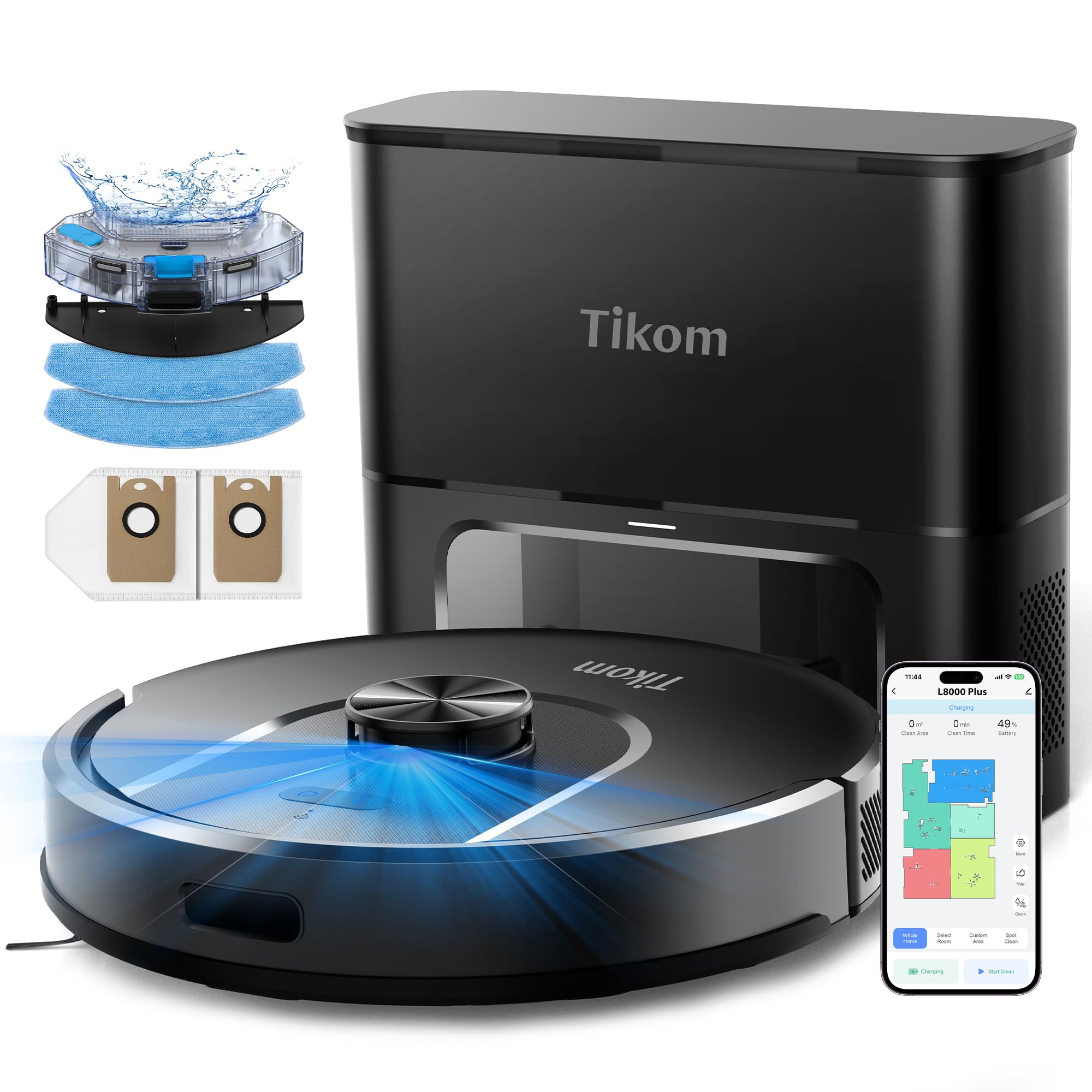
A self-emptying robot that keeps you hands-off for months without the premium price — the daily chore is gone.
The Tikom L8000 Plus is among the most affordable ways to get a self-emptying base. Its 3L dust bag holds about 90 days of debris, so you are not touching a bin weekly. Suction hits 6000Pa (matching the Kilgone at a lower upfront cost), and it boosts to max power automatically when it senses carpet. The trade-off is a shorter 150-minute battery — the Kligone runs 20% longer at 200 minutes — which still covers most homes on a single charge.
360° LiDAR navigation makes quick work of mapping your home. It can store up to 5 floor plans and lets you set no-go zones and no-mop zones in the app. One reviewer noted that mopping “is ineffective — just a damp cloth on tile,” so set expectations: this is a strong vacuum with a basic mopping feature, not a deep scrubber. It works with both 2.4GHz and 5GHz Wi-Fi, a flexibility not all competitors offer.
Why it wins on value
- 6000Pa suction with auto-boost on carpets matches pricier models
- Self-emptying base holds 3L — about 90 days of dust
- LiDAR navigation maps up to 5 floors with no-go zone support
- Works on both 2.4GHz and 5GHz Wi-Fi networks
Honest limitation
- Mopping is a light damp cloth swipe, not a real scrub — owners mention it is ineffective on stuck-on messes
Reach for this if: You want the hands-off convenience of a self-emptying base at the lowest entry price.
Look elsewhere if: Mopping performance matters — this one wets the floor lightly and does not scrub stains.
4. iRobot Roomba 105 Combo Robot Vacuum & Mop with AutoEmpty Dock
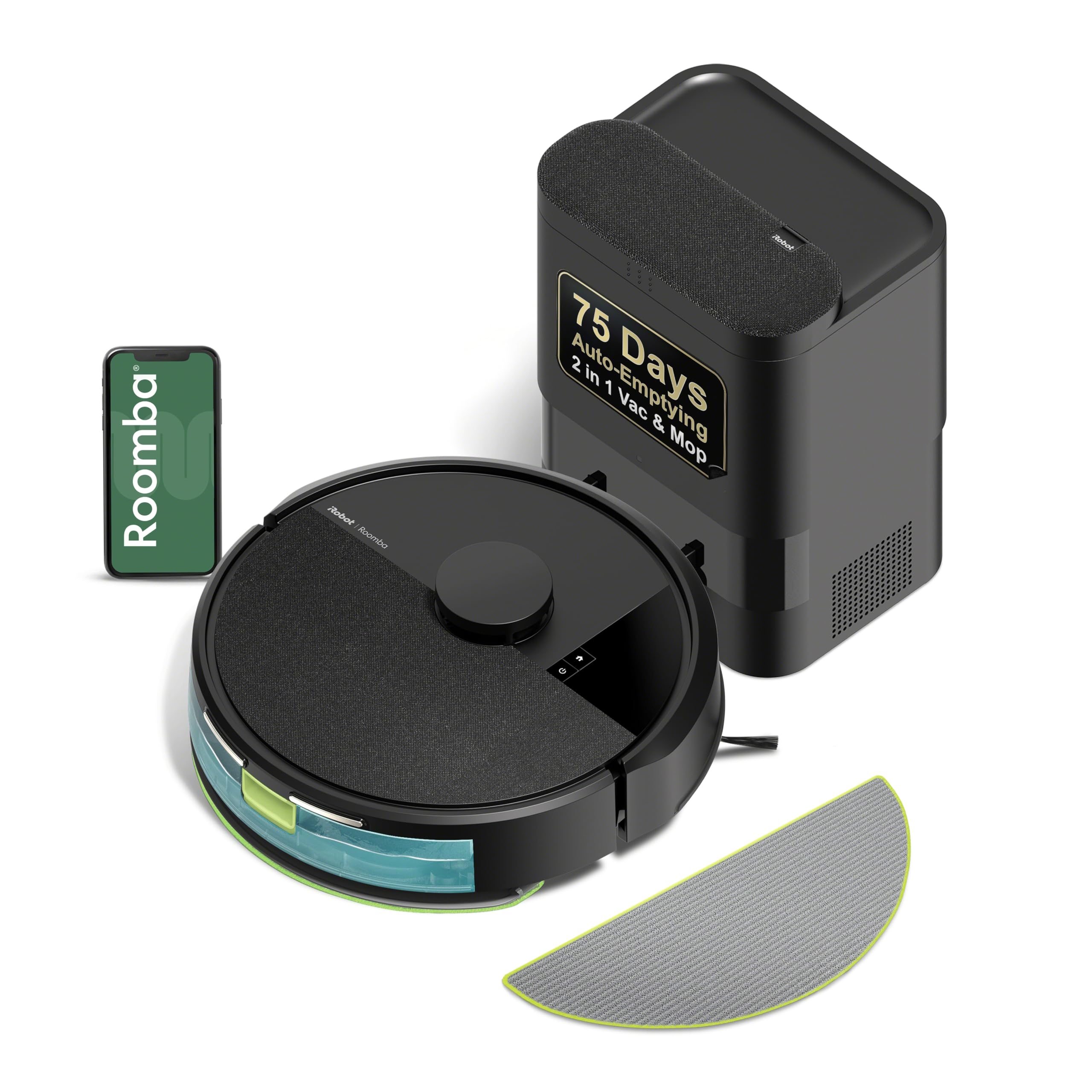
The Roomba that knows not to mop your rug — it spots carpets and backs away automatically.
Unlike most combo robots, the Roomba 105 automatically detects and avoids carpets when mopping, so you never come home to a wet wool rug. The AutoEmpty dock holds 75 days of debris and traps 99% of allergens down to 0.7 microns (smaller than most dust particles) in a sealed bag — no dust clouds when you swap it. According to iRobot, it delivers 70x more power-lifting suction compared to its base models, which customers note picks up debris that their regular vacuums miss.
ClearView LiDAR navigation maps your home quickly and avoids obstacles like pet bowls and furniture legs. The 100-minute battery is shorter than the Kilgone’s 200 minutes or the MONSGA’s 160 minutes, but the robot returns to the dock, recharges, and resumes if it runs low mid-cleaning. The app lets you choose vac-only, mop-only, or combo passes and adjust suction levels per room. A micro-pump controls water flow to the mopping pad, and the SmartScrub mode delivers what the brand describes as 2x deeper scrubbing on command.
Smartest mop in the test
- Auto-detects carpets and avoids wetting them during mopping
- AutoEmpty dock seals 99% of allergens down to 0.7 microns
- LiDAR navigation creates precise room maps quickly
- SmartScrub designed to deliver 2x deeper scrubbing for stuck-on messes
Shorter battery
- 100-minute runtime is well below the 160-200 minutes of competitors — may need a mid-clean recharge in larger homes
Pick this for: Mixed flooring homes where you want to mop hard floors without worrying about wet carpets.
Consider another if: You have a big house over 1,500 square feet — the shorter battery could interrupt cleaning mid-way.
5. Shark Matrix Plus | 2-in-1 Robot Vacuum & Mop (AV2610WA)
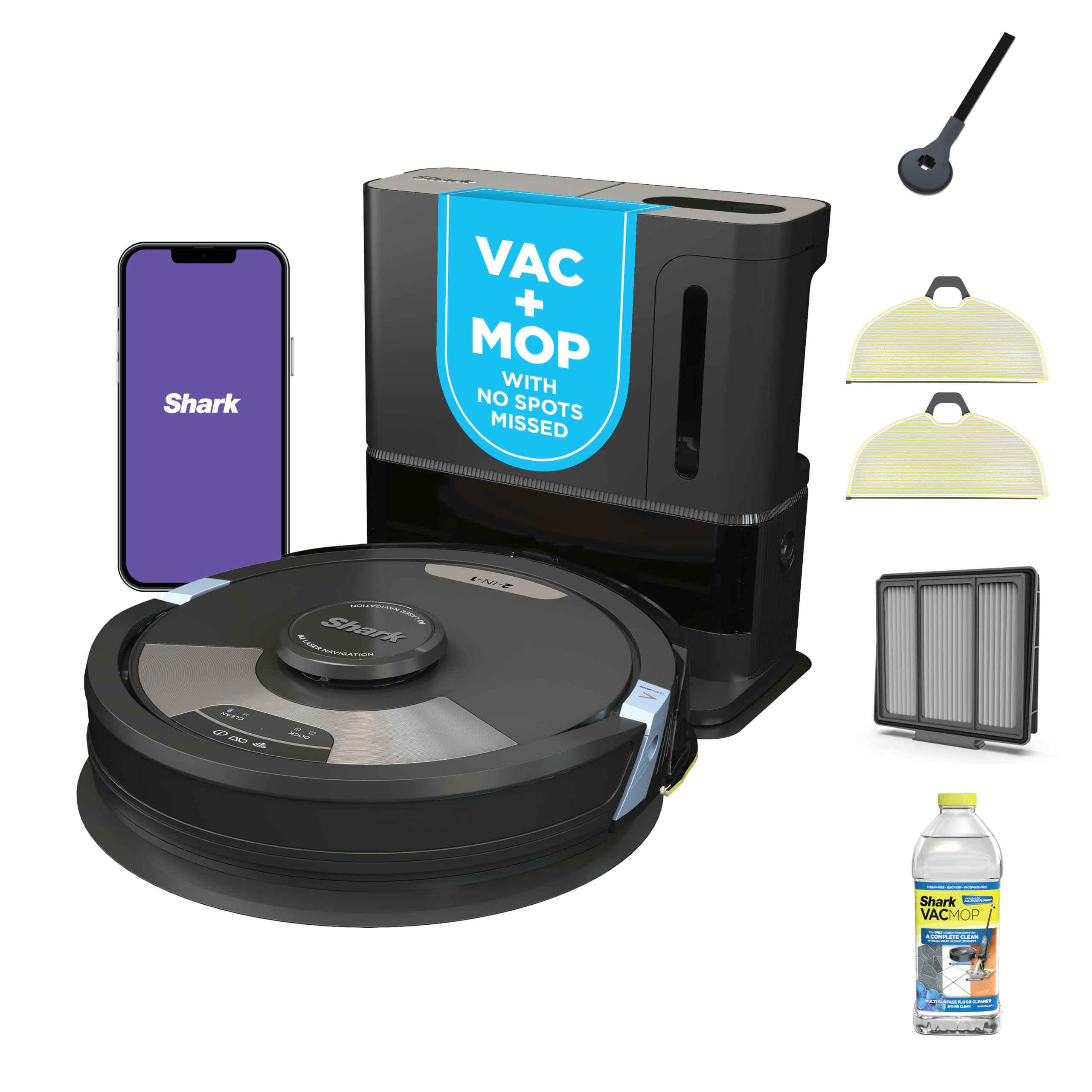
A bagless self-emptying base plus sonic mopping that scrubs hard floors 100 times per minute.
The Shark Matrix Plus is the only robot in this list with a bagless self-emptying base — you rinse the bin, you never buy replacement bags. It holds up to 60 days of dirt, and True HEPA filtration (a high-efficiency filter) in the base captures 99.97% of dust and allergens down to 0.3 microns. Sonic mopping scrubs hard floors at 100 strokes per minute, and in Matrix Mop mode it targets specific zones, which the brand claims delivers 50% better stain cleaning.
A 360° LiDAR vision system maps your home and adapts to daily changes like open doors or moved furniture. CleanEdge Detect shoots targeted air bursts at corners and edges to pull debris into the cleaning path, which the brand says gives 50% better edge cleaning versus previous models. Reviewers point out the self-cleaning brushroll really does prevent hair wrap. Battery life is 110 minutes, and the robot auto-recharges and resumes. The main drawbacks: the initial mapping took some users 25+ runs before it stabilized, and one buyer mentioned a unit failure just after the 1-year warranty.
Mopping powerhouse
- Sonic mopping scrubs 100 times per minute — the most aggressive mop in the lineup
- Bagless self-emptying base saves money on replacement bags
- HEPA filtration traps 99.97% of allergens in the base
- Self-cleaning brushroll prevents hair wrap effectively
Rough start for some
- Initial mapping took 25+ runs for some buyers before it worked reliably
- 110-minute battery is shorter than the top-tier 200-minute models
Choose this if: You want the strongest mopping action available and do not want to buy dust bags ever again.
Be aware: The mapping software may frustrate early adopters — plan for several cleaning cycles before it learns your floor plan.
6. uninell Robot Vacuum and Mop Combo (UR1)

A 180-minute battery that outlasts every other robot here — it finishes the whole house without stopping.
The uninell UR1 gives you 180 minutes of runtime, beating the Kilgone (200 min is close) but at a lower entry price. The anti-tangle V-shaped brush prevents hair wrap, and a HEPA filter traps 99.9% of dust and dander for cleaner air. It automatically boosts suction when it senses carpet.
The UR1 does not have a self-emptying base, so you empty the 450ml dustbin each time. However, it works with Alexa, the Smartlife App, a remote control, and physical buttons — making it easy for anyone in the family to start a clean. Shoppers say vacuuming is excellent but mopping is poor, describing it as “low water output, fast speed, dry cloth” with a small water tank. The dustbin is small, and the robot uses random mode, which is less efficient than LiDAR-guided models. Still, for the price, the battery life alone makes it a candidate for large, open-floor homes.
Best battery in the budget tier
- 180-minute runtime leads the non-premium models — covers large houses
- 5000Pa suction with carpet auto-boost handles pet hair well
- Anti-tangle V-shaped brush stops hair wrap
- HEPA filter traps 99.9% of dust and dander
Mopping is a miss
- Buyers report mopping is poor — low water output, small tank, dry cloth quickly
- No self-emptying base — you empty the 450ml dustbin after every cleaning
- Random navigation pattern is less efficient than LiDAR-guided models
Ideal for: Large homes on a budget where a long battery life matters more than mopping quality.
Not for: Anyone wanting effective mopping or a hands-off self-emptying experience.
7. MANVN Robot Vacuum and Mop Combo for Pet Hair (Racing)
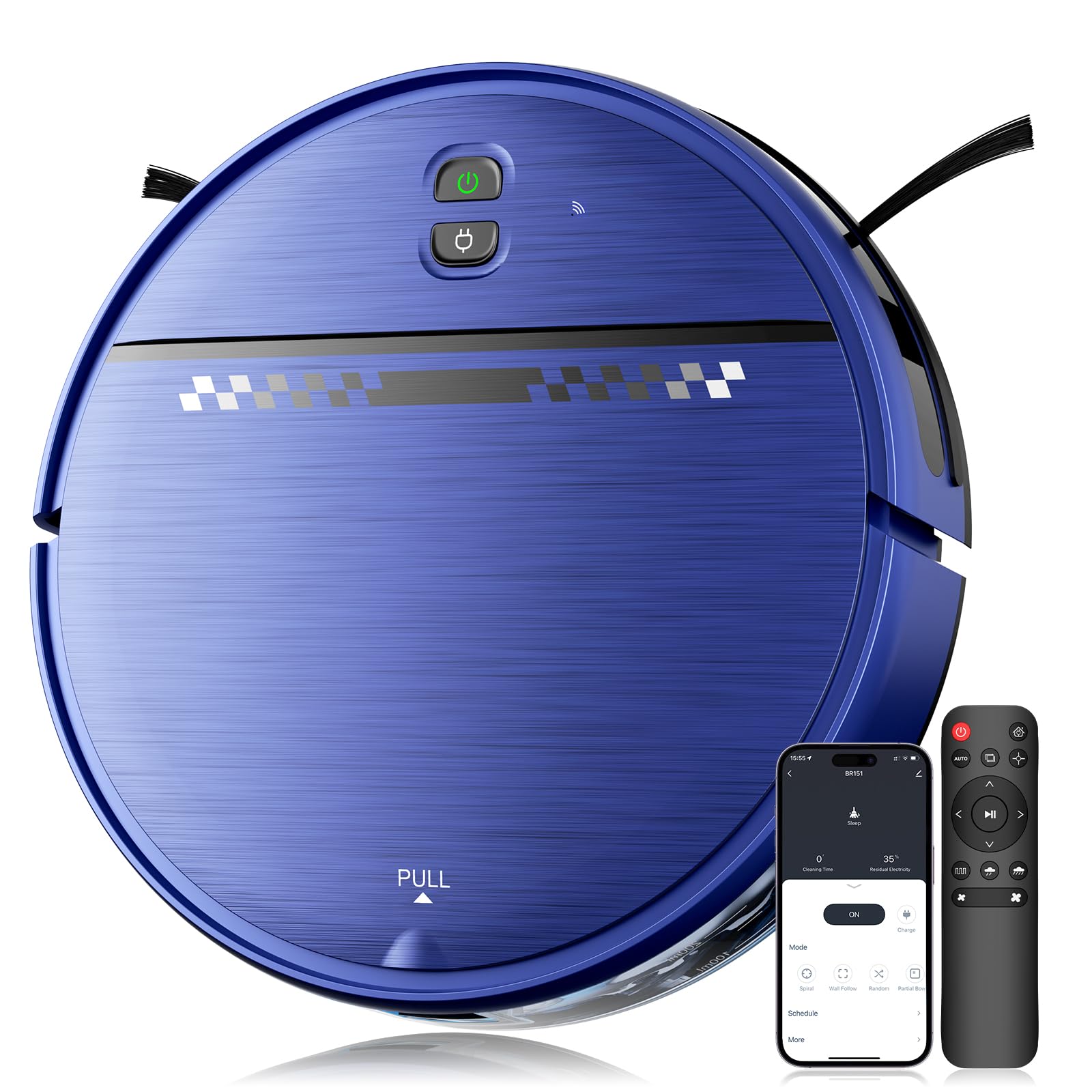
At 2.87 inches tall, it slides under furniture that thicker robots cannot reach.
The MANVN Racing is the shortest robot in the lineup at just 2.87 inches high — that is 14% shorter than the Tikom’s 13.2-inch dock height. It glides under beds, sofas, and low cabinets to clean areas most robots miss. Suction is 2300Pa, lower than the 6000Pa behemoths above, but owners mention it picks up birdseed and dog hair with surprising effectiveness. One reviewer wrote: “I dropped birdseed on the floor and I thought oh I’ll be living with that for years but it found every piece of birdseed and picked it up.”
The 100-minute runtime covers about 1,290 square feet on a 2500mAh battery, then auto-docks to recharge. Its non-rolling brush design prevents tangled long hair — a genuine problem for pet owners. The electric mopping has two water levels, though you must manually remove the mop cloth for carpets. It uses 3D sensors to avoid stairs and furniture, and runs at 60dB, quiet enough for babies and light sleepers. No self-emptying base, no LiDAR navigation, but for the price and slim profile, it is a solid entry-level pick for tight spaces.
Fits where others do not
- 2.87″ ultra-slim height — glides under low furniture
- Non-rolling brush design prevents all hair tangles
- 60dB noise level — very quiet for baby-friendly operation
- Buyers confirm surprisingly strong pickup for the price
Basic specs
- 2300Pa suction is low compared to the 6000-8000Pa models
- No LiDAR navigation — uses bump-and-turn sensors
- No self-emptying base — empty the bin after each run
Grab this for: Apartments or rooms with low-clearance furniture where no other robot can fit.
Move up if: Your home has lots of carpet or you want mapping and self-emptying features.
Understanding the Specs
Suction (Pascals)
Suction is measured in Pascals (Pa), a unit of air pressure. This number tells you how much pulling force the vacuum has. For hard floors, 2000-3000Pa is usually enough to lift crumbs and dust. For carpets, especially with pet hair embedded in the fibers, you want 5000Pa or higher so the robot pulls out deeply buried debris. A few robots auto-boost to maximum suction when they detect a rug, which saves battery on hard floors while still cleaning effectively on carpets.
Runtime and self-emptying
Battery runtime is measured in minutes — but the real question is whether the battery covers your entire floor on a single charge. A 100-minute robot handles a small apartment; a 2000-square-foot home needs at least 150 minutes so the robot finishes without stopping. Self-emptying bases change the game by automatically pulling debris from the robot’s bin into a sealed bag in the dock, so you only touch the bag every 60-90 days depending on the model.
FAQ
Will an automatic sweeper work on thick carpets?
How often do I need to empty a self-emptying robot?
Do I need Wi-Fi to use an automatic sweeper?
Can a robot vacuum handle dog hair without tangling?
What is the difference between LiDAR and random navigation?
Will the mop feature damage my hardwood floors?
How do I choose between a self-emptying and a non-self-emptying model?
Can I set a no-go zone to keep the robot away from pet bowls?
How long does it take to map my home the first time?
What is the quietest automatic sweeper in this list?
Final Thoughts: The Verdict
Across the board, the best automatic sweeper winner is the Kligone Robot Vacuum because it combines 6000Pa suction, a 200-minute battery, LiDAR navigation, and a 90-day self-emptying base in a package that undercuts many premium competitors. If you want the absolute strongest suction for deep carpet cleaning, grab the MONSGA MR7PRO with its 8000Pa motor and 4L dust bag. And for a true hands-off mopping experience that automatically avoids wetting your carpets, the iRobot Roomba 105 Combo is the pick, thanks to its carpet-detecting mopping and sealed allergen-trapping dock.
How We Picked
We do not accept paid placement. Every pick is matched to a real buyer and a real use-case; we do not hands-on test units.
Sources & Methodology
Specifications: manufacturer listings and product documentation. Review insights: verified customer reviews, as of July 2026. Pricing: not shown on this page (it changes often); check the current price via the retailer link.
As an Amazon Associate, Gadgets Feed earns from qualifying purchases. This does not affect which products we feature.