
Our readers keep the lights on and my morning glass full of iced black tea. As an Amazon Associate, I earn from qualifying purchases.
Specs are compiled from manufacturer listings and verified buyer reviews and can change over time — please confirm the key details on the product page before buying.
That single tiny hole in your window screen or foundation vent? It is all the space a mouse or a clump of debris needs to turn your home into a headache. A 40 mesh screen blocks that entry for good. It keeps airflow moving but stops pests, bugs, and litter cold. Every pick here is made from real 304 stainless steel (a rust-resistant alloy) with a tight 40 holes per inch weave, so you get a barrier that lasts outdoors without flaking or failing in a season.
I’m Min — the founder and writer behind Gadgets Feed. This guide is built by comparing the manufacturers’ published specifications and the patterns across verified customer reviews, so you get each pick’s real strengths and trade-offs instead of marketing spin.
You are patching a foundation vent, building a DIY air filter, or making a critter-proof bird feeder. This roundup of the 40 mesh screen options tells you which roll or sheet set fits your exact project without guesswork.
Quick Picks
- YAGJIA 304 Stainless Steel Mesh 40Mesh — Best Overall
- SCRMUSHUZI Stainless Steel Mesh Screen #40Mesh — Versatile Tool
- FAYERXL 2 Packs 40 Mesh Screen Stainless Steel — Twin Pack
- YUKKOEOQ 4 Pcs 13×9 (33cmx23cm) 40 Mesh 304 — Quick Fix Kit
- Xanyi qin 40 Mesh 304 Stainless Steel Mesh — Max Coverage
How To Choose The Best 40 Mesh Screen
Every 40 mesh screen in this list looks similar at first glance, but the differences in size, wire thickness, and format can make or break your project. Here is how to pick the one that fits your actual job.
Pick the Right Format: Roll vs Sheets
A roll gives you a single long, continuous piece of mesh that you cut down to size. That is perfect for covering a row of windows or wrapping around a fence corner. Pre-cut sheets (like the 4-pack option) give you multiple ready-to-use pieces without unrolling and flattening a long curl. They are better for smaller jobs like patching a single vent cover or lining a kitchen cabinet.
Wire Diameter and Stiffness Dictate What It Can Stop
The two most important numbers are the wire thickness and the hole size (the aperture). A thicker wire (around 0.21 mm) makes a stiffer, harder-to-bend sheet that stops mice and holds its shape under heavy use. A thinner wire (around 0.13 mm to 0.18 mm) makes a more flexible mesh you can cut with regular scissors, but it may bulge if a raccoon pushes against it. For critter blocking, choose the thickest wire you can still cut with your shop shears.
Size It to Your Project — Don’t Guess
A standard screen is roughly 15.7 x 47.2 inches, which usually covers one or two windows. If you are sealing a crawlspace perimeter or building a custom filter tray, look for larger rolls like 24 x 118 inches. Buying too small means you will waste time splicing pieces together; buying too large means you will wrestle with more roll curl than you need.
Quick Comparison
| Model | Best For | Dimensions | Wire Diameter | Number of Items | Amazon |
|---|---|---|---|---|---|
| YAGJIA 304 Stainless | All-purpose window and vent replacement | 15.7×47.2 in | 0.21 mm | 1 roll | Amazon |
| SCRMUSHUZI SS304 | DIY builds (filters, bird feeders) | 15.7×47.2 in | 0.18 mm | 1 roll | Amazon |
| FAYERXL 2-Pack | Double pest-blocking coverage | 11.8×47.2 in each | 0.01 in (approx 0.25 mm) | 2 sheets | Amazon |
| YUKKOEOQ Sheet Pack | Small, fast patches and crafts | 13×9 in each | — | 4 sheets | Amazon |
| Xanyi qin Large Roll | Extra-large coverage (fences, pools) | 24×118 in | 0.13 mm | 1 roll | Amazon |
In‑Depth Reviews
1. YAGJIA 304 Stainless Steel Mesh 40Mesh, 15.7″x47.2″

The 0.21 mm wire stops mice yet cuts easily with heavy shears, striking the best stiffness-to-workability balance in this lineup.
You get a stiff, dent-resistant sheet with a 0.21 mm wire diameter — noticeably thicker than the 0.18 mm on the SCRMUSHUZI roll below. That extra thickness stops mice from pushing through and keeps the mesh from sagging over time on window screens, air vent covers, and foundation barriers. Buyers report they “replaced some window screens with this” and found it “much better/stronger than the mesh screen” because it is easier to clean.
The roll measures 15.7 inches wide by 47.2 inches long — the same footprint as the SCRMUSHUZI option, but with heavier wire. The hole size is 0.4 mm (about the diameter of a human hair), which blocks tiny insects like gnats while keeping airflow steady. It resists temperatures up to 800°C (1,472°F), so installing it near a heater intake or fireplace leaves no rust stains. You will need a sharp wire cutter or heavy scissors, and the maker includes a glove warning inside the packaging.
One trade-off: the same stiffness that makes it tough against critters means it holds a curl from the roll. You might need to flatten it with a board before fitting it into a tight frame. For most window and vent jobs, that small extra effort pays off in longevity.
Sturdy workhorse: This is the roll to reach for when you need a permanent fix — thicker wire, high-temp resistance, and proven by reviewers for both window replacement and bird-feeder seed catchers.
One heads-up: If your project is a delicate DIY craft where you need to bend the mesh into a perfect sharp corner, the heavier 0.21 mm wire is a little harder to shape than thinner alternatives.
2. SCRMUSHUZI Stainless Steel Mesh Screen #40Mesh, 15.7″x47.2″
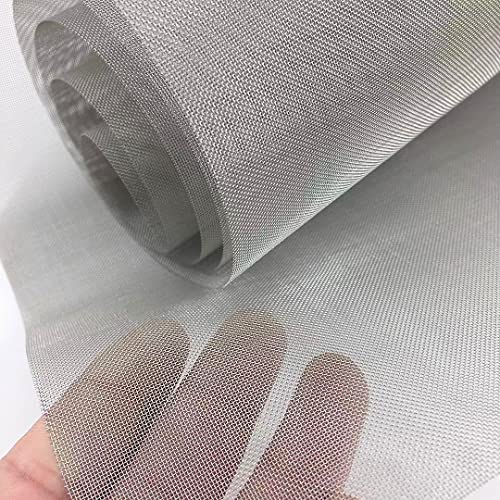
The 0.18 mm wire makes this the most pliable mesh in the group for folding, wrapping, and stapling into tight spots.
This roll uses a 0.18 mm wire diameter and a 0.45 mm square aperture (slightly wider holes than the YAGJIA’s 0.4 mm). The thinner wire makes the mesh noticeably more pliable, so cutting and shaping it with a wire cutter or snips is easier. One reviewer described it as “flexible and firm,” using it to screw along a roof edge to keep critters out of an attic.
Owners mention creative uses beyond vents: “doing some DIY air purifier to hold pelletized charcoal and this worked out well,” said one verified buyer, who later bought a second roll. Another reviewer used it for a bird feeder project and called it “good product.” At 0.7 pounds for the full roll, it is light enough to handle with one hand while marking cut lines. The roll ships in a tube to prevent creases, which helps keep the weave flat when you unroll it.
The catch: the thinner wire means the cut ends are sharp, and reviewers specifically warn to “use heavy leather gloves when cutting it” because “some bits got embedded in our fingers while wearing canvas/rubber gloves.” If you need maximum rigidity against heavy animal pressure, the YAGJIA with its 0.21 mm wire is the sturdier choice.
Builder’s pick: Buy this when your project requires you to wrap, fold, or staple the mesh into tight or curved spaces — the flexibility and light weight make it the most forgiving option here.
Safety note: Do not handle with thin cloth gloves; the cut ends are sharp and will find unprotected skin.
3. FAYERXL 2 Packs 40 Mesh Screen Stainless Steel Metal Wire Mesh 11.8″x47.2″

Two separate sheets with the thickest wire in the group (0.01 inch, about 0.25 mm) deliver maximum rigidity against rodent pressure.
Unlike the single-roll options, this is a 2-pack of pre-cut sheets, each measuring 11.8 inches by 47.2 inches. That gives you about 7.7 square feet of coverage total, split into two manageable pieces. A buyer shared: “We had a couple of field mice that made their way into my crawl space through some old air vents. We used this with some sealant to cover over the vents and we have seen no more mice.” The 0.01-inch (approximately 0.25 mm) wire diameter makes this the thickest wire in the batch, so it is very stiff and hard to push through.
Each sheet is labeled as a 40 mesh weave The material comes rolled in a cardboard sleeve inside a standard shipping envelope (not a tube), so there is a small chance of corner creases if the package gets crushed. The mesh is woven, so edges can unravel if you do not seal them with a staple or a dab of clear caulk after cutting.
Here is the honest trade-off: the 11.8-inch width is 3.9 inches narrower than the 15.7-inch rolls from YAGJIA and SCRMUSHUZI. You will need to overlap two pieces if you are covering a standard 15-inch vent. For narrow gaps and crawlspace vents, the narrower width is actually easier to work with — you just measure twice.
Pest-block specialist: The thickest wire in the group and a second sheet included means you can fix two locations in one purchase, which matters when you are sealing multiple foundation vents.
One limitation: The 11.8-inch width may force a seam on wider frames — plan your cuts before opening the package.
4. YUKKOEOQ 4 Pcs 13×9 (33cmx23cm) 40 Mesh 304 Stainless Steel Wire Mesh Sheet
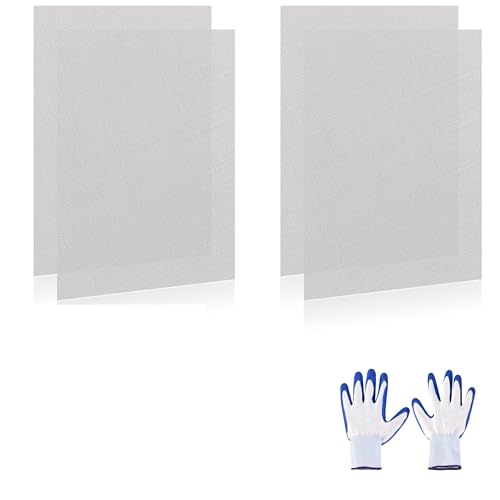
Four pre-cut 13×9-inch sheets slip into tight spots without unrolling — the only pack that includes gloves.
This is the only multipack in the list that gives you 4 individual sheets, each measuring 13 by 9 inches (33 x 23 cm). That is roughly the size of a standard piece of printer paper, so it fits inside a microwave air vent, a cabinet back, or a small window frame without any cutting along the long dimension. One reviewer noted: “Got this because I was getting flys in the kitchen through my microwave air vent. Easy to cut and shape. Comes with gloves as well.” Another used them to line drilled holes in plastic containers for potato storage, keeping “critter bugs out.”
The material is 304 stainless steel with a silver gray finish and a commercial grade rating. The surface is non-corrosive, so cleaning it with a damp cloth after a kitchen grease buildup is simple. The pack includes gloves, so you do not have to hunt for your own pair before cutting. Because the sheets are small and flat (not rolled), there is no curl to fight — just grab a sheet, mark your cut, and snip.
However, the total area (4 sheets at 13×9 inches gives you about 3.25 square feet) is less than what a single 15.7 x 47.2-inch roll provides (about 5.15 square feet). If you are covering a large window or a long fence line, you will run out of material fast. A reviewer also noted “this is hardware cloth not screen material,” pointing out that the holes are larger than typical window screen, so tiny no-see-ums might still get through depending on your local insect size.
Slot-and-forget patch: Perfect for covering small vents, cabinet holes, or container lids where a full roll would be overkill. The 4-count gives you backup pieces for the same price as a single roll.
Area limits: Not for big jobs — you will need two or three packs to cover a single standard window.
5. Xanyi qin 40 Mesh 304 Stainless Steel Mesh Screen, 24” x 118”

At 24 inches wide and 118 inches long (about 9.8 feet), this single roll covers nearly 20 square feet — four times the area of a standard 15.7×47.2-inch roll.
The Xanyi qin roll gives you 19.7 square feet of continuous mesh, which is about four times the coverage of a standard 15.7 x 47.2-inch roll. One buyer used it to wrap the corners of a chain-link fence to keep cedar chips from flying into the yard: “I wrapped the mesh around the outside of the fence corners for a few feet to keep the chips piled up still in the yard. Works great.” Another reviewer used it on a pool heater to keep rodents out.
The wire diameter is 0.13 mm, the thinnest in the group, and the aperture is 0.5 mm with an open area of 53% — meaning just over half the sheet is open space for airflow. The thinner wire makes it easier to cut with standard snips, but a reviewer noted it is “pretty thin,” so it does not have the rigid, structural feel of the FAYERXL or YAGJIA options. The roll is made of upgraded 304 stainless steel, so rust and corrosion resistance still hold up in outdoor conditions.
The big catch here is wire thickness. At 0.13 mm, it is noticeably flimsier than the 0.21 mm YAGJIA or the 0.25 mm FAYERXL. If you need a mesh that can withstand a raccoon pushing against it or heavy wind pressure on a large uncovered vent, this one may bulge. It is best for low-impact jobs like covering a long fence gap, a pool heater intake, or a large gutter guard where you prioritize coverage area over brute strength.
Big project enabler: If you are wrapping a long fence line or covering a large crawlspace perimeter, this single roll eliminates the hassle of overlapping smaller pieces.
Durability trade-off: The thinner wire means this roll relies on the frame for support — do not use it alone as a free-standing barrier where animals can push against it.
Understanding the Specs
Mesh Count (40 Mesh)
Mesh count tells you how many openings there are in one linear inch of the screen. A 40 mesh screen has 40 holes per inch in each direction, or roughly 1,600 holes per square inch. That level of fineness blocks house flies, gnats, and most small field mice, while still allowing plenty of air to flow through vents or windows. The individual holes in these products measure between 0.4 mm and 0.5 mm across, depending on the specific roll.
Wire Diameter and Gauge
This is the thickness of the metal strand woven into the screen. It ranges from 0.13 mm (the thinnest in this group) to around 0.25 mm (the thickest). A thicker wire creates a stiffer, harder-to-bend sheet that resists animal pressure and holds its shape for years. A thinner wire is easier to cut and shape with household scissors, but it will flex more under force. Match the wire thickness to the threat level: thin for bugs, thick for rodents.
FAQ
Will a 40 mesh screen keep mice out?
How do I cut stainless steel 40 mesh without hurting myself?
Can I use 40 mesh screen for a dryer vent?
What is the difference between 304 and 316 stainless steel mesh?
How do I flatten a rolled mesh screen without creases?
Is 40 mesh small enough to keep gnats and no-see-ums out?
Can I use 40 mesh screen for a DIY French press coffee filter?
How do I attach 40 mesh screen to a wooden frame?
Does 40 mesh screen rust in the rain?
What is the open area percentage of a 40 mesh screen?
Final Thoughts: The Verdict
For the majority of shoppers, the best 40 mesh screen is the YAGJIA 304 Stainless Steel Mesh because it delivers the best balance of thick 0.21 mm wire, precise 0.4 mm holes, and easy handling for window replacement, vents, and DIY barriers. If you need two identical sheets for dual pest-blocking jobs, grab the FAYERXL 2-Pack. And for maximum uninterrupted coverage on a fence or pool heater, the standout is the Xanyi qin 24×118 inch roll.
How We Picked
We do not accept paid placement. Every pick is matched to a real buyer and a real use-case; we do not hands-on test units.
Sources & Methodology
Specifications: manufacturer listings and product documentation. Review insights: verified customer reviews, as of July 2026. Pricing: not shown on this page (it changes often); check the current price via the retailer link.
As an Amazon Associate, Gadgets Feed earns from qualifying purchases. This does not affect which products we feature.