
Our readers keep the lights on and my morning glass full of iced black tea. As an Amazon Associate, I earn from qualifying purchases.
Specs are compiled from manufacturer listings and verified buyer reviews and can change over time — please confirm the key details on the product page before buying.
A failed bond that bubbles or peels ruins a day on the water. The wrong adhesive causes rework, wasted money, and a carpet that lifts when wet. This guide compares marine-grade adhesives that bond boat carpet to wood, aluminum, and fiberglass.
I’m Min — the founder and writer behind Gadgets Feed. This guide is built by comparing the manufacturers’ published specifications and the patterns across verified customer reviews, so you get each pick’s real strengths and trade-offs instead of marketing spin.
Whether you are recarpeting a pontoon, a fiberglass fishing boat, or a cabin cruiser, the right adhesive for boat carpet makes the difference between a professional finish and a peeling disappointment that needs redoing next season.
Quick Picks
- 3M 7000000623 Marine Adhesive Sealant — Best Overall
- RecPro RV Roll On Floor Adhesive — Best for Full Decks
- Marine Adhesive for Boat Carpet & Pontoon — Budget Champion
How To Choose The Best Adhesive For Boat Carpet
Marine carpet adhesive must stay flexible, resist moisture, and hold under vibration. Three specs separate a lasting bond from failure.
Chemistry: Polyurethane vs. Water-Based PVA
The chemical makeup of the adhesive determines how it grabs the backing of your carpet and the deck below. Polyurethane adhesives, like the 3M 5200 formula, cure into a tough rubbery solid that stays flexible and bonds underwater — they are the go-to for below-the-waterline and high-stress areas. Water-based polyvinyl acetate (PVA) adhesives are easier to apply and clean up with soap and water, and they work well on wood and rubber-backed carpet in dry environments. The trade-off is that water-based glues generally do not stick to aluminum surfaces as reliably as polyurethane does.
Full Cure Time
Full cure time is the hours you must wait before the bond is waterproof and walkable. Some adhesives reach handling strength in 24 hours, while others need a full 48 hours before they are waterproof. A shorter cure time gets your boat back on the water faster. A longer polyurethane cure provides a permanent bond that flexes with the hull.
Coverage and Container Size
Coverage is measured in square feet per gallon, and it varies wildly between products. A single gallon might cover 100 square feet when applied with a notched trowel, while a smaller tube covers just a few square feet of seam or edge. For a full deck recarpet, you want a gallon-sized bucket. For spot repairs around hatches and trim, a tube is sufficient. Always check the coverage estimate so you do not run out halfway through the job.
Quick Comparison
| Model | Best For | Chemistry | Full Cure Time | Coverage / Size | Amazon |
|---|---|---|---|---|---|
| 3M 7000000623 Marine Adhesive Sealant | Permanent underwater bonds & repairs | Polyurethane | 48 Hours | 10 oz. tube | $20.21$21.77Amazon |
| RecPro RV Roll On Floor Adhesive | Full-deck wood reflooring projects | Water-based | 24 Hours | 1 Gallon (~100 sq. ft.) | $69.95Amazon |
| Marine Adhesive for Boat Carpet & Pontoon Vinyl Flooring | Budget-friendly large-area coverage | Water-based PVA | 24 Hours | 2 Gallons | $99.99Amazon |
In‑Depth Reviews
1. 3M 7000000623 Marine Adhesive Sealant – 10 oz., White

The industry standard that bonds underwater and stays put for decades.
This is the adhesive serious boat owners reach for when the bond absolutely cannot fail. The 3M 5200 formula is a tough, flexible polyurethane polymer that cures into a permanent seal — it works both above and below the waterline, and it actually sets and cures underwater without weakening. The full cure time takes 48 hours, compared to 24 hours for the water-based options here, but you get a bond that flexes with the hull and resists years of vibration and moisture. It is compatible with wood, and one reviewer noted it works great on plywood projects.
The catch is the 10-ounce tube size — this is a tube, not a bucket, so it is best for patching seams, mounting fittings, or re-gluing edges rather than covering an entire deck. Buyers report that the tube sometimes ships damaged and without the applicator tip, which makes application messy. One reviewer who called “3M 5200 is best boat sealant” also noted that a damaged shipment made it unusable on arrival. For small jobs and permanent repairs, this is unbeatable; for full-deck recarpeting, you would need several tubes.
Unlike the water-based options below, this polyurethane glue does not rely on surface humidity to cure — it grabs even on damp surfaces. If you need a single spot repair that lasts longer than the boat itself, this is your pick.
Built for permanence
- Sets and cures underwater, staying immediately waterproof
- Tough and flexible polyurethane polymer absorbs hull flex without cracking
- Industry standard for over 50 years — trusted for through-hull fittings
Handle with care
- Full cure takes 48 hours — you are off the water for two days
- 10 oz. tube covers limited area; not cost-effective for a full deck
- Owners mention tubes arriving damaged and missing the applicator tip
Reach for this if: You are repairing a seam, mounting hardware, or bonding something that needs to hold underwater permanently — and you only need a tube, not a gallon.
Look elsewhere if: You are recarpeting an entire deck; you would spend a fortune on tubes and still wait 48 hours to use the boat.
2. RecPro RV Roll On Floor Adhesive | Marine Grade | Water-Based | 1 Gallon
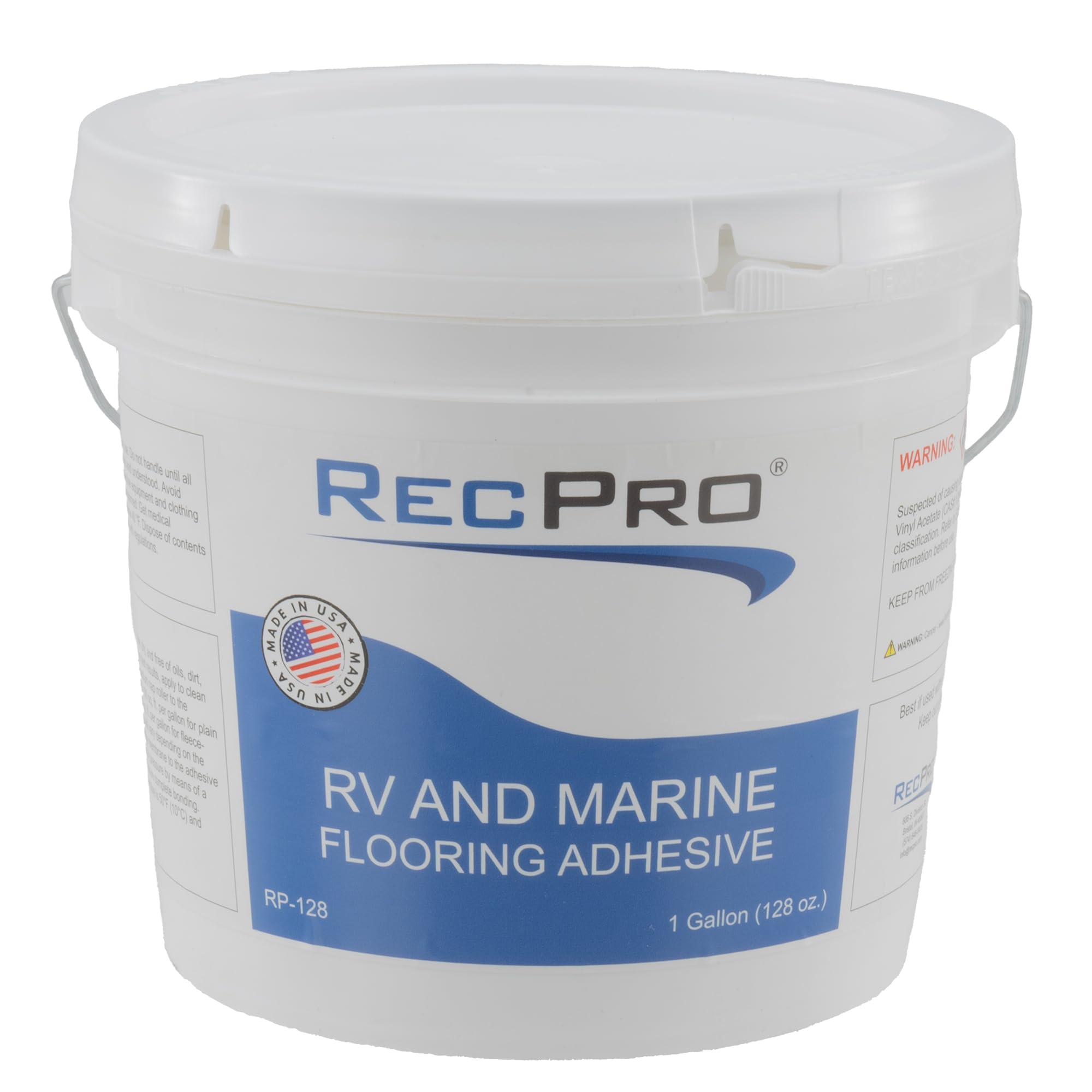
The roller-friendly gallon that covers 100 square feet and cures in half the time.
If you are laying down new carpet across an entire deck, this water-based adhesive is designed for exactly that job. It comes in a 1-gallon pail, covers roughly 100 square feet when applied with a notched trowel — or a medium-nap roller, as one reviewer found — and reaches full cure in 24 hours. That is 24 hours faster than the 3M’s 48-hour cure, so you can get the boat back in the water sooner. The adhesive is best applied between 65-75 degrees Fahrenheit, and a steel roller helps eliminate wrinkles and air pockets for a professional-looking finish.
The biggest limitation is surface compatibility. This product is designed for wood substrates and felt-backed or rubber coin flooring — it does not bond reliably to aluminum. One buyer stated this bluntly: “This product doesn’t work on aluminum with marine carpet.” If your boat deck is aluminum, this glue will not hold the carpet down long-term. Buyers also report inconsistent bucket batches — one buyer mentioned two buckets had different colors and consistencies, though both seemed to work so far. For a wood-deck recarpet job where you need speed and ease of application, this is the smart pick.
Compared to the BoatCarpetCentral glue below, this RecPro adhesive has more positive reviews citing its strong bond on wood and easy roller application, but it costs more per gallon. You pay a premium for the consistency and the 24-hour cure.
Deck-ready speed
- Full cure in 24 hours — use the boat tomorrow, not the day after
- Easy roller or notched-trowel application covers 100 sq. ft. per gallon
- Strong bond on wood with felt-backed polyvinyl or rubber coin flooring
Know your surface
- Does not bond to aluminum — useless on metal boat decks
- Inconsistent bucket batches reported; color and thickness vary
- Application temperature window (65-75°F) limits cold-weather use
Best for: A wood-deck recarpet project where you want fast cure and one-gallon coverage that rolls on easily.
skip it if: Your boat deck is aluminum — you need a polyurethane adhesive that grips metal, not water-based PVA.
3. Marine Adhesive for Boat Carpet & Pontoon Vinyl Flooring – 2 Gallons

Two gallons of budget glue that covers a lot of deck — if the surface is right.
This is the most adhesive you get for your dollar: two full gallons of water-based polyvinyl acetate (PVA) glue, sold in pails by BoatCarpetCentral. It is marketed for use on marine plywood, particle board, concrete, aluminum, and fiberglass, and it cures in 24 hours. The gel form is easy to spread, and one reviewer who let it sit for five minutes before laying the carpet reported a strong, flexible bond that they were optimistic about long-term. For a large pontoon or a full deck, this is the most affordable way to get coverage.
The honest trade-off is that some buyers found the bond completely inadequate. One owner reported it “looks like Elmers glue and wouldn’t stick,” and that the carpet came off while driving down the road even with a thick application. This is a water-based PVA adhesive — it does not have the chemical grab of a polyurethane formula like the 3M, and it is particularly weak on aluminum and non-porous surfaces. The maker states it adheres to rubber-backed flooring and aluminum, but real-world reviews suggest you should test it on a small patch first. On wood decks with rubber-backed carpet, it has a much better track record.
For a budget-conscious project on a wood deck where you need maximum coverage, this glue can work — but do not trust it on aluminum without testing, and follow the tack-time instructions (letting it sit five minutes before laying carpet) closely.
Maximum coverage per dollar
- Two full gallons give you the most adhesive volume for the price
- Water-based PVA cleans up with soap and water, no solvents needed
- 24-hour full cure — back on the water in one day
Adhesion is a gamble
- Some customers note carpet peeling off even with thick application
- Weak bond on aluminum — not reliable for metal boat decks
- Reviewers describe it as “looks like Elmers glue” consistency
Grab this for: A wood-deck recarpet on a tight budget, where two gallons cover the whole floor and you can test adhesion before committing.
Pass on this if: Your boat has an aluminum deck or any non-porous surface — the bond failure risk is too high to save a few dollars.
Understanding the Specs
Polyurethane vs. Water-Based PVA
The type of polymer in the adhesive decides whether it grabs plastic carpet backing and metal decks or slips off. Polyurethane adhesives (like the 3M 5200) cure into a flexible, waterproof rubber that bonds permanently to wood — even underwater. Water-based PVA glues (like the BoatCarpetCentral and RecPro options) are cheaper, clean up with water, and work well on wood with rubber-backed carpet, but they often fail on aluminum and non-porous surfaces because they lack the chemical bite to grip slick materials.
Full Cure Time
Full cure time is the total number of hours you must wait before the glue reaches full strength and becomes waterproof — this is different from “tack time” (how fast it gets sticky). The 3M marine sealant needs 48 hours for a permanent underwater bond, while both water-based options reach full cure in 24 hours. If you need the boat ready in one day, pick a 24-hour glue. If you need a bond that can flex with the hull season after season, the longer cure of polyurethane is a feature, not a drawback.
FAQ
Will water-based adhesive work on aluminum boat decks?
How long should I wait before putting my boat back in the water?
Can I use indoor carpet glue on a boat?
How much adhesive do I need for a full boat deck?
What is the difference between tack time and full cure time?
Does the 3M marine sealant really bond underwater?
Can I paint over marine carpet adhesive?
Will water-based glue damage rubber-backed carpet?
Final Thoughts: The Verdict
If you want one dependable pick, the adhesive for boat carpet winner is the 3M 7000000623 Marine Adhesive Sealant because nothing else matches its permanent underwater bonding power and decades of proven reliability on wood. If you want full-deck coverage on a wood surface with a fast 24-hour cure, grab the RecPro RV Roll On Floor Adhesive. And for a budget-friendly two-gallon option on a wood deck where you can test adhesion first, the Marine Adhesive for Boat Carpet & Pontoon Vinyl Flooring gives you the most volume per dollar.
How We Picked
We do not accept paid placement. Every pick is matched to a real buyer and a real use-case; we do not hands-on test units.
Sources & Methodology
Specifications: manufacturer listings and product documentation. Review insights: verified customer reviews, as of July 2026. Pricing: not shown on this page (it changes often); check the current price via the retailer link.
As an Amazon Associate, Gadgets Feed earns from qualifying purchases. This does not affect which products we feature.
Related Guides
Product prices and availability are accurate as of the date/time indicated and are subject to change. Any price and availability information displayed on Amazon at the time of purchase will apply to the purchase of this product. As an Amazon Associate I earn from qualifying purchases.
CERTAIN CONTENT THAT APPEARS ON THIS SITE COMES FROM AMAZON. THIS CONTENT IS PROVIDED "AS IS" AND IS SUBJECT TO CHANGE OR REMOVAL AT ANY TIME.
Amazon and the Amazon logo are trademarks of Amazon.com, Inc. or its affiliates.