
Our readers keep the lights on and my morning glass full of iced black tea. As an Amazon Associate, I earn from qualifying purchases.
Specs are compiled from manufacturer listings and verified buyer reviews and can change over time — please confirm the key details on the product page before buying.
Most headphones are built for one job — music, gaming, calls, or travel — and fall flat at the rest. The ones that truly do it all share a short list of specs that actually matter, not marketing lingo you will forget after a week.
I’m Min, the writer and founder of Gadgets Feed. This guide compares each model’s published specs and patterns across verified customer reviews, so you see real strengths and trade-offs instead of brand spin.
These are the best all around headphones that the data shows deliver on the promise of doing everything well.
Quick Picks
- Sennheiser HD 490 PRO Open-Back Professional — Top Performer
- Sony WH-1000XM6 Wireless Noise Cancelling — Best Wireless
- Sony WH-1000XM4 Wireless Premium Noise — Premium Value
- Bose QuietComfort Wireless Bluetooth Headphones — Luxury Pick
- beyerdynamic DT 770 Pro X Wired Over-Ear — Studio Standard
- Audio-Technica ATH-M50X Professional Studio — Studio Workhorse
- Shure SRH440A Over-Ear Wired Studio Headphones — Budget Champion
How To Choose The Best All Around Headphones
You want one pair for music, podcasts, calls, gaming, and maybe basic mixing. You do not need a separate headphone for each task. The trick is choosing the specs that match your mix of uses, not chasing the highest number on the box.
Wired vs. Wireless: The Real Trade-off
A wireless pair like the Sony WH-1000XM6 gives you 30 hours of battery and Bluetooth 5.1 multipoint, so the audio switches automatically when you walk from your desk to your couch. But every wireless model uses a digital-to-analog converter built into the headphones, which limits the peak detail you get compared to a wired connection to a dedicated DAC (a small digital-to-analog converter that turns your computer’s data into sound). If you do critical listening or mixing, a wired pair with a detachable cable, like the Shure SRH440A or Sennheiser HD 490 PRO, avoids that bottleneck — but you stay tethered to your device.
Open-Back vs. Closed-Back: Which Design Fits Your Room
Closed-back headphones, like the Shure SRH440A, Audio-Technica ATH-M50X, and beyerdynamic DT 770 Pro X, have sealed earcups that block outside noise and prevent sound from leaking out — essential for recording vocals or using them in a coffee shop. Open-back headphones, like the Sennheiser HD 490 PRO, have mesh grilles that let air pass through, creating a wider, more natural sense of space (called soundstage), so instruments feel positioned around you in a room rather than inside your head. The catch is that open-back models leak sound audibly and offer zero noise isolation, so they only work in quiet spaces.
Quick Comparison
| Model | Best For | Driver Size | Impedance | Battery Life | Amazon |
|---|---|---|---|---|---|
| Sennheiser HD 490 PRO | Open-back detail & comfort | — | — | — (wired) | Amazon |
| Sony WH-1000XM6 | Best noise cancelling & wireless | 30mm | — | 30 hours | Amazon |
| Sony WH-1000XM4 | Premium wireless value | 40mm | — | 30 hours | Amazon |
| Bose QuietComfort | Everyday noise cancelling comfort | — | — | 24 hours | Amazon |
| beyerdynamic DT 770 Pro X | Durable studio monitoring | 45mm | 48 ohms | — (wired) | Amazon |
| Audio-Technica ATH-M50X | Versatile studio & casual use | 45mm | — | — (wired) | Amazon |
| Shure SRH440A | Budget-friendly studio sound | — | — | — (wired) | Amazon |
In‑Depth Reviews
1. Sennheiser HD 490 PRO Open-Back Professional Headphone

The open-back specialist that makes mixing and gaming feel like you are in the room with the instruments.
You get an extremely wide soundstage — that sense that sounds come from specific spots around you — thanks to the open-back design and Sennheiser’s Open-frame Architecture (a structure that reduces total harmonic distortion, so the sound is cleaner). The frequency range is 5 to 36,000 Hz (reaching well beyond human hearing to preserve detail). Buyers report it is more comfortable than the Hifiman Edition XS because it weighs less. One reviewer noted they wore it 8 hours straight without issue. This clarity means you hear exactly where footsteps are in a game or how the reverb tail decays on a vocal track.
Two sets of ear pads ship in the box: one labeled “Mixing” and one labeled “Producing,” which subtly shift the bass response. The cable attaches to both the left and right ear cups with a patented coil design that blocks noise traveling through the wire. The pads are washable and replaceable. Unlike the closed-back picks on this list, the HD 490 PRO leaks sound audibly, so you cannot use it in a shared room or on a commute. It is a desktop headphone for a quiet space, and within that role, it sets the standard for detail retrieval and all-day wear.
Open-back precision
- You mix, game, or critically listen at a desk and want the widest soundstage in this price range
- Washable, replaceable pads and FSC-certified packaging matter for long-term ownership
- Owners mention it is comfortable enough for 8-hour sessions even with larger ears
No noise isolation
- You need noise isolation or use headphones in a noisy environment — open-back leaks sound both ways
- You prefer a wireless connection or plan to use these with a phone on the go
Best for critical listening and gaming at a desk: The HD 490 PRO beats every closed-back pick here on soundstage and comfort for long sessions, but only if you have a quiet room to use it in.
Studio mixing: No wireless option, no built-in mic, and zero noise isolation mean it is strictly a home-use tool — not a travel companion.
2. Sony WH-1000XM6 Wireless Noise Cancelling Headphones
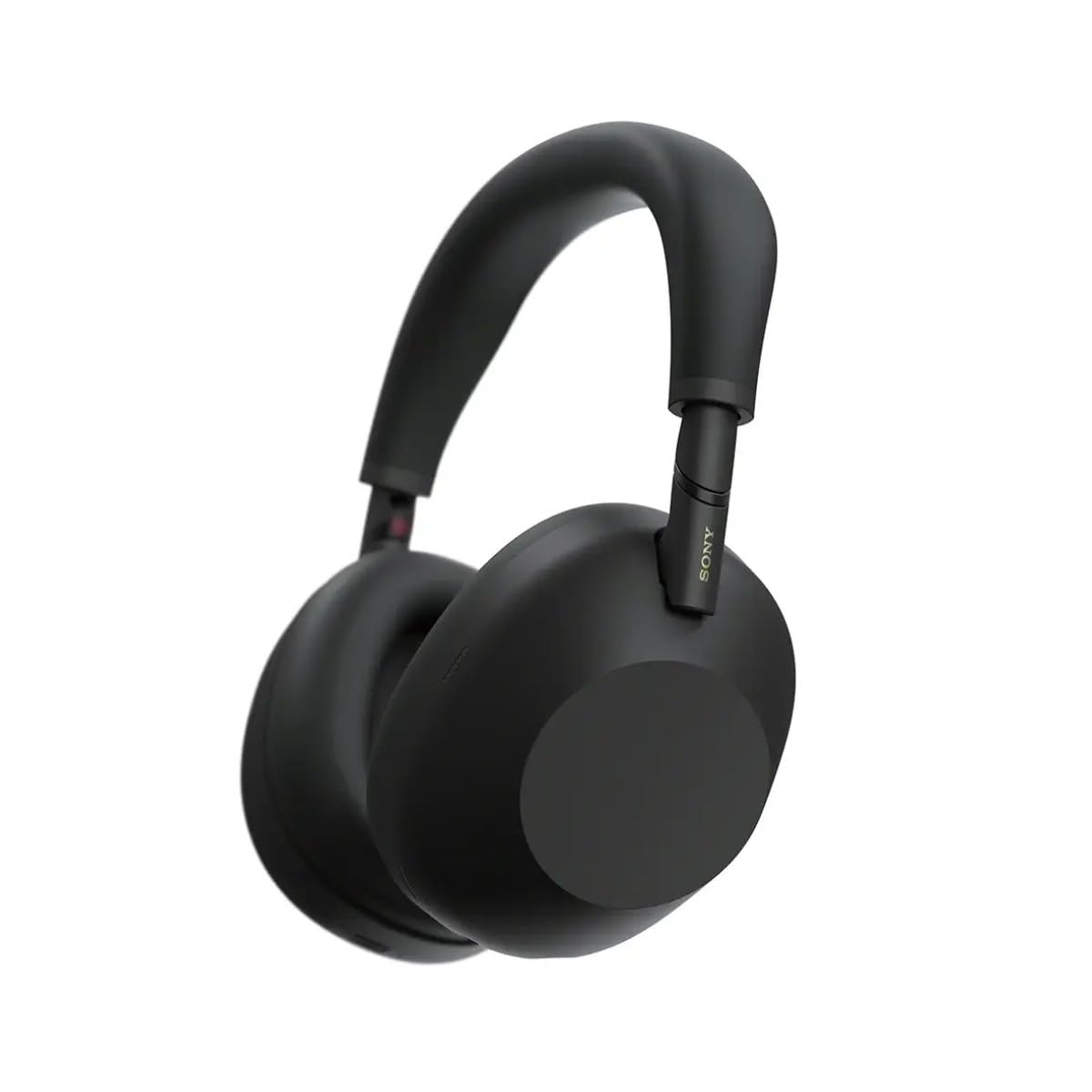
A noise-cancelling flagship that wraps clear audio, 30-hour battery, and foldable portability into one package.
The WH-1000XM6 uses the HD Noise Cancelling Processor QN3 (the chip that analyzes ambient noise and cancels it in real time) and Multi Noise Sensor Technology that adapts to your environment — it tones down the train rumble but lets traffic announcements through in ambient mode. The 30mm driver was developed with Grammy-winning mastering engineers. DSEE Extreme (a processing engine that upscales compressed files like MP3s) works alongside a customizable 10-band EQ inside the Sony app. Buyers consistently call the sound “rich” and “clear.” One reviewer says the quality is so good they can go weeks between charges.
Call quality gets a meaningful upgrade: six AI-powered beamforming microphones (compared to five on the older XM4) filter wind and background chatter. A 3-minute quick charge gives you 3 hours of playback, while the Bose QuietComfort takes 15 minutes for 2.5 hours. The folding design with a magnetic closure case makes it easier to pack than the fixed-frame Bose. Unlike the XM4, the XM6 uses a 30mm driver versus 40mm — the trade-off is a slightly smaller diaphragm, though most listeners prefer the XM6’s tighter bass control. The biggest catch is the non-detachable cable (the headphone is wireless-first) and the price sits above the mid-range wired options.
Top noise cancellation
- You commute, fly, or work in open offices and need active noise cancellation that adapts to your environment
- 30-hour battery life with fast charging means you charge once a week with daily use
- Buyers love the smooth multipoint connection switching between phone, laptop, and tablet
Bulky case
- You want a non-Bluetooth wired-only studio headphone for critical mixing — the Sennheiser HD 490 PRO or beyerdynamic DT 770 Pro X will give more transparent detail
- You prefer replaceable parts and detachable cables for longevity (the cable is not detachable)
Best for wireless, all-day use across commuting and office: The WH-1000XM6 leads the wireless pack on noise cancellation, call quality, and battery life — it is the most versatile headphone here if Bluetooth is non-negotiable.
Commute king: The 30mm driver and non-detachable cable mean it falls short of the analytical clarity you get from the Sennheiser HD 490 PRO or the beyerdynamic DT 770 Pro X for studio tasks.
3. Sony WH-1000XM4 Wireless Premium Noise Canceling Headphones

The previous-gen flagship that still delivers 30-hour battery and dual-sensor noise cancelling for less.
The WH-1000XM4 uses Dual Noise Sensor technology (two microphones on each earcup that capture ambient sound and feed it to the cancelling processor) and the QN1 chip — not the newer QN3 found in the XM6. Reviewers still report a 95% reduction of background noise at 70 decibels of ambient volume. The 40mm driver is larger than the XM6’s 30mm unit, and many owners prefer the XM4’s slightly warmer bass response for genres like electronic and hip-hop. DSEE Extreme is present here too. Speak-to-Chat automatically lowers the volume when you start talking.
Battery life matches the XM6 at 30 hours, and a 10-minute charge gives you 5 hours of playback (the XM6’s 3-minute charge gives 3 hours). The key trade-offs versus the newer model are the older Bluetooth 5.0 (versus 5.1), the lack of the QN3 processor, and a slightly bulkier case. One reviewer notes that the auto-pause feature can be inconsistent because the light sensor occasionally triggers in bright rooms. On call quality, the XM4 uses five microphones against the XM6’s six, and customers note the mic sounds fine indoors but struggles in noisy outdoor environments — making the XM6 a better pick if you take calls on the street. Still, for the price gap, the XM4 offers 95% of the same noise cancelling and battery experience.
Balanced ANC value
- You want flagship-level noise cancellation and 30-hour battery without paying the XM6 premium
- Reviewers point out it is comfortable for 10+ hours even with glasses, with a more relaxed bass tuning than the XM6
- Quick charging (10 minutes for 5 hours) beats most competitor wireless models
Dated design
- You take frequent calls in windy or noisy outdoor places — the mic is noticeably weaker than the XM6
- You want the smallest possible case or the newest processor — the XM6 folds into a slightly more compact package
Best for buyers who want wireless noise cancelling with a warmer sound signature: The XM4 gives you essentially the same battery life and noise reduction as the XM6, and many listeners prefer its larger 40mm driver for bass-heavy music.
Budget premium: Call microphone quality falls behind the Bose QuietComfort and the XM6, so anyone who spends hours on voice calls in loud spots should step up to the newer model.
4. Bose QuietComfort Wireless Bluetooth Headphones

The plush, noise-cancelling pair that turns any commute into a quiet listening room.
It offers two listening modes — Quiet (full noise cancellation) and Aware (lets surrounding sound in) — and you can adjust the bass, mid-range, and treble through the Bose app’s EQ (a graphic equalizer with sliders to boost or cut specific frequencies). Battery life is 24 hours on a single charge, with a 15-minute charge giving you 2.5 hours of extra play time via USB-C. Unlike the Sony XM4 and XM6, you can plug the included audio cable in to use these wired even when the battery is dead — a meaningful backup for flights.
Buyers consistently mention how lightweight the QuietComfort feels. One reviewer says they can sleep in them comfortably. The noise cancellation is described as top-tier, reducing TV noise by about 90%. Compared to the Sony XM6, the Bose has slightly less aggressive noise cancellation — some say it is “good but not 100% with quiet audio” — and the sound signature leans warmer and slightly less detailed in the treble; some tracks can sound a bit muddled. But the comfort gap is real: for people with small heads or glasses, the Bose is the most forgiving frame of any wireless model here. Multipoint Bluetooth connects to two devices at once. A long-time owner notes that after 1.5 years of use it still feels solid.
Supreme comfort
- Comfort is your absolute priority — this is the lightest, most padded wireless headphone in this list
- You want noise cancellation that works well enough for TV, coffee shops, and flights without the “pressure” feel some ANC models create
- Shoppers say the Aware mode is natural enough to hold conversations without removing the headphones
Bass lacks punch
- You are a critical listener who wants the last bit of treble detail — the Sony XM6 and the wired studio headphones deliver more transparency
- You need 30-hour battery life (the Bose gets 24 hours, while the Sony XM4/XM6 get 30 hours)
Best for maximum physical comfort and relaxed noise cancelling: The QuietComfort is the pair to grab if you wear headphones for 8-hour shifts, nap on planes, or have glasses — it is the only wireless model here where comfort reviews are universally positive regardless of head shape.
All-day wear: Sound detail falls slightly behind the Sony XM6 and the wired studio picks, and battery life at 24 hours is below the Sony competitors’ 30-hour mark.
5. beyerdynamic DT 770 Pro X Wired Over-Ear Headphones

The German-built closed-back that isolates noise passively for years of studio use without recharge anxiety.
The DT 770 Pro X is built around the STELLAR.45 driver (a 45mm dynamic driver designed for high clarity and low distortion). It covers a frequency range of 5 to 40,000 Hz — wider than the Sennheiser HD 490 PRO’s 5-36,000 Hz — meaning it reaches into ultrasonic territory where some high-res audio formats place data. The impedance is 48 ohms, a middle ground that works with both portable devices and studio interfaces without needing a separate amplifier. Buyers report that the passive noise isolation (sealing out sound through the velour ear pads and closed-back shell) beats many active noise cancelling headphones for blocking background chatter because there is no electronic hiss or pressure sensation. One drummer reviewer who also plays guitar and bass says there “is not a lot of bleed and the sound qualities” are excellent for tracking instruments.
A defining feature is repairability: the ear pads, headband padding, and cable are all replaceable parts, and the headphones are handmade in Germany. The detachable cable connects via a locking mini-XLR connector (a small plug that twists to lock, so it never pulls loose during a session) and comes with a threaded 1/8-inch to 1/4-inch adapter. The trade-offs are clear: there is no earcup swivel for single-ear monitoring (unlike the Audio-Technica ATH-M50X which swivels 90 degrees). Owners mention the stock 3-meter cable is long enough to bump your neck. The treble can be sharp for listeners sensitive to high frequencies — one reviewer calls the stock sound “harsh” and recommends EQ to tame it and add bass. But the isolation, build, and clarity at this price point are tough to top compared to the Shure SRH440A below.
sturdy build
- You want a closed-back wired headphone for recording, mixing, or gaming with passive isolation that beats ANC
- Replaceable parts and ‘Made in Germany’ build quality matter for long-term ownership — this should last a decade
- Buyers describe the sound as very detailed with “crisp, clean bass” and a spacious soundstage for a closed-back design
Non-detachable cable
- You are sensitive to treble peaks — the stock tuning is bright and may need EQ for relaxed listening
- You need earcups that swivel for one-ear monitoring or a shorter, more flexible stock cable
Best for studio recording and long-term reliability: The DT 770 Pro X beats the Shure SRH440A on build quality and repairability, and it rivals the Audio-Technica ATH-M50X on passive isolation while exceeding it in parts lifespan.
Studio durability: The treble is sharp from the start, and the 3-meter non-coiled cable is cumbersome for portable use — this is a desktop-first tool, not a travel headphone.
6. Audio-Technica ATH-M50X Professional Studio Monitor Headphones

The most-recognized closed-back studio headphone on the planet, now with a detachable cable and swiveling earcups.
The ATH-M50X uses proprietary 45mm large-aperture drivers (the same size as the beyerdynamic DT 770 Pro X’s STELLAR.45, but with rare earth magnets and copper-clad aluminum wire voice coils), delivering what Audio-Technica calls “exceptional clarity throughout an extended frequency range” with deep, accurate bass. The circumaural design (earcups that fully enclose your ears) seals out background noise well for a closed-back monitor. The 90-degree swiveling earcups let you flip one cup off for single-ear monitoring — a feature the DT 770 Pro X lacks. Customers note that the sound signature is balanced with true bass and clear highs. One reviewer specifically says they are “comfortable for 12+ hours with glasses.”
The impedance is 38 ohms (slightly lower than the 48 ohm DT 770 Pro X, so it gets louder at the same volume on a phone or laptop). The cable is detachable, and three different cable lengths ship in the box: a coiled cable, a straight cable, and a short cable for portable players. Compared to the Shure SRH440A, the ATH-M50X has a more aggressive, detailed treble and stronger bass punch, though some reviewers point out a treble peak that can emphasize sibilance (the “S” sound) at high volumes. The soundstage is narrower than the open-back Sennheiser HD 490 PRO, but for a closed-back it is described as “great” by owners. The main complaint after 14 months of use is that the stock earpads are critical to the sound signature — swapping them changes the bass response noticeably. Still, the balance of durability (metal headband), comfort, and detail at this price remains a benchmark.
Detailed midrange
- You want a closed-back wired headphone that works for both casual listening and light monitoring — the swivel cups make single-ear use easy
- Shoppers say the 38 ohm impedance drives well from phones and laptops without an amplifier
- Three detachable cable options give flexibility for studio, desk, and portable setups
Clamping force
- You are sensitive to treble peaks — the ATH-M50X can emphasize sibilance at higher volumes
- You need the repairability of the beyerdynamic DT 770 Pro X — the ATH-M50X’s earpads are harder to replace without changing the sound
Best for versatility between studio monitoring and daily listening: The ATH-M50X is more portable than the DT 770 Pro X, with better phone compatibility and swiveling cups, and it beats the Shure SRH440A on bass punch and overall detail.
Monitoring work: The treble can be fatiguing over long sessions for sensitive ears, and the stock earpads are essential to the sound — replacing them shifts the tuning.
7. Shure SRH440A Over-Ear Wired Studio Headphones

A budget-friendly studio headphone that punches well above its weight against more expensive competitors.
The SRH440A delivers a balanced, detailed sound signature with an extended frequency response (the range the driver can reproduce, covering deep bass through high treble) tuned to a pleasant Harmon curve — a target curve designed to sound natural to most ears. The closed-back, over-ear design blocks ambient noise passively. The collapsible frame folds down for storage in a bag. A drummer and multi-instrumentalist buyer confirms there is “not a lot of bleed and the sound qualities” are excellent for recording, adding that the headphones are “very comfortable to wear.” The detachable locking cable uses a twist-to-lock connector so it never pulls loose accidentally — a durability feature typically found on more expensive studio gear like the DT 770 Pro X.
One reviewer who consulted a dedicated audiophile for a budget-friendly recommendation landed on this model and notes that at full price it is “probably worth it,” especially with a Peace equalizer to fine-tune the sound. The main trade-off versus the Audio-Technica ATH-M50X and the beyerdynamic DT 770 Pro X is in raw resolution — those more expensive headphones retrieve slightly more micro-detail in complex mixes, like individual hi-hat decays in a dense rock track. The stock ear pads provide very good passive noise cancellation, but one buyer replaced them with velour pads due to allergy concerns, noting that change hurt the isolation. Despite that, one reviewer calls it “balanced and detailed” and says it “outperforms pricier rivals.”
Neutral sound
- Your budget is limited but you want a balanced studio reference sound that is comfortable for long sessions
- You prefer a collapsible design for throwing in a bag — the ATH-M50X and DT 770 Pro X are bulkier to carry
- Buyers report the default ear pads have strong passive noise cancellation and the adjustable headband fits most head sizes well
Cheap pads
- You need the absolute highest detail retrieval for critical mixing — the ATH-M50X and DT 770 Pro X reveal more subtle information in the mix
- You have a larger-than-average head — one reviewer mentions they felt “kinda small” and recommends checking the fit
Best for budget-conscious buyers who need a reliable closed-back studio headphone: The SRH440A offers 90% of the sound quality of the ATH-M50X for less money, with a locking cable and comfortable fit.
Critical listening: The earcups run slightly small for larger heads, and the resolution ceiling is lower than the two more expensive studio picks above it.
Understanding the Specs
Impedance (Ω / Ohms)
This is the electrical resistance the headphones present to your device. A lower impedance, like the Audio-Technica ATH-M50X at 38 ohms, means the headphones get loud enough from a phone or laptop without a separate headphone amplifier. A higher impedance, like the beyerdynamic DT 770 Pro X at 48 ohms, needs more voltage to reach the same volume, which can sound weak from a standard phone jack but delivers cleaner, more controlled audio from a dedicated DAC (digital-to-analog converter) or audio interface. If you plug into a PC, phone, or tablet directly, keep impedance under about 50 ohms or you will need an external amplifier to get satisfactory volume.
Open-Back vs. Closed-Back
Closed-back headphones, like the Shure SRH440A, Audio-Technica ATH-M50X, and beyerdynamic DT 770 Pro X, have sealed earcups that block outside noise from coming in and prevent sound from leaking out. This makes them essential for recording vocals, using in shared spaces, or commuting. Open-back headphones, like the Sennheiser HD 490 PRO, have mesh grilles on the earcups that let air pass through. This creates a wider, more spacious soundstage (instruments sound like they are positioned around you in a room instead of inside your head) at the cost of zero noise isolation — sound leaks in and out, so they are only usable in quiet rooms.
FAQ
Do I need a headphone amplifier for the beyerdynamic DT 770 Pro X at 48 ohms?
Can I use the Sennheiser HD 490 PRO for gaming?
How do the Sony WH-1000XM4 and XM6 compare for call quality?
Will the Bose QuietComfort work if the battery is completely dead?
Which of these headphones is the most comfortable for glasses wearers?
Is the Shure SRH440A good for music production and mixing?
How long do the ear pads last on the Sony WH-1000XM4?
Can I use the Sennheiser HD 490 PRO for recording vocals or instruments?
What is the main difference between the Sony WH-1000XM4 and WH-1000XM6?
Can I wire the beyerdynamic DT 770 Pro X to a phone?
Final Thoughts: The Verdict
For most buyers, the best all around headphones winner is the Sony WH-1000XM6 because it delivers flagship noise cancellation, excellent call quality, 30-hour battery life, and a flexible sound signature that works for music, podcasts, gaming, and travel — all without needing a separate amplifier. If you want the absolute widest soundstage for mixing or competitive gaming and always listen at a desk, grab the Sennheiser HD 490 PRO. And for a budget-friendly closed-back studio headphone that punches well above its price and collapses for portability, the Shure SRH440A is the smart value pick.
How We Picked
We do not accept paid placement. Every pick is matched to a real buyer and a real use-case; we do not hands-on test units.
Sources & Methodology
Specifications: manufacturer listings and product documentation. Review insights: verified customer reviews, as of July 2026. Pricing: not shown on this page (it changes often); check the current price via the retailer link.
As an Amazon Associate, Gadgets Feed earns from qualifying purchases. This does not affect which products we feature.