
Our readers keep the lights on and my morning glass full of iced black tea. As an Amazon Associate, I earn from qualifying purchases.
Specs are compiled from manufacturer listings and verified buyer reviews and can change over time — please confirm the key details on the product page before buying.
That moment your air conditioner shuts off mid-summer and the breaker won’t reset is the moment you realize this little box in the panel matters more than you thought. You do not need an electrician’s license to pick the right replacement — you just need the exact amperage, the right voltage, and a breaker that is actually built for the heavy startup surge an AC compressor demands. Many standard home breakers are not, which is why this category exists at all.
I’m Min — the founder and writer behind Gadgets Feed. This guide is built by comparing the manufacturers’ published specifications and the patterns across verified customer reviews, so you get each pick’s real strengths and trade-offs instead of marketing spin.
Whether you are swapping out a failed part in your air handler or adding a dedicated circuit for a mini-split, these are the best air conditioner circuit breaker options for getting your cooling back online without guessing.
Quick Picks
- Square D HOM220GFIC Homeline Circuit Breaker — Top Performer
- Supplying Demand 425097 QOU260 Circuit Breaker — Bulletproof Build
- Supplying Demand 42-107430-03 HVAC Air Handler — Great Value
- CHTAIXI DZ47N-63 AC Miniature Circuit Breaker — Compact Budget
How To Choose The Best Air Conditioner Circuit Breaker
An undersized breaker trips constantly; an oversized one lets wires overheat before it opens the circuit. An undersized breaker trips constantly; an oversized one lets the wires overheat before it ever opens the circuit. You need to match three things: the unit’s nameplate amps, the wire gauge already in your wall, and the physical fit in your panel.
Amperage and Voltage — The Hard Limit
The current rating on the breaker must match the maximum overcurrent protection device (MOPD) number printed on your AC’s data plate, not the running amps you measure. For a typical window unit that might be 15 or 20 amps; for a central air handler or condenser it is often 30, 50, or 60 amps. Voltage also matters — most residential ACs use 240V (two hot legs), so you need a 2-pole (double pole) breaker that connects both lines.
Mounting Style: DIN Rail vs Plug-In
If you are replacing a breaker inside a Square D Homeline, GE, or Siemens load center (the main panel in most homes), you almost certainly need a plug-in breaker that snaps onto the bus bar. If you are working with a separate disconnect box or a DIN-rail enclosure near the outdoor unit, you need a DIN-rail-mount breaker that clips onto a metal rail. Check what your existing breaker attaches to — the physical shape is not interchangeable between the two.
Special Types: GFCI, HACR, and Thermal Magnetic
A GFCI breaker (a ground-fault circuit interrupter — a device that shuts off power when it detects a tiny leak of electricity to ground) adds protection that trips when even a tiny 6-milliampere leak to ground occurs — a critical safety feature if your disconnect is within six feet of a water source or if code requires it. HACR-rated breakers (Heating, Air-Conditioning, and Refrigeration — an official certification) are specifically tested for heating and air-conditioning circuits and handle the high inrush current of a compressor motor. Thermal magnetic trip, the most common style, uses a bimetal strip for overloads and a magnetic coil for short circuits, giving you a reliable balance for typical AC loads.
Quick Comparison
| Model | Best For | Current Rating | Voltage | Mounting Style | Amazon |
|---|---|---|---|---|---|
| Square D HOM220GFIC | 20A mini-split GFCI circuit | 20 Amps | 120/240V AC | Plug-In Mount | Amazon |
| Supplying Demand 425097 QOU260 | 60A heavy-duty air handler replacement | 60 Amps | 230 Volts | DIN Rail Mount | Amazon |
| Supplying Demand 42-107430-03 | 60A HVAC air handler mid-range fix | 60 Amps | 230 Volts | DIN Rail Mount | Amazon |
| CHTAIXI DZ47N-63 MCB | 50A solar or RV disconnect | 50 Amps | 240 Volts | DIN Rail Mount | Amazon |
In‑Depth Reviews
1. Square D HOM220GFIC Homeline Circuit Breaker

The only breaker here that adds ground-fault protection while fitting standard home panels.
Choose the Square D HOM220GFIC when your local code or your own confidence demands a GFCI for the AC circuit. It is a 20-amp, 2-pole, plug-in mount breaker that provides Class A ground-fault protection — meaning it will trip the circuit when it detects a ground leak of 6 milliamps (a tiny amount that could still shock you). It is UL-listed (Underwriters Laboratories — a safety certification) and HACR-rated, an official certification that the breaker handles the high starting surge of a compressor motor without nuisance tripping. The pigtail neutral design uses a flexible white wire that connects to your load center’s neutral bar, and the clamp terminals accept two wires from 14 AWG up to 8 AWG copper or aluminum.
At 20 amps this unit is specifically for smaller loads — not for a 60-amp central condenser. But for an 18000 BTU mini-split, buyers report it is a perfect fit, with one reviewer calling it exactly what they needed for their 18000 BTU unit. It is more compact than the DIN-rail breakers below, with dimensions of 2.98 inches deep, 1 inch wide, and 3.13 inches high, so it slides into a Homeline load center without crowding adjacent slots.
In the comparison, the HOM220GFIC runs at 20 Amps while the Supplying Demand options are rated at 60 Amps (a 3.0x gap in current capacity), so they serve completely different machines — do not put a 20A breaker on a 60A air handler. The trade-off here is the price: it is the most expensive pick on the list, but the GFCI safety layer and Square D brand reliability justify the premium for circuits near water or outlets.
GFCI Safety First
- Shuts off at a ground leak of just 6 milliamps
- Fits standard Square D Homeline load centers with a plug-in mount
- HACR-rated for handling AC compressor startup surges
Size Limits the Use Case
- 20-amp limit means it only works on smaller units, not central air handlers
- More expensive than a standard 20A breaker without GFCI
Perfect for mini-split owners: The 20A rating is right for most mini-splits up to 18000 BTU, and the GFCI adds code-compliant protection.
Not for high-amp circuits: If your AC nameplate calls for 30 to 60 amps, you need a larger breaker — look at the 60-amp picks below.
2. Supplying Demand 425097 QOU260 Circuit Breaker
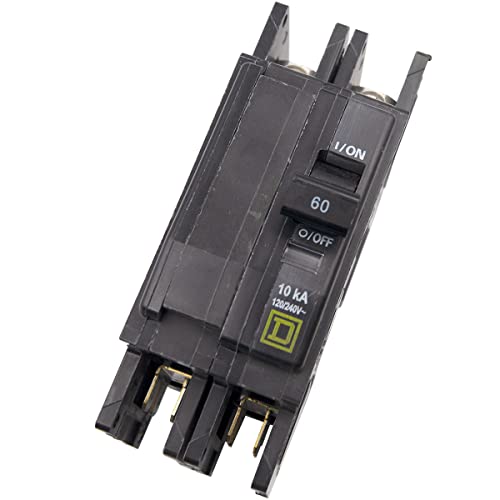
The QOU-type breaker that owners mention saved them thousands versus replacing the whole air handler.
This Supplying Demand unit is a 60-amp, 2-pole, DIN-rail-mount breaker designed as a direct replacement for many Tappan, Ruud, and Rheem air handlers. The key spec is 60 Amps at 230 Volts, putting it in the heavy-duty territory that central air handlers demand. It uses both lug and 1/4-inch quick-connect electrical connections, giving you flexibility whether you are wiring it in a disconnect box or a DIN-rail enclosure. The QOU type designation means it is a compact, bolt-on-style breaker with a proven track record in HVAC equipment.
Customers note that this breaker fixed their AC unit and saved thousands compared to replacement quotes they had received. One reviewer called out a broken clip on one unit but noted the other installed easily and the product worked perfectly — so it is worth inspecting upon arrival. The breaker handles the heavy inrush current of a compressor motor without tripping. The item dimensions and physical form are designed to slot into the existing mounting grid on the DIN rail inside your air handler’s control box.
Compared to the Supplying Demand 42-107430-03 below, the QOU260 has the same 60-amp and 230-volt rating, but this QOU variant uses the 1/4-inch quick-connect terminal in addition to the lug connection, which some technicians find faster to install. The price is higher — this is the premium-tier pick — but the quick-connect feature and the more sturdy QOU physical design make it a top choice for pros who want a part that matches the factory fit.
Factory-Level Fit
- 60-amp rating matches most central air handlers
- Lug and 1/4-inch quick-connect terminals for flexible wiring
- Reviewers point out it saved thousands vs. replacing the whole unit
Inspect on Arrival
- One review noted a broken clip, so check before installing
- Higher price than the standard Supplying Demand model
Ideal for Tappan and Rheem owners: The QOU260 is a drop-in match for many air handler models listed in the fitment guide.
Overkill for small units: A 60-amp breaker on a 20-amp circuit is unsafe — verify your AC nameplate before purchasing.
3. Supplying Demand 42-107430-03 HVAC Air Handler Circuit Breaker
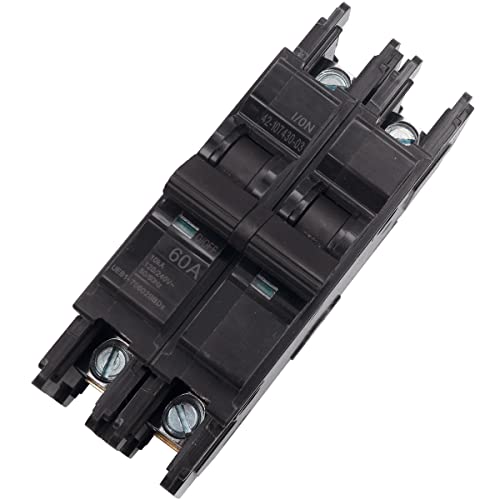
The model specific replacement that costs half the OEM price and ships overnight.
For those who need a 60 amp, 230 volt, 2-pole breaker that fits RBHL and RBHN series air handlers, this is the budget-friendly mid-range pick. It uses a lug-to-lug connection type and mounts on a standard DIN rail. The Supplying Demand packaging makes it clear this is a third-party replacement part, not an official OEM branded unit, but the construction is solid and the reviews back it up. One buyer described it as a well-built, USA-made product that solved their problem for half the cost of the original part, with overnight delivery getting them back up and running fast.
The data sheet specifies this breaker is model-specific and not universal — that is the critical warning. You must verify by checking the fitment notes on the product page before you order, because it is not designed to fit every air handler on the market. It works with the RBHL and RBHN series, but if your unit is from a different line, it may not align with the mounting grid or electrical connections. The 30-day return policy offers some safety net, and the 90-day limited manufacturer’s warranty covers you for early defects, but this is not a general-purpose breaker.
In terms of value, this is the mid-range option — less expensive than the QOU260 above while delivering the same 60-amp and 230-volt rating. The difference is that the QOU260 adds the 1/4-inch quick-connect terminal, which this model lacks. If you only need lug connections and your air handler is one of the compatible models, this is a very compelling value pick that matches the same current capacity at a lower price point.
Cost-Effective Fix
- Same 60-amp capacity as the QOU260 at a lower cost
- Shoppers say it is well-built and USA-made
- Often delivers overnight for quick repairs
Not Universal
- Only compatible with specific RBHL and RBHN series air handlers
- One review noted the breaker failed after being turned off
Best for RBHL/RBHN air handlers: If your model is on the compatibility list, this is the most affordable genuine replacement.
Skip it for universal use: Not designed as a general-purpose breaker, so double-check the fitment guide or choose the QOU260 above for broader compatibility.
4. CHTAIXI DZ47N-63 AC Miniature Circuit Breaker

The DIN-rail miniature breaker that is equally at home in a solar system or an RV disconnect box.
This CHTAIXI DZ47N-63 is a 50-amp, 2-pole miniature circuit breaker rated for 120V/240V systems with a thermal magnetic trip curve C, meaning it will trip at 5 to 10 times the rated current on a short circuit. The compact dimensions of 2.91 inches deep, 1.42 inches wide, and 3.26 inches high, plus a weight of only 6.31 ounces, make it easy to fit into tight enclosures. It mounts on a 35mm DIN rail and uses screw clamp wire connections — a standard setup for subpanels and AC disconnect boxes.
The silver alloy contacts and flame-retardant shell give it decent build quality for its price, and the color indicator on the handle makes it easy to see at a glance if the breaker is on or tripped. Buyers report that it is hard to find this specific size and that it works perfectly for its intended application. The application notes list solar AC systems, RV circuits, and home circuits as valid use cases, so this is a versatile option for a 50-amp 240V circuit that does not need the full 60-amp capacity of the Supplying Demand breakers above.
This is a budget-tier Chinese-manufactured MCB, not a UL-listed or HACR-rated breaker. The lack of UL listing may make it ineligible for code compliance in some jurisdictions. But for a workshop AC unit, a window-unit subpanel, or a solar disconnect, the low entry cost and solid 50-amp rating make it a functional choice that gets the job done.
Light and Compact
- Only 6.31 ounces and 1.42 inches wide for tight spaces
- Curve C thermal magnetic trip handles startup surge
- Works for 50A AC, solar, and RV circuits
Not UL-Listed
- No UL or HACR certification may limit code acceptance
- 50-amp rating may not be enough for larger central units
A solid budget pick for a 50A circuit: If your AC needs a DIN-rail 50-amp breaker and local code does not require UL listing, this is a functional and affordable option.
Not for code-sensitive installs: Inspectors may reject a non-UL breaker on a permanent HVAC circuit — use the Supplying Demand options above for that.
Understanding the Specs
Current Rating (Amps)
This is the maximum continuous current the breaker is designed to carry without opening the circuit. A 20-amp breaker like the Square D HOM220GFIC is sized for smaller loads such as a mini-split, while the 60-amp breakers from Supplying Demand handle central air handlers and condensers. Never install a breaker with a higher amp rating than what the AC nameplate says — the wires and internal components are not built for that extra current and can overheat dangerously.
Poles and Voltage
A 2-pole (double-pole) breaker connects to both 120V hot legs in your panel to deliver 240V — the standard voltage for most central air conditioners. The voltage rating on the breaker must match or exceed the system voltage; a 120V-only breaker on a 240V circuit will arc and fail. Always use a 2-pole breaker for any AC that requires 208V, 230V, or 240V.
GFCI vs Standard Trip
A ground-fault circuit interrupter (GFCI) breaker adds a sensor that detects tiny current leaks to ground (6 milliamps or more) and shuts the circuit instantly — a critical safety measure if the disconnect is located near a water source or if local code requires it. A standard thermal magnetic breaker only protects against overloads and short circuits, so it will not protect you from a ground leak. The Square D HOM220GFIC is the only GFCI pick in this list.
DIN Rail vs Plug-In Mount
A DIN-rail mount breaker clips onto a standardized 35mm metal rail inside a subpanel, disconnect box, or air handler enclosure. A plug-in mount breaker snaps directly onto the bus bars inside a main load center, like the Square D Homeline panel common in residential homes. The two types are not physically interchangeable — you must match the mounting style of the breaker you are replacing.
FAQ
Can I use a standard home breaker for my air conditioner?
Will a 20-amp breaker work on a 60-amp air handler?
What is the difference between a 1-pole and a 2-pole breaker for AC?
Do I need a GFCI breaker for my air conditioner?
How do I know if my breaker mounts on a DIN rail or plugs in?
Can I use a 60-amp breaker if my AC nameplate says 50 amps?
What does HACR-rated mean on a circuit breaker?
Will a non-UL breaker pass an electrical inspection?
Final Thoughts: The Verdict
Across the board, the air conditioner circuit breaker winner is the Square D HOM220GFIC because it is the only pick that adds GFCI protection while fitting standard home panels and carrying UL and HACR ratings. If you need a 60-amp breaker for a central air handler, grab the Supplying Demand 425097 QOU260 for its quick-connect terminals and proven fit. And for a budget-friendly option on a 50-amp circuit, the CHTAIXI DZ47N-63 gets the job done at a very low entry cost.
How We Picked
We do not accept paid placement. Every pick is matched to a real buyer and a real use-case; we do not hands-on test units.
Sources & Methodology
Specifications: manufacturer listings and product documentation. Review insights: verified customer reviews, as of July 2026. Pricing: not shown on this page (it changes often); check the current price via the retailer link.
As an Amazon Associate, Gadgets Feed earns from qualifying purchases. This does not affect which products we feature.