
Our readers keep the lights on and my morning glass full of iced black tea. As an Amazon Associate, I earn from qualifying purchases.
Specs are compiled from manufacturer listings and verified buyer reviews and can change over time — please confirm the key details on the product page before buying.
Picking your first interchangeable lens camera on a tight budget feels like a gamble — a bad body with a slow kit lens can make learning photography frustrating rather than fun. The real trick is knowing which older-generation models still deliver sharp, usable images and which ones hide deal-breaking flaws behind a low price tag.
I’m Min — the founder and writer behind Gadgets Feed. This guide is built by comparing the manufacturers’ published specifications and the patterns across verified customer reviews, so you get each pick’s real strengths and trade-offs instead of marketing spin.
Shooting portraits in the backyard or capturing your first landscape starts with finding beginner cameras cheap enough to learn on without sacrificing image quality — it is the single most important decision you will make as a new photographer.
Quick Picks
- OM SYSTEM Olympus E-M10 Mark IV — Best Value
- Sony Alpha ZV-E10 — Vlogger Pick
- Canon EOS RP + RF24-105mm F4-7.1 — Full-Frame Entry
- Nikon D3200 (Renewed) + 18-55mm — Budget Champion
- Sony Alpha a6000 + 16-50mm Power Zoom — Burst Master
- Canon EOS Rebel T7 Bundle — Full Accessory Kit
How To Choose The Best Beginner Cameras Cheap
When you are just starting out, the camera body and its kit lens are your only tools, so picking the wrong pair means fighting bad autofocus or a tiny sensor from day one. Below are the three specs that separate a good learning platform from a paperweight.
Sensor Size vs Megapixels
Bigger is better here. An APS-C sensor (the standard size in most cheap DSLRs and mirrorless bodies, roughly the size of a postage stamp) captures way more light than the tiny 1/2.3-inch sensors in budget point-and-shoots, so your indoor shots stay cleaner without needing a flash. Megapixels above 20MP are plenty for social media and 8×10 prints — do not chase a high number.
Autofocus System Depth
Cheaper cameras often use few autofocus points (look for at least 9), but the real beginner win is having phase-detection points on the sensor itself — this is what makes a camera snap onto a moving kid or pet instead of hunting back and forth. Contrast-detection-only systems, typical in older entry-level models, feel sluggish because they have to look for edges.
Lens Ecosystem and Kit Lens Quality
You will outgrow the 18-55mm kit lens quickly, so pick a brand (Canon, Nikon, Sony, or OM SYSTEM) with tons of affordable used lenses on the market. A cheap body with a great 50mm f/1.8 lens (one that lets in a lot of light for a blurred background) always beats an expensive body stuck with a bad kit zoom.
Quick Comparison
| Model | Best For | Megapixels | Autofocus Points | Max ISO | Amazon |
|---|---|---|---|---|---|
| OM SYSTEM E-M10 Mark IV | Compact creative mirrorless | 20 MP | 121 | — | Amazon |
| Sony ZV-E10 | Vlogging and video | 24.2 MP | 425 | — | Amazon |
| Canon EOS RP | Full-frame starter | — | — | — | Amazon |
| Nikon D3200 (Renewed) | Budget DSLR bargain | 24.2 MP | 11 | — | Amazon |
| Sony Alpha a6000 | Action and burst shooting | 24.3 MP | 25 | 25600 | Amazon |
| Canon EOS Rebel T7 Bundle | Full-kit beginner DSLR | 24.1 MP | 9 | — | Amazon |
In‑Depth Reviews
1. OM SYSTEM Olympus E-M10 Mark IV

The near-pocketable mirrorless that packs pro-grade stabilization and creative fun.
This is the camera you take everywhere because it actually fits in a jacket pocket with its 14-42mm EZ pancake lens. Unlike the bulkier Sony a6000, the E-M10 Mark IV gives you in-body 5-axis image stabilization capable of 4.5 shutter speed steps of compensation — meaning you can shoot sharp handheld shots in dim light without a tripod. Buyers report the autofocus is fast and the 1-second handheld stabilization is a real world-saver for new shooters.
The 20 MP Live MOS sensor delivers excellent image quality that owners mention looks noticeably better than a cell phone, especially when you view photos on a laptop. It also includes 16 Art Filters (31 types) like Instant Film for a nostalgic look right out of camera, so you skip the edit phase entirely. The flip-down monitor automatically triggers a dedicated selfie mode, making it easy to frame yourself for vlogs or group shots.
The catch is that it uses a Micro Four Thirds sensor, which is smaller than the APS-C chips inside the Sony and Nikon picks here — so in very low light, you may see more grain. Also, the bundled kit lens is decent for casual walk-around use, but several owners upgrade to the OM System 12-45mm f/4 PRO lens for noticeably sharper results.
Standout beginner feature: The in-body 5-axis stabilization makes handheld low-light shots far more forgiving than any unstabilized DSLR kit, so you waste fewer frames to blur while you learn composition.
Reach for this if: You want the smallest, lightest interchangeable-lens camera on this list and plan to carry it daily rather than leave it on a shelf.
Look elsewhere if: You need maximum low-light performance or prefer the optical viewfinder of a traditional DSLR — the E-M10 uses an electronic viewfinder and a smaller sensor.
2. Sony Alpha ZV-E10
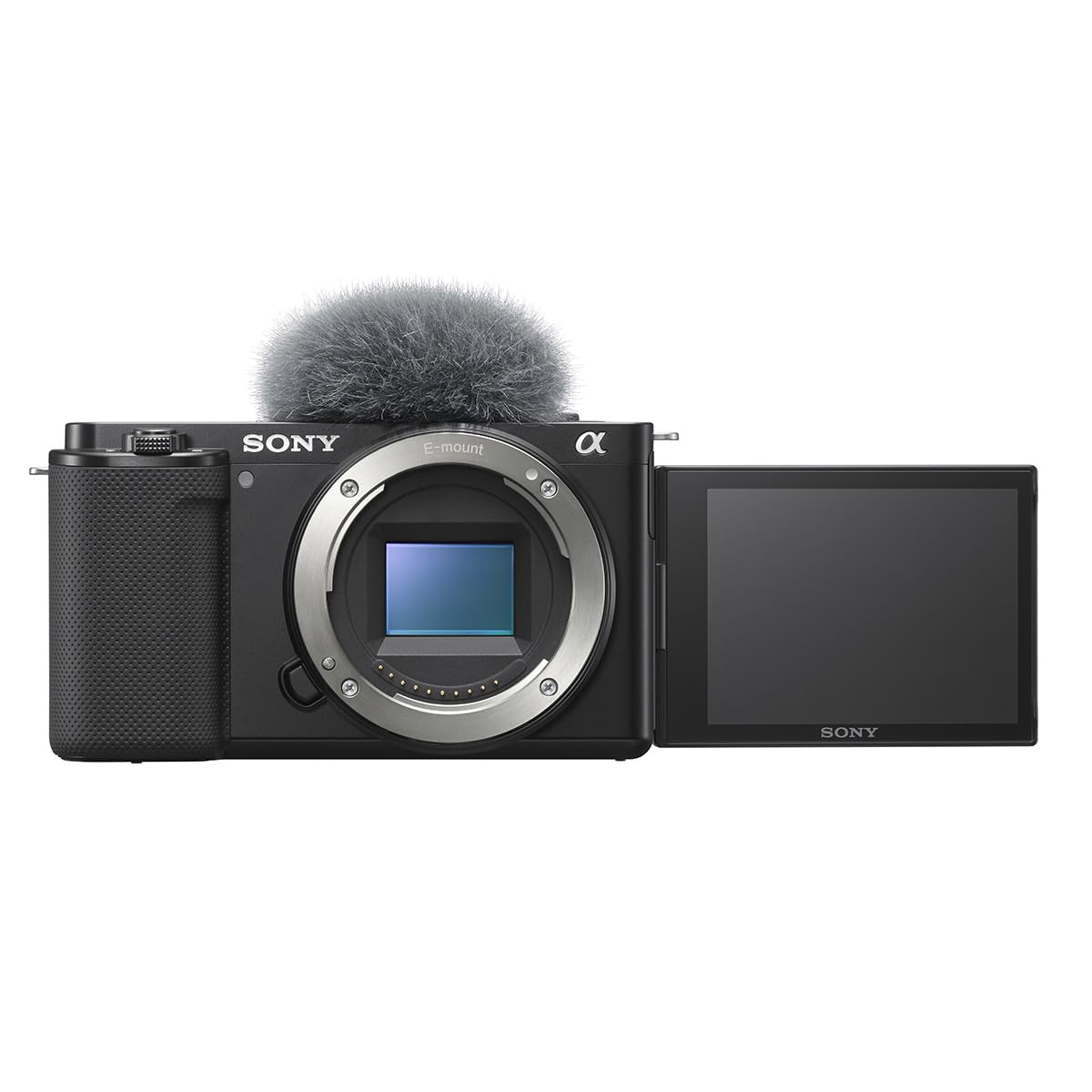
A purpose-built vlogging body with the largest autofocus count in this lineup.
If your primary goal is video, the ZV-E10 beats the Canon EOS RP and the Nikon D3200 on autofocus alone thanks to 425 phase-detection points — that is a 47.2x gap compared to the Canon T7’s 9 points. The 24.2MP APS-C Exmor CMOS sensor oversamples 4K from a 6K readout, giving you crisp video without the softness you often get on cheaper cameras. Two dedicated features make it beginner-friendly: the Background Defocus button instantly blurs the background behind you, and the Product Showcase Setting shifts focus from your face to an object you hold up.
Customers note the image quality for the price is excellent, and the lightweight body with simple controls makes it an easy daily carry. For podcasting, one owner reported preferring it over a Sony A7S because it looks just as good without overheating in long recording sessions. It also streams live over a single USB cable with no extra hardware, which is a huge convenience for live Q&A sessions.
However, buyers also report that the battery life is poor — roughly 25 minutes when shooting 4K — and that the camera overheats easily in warm environments. The rolling shutter is severe, and there is no in-body stabilization, so your handheld video will require a gimbal or a high level of steadiness. Unlike the a6000 below, this camera lacks a built-in viewfinder, which can be annoying in bright sunlight.
Why video beginners love it
- 425 autofocus points make face and eye tracking nearly perfect for b-roll
- Background Defocus button lets you get a blurred-background look instantly
- USB streaming works with no extra capture card
The trade-offs to know
- Poor battery life (~25 minutes in 4K) demands spare batteries
- No viewfinder makes outdoor framing harder
- Overheating is a real risk in summer shoots
Pick this for: vloggers and streamers who need fast autofocus and a clean 4K image more than they need long battery runtime.
skip it if: You are a stills-first photographer who wants a viewfinder and long battery life — the a6000 is a better fit.
3. Canon EOS RP + RF24-105mm F4-7.1

The cheapest way to get a full-frame sensor with a sharp kit zoom and webcam-ready features.
The EOS RP is your entry ticket to a full-frame sensor without paying premium prices — and that bigger sensor outshoots every APS-C camera on this list in low light and depth of field. The RF24-105mm F4-7.1 IS STM lens packs optical image stabilization good for up to 5 stops of shake correction, which means you can hand-hold at slower shutter speeds than the unstabilized Sony a6000. The lens also focuses as close as 0.66 feet in autofocus mode, letting you shoot semi-macro shots of flowers or food.
Reviewers consistently call it an excellent upgrade path from older Canon DSLRs like the T3i or the Rebel T7, noting that the electronic viewfinder is amazing and the menu layout is simple enough for a true beginner. One buyer specifically mentioned the “nice setting that automatically adjusts certain settings for best picture quality” as a fantastic learning crutch. The camera can also be turned into a high-quality webcam via Canon’s free EOS Utility Webcam Beta Software or clean HDMI output, adding remote work value.
The trade-off is that while the body is compact and light for a full-frame camera, the RF lens system currently has fewer budget-friendly used options compared to the Canon EF-mount system. A few owners note that the battery life feels fine when you buy a third-party 3-pack, but the stock battery alone will not last a full day of heavy shooting. For video, the 4K capture has a crop factor, so your wide-angle lens becomes a standard zoom.
The real selling point: A full-frame mirrorless that takes professional-looking pictures with an auto-adjust setting that beginners rely on while they learn — something no camera in this price bracket typically offers.
Best suited for: the newer photographer who is certain they will grow into advanced shooting and wants a sensor that will not feel limiting after a year.
Not ideal for: budget-strict beginners who cannot also afford extra RF lenses — the Nikon D3200 or Canon T7 bundle have way cheaper glass available used.
4. Nikon D3200 (Renewed) + 18-55mm
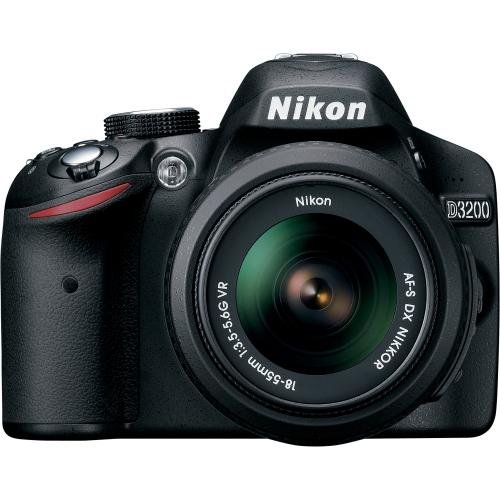
The refurbished bargain that shoots like a modern camera but costs like a used one.
At this price point, the D3200 gives you a 24.2 MP DX-format CMOS sensor and EXPEED III image processing that still holds up against newer entry-level cameras. Reviewers point out the autofocus is faster and the metering is more reliable than an older Nikon D90, and the 18-55mm kit lens is sharp and decent in low light. One owner says the battery lasts roughly 500 shots (3-4 hours) on a full charge — that is more than enough for a day of learning without carrying spares.
The D3200 shoots Full HD 1080p video at 30 frames per second with one-touch recording, so you can capture quick clips without digging through menus. It also comes with a 90-day warranty as a Certified Refurbished product, which takes the risk out of buying used. Several reviewers mention the camera arrived feeling brand new with no visible damage, including the body, lens, dust covers, and a charger.
On the downside, the autofocus system uses only 11 contrast-detection points, which is significantly slower than the 121 points on the OM SYSTEM E-M10 or the 425 on the Sony ZV-E10. The camera also lacks WiFi connectivity — a feature mentioned as an expected miss by one buyer. The refurbished unit may show minor cosmetic wear like a dusty grip or partially worn button icons, but as shoppers say, none of that affects performance.
Why it is the value king
- 24.2 MP sensor still delivers excellent image quality even in poor lighting
- Battery that lasts ~500 shots means you shoot all day on one charge
- Lightweight body and compatible with older Nikkor lenses
The corners cut for the price
- 11 autofocus points feel slow compared to modern mirrorless cameras
- No WiFi — you need a card reader to transfer photos
- Refurbished unit may have minor cosmetic signs of use
Solid choice when: every dollar counts and you want a capable DSLR that leaves room in your budget for a 50mm f/1.8 lens or a tripod.
Think twice if: you need fast autofocus for moving subjects or wireless transfer — the easier daily workflow of the E-M10 or a6000 matters more.
5. Sony Alpha a6000 + 16-50mm Power Zoom

A compact speed demon that captures 11 frames per second with 179 phase-detection points.
If you shoot sports, pets, or kids who never stop moving, the a6000’s burst rate of 11 frames per second with continuous autofocus tracking is class-leading on this list — the closest competitor (the Canon T7) runs at about 3 frames per second. It packs a 24.3MP APS-C sensor (giving you 22% more resolution than the 20MP E-M10) and a hybrid autofocus system with 179 focal-plane phase-detection points plus 25 contrast-detect points. The ISO range (the camera’s sensitivity to light) stretches from 100 to 25600 (expandable to 51200), which helps when the light drops.
Reviewers call it an outstanding image-quality camera with a solid build and an improved menu compared to older Sony NEX bodies. The kit lens is a 16-50mm power zoom that keeps the body compact enough for daily carry or backpacking trips — one owner specifically praised it as an excellent backpacking camera for capturing great photos with full manual control. The tilting 3-inch LCD with 921,000 dots makes overhead or low-angle live-view composition easy.
However, the battery life is poor — rated at up to 360 shots per charge — and several owners mention it drains in about one day of moderate use. The NFC connectivity (a short-range wireless feature to link to a phone) is a common hardware failure point, and the camera lacks a built-in wall charger (only a Micro USB cable is included). Unlike the newer ZV-E10, the a6000 lacks 4K video, and its 15-20 second buffer clear time can feel slow if you shoot long bursts.
The standout spec: an 11 fps burst with tracking that most budget cameras do not offer, making it the best pick on this list for capturing action without the premium price.
Great for: the beginner who wants to shoot fast-moving subjects and appreciates a mirrorless size with SLR-level burst speed.
Not for: vloggers — the lack of 4K and poor battery make the ZV-E10 a better choice if video is primary.
6. Canon EOS Rebel T7 Bundle
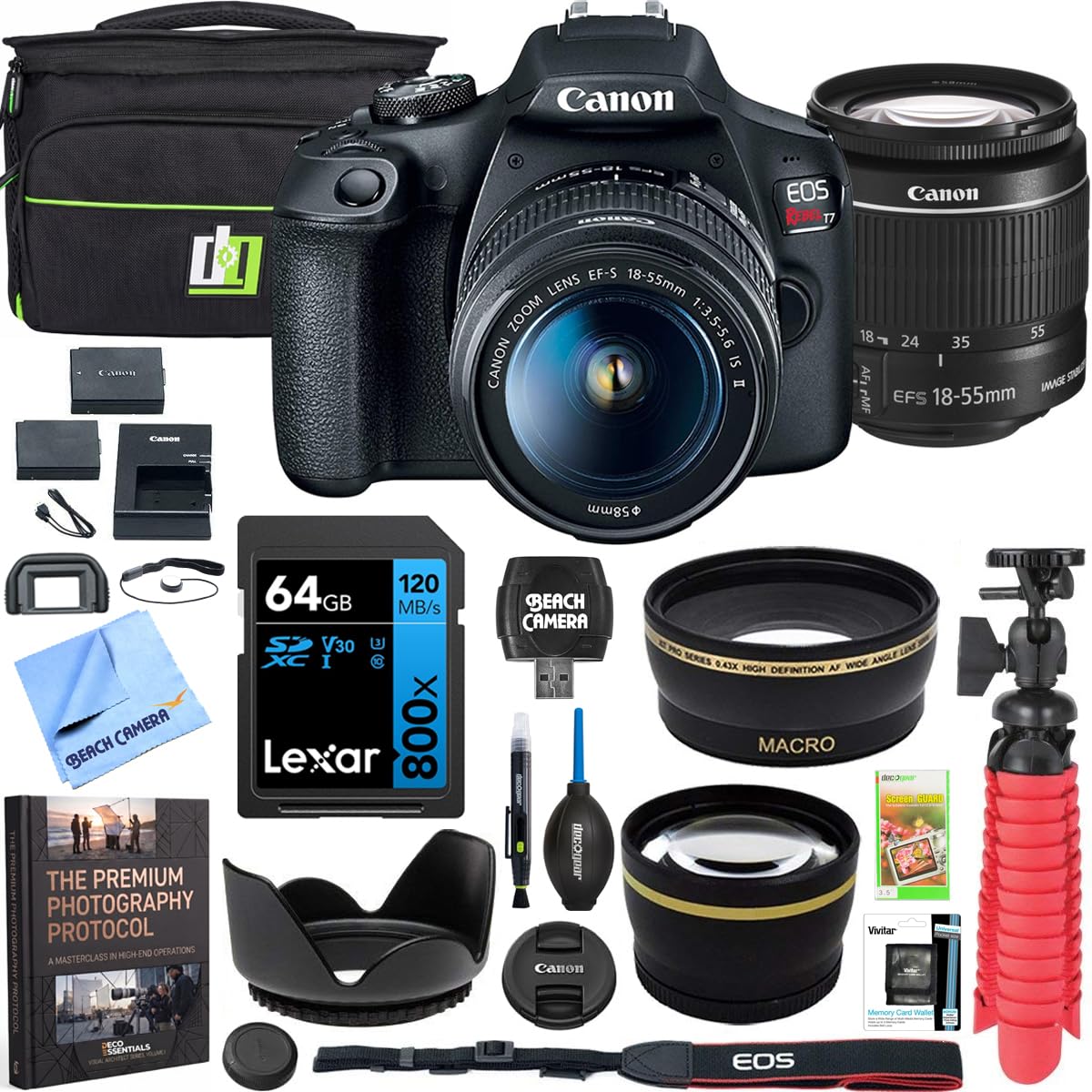
The everything-in-the-box kit that gets you shooting immediately with zero extra purchases.
This bundle gives you the Canon EOS Rebel T7 body with its 18-55mm f/3.5-5.6 IS II lens, plus a Deco Gear camera bag, a 64GB Lexar SDXC memory card, a tabletop tripod, cleaning tools, a spare battery, and even a digital photography ebook. It is the most complete start-to-shoot package on this list, meaning you do not need to spend another penny for months. The 24.1MP CMOS sensor produces solid quality for portraits and everyday shots, and the built-in WiFi lets you share photos straight to your smartphone without a cable.
Reviewers generally like the camera — one called it “the best investment” they had made, and another said it takes awesome photos that are fun to shoot. The 9-point phase-detection autofocus is basic but reliable for static subjects, and the 14-bit depth (the amount of color information the camera records) gives you decent editing latitude in RAW (the uncompressed file format that lets you adjust exposure after the shot). The camera handles 16:9, 3:2, and 4:3 aspect ratios, so you can switch between widescreen landscapes and square social-media crops.
Here is the honest catch: one reviewer reports that the battery dies after roughly 8 photos on a full charge, which is an alarmingly low number. The included spare battery helps, but you should plan to charge both batteries before any outing. Also, some buyers report that the 50-inch tripod they received was actually a 50-inch model rather than the advertised 60-inch, and the second SD card may be an off-brand unit. The 18-55mm kit lens is optically fine for the price but will leave you wanting more reach or a wider aperture as you improve.
What the bundle gets right
- Comes with bag, SD card, tripod, and cleaning kit — ready from the start
- WiFi built in for easy phone transfer
- 14-bit depth gives good editing flexibility
The bundle’s weak spots
- Stock battery reportedly dies fast — the spare is essential
- 9 autofocus points are the lowest count in this entire lineup
- Bundled accessories are entry-level quality, not pro gear
Buy this bundle if: you want one box with everything included and hate worrying about missing a memory card or bag on day one.
pass on it if: you are comfortable buying accessories separately — the bare Nikon D3200 gives you better image quality for a similar effective price.
Understanding the Specs
Autofocus Points: What They Actually Do
A camera’s autofocus (AF) points are small sensors on the imaging chip (or in the mirror box on DSLRs) that detect contrast or phase differences to lock focus. More points — like the 425 on the Sony ZV-E10 — means the camera can track subjects across the entire frame, including edges, instead of just the center. For a beginner shooting moving kids or pets, at least 20 points give you a much higher keeper rate than the 9 or 11 points found on older budget DSLRs like the Canon T7 and Nikon D3200.
Megapixels vs Image Quality
Megapixels (MP) measure the number of millions of pixels in the image. A 24MP camera captures enough detail for crisp 20×30-inch prints and heavy cropping, but more than 20MP is overkill for social media and 8×10 prints. What matters more for your pictures is the sensor size: an APS-C or full-frame sensor (found on all cameras listed here) captures significantly more light than the tiny 1/2.3-inch sensors in cheap compact cameras, giving you richer colors, wider dynamic range, and cleaner low-light shots regardless of the MP count.
FAQ
Should a beginner buy a DSLR or a mirrorless camera on a tight budget?
Is a used or refurbished camera safe for a first-time buyer?
Which is better for learning photography — the Canon T7 or the Nikon D3200?
Will the Sony a6000’s 24.3 MP sensor produce noticeably sharper photos than the OM SYSTEM’s 20 MP?
How many autofocus points do I really need as a beginner?
Do I need a separate microphone for video with these cameras?
Which kit lens offers the best image quality for a beginner?
Why does the Canon T7 bundle include a spare battery if the stock battery is bad?
Final Thoughts: The Verdict
For most buyers, the beginner cameras cheap enough to learn on without outgrowing too fast is the OM SYSTEM Olympus E-M10 Mark IV because its in-body 5-axis stabilization, 121 autofocus points, and compact body make it the easiest camera to carry and shoot with daily. If you want the burst speed for action shots, grab the Sony Alpha a6000. And for the tightest budget where every dollar matters, the refurbished Nikon D3200 delivers a 24.2 MP sensor at a price that leaves room for your first prime lens.
How We Picked
We do not accept paid placement. Every pick is matched to a real buyer and a real use-case; we do not hands-on test units.
Sources & Methodology
Specifications: manufacturer listings and product documentation. Review insights: verified customer reviews, as of July 2026. Pricing: not shown on this page (it changes often); check the current price via the retailer link.
As an Amazon Associate, Gadgets Feed earns from qualifying purchases. This does not affect which products we feature.