
Our readers keep the lights on and my morning glass full of iced black tea. As an Amazon Associate, I earn from qualifying purchases.
Specs are compiled from manufacturer listings and verified buyer reviews and can change over time — please confirm the key details on the product page before buying.
You do not need to spend a fortune to get smooth gaming on your TV. The secret is knowing which specs matter — high refresh rates, Variable Refresh Rate, and HDMI 2.1 ports — and skipping the hype. This guide shows you affordable TVs that actually deliver a 120Hz or higher refresh rate, tear-free gameplay with VRR (a feature that syncs your screen’s refresh rate with your game to stop tearing), and HDMI 2.1 (a cable standard that supports 4K at 120Hz), all at prices that won’t break your budget.
I’m Min — the founder and writer behind Gadgets Feed. This guide is built by comparing the manufacturers’ published specifications and the patterns across verified customer reviews, so you get each pick’s real strengths and trade-offs instead of marketing spin.
After sorting through the specs and real owner feedback, these are the best affordable tvs for gaming available right now that actually deliver the smooth, tear-free performance you expect without a premium price tag.
Quick Picks
- iFFALCON 55″ 4K MiniLED Smart TV (55U85) — Best Overall
- TCL Amazon Exclusive 55 Inch Class T7 Series — Big-Screen Bargain
- Hisense 50″ E7 Cinema Series Hi-QLED Mini-LED — Pro-Grade Compact
- Amazon Ember 55″ Mini-LED Series with Fire TV — Smart Integration King
- Sony BRAVIA 3 II 50 Inch 4K HDR LED Smart — PS5 Native
- Hisense 65″ U7 Mini-LED ULED 4K UHD Smart Fire — Highest Refresh Rate
- TCL 55 Inch Class QM7L Series (55QM7L) — OLED-Level Black
How To Choose The Best Affordable TVs For Gaming
Picking the right gaming TV under a grand means focusing on a few key specs that directly affect how your games look and feel. Ignore the marketing fluff and watch for these four things.
Refresh Rate: 120Hz vs 144Hz vs 60Hz
A standard TV refreshes the picture 60 times per second (60Hz). A gaming TV jumps to 120Hz or 144Hz, meaning the screen updates twice as often. This makes fast camera pans in shooters or racing games look much smoother with less blur. Most modern consoles (PS5, Xbox Series X) and gaming PCs can output a 120Hz signal, so a 144Hz panel gives you extra headroom to stay smooth even when frame rates fluctuate. A 60Hz TV will still play these games, but the motion will look noticeably less fluid.
Variable Refresh Rate (VRR) and HDMI 2.1
VRR syncs your TV’s refresh rate to the exact frame rate your console or PC is outputting at that moment. When a game’s frame rate drops from 60 to 45 fps, a non-VRR TV may show a visible tear across the screen. VRR eliminates that tear. HDMI 2.1 is the cable standard that delivers VRR, 4K at 120Hz, and Auto Low Latency Mode (ALLM), which automatically switches the TV into its lowest-lag picture mode when you launch a game. You want HDMI 2.1 ports, not 2.0, if you plan on using a PS5 or Xbox Series X.
Panel Technology: Mini-LED vs QLED vs Standard LED
Standard LED backlights light up the whole screen evenly, which means dark scenes can look washed out or gray. QLED (Quantum Dot) adds a layer of nano-crystals that boost color range and brightness without raising the price too much. Mini-LED goes a step further by using thousands of tiny LEDs behind the screen instead of a few large ones. This allows the TV to dim very small areas of the screen independently (called local dimming zones), producing much deeper blacks and brighter highlights in the same image — great for dark horror games or high-contrast cutscenes.
Sound Quality and Audio Pass-Through
Built-in TV speakers are almost always thin and lack bass. Some gaming TVs come with a decent built-in 2.1 channel system (like the iFFALCON’s 50W setup with a separate woofer), but most still benefit from a soundbar. Look for Dolby Atmos support (a technology that creates a 3D sound bubble) and eARC on an HDMI port, which lets you send lossless audio to an external soundbar or receiver without degrading quality.
Quick Comparison
| Model | Best For | Refresh Rate | Panel Type | HDMI 2.1 Ports | Amazon |
|---|---|---|---|---|---|
| iFFALCON 55″ 55U85 | Best Overall Value | 144Hz (up to 288Hz VRR) | Mini-LED | 4 (2x 4K@144Hz) | Amazon |
| TCL 55″ T7 Series | Big-Screen Budget Pick | 120Hz (up to 240Hz at 1080p) | QLED | 4 (1x eARC) | Amazon |
| Hisense 50″ E7 Cinema | Compact Premium | 144Hz native | Hi-QLED Mini-LED | 4 | Amazon |
| Amazon 55″ Ember Mini-LED | Fire TV Integration | 144Hz (FreeSync Premium Pro) | Mini-LED QLED | 4 | Amazon |
| Sony BRAVIA 3 II 50″ | PS5 Perfection | 120Hz | LED (Direct LED) | 2 (HDMI 2.1) | Amazon |
| Hisense 65″ U7 Mini-LED | High-End Performance | 165Hz native (330Hz VRR) | Mini-LED Pro | 4 | Amazon |
| TCL 55″ QM7L | OLED-Level Contrast | 144Hz (Game Accelerator 288 VRR) | SQD-Mini-LED QLED | 4 | Amazon |
In‑Depth Reviews
1. iFFALCON 55″ 4K MiniLED Smart TV (55U85)
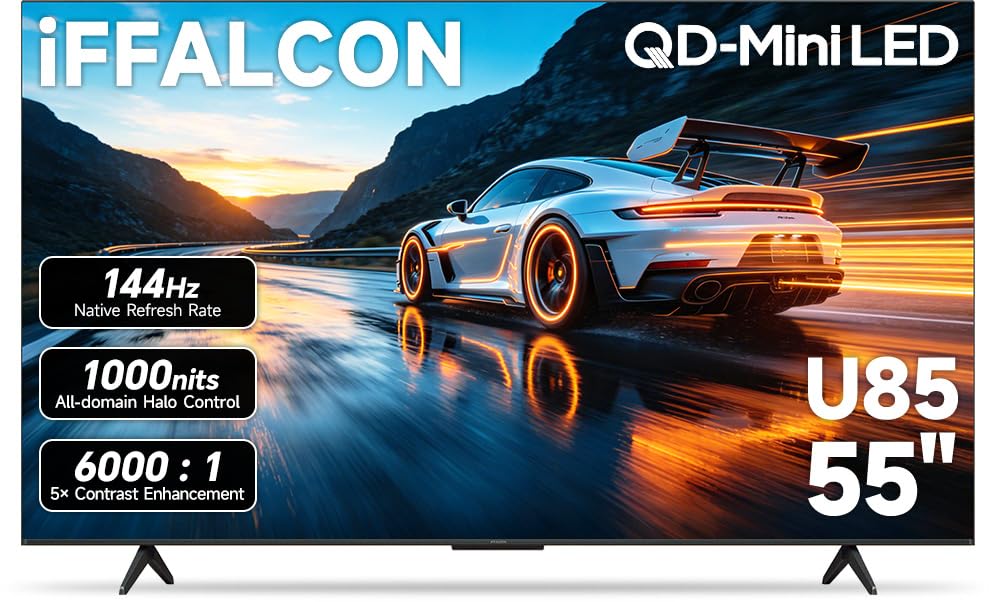
The iFFALCON delivers Mini-LED contrast and a 144Hz panel without the usual premium price tag.
You get smooth motion during fast action because of the native 144Hz refresh rate with Variable Refresh Rate (VRR) that reaches 4K at 48–144Hz and even higher at lower resolutions. That means racing through neon-lit streets in *Cyberpunk* stays silky, and tracking a fast target in an esports shooter stays sharp. The Mini-LED backlight produces a 6,000:1 contrast ratio with up to 1,000 nits of peak brightness, so dark scenes stay deep and bright highlights pop without washing out the mid-tones.
Buyers report that this TV runs at 120 fps with games that allow it and the graphics are phenomenal, and they note that it is a TCL subsidiary that saves compared to a similar TCL model. Four HDMI 2.1 ports let you plug in a PS5, Xbox Series X, gaming PC, and a soundbar all at once without swapping cables — two of those ports run at 4K@144Hz. The built-in 50W 2.1-channel audio with Dolby Atmos and DTS Virtual:X means you might not even need a soundbar for your bedroom or office setup.
Unlike the Hisense E7 which is a 50-inch panel, the iFFALCON gives you a 55-inch canvas for roughly the same price, making it the better fit for a living room or gaming den. It also comes with a built-in hotel mode and IP/IR control, a rare feature at this price that makes it a smart choice for an Airbnb or rented space where you want to lock the settings.
Why it wins for gamers
- Native 144Hz panel with FreeSync Premium Pro for tear-free gaming — up to 288Hz VRR at lower resolutions.
- Four HDMI 2.1 ports — two support full 4K@144Hz for next-gen consoles and high-end PCs.
- Dolby Vision Gaming support with zero setup required on compatible consoles.
The one trade-off to know
- Some buyers mention the TV is slightly thicker than competing ultra-slim models, which may matter if you plan to wall-mount it flush.
Reach for this if: you want a true Mini-LED gaming TV with all the HDMI 2.1 ports and a 144Hz panel but don’t want to cross into premium pricing.
Look elsewhere if: you need a 65-inch or larger screen — the 55-inch size is the only option here.
2. TCL Amazon Exclusive 55 Inch Class T7 Series (55T7)
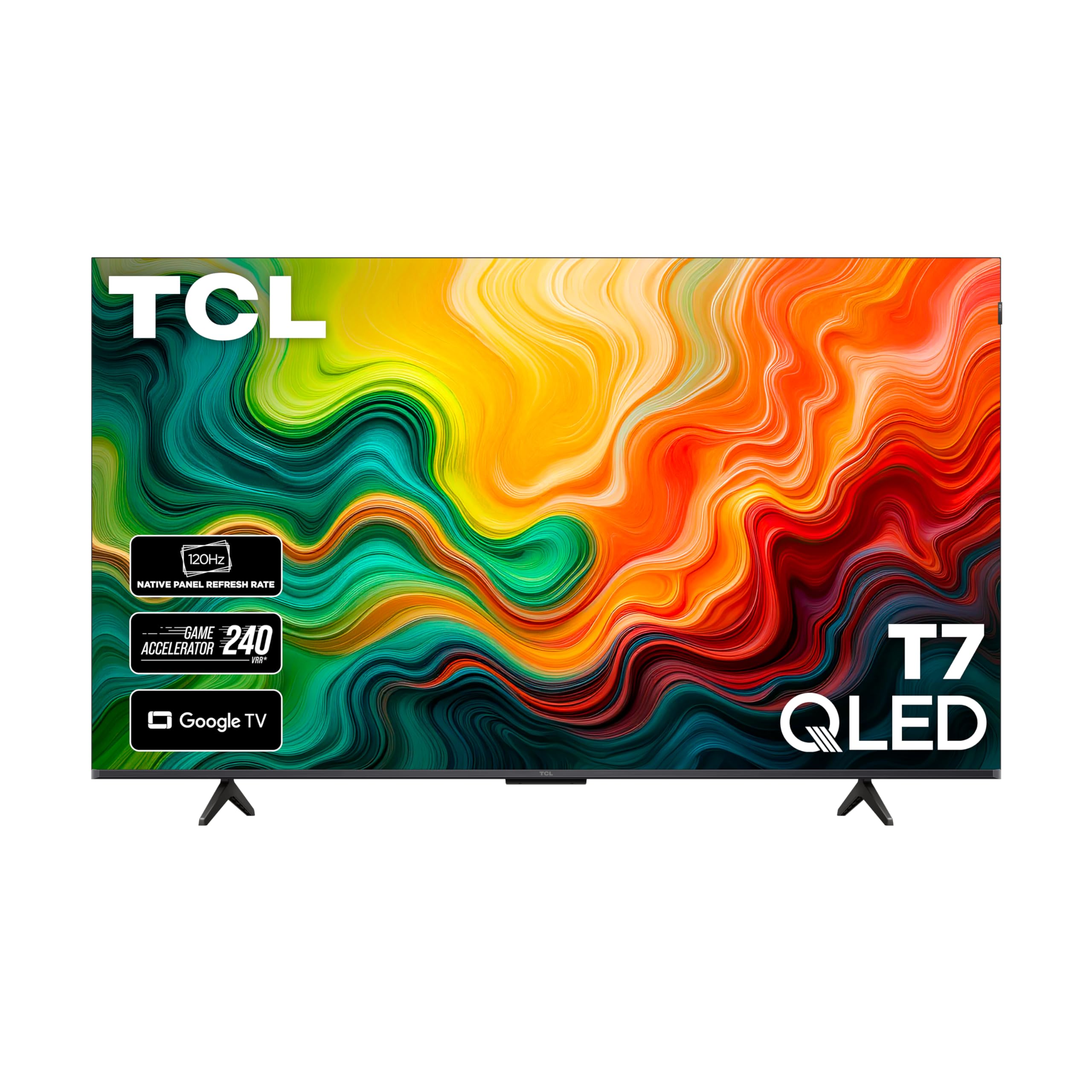
A QLED 120Hz panel at a price that makes 60Hz TVs look overpriced.
You get a 120Hz panel with the ability to push up to 240Hz at a 1080p resolution on a PC, according to one buyer who noted enabling the Game feature avoids lag. The Quantum Dot (QLED) technology covers nearly the entire DCI-P3 color space, so game worlds look richly saturated without that oversaturated cartoon look. It also features MEMC frame insertion, which smooths out fast camera pans in sports and racing titles beyond what the raw refresh rate alone delivers.
The T7 holds a clear value advantage over the iFFALCON if you prefer a bigger screen at the same price tier, since the 55-inch class is the starting size here. However, it uses a Direct LED backlight instead of Mini-LED, so deep blacks won’t be as inky as what you see on the iFFALCON or the Hisense E7. It still supports Dolby Vision, HDR10+, and HLG, so cutscenes and streaming movies look vibrant and detailed.
With four HDMI inputs — one with eARC — and a TCL AIPQ Pro processor that tune color and clarity in real time, this is a straightforward pick for a mixed-use room where both console gaming and streaming movies happen equally. Owners mention the picture is stunning and the sound quality is better than expected for the price.
Why it stands out: The Motion Rate 480 with MEMC frame insertion goes beyond a simple 120Hz refresh rate to keep fast-moving action exceptionally crisp.
Best for: the buyer who wants a 120Hz QLED TV for console gaming and movie nights, and is happy to trade some black-level depth for a significantly lower cost than Mini-LED alternatives.
The catch: Using it as a PC monitor may require disabling power-saving features, as some customers note it failing to wake from sleep without unplugging the HDMI cable.
3. Hisense 50″ E7 Cinema Series Hi-QLED Mini-LED (50E7SF)
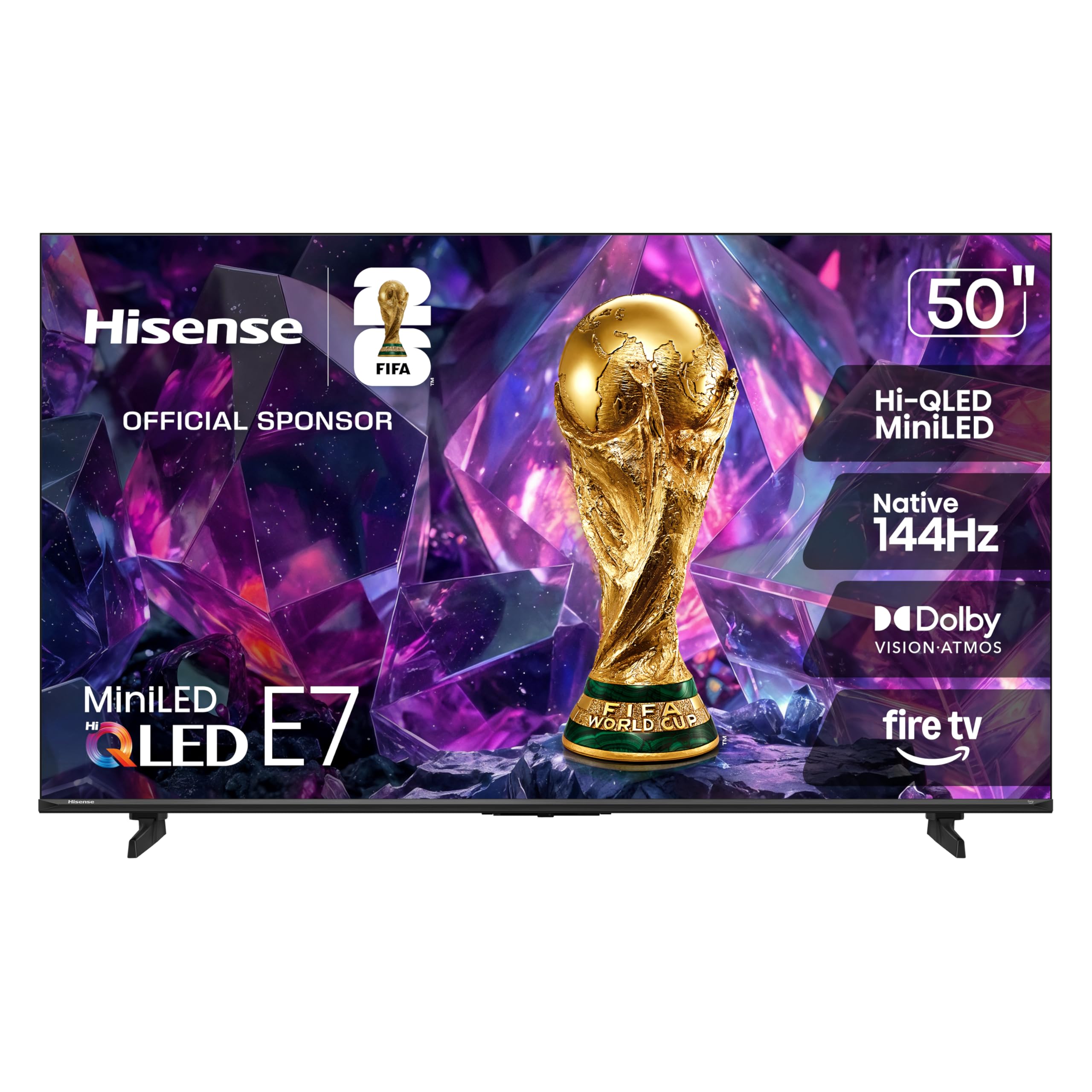
Mini-LED precision and a native 144Hz panel in a smaller, gaming-friendly size.
This Hisense pulls ahead of the TCL T7 in raw gaming performance thanks to its native 144Hz refresh rate — a 20% higher gap compared to the TCL’s 120Hz. That extra refresh headroom means less input lag and smoother motion in titles that can push past 120 fps on PC or future-proofed consoles. The Hi-QLED Mini-LED backlighting system uses thousands of tiny light zones to boost contrast, so nighttime play in a dim room reveals deep blacks and bright highlights without halo effects.
It supports Dolby Vision IQ, which adjusts the picture automatically based on your room’s ambient light, plus Filmmaker Mode and AI Sports Mode for other content. The 50-inch screen size is a solid fit for a bedroom gaming setup or a desk-based PC gaming station where a 55-inch panel feels too large. Reviewers point out the picture quality is phenomenal and the native 144Hz refresh rate makes gaming look amazingly smooth.
One trade-off: multiple shoppers say occasional Wi-Fi connectivity issues with this model, which can interrupt streaming apps. The Fire TV interface is snappy when it works, but the wireless stability is a real weak point to consider if you rely on streaming rather than a hardwired Ethernet connection.
Standout gaming features
- Native 144Hz panel with MEMC motion enhancement for blur-free action.
- Dolby Vision + Dolby Atmos for a full cinema experience without additional hardware.
- AI Picture processor adjusts brightness and color scene-by-scene in real time.
What to watch out for
- Several buyers report persistent Wi-Fi dropouts that require power cycling the TV.
- Only 50 inches available — no larger size option for this model.
Who it’s for: the gamer who wants the highest refresh rate and Mini-LED contrast in a smaller, more affordable package for a dedicated gaming room or desk.
Who it’s not for: anyone planning to stream games wirelessly or rely heavily on Wi-Fi for apps — the wired Ethernet connection is more reliable here.
4. Amazon Ember 55″ Mini-LED Series with Fire TV (newest model)
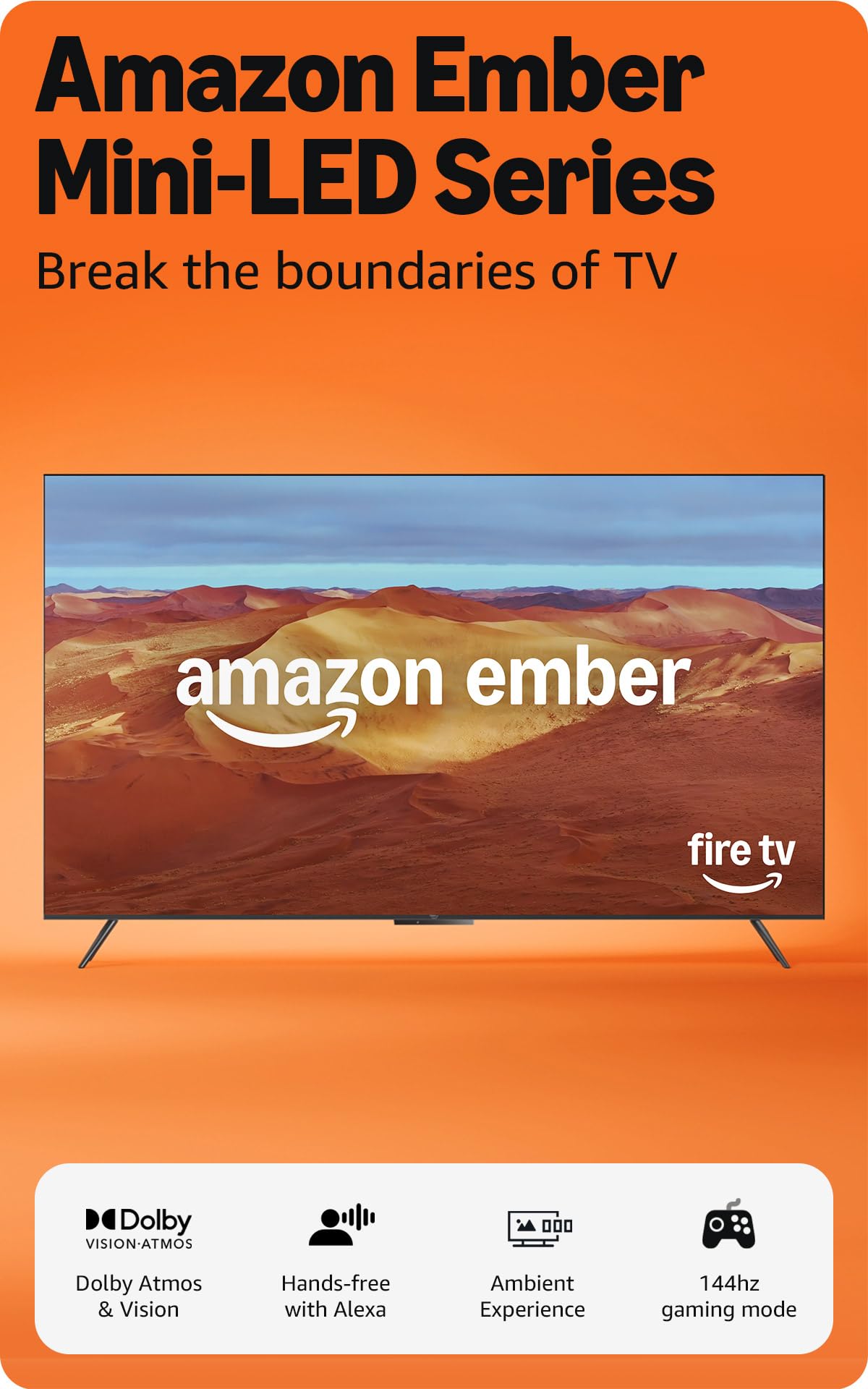
Amazon’s best gaming TV with deep Mini-LED contrast and hands-free Alexa control built right in.
You get a 4K QLED Mini-LED display with 512 local dimming zones and up to 1,400 nits of peak brightness. That density of dimming zones means a dark room in a horror game looks truly black, while bright explosions stay vivid and punchy. The 144Hz panel is certified for AMD FreeSync Premium Pro, so it handles tear-free gaming across both console and PC — smoother than the iFFALCON’s standard FreeSync.
What really sets this apart from the Hisense E7 or the iFFALCON is the software. The 2026 Fire TV update with Alexa+ makes voice searching feel natural — you can ask for a specific game, a show, or even control your smart home devices without fumbling for the remote. The built-in Omnisense technology wakes the display when you walk into the room, showing artwork or your last app, so you can start playing almost instantly. Owners mention the picture comes close to OLED quality at five times the cost.
That said, some owners mention the software can get noticeably slow after updates, and a few have experienced random reboots during use. If you are resistant to the Fire TV interface or prefer a more streamlined smart platform, the Ember’s reliance on Alexa+ may feel restrictive rather than convenient.
The headline feature: 512 individual dimming zones in a gaming TV — that density creates near-OLED black levels with bright highlight punch that most affordable sets cannot match.
Pick this if: you are already invested in the Amazon ecosystem with Alexa, Blink, or Eero and want the tightest voice and smart-home integration possible.
skip it if: software stability is your top priority — occasional slowdowns and reboots are a known pattern in longer-term reviews.
5. Sony BRAVIA 3 II 50 Inch 4K HDR LED Smart Google TV (K-50XR30M2)
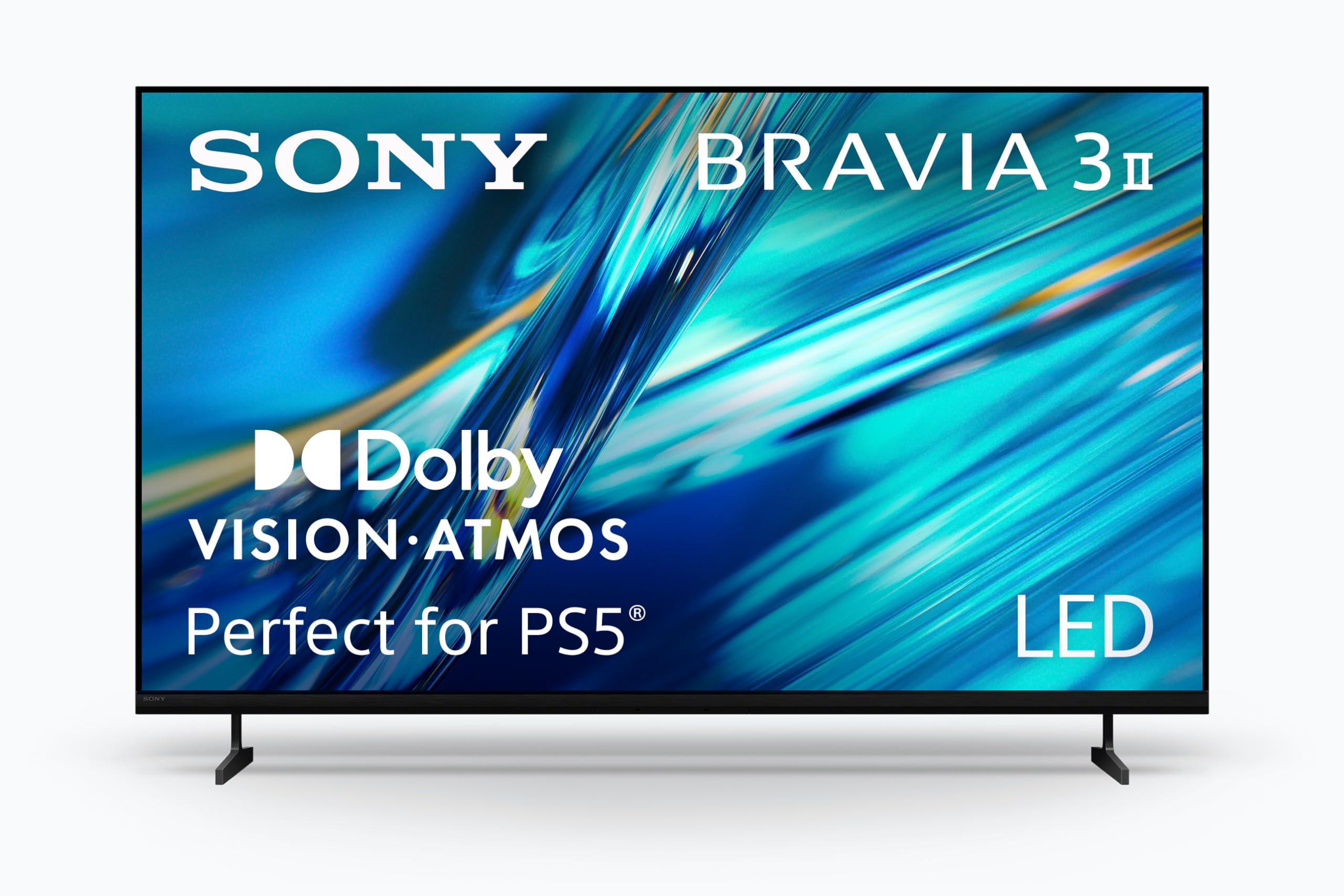
Sony’s XR processor and exclusive PS5 features make this the ultimate companion for PlayStation owners.
You get smooth, tear-free gameplay at 4K and 120Hz with Variable Refresh Rate (VRR) and Auto Low Latency Mode (ALLM) on both PS5 and Xbox Series X, thanks to the HDMI 2.1 ports. But the real strength here is the XR Processor with AI scene recognition — it analyzes every frame and tune color, contrast, and clarity in real time. Playing *Ghost of Tsushima* looks exactly as the developer intended, with rich foliage detail and accurate skin tones that a standard processor would flatten.
Where this TV truly stands apart is the exclusive PlayStation 5 integration. Auto HDR Tone Mapping adjusts the console’s HDR output specifically for this screen, and Auto Genre Picture Mode automatically switches into game mode when you pick up the controller. The Game Menu puts all gaming picture settings and assist tools in one overlay so you are not diving into system menus mid-match. It also includes Sony Pictures Core with 5 movie credits and 12 months of streaming.
Compared to the iFFALCON, the Sony uses a standard Direct LED backlight rather than Mini-LED, so black levels are not as deep. One reviewer noted mild sound quality disappointment and the small remote buttons can be annoying. Another buyer reported returning the unit due to persistent casting and DRM errors that could not be resolved. Those casting issues seem isolated but are worth verifying before purchase if you stream heavily from an Android device.
What makes it a PS5 dream
- Exclusive Auto HDR Tone Mapping and Auto Genre Picture Mode for a smooth PS5 experience.
- XR Triluminos Pro delivers over a billion colors with natural, real-world accuracy.
- Dolby Vision and Dolby Atmos create an rich cinema experience for movies and games.
Limitations to consider
- Standard Direct LED backlight — less contrast than Mini-LED rivals like the iFFALCON.
- A small number of customers note casting and DRM-related software issues that could not be fixed.
Reach for this if: your primary console is a PlayStation 5 and you want the exclusive features plus Sony’s proven image processing for movies and shows.
Consider alternatives if: you game on a PC or Xbox Series X — the exclusive integration is only useful for PS5, and Mini-LED screens give you better contrast for the same money.
6. Hisense 65″ U7 Mini-LED ULED 4K UHD Smart Fire TV (65U7SF)
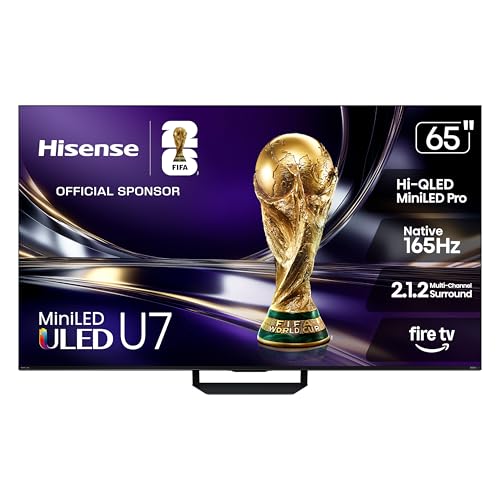
A native 165Hz panel and up to 3000 local dimming zones push this Hisense into premium territory.
You get the highest native refresh rate in this lineup — 165Hz — with VRR that can hit 330Hz, so this TV handles the most demanding PC gaming rigs without stutter or tearing. That is a step up even from the iFFALCON’s 144Hz panel. The Mini-LED Pro backlight with up to 3,000 local dimming zones and up to 3,000 nits of peak brightness is the kind of spec you normally see on flagship TVs costing twice as much. Bright HDR highlights in games like *Cyberpunk 2077* look searingly intense, while dark alley scenes retain deep shadow detail without blooming.
It also features an anti-reflection layer that goes beyond a standard single-layer matte coating. If your gaming setup sits opposite a bright window or overhead lights, this screen stays crisp and glare-free. The 2.1.2 multi-channel surround sound system tuned by Devialet gives you room-filling audio without needing a separate soundbar, which is rare for a TV at this tier. Reviewers point out the picture quality is excellent with rich colors, deep blacks, and high brightness, and the anti-reflection screen is highly effective.
Compared to the TCL QM7L, the Hisense U7 loses the Bang & Olufsen audio branding but gains a higher native refresh rate (165Hz vs 144Hz) and a significantly higher dimming zone count. However, the built-in speakers are not the best — one buyer mentioned they were not great and recommended a separate surround sound system if audio quality is a priority.
The gamer’s edge: The Game Booster 330 with Enhanced Game Bar lets you monitor FPS, VRR, and HDR stats in real time and tweak settings without leaving the game — a feature most TVs at this price lack entirely.
Who should buy: a PC gamer with a high-end graphics card who wants the fastest refresh rate and most detailed mini-LED backlight available without spending over a thousand dollars.
Who should skip: anyone who plans to rely on the TV’s built-in speakers for serious audio — a soundbar or surround system is strongly recommended.
7. TCL 55 Inch Class QM7L Series (55QM7L)
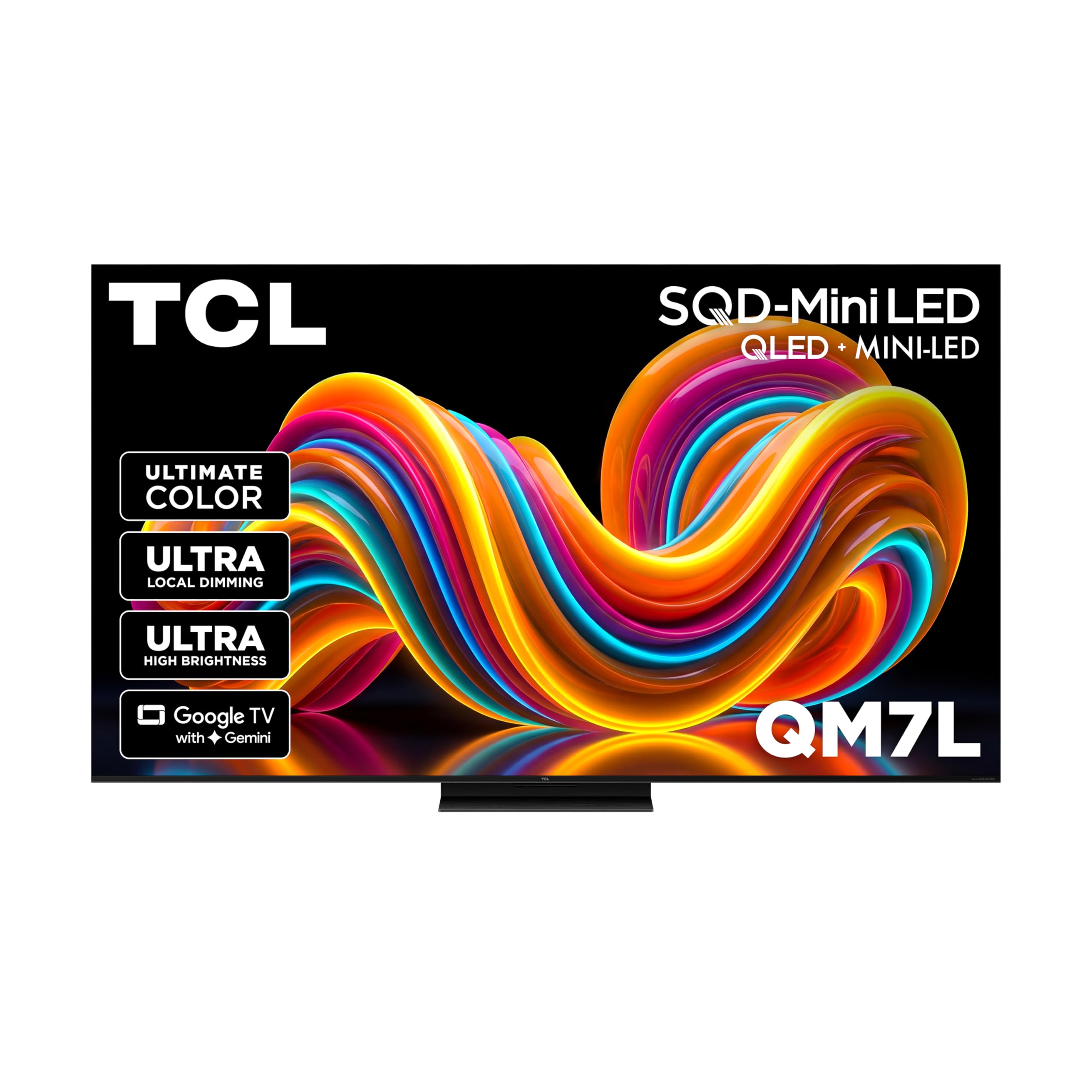
Over 2,100 local dimming zones and Bang & Olufsen audio make this feel like a high-end set with a mid-range price.
You get black levels genuinely close to what an OLED panel delivers, without the risk of burn-in from static HUD elements, thanks to up to 2,100 precisely controlled dimming zones on a 55-inch screen. The SQD-Mini-LED backlight combined with the TCL Halo Control System delivers what one buyer described as OLED-level black levels with aggressive peak brightness for HDR content.
The 144Hz panel with Game Accelerator reaching a 288Hz VRR mode and AMD FreeSync Premium Pro certification keeps gameplay silky smooth. TCL’s Game Pack puts all gaming settings — frame rate, VRR status, HDR mode — into a single Game Bar overlay. The audio by Bang & Olufsen is a legit upgrade over standard TV speakers; one owner reported the built-in sound was great and loud enough to skip a soundbar entirely. In a direct comparison, some owners feel this TV’s picture beats a Sony at a lower price. Compared to the Hisense U7, the QM7L trades a lower native refresh rate (144Hz vs 165Hz) for far better built-in audio and a non-glare screen coating that helps with reflections.
The trade-off is the Google TV operating system, which requires you to log into a Google account before you can use any apps — a minor annoyance but one a few buyers found irritating. The glossy screen with noticeable reflectivity is also something to keep in mind if your room has bright direct light.
Where it excels
- Over 2,100 dimming zones deliver near-OLED black levels with no blooming around bright objects.
- Audio by Bang & Olufsen eliminates the need for a soundbar for most users.
- 144Hz panel with Game Accelerator 288 VRR and FreeSync Premium Pro.
Where it stumbles
- Glossy screen is more reflective than matte-finished rivals like the Hisense U7.
- Google TV forces a mandatory account login before any app can be used.
Reach for this if: you want the closest thing to OLED black levels without paying OLED prices, and you value excellent built-in audio that can replace a soundbar.
Think twice if: your TV sits opposite a bright window — the glossy screen will be a distraction — or you prefer a purely offline experience without a Google account.
Understanding the Specs
Variable Refresh Rate (VRR)
VRR is a technology that lets your TV’s refresh rate match the exact frame rate your game is outputting in real time. When a game jumps from 60 frames per second down to 45 during an intense scene, a TV without VRR may show a visible horizontal tear across the screen. With VRR enabled, that tear disappears completely. The higher the VRR ceiling (like 288Hz on the iFFALCON or 330Hz on the Hisense U7), the wider the range of frame rates your TV can handle smoothly.
Local Dimming Zones
This refers to how many tiny, independent sections of the backlight your TV can turn on or off. A TV with no local dimming lights the whole screen evenly, so a dark scene with a single bright object (like a candle) will look grayish. More dimming zones — like the 512 on the Amazon Ember or the 2,100+ on the TCL QM7L — allow the TV to keep that candle bright while making the rest of the screen truly black. More zones generally means better contrast, but only when the zones are dense enough to avoid a “halo” effect around bright objects.
FAQ
Does my PS5 or Xbox Series X need HDMI 2.1 to benefit from these TVs?
What is the difference between native 144Hz and 120Hz in gaming?
Can I use a gaming PC as a monitor with these TVs?
What does FreeSync Premium Pro do for my gaming experience?
How many HDMI 2.1 ports do I really need for gaming?
Is Mini-LED noticeably better than QLED for gaming?
Will a 50-inch TV feel too small for console gaming?
Why do some shoppers say built-in TV speakers are fine and others say you need a soundbar?
Final Thoughts: The Verdict
For most people looking for the best affordable tvs for gaming, the winner is the iFFALCON 55U85 because it packs a native 144Hz Mini-LED panel, four HDMI 2.1 ports, and a solid 50W audio system at a price that undercuts similar TCL and Hisense models. If you want the fastest possible refresh rate and the highest dimming zone count for HDR gaming, grab the Hisense 65″ U7. And for a PS5 owner who values exclusive integration and proven picture processing, the Sony BRAVIA 3 II is the natural fit.
How We Picked
We do not accept paid placement. Every pick is matched to a real buyer and a real use-case; we do not hands-on test units.
Sources & Methodology
Specifications: manufacturer listings and product documentation. Review insights: verified customer reviews, as of July 2026. Pricing: not shown on this page (it changes often); check the current price via the retailer link.
As an Amazon Associate, Gadgets Feed earns from qualifying purchases. This does not affect which products we feature.