
Our readers keep the lights on and my morning glass full of iced black tea. As an Amazon Associate, I earn from qualifying purchases.
Specs are compiled from manufacturer listings and verified buyer reviews and can change over time — please confirm the key details on the product page before buying.
A rattling unit or one that fails to cool a hot room is the real frustration of a 10,000 BTU air conditioner. — the right one quietly handles a whole bedroom or living space without a fight. This guide highlights models that deliver fast cooling, reasonable energy use, and easy installation. You will get direct comparisons on noise, efficiency, and real-world performance to find the right unit for your space.
I’m Min — the founder and writer behind Gadgets Feed. This guide is built by comparing the manufacturers’ published specifications and the patterns across verified customer reviews, so you get each pick’s real strengths and trade-offs instead of marketing spin.
if you need a window unit for a master bedroom or a portable for an apartment that bans permanent mounts, this breakdown of the 10000 btu air conditioner market helps you make a call you can live with all summer.
Quick Picks
- Midea 10,000 BTU U Shaped Smart Inverter Window — Best Overall
- Hykolity 10,000 BTU Smart Inverter Window Air — Smart Value
- Frigidaire 10,000 BTU Window Air Conditioner — Popular Pick
- ZAFRO 10000 BTU Window Air Conditioner — Quiet Value
- Honeywell 10,000 BTU Digital Window Air — Eco Champion
- KISSAIR 10,000 BTU Window Air Conditioner — Budget Window
- ftocase Portable Air Conditioner, 10,000 BTU — Portable Choice
How To Choose The Best 10000 BTU Air Conditioner
Choosing a 10,000 BTU air conditioner requires balancing room size, noise tolerance, and operating cost. These key specs separate a comfortable summer from a disappointing one.
Efficiency — The CEER rating is the number that saves you money
BTU tells you cooling power, but CEER (Combined Energy Efficiency Ratio – a rating that shows how much cooling you get per unit of electricity) tells you how much electricity it uses to deliver that power. A higher CEER rating means lower monthly electricity bills. Entry-level units often hover around 7.0 CEER, while premium inverter models hit 15.0. That difference can nearly halve your cooling cost during a hot month. Look for units with a CEER of 10.9 or higher if you plan to run the AC daily.
Noise — dBA ratings separate a restful night from a headache
Window ACs vary wildly in sound. A standard unit might hum along at 53-56 dBA, which is roughly the level of a quiet conversation. But some cheap compressors rattle louder. Inverter models with variable-speed compressors drop as low as 32 dBA — barely a whisper. For bedroom use, choose a unit with 50 dBA or lower on its sleep or low fan setting. Portable units tend to be louder because the compressor sits inside the room with you.
Form Factor — Window vs Portable vs U-Shaped
Window units are the most efficient and generally quieter since the noisy parts hang outside. Portables are easier to move between rooms but always lose some cooling power because the exhaust hose vents hot air inefficiently — and buyers report that cooling can drop after a month of use. U-shaped designs like the Midea let you open your window while the AC runs, block outside noise better, and often include inverter tech for whisper-quiet operation. Your window type (single-hung, double-hung, or sliding) will determine which fits.
Quick Comparison
| Model | Best For | Noise (dBA) | CEER | Annual kWh | Amazon |
|---|---|---|---|---|---|
| Midea U Shaped | Quietest Smart Unit | 32 | 15.0 | — | Amazon |
| Hykolity Smart Inverter | Budget Inverter Pick | 32 | 15.0 | — | Amazon |
| Frigidaire Window AC | Reliable Standard Window | 53 | 10.9 | 688 | Amazon |
| ZAFRO Window AC | Low-Noise Value | 45 | — | — | Amazon |
| Honeywell Window AC | Lowest Energy Use | — | — | 656 | Amazon |
| KISSAIR Window AC | Best Value Window | 54 | 10.9 | — | Amazon |
| ftocase Portable AC | Portable Flexibility | 50 | 7.0 | 730 | Amazon |
In‑Depth Reviews
1. Midea 10,000 BTU U Shaped Smart Inverter Window Air Conditioner
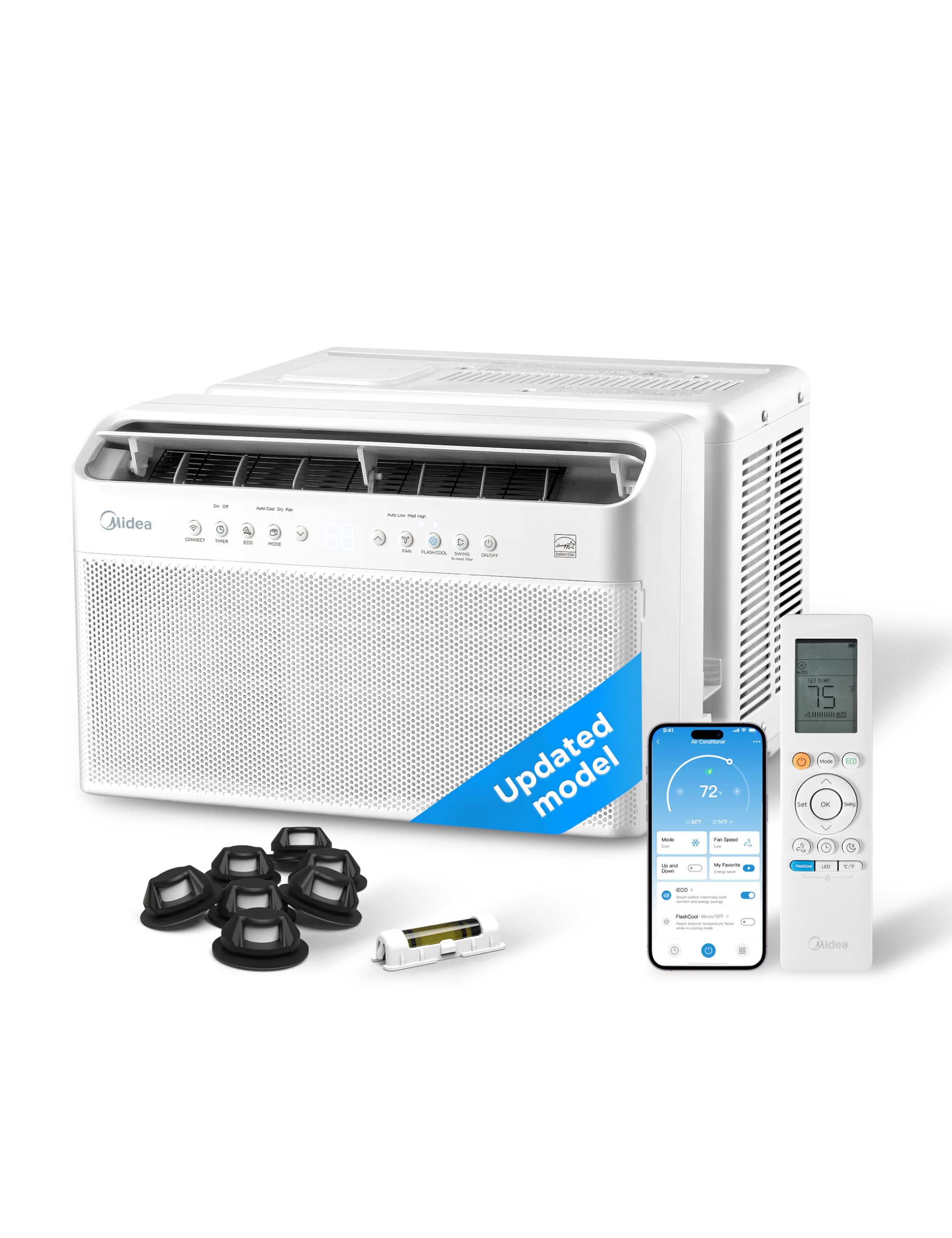
The shape that silences a window AC and lets you open the glass.
The defining trick of the Midea U Shaped is its design — the notch lets your window slide down into the unit, so you can open the window for fresh air while the AC runs, and the window sash blocks outside noise from entering through the gap. Owners mention the unit is whisper quiet, with the inverter system cooling at a sound level as low as 32 dBA — that is about as loud as a library, not a machine. Unlike traditional compressors that cycle on and off with a bang, the inverter ramps power up and down smoothly, and one reviewer noted the watt draw drops to 75 to 150 watts once the room reaches temperature.
The Midea also claims more than 35% energy savings over conventional units and holds ENERGY STAR Certification — the first window AC to get that badge. It uses R32 refrigerant (a more environmentally friendly coolant) and comes with Wi-Fi control via the SmartHome app plus voice commands through Alexa or Google Assistant. The catch is the price — it sits at the premium end of the 10,000 BTU range — and the U-shaped fit only works with single-hung or double-hung windows between 22 and 36 inches wide. The unit is heavy, so a second pair of hands helps during installation, which usually takes about 30 minutes.
Why It Leads
- Ultra-quiet 32 dBA operation — barely audible at night
- Inverter technology cuts energy use significantly after the room reaches temp
- Window can open when the unit is installed, preserving view and fresh air
The Trade-offs
- Premium price — the most expensive unit on this list
- Heavy at roughly 70 lbs, needs two people for safe installation
- Requires windows within exact width range (22-36 inches)
Best for quiet sleepers and smart-home users: If noise keeps you up or you want Alexa/Google control and the lowest energy draw, this is the one to get. skip it if: your windows are smaller than 22 inches or you need a unit you can install solo without lifting help.
2. Hykolity 10,000 BTU Smart Inverter Window Air Conditioner
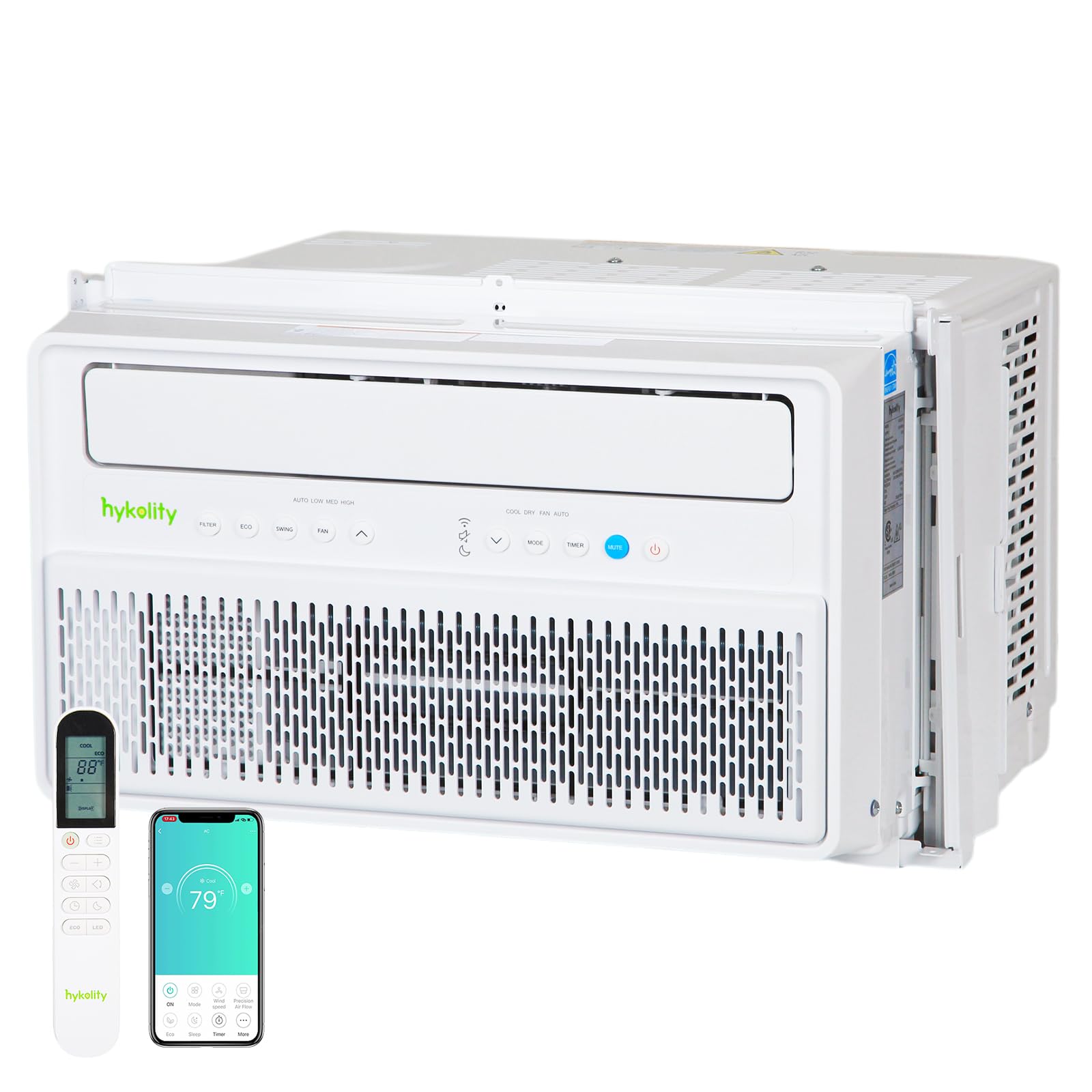
Matches the Midea on efficiency and quietness at a lower entry point.
The Hykolity matches the Midea’s best specs — it operates as low as 32 dBA and also achieves a CEER of 15.0, which makes it among the most energy-efficient window ACs at the 10,000 BTU level. It uses inverter technology and R32 refrigerant too, so your monthly electricity bill should look noticeably smaller compared to a standard unit. The built-in Wi-Fi lets you control it through a mobile app, just like the Midea, with modes for Cool, Dry, Fan, Auto, and ECO.
Customers note the unit cools fast — one buyer mentioned it took just a few minutes for the entire space to feel comfortable — and the removable washable filter makes maintenance straightforward. The unit fits single-hung or double-hung windows between 25 and 36 inches wide with a minimum height of 14.5 inches. The main complaint from a handful of buyers was that the airflow through one unit felt weak beyond a foot, though most other reviewers found it effective for rooms up to 450 sq. ft. At a mid-premium price point, it undercuts the Midea while keeping the same core inverter advantages.
What Stands Out
- Whisper-quiet 32 dBA operation for bedrooms
- CEER 15.0 delivers top-tier energy efficiency
- Smart app and remote control included
A Few Drawbacks
- Some users report weak airflow on certain fan settings
- Window fit range is a bit narrower than the Midea
- Brand has a shorter track record than Frigidaire or Honeywell
Smart pick for inverter savings: Get this if you want Midea-level efficiency and quiet but prefer to spend less. Not for you if: you need a proven brand with years of reliability data or your window is narrower than 25 inches.
3. Frigidaire 10,000 BTU Window Air Conditioner

The well-known brand that cools a 20×20 room in 10 minutes flat.
One reviewer called this “small, but mighty” after it cooled a 20×20 room from 89°F to 80°F in ten minutes — a believable claim given the 10.9 CEER rating and a compressor rated for 450 sq. ft. The Frigidaire operates at 53 dBA, which is noticeably louder than the inverter units above but still within a reasonable hum for a living room or bedroom if you do not need total silence. It offers six-way directional airflow, three fan speeds, Eco Mode, Sleep Mode, and a 24-hour programmable timer.
Unlike the U-shaped Midea, this is a standard rectangular window unit that fits a wider range of windows. The washable filter has a clean-filter alert, and the remote control lets you change settings from across the room. One buyer who used it in Texas heat said it has been a “lifesaver” and keeps rooms cool even during the hottest afternoons. The downsides are that it weighs a lot — expect around 60 pounds — and the vent lets in a noticeable amount of light, which some bedroom users found annoying for blackout sleep.
Why People Love It
- Aggressive cooling — drops room temperature remarkably fast
- Solid 10.9 CEER for reasonable energy bills
- Trusted brand with a two-year track record noted by reviewers
Room for Improvement
- Light intrusion through the vent makes it poor for blackout bedrooms
- No settings memory — resets to default temperature every power cycle
- Heavy, ideally needs two people for installation
Solid choice for most rooms: If you want a no-frills workhorse from a brand that has been making ACs for decades and fast cooling matters more than silent operation, this fits. Look elsewhere if: you need total darkness in your bedroom or want inverter-level efficiency and quiet.
4. ZAFRO 10000 BTU Window Air Conditioner
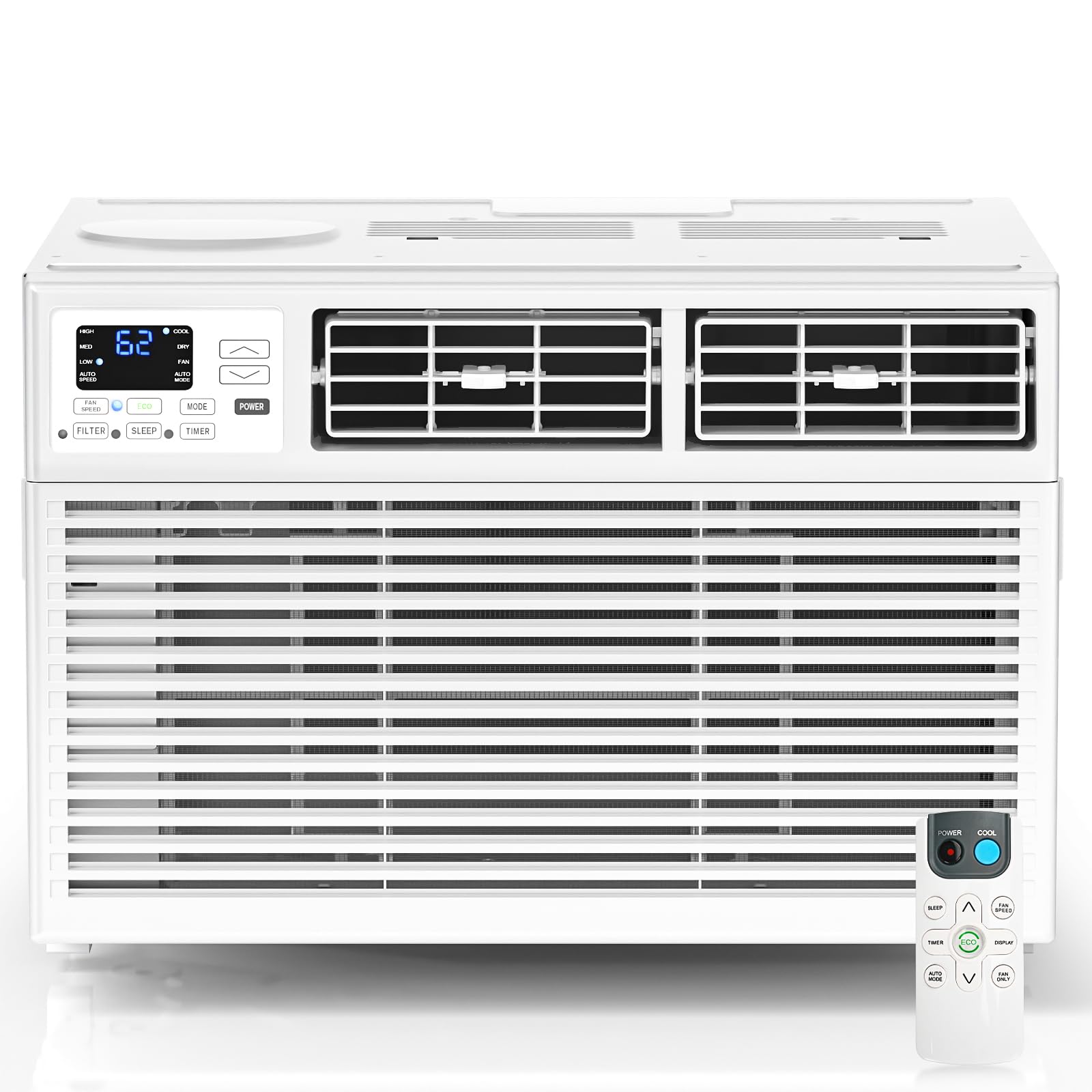
Quieter than many competitors and easy on the budget for a 450 sq ft window unit.
The ZAFRO hits a low decibel rating of 45 dB, which is quieter than the Frigidaire’s 53 dBA and the Honeywell’s unknown but typical window-unit hum. That makes it a solid option for a bedroom where you do not want a loud compressor cycling on and off. It offers seven operating modes including cooling, dehumidifying, fan-only, sleep, and eco, all controllable via the included remote or the front-panel buttons. The washable mesh filter has a filter-check light that reminds you when it needs cleaning, which keeps airflow from dropping off over time.
Reviewers point out the installation is easy and the unit cools small rooms quickly — one owner reported it works great for a space up to 150 sq. ft. with strong airflow, and that it is “quiet enough for sleep.” It uses R32 refrigerant, which is better for the environment than older refrigerants. The unit also includes four-way swing louvers for directing airflow. A number of reviews applaud the value, calling it a “great value with quality and comfort” for the price. The main unknown is brand longevity — ZAFRO is not as established as Frigidaire or Honeywell, and long-term reliability data is thin. The compressor type is rotary scroll, which tends to be reliable but you will not find as many years of user feedback here.
Strong Points
- Low 45 dB noise level — genuinely quiet for a non-inverter AC
- Seven modes give flexibility beyond basic cool/fan
- Lightweight build compared to other 10,000 BTU units
Considerations
- Brand is newer — fewer long-term reliability reports
- No inverter technology, so efficiency is lower than premium picks
- CEER rating is not published, making energy-cost comparison hard
A quiet workhorse for the money: Pick this if low noise and a wide range of modes matter more than inverter efficiency or a household brand name. pass on it if: you need a proven five-year track record or the absolute lowest electricity bill.
5. Honeywell 10,000 BTU Digital Window Air Conditioner

The energy-sipper that makes a 5,000 BTU upgrade feel huge.
The Honeywell stands out for its annual energy consumption of 656 Kilowatt Hours Per Year — that is the lowest in this lineup, beating the portable ftocase at 730 kWh/yr and the KISSAIR at 1100 Watts. That number directly translates to a lower electricity bill if you run the unit daily. It is a standard window AC rated for 450 sq. ft., with a temperature range of 61°F to 88°F and four modes (Auto, Cool, Fan, Dry). The lifted vent design helps circulate air better across the room rather than just blowing straight out.
One customer observed they were running a 5,000 BTU AC before this Honeywell and “it just wasn’t getting the job done” — the upgrade to 10,000 BTU solved it. The unit includes a washable filter with an indicator light, a 24-hour timer, sleep mode, and eco energy-saving mode. However, the reviews are split: while many buyers love the cooling, one gave it one star, calling it “ridiculously noisy,” almost like it was refurbished. The footprint measures 19.76″W x 22.91″D x 15.16″H, so measure your window space — it needs a minimum window height of 16 inches and a width between 26 and 36 inches.
What Works
- Lowest annual energy consumption in this roundup — 656 kWh/yr
- Good for upgrading from a weaker 5,000 BTU unit
- Lifted vent design improves air circulation
The Mixed Bits
- Some units arrive noisy — a potential quality-control gamble
- No published CEER rating makes efficiency comparison less transparent
- Larger dimensions may not fit narrow or short windows
Best for energy-conscious buyers: Choose this if low electricity consumption is your top priority and you are coming from a smaller AC that left you sweating. Reconsider if: you are a light sleeper — the noise complaints suggest it may be a gamble for total silence.
6. KISSAIR 10,000 BTU Window Air Conditioner
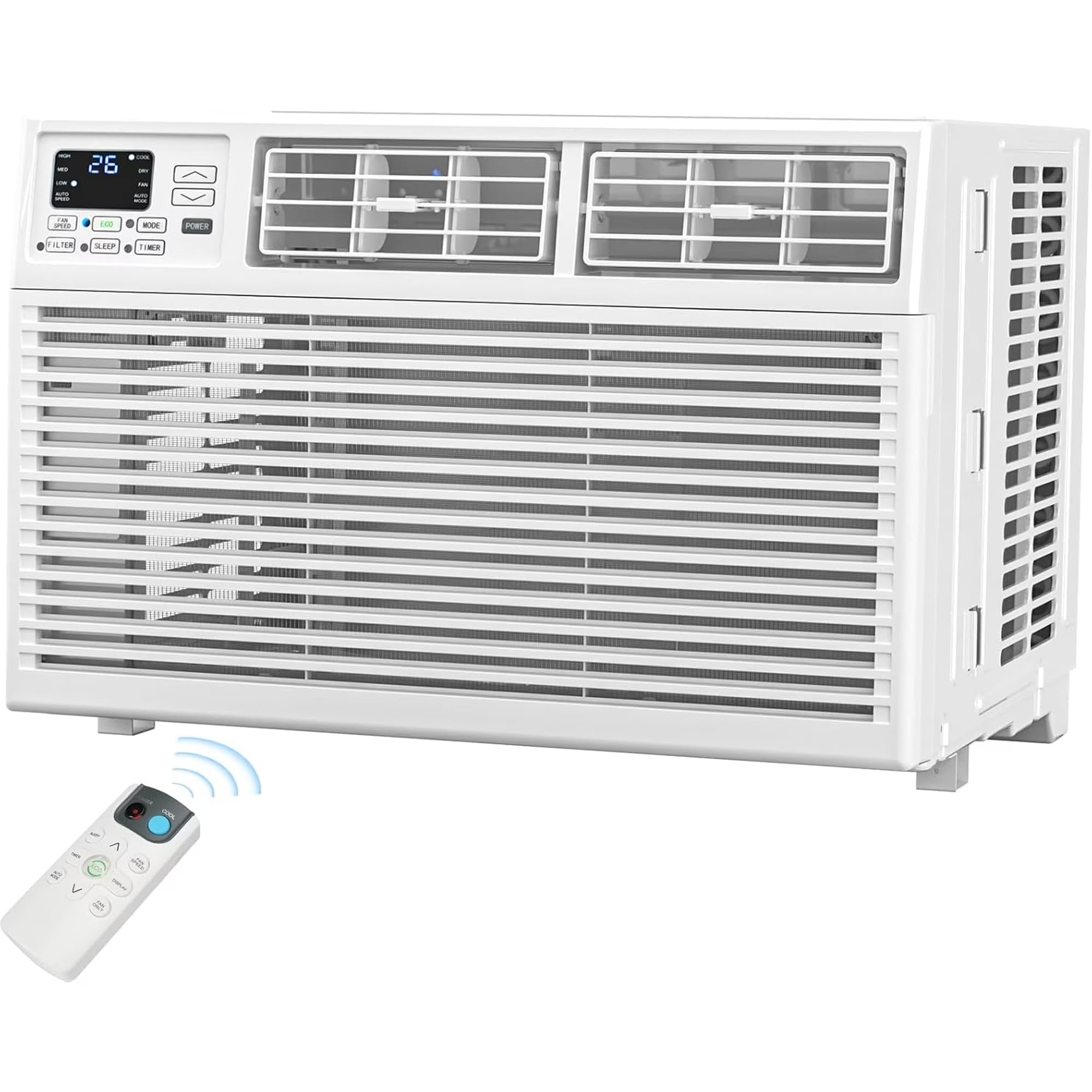
A wallet-friendly 10k BTU that a Texas dad used to cool his son’s travel trailer.
The KISSAIR is the most affordable window unit on this list while still delivering 10,000 BTU of cooling power for rooms up to 450 sq. ft. It packs six modes — cooling, dehumidifying, fan, auto, sleep, and energy-saving — plus four adjustable fan speeds and directional louvers. The CEER is 10.9, matching the Frigidaire for efficiency, so your energy bills should not spike despite the lower upfront cost. The sleep mode runs at 54 dB, which is a bit louder than the ZAFRO but still acceptable for a bedroom.
Shoppers say solid real-world results — one gave it five stars after installing it in a small travel trailer and said it cools “really well in 95 degree Texas weather.” Another noted it “does great in a 15×15 room.” The unit weighs 48.6 pounds, which is lighter than many competitors and easier to handle alone. It includes a remote control and a washable dust filter with a smart reminder. The main trade-off is the annual energy consumption listed as 1100 Watts. Also, the brand does not have the same long-term reliability reputation as Frigidaire or Honeywell.
Why It Scores
- Lowest price in the 10,000 BTU window group
- Light at 48.6 lbs — easier to install solo
- 10.9 CEER provides decent efficiency for the cost
A Few Caveats
- Newer brand — less long-term reliability data
- Sleep mode at 54 dB is louder than the ZAFRO’s 45 dB
Best for tight budgets and small rooms: If you need to cool a bedroom or small office without spending much and you can accept a newer brand, this is your pick. it’s not for you if: you want a proven track record from a major manufacturer or need whisper-quiet sleep mode.
7. ftocase Portable Air Conditioner, 10,000 BTU
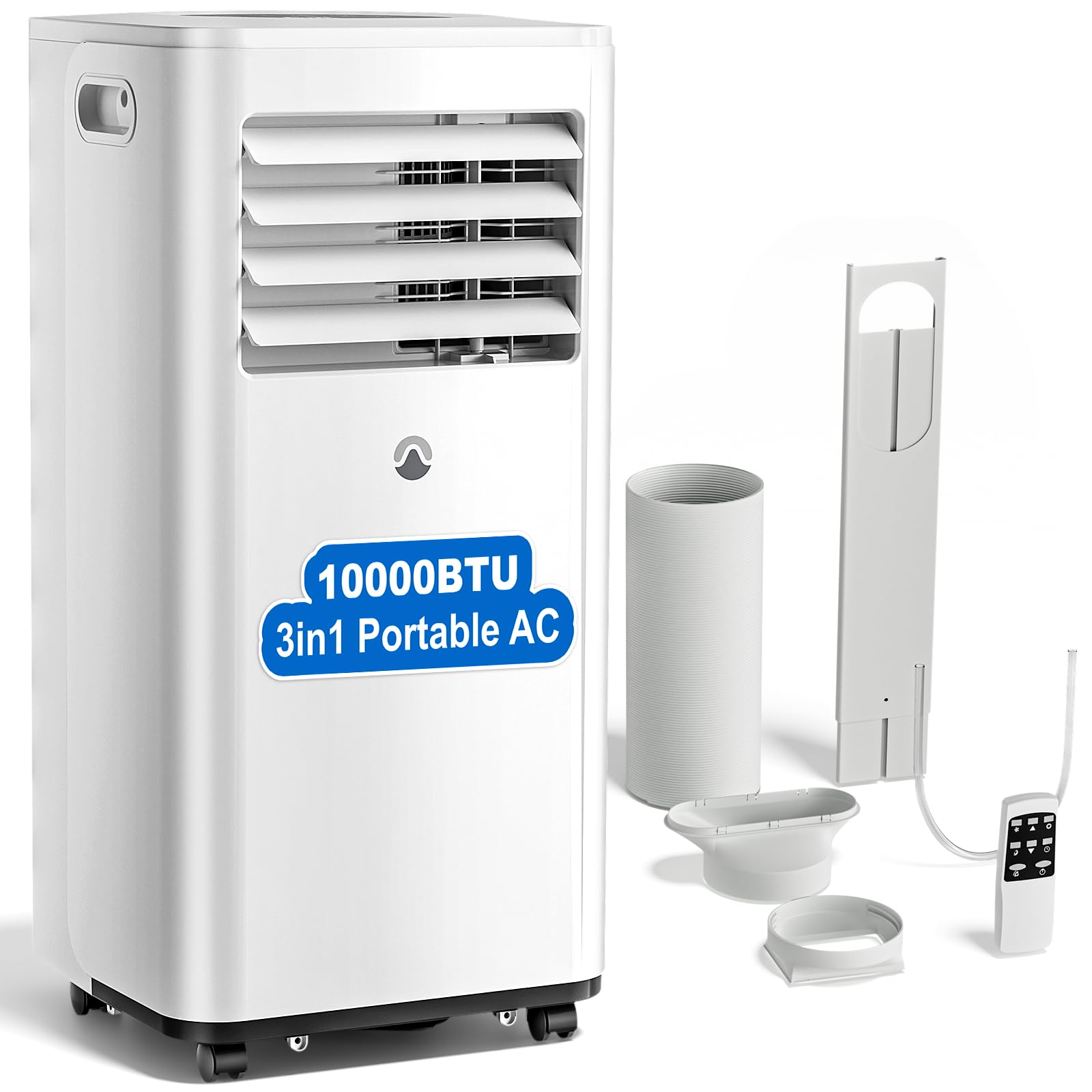
The only portable on the list — rolls from room to room, but has a big efficiency gap.
If your landlord bans window units or you need to cool different rooms at different times, the ftocase portable AC is your only option here. It delivers 10,000 BTU for rooms up to 450 sq. ft. with three modes — air conditioning, fan, and dehumidifier. It operates at less than 50 dB in sleep mode, which is decent for a portable since the compressor sits in the room with you. The unit rolls on 360-degree caster wheels and has hidden side handles, so you can move it from the bedroom to the living room without breaking your back.
The annual energy consumption is 730 Kilowatt Hours Per Year versus the Honeywell’s 656 Kilowatt Hours Per Year, so it uses roughly 11% more energy — a noticeable difference on your bill if you run it all summer. The window kit fits sliding windows from 36.61 to 49.6 inches. Buyers generally praise the fast cooling and easy setup, but there is a serious durability warning: one user highlighted the cooling “dropped after first month,” plastic housing cracked, caster wheels broke off, and the remote stopped working. This suggests the unit is best for light, occasional use rather than daily heavy-duty cooling.
The Appeal
- Portable design with wheels — no permanent installation
- Under 50 dB in sleep mode is fairly quiet for a portable
- Setup takes under 30 minutes with included window kit
The Risks
- At 730 kWh/yr, it uses 11% more energy than the most efficient window unit
- Multiple reports of rapid build-quality failure (cracked plastic, broken wheels)
- CEER 7.0 is significantly lower than the 10.9+ of window units
Portability is the only reason to pick it: If you absolutely cannot install a window AC and need to move the unit between rooms, this does the job. Otherwise skip it: for a stationary bedroom or home office, a window unit will cool better, use less electricity, and likely last longer.
Understanding the Specs
CEER (Combined Energy Efficiency Ratio)
This is the number that tells you how much cold air you get for each watt of electricity. A CEER of 10.9 is good — typical for a modern non-inverter unit. A CEER of 15.0 is excellent, found in inverter models like the Midea and Hykolity. The portable ftocase sits at 7.0 CEER, which means it costs more to run for the same cooling. Always check this number before buying if you plan to run the AC daily. Higher CEER = lower electric bill.
dBA (Decibel Rating for Sound)
Noise is measured in dBA on a scale where a lower number is quieter. A standard conversation is about 60 dBA, a quiet library is around 40 dBA, and a whisper is roughly 30 dBA. An AC running at 53 dBA (like the Frigidaire) will produce a noticeable hum, while a 32 dBA unit (Midea or Hykolity) is barely audible at night. If you are a light sleeper, aim for 50 dBA or less on the sleep or low fan setting.
FAQ
Will a 10,000 BTU AC cool my 450 sq. ft. room?
Is a window AC more efficient than a portable AC at 10,000 BTU?
How much does it cost to run a 10,000 BTU air conditioner per month?
Can a 10,000 BTU AC run on a standard 15-amp household outlet?
What is the difference between a U-shaped and a traditional window AC?
How often should I clean the filter on my 10,000 BTU AC?
What window measurements do I need before buying a 10,000 BTU window AC?
Is R32 refrigerant better than older types?
Final Thoughts: The Verdict
For the majority of shoppers, the 10000 btu air conditioner winner is the Midea U Shaped Smart Inverter because it combines the lowest 32 dBA noise level, inverter-driven efficiency, and a design that lets you open your window while it runs — a combination no other unit here matches. If you want the same inverter technology and quiet operation for less money, grab the Hykolity Smart Inverter. And for a straightforward budget-friendly window unit that cools a 15×15 room while staying affordable, the KISSAIR is your best bet.
How We Picked
We do not accept paid placement. Every pick is matched to a real buyer and a real use-case; we do not hands-on test units.
Sources & Methodology
Specifications: manufacturer listings and product documentation. Review insights: verified customer reviews, as of July 2026. Pricing: not shown on this page (it changes often); check the current price via the retailer link.
As an Amazon Associate, Gadgets Feed earns from qualifying purchases. This does not affect which products we feature.