
Our readers keep the lights on and my morning glass full of iced black tea. As an Amazon Associate, I earn from qualifying purchases.
Specs are compiled from manufacturer listings and verified buyer reviews and can change over time — please confirm the key details on the product page before buying.
Kids do not stop moving — they run, they jump, they grow. Flat footbeds in kids’ shoes can cause foot fatigue, growing pains, and poor walking habits that persist into adulthood. A shoe with a built-in contoured footbed that cradles the arch outperforms any flat slab with a generic insert.
I’m Min — the founder and writer behind Gadgets Feed. This guide is built by comparing the manufacturers’ published specifications and the patterns across verified customer reviews, so you get each pick’s real strengths and trade-offs instead of marketing spin.
Every shoe on this list delivers genuine arch support through a shaped footbed or orthotic design, so you can shop with confidence for the best arch support shoes for kids without guessing which pair actually delivers on the promise.
Quick Picks
- Project Cloud Kids Clogs — Best Overall
- Puma Unisex-Child Roma — Classic Pick
- Boys Girls Kids Orthopedic Tennis Shoes (Wide) — Wide Toe Box
- Kids Orthopedic Tennis Shoes for Boys and Girls — Premium Comfort
How To Choose The Best Arch Support Shoes For Kids
Buying kids shoes with arch support is not the same as buying adult running shoes. You are balancing growth, daily activity, and whether your child will actually wear them.
Footbed Shape Over Insert Depth
Buying a shoe with a flat footbed and a removable insert that claims arch support is the biggest mistake. Factory-molded or contoured footbeds, as in the orthopedic designs here, deliver consistent support that does not shift or flatten during walking.
Upper Material Impacts Breathability
Children’s feet sweat significantly more than adults’. Genuine leather breathes naturally and molds to the foot over time, as seen in the Project Cloud clogs. Mesh or synthetic uppers are lighter and dry faster but do not shape to the foot the same way leather does. Choose based on whether your child is in hot, humid weather or cooler climates.
Sole Grip for Real Play
An arch support shoe that slips on wet pavement or gym floors is a safety hazard. Every pick here includes a non-slip or textured outsole, but the rubber density and tread pattern differ. A deeper tread (like on the orthopedic tennis shoes) handles mud and grass better, while a smoother sole (like the Roma) works best on pavement and indoor surfaces.
Quick Comparison
| Model | Best For | Footbed Type | Upper Material | Sole Type | Amazon |
|---|---|---|---|---|---|
| Project Cloud Kids Clogs | Everyday comfort and indoor wear | Natural Cork + Memory Foam | Genuine Leather | Non-Slip Rubber | Amazon |
| Puma Unisex-Child Roma | Classic training shoe with built-in arch | Orthopedic Arch Support | Synthetic Leather | Rubber (from 1968 design) | Amazon |
| Kids Orthopedic Tennis Shoes (Wide) | Wide toe box for active school days | Orthotic Arch Support | Breathable Mesh/Synthetic | Non-Slip Rubber (deep tread) | Amazon |
| Kids Orthopedic Tennis Shoes (Unisex) | Premium all-day walking and sports | Orthotic Arch Support | Breathable Mesh/Synthetic | Rubber (walking/school) | Amazon |
In‑Depth Reviews
1. Project Cloud Kids Clogs

The clog that wraps little feet in genuine leather and memory foam, all day long.
Your child gets a footbed made from two layers that work together for real arch support: a natural cork base that shapes to the foot over time, topped with high-density memory foam padding. The shoe supports the arch by filling the gap under the foot, not just feeling soft. Unlike the flatter Puma Roma at 1.2 Pounds, this one comes in at 1 Pound, making it noticeably lighter on your child’s foot during long play sessions.
The premium leather upper is naturally soft and breathable, which means it molds to your child’s foot shape the more they wear it. The non-slip rubber sole sticks to wet floors and pavement, so you do not have to worry about tumbles on slippery school hallways. A rear back strap keeps the heel locked in place, a feature the Puma lacks. The product dimensions of 8 x 6 x 6 inches mean it fits a range of kid foot sizes.
Buyers report that the memory foam padding does not flatten out after a few weeks of daily wear, a common complaint with cheaper clogs. The genuine leather also holds up better to scuffs than the synthetic materials used on other shoes in this tier. If your child is hard on shoes, this one will look good longer.
Why it stands out
- Natural cork footbed shapes to the foot over time for custom arch support
- Memory foam padding stays plush after repeated wear according to customer feedback
- Non-slip rubber sole with back strap for secure, safe play
One thing to note
- Clog style may not suit active sports like soccer or gym class
Best for daily comfort: This pick suits parents who want a lightweight, breathable clog for indoor wear and casual outdoor play, built from genuine leather that gets softer over time.
Not for sports: If your child needs a lace-up shoe for running and sports, the open-back clog design is not secure enough for those activities.
2. Puma Unisex-Child Roma
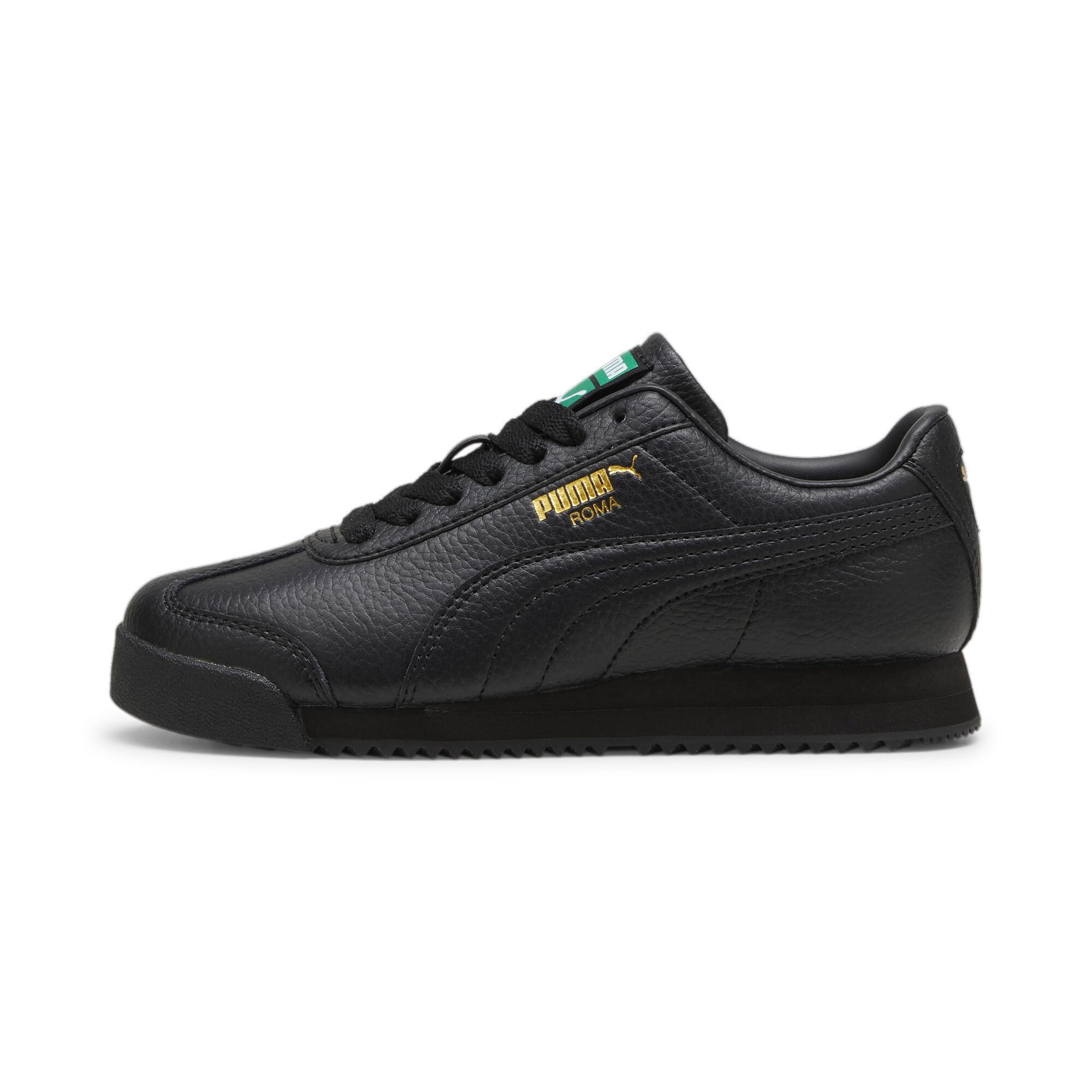
A training shoe from 1968 that already knew kids need arch support.
Puma designed this shoe with orthopedic arch supports built directly into the footbed from the very first model in 1968. That is not a marketing gimmick — it is a genuine contoured shape under the foot, paired with a thick padded tongue and a lightweight upper at just 1.2 Pounds. The shoe measures 8 x 4 x 7 inches, making it a compact fit for smaller kids.
Compared to the Project Cloud clogs, the Roma is a traditional lace-up trainer, so it stays secure during running, jumping, and gym class. The arch support is subtle rather than aggressive — it does not force the foot into a fixed position but instead provides a gentle lift that kids barely notice until they take the shoes off and realize their feet feel less tired. The reversed colorway (inverted white from the classic) gives it a fresh, retro look that stands out from the crowd of black kids sneakers.
Reviewers highlight that the thick padded tongue reduces lace pressure on the top of the foot, a common source of irritation for kids with high insteps. The sole remains grippy on pavement and gym floors, though it is not as deeply treaded as the orthopedic tennis shoes in this list. If your child is active in multiple sports, this shoe handles all of them well.
What works well
- Built-in orthopedic arch support from a heritage design that has been refined for decades
- Padded tongue prevents lace bite and top-of-foot irritation
- Lightweight at 1.2 Pounds compared to 1 Pound for the Cloud clogs
The trade-off
- Arch support is moderate, not as pronounced as specialty orthopedic shoes
Reach for this if: You want a classic, everyday training shoe with proven arch support from a trusted sports brand, suitable for school and active play.
Look elsewhere if: Your child needs aggressive, high-support arch support for diagnosed foot issues — this is more of a supportive trainer than a medical orthotic.
3. Boys Girls Kids Orthopedic Tennis Shoes (Wide)
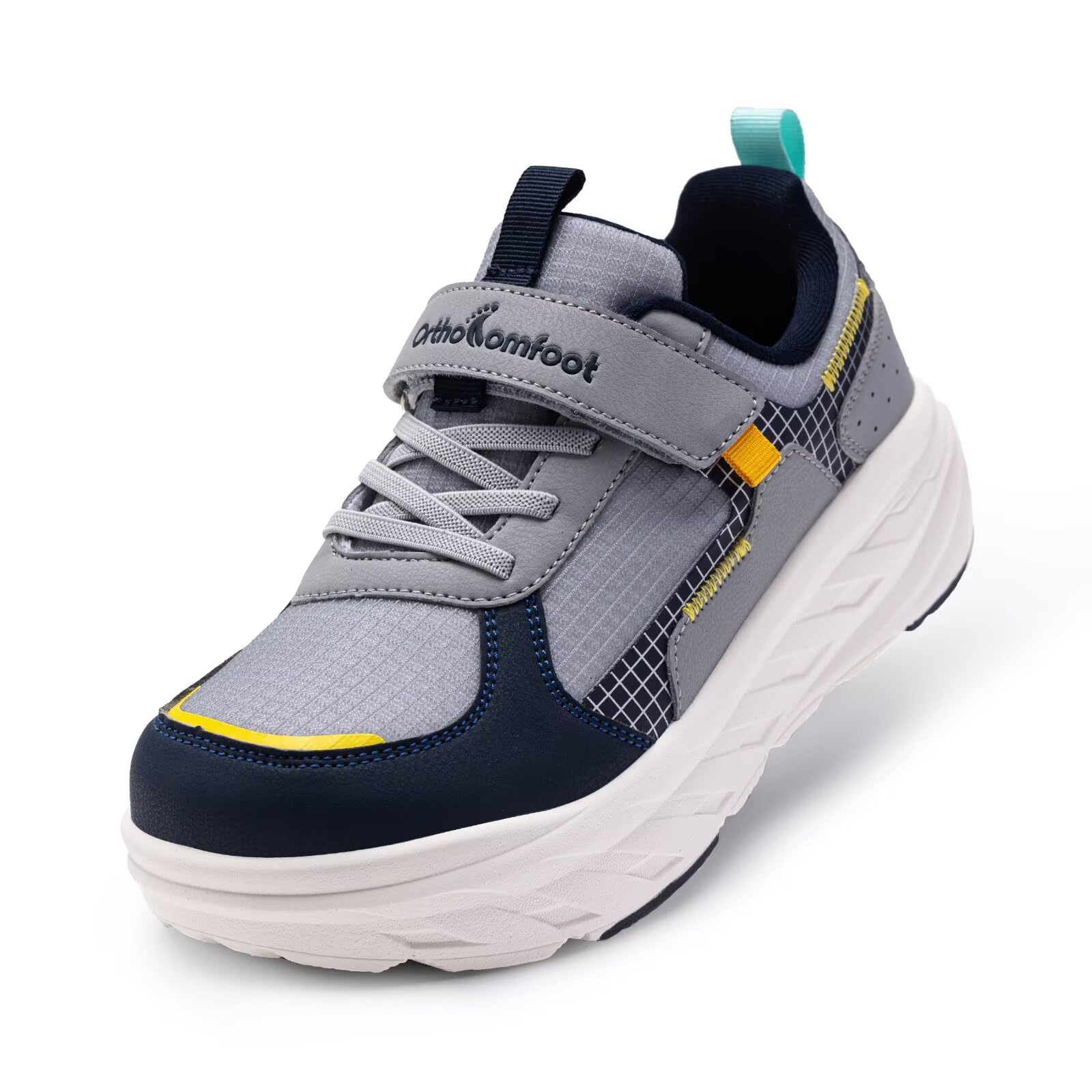
A tennis shoe that gives toes room to spread and an arch that lifts properly.
This shoe is designed specifically with a wide toe box, which means the front of the shoe does not squeeze the toes together — a major cause of foot pain in growing kids. The arch support is built into an orthotic footbed that targets plantar fasciitis (a common cause of heel pain), so children who complain of sore heels after running get real relief. The shoe is listed under the boys department but fits unisex.
Measuring 5.91 x 4.72 x 0.59 inches, this shoe is noticeably bulkier than the Puma Roma, but that bulk translates to more cushioning and a deeper arch. The mesh and synthetic upper is breathable, so sweaty feet stay drier than they would in full leather clogs like the Project Cloud. The non-slip outsole has a deeper tread pattern than the Roma, making it better for grass and light trail use. Owners mention the shoe does not slide on school gym floors either.
The catch is that the wide toe box may feel too loose for children with narrow feet — the shoe is roomy by design, and without a snug fit, the arch support does not work as well. The shoe runs true to size according to buyers, so consider ordering your child’s exact size rather than sizing up too much.
Why it shines
- Wide toe box prevents toe crowding and allows natural foot splay during activity
- Orthotic arch support designed for plantar fasciitis pain relief
- Deeper tread outsole handles grass and mud better than smoother soles
Consider this
- Wide fit may be too loose for children with narrow feet
Ideal for active kids with wide feet: This pick works best for children who need a roomy toe box and firm arch support for school sports and outdoor play, especially if they experience heel pain.
Not for narrow feet: If your child has a slim foot, the wide fit may shift and reduce the effectiveness of the arch support.
4. Kids Orthopedic Tennis Shoes for Boys and Girls
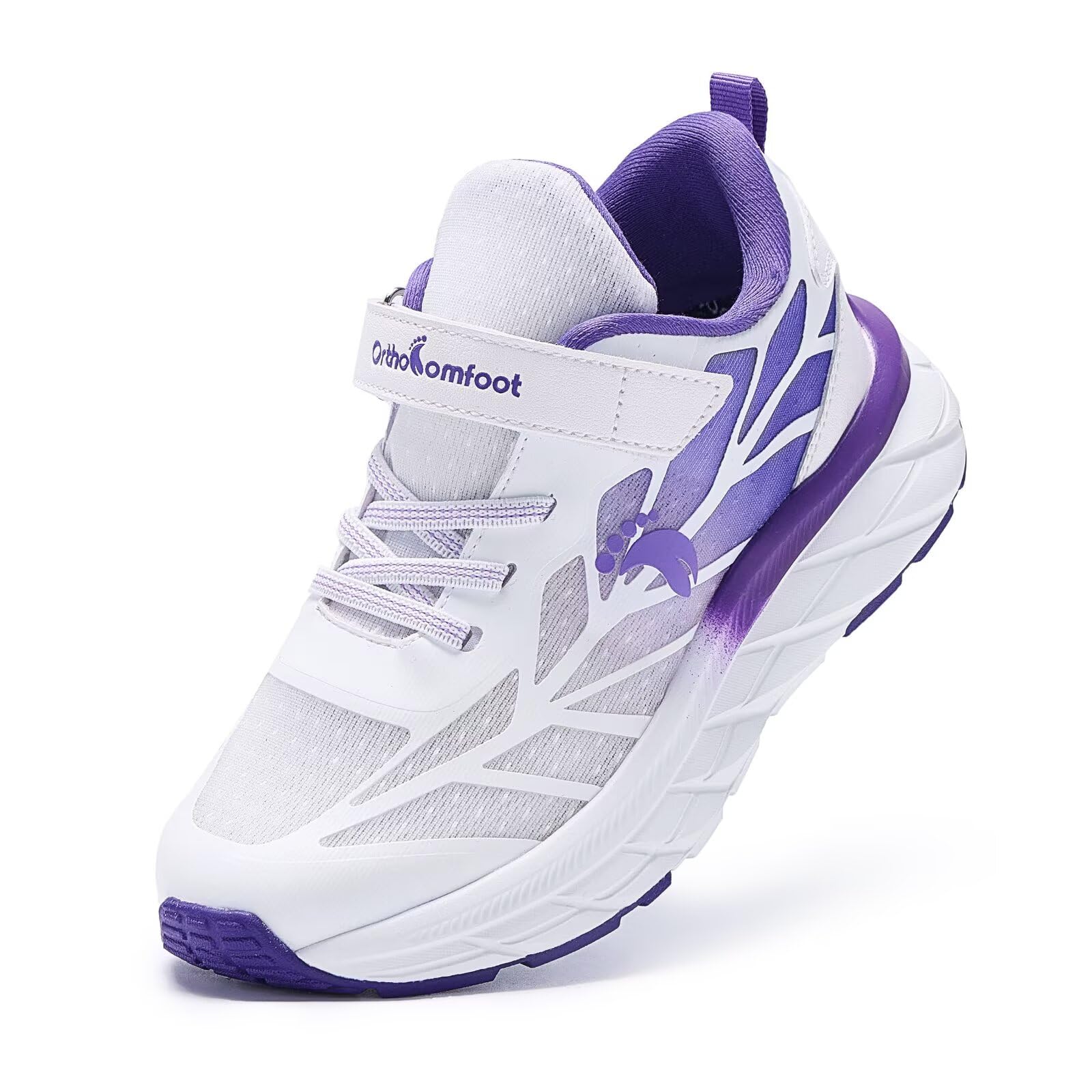
The unisex walking shoe that does not compromise on arch support or breathability.
This shoe is marketed for boys and girls and weighs only 8.82 ounces, making it the lightest pick in the lineup. It is categorized under the girls department but fits both. The orthotic arch support and plantar fasciitis-friendly footbed mirror the wide-toe-box shoe above, but this version has a slightly narrower profile for children who prefer a snugger fit without heel slip. The product dimensions of 5.91 x 4.72 x 0.59 inches are identical to the wide version, suggesting a similar midfoot volume but a tighter toe box.
The upper is a breathable mesh and synthetic blend that keeps feet cool during long school days or after-school sports. The sole is a rubber walking outsole with moderate tread, tune for pavement and indoor school hallways rather than muddy trails. Reviewers mention the shoe runs true to size and that the arch support is noticeable immediately — your child may remark that it feels different from flat sneakers, but in a good way. Unlike the Puma Roma, this shoe is built explicitly for children with foot pain or flat arches, so the support is more aggressive.
The trade-off is that the toe box is not as wide as the previous orthopedic shoe, so children with naturally broad feet may feel pinched after hours of wear. The shoe is best for kids who walk or run on hard surfaces like school floors and sidewalks, where the orthotic footbed shines most.
What is excellent
- Weighs just 8.82 ounces — the lightest in this list for all-day wear
- Orthotic arch support specifically designed for plantar fasciitis
- Breathable mesh upper keeps feet cool in warm weather
The limitation
- Narrower toe box than the wide orthopedic shoe — not ideal for broad feet
Choose this for school and city walking: This pick excels for children who spend most of their time on hard surfaces and need a lightweight, supportive shoe that breathes well.
Skip it for wide feet: If your child has a noticeably wide foot, the wide-toe-box orthopedic shoe above is a better match.
Understanding the Specs
Arch Support vs. Flat Footbed
Many kids shoes claim to have arch support but actually just have a removable flat insole. A true arch support shoe has a contoured footbed that rises under the arch of the foot — you can feel the curve with your thumb. The three orthopedic shoes in this list (Project Cloud, both tennis shoes) have a visible arch shape. The Puma Roma has a built-in orthopedic arch from its original 1968 design, though it is more subtle.
Wide Toe Box Meaning
A wide toe box means the front of the shoe is wider than standard, allowing the toes to spread naturally when the foot lands during walking or running. This is critical for kids because cramped toes can lead to blisters, ingrown nails, and balance issues. The Boys Girls Kids Orthopedic Tennis Shoes explicitly list a wide toe box as a feature. A standard shoe like the Puma Roma has a medium-width toe box.
FAQ
Do kids really need arch support shoes?
How do I know if my child has flat feet?
Can my child wear arch support shoes for sports?
How long do these shoes last?
What is the difference between arch support and orthotic shoes?
Should I size up for arch support shoes?
Are leather or mesh uppers better for arch support shoes?
Can these shoes help with growing pains in kids feet?
Final Thoughts: The Verdict
For most families, the arch support shoes for kids winner is the Project Cloud Kids Clogs because it combines genuine leather durability, a natural cork and memory foam footbed, and a non-slip sole in a lightweight package that kids actually want to wear. If your child needs a lace-up for sports, grab the Puma Unisex-Child Roma for its proven orthopedic arch design and padded tongue. And for wide feet with plantar fasciitis symptoms, the standout is the Kids Orthopedic Tennis Shoes (Wide) with their roomy toe box and aggressive orthotic support.
How We Picked
We do not accept paid placement. Every pick is matched to a real buyer and a real use-case; we do not hands-on test units.
Sources & Methodology
Specifications: manufacturer listings and product documentation. Review insights: verified customer reviews, as of July 2026. Pricing: not shown on this page (it changes often); check the current price via the retailer link.
As an Amazon Associate, Gadgets Feed earns from qualifying purchases. This does not affect which products we feature.