
Our readers keep the lights on and my morning glass full of iced black tea. As an Amazon Associate, I earn from qualifying purchases.
Specs are compiled from manufacturer listings and verified buyer reviews and can change over time — please confirm the key details on the product page before buying.
Getting TPU to stick to your build plate is a battle. The flexible filament loves to curl up, shift mid-print, or simply lift off the bed, ruining hours of work. The fix is a textured or PEI-coated surface that grabs that first layer and holds it steady from start to finish — without needing glue sticks or hairspray.
I’m Min — the founder and writer behind Gadgets Feed. This guide is built by comparing the manufacturers’ published specifications and the patterns across verified customer reviews, so you get each pick’s real strengths and trade-offs instead of marketing spin.
We looked at the surface material, thickness, and compatibility of each option to find the most dependable build plate for tpu that keeps flexible prints locked in place and pops them off cleanly when done.
Quick Picks
- Upgraded Thicker Textured PEI Plate 0.77mm — Best Overall
- JUUPINE 3D Printer H1H Build Plate for Bambu Lab — Premium Pick
- Creality Official K1C Build Plate — Best Value
- Upgraded Kobra S1 Double Sided PEI Build Plate — Compact Pick
- Flashforge Double-Sided Textured PEI Sheet — Top Performer
- H2D PEI Build Plate for Bambu Lab H2D/H2S — Large Format
How To Choose The Best Build Plate For TPU
TPU is notoriously slippery on a bare or smooth bed. The key is a surface that physically grips the filament without glue. Here is what to look for.
Surface Coating — PEI vs. Smooth vs. Glass
A textured PEI (polyetherimide) coating creates a micro-rough finish that flexible TPU grabs onto. Smooth glass or bare metal lets TPU slide and warp during cooling. Stick to plates with a frosted PEI powder coat or an engineered texture like Light beam patterns for the best hold.
Plate Thickness
A thicker plate — around 0.77mm — resists the subtle flexing that can pull TPU loose at corners. Thinner plates may bend more under the print, causing edge lift. Heavier gauge steel also distributes heat more evenly across the bed.
Flexible Magnetic Base
TPU prints stick hard while hot. A spring-steel plate that attaches to a magnetic base lets you pop the assembly off, bend it gently, and release the finished part without prying or scraping. This also protects the delicate PEI coating from scratches.
Quick Comparison
| Model | Best For | Weight | Dimensions | Compatible Printers | Amazon |
|---|---|---|---|---|---|
| Upgraded Thicker Textured PEI Plate (Bambu Lab) | Heavy-duty daily TPU printing | 13.7 oz | 257x257mm | Bambu Lab X1/P1/P2/A1 series | $16.59Amazon |
| Creality K1C Build Plate | Reliable budget-friendly TPU upgrade | 10.2 oz | 235x235mm | Creality K1, Ender 3 series | $16.49$21.99PrimeAmazon |
| JUUPINE H1H Build Plate | Holographic style with solid grip | 13.1 oz | 257x257mm | Bambu Lab P2S/X2D/A1/X1 series | $16.59Amazon |
| Upgraded Kobra S1 Double Sided PEI | Anycubic and Neptune printer owners | 11.3 oz | 264x276mm | Anycubic Kobra S1, Neptune 4 | $17.99Amazon |
| Flashforge Double-Sided Textured PEI | Adventurer 5M and AD5X users | 12.6 oz | — | Flashforge AD5M/AD5X series | $22.00Amazon |
| KOYOFEI H2D PEI Build Plate | Large-format Bambu Lab H2D owners | 1.4 lbs | 355x346mm | Bambu Lab H2D, H2S | $32.99Amazon |
In‑Depth Reviews
1. Upgraded Thicker Textured PEI Plate 0.77mm with QR Code for Bambu Lab
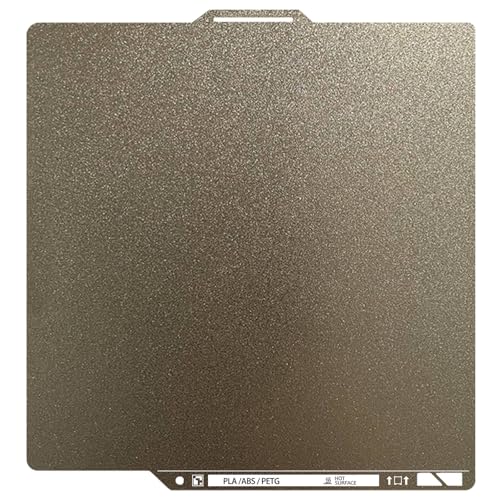
The thickest plate on this list that holds TPU flat through the whole print cycle.
The number that matters here is 0.77mm — the total thickness of the spring steel. At 13.7 ounces, it is 34% heavier than the Creality K1C plate (which weighs 10.2 ounces), and that extra heft translates directly to stability. A thicker plate resists the micro-flexing that can lift a TPU corner during a long print. The textured PEI powder coat on both sides grabs flexible filament without glue, and the 257x257mm size fits the full Bambu Lab family — X1-Carbon, P1S, P1P, A1, and the newer X2D and P2S models.
Buyers report that the original plate on their Bambu printer “had adhesion problems after just a few prints,” but this thicker replacement “has now gone through 100’s of prints and still no problems.” The QR code on the surface lets the printer auto-detect the plate type for the right bed temperature profile. The 300°C heat resistance means you can push bed temps high enough for TPU without worrying about coating damage.
Compared to the JUUPINE H1H plate below, this one skips flashy holographic patterns in favor of a straightforward functional textured finish, but it makes up for it with a noticeably thicker build that resists warping over years of use.
Why it leads the pack
- Thickest steel at 0.77mm resists corner lift during TPU prints
- Double-sided textured PEI for twice the usable life
- QR code enables auto-detection on Bambu Lab printers
The trade-off
- Only fits 257x257mm Bambu Lab printers — not universal
- Slightly heavier means slower cool-down between prints
Perfect for: Bambu Lab owners who print a lot of TPU and want a plate that outlasts the stock bed without losing grip.
Not your match if: you need a plate for a Creality, Anycubic, or Flashforge printer — the size and QR code are Bambu-specific.
2. JUUPINE 3D Printer H1H Build Plate for Bambu Lab

A holographic plate that works on looks but delivers real TPU grip underneath.
This plate from JUUPINE uses a proprietary H1H coating that combines a Light beam pattern on one side and a Phantom pattern on the other — both add visual flair to the bottom layer of your print. But the real function is adhesion: the H1H surface grabs TPU firmly even without heating the bed, according to the specs, which is a huge time-saver for quick prints. It weighs 13.1 ounces, close to the Bambu Lab thicker plate at 13.7 ounces, so it has good mass to hold heat steady.
At 257x257mm, it directly competes with the Upgraded Thicker PEI plate on size. The key difference is the pattern coating — the Light beam side creates light-diffracting lines that look like neon strips on the print base. The trade-off is maintenance: the manufacturer warns that oils from your hands can fade the pattern, but a wipe with a wet tissue followed by a dry tissue restores it. The plate handles 200°C heat, which is well above the 60-80°C typical for TPU printing, so thermal limits are not a concern here.
It is a Bambu Lab-only fit (P2S, X2D, A1, X1C, X1E, P1P, P1S), so Creality or Flashforge users need to look elsewhere. But for Bambu owners who want their print’s bottom layer to look as good as it sticks, this is the pick.
Style with substance: The holographic patterns create a unique print finish while the PEI-equivalent coating grabs TPU as well as a plain textured plate. The 200°C rating easily covers all TPU bed temps.
Reach for this if: you want a build plate that adds visual flair to your TPU prints without sacrificing first-layer adhesion.
Look elsewhere if: you prefer a plain textured surface with no pattern maintenance or you need a plate for non-Bambu printers.
3. Creality Official K1C Build Plate, 235x235mm Textured Surface PEI Sheet
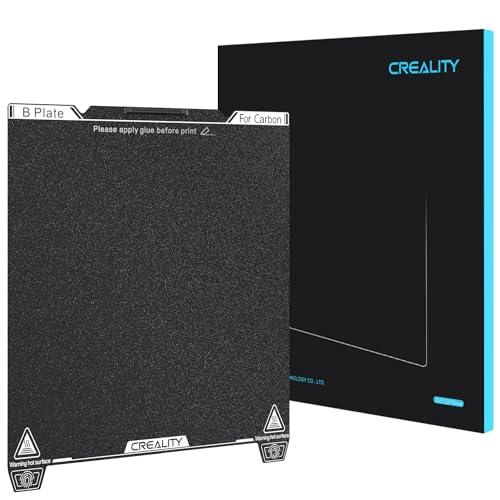
An official Creality upgrade that brings TPU-friendly textured PEI to the K1 and Ender 3 family.
The 235x235mm size fits the Creality K1C, K1 SE, and the entire Ender 3 series (V2, V3, V3 KE, V3 SE). It also works with CR-10 SE. The dual handles and positioning hole make installation straightforward, and the R-angle edges are safer than sharp-corner plates.
One reviewer noted a practical tip: “I use a bed temperature of 95 degrees on the first layer and then lower it to 90 degrees Celsius” for TPU. That kind of temperature tweak is easy with the PEI surface’s 300°C heat rating. Reviewers also noted that the textured finish can get stained with PLA residue that does not wash off with alcohol or soap, but they report it does not affect print quality. The nozzle cleaning strip at the front is a thoughtful addition — it wipes the nozzle before printing starts, reducing the chance of dragging a blob of TPU across the bed.
Compared to the Flashforge option below, this Creality plate has a wider printer compatibility list and costs less, though it lacks the double-sided design of several competitors.
Solid entry-level workhorse: The textured PEI surface handles TPU, PLA, ABS, and PETG. The spring steel bends to pop prints off. Just note it is single-sided, so once worn, you need a new one.
Best for: Creality K1 or Ender 3 owners on a budget who need a reliable TPU surface without frills.
Not ideal if: you want a double-sided plate for twice the lifespan or a larger 257x257mm build area.
4. Upgraded Kobra S1 Double Sided PEI Build Plate, 264x276mm
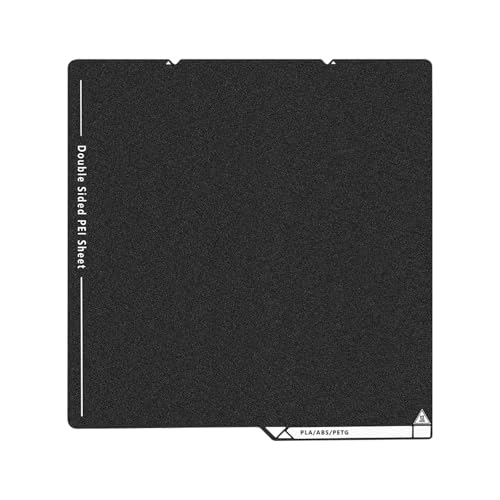
An Anycubic-specific plate that buyers confirm fits the Neptune 4 without trimming.
The key dimension here is 264x276mm — it is 12% larger along one axis than the 235x235mm Creality plate, giving you more build area for bigger TPU parts. It weighs 11.3 ounces, a mid-point between the Creality and Bambu plates. The double-sided textured PEI means you get two usable sides in one purchase, effectively halving the per-print cost over the life of the plate. The powder-spray coating creates a matte black finish that hides wear and gives the bottom of your prints a consistent rough texture.
One buyer mentioned it was a “good fit on Neptune 4, no trimming needed,” which suggests the stated 264x276mm dimensions are accurate and compatible with printers outside the Anycubic Kobra S1 line. The uniform PEI spray coating provides strong grip for TPU, PLA, and PETG, and prints release easily once the bed cools. The manufacturer recommends re-leveling the printer after installing, which is standard practice for any new build plate. It handles high-temperature filaments like ABS and Nylon as well, making it a versatile all-rounder despite being targeted at the Kobra S1.
Compared to the H2D plate below, this one is much smaller physically but more universally compatible with mid-size printers like the Neptune 4 and Centauri Carbon mentioned in reviews.
What stands out
- Double-sided PEI gives twice the lifespan at a single-plate price
- 264x276mm fits larger beds like the Neptune 4 without trimming
- Matte black textured finish hides scuffs and stains
Watch out for
- Designed for Anycubic Kobra S1 — verify your printer’s platform size first
- Relatively new (July 2025 release), fewer long-term reviews available
Grab this if: you own an Anycubic Kobra S1, Neptune 4, or a printer with a 264x276mm bed and want a durable double-sided surface for TPU and more.
skip it if: your printer uses a standard 235x235mm bed — the extra dimension may overhang.
5. Flashforge Double-Sided Textured PEI Sheet for Adventurer 5M and AD5X Series
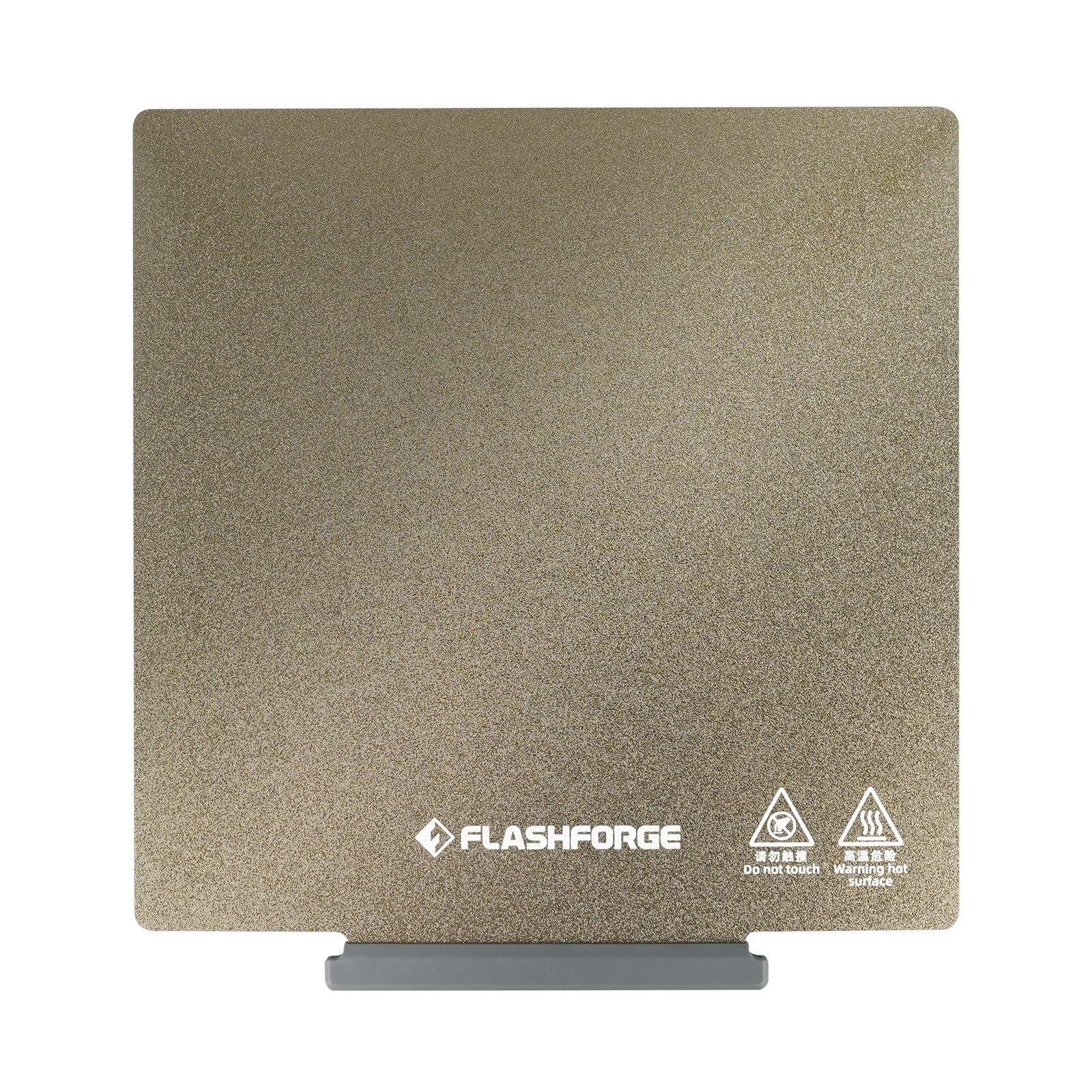
A Flashforge-official replacement that keeps TPU locked down on Adventurer 5M printers.
This is the only plate on the list made by the same company as the printer — Flashforge — so fitment is guaranteed for the AD5M, AD5M Pro, and AD5X. It weighs 12.6 ounces and uses a double-sided textured coating that works with PLA, PETG, TPU, PLA-CF, and PETG-CF. The “2s installation” claim is realistic: align the two corners and the magnetic bed grabs the sheet instantly. No clips, no screws.
Not everyone was thrilled, though. One reviewer flagged that the top side has a raised FF logo and warning symbols that reduce the usable print area, and the bottom side “lacks coating, has micro-scratches out of box, and poor filament adhesion.” That is a split review — some buyers got a perfect double-sided sheet, others got a single-sided surface with a decorative top. If you get a good one, the adhesion is excellent for TPU. The manufacturer recommends using glue for very small models, but for most TPU prints the textured PEI grip alone is enough.
Compared to the Creality plate, this one costs more but is double-sided and purpose-built for the Flashforge AD5M ecosystem. The warranty and quality control come from the OEM, which matters if you want a sure fit.
OEM quality with a caveat: When the double-sided coating is applied correctly, this plate grips TPU as well as any aftermarket option. Check your unit for coating uniformity right from the start.
Pick this for: Flashforge Adventurer 5M/AD5X owners who want a guaranteed fit and direct manufacturer support.
Hesitate if: you depend on both sides having full textured coating — inspect yours immediately upon arrival.
6. H2D PEI Build Plate for Bambu Lab H2D/H2S 355x346mm
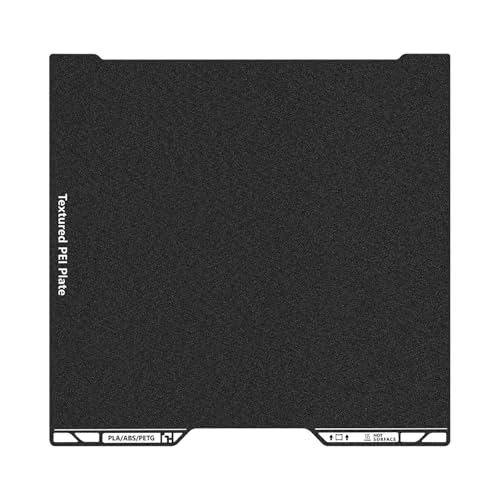
The massive plate for Bambu Lab’s largest H2D printer that handles TPU in bulk.
At 355x346mm, this is by far the biggest build plate on the list — almost 50% wider than the 235x235mm Creality plate. It weighs 1.4 pounds, so it has the thermal mass to hold bed temperature steady for large TPU prints that take hours. The uniform PEI spray coating provides strong first-layer grip to prevent warping on wide, flat parts. It is double-sided matte black, giving you two textured surfaces to wear through before replacement.
The reviews are actually copied from the Kobra S1 plate — buyers mention fit on Neptune 4 and Centauri Carbon, which confirms that this same manufacturer (KOYOFEI) produces both plates with the same coating quality. For the H2D/H2S specifically, the 355x346mm size is non-negotiable, and this is one of the few aftermarket options available. The magnetic spring steel base makes removal easy: let the plate cool, lift it off, and give it a gentle flex to pop the TPU part loose.
Compared to every other plate here, this is the premium choice for the Bambu Lab H2D owner who wants a reliable textured PEI surface that covers the entire bed without gaps. The trade-off is the limited printer compatibility — it only fits H2D and H2S.
King of the large bed: The 355x346mm surface gives you room for oversized TPU projects. The PEI coating holds even large first layers flat. Just confirm your printer exactly matches these dimensions before buying.
Designed for: Bambu Lab H2D and H2S owners who need a full-coverage double-sided PEI plate for large-format TPU printing.
Not for: any printer smaller than 355x346mm — it will overhang the bed and cause leveling issues.
Understanding the Specs
Textured PEI Coating
PEI (polyetherimide) is a high-temperature polymer applied as a powder coat that creates a matte, slightly rough surface. Flexible TPU physically grips these micro-peaks, preventing the part from sliding or curling during printing. Smooth plates (glass, bare metal) lack this texture and typically need glue or tape to hold TPU. All plates on this list use textured PEI or a PEI-equivalent coating.
Plate Thickness & Weight
A thicker spring steel plate — measured in millimeters — resists the flex that can lift a TPU edge mid-print. Heavier plates (measured in ounces or pounds) also hold heat more consistently across the bed surface, reducing cold spots that cause warping. The plates here range from 10.2 ounces (Creality K1C) to 1.4 pounds (H2D). The 0.77mm thick Bambu Lab plate is the stiffest option.
FAQ
Can I print TPU on a smooth glass build plate without glue?
What is the best bed temperature for TPU on a PEI plate?
Will a thicker build plate reduce TPU warping?
How do I clean a textured PEI plate after printing TPU?
Does a double-sided build plate last twice as long?
Will a Bambu Lab build plate fit my Creality printer?
Why do some TPU prints stick too well to PEI?
Can I use a textured PEI plate for filaments other than TPU?
Final Thoughts: The Verdict
Across the board, the build plate for tpu winner is the Upgraded Thicker Textured PEI Plate because its 0.77mm thickness and double-sided PEI provide the most reliable first-layer grip for flexible prints across hundreds of cycles. If you want a holographic finish that still grips well, grab the JUUPINE H1H Build Plate. And for Creality or Flashforge owners, the Creality K1C and Flashforge Double-Sided PEI Sheet are the best drop-in fits for those specific ecosystems.
How We Picked
We do not accept paid placement. Every pick is matched to a real buyer and a real use-case; we do not hands-on test units.
Sources & Methodology
Specifications: manufacturer listings and product documentation. Review insights: verified customer reviews, as of July 2026. Pricing: not shown on this page (it changes often); check the current price via the retailer link.
As an Amazon Associate, Gadgets Feed earns from qualifying purchases. This does not affect which products we feature.
Related Guides
Product prices and availability are accurate as of the date/time indicated and are subject to change. Any price and availability information displayed on Amazon at the time of purchase will apply to the purchase of this product. As an Amazon Associate I earn from qualifying purchases.
CERTAIN CONTENT THAT APPEARS ON THIS SITE COMES FROM AMAZON. THIS CONTENT IS PROVIDED "AS IS" AND IS SUBJECT TO CHANGE OR REMOVAL AT ANY TIME.
Amazon and the Amazon logo are trademarks of Amazon.com, Inc. or its affiliates.