
Our readers keep the lights on and my morning glass full of iced black tea. As an Amazon Associate, I earn from qualifying purchases.
Specs are compiled from manufacturer listings and verified buyer reviews and can change over time — please confirm the key details on the product page before buying.
You grab a canoe paddle for the first time and think, “It’s just a stick with a blade, right?” Then you spend three hours with the wrong one and learn the hard way. A bad paddle makes your grip ache, your shoulders complain, and the canoe zigzag. A good paddle feels like part of your arm—you forget it’s there, you paddle longer without pain, and you steer without thinking. This guide compares the actual published specs and patterns from buyer reviews, so you can pick the one that works for you and your water.
I’m Min — the founder and writer behind Gadgets Feed. This guide is built by comparing the manufacturers’ published specifications and the patterns across verified customer reviews, so you get each pick’s real strengths and trade-offs instead of marketing spin.
A canoe paddle is a balance of weight, grip comfort, and durability. You want one that fits the boat, the water, and your body without costing too much.
Quick Picks
- BENDING BRANCHES BB Special Wood Canoe Paddle — Top Performer
- BENDING BRANCHES Beavertail — Classic Craftsmanship
- Attwood Wooden Canoe Paddle — Smart Value
- WONITAGO Wooden Canoe Paddle — Lightweight Float
- Y&K Homish Wooden Canoe Paddle 4 Feet — Budget Two-Pack
How To Choose The Best Canoe Paddle
Finding the right canoe paddle means matching the boat, the water, and the paddler. A short paddle on a wide canoe means leaning too far—a long paddle on a narrow kayak means clumsy strokes. The three specs below matter most.
Length: How Tall Is the Canoe and How Far Do You Reach?
Your paddle length needs to match your torso height and the width of your canoe. A general starting point: a 48-inch paddle works for smaller paddlers in narrow boats, while a 57-inch paddle suits taller paddlers in wider recreational canoes. If you sit on a raised seat, you need a longer paddle than someone kneeling on the floor. Getting this wrong means either knuckles hitting the gunwale (the top edge of the canoe) or straining to reach the water.
Shaft Shape: Bent or Straight?
A straight shaft is the classic design—simple, affordable, and it gives you full reach for deep strokes. A bent shaft (typically 11 to 14 degrees) angles the blade slightly forward at the start of each stroke, which puts your body in a more efficient position so you use less energy over a full day of paddling. The trade-off: a bent shaft takes a few trips to get used to, and it costs more.
Blade Material and Protection
Solid wood paddles are beautiful and quiet in the water but dent or split easily on rocks. Laminated wood (multiple layers of wood glued together, like 18-laminate basswood) is stronger and resists warping (twisting out of shape when wet). Some blades add a Rockgard tip (a tough plastic or fiberglass strip) or a fiberglass edge to absorb bumps from sandy shorelines and rocky shallows. If you paddle shallow rivers or often push off the bottom, look for that extra tip protection.
Quick Comparison
| Model | Best For | Length | Weight | Shaft Style | Amazon |
|---|---|---|---|---|---|
| Attwood Wooden Canoe Paddle | Budget all-rounder for kids or casual use | 5 Feet (60″) | 1.5 Pounds | Straight | $46.03Amazon |
| WONITAGO Wooden Canoe Paddle | Lightweight beginner paddle with floating design | 4.8 FT (57.6″) | 1.38 kg (3.0 lb) | Straight | $49.99Amazon |
| Y&K Homish 2-Pack Wooden Paddle | Budget twin-pack for kids, decor, or raft | 4 FT (48″) | 1.7 kg (3.7 lb) for two | Straight (T-grip) | $53.98$59.98PrimeAmazon |
| BENDING BRANCHES BB Special | Mid-range bent shaft for recreational paddlers | 56″ | 1 Pound | Bent | $169.95Amazon |
| BENDING BRANCHES Beavertail | Premium straight shaft for efficiency and durability | 57″ | 22 oz (1.4 lb) | Straight | $174.95Amazon |
In‑Depth Reviews
1. BENDING BRANCHES BB Special Wood Canoe Paddle – 18-Laminate Basswood Shaft
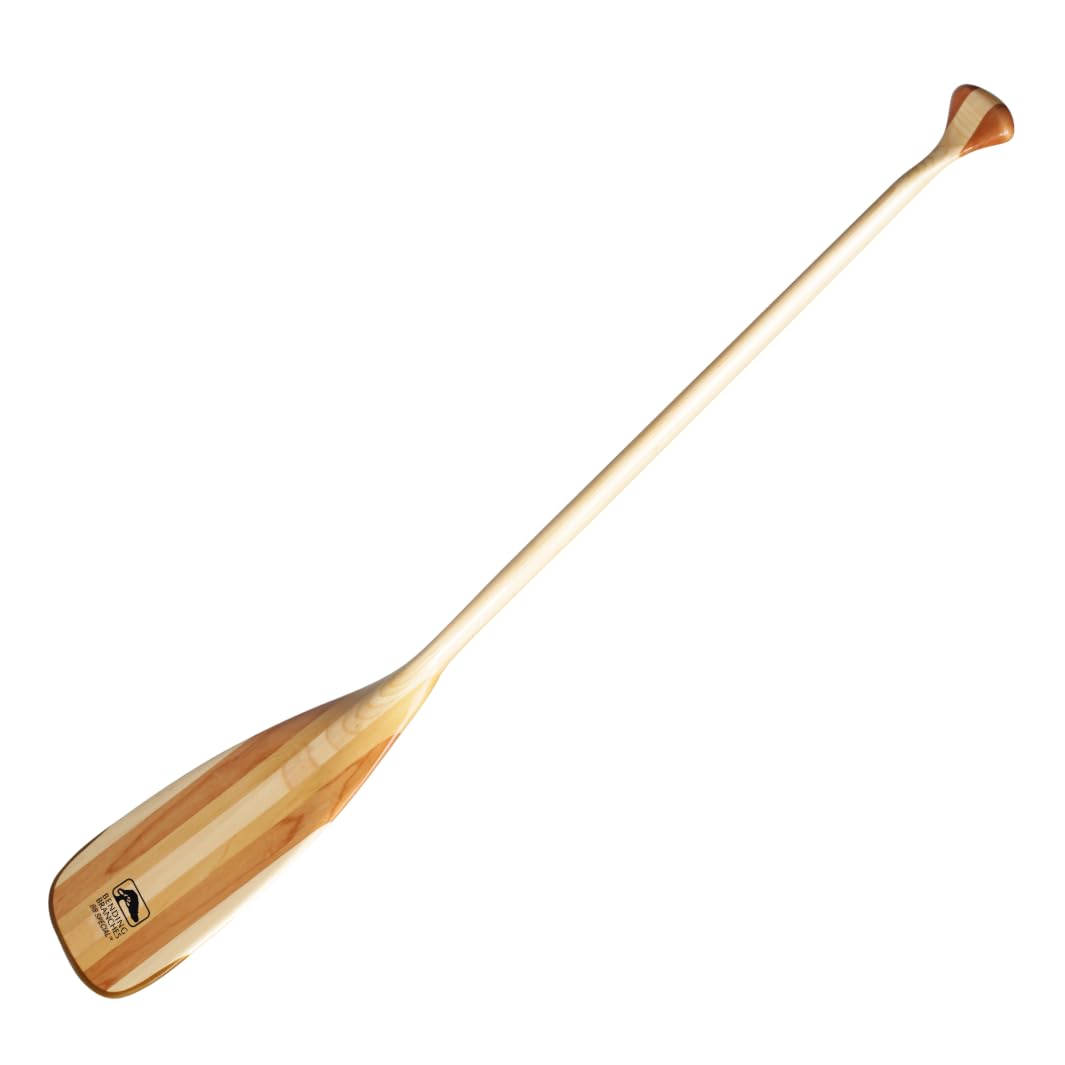
This paddle weighs just 1 lb, and its bent shaft saves your wrists on long lake crossings.
The BB Special reduces arm fatigue on trips longer than an hour because of its 11-degree bent shaft (the shaft angles away from you so your lower hand sits in a more natural position). To make that shaft strong without adding weight, it uses 18-laminate basswood (18 thin layers of wood glued together), which flexes under load rather than snapping. The hardwood blade has a Rockgard tip (a protective strip on the blade edge) so you can push off rocky shorelines without chipping the wood.
The BB Special weighs 16 oz (1 lb) and the straight-shafted BENDING BRANCHES Beavertail weighs 22 oz. Its bent shaft changes your stroke timing—you pull the paddle out of the water sooner. Buyers report the paddle is “lightweight, 11-degree bent paddle, injury-reducing tip” and call it “powerful, ergonomic paddle reduces fatigue.” However, owners mention the wood on both BENDING BRANCHES paddles can split after 20-30 days of use if left unsealed, and recommend sanding and re-varnishing every other year to prevent water damage. One owner mentioned the graphics on the blade are printed on the wrong side, so you paddle backward if you want to see them.
What makes it worth the money
- Weighs only 1 lb for all-day comfort
- Bent shaft design reduces wrist and arm strain
- Rockgard tip protects the blade on rocky shores
- 18-laminate basswood shaft resists warping
The honest trade-offs
- Wood can split after 20-30 days without seasonal maintenance
- Requires sanding and re-varnishing every other year
- Bent shaft takes a few trips to get used to
- Blade graphics may be printed on the wrong side
Reach for this if: you paddle lakes or gentle rivers regularly and want the ergonomic advantage of a bent shaft without the price tag of a carbon-fiber paddle.
Look elsewhere if: you hate any kind of maintenance—this paddle needs sanding and varnish every other season to stay in shape.
2. BENDING BRANCHES Beavertail – Recreational Wood Canoe Paddle with Palm Grip

Hand-built in Wisconsin, this paddle’s beavertail blade shape gives a smooth, quiet stroke that is easier on your shoulders than a square blade.
The beavertail blade is wide and rounded at the bottom, narrow at the top—so it slips into the water without a splash and pulls smoothly. This one is built from Red Alder and Basswood, with a Rockgard tip coated in 2 oz. fiberglass (a thin layer of protective fiberglass) to seal the wood and resist wear. The freestyle palm grip (a curved handle that fits your palm) lets you roll the shaft in your hand without shifting your grip, which helps on long trips when you need to change stroke angles.
At 57 inches, it is 1 inch more than the BB Special’s 56 inches, which gives taller paddlers better reach. It weighs 22 oz (624 g); the BB Special weighs 16 oz (1 lb). Many solid-wood paddles weigh more. The blade surface area is 139 sq. in. (897 sq. cm)—each stroke catches more water so you get more power per pull, at the cost of slightly more effort on each recovery. Customers note it paddles well on lakes, calling it “lightweight for the price” and mentioning the “multiple rock checks and accidental bottom scrapes barely scarred the rockguard.” A few buyers received paddles shipped in thin plastic bags with scuffed blades—packaging is the weakest link.
What stands out
- Hand-built in the USA from Red Alder and Basswood
- Beavertail blade offers a forgiving, quiet stroke
- Rockgard tip with fiberglass coating protects against scrapes
- Freestyle palm grip allows easy hand rotation
What to watch for
- Weighs 22 oz compared to 16 oz for the BB Special
- Weak packaging—some buyers received scuffed blades
- Paint on blade may not hold up to repeated push-offs
Pick this instead of the BB Special if you want a classic straight shaft and the wider beavertail blade for steady touring. The extra 139 sq. in. of blade area gives you more power per stroke on open water.
3. Attwood Wooden Canoe Paddle, Ergonomic Grip, Premium Wood Construction

At 60 inches and 1.5 pounds, this paddle measures 60 inches; the other paddles reviewed are shorter. It gives tall paddlers or wide canoes the reach they need without a high price.
The Attwood paddle’s length (60 inches or 5 feet) means you don’t have to lean far over the side of a wide recreational canoe. The shaft has an ergonomic top handle (a palm-shaped grip) and a precision-sized lower shaft for your other hand, which reduces fatigue on shorter trips. The whole paddle is coated in varnish, which seals the wood against water and makes for a smooth finish. Reviewers point out it is “affordable, lightweight, spotless appearance, durable for children” and call it “perfect for making a plaque” because the pre-varnished surface takes paint well.
The Attwood is 5 ft long and weighs 1.5 lb, while the WONITAGO paddle is 4.8 ft long and has a package weight of about 3.0 lb (1.38 kg). The Attwood’s length is better for taller adults in wider boats, while the WONITAGO is more portable. The Attwood is solid wood, not laminated, so it dents more easily than an 18-laminate paddle if you hit rocks. A few buyers noted the color was light pine, not the two-toned look in the pictures—expect a uniform wood appearance.
Why it earns a spot
- Reaches 5 feet for wider canoes
- Ergonomic top handle reduces grip fatigue
- Varnish coating seals the wood and gives a smooth finish
- Budget-friendly for a solid wood paddle
Where it falls short
- Solid wood dents more easily than laminated construction
- Heavier than laminated alternatives at 1.5 lb
- Color may be plain pine, not the two-toned look in pictures
Grab this if: you need a functional, affordable paddle for kids, spare use, or a DIY project. The varnish and ergonomic grip make it more than just a cheap stick.
Move on if: you paddle frequently on rocky water—the solid wood dents easily and has no Rockgard tip.
4. WONITAGO Wooden Canoe Paddle with Ergonomic Palm Grip and Anti-Collision Edge
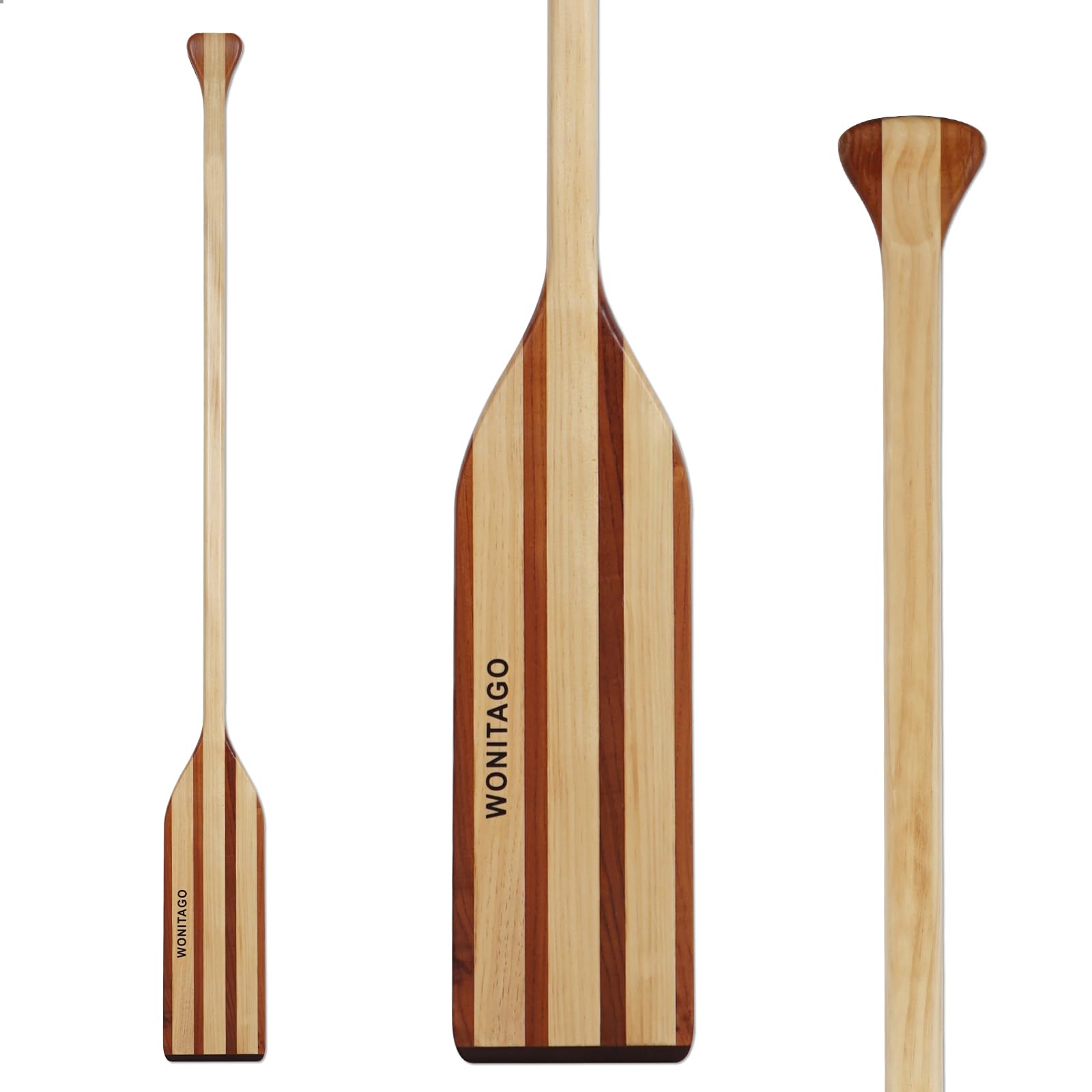
This paddle floats in both saltwater and freshwater, so if you drop it overboard, it stays on the surface—a real advantage for beginners.
The WONITAGO is made from Monterey Pine with a protective varnish coating. Because wood is less dense than water, it floats. An anti-collision strip (a protective bumper) runs along the ends of the paddle to shield the wood when you push off docks or rocks. The ergonomic handle follows the curve of your palm, reducing wrist strain on short trips.
Compared to the Attwood paddle (1.5 lb, 5 ft), the WONITAGO is shorter at 4.8 ft and has a package weight of 1.38 kg (about 3.0 lb). It comes in three length options (2.5 ft, 4.0 ft, and 4.8 ft) and two blade shapes (rectangle and slender), giving you more fit choices than any other paddle here. Buyers call it “very light, paddles great” and note it is a “quality wooden paddle for the price,” but one reviewer noted it is “almost too pretty to use” and would rather hang it on a wall. The 1-year warranty adds some confidence for a first-time buyer. The slicing color option (two-tone wood) looks more premium than the solid-color Attwood.
What works well
- Floats in saltwater and freshwater—won’t sink if dropped
- Anti-collision strip protects the blade edges
- Multiple length and blade shape options for different users
- 1-year warranty included
What to keep in mind
- Measures 4.8 ft, while a standard paddle is 60 inches (5 ft)
- Monterey Pine is softer than laminated hardwood
- Some buyers find it too pretty to risk scratching on rocks
Best for beginners or kids who might drop a paddle overboard—the floating design saves a swim. It is also the most customizable paddle here with three lengths and two blade shapes.
5. Y&K Homish Wooden Canoe Paddle 4 Feet, Row Boat Oars with Ergonomic Grip (2 Pack)
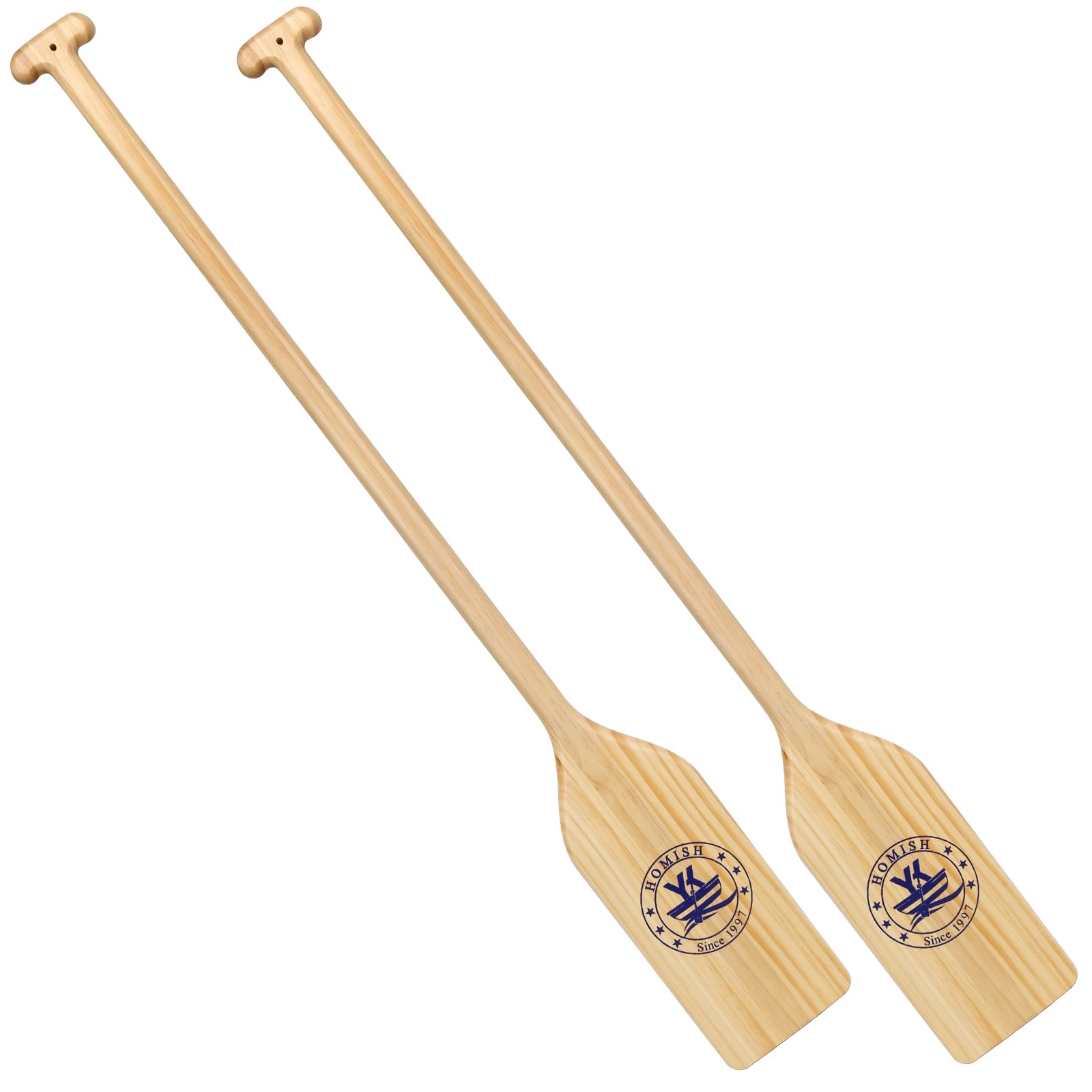
You get two 48-inch paddles for the price of one single paddle—but only if you and your partner are both under five feet tall.
This set gives you two pinewood paddles with T-shaped handles (a handle shaped like an upside-down T, giving you a solid grip for push strokes) and a hole in the handle for a lanyard. The paddles are hand-polished and treated with environmentally friendly oil or wax to protect the wood. One buyer called them “a cute solid wood canoe paddle” and another said “perfect for smaller people works great for canoe.” At 1.7 kg total package weight (about 3.7 lb for both), each paddle weighs roughly 1.85 lb, while the Attwood single paddle weighs 1.5 lb; you get two for a similar price.
These paddles are 4 ft long, whereas the Attwood paddle is 5 ft long and weighs 1.5 lb. That works for a child or a small adult in a narrow boat, but one buyer mentioned: “at a height of only 48 inches, it is over a foot shorter than my other canoe paddles. This might be okay for kids, but if you are an adult sitting in a canoe with a raised seat, you will have to lean over.” The wood is also soft—one owner reported their dog chewed on it briefly and “it’s scratched up very badly.” Shoppers say they “seem sturdy enough” for an inflatable raft.
The upside
- Two paddles in one box for a low total price
- T-handle offers a secure grip and has a hole for a lanyard
- Hand-polished with oil/wax finish
- Good for kids, small boats, or decoration projects
The downside
- Very short at 48 inches—adults will need to lean over
- Soft wood scratches and dents quickly
- Heavier per paddle than the Attwood single
- Best suited for non-demanding use like rafts or kids
Only buy this for kids or a decorative project. For adult paddling on a standard canoe, the Attwood (5 ft, 1.5 lb) is a better value because it fits the boat.
Understanding the Specs
Laminated vs Solid Wood Shaft
A solid wood paddle is cut from one piece of wood. It is cheaper and looks simple, but it dents and warps (twists out of shape) more easily when it gets wet. A laminated shaft (like the 18-laminate basswood on the BB Special) is built by gluing many thin layers of wood together. That makes it stronger—it flexes under load rather than snapping, and it resists warping after repeated wet-dry cycles. If you plan to paddle frequently, pay the extra for a laminated shaft.
Rockgard Tip and Blade Protection
Rockgard is a brand name for a protective strip bonded to the tip and edges of a wooden blade. It absorbs the impact when you push off rocks, logs, or gravel shorelines. Without it, a solid wood blade chips and splits quickly in shallow water. The BENDING BRANCHES paddles both have Rockgard tips. The WONITAGO uses an anti-collision strip, which is a similar idea. For aluminum or plastic paddles, tip protection is less critical, but for wood it is essential if you paddle anything other than deep, sandy-bottom lakes.
FAQ
How do I choose the right canoe paddle length?
What is the difference between a straight shaft and a bent shaft paddle?
Do wooden canoe paddles need maintenance?
Can I use a canoe paddle for a kayak?
What is a beavertail blade shape good for?
How heavy is too heavy for a canoe paddle?
Can a wood canoe paddle float if I drop it?
What size paddle do I need for a child?
Is a 2-pack of paddles a good buy for a family canoe?
What is a T-grip paddle and who should use it?
Final Thoughts: The Verdict
For most people, the canoe paddle winner is the BENDING BRANCHES BB Special because its bent shaft and 1-lb weight reduce arm fatigue on any trip longer than an hour. If you want a classic straight-shaft paddle with a wide beavertail blade and protective fiberglass tip, grab the BENDING BRANCHES Beavertail. And for a simple, affordable paddle for kids or casual use, the standout is the value of the Attwood Wooden Canoe Paddle.
How We Picked
We do not accept paid placement. Every pick is matched to a real buyer and a real use-case; we do not hands-on test units.
Sources & Methodology
Specifications: manufacturer listings and product documentation. Review insights: verified customer reviews, as of July 2026. Pricing: not shown on this page (it changes often); check the current price via the retailer link.
As an Amazon Associate, Gadgets Feed earns from qualifying purchases. This does not affect which products we feature.
Related Guides
Product prices and availability are accurate as of the date/time indicated and are subject to change. Any price and availability information displayed on Amazon at the time of purchase will apply to the purchase of this product. As an Amazon Associate I earn from qualifying purchases.
CERTAIN CONTENT THAT APPEARS ON THIS SITE COMES FROM AMAZON. THIS CONTENT IS PROVIDED "AS IS" AND IS SUBJECT TO CHANGE OR REMOVAL AT ANY TIME.
Amazon and the Amazon logo are trademarks of Amazon.com, Inc. or its affiliates.