
Our readers keep the lights on and my morning glass full of iced black tea. As an Amazon Associate, I earn from qualifying purchases.
Specs are compiled from manufacturer listings and verified buyer reviews and can change over time — please confirm the key details on the product page before buying.
You need a bar that stays straight, stays put on your back, and does not slip when the weight gets serious. The wrong one bends, slides around, or spins too much, and that turns a solid squat into a dangerous wobble. The right one feels locked in from your first rep to your last.
I’m Min — the founder and writer behind Gadgets Feed. This guide is built by comparing the manufacturers’ published specifications and the patterns across verified customer reviews, so you get each pick’s real strengths and trade-offs instead of marketing spin.
If you are outfitting a new garage gym or upgrading an old loaner bar, these options cover the specs that matter under a loaded barbell: tensile strength (how much it can take before it bends), knurling feel (the texture that keeps it on your back), and real-world durability from lifters who have already run heavy cycles on these bars.
Quick Picks
- Olympic Barbell 7FT 45LB, 1500LB Capacity — Best Overall
- Synergee 45 lb Rhino Power Bar – Cerakote Finish — Power Bar Pick
- Mikolo 7ft Olympic Barbell — Best Value
- GarveeLife 7FT Olympic Barbell — Budget Starter
- XMARK Lumberjack 7 Ft Olympic Barbell, 28mm Bar — Balanced All-Around
How To Choose The Best Barbell For Squats
Your squat bar needs to feel locked into your shoulders when the weight gets heavy. The key specs that separate a great squat bar from a mediocre one are tensile strength (how much load it can take before bending), knurling (the texture that keeps the bar from sliding on your back), and the kind of spin in the sleeves. Here is what to look for.
Tensile Strength and Weight Capacity
Tensile strength, measured in PSI (pounds per square inch), tells you the maximum stress the steel can handle before it permanently deforms. For serious squatting, look for at least 190,000 PSI. A bar rated for 1500 pounds gives you a huge safety margin if you are squatting in the 300-500 pound range, so the bar stays straight set after set without taking a set.
Knurling Depth and Feel
Knurling is the diamond pattern pressed into the steel that creates friction for your grip and your back. A 1.2mm medium-depth knurl gives you a secure hold without being so aggressive it tears up your hands or your traps. Power bars often use a deeper, more aggressive knurl to lock the bar in place on your back, while multi-purpose bars use a gentler texture for cleaner Olympic lifts overhead.
Sleeve Spin: Bearings vs. Bushings
Sleeves rotate so the plates do not spin the whole bar during a clean or snatch. Needle bearings offer very fast, smooth spin for Olympic lifts, but that much spin can feel unstable during a heavy squat where you want the bar to settle and stay still. Brass bushings provide a slower, more controlled rotation, which many powerlifters prefer for squats because the bar does not wobble as you unrack it.
Quick Comparison
| Model | Best For | Tensile Strength | Weight Capacity | Shaft Diameter | Amazon |
|---|---|---|---|---|---|
| Olympic Barbell 7FT 45LB (E.T.ENERGIC) | Heavy home-gym squatting & powerlifting | 205,000 PSI | 1500 Pounds | 28 mm | Amazon |
| Synergee 45 lb Rhino Power Bar | Raw powerlifting & heavy singles | 190,000 PSI | 1500 Pounds | 29 mm | Amazon |
| Mikolo 7ft Olympic Barbell | Value-driven squat & deadlift training | 190,000 PSI | 1500 Pounds | 28 mm | Amazon |
| GarveeLife 7FT Olympic Barbell | Budget-friendly starter home gym bar | 190,000 PSI | 1500 Pounds | — | Amazon |
| XMARK Lumberjack 7 Ft Olympic Barbell | Balanced all-around training & Olympic lifts | — | 1000 Pounds | 28 mm | Amazon |
In‑Depth Reviews
1. Olympic Barbell 7FT 45LB, 1500LB Capacity Weight Bar (E.T.ENERGIC)

The bar shrugs off 1500 pounds with a 205,000 PSI tensile strength and a grip that feels custom to your hands.
The 28mm shaft uses 1.2mm medium-depth knurling that reviewers call “grippy but not painful,” so it holds your back on squats without digging into your palms on pulls. Each sleeve has 4 needle bearings (small rollers for fast rotation) plus a bushing (a metal sleeve for controlled spin), giving you smooth rotation for cleans while keeping the bar stable when you unrack a heavy squat. The 16.4-inch loadable sleeves fit standard 2-inch plates, and the black shaft with gold ends gives it a commercial-gym look that blends into any rack.
Buyers report the bar arrived with a light machine-oil coating and some metal flakes from manufacturing — a quick wipe-down solves it, and one owner noted after two years of regular use the bar is “still very solid” with no sleeve play or rust. At 45 pounds it meets standard gym weight, so you can track your numbers without adjusting for a light or heavy bar.
Compared to the XMARK Lumberjack which maxes at 1000 pounds, this E.T.ENERGIC bar carries 1500 pounds, giving you serious headroom if your squat is climbing toward 500+.
Best for you if: you want a premium bar that outperforms big-name brands at half the price, with the highest tensile strength for growing into heavier squats. skip it if: you need a stiffer bar with zero whip for raw powerlifting — this has medium whip (flex under load) that some deadlifters may notice.
Why It Dominates
- 205,000 PSI tensile strength — highest in the list, resists bending under max loads
- 1500-pound weight capacity leaves a massive safety margin for heavy squats
- Medium knurling balances grip on your back and comfort in your hands
- Needle bearings plus bushing give smooth but controlled spin
The Minor Gripes
- Arrives with machine oil — you will need to wipe and let it dry before first use
- Black coating on the ends can show wear over time if racks are rough
2. Synergee 45 lb Rhino Power Bar – Cerakote Finish
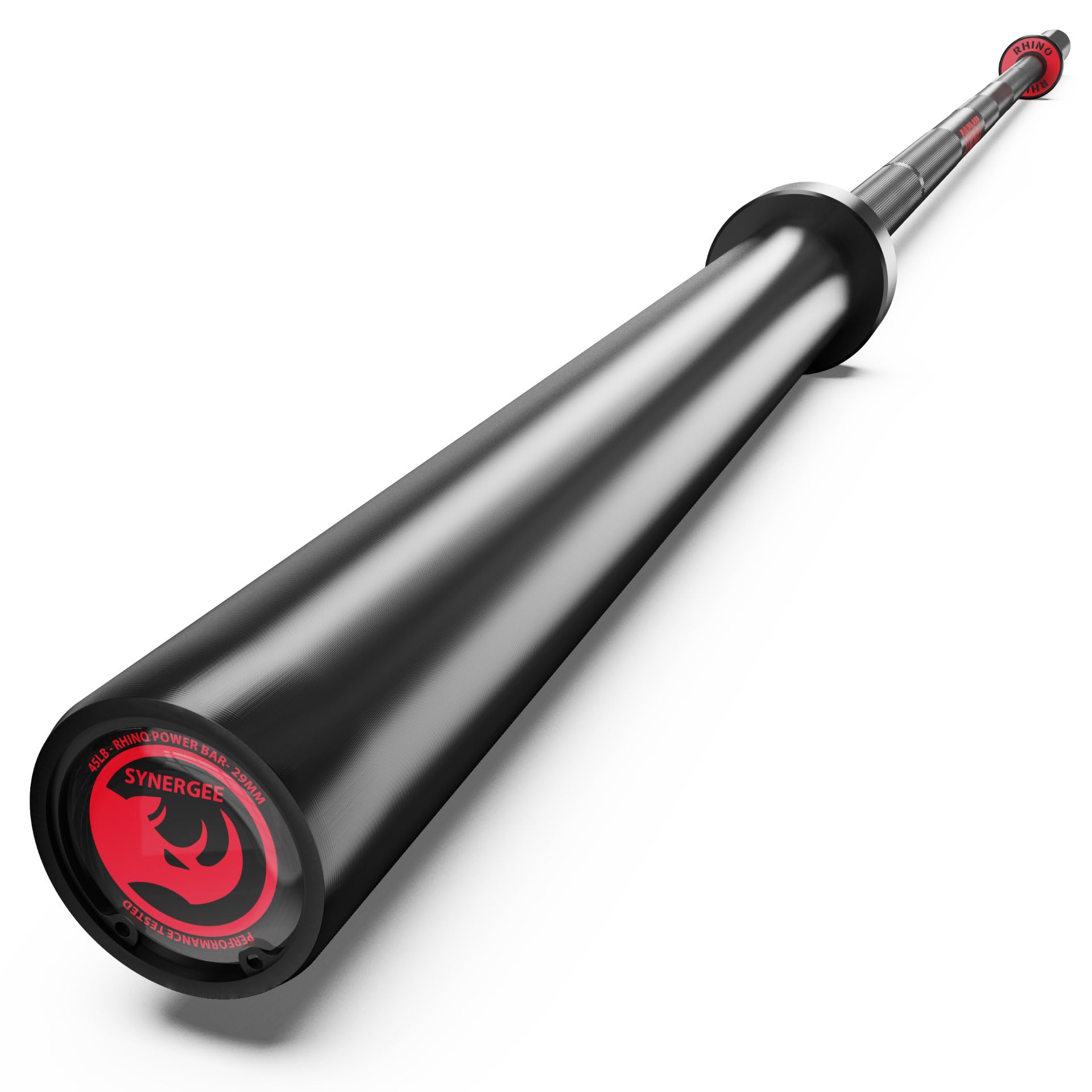
A stiff, aggressive knurl bar with a 29mm diameter shaft that sits rock-solid on your back for heavy singles.
The Rhino is not a multi-purpose bar — it is a dedicated power bar designed to be stiffer with less whip (flex), and it skips the bearings entirely. That stiffness means you feel every pound directly without the bar bouncing or flexing, which is exactly what you want under a max-effort squat. The 29mm diameter shaft is a full millimeter thicker than the 28mm bars from E.T.ENERGIC and Mikolo, helping your hands grip more surface and reducing fatigue during long holds. The volcano knurling (an extra-rough diamond pattern) is more aggressive than a standard multi-purpose barbell, so it locks into your traps without needing chalk, though it may feel harsh during high-rep deadlift sets. The Cerakote-coated shaft (a ceramic-based finish) resists rust and looks tough, while the black phosphate sleeves add extra corrosion resistance where plates slide on.
Reviewers who have owned both Rogue and Hammer Strength bars say the Rhino holds up and feels better than those big-name options. One owner called it the “best power bar owned” after decades of lifting, praising the solid feel and the fact that there are “no gimmicks.” The bar weighs a true 45 pounds and gives you 16.4 inches of loadable space on each sleeve, so it fits standard 2-inch plates with no adapters needed. If you mostly squat and bench with occasional deadlifts, the aggressive knurling and zero-whip feel make this a specialist tool that does one thing extremely well.
Stiffness vs flexibility: The lack of bearings means the sleeves spin slowly, which is a feature for squats — the bar stays planted and does not wobble as you unrack it. But if you also do Olympic lifts like cleans or snatches, the slow spin will feel sluggish compared to a bearing bar.
Choose this if: you train raw powerlifting and want a stiff, non-bouncing bar with an aggressive knurl that never needs chalk. pass on it if: you need one bar for everything including cleans and snatches — the volcano knurling and thick 29mm shaft will feel too aggressive for overhead work.
3. Mikolo 7ft Olympic Barbell, 45lb 1500lbs Capacity
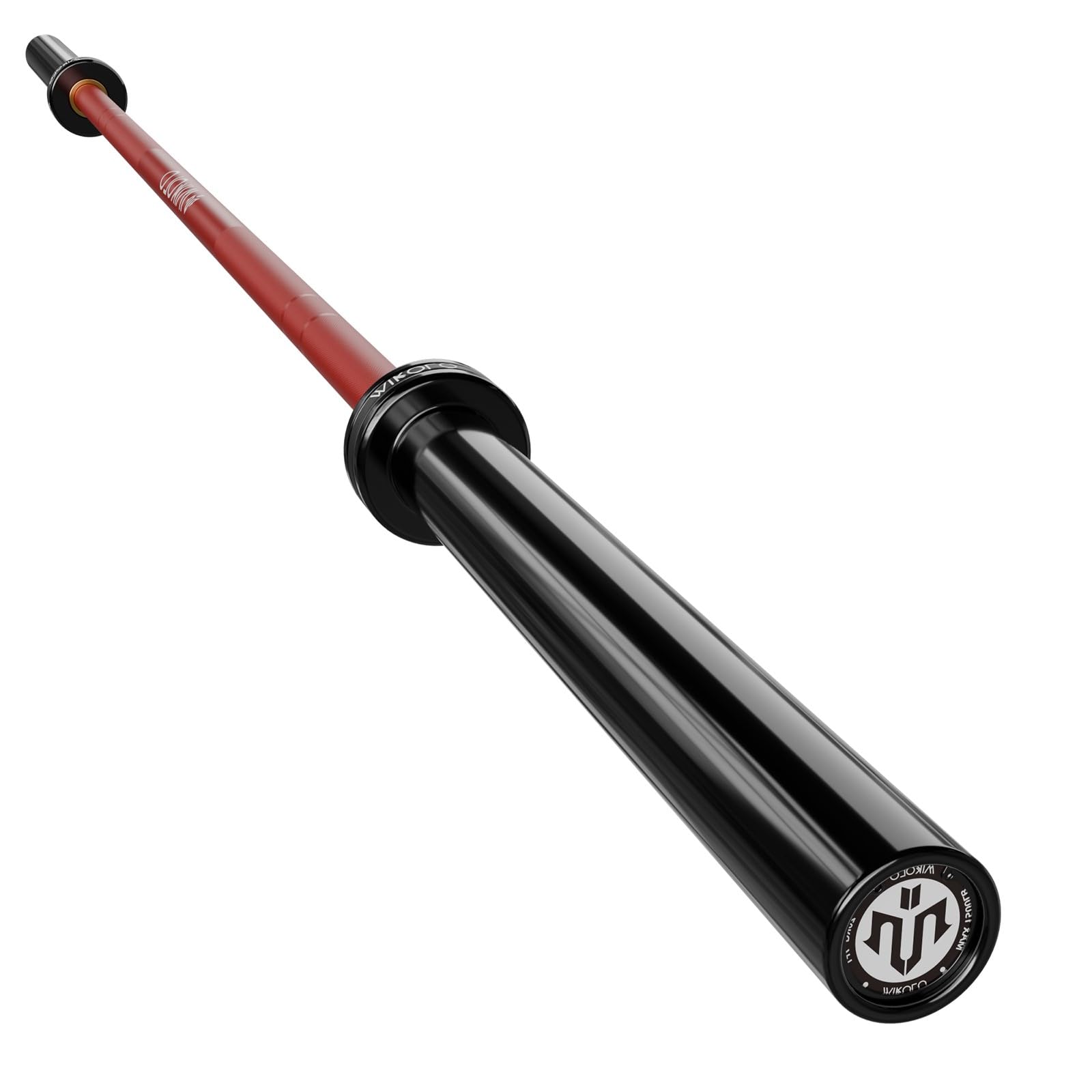
Eight needle bearings give this bar a fast spin that beats bars twice its price, with a 190,000 PSI tensile strength
Where most bars in this range use 4 needle bearings, the Mikolo packs 8 needle bearings plus brass bushings, so the sleeves spin faster and smoother — a big plus if you do clean-and-jerks or snatches alongside your squats. The 1.2mm diamond knurling provides a secure grip that owners mention is “aggressive but comfortable,” and after a year of garage use, one lifter noted the medium knurling still spins well with no rust. The tensile strength sits at 190,000 PSI with a 1500-pound weight capacity, matching the GarveeLife bar but with a more refined bearing setup that reduces friction during dynamic lifts. The hardened chrome surface resists corrosion better than raw steel, and the 28mm grip diameter feels smooth and comfortable in your hands. Customers note this bar “holds up well with 300+ lbs for squats and deadlifts,” and one called it the “best bang for buck 7ft Olympic barbell” they have bought.
Compared to the XMARK Lumberjack which maxes at 1000 pounds, the Mikolo holds 1500 pounds capacity, giving you growing room without needing a second bar later. The dual-marking knurl clearly shows hand positions for both powerlifting and Olympic lifting, so you can switch between squat and snatch without measuring. The only real trade-off is that the fast spin from 8 bearings can feel slightly loose under a heavy squat if you prefer the dead-stable feel of a bushing-only bar.
Grab this for: a do-it-all Olympic bar that spins fast for cleans and holds up for heavy squats, at a price that leaves room for plates. Pass on this if: you are a strict powerlifter who only squats and benches — the bearing spin is more than you need, and a bushing-only bar will feel more planted.
What Stands Out
- 8 needle bearings provide noticeably smoother spin than standard 4-bearing bars
- 1500-pound capacity matches premium bars at a mid-range price point
- Hardened chrome surface resists rust in humid garage environments
- Dual knurl markings for powerlifting and Olympic stance widths
The Trade-Off
- Fast spin can feel unstable for lifters who prefer a stiff, zero-wobble squat bar
- Some units arrived with light surface marks on the chrome over time
4. GarveeLife 7FT Olympic Barbell, 45lb 1500LBS Capacity
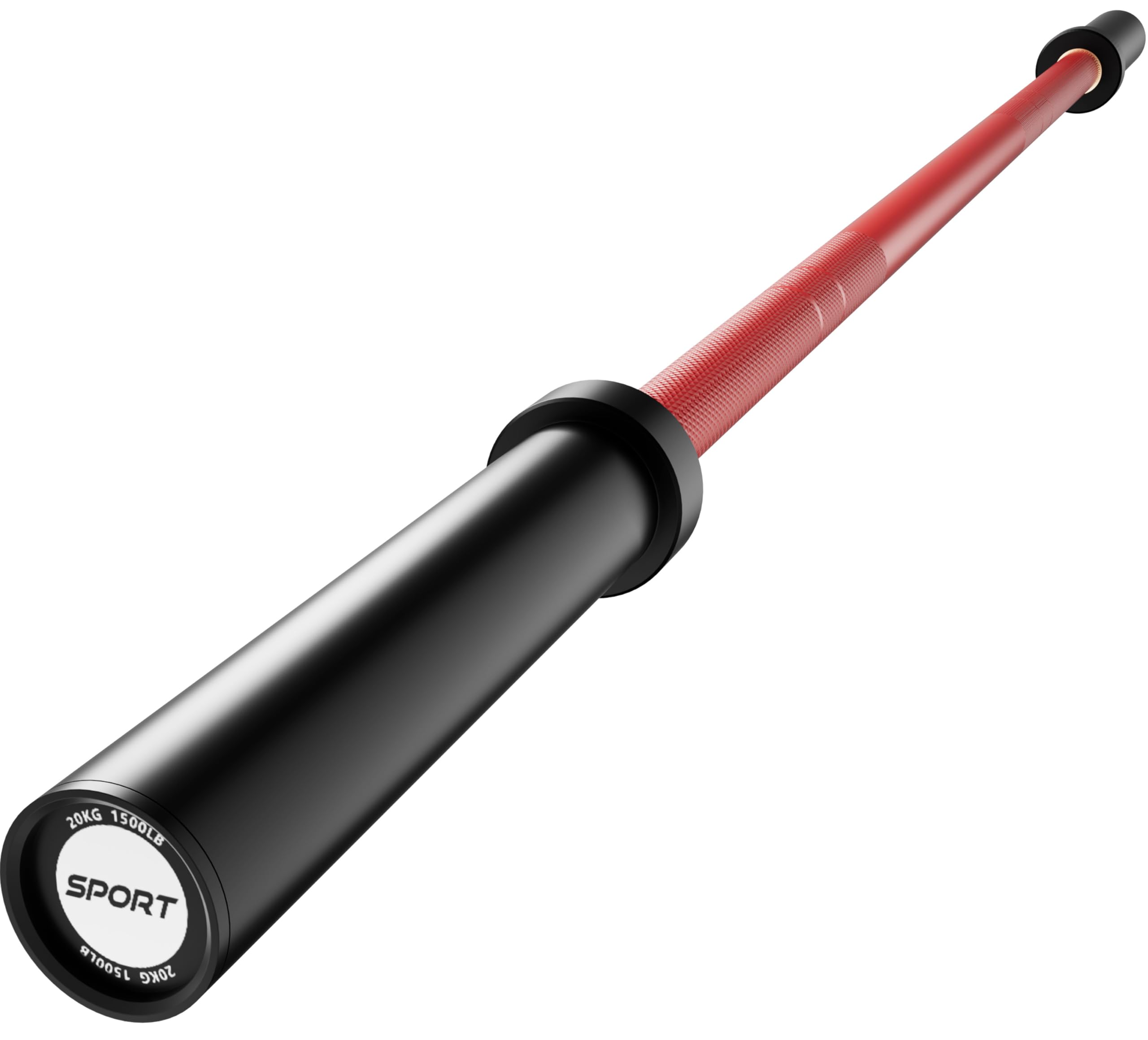
A brass-and-bearing bar with a 190,000 PSI tensile strength that feels like a commercial gym bar without the price tag.
The GarveeLife 7FT bar brings needle bearings and brass bushings together, giving you smooth rotation that reviewers compared to the feel of a gym chain bar. The 190,000 PSI tensile strength supports up to 1500 pounds, so you have the same headroom as the Mikolo bar even though the GarveeLife costs less. The 1.2mm diamond-patterned knurling provides good grip when your hands get sweaty, and the anti-oxidation coating on the shaft helps prevent surface rust in humid basements. It weighs 47.95 pounds according to the specs — a touch over the standard 45 pounds, though a buyer weighed theirs at 45.8 pounds — so it is close enough that you do not need to adjust your training numbers. The dual-marking design shows clear hand positions for both powerlifting and Olympic lifts, making it easy to set up for squats, bench, or deadlifts without measuring every time.
Reviewers point out it is a “perfect addition to home gym” with a “sturdy bar, well-greased” feel right from the start. One review noted the black coating on the sleeves does scratch off more easily than a chrome finish, so if you slide plates on aggressively the sleeves may show wear faster. The locking rings on each sleeve end keep plates stable, and the bar fits standard 2-inch plates and most power racks. At this entry-level price, you get bearing-level spin and 1500-pound capacity that was only found on bars costing twice as much a few years ago.
Commercial feel, budget cost: The needle bearings and brass bushings reduce noise and friction, making this bar feel smoother than most budget options. But the black coating on the sleeves is less durable than chrome, so expect some cosmetic wear if you load and unload heavy plates frequently.
Start here if: you are building your first home gym and want a bar that spins well, holds 1500 pounds, and costs less than a month of gym dues. Upgrade later if: you outgrow the sleeve coating durability or need a stiffer bar for max-effort powerlifting — the bearing spin here is tuned for fast lifts, not dead stability.
5. XMARK Lumberjack 7 Ft Olympic Barbell, 28mm Bar

The medium knurl on a 28mm shaft that lets you squat, bench, and clean without switching bars.
The XMARK Lumberjack is a true training bar built around a 28mm shaft with a medium-depth knurling that hits a balance — secure enough for heavy squats and deadlifts, but not so aggressive that it tears your hands on clean pulls. The sleeve length is 16.25 inches, giving you plenty of room to load plates for squats and deadlifts, and the chrome finish resists rust through humid garage seasons. Unlike the bearing-heavy Mikolo or the stiff Rhino, the Lumberjack uses a bushing-based spin that is smooth but slower, which many lifters prefer for squats because the bar settles into position without wobble. It weighs 42 pounds, lighter than the standard 45 pounds, so keep that in mind if you track your bar weight precisely.
Reviewers are impressed with the build quality, calling it “excellent value” with knurling that feels like a higher-end gym bar. One experienced lifter noted the bar has “more whip than expected” and “a noticeable bounce on explosive bench press with 150lb+,” which is something to consider if you prefer a dead-stiff bench. A few buyers mentioned the bar arrives heavily coated in protective oil — you will want to wipe it down and re-oil the sleeves before first use. Despite that, the Lumberjack earned a reputation as a “great bar at a great point” for lifters who want one bar that handles everything in a home gym without being too specialized.
Pick this if: you want a balanced barbell for squats, bench, and clean work that does not demand a break-in period — the medium knurl works from day one. Consider another bar if: you are chasing a 500-pound squat or need a true 45-pound bar — the 42-pound weight and 1000-pound ceiling may hold you back as you progress.
What It Does Right
- Medium knurling locks your grip without needing chalk for most sessions
- Chrome finish holds up well against sweat and humidity in garage gyms
- Smooth bushing rotation keeps the bar stable under heavy squats
- 16.25-inch sleeves give plenty of loading room for multiple plate sets
The Missing Piece
- 1000-pound capacity limits headroom compared to 1500-pound bars in this list
- 42-pound actual weight means it is 3 pounds under standard, so your total load will be off by that amount
- Noticeable whip can feel bouncy during explosive bench press
Understanding the Specs
Tensile Strength (PSI)
Tensile strength measures how much stress the steel can handle before it permanently bends. A higher number means the bar can take more abuse without warping. For squats, 190,000 PSI is the baseline for serious training — anything below that risks a banana-shaped bar after a few heavy cycles. The E.T.ENERGIC bar at 205,000 PSI gives you extra protection if you are squatting near 500 pounds or plan to add weight over time.
Knurling Depth and Pattern
Knurling is the textured diamond pattern on the shaft that creates grip. A 1.2mm medium-depth knurl is the standard for multi-purpose bars — it holds your back on squats without feeling like sandpaper on your hands. Power bars use a deeper, more aggressive knurl (like the Rhino’s volcano pattern) that locks into your traps but can irritate your palms during high-rep sets. If you only squat, a more aggressive knurl is fine. If you also deadlift or clean, stick with medium depth to keep your hands happy.
Sleeve Bearing vs. Bushing
The sleeves on the ends of the bar rotate so the plates do not spin the whole bar. Needle bearings give you fast, smooth rotation (great for Olympic lifts like cleans and snatches), but that speed can feel unstable under a squat. Brass bushings rotate slower with more control, which powerlifters prefer because the bar settles into a stable position. If you only squat and bench, a bushing bar is usually better. If you also do Olympic lifts, look for a bearing bar or a hybrid like the E.T.ENERGIC that uses both.
Shaft Diameter and Whip
Shaft diameter affects how the bar feels in your hands and on your back. A 28mm shaft is standard for multi-purpose Olympic bars — thin enough for comfortable grip but thick enough for stability. A 29mm power bar (like the Rhino) fills your palm more and reduces fatigue during long holds, but it may feel thick if you have smaller hands. Whip is the flex the bar shows under load — more whip helps with the bounce in a clean, but less whip gives a solid, planted feel for squats and bench. Power bars are designed to have minimal whip; multi-purpose bars like the XMARK Lumberjack have more.
FAQ
Is a power bar or an Olympic bar better for squats?
What does tensile strength mean for a barbell?
Will a 28mm barbell work for all squat styles?
How much weight can a good squat bar hold?
Do I need a bar with needle bearings for squats?
Will a 7ft barbell fit in a standard home gym power rack?
What does knurling depth mean for my squat?
How do I maintain a barbell for squats in a garage gym?
What is the difference between a 45 lb bar and a 42 lb bar?
Does a center knurling matter for squats?
Final Thoughts: The Verdict
If you want one dependable pick, the best barbell for squats winner is the E.T.ENERGIC Olympic Barbell 7FT 45LB because its 205,000 PSI tensile strength and medium knurling give you the highest safety margin and most comfortable grip for heavy squats at a mid-range price. If you want a stiff power bar with aggressive knurl that never needs chalk, grab the Synergee 45 lb Rhino Power Bar. And for a do-it-all Olympic bar with fast bearing spin that still holds 1500 pounds, the standout is the Mikolo 7ft Olympic Barbell.
How We Picked
We do not accept paid placement. Every pick is matched to a real buyer and a real use-case; we do not hands-on test units.
Sources & Methodology
Specifications: manufacturer listings and product documentation. Review insights: verified customer reviews, as of July 2026. Pricing: not shown on this page (it changes often); check the current price via the retailer link.
As an Amazon Associate, Gadgets Feed earns from qualifying purchases. This does not affect which products we feature.